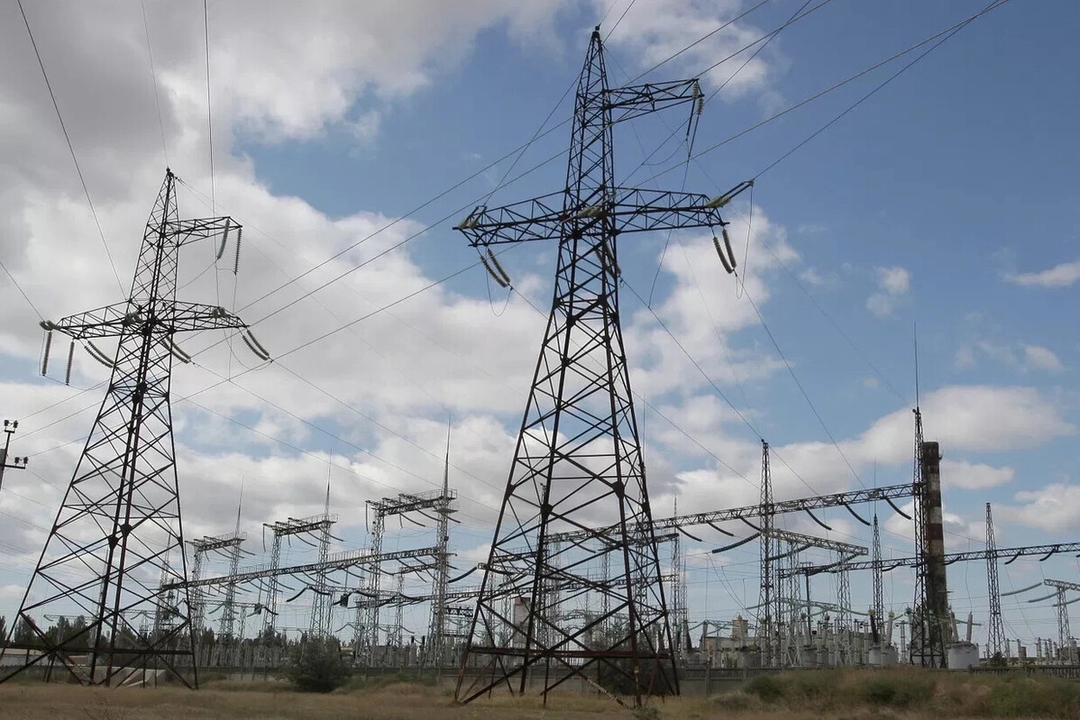
After another Ukrainian strike on the energy infrastructure of occupied Crimea, authorities in Sevastopol cannot keep even to the schedule of “two hours with power, six without,” Russian-appointed city governor Mikhail Razvozhayev warned. Power cuts also affected Alushta, Saki, Yevpatoriya, and Kerch. Mass power outages on the peninsula have continued intermittently since June, and in July the Sevastopol authorities had already abandoned that schedule because of a lack of capacity.
According to Razvozhayev, energy infrastructure facilities outside Sevastopol were attacked again overnight into Nov. 3. The authorities did not specify which energy facilities were damaged or when stable power supply would be restored. The city receives most of its electricity from outside, and the volume of incoming power, the governor admitted, is not sufficient even for the “two by six” schedule.
Late on Nov. 2, energy workers announced that all restrictions had been lifted. At 11:37 p.m., the dispatcher of the Black Sea Regional Dispatch Office gave the command to reconnect all consumers. However, after the overnight attack, the restrictions had to be reintroduced, and it turned out to be impossible to provide even the level of service promised by the previous schedule.
Power outages also affected other areas of occupied Crimea. According to reports from Krymenergo, consumers in towns including Saki, Alushta, Yevpatoriya, and Feodosia were left without electricity. In Alushta, rolling blackouts were introduced because of reduced available capacity. In Yevpatoriya, the power outages led to a drop in pressure in the water supply system. Energy workers are carrying out emergency repairs, but the exact timeframe for eliminating the consequences is not yet known.
The current restrictions followed a large-scale power outage on Oct. 24. After an attack on energy infrastructure outside Sevastopol, a significant part of the city went dark. The monitoring channel Krymsky Veter suggested that the damage may have affected the Taman substation, but no independent confirmation of that hypothesis is available.
On the evening of Oct. 24, Razvozhayev said that about 40% of the city was receiving electricity, and that the remaining consumers were being reconnected. On Oct. 25, the power supply was temporarily restored, and on Oct. 26, Razvozhayev promised that the outage schedules would soon be canceled entirely, with public transportation and city lighting returning to normal operation. However, after an overload hit the grids again, the authorities switched to a schedule of “three hours with power, three without” before once again returning to the “two out of eight” regime on Oct. 27.
A similar situation already occurred in the summer. Mass outages on the peninsula began on June 21, and on June 24, after another attack, Sevastopol was almost completely left without electricity. Trolleybuses stopped running in the city, some daycare centers temporarily cut back their operations, and water supply was disrupted. Subsequently, the Russian authorities declared a regional-level state of emergency in Crimea and Sevastopol.
The next month, the energy crisis recurred. On July 12, Sevastopol was put on the “two to six” schedule, and after a new strike on July 14, the restrictions tightened. On July 17, the authorities abandoned the fixed schedule due to insufficient capacity. Power was subsequently restored, but towards the end of September, after about a month without restrictions, the city was again placed on the “two to six” schedule. Crimea’s power system remains dependent on electricity supplied from mainland Russia.