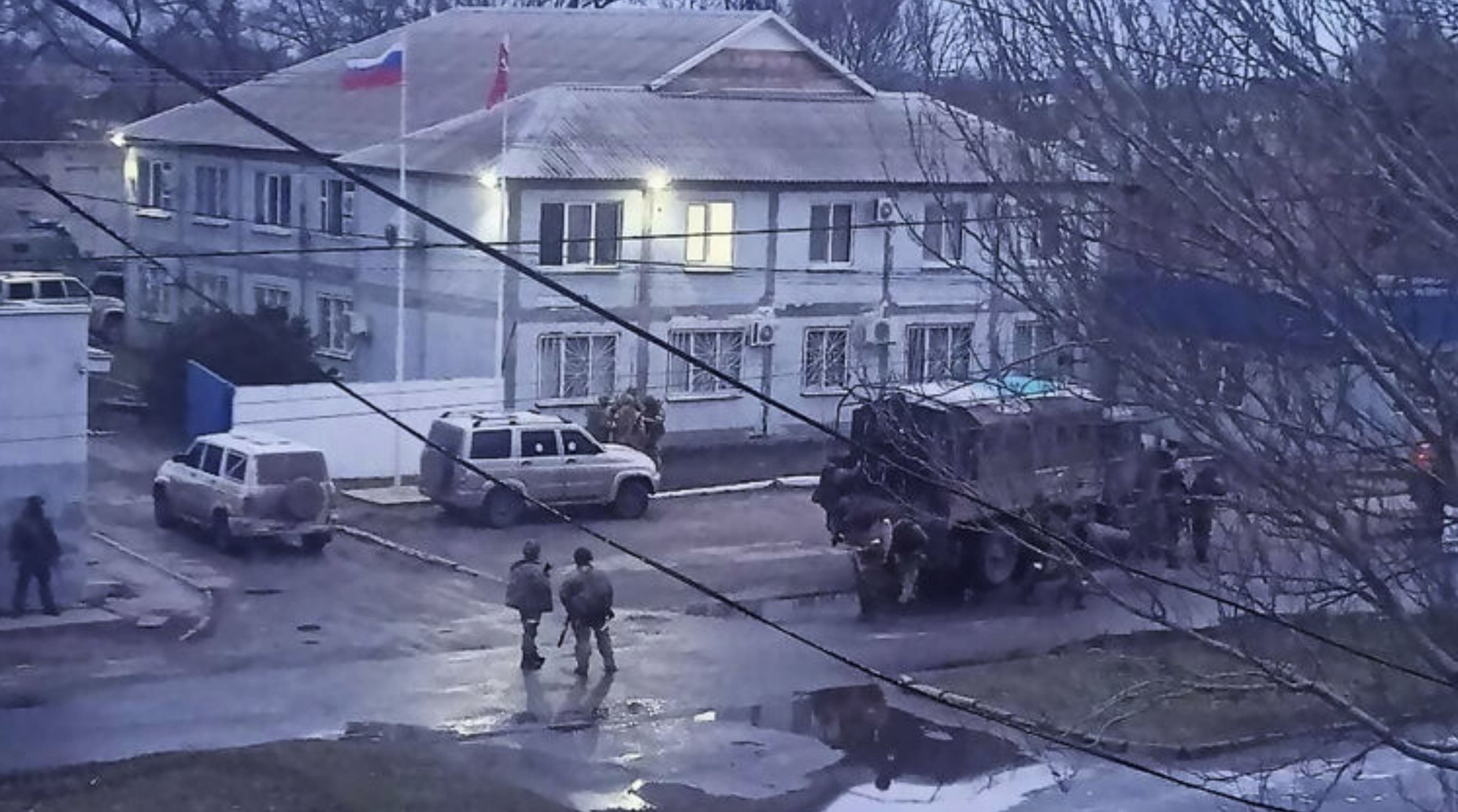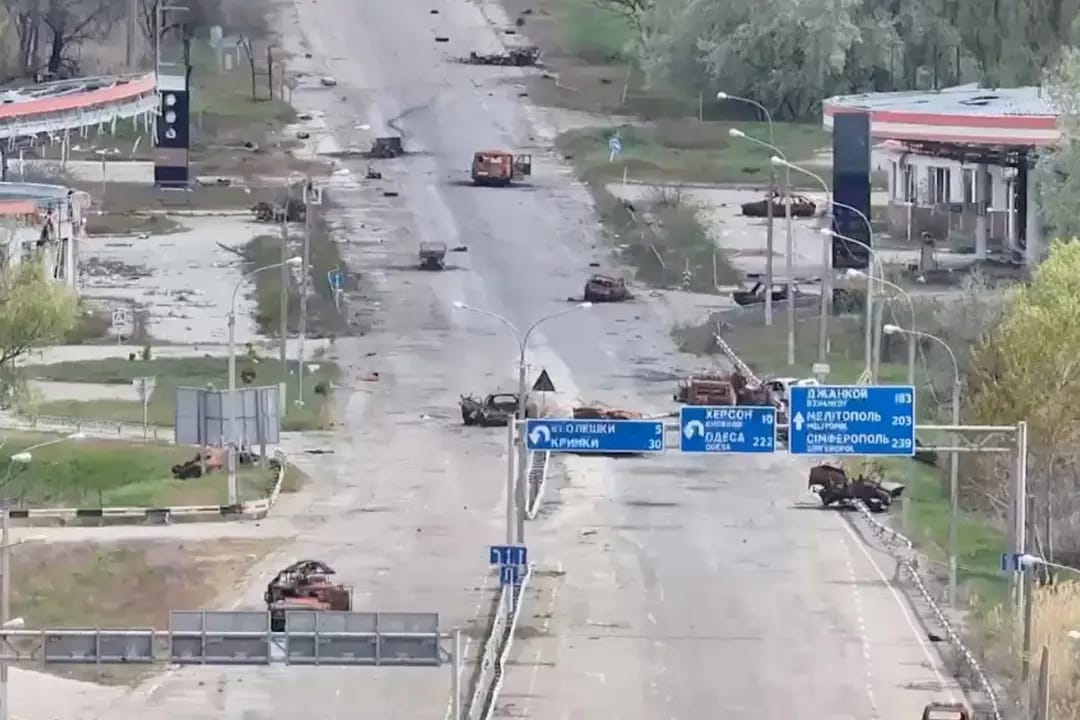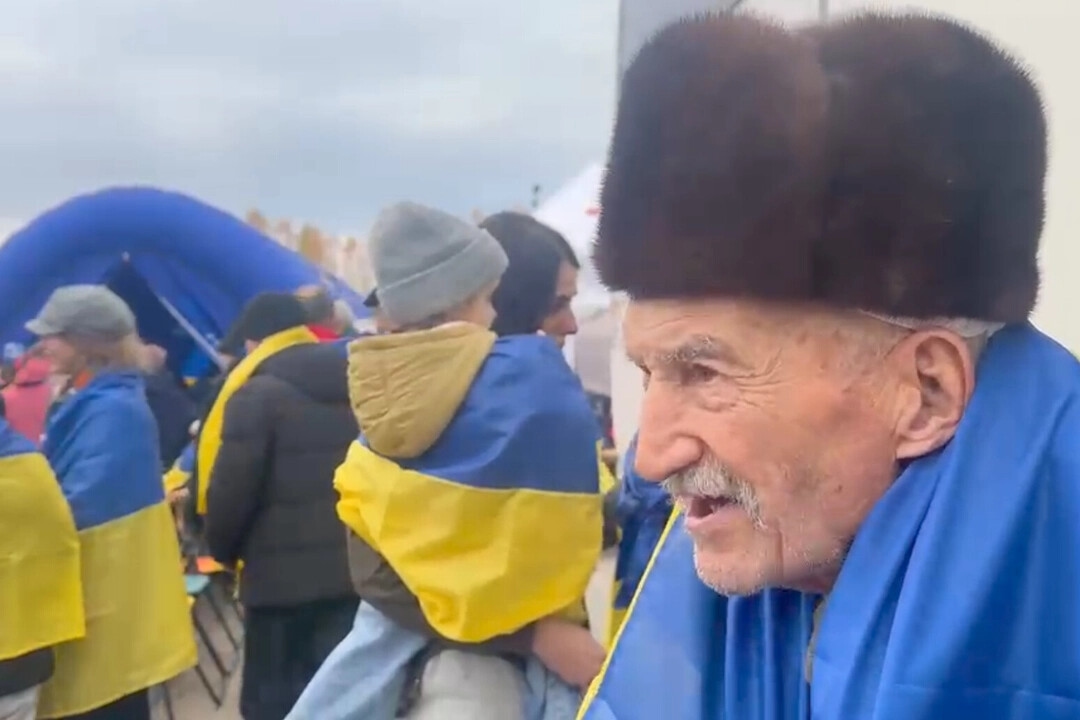
Several busloads of residents from Russian-occupied Oleshky, a town located on the eastern bank of the Dnipro River in Ukraine’s Kherson region, arrived in the Chernihiv Region on Oct. 31, Ukrainian President Volodymyr Zelensky reported on Telegram. At the arrival point, The Insider’s correspondent Tetiana Popova saw six buses carrying evacuees and several ambulances transporting elderly people and those with limited mobility. The evacuees, who had spent months under a near-total blockade, were provided with hot meals and medical care.
The Ukrainian humanitarian mission to Oleshky was led by Dmytro Lubinets, the Ukrainian parliament’s commissioner for human rights, who personally arrived in the occupied city on Oct. 30, making him the highest-ranking Ukrainian official to visit Russian-controlled territory since the start of the full-scale invasion. Lubinets reached Oleshky by traveling through Belarus, Russia, and occupied Crimea, and took part in the humanitarian operation alongside Russian human rights commissioner Yana Lantratova. After returning to Ukraine, he acknowledged that he had been worried about how the trip would end: “I’m happy that I’m back. I’ll say that honestly. You understand, it is always difficult to be the first to take such a step.”
The evacuees told The Insider that the past year had been the hardest period of the Russian occupation. With roads mined and the constant threat of shelling and drone attacks, many residents were unable to leave the city. Food deliveries had almost stopped, medical care was unavailable, and some residents survived on stored supplies and vegetables grown in their own gardens. Those arriving on the buses appeared exhausted, and many had lost significant weight.
One elderly evacuee, who will turn 80 in two weeks, told The Insider that he had lost 20 kilograms (44 pounds) during the blockade. He said residents had previously received humanitarian aid including pasta, salt, and grains, but over the past year those distributions had been reduced to two cans of condensed milk a month. Eventually, even that help ceased. The man said his health had deteriorated and that he lacked necessary medication.
Another evacuee, Tetiana Vasylivna, said her house was flooded almost to the chimney after the destruction of the Kakhovka dam in June 2023. Her family managed to leave only minutes before floodwaters cut off the road. When they returned three weeks later, they found that little beyond the building’s main walls remained. After rebuilding the house, the family again found itself in danger: Over the past year, the city was largely cut off from the outside world, and trips to buy food became potentially deadly because of land mines.
“Oleh was driving recently and hit a mine. He had helped us raise the ceiling. He died instantly,” the woman said. She also described several acquaintances who were wounded and other residents who were killed. She said Russian soldiers sometimes took food from local residents, beat them, and threatened them with violence. Tatyana Vasilyevna said Russian servicemen shot dead a family she knew after a dispute over food.
Another evacuee told The Insider that Russian troops took her husband away in 2022. She has had no information about him since, adding that relatives were made to understand that continuing to search for him could be dangerous and that approaching Russian institutions with Ukrainian documents was effectively impossible. She also described the disappearance of an elderly neighbor — the woman stopped leaving her home, and when neighbors went to check on her, they found the doors open and her belongings untouched; but the resident herself was gone.
With no electricity, Oleshky residents cooked food on makeshift brick stoves and relied on generators and solar panels. Communications barely functioned. One woman told The Insider that residents sometimes had to search for a long time to find a place where they could call relatives, while some people went without contact for weeks or months.
Evacuees said they remained unsure until the last moment whether they would be able to reach Ukraine safely. Many feared Russian “filtration” procedures — security screenings used by Russian authorities in occupied Ukrainian territories that can include questioning, document checks, and searches leading to potential detention. Tetiana Vasylivna said she was even afraid to board the plane because she feared the Russian side might stage a false-flag attack during the flight. She said, however, that there was no filtration during this evacuation — passengers were checked before boarding the plane and then allowed to continue into Belarus and Ukraine. Women interviewed by The Insider stressed that there was no direct coercion during the evacuation and thanked U.S. first lady Melania Trump for helping organize the operation.
According to The Insider correspondent’s estimate, between 700 and 1,000 people remained in Oleshky after the evacuation. They include children, elderly residents, and people with limited mobility. Many refused to leave because they feared a possible attack or did not want to abandon their homes. One evacuee said that after seeing the success of the first evacuation, more people would probably agree to leave if another round were organized.
The evacuation became possible after an agreement on a temporary ceasefire in the Oleshky area was brokered with the involvement of Melania Trump. The “regime of silence” — a term commonly used in Russian and Ukrainian official language for a temporary suspension of hostilities — has been in effect since Oct. 27 and was due to end on the evening of Nov. 1. Residents who chose to travel to Ukraine were first taken to the Russian resort city of Anapa, then flown to Gomel in Belarus, from where they continued on by bus to the Ukrainian border.
Before the start of Russia’s full-scale invasion, Oleshky had a population of about 24,000. In September, The Insider reported on a humanitarian crisis in the city, where residents were left without electricity, water, food, and medicine.