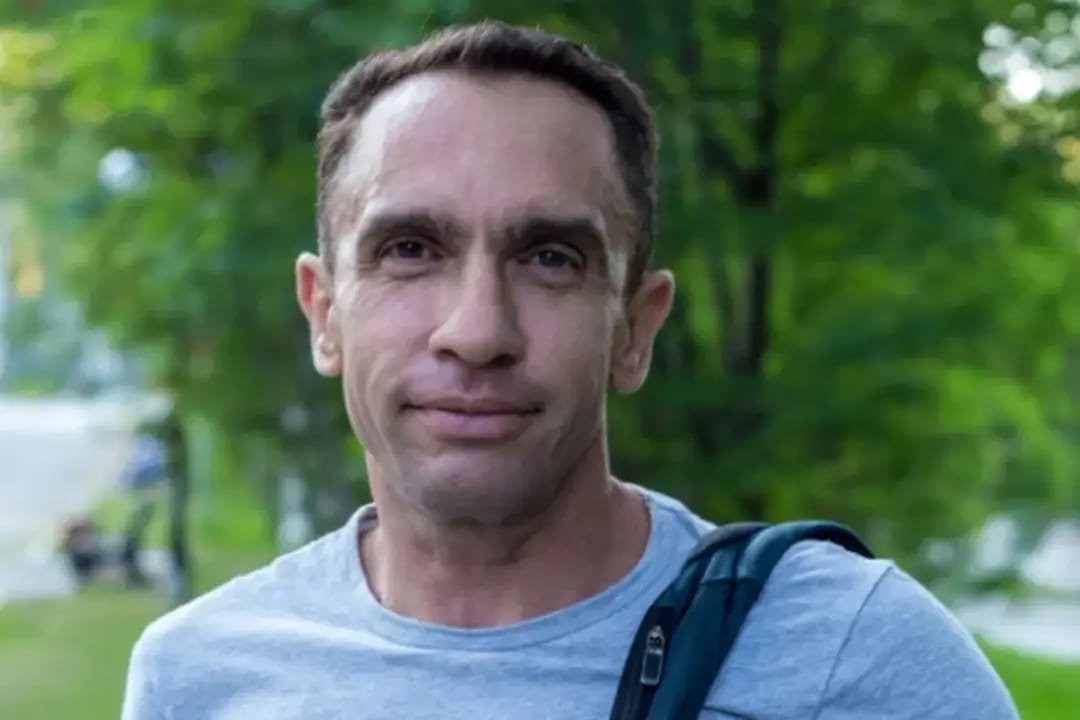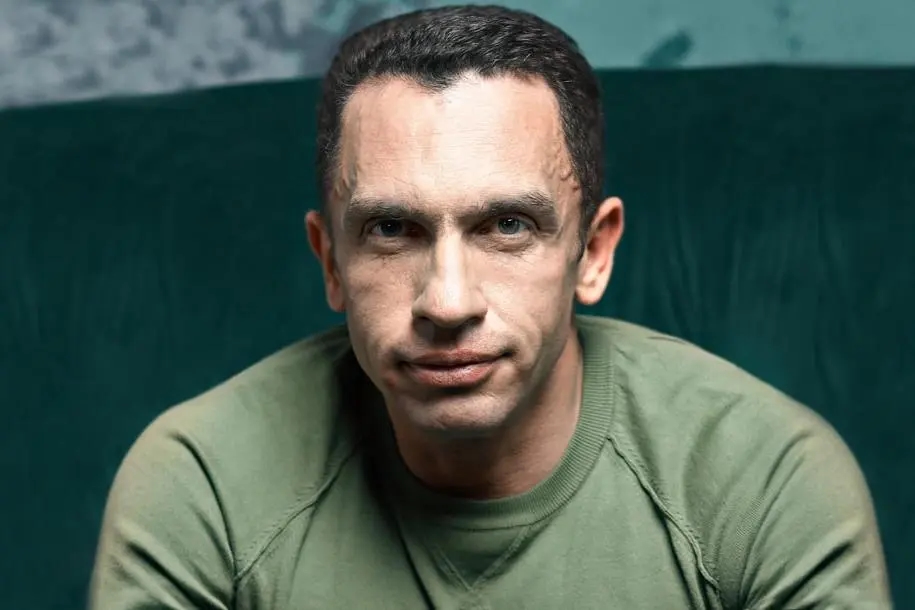
Political scientist Alexander Kynev, who is being held at Moscow’s Pretrial Detention Center No. 4 (known as “Medved”) is refusing to eat, as the injuries he sustained during his arrest prevent him from using the toilet in his new cell, Kynev’s lawyer Mikhail Biryukov wrote on Facebook earlier today. Kynev, a highly respected academic and analyst, was detained in Moscow in late September on drug distribution charges. He was beaten during the arrest and suffered a broken leg.
Biryukov described a colleague’s visit to Kynev at the detention center:
“My colleague visited Alexander Kynev today and said: ‘Alexander has been on a hunger strike since the weekend. He was transferred to Cell 213, the largest in Medved, designed for 34 people, but there are 35 detainees there. Instead of a toilet, there is a hole in the floor, and because his leg is in a cast after being broken in two places, he cannot use it. So he is not eating.’ We have taken every possible step to have him transferred today to conditions appropriate for his medical condition.”
As The Insider previously reported, Kynev was detained in Moscow on Sept. 25. He is accused of the illegal production, sale, or distribution of narcotics on a large scale under Article 228.1, Part 4, Clause “g” of Russia’s Criminal Code. The charge carries a prison sentence of 10 to 20 years.
On Oct. 22, Kynev personally told the Moscow City Court that he had suffered the injuries during his arrest. He said the officers did not identify themselves and that the force they used caused a serious double fracture of his right leg, along with multiple bruises. Kynev said he remembered little of what happened after he was forced to the floor. He also complained that he was not receiving necessary medical care and was having difficulty moving around the detention center.
Also on Oct. 22, the Moscow branch of Russia’s Federal Penitentiary Service (FSIN) said it had found no violations of Kynev’s rights. The legal rights project Slovo Zashchite (lit. “Word to the Defense”) reported the finding after publishing FSIN’s response to an appeal by urbanist Mikhail Popov, who had asked the authorities to investigate reports that Kynev was beaten. In its Oct. 22 statement, FSIN said Kynev’s detention conditions complied with Russian law and that it had found no threat to his life or health.
The agency also said it had found no violations of Kynev’s rights or treatment degrading to his human dignity. The published response, however, said nothing about the circumstances of his arrest, the incident during which Kynev says he was injured. Instead, the review concerned his detention at Pretrial Detention Center No. 1 (nicknamed “Matrosskaya Tishina”), even though on Oct. 14 he had already been transferred to another facility, Pretrial Detention Center No. 4 (SIZO-4 “Medved”).
Alexander Kynev is a political scientist who specializes in the structure of political power in Russia’s regions and analyzes election results at both the regional and federal levels. In February, he was added to Russia’s register of “foreign agents,” a politically charged designation that imposes extensive reporting requirements and restrictions and has been widely used against journalists, activists, researchers, and other critics of the Putin regime.
The Nobel Peace Prize-winning human rights organization Memorial has recognized Kynev as a political prisoner.