Russia has fallen from third to fourth place among the world’s largest exporters of non-coking coal, according to data from analytics firm BigMint. From January through September 2026, Russian exports in the category fell by 18.6% to 42.5 million metric tons, the steepest decline among large suppliers.
Russia ceded third place to South Africa, which increased shipments by 8% to 52.1 million metric tons. Based on BigMint’s published figures, The Insider calculated that Russian shipments fell by about 9.7 million metric tons from the same period in 2025.
Overall, global trade in non-coking coal declined by 3.2% to 602.5 million metric tons, a drop of about 19.9 million metric tons. That means the decline in Russian exports accounted for roughly 49% of the overall contraction in global trade in the category as tracked by BigMint. Russia’s share of that market fell from about 8.4% to 7.1%.
Indonesia remained the world’s largest exporter despite a 10% decline in shipments that lowered its output to 240.3 million metric tons. Australia ranked second after increasing exports by 2% to 151.2 million metric tons.
Among major suppliers, Mongolia recorded the strongest growth, with exports rising 73% to 24 million metric tons.
The biggest declines in Russian exports were to China and Turkey. Shipments to Turkey fell 32% to 15.7 million metric tons, while exports to China dropped 26% to 15.1 million metric tons.
India was the only major destination in where Russian companies managed to increase sales, rising by 63% to 9.6 million metric tons and surpassing the 7.4 million metric tons Russia shipped to India during all of 2025.
Analysts interviewed by the Kremlin-aligned newspaper Kommersant attributed the decline in Russian exports to weaker demand for power-station coal in Turkey, high fuel inventories in China, and growing competition from Mongolia. Russian suppliers also face additional pressure from the cost of rail transportation, shipping, and vessel insurance. Companies were able to increase sales in India by offering discounts, analysts said, although higher logistics costs could make Russian coal less attractive in that market as well.
BigMint’s figures should not, however, be treated as a measure of Russia’s entire coal export sector. According to data from Kpler, Russian seaborne exports of all types of coal rose 7.25% from January through September, reaching 135.86 million metric tons.
The two estimates cover different product categories and use different methodologies.
Nearly two-thirds of Russian coal companies are unprofitable
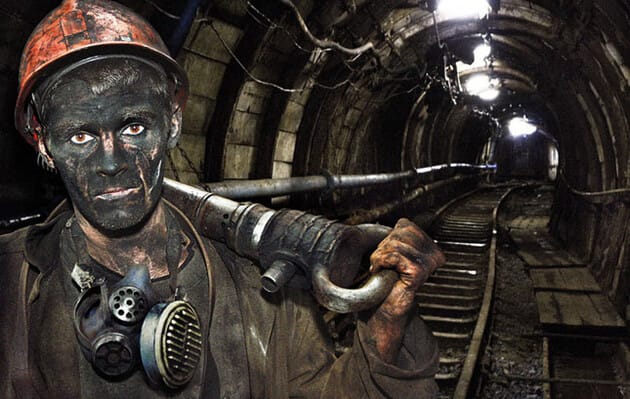
The deterioration in Russian exporters’ position comes amid a prolonged crisis in the country’s coal industry. According to official data from Russia’s state statistics agency Rosstat, coal-mining companies posted a combined net loss of 178.2 billion rubles ($2.2 billion) from January through July 2026. Profitable companies earned 45 billion rubles ($556.9 million), while total losses among the rest reached 223.2 billion rubles ($2.8 billion). Overall, 64.5% of companies in the sector were unprofitable.
The situation is particularly severe in Kuzbass, Russia’s largest coal-producing region. According to data from the regional Coal Industry Ministry, 20 of the region’s 93 underground mines and open-pit operations were not operating as of August 2026. Employment in the coal sector fell from 103,000 to 97,300 workers over the course of a year.
Russia’s Energy Ministry, however, says the industry has passed the worst stage of the crisis. Deputy Energy Minister Dmitry Islamov said recently that prices had begun to recover, although the situation remained difficult. The ministry estimates that the industry’s losses for all of 2026 will be as high as 310 billion rubles ($3.8 billion).
As The Insider previously reported, among suppliers to the Chinese market Russia fell from second to third after being displaced by Mongolia. In August, Mongolia exported 9.81 million metric tons of coal to China, compared with Russia’s 9.2 million metric tons.
Experts cited Chinese import duties of 3% to 6% on Russian coal — tariffs from which Russia’s main competitors are exempt — as well as rising transportation costs as being among the reasons for Russia’s declining position.
In June, The Insider also reported on a Green Think Tank study that concluded redirecting exports to China had failed to compensate Russian coal companies for the loss of the European market. The initiative’s researchers estimated that the industry’s combined financial losses during the years of the full-scale war exceeded 2.5 trillion rubles ($30.9 billion). For Russian coal companies, maintaining export volumes has become increasingly dependent on government benefits, tax deferrals, and state support for rail transportation, rather than on actual market mechanisms.