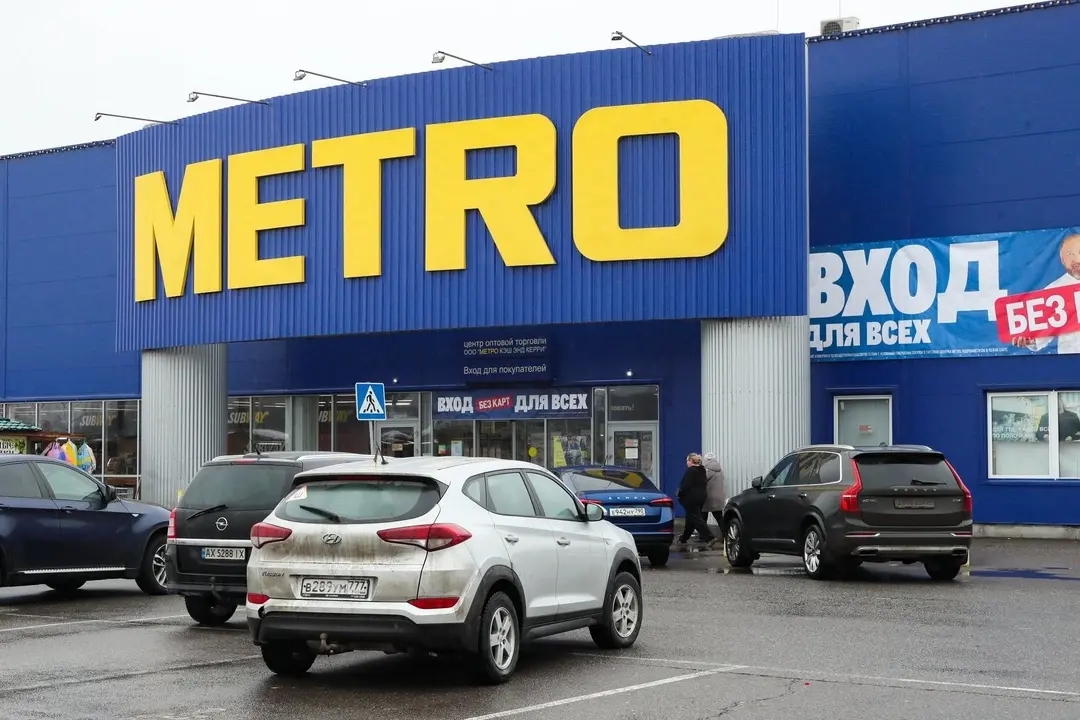
A store belonging to German retailer Metro provided free food to Russian service members in the city of Samara on multiple occasions in 2022, according to the official journal of the Samara Region’s Public Chamber. At the same time, Metro’s Ukrainian subsidiary was providing aid to Ukraine’s armed forces, donating more than 1,000 metric tons of food and other goods between February 2022 and September 2023, The Insider found.
The reference to the Samara Metro store appears in the Bulletin of the Public Chamber of the Samara Region for the second half of 2022. The article described aid collections for Russian service members as part of a campaign titled “We Don’t Abandon Our Own,” a pro-war slogan widely used by Russian authorities and supporters of the invasion. The independent exiled Russian news outlet Echo first reported on the publication.
On Nov. 16, 2022, participants in the campaign were collecting their eighth shipment of what they called “public” humanitarian aid. Galina Nikolayeva, a member of the regional Public Chamber, said it included warm blankets and plastic sheeting for covering dugouts. She also thanked “the METRO store in Samara, which has already provided instant soups and noodles free of charge more than once.” The publication did not specify which of Metro’s two wholesale stores in Samara took part in the campaign.
The context of the article indicates that the aid was intended for Russian service members. The Public Chamber said that in the fall, local officials worked together with the regional branch of the Kremlin-backed All-Russia People’s Front movement to collect several truckloads of supplies “for the needs of the 2nd Guards Combined Arms Army.” The seventh such shipment was sent on Nov. 1 “to the front line for fighters of the 2nd Guards Combined Arms Army.” The publication does not, however, establish that the Nov. 16 shipment containing Metro products was intended specifically for that military formation.
At the time the food was donated, Russia’s Metro Cash & Carry LLC was wholly owned by the German group. Metro AG’s annual report for the 2021-2022 fiscal year listed the Russian company among the group’s entities, with 100% ownership. The Samara Public Chamber publication does not make clear who at Metro authorized the free transfer of goods or whether the assistance was coordinated with the central management of the Russian subsidiary or Metro AG. Company representatives did not publicly comment. The publication also did not specify how the company had participated in earlier aid drives.
Metro condemned Russia’s invasion while its Ukrainian unit gave more than 1,000 tons of goods to the AFU
After Russia launched its full-scale invasion of Ukraine in February 2022, Metro AG publicly condemned the attack while nevertheless maintaining its Russian business, citing responsibility for around 10,000 employees in addition to its customers. In February 2023, group CEO Steffen Greubel said Metro’s position had not changed and that the group condemned Russia’s war against Ukraine “without any ifs or buts.” He also said Metro employees in Ukraine were supplying food to civilians and the military.
On its official website, Metro says its Ukrainian subsidiary made daily donations to military units, hospitals, and nonprofit organizations. From Feb. 24, 2022, through Sept. 30, 2023, it donated 833 metric tons of food, 128 metric tons of hygiene and household goods, and 77 metric tons of other products to the Armed Forces of Ukraine (AFU). In total, Metro Ukraine provided 1,038 metric tons of goods to the military.
Major Metro customer said it sent food to Luhansk
The Insider identified another episode linking purchases from Metro’s Russian business to work in Russian-occupied Ukrainian territory. It is described in records from a tax dispute involving RBK StroyInvest LLC that was considered by arbitration courts in Moscow in 2026.
A ruling by the Ninth Arbitration Court of Appeal shows that in 2021 and 2022, RBK StroyInvest purchased goods from Metro Cash & Carry LLC. According to the ruling, Metro itself provided the tax authorities with delivery documents during an audit. Those documents showed that the company sold instant coffee, tea, chips, chewing gum, toffee, chocolate candies, Fruittella, and Mentos to RBK StroyInvest.
The buyer told the court that food purchased from Metro and Russian retailer Lenta was used to feed employees working in Russian-occupied Luhansk. RBK StroyInvest also said it had carried out reconstruction work, built protective and fortification structures, and reinforced trenches in the so-called Luhansk People’s Republic “as part of the special military operation,” the Kremlin’s official term for the war in Ukraine.
The company submitted transportation contracts from Moscow dated between August and October 2022 and said food was shipped to Luhansk along with equipment, materials, and workers. Court records indicate that in 2021 and 2022, RBK StroyInvest claimed 34.5 million rubles in value-added tax ($415,500) related to transactions with Metro, with most of the amount tied to 2022. The court, however, found that it had not been proven the food was actually transported to Luhansk, rather than to a different destination.
Ukraine put Metro on its list of “international sponsors of war” in 2023
In February 2023, Ukraine’s National Agency on Corruption Prevention added Metro Cash & Carry to what was then its list of “international sponsors of war.” The agency said the main reason was the company’s decision to continue doing business in Russia after the invasion.
Putin placed Metro’s Russian business under “temporary management”
On Sept. 28, 2026, Vladimir Putin placed Metro’s Russian assets under the temporary management of JSC UK Torg RUS. The assets included Metro Cash & Carry LLC, Metro Warehouse Noginsk LLC, and Retail Property 5 LLC.
Following the decree, the German group said it formally remained the owner of the Russian business but had lost operational control over it. UK Torg RUS had been registered just 20 days before Putin issued the decree.
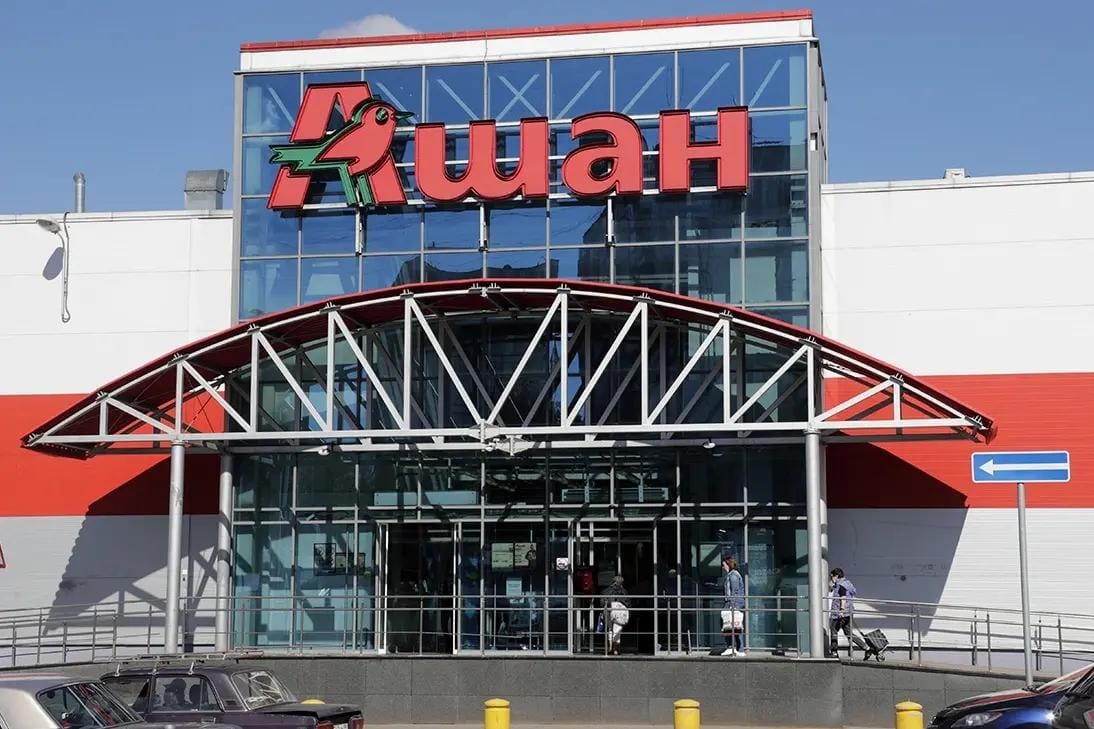
The Insider and Le Monde previously investigated a similar case involving a different foreign retailer that remained in Russia. After the full-scale invasion began, the Russian operations of French supermarket chain Auchan supplied goods to Russian troops in occupied Ukrainian territories under the guise of “humanitarian aid.” The shipments included both goods taken from the chain’s warehouses and products collected by volunteers directly at Auchan stores in various Russian regions.