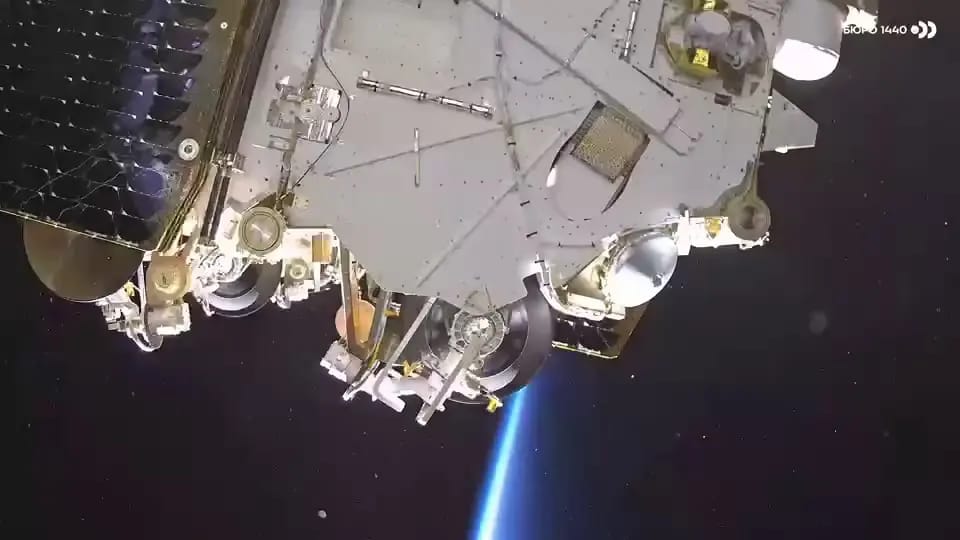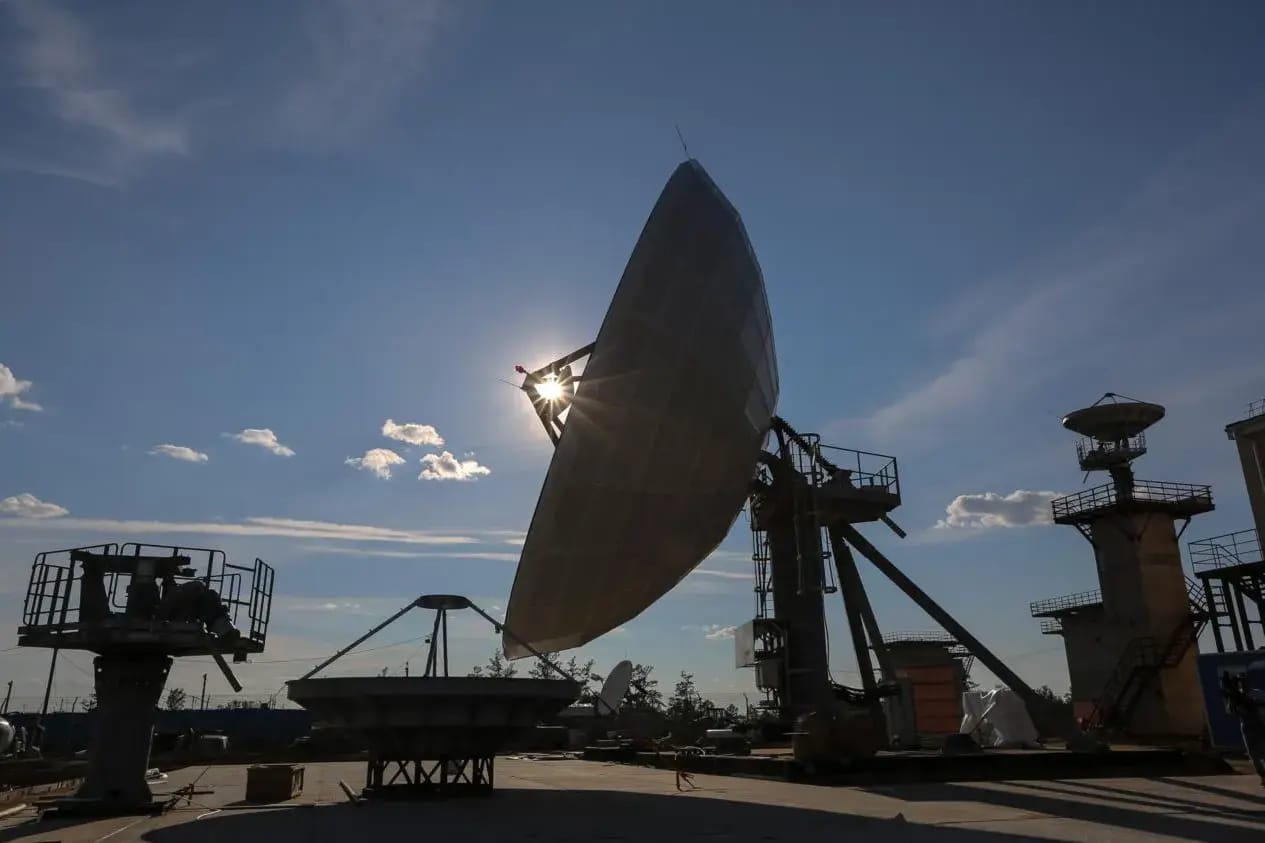
None of the 16 low-Earth orbit communications satellites that Russia launched on July 19 as part of its Rassvet-3 series have reached their planned orbital altitude, according to a report by Business Insider citing data from the U.S. Space Force.
Under the plan by Russian company Bureau 1440, responsible for developing the Rassvet constellation as an alternative to SpaceX’s Starlink, the satellites were supposed to reach an orbit of about 800 kilometers. As of the end of August, however, they were at altitudes of 300 to 400 kilometers. At those heights, atmospheric drag significantly shortens a satellite’s service life, and without additional maneuvers the spacecraft gradually deorbit. Analysts at the Institute for the Study of War wrote that the failure of all 16 satellites to reach their target altitude “suggests Russia may have been unprepared to accelerate constellation deployment at this pace and will likely face additional delays.”
Rocket launch analyst Georgy Trishkin described the current situation to The Insider:
“The spacecraft from two launches have indeed not yet reached their working orbit of 800 kilometers, but out of 32 satellites, only three are inoperable. Bureau 1440 has not provided any clear communication on the matter, but it can be assumed that moving from the parking orbit to the current orbit is a temporary measure — most likely for a period of testing key components. The satellites themselves are functioning and communicating with ground terminals, which are being actively tested. We should be prepared for a scenario in which, after some time, their orbit begins rising again. But because of the way electrostatic engines work — more precisely, because of their low thrust — raising the orbit takes weeks and months.
There are many reasons why such a scenario may have been chosen, the most obvious being testing. This is the company’s first serially produced constellation, and as with any other complex spacecraft, the firm cannot begin full operations immediately. The intermediate orbit is high enough that the satellites will not quickly deorbit from it. That said, it could also point to problems, for example with the company’s own krypton-based propulsion system (though it is unlikely that it failed on all the satellites at once), or to insufficient power generation while all components are being tested. In short, there are many possible explanations, but it is far too early to talk about failure or mass breakdowns.”
Notably, the first batch of Bureau 1440 satellites, which were launched in March, also failed to settle at the target altitude of 800 kilometers, though 12 of the 16 spacecraft did reach an orbit of about 550 kilometers. Since the start of the year, Bureau 1440 has launched 32 satellites.
According to Ukrainian estimates, the Russian military would need 200 to 250 operational satellites in order to ensure stable communications. SpaceX, by comparison, currently has more than 11,000 Starlink satellites in orbit. Building its own constellation became a priority for the Kremlin after SpaceX stopped providing Starlink services to the Russian military on Feb. 1.