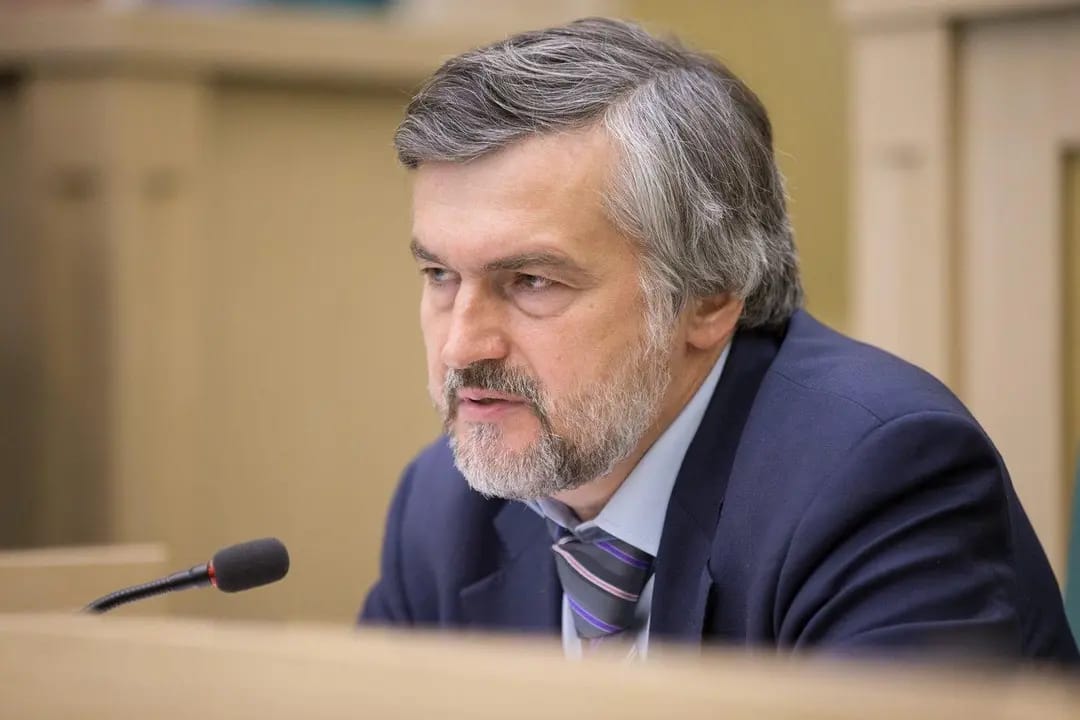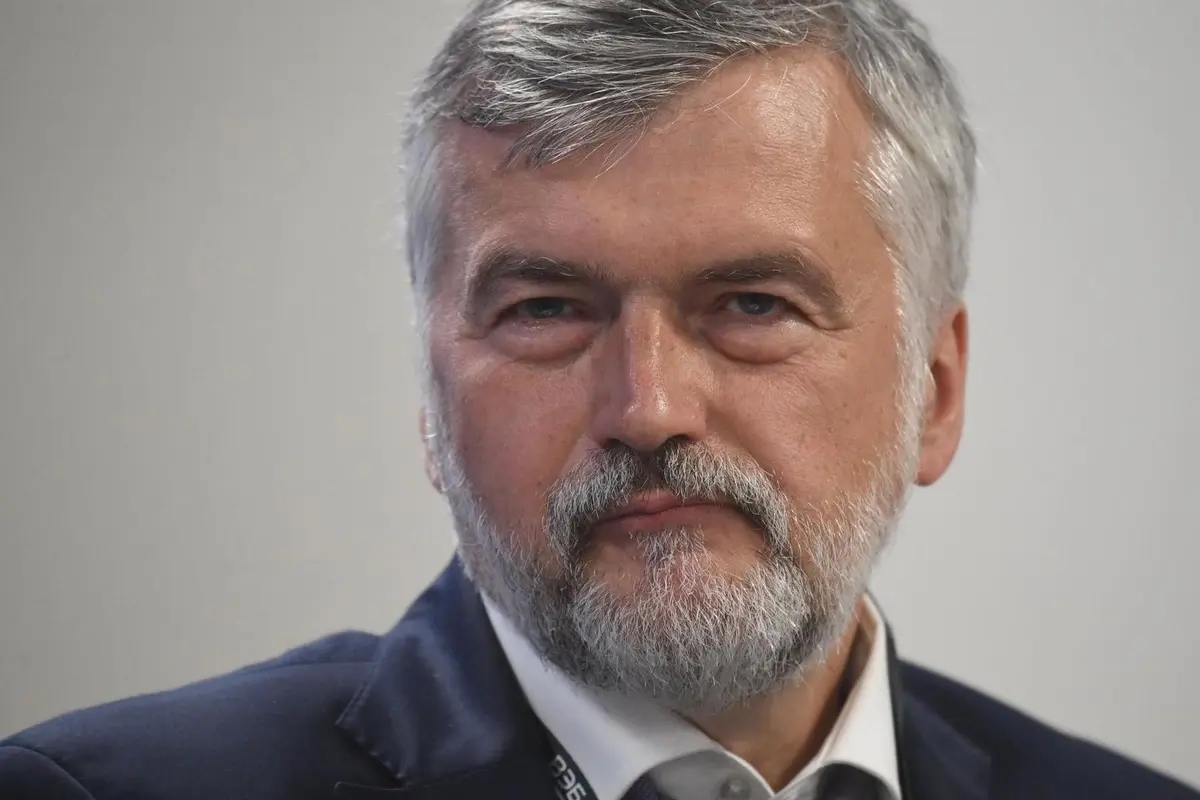
On Aug. 16, the Russian state development corporation VEB.RF dismissed its chief economist, Andrey Klepach. Two days earlier, The Moscow Times had published excerpts from a report that Klepach had presented in May at a meeting of the Nikitsky Club. The full document, titled “The Russian Economy and Geopolitical Challenges,” was published on the club’s website. The Insider reviewed Klepach’s presentation and highlighted its key points.
Unprecedented challenges
According to Klepach, in recent years the world has faced challenges that are “unprecedented for the entire postwar period.”
- The model of globalization that emerged in the 1980s and 1990s is reaching its limits.
- A redistribution of spheres of influence and the formation of new alliances have begun.
- National security and national interests are beginning to take precedence over the goals of economic and sustainable development.
- And Western sanctions imposed over the invasion of Ukraine have severed the economic ties between Russia and the European Union.
“The question arises: what place will we [Russia] occupy in this world, both now and going forward? Will we be, as we say – and this is a priority of our policy – a sovereign regional or even global power, or will we turn into a country with a non-sovereign economy overwhelmingly dependent on China?
The structure of Russian exports and imports already points to an extremely high degree of dependence on China, in many respects greater than our previous dependence on the European Union. The only question is how far we will comply with China’s various regulatory requirements and allow Chinese businesses to take control of different sectors of the Russian economy. Or will we once again become a dependent state under the United States and the European Union if we reach an agreement? Sooner or later, one way or another, we will reach an agreement – the only question is at what cost...
All military confrontations eventually end in peace, good or bad. If our policy was previously focused on joining advanced Western civilization, integrating into the European economy and Western institutions, and forming alliances with international companies, primarily European and American, then under conditions of global confrontation, we will not return to the model of European integration, not even after the end of the 'special military operation.'”
The impact of the war on the Russian economy
- Military spending has fueled GDP growth and contributed to a substantial increase in real household incomes. The share of military pay and other military-related payments in household incomes rose from 2% to 7–8% of total household income.
“However, the economic slowdown and mounting budget problems have also slowed the growth of household incomes. We estimate that real disposable incomes will grow by 0.6% this year, while the decline in inequality has come to a halt.
Although real wage growth has slowed, wages are still pushing incomes upward (with the exception of public-sector wages, which are lagging behind), as are high interest rates on bank deposits. The main factors holding incomes back are low pensions, which are increasingly falling behind wages, and incomes from small and medium-sized businesses (although we will only have a complete picture of those a year from now).”
- Among civilian industries, only pharmaceuticals and fertilizer production grew in 2025, but their growth also slowed toward the end of the year, in part because of Ukrainian strikes on chemical plants.
“This resulted in a contraction in the first quarter [of 2026]. The Institute for National Economic Forecasting and the VEB Institute had made forecasts and warned the government that we would see a contraction — not just a slowdown in growth. This is the result of uncoordinated monetary, fiscal, and industrial policies... In our estimation, investment will decline by 2.5% in real terms in 2026, and there may be no growth in 2027 either.
Even the food industry contracted, mainly because of beverages, both as a result of higher taxes and tighter regulation and fees...If the ‘special military operation’ continues, along with anti-Russian sanctions and a sufficiently tight monetary policy, followed in the longer term by a tight fiscal policy, the Russian economy is unlikely to achieve annual growth rates above 2–2.5%, meaning it would lag behind the growth of the global economy. Given the risk of a new wave of tighter sanctions and mounting losses from Ukrainian strikes on industrial facilities and transport infrastructure, GDP growth in 2027 will not exceed 1–1.5%.
Our monetary policy is unique: we are at war, spending a huge amount of money on defense while squeezing the economy, especially the civilian sector, through high borrowing costs – there are no other historical examples of such a policy in wartime.”
One of the most pressing issues, both in the past and today, is creating an effective system of governance and building a responsible elite.
“In addition to the traditional disputes and conflicts between monetary, fiscal, and industrial policies and growth policy, there is now an intensified search for a new balance between nationalization and privatization, as well as for a new model of strategic governance. However, the current privatization process looks more like taking assets away from ‘bad’ people and transferring them, often at a low price, to ‘good’ people. Ownership is being redistributed, but this is driven less by the priority of strengthening the integrity of the Russian economy and improving its efficiency than by shifts in the balance of private interests under conditions of anti-Russian sanctions.”
Another problem is the growing debt burden, primarily arrears on government contracts.
“We are seeing a fairly substantial increase in non-payments, and the statistics do not show the full picture because the Defense Ministry’s arrears are not included. Something needs to be done about this: either these obligations, particularly the Defense Ministry’s debts, should be converted into government debt, or they should be offset by an easing of monetary policy. Non-payments throughout the contracting chain are now becoming a serious barrier to economic growth.”
The Middle East crisis and oil
- The war in the Middle East and the blockade of the Strait of Hormuz will bring 2–2.5 trillion rubles in additional revenue to the Russian budget this year. However, the positive effect on the real economy will be limited.
- Losses from Ukrainian strikes on oil and gas facilities, ports, and other infrastructure have already become a significant macroeconomic constraint on the growth of the Russian economy.
“Instead of increasing oil production and exports, we appear to be entering a period of decline. Production will not exceed 500–505 million metric tons. This will, of course, have a significant impact on industrial and GDP growth. In addition, gas infrastructure and the energy sector are coming under attack. Plants producing nitrogen fertilizers have already suffered significant damage, while production and exports have declined, meaning that we cannot take advantage of favorable conditions on global markets. We are increasing exports of potash fertilizers, while nitrogen fertilizer production is declining.
The peak in oil production will be reached sometime around the middle of this year. In the second half of 2026, and especially in 2027, the price of oil will fall significantly.”
The agricultural crisis
- Global conflicts have driven up food prices, which benefits Russia as a major exporter of wheat and oilseeds.
- However, limited Russian shipping infrastructure will likely prevent the country from increasing its exports.
“The profitability and incomes of our farmers have been declining for several years. Whereas profitability in grain production used to average around 40%, it is now 4–5%. Some regions, including in Siberia, are simply operating at a loss. Agriculture has received little investment for about five years, and there will most likely be no investment this year either – which means a decline in spending on machinery, agricultural facilities, and everything else. Thus far, this reality has not prompted any support measures.”
The strengthening of the ruble helped slow price growth, including food prices, at the end of 2025 and this year.
“It is important to understand that this happened against the backdrop of problems our farmers are having selling their produce. In addition, fruit and vegetable prices usually rise sharply in late winter and in the fall, but this time they did not. And this was not because of an excess domestic supply of food, but because we opened up the market to Chinese producers. For the first time in recent years, food and agricultural imports exceeded agricultural exports. All of this put downward pressure on prices, which, of course, helped bring inflation down.
The demographic crisis
In recent years, Russia’s population has been declining. The death rate has been rising, and the birth rate is falling.
“Given current trends, the population is shrinking and will continue to shrink – primarily in European Russia, the Volga region, central Siberia, and the Far East. The Caucasus, as well as some regions of eastern Siberia, are seeing population growth.
It is not possible to reverse these trends simply by encouraging higher birth rates. As has already been acknowledged in government documents, we need to increase the age at which people remain actively employed, as well as find a balanced approach to migration.
In the last population census [in 2020–2021], we ‘found’ 1.5 million people who were not accounted for in any of our estimates based on birth rates, death rates, and migration. Apparently, we need to conduct the next census – it is scheduled for 2030, unless it is postponed due to a lack of funding – and perhaps we will find another 1–1.5 million people. In addition, around 5.5 million people live in Russia’s new regions – the DNR, LNR, and the Zaporizhzhia and Kherson regions (11 million lived there before the ‘special military operation’). I think that at some point we will start counting them as part of Russia’s population.”
According to Central Bank surveys, more than 30% of Russia’s residents have enough money only for food — not for clothing or other needs.
“A huge proportion of the population falls into the category of low-income people. If we take those with incomes between one and three subsistence minimums, they account for almost 40%.
Having a child when the woman is not working (or stops working) automatically means that they fall into poverty. Forty percent of the poor in Russia are children, despite all the benefits and maternity capital.”
“We are losing out not only to the U.S. and China, but also to Ukraine”
“Whatever we do with our economy, it will survive... The problem is rather that we are falling behind. We are losing the technological and economic competition in the world. And we are losing not only to China and the U.S. — in some respects, we are losing to Ukraine as well.
Ukraine’s economy has obviously been destroyed to some extent, and there has been a demographic catastrophe. But the Ukrainian economy, despite everything, is surviving. Of course, there is enormous financial assistance; without it, everything would collapse. But with that level of assistance, their military spending and their own expenditures amount to almost 50% of our budget. And if you take all the assistance as a whole, it is several times greater than our capital outflow.
We will not win the competition in this war of attrition. We have this illusion that everything there will collapse. It hasn’t, and it won’t. Our costs are mounting. According to public opinion surveys, the quality of healthcare is deteriorating. Our scientific and technological sector is highly uneven. In some areas, we have achieved results and made breakthroughs, but overall, in my view, we are losing the competition, not winning it. Inequality is growing. After declining substantially in 2023–2024, it has now begun to move in the opposite direction.
In my view, the economy will withstand the pressure, but a social crisis may emerge – and when it does, no one will be expecting it. But no one expected the February Revolution either, let me remind you. Lenin wrote in December 1916 that “we will not live to see it,” but within a few months, he did. As for the situation in the Soviet Union in 1991, we had been steadily moving toward it for a long time, and everyone understood that we were heading toward a crisis. But there was nothing fatally inevitable about the Soviet Union’s collapse.
I believe Russia will not fall apart, but I am almost certain that we will face a social crisis. We will not collapse economically, but we will continue to lag further behind the rest of the world, with all the consequences that entails.”