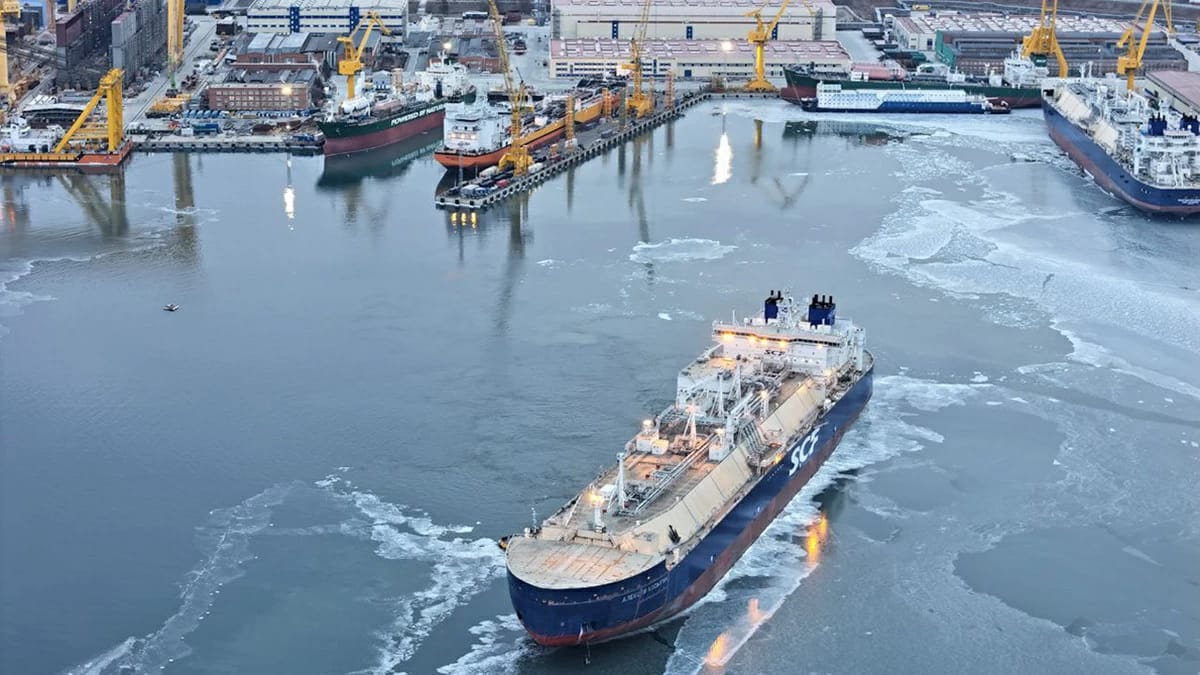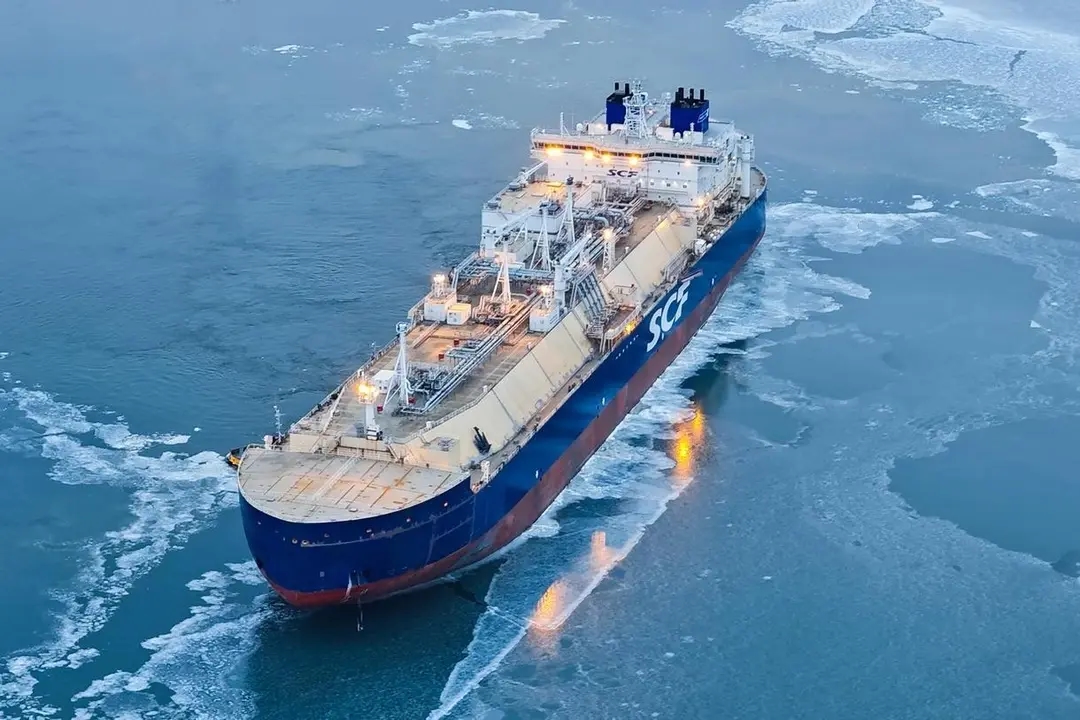
Russia has put its second domestically built Arc7 ice-class LNG carrier into operation. The Konstantin Posiet (IMO: 9904704) left Ussuri Bay in Russia’s Primorsky Krai and is heading to the Arctic, according to a Reuters report citing LSEG data. The vessel is expected to arrive at an unnamed destination on Aug. 30.
The tanker was built at the Zvezda Shipbuilding Complex in Bolshoy Kamen, a town in the south of Primorsky Krai, to serve the Arctic LNG 2 project, which is under U.S. sanctions.
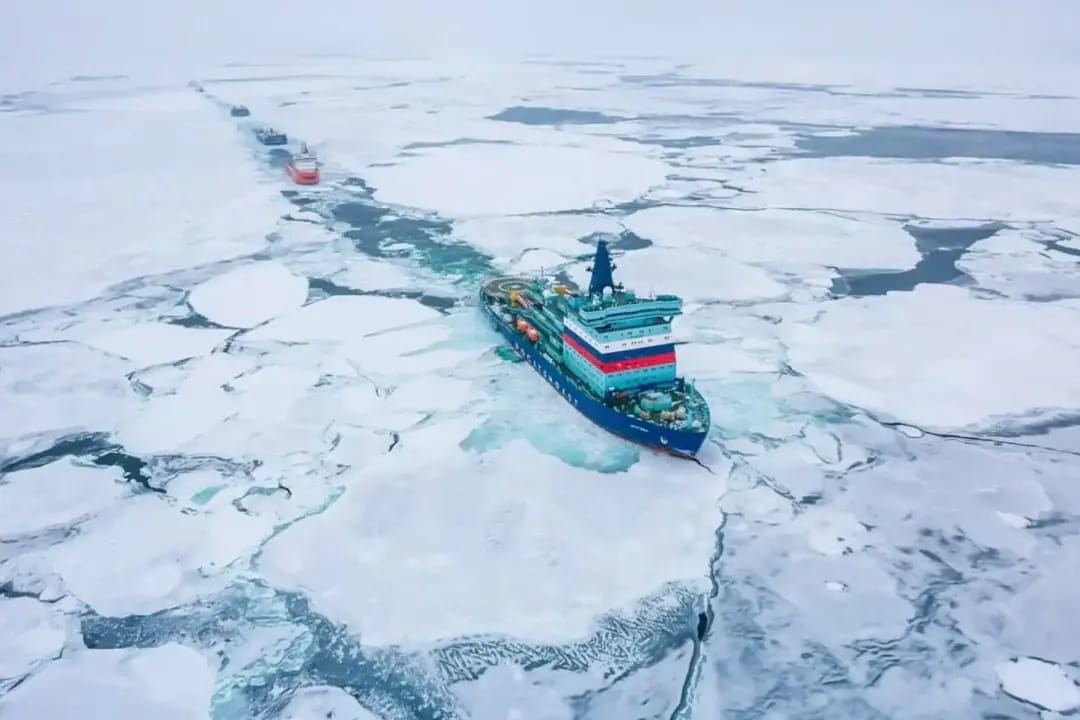
Zvezda delivered the first Arc7 ice-class LNG carrier, the Alexey Kosygin (IMO: 9904546), to the customer in December 2025. Such tankers are capable of breaking through ice up to 2 meters thick. The shipyard had planned to build 15 vessels of this type, but sanctions caused delays. A third tanker working for Arctic LNG 2 is the Merkuriy (IMO: 9326689).
As Anna Orlova, an investigator with Arctida, an NGO specializing in research on the Russian Arctic, previously told The Insider, Arc7-class tankers will allow Novatek, the operator of Arctic LNG 2, to export liquefied natural gas year-round.
“The key difference between Alexey Kosygin and standard LNG carriers lies in its ability to independently navigate ice fields up to 2.1 meters thick. This feature is critically important for operations in the waters of the Kara Sea and the Gulf of Ob during the winter period, which lasts from December to May, when the thickness of first-year ice often exceeds 1.5 meters and pressure ridges block the movement of lower-class vessels.
Until now, the Arctic LNG 2 project had been in a difficult situation: the plant was producing output but could not ship it during the winter months due to the lack of vessels capable of operating in the freezing Ob Bay. The new tanker makes it possible to carry out two to three shipments per month even in the harshest cold, ensuring exports of up to 250,000 metric tons of LNG per month.
This will help prevent inventory buildup. The LNG production process is continuous: if storage tanks are full and no tanker is available for loading, production has to be halted. A full shutdown and subsequent restart of liquefaction trains in Arctic conditions is a risky and costly operation. An Arc7-class vessel will ensure the minimum required shipping cadence and help maintain continuity of the production cycle.”