Russian merchant ships passing through the Black Sea have begun using unusual methods to protect themselves from Ukrainian aerial and naval drones — from nets and metal structures to camouflage paint reminiscent of designs used during World War I and World War II.
Tankers with “cope cages”
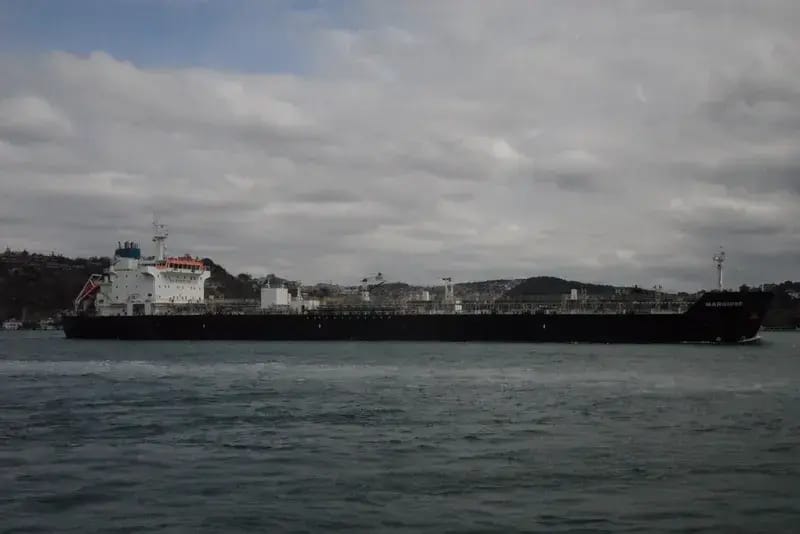
The shipping monitoring service TankerTrackers.com recently reported on the 28-year-old Suezmax tanker Caruzo (IMO: 9137648), which passed through Istanbul with about 1 million barrels of Russian crude oil. The vessel sails under the flag of Sierra Leone. It is under sanctions imposed by the UK, EU, New Zealand, Canada, Switzerland, and Australia, but it has notably avoided any restrictions from the United States. The international NGO Greenpeace also identifies the Caruzo as part of Russia’s “shadow fleet.”
TankerTrackers.com noted that the crew had completely covered the Caruzo’s superstructure with netting, effectively placing themselves inside it. The service said the sailors appeared to be trying to protect themselves from Ukrainian aerial drones.
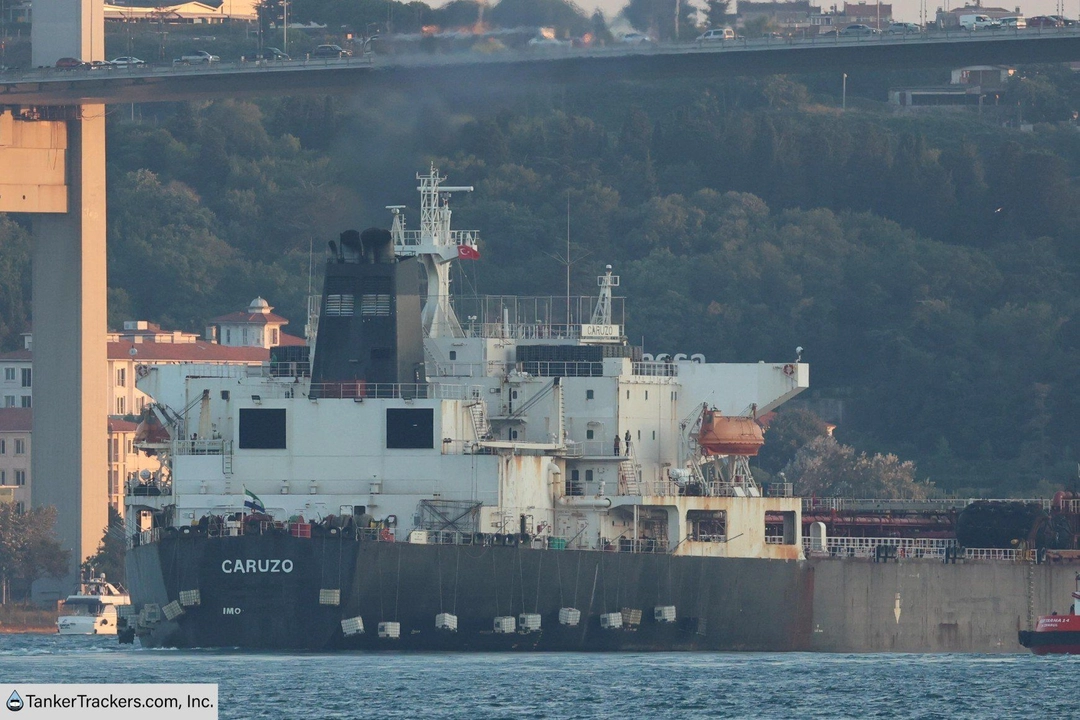
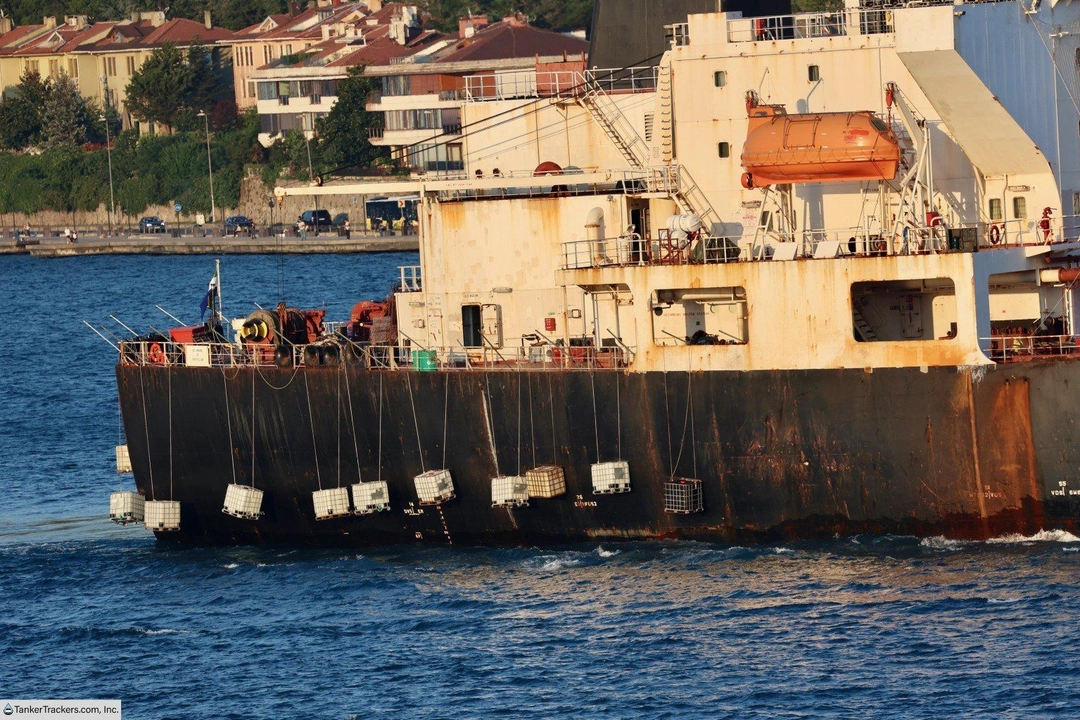
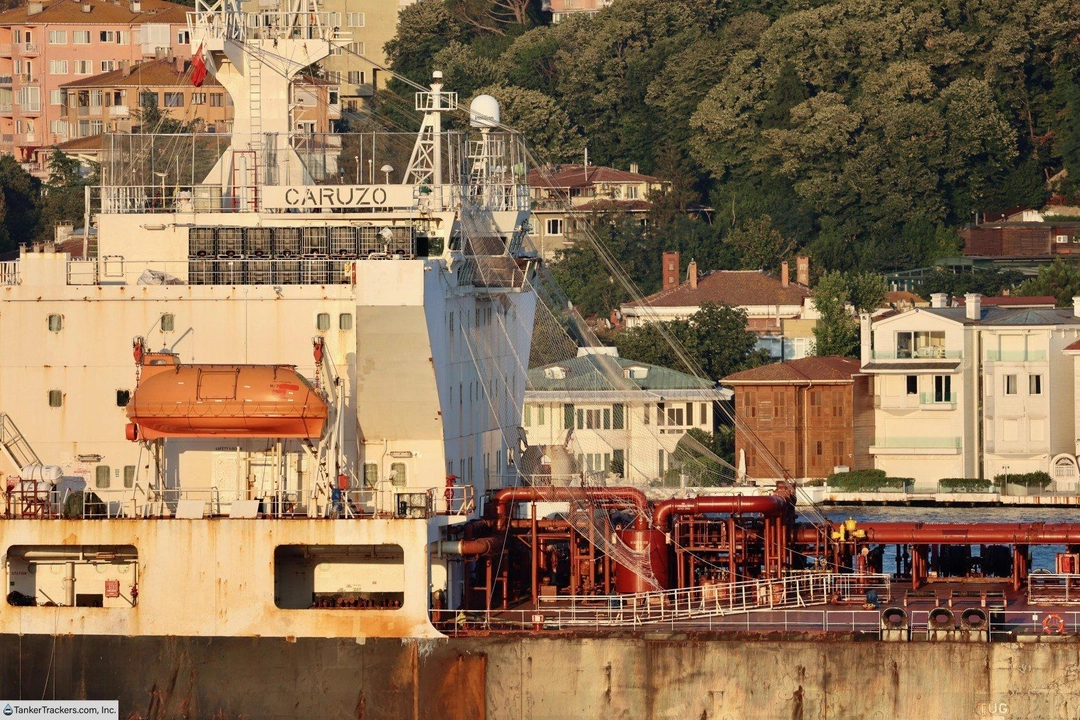
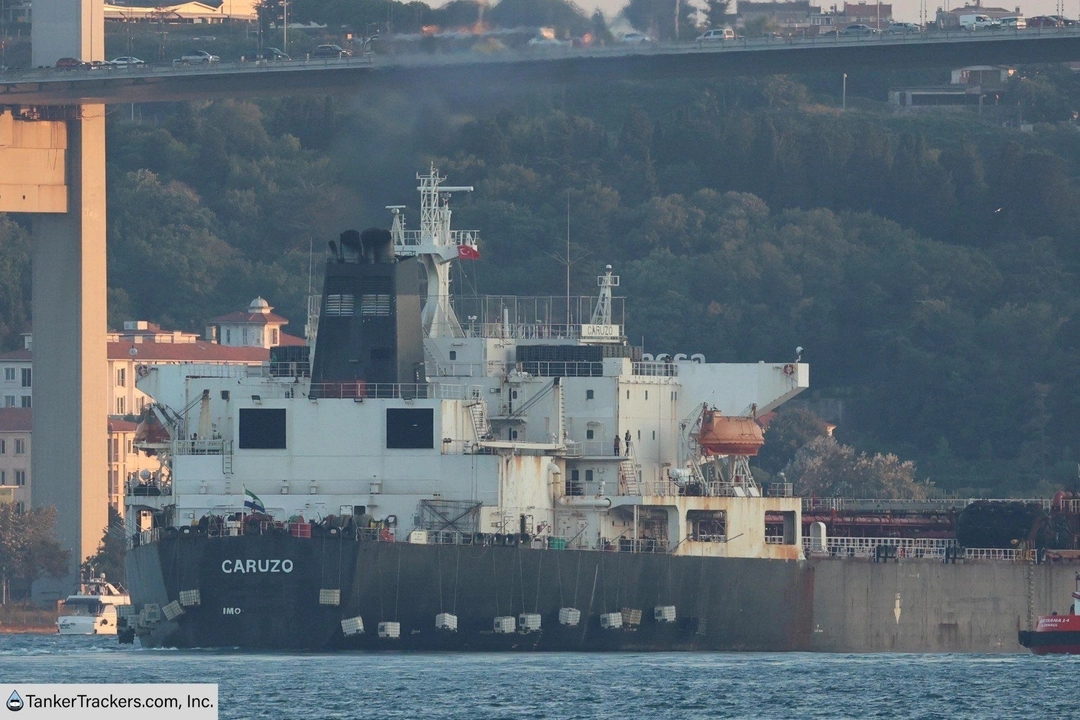
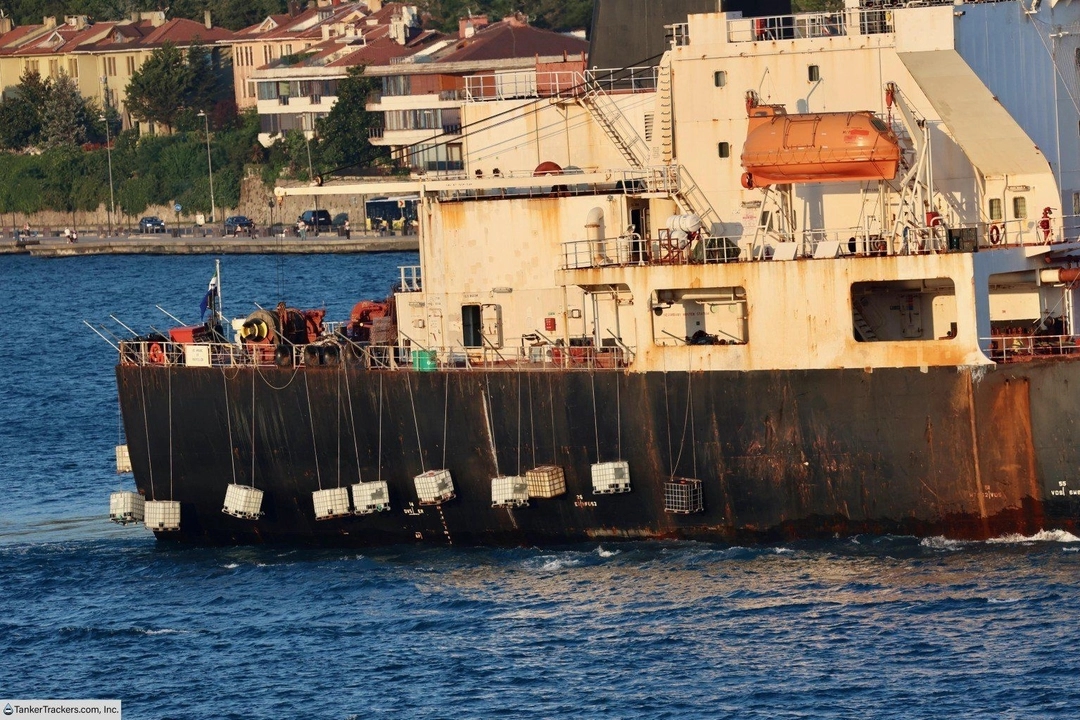
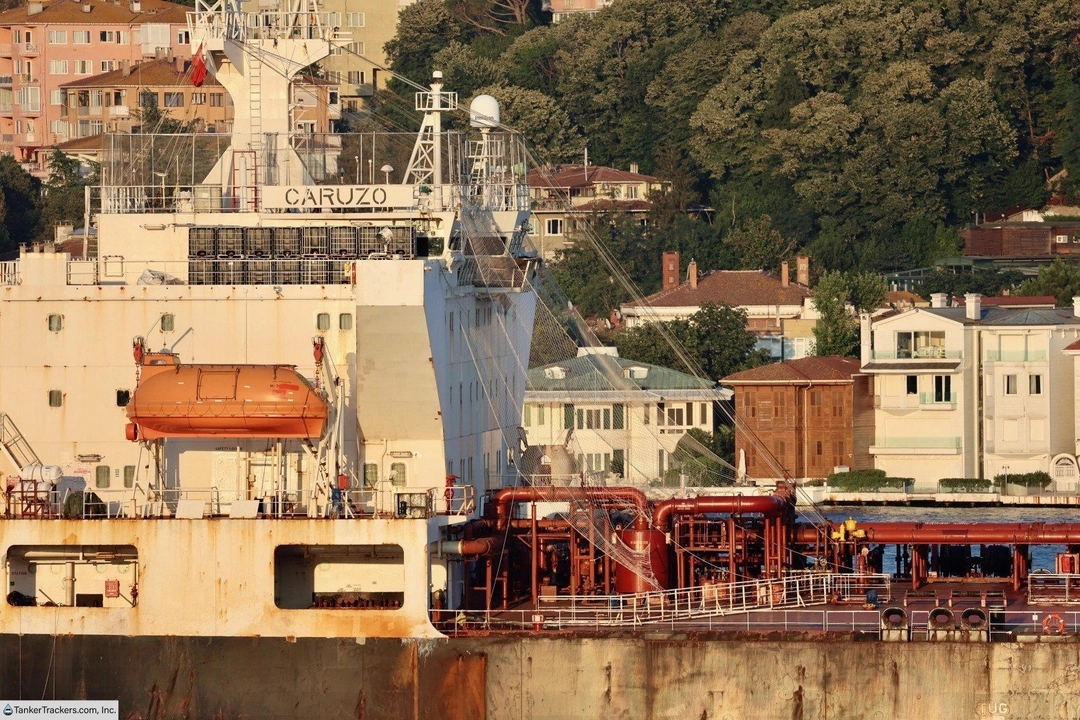
Additional protection is also visible at the tanker’s stern, where metal structures resembling cages hang from both sides. TankerTrackers.com assessed that these were intended to protect the engine room from naval drone attacks.
Judging by data from the vessel tracking platform Starboard Maritime Intelligence, since July 2025 the ship has been turning off its AIS before entering the Black Sea, making it appear for months as if it were “located” in the Bosphorus.
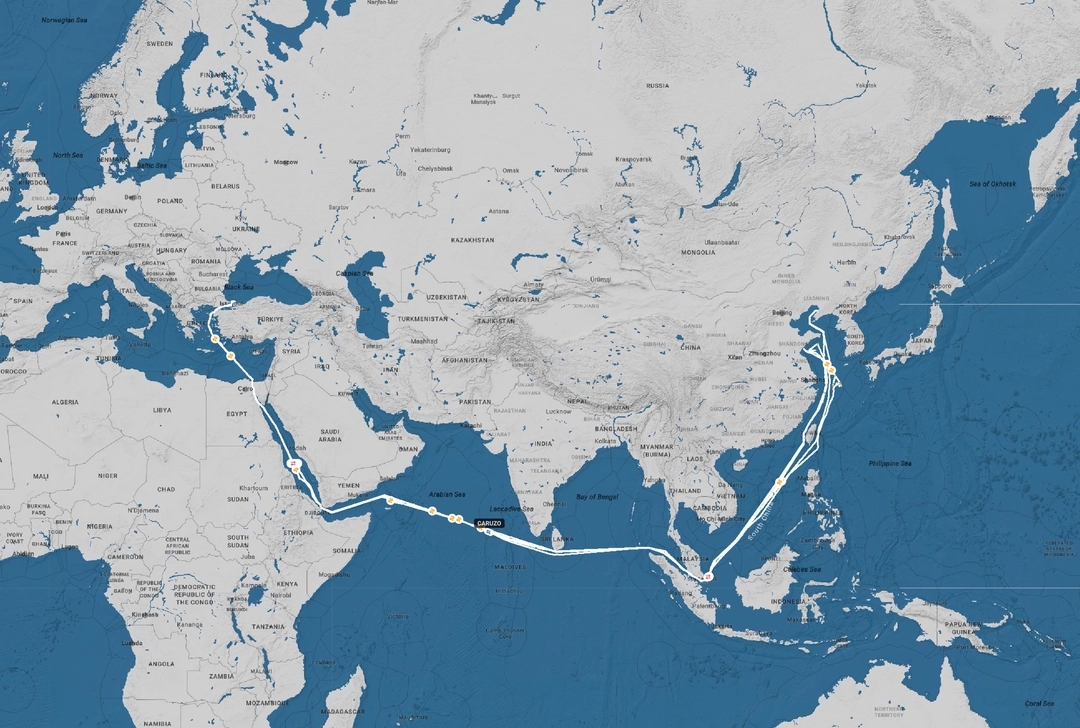
Ukraine’s military intelligence agency (HUR) classifies the Caruzo as a vessel involved in exporting Russian oil and petroleum products in circumvention of the G7 oil embargo and price cap. According to HUR, the tanker has been involved in these shipments since at least October 2023. In January 2024, it took part in a ship-to-ship (STS) oil transfer near the Kerch Strait with sanctioned tankers.
The Caruzo’s routes extend far beyond the Black Sea. The database lists terminals and ports in Turkey, China, India, Malaysia, Morocco, Egypt, and Vietnam, among others. The HUR separately notes that the vessel has called at Russian ports and has been recorded turning off its AIS.
A cargo ship with camouflage
The day before, another unusually protected Russian vessel in Istanbul caught the attention of Murat Fırtına — a Turkish sailor, merchant fleet captain, and author of books about his experience at sea. The Turkish industry outlet HaberDenizde also cited Fırtına’s observations.
On Aug. 10, Fırtına saw the Russian cargo ship Mechta S (IMO: 8419659) in the port of Haydarpaşa and photographed it from a passing ferry.
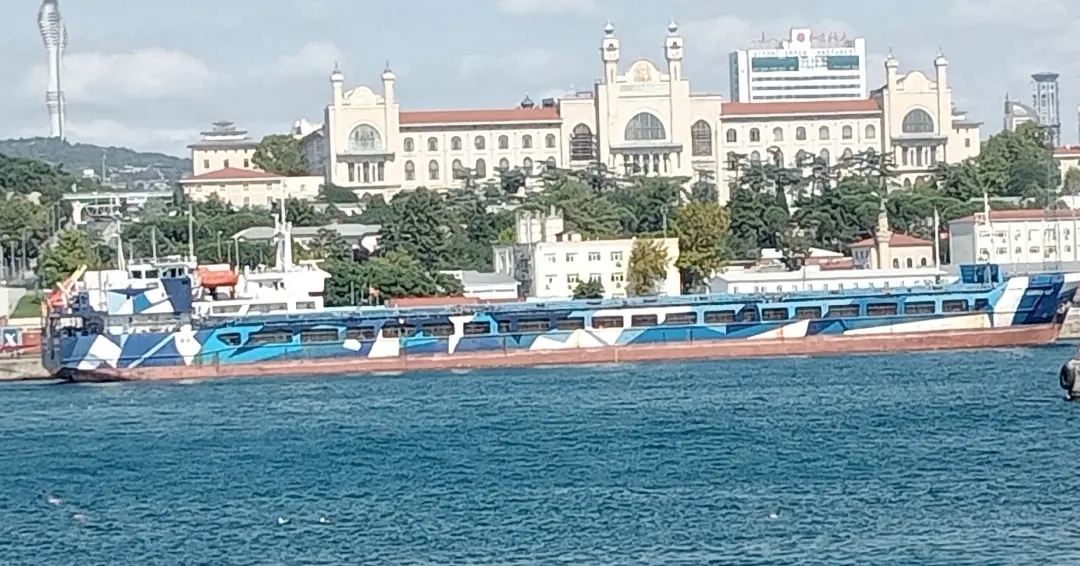
The Mechta S, a general cargo ship built in 1987, is about 119 meters long and sails under the Russian flag. It was previously named Sormovskiy-3059 and belongs to the Sormovskiy class of Soviet-designed vessels built for Black Sea and river-sea routes. The ship still operates in the Black Sea basin.
Fırtına’s attention, however, was drawn less by the cargo ship’s specifications than by its unusual paint scheme. The sides, bow, stern, and superstructure of the Mechta S are covered with sharp geometric shapes painted in blue, dark blue, white, and gray.
The captain said the pattern resembled dazzle camouflage, a disruptive naval paint scheme that became widespread during World War I and was also used during World War II.
Historically, such camouflage was not meant to make a vessel invisible. Instead, high-contrast geometric patterns were designed to visually distort the ship’s silhouette, making it harder to determine its size, the location of its bow and stern, its direction of travel, and possible strike points.
Fırtına noted that older photographs of the Mechta S do not show the geometric paint scheme, meaning the vessel received it later.
“Given that even merchant ships in the Black Sea today face threats from unmanned aerial vehicles and naval drones, it cannot be ruled out that this paint scheme is not merely aesthetic, but military camouflage intended to complicate optical detection and targeting of the vessel,” he said.
“Seeing a merchant ship in 2026 in the middle of Istanbul, in Haydarpaşa, looking as if it had stepped off the pages of wartime history, is quite unusual,” he added.
Russia’s Mechta S had not previously appeared on “shadow fleet” lists
Notably, Ukraine has not yet added Mechta S to its list of “shadow fleet” ships, and the vessel has so far avoided sanctions.
Starboard Maritime Intelligence data reviewed by The Insider show that the Mechta S regularly operates in the Black Sea region, with Novorossiysk the most frequently visited port in the vessel’s available history. Starboard recorded 83 calls by the cargo ship at Novorossiysk, totaling more than 72 days. Its route history also includes ports in Russia, Turkey, Ukraine, Italy, Greece, Bulgaria, Romania, Georgia, Israel, Egypt, Croatia, Cyprus, Kazakhstan, and Turkmenistan. The service’s data cover 3,294 days (about nine years).
Shortly before the Mechta S was spotted in Istanbul with its unusual paint scheme, the cargo ship had called at Novorossiysk. It then spent a long period in Yalova, one of Turkey’s largest ship-repair centers. According to Starboard, the Mechta S arrived there around July 15 and stayed until Aug. 10, about 26 days. Only after that did the cargo ship appear in Istanbul, where Fırtına photographed it decorated in geometric camouflage. Fırtına himself noted that earlier photos of the Mechta S did not show such a pattern.
Another feature of the vessel’s history involves its significant gaps in AIS data. Over 3,294 days of monitoring, Starboard counted about 930 days and six hours for which no location data were available for the Mechta S — roughly 28% of the period covered by the service.
Starboard also identified several risk factors for the Mechta S. The service could not confirm that the vessel’s declared Russian flag matched the registries it uses, nor could it confirm that the ship was insured through a known P&I club (a protection and indemnity insurer that covers maritime liability). The Mechta S also regularly called at ports in countries with relatively high perceived levels of corruption.