Three of Russia’s largest business publications recently published guidelines for accountants and HR professionals on military record-keeping during mobilization. The explainer articles appeared amid a surge of interest in the topic of a possible new round of call-ups. Experts interviewed by The Insider agree that such materials are more a reaction by the business community to “general anxiety” than a sign that the Kremlin is planning to bring a massive new wave of men under arms, but Russian authorities nevertheless already possess the necessary legal tools to launch a new mobilization.
The rules of mobilization record-keeping
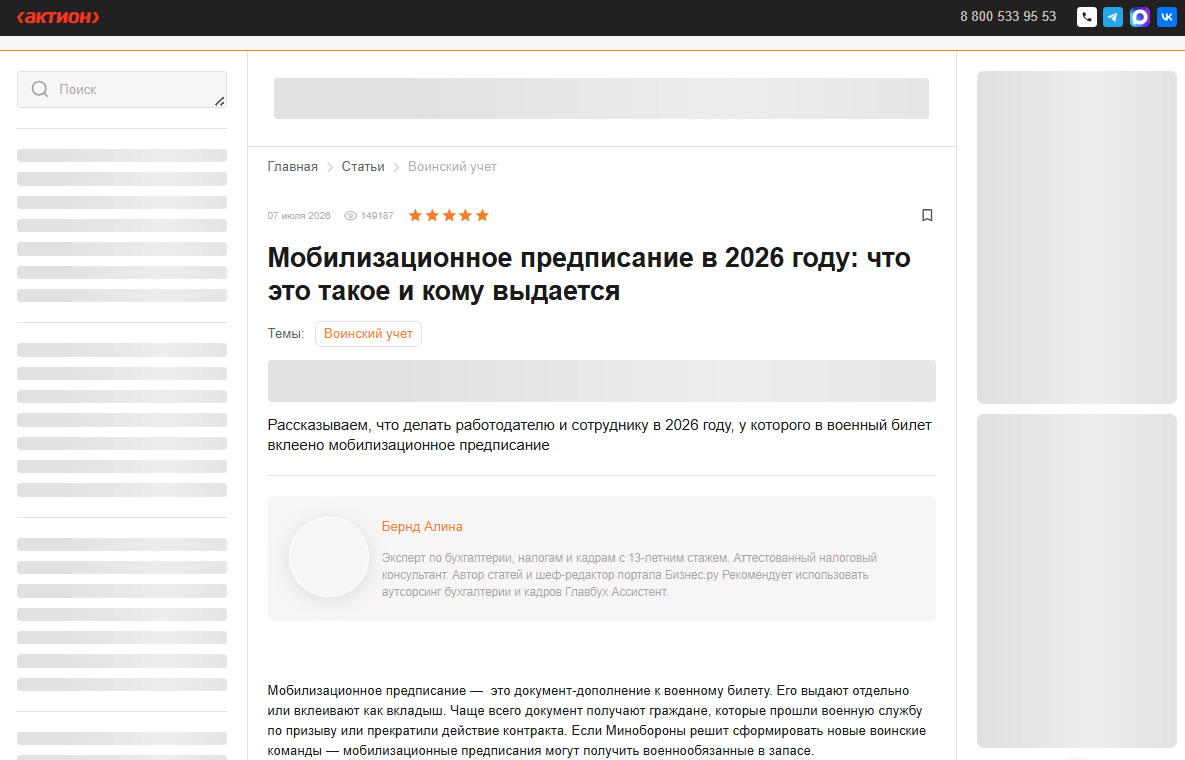
Last month, at least three major Russian business publications — Business.ru, Glavbukh, and Rossiysky Nalogoviy Kurier — published similar materials. As The Insider noted, all of them provide detailed guidelines for employers on maintaining mobilization records in 2026, as well as information on how to respond to summonses and mobilization notices issued to employees. The publications also elaborated on the mechanisms of accountability for violations of the military registration procedure.
A Prosecutor General’s order issued this past May also introduces a higher level of military record-keeping accountability for HR officers and managers. The authorities have thus apparently decided to shift some of the responsibility for the mobilization effort onto employers.
The result of general anxiety
The experts interviewed by The Insider agree these articles are the business community’s reaction to the numerous reports in the media and on social networks that Russian authorities are preparing a second wave of mobilization after the State Duma elections this September.
Mobilization in the fall of 2026? What we know so far
In recent months, talk of a new wave of mobilization has become one of the hottest topics of discussion in the Russian information space. In late June, a number of independent publications (1, 2), citing sources in Russia’s Presidential Executive Office, reported that the Kremlin was looking into options for replenishing the army’s ranks amid declining interest in contract service.
One option involves a new wave of mobilization, which could take place after the State Duma elections that are set to take place in mid-September. No other details of this initiative have emerged, however, and the publications’ sources said that their knowledge of a possible mobilization is limited to rumors.
Then, in late July, Volodymyr Zelensky cited intelligence data while also stating that the Russian authorities were preparing a new wave of mobilization. Later, The Wall Street Journal reported, quoting American officials, that Russian authorities were considering such a scenario for after the elections.
Russian officials, however, dismiss these claims. Dmitry Medvedev, Deputy Chairman of Russia’s Security Council, called them “hogwash” and a “lying provocation.”
The Call to Conscience project notes that such messages can be interpreted as preparation for businesses or organizations but suspects that the recent articles merely represent “a response to the general expectation of a ‘new wave’ rather than any ‘insider’ information from businesses.”
Still, not only private companies are preparing for a possible new wave of mobilization, says Timofey Vaskin, head of the legal department of the School of the Conscript human rights group:
“I think it is obvious that businesses have started preparing for a new wave of mobilization. And not just businesses. If you analyze the agency’s data, you can see that government bodies, corporations, and institutions are also preparing for the draft. They are all bracing themselves for a new wave.
It is hard to say what is driving the activity of recent weeks and months. One can assume that government institutions received information from above, from higher authorities, that there is a risk of mobilization, and that administrative preparation is needed.”
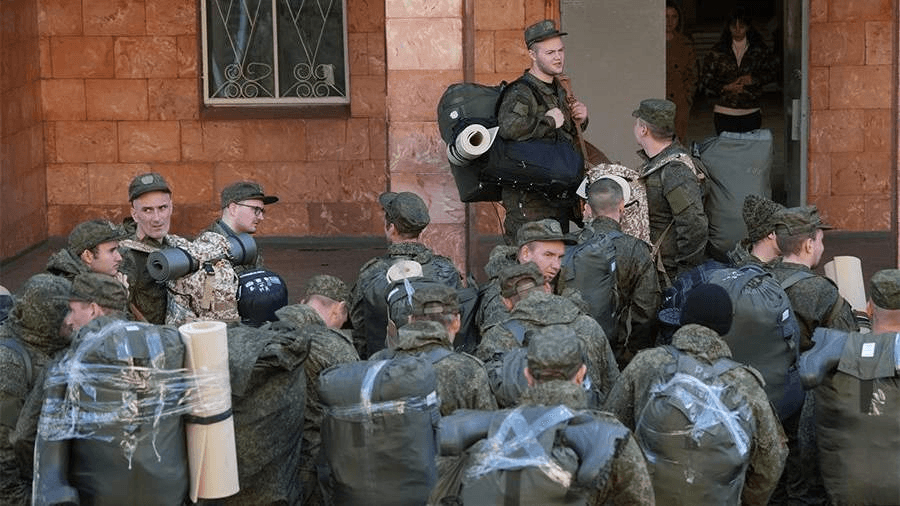
In the case of businesses, the explanation is simpler, Vaskin says. Accountants and HR professionals hear the same rumors as everyone else in society, and so the journals that exist in order to keep them up-to-date professionally responded to public sentiment by publishing updated instructions on military record-keeping:
“These are private projects, and they try to publish things that resonate with their audience. So I think their materials were not inspired by some signals about mobilization they may have received, but by their presence in the same information space as you and I. Their behavior is a reaction to the state of the information space.”
Based on the presence of such articles in business publications alone, emphasizes Ivan Chuvilyaev, press secretary of the Get Lost project, it does not follow that mobilization is set to occur: “Neither does this follow from the insertion of mobilization notices, or from the presence of the ‘Mobilization’ module in the registry, or from posts by pro-war bloggers. Are they testing the waters? Yes. Are they preparing? In that case, Rossiiskaya Gazeta would be writing: ‘the bill has been submitted for consideration, the amendments are such and such.’” And as the Movement of Conscientious Refuseniks summarizes the situation: “The publication of mobilization guidelines is the result of general anxiety and public sentiment. This idea is in the air. Job postings for mobilization specialists are a reaction of businesses to increased fines and general anxiety. Companies are trying to lay down a safety net where a fall is clearly easy.”
A new wave
It is impossible to say for certain whether Russian authorities are preparing a possible second wave of mobilization. However, experts interviewed by The Insider point to several indirect signs. One of them is the hiring of military record-keeping experts by both private and public-sector entities. Still, perhaps the main sign involves changes in legislation, such as the aforementioned Prosecutor General’s order of this past May, which transfers primary oversight of military record-keeping from military enlistment offices to the prosecutor’s office.
Broader changes have affected the law on military service, but these have been in force since 2023. They relate primarily to the summons registry. As the Call to Conscience project notes:
“The registry is running at full capacity; reservists have been receiving summonses en masse since spring — you could call this preparation. But of course, we don’t know for sure.”
The bureaucratic machinery of the state is “undoubtedly” preparing for a new wave, says Timofey Vaskin, head of the legal department of the School of the Conscript:
“We can see this from the drills held several months ago in regional governments. We saw that mobilization notices began to be mass-inserted into men’s files. We see that men are being summoned en masse to update their military registration data. Various regions and government bodies are introducing minor changes to regulations and incorporating provisions on mobilization. For instance, there was news about changes at the National Guard. The Prosecutor General’s Office has issued a new decree strengthening oversight of military record-keeping. Either in the Sverdlovsk Region or someplace else they introduced amendments related to the mobilization period. We can see that the bureaucratic machinery wants to approach a possible mobilization fully prepared.”
Human rights advocates interviewed by The Insider also note that in recent months they have recorded a surge in requests for consultations on the topic of a possible mobilization. As Vaskin continues: “Private-practice lawyers in Russia are writing that they can no longer keep up with advising people in connection with rumors about mobilization, and that the number of requests for paid services is growing.”
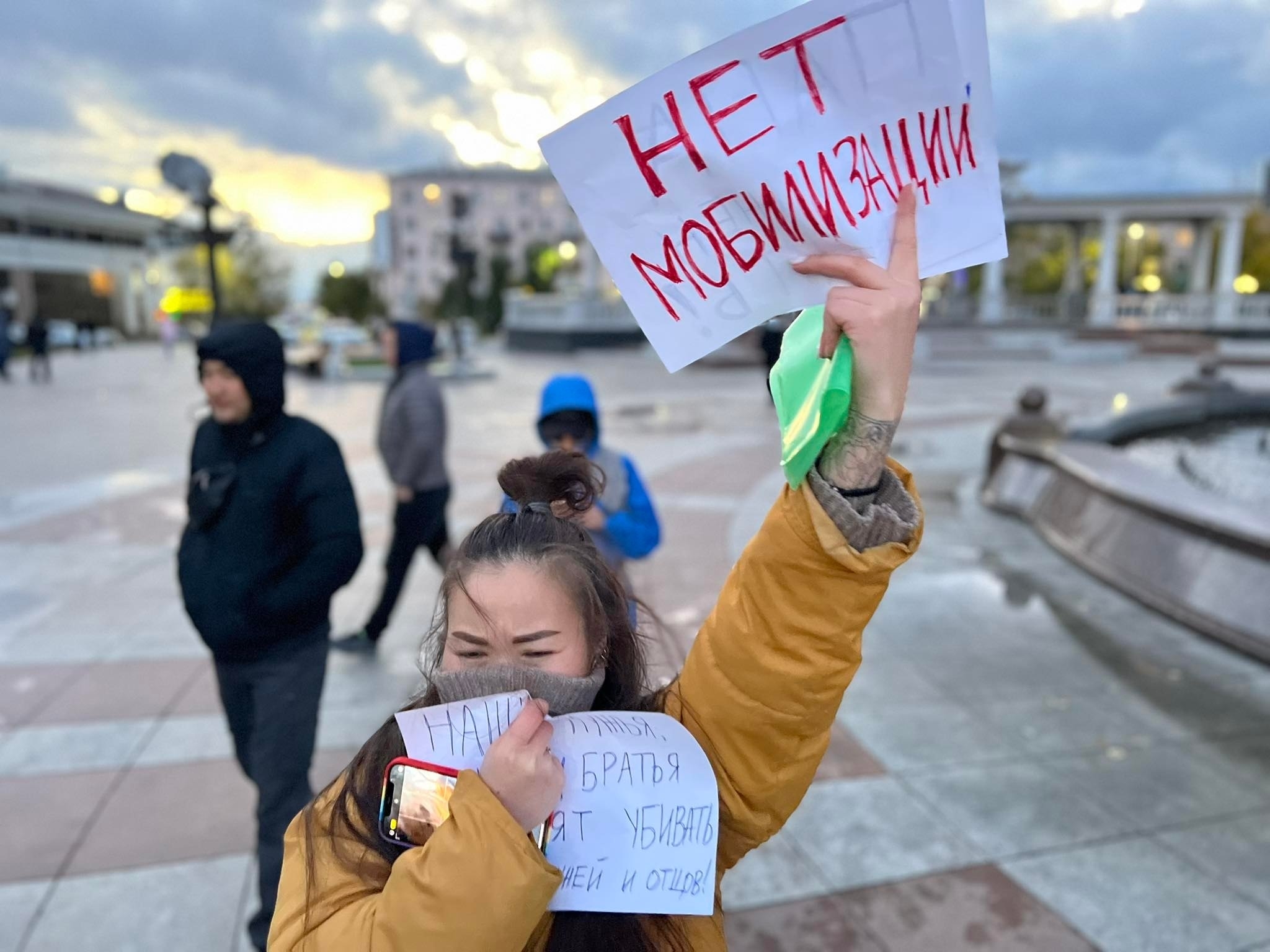
The preparatory measures in and of themselves do not necessarily mean the mobilization campaign will be carried out — at least not in the way it unfolded in 2022. The Movement of Conscientious Refuseniks states:
“In general, we do not believe there will be a mobilization along the lines of the fall of 2022. Administrative resources will be heavily taxed by the elections, and engaging them to conduct mobilization will place serious strain on the system. In addition, over the past four years, numerous legislative measures have been adopted to make a similar mobilization unnecessary. But one should not completely rule out an irrational — from the system’s standpoint — decision by one well-known individual based on personal motives.”
Vaskin again sums up: “No matter how we approach it, the overall situation on the battlefield invites the conclusion that the state needs mobilization. It would address both the need for drone troops and the manning of combat units. The state needs to increase the number of military personnel, so from a substantive standpoint I have no arguments against [the possibility of mobilization].”
Why all the talk about mobilization?
When discussing a possible new wave of mobilization, government sources cited by several media outlets pointed to declining rates of contract enlistment in the Russian army.
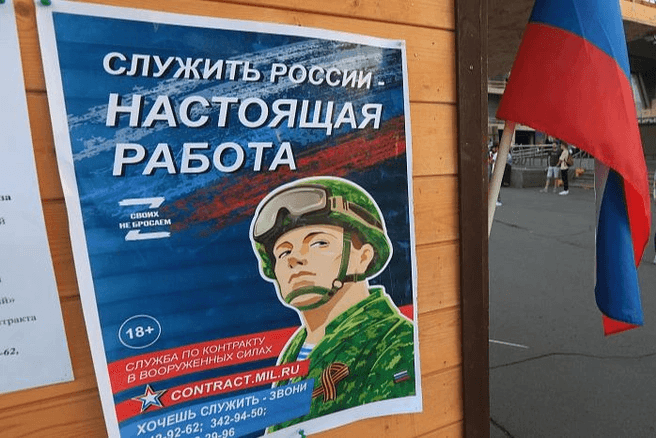
In early June Janis Kluge, a researcher at the German Institute for International and Security Affairs, analyzed federal budget data and concluded that in the first quarter of 2026, a daily average of 800 people signed a contract — the lowest figure in three years. He also noted, however, that this number increased somewhat in the second quarter.
Nevertheless, journalists’ sources from various regions noted difficulties with contract recruitment. In late 2025, an extensive military recruitment campaign was also launched at colleges in hopes of attracting students by making promises of rear-area service and fixed-term contracts, supposedly for just one year. In practice, however, “special” contracts for students turned out to be ordinary open-ended contract service, as human rights advocates pointed out.
It is difficult to assess the degree of the shortage of servicemen in the Russian armed forces, but human rights advocates note that recruitment practices have become increasingly “coercive” of late. As the Movement of Conscientious Refuseniks explains:
“People are being recruited through the regular conscription (including by coercing newly conscripted soldiers to sign contracts), targeted raids on socially vulnerable citizens, and through a comparatively new practice — threats of revocation of acquired citizenship and recruitment at Temporary Detention Centers for Foreign Nationals. Would they be so active in doing this if the number of volunteers remained at 2024 levels? Probably not. After all, these recruitment methods come with their own costs.”
The Insider’s sources in the Call to Conscience project cite security forces’ raids in Penza (1, 2), calling these cases “a new level of coercion”:
“Before, the first to be taken were vulnerable people — the homeless, those with addictions, and migrants. One could say this signals a worsening of the recruitment situation. A quick scan of popular online forums shows that whereas one or two years ago some saw contract service as an opportunity for easy money, people are now aware that the risks are far greater.”
One area where recruitment can be assessed objectively is drone troops. In mid-July, Deputy Defense Minister Alexei Krivoruchko reported that 8,000 drone specialists had been trained in the first half of the year. However, previous reports suggest that the total plan was to recruit around 78,000 people for drone unit service — that is, roughly 34,000 in the first six months. In effect, the defense ministry has acknowledged that this endeavor failed.
“The problem is obvious, and there is no solution. You can’t recruit people into drone troops with money or propaganda. The only option left is to make people join — that is, through mobilization. That’s a fairly strong argument in favor,” says Vaskin. “The arguments against are almost all in the realm of political risks for the state: society will react negatively. But how this will manifest itself is hard to say.”
The effectiveness of mobilization as such still remains in question, especially given the experience of 2022, when the state swept up mental health patients and people from other exempted categories. Now, however, with new legislation in place — including the electronic military registration system — mobilization could become quite an effective tool, says Vaskin:
“The system will be able to easily identify men of the right age, with military experience and a military occupational specialty, in order to try to mobilize them specifically. Mobilization could work, but everything depends on how it is organized. In 2022, they grabbed whoever showed up. What will a new wave look like? No one can tell.”