
Over the course of July, three Russian publications aimed at accountants, HR specialists, and company executives released guides for maintaining military records during mobilization. The articles appeared despite the absence of any major legislative changes suggesting a period of imminent call-ups. However, businesses are facing increased liability for complying with military record-keeping requirements.
Three July guides
Business.ru published its article on July 7,Glavbukh followed on July 24, and Russian Tax Courier ran its version on July 27. All three publications are aimed at administrative personnel responsible for military record-keeping within civilian organizations.
The Glavbukh article is titled “Order of Conscription During Mobilization.” It directly addresses employers, explaining “How employers should maintain mobilization records in 2026” and includes sample orders, notifications, and military registration cards. The article is an updated version of a publication first released on September 22, 2022 — the day after Vladimir Putin’s first decree announcing a partial mobilization was issued.
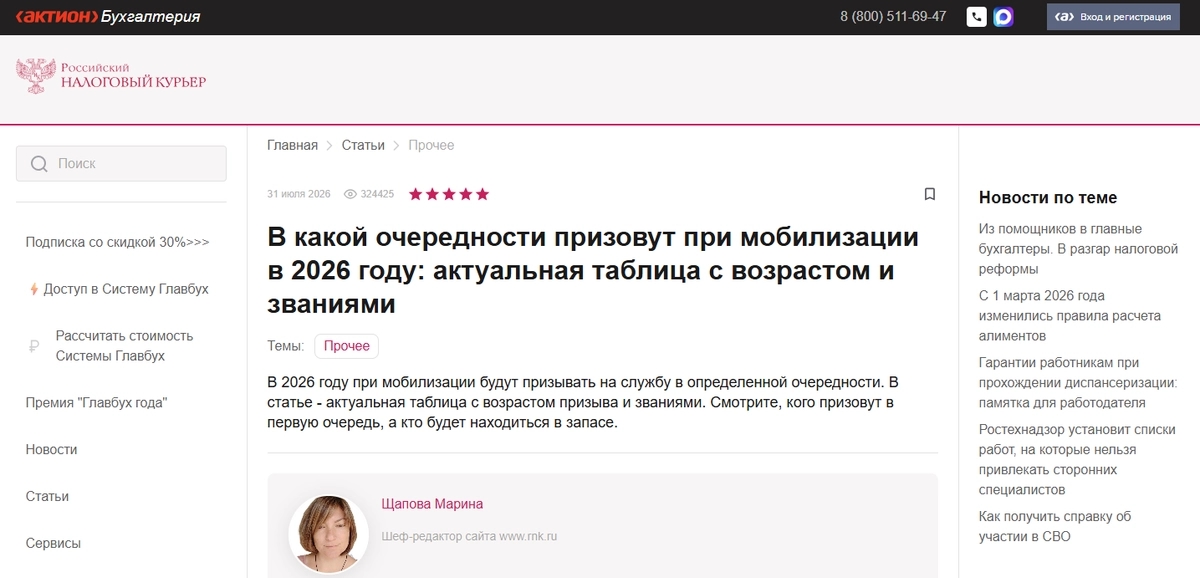
The Russian Tax Courier article is likewise titled “Order of Conscription During Mobilization” and similarly instructs HR personnel and accountants on how to properly maintain military records and accommodate employees who have received draft notices and mobilization orders. The Business.ru article, “Mobilization Order,” is aimed at owners of small and medium-sized businesses and contains detailed guidance on how employers should verify employees' mobilization orders and monitor compliance.
What makes these publications unusual is that outlets specializing in explaining newly adopted laws, regulations, and accounting changes published these guides despite the lack of any relevant legislative developments. Over the past year, no direct legislative changes have been made to the legal framework governing mobilization orders. Since May 2025, the electronic draft notice registry has been operational, allowing employers to request information about employees, and the last notable development in the state Duma occurred last October, when the government's legislative commission approved a bill allowing reservists to be called up in peacetime “to perform tasks during counterterrorism operations or when the Armed Forces of the Russian Federation are deployed outside Russia.”
Pressure on employers as a tool of mobilization
An indirect indication that the government has decided to shift part of the responsibility for implementing future mobilization onto employers is the detailed system of penalties provided for violations of military record-keeping requirements. Business.ru provides the most comprehensive list, which includes:
- A fine of 40,000–50,000 rubles ($520–650) for failing to notify the military enlistment office when a liable-for-service employee is hired or dismissed by the person responsible for military records within the company (Article 21.4 of the Russian Code of Administrative Offenses).
- A fine of 40,000–50,000 rubles ($520–650) for company officials and 350,000–400,000 rubles ($4,550–5,200) for legal entities if a company representative fails to deliver a draft notice or mobilization order to an employee, fails to notify the employee of a summons to the military enlistment office, or fails to create the conditions necessary for the employee to appear there (Article 21.2 of the Russian Code of Administrative Offenses).
- A fine of 60,000–80,000 rubles ($780–1,040) for company officials and 350,000–400,000 rubles ($4,550–5,200) for legal entities if an employer assists an employee in evading mobilization or fails to cooperate with the military enlistment office in organizing the draft.
- A fine of up to 500,000 rubles ($6,500) for violations of military record-keeping rules within an organization.
Notably, since this spring HR personnel, accounting departments, and company executives have been subject to a higher level of responsibility for maintaining military records. This follows from a new order issued by the Prosecutor General's Office dated May 12, 2026 and titled “On the Organization of Prosecutorial Oversight over Compliance with Legislation in the Sphere of Military Registration and Conscription of Citizens for Military Service.”
The new order shifts primary oversight of military record-keeping from military enlistment offices to prosecutors. Whereas inspections by enlistment offices were previously sporadic and typically carried out in response to complaints or notable violations, prosecutors are now empowered to initiate inspections independently and oversee the entire system — from the establishment of military registration offices within companies to employers' assistance in delivering draft notices and ensuring employees report to military enlistment offices.
Another indirect sign of preparations for mobilization may be the growing number of job openings related to military record-keeping. On July 31, the publication Agentstvo noted that Russian companies had posted more than 2,500 vacancies involving responsibilities focused on “mobilization preparedness,” “military record-keeping,” or “mobilization departments.” Nearly 1,300 of those vacancies had been posted on the HeadHunter website during the previous week alone.
Order of conscription by military rank and age
The publications state that reservists and people holding mobilization orders are called up first. A mobilization order is a special insert placed inside a military ID card that has no expiration date; a stamp indicates the date of issuance, the unit number, and the signature of the military commissar.
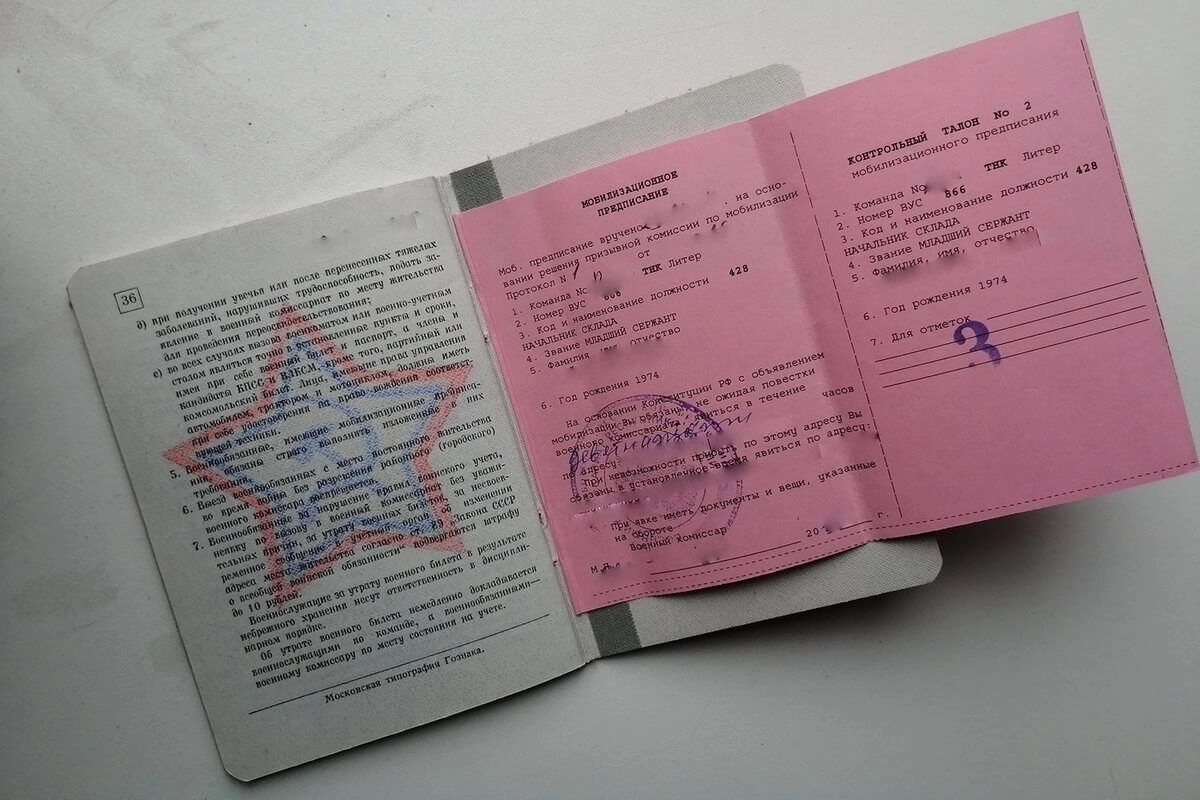
There are two types of mobilization orders. The pink (red) version is issued to people subject to mobilization and consists of a main section and two control coupons (the first is collected at the assembly point and the second at the military unit). The white version is issued to people assigned to mobilization support work for up to 10 days and contains one control coupon. The order specifies the unit number, the title and code of the military position, the military rank, and the time and place where the person must report. Once mobilization is declared, anyone holding such an order is required to report to the designated location.
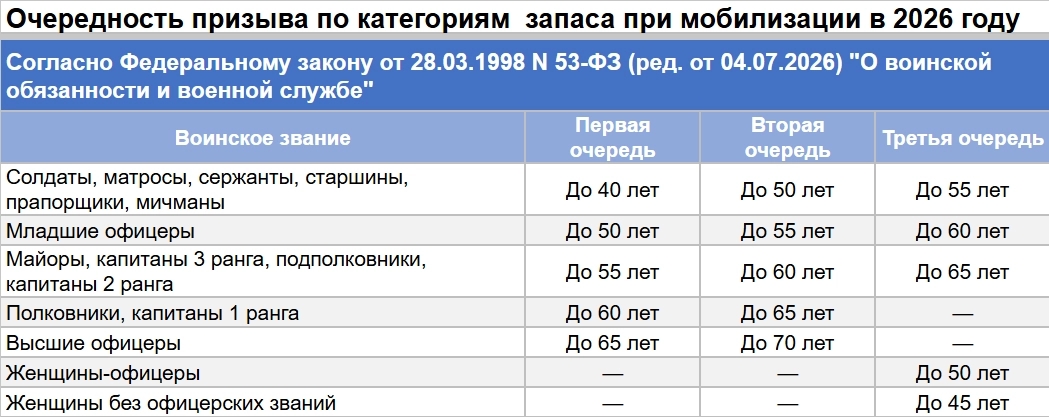
The overall system of call-up priority divides reservists into three categories (or waves). Those who are younger, physically fitter, and have served more recently are called up first. The Insider provides the following table based on the current version of the federal law “On Military Duty and Military Service.”
Information on how to avoid conscription or leave Russia can be obtained from the following organizations:
- Idite Lesom (“Get Lost”) helps Russians avoid being sent to war by providing legal and psychological assistance and helping people leave the country.
- The Movement of Conscientious Objectors to Military Service (DSO) specializes in lawful ways of avoiding conscription, including alternative civilian service, and provides consultations for conscripts.
- School of the Conscript is a human rights organization that advises conscripts on issues related to military service, deferments, medical examinations, and the protection of their rights.