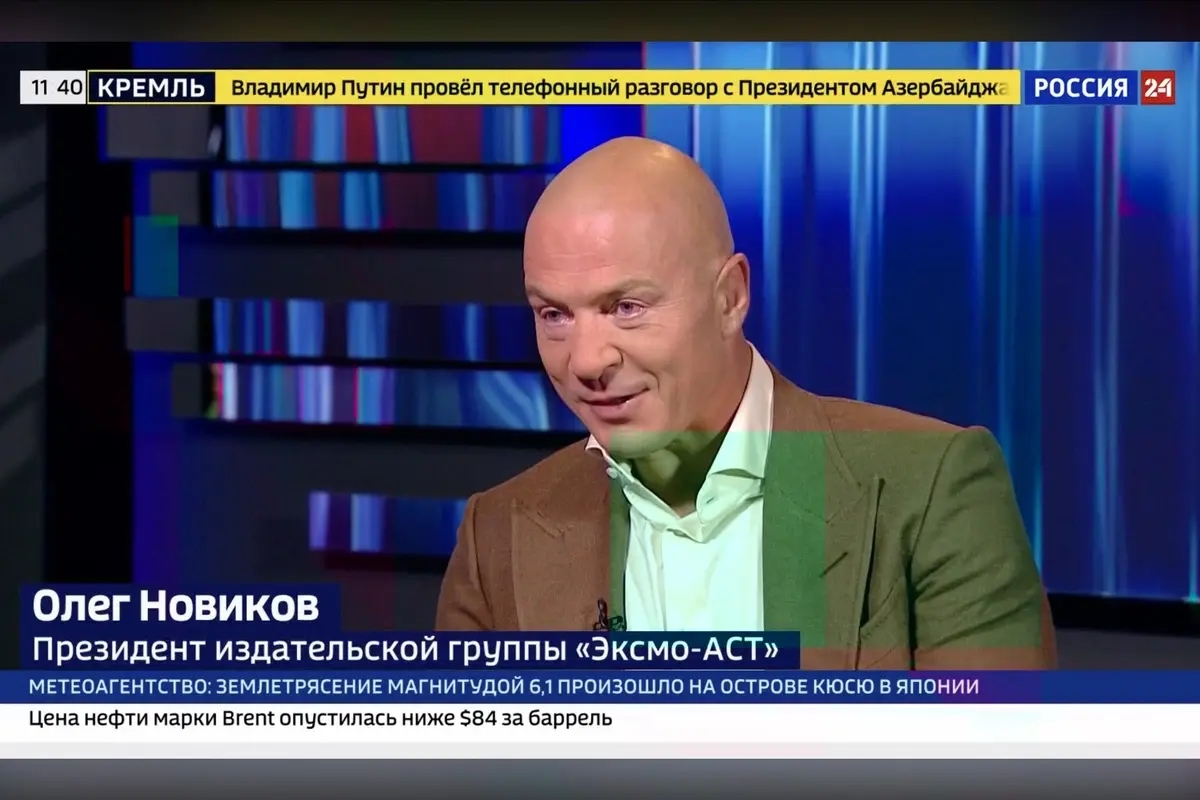
For over a year, Russian authorities have been increasing censorship measures against independent book publishers, leading to an exodus of employees from the industry — both voluntary and involuntary. Some employees of Eksmo-AST, Russia’s largest publishing group, left the company on their own, while others were fired because they were not prepared to comply with new legal requirements, group CEO Oleg Novikov said in an interview with state-controlled TV and radio broadcaster VGTRK.
“Some people could not work. We have employees who resigned. We fired some ourselves because the person was not ready — or one could even say did not want — to meet the requirements that the law imposes today,” Novikov said.
Novikov linked the staffing decisions to fallout from the “book publishers’ case,” after which the company revised its internal instructions, redistributed responsibility, and significantly tightened its rules. Each book is now checked against several criteria before publication.
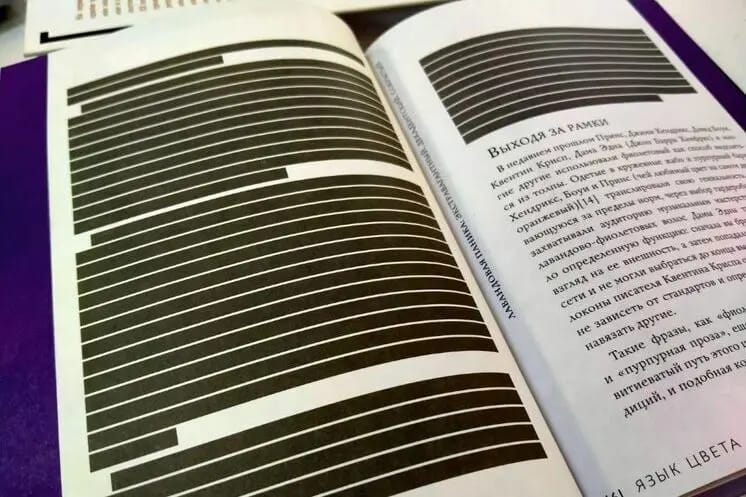
“Today we have 10 criteria against which a book is checked before its release. This is not only about nontraditional relationships, but also various other bans. There was, in particular, a law banning drug propaganda, and from that perspective we had to review and check not only books currently being released, but also books that were created over the publishing house’s 20 years and were or are still in some way on sale, or may be being prepared for sale,” Novikov said.
“Nontraditional relationships” is the official Russian euphemism used in laws targeting LGBTQ+ content.
Eksmo-AST uses artificial intelligence for preliminary checks. Novikov said neural networks do not make the final decision, but they do play an important role in flagging pages and passages that editors should review more closely. In all, the group has carried out about 20,000 internal reviews, and another 600 books were sent to outside experts.
In April, Eksmo’s press service reported having conducted more than 45,000 AI-assisted checks, 5,000 other internal reviews, and 530 external reviews. Potentially banned content was found in medical literature, biology textbooks, art albums, and biographies of famous people.
The “book publishers’ case” was launched in May 2025 under Article 282.2 of Russia’s Criminal Code, which covers organizing the activities of an extremist organization. The defendants were Dmitry Protopopov, executive director of Individuum and Popcorn Books, Pavel Ivanov, Popcorn’s former sales director, and Artyom Vakhlyayev, the former head of sales at Eksmo.
Ivanov received a four-year suspended sentence after entering into a plea agreement with the investigation and testifying against the other suspects — his former colleagues. In court, he claimed that during questioning he had “fully exposed” Eksmo’s employees in criminal activity, as he had witnessed them “dragging” him into the sale of books with LGBTQ+ content.
Ivanov described his decision to cooperate with the investigation as a “civic duty,” claiming to have always supported Vladimir Putin and to have advocated for censorship of book products, adding that he would have gone to the front line in Ukraine with the Russian military if not for a heart attack he had suffered.
Following Ivanov’s testimony, in early July Vakhlyaev was handed a four-year suspended sentence.
The Russian state considers the sale of books with LGBTQ+ themes to constitute “extremism.” Titles falling under this category include the novels Summer in a Pioneer Tie and What the Swallow Keeps Silent About.