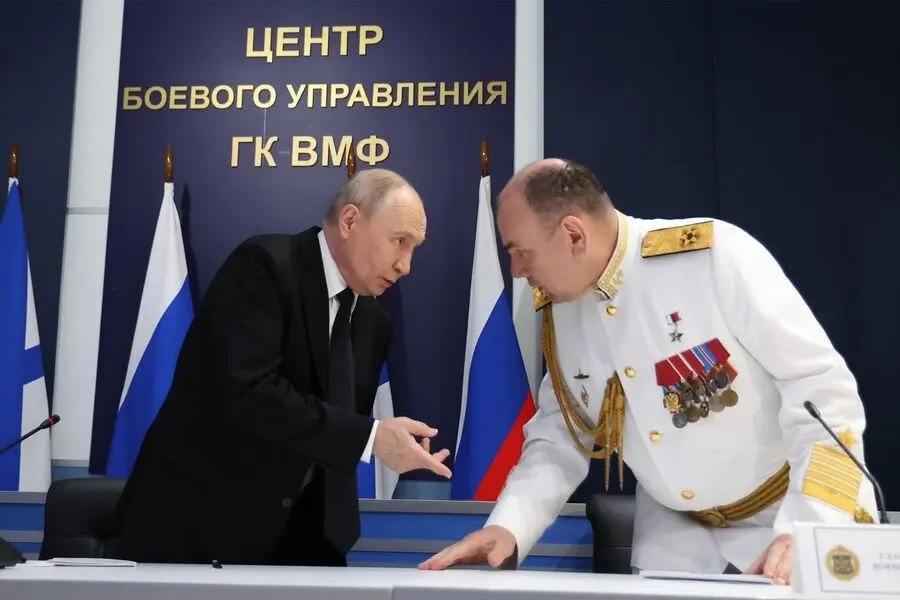
Russia is building its largest ever uncrewed naval vessel — with a displacement of 500 metric tons — designed to search for submarines and other underwater objects, Russian navy commander-in-chief Admiral Alexander Moiseyev announced on the Defense Ministry-run Zvezda television channel. Moiseyev did not name the developer, state the project’s cost, clarify when the vessel would be launched, or explain how the vessel would be controlled.
“It is being built. It will be the first such ship. It will become the basis for the further development of uncrewed systems,” Moiseyev said. He said the project is included in Russia’s current state armaments program.
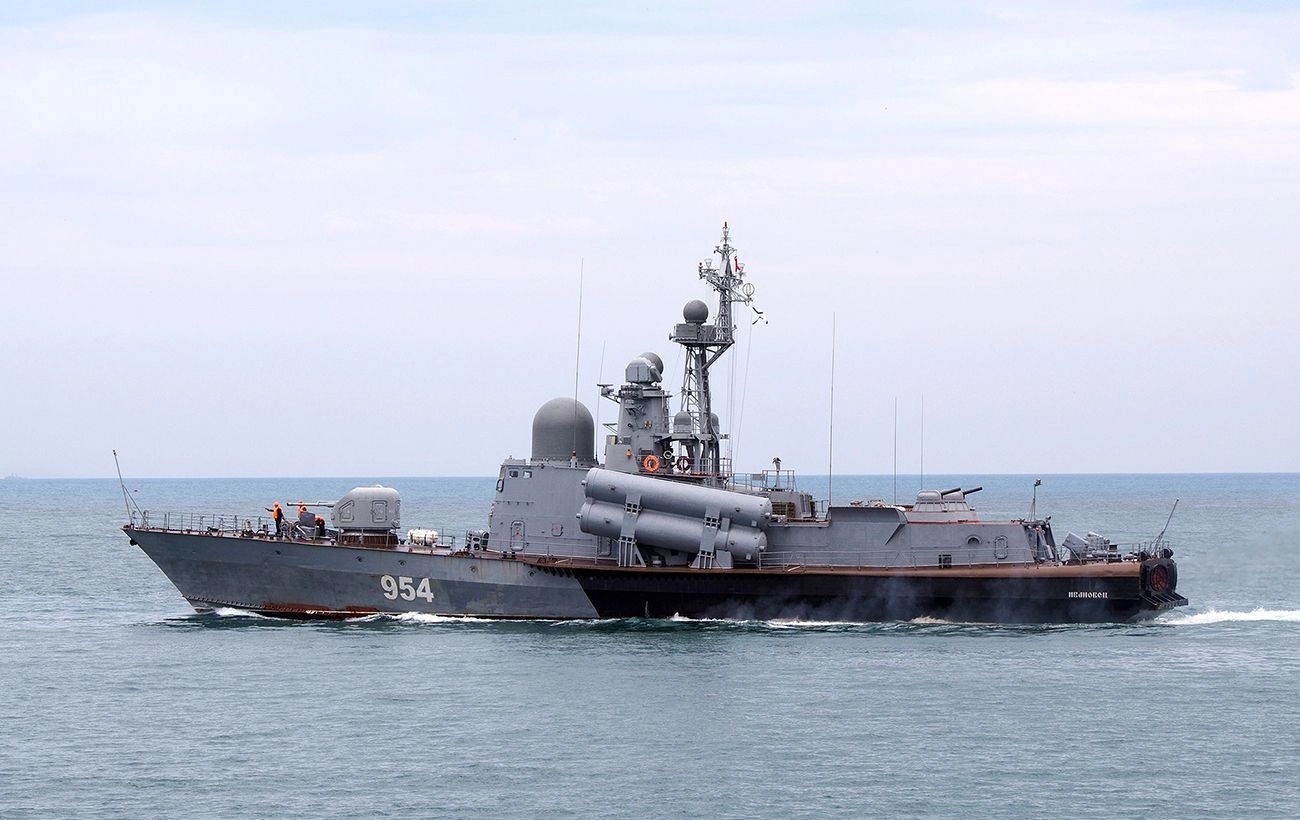
In size, the vessel would not be an ordinary sea drone, but a platform comparable to a full-fledged warship. The Russian Ivanovets missile boat of Project 12411 Molniya, for example, had a full displacement of 493 metric tons and was 56.1 meters long. It carried four Moskit anti-ship missiles, an artillery mount, and two six-barrel AK-630 close-in weapon systems, operating with a crew of about 40 people. The Ivanovets was sunk by Ukrainian sea drones off the coast of occupied Crimea in February 2024.
The announcement drew criticism from several major pro-war channels and commentators, who argued that Russia’s navy is trying to move to large and expensive uncrewed ships before establishing mass production of small, cheap attack boats of the kind Ukraine used to drive the Russian navy out of Crimea in 2024. More recently, Ukraine has used sea drones to strike Russian ships as far away as the port in Novorossiysk, along with oil infrastructure located on the Black Sea coast.
The Telegram channel Razrabotchik BPLA (lit. “UAV Developer”) criticized the Russian initiative, comparing the concept of building a massive sea drone to building a single “uncrewed Tu-95” bomber instead of mass-producing UAVs. The channel’s authors said a 500-ton vessel would not solve the navy’s two main problems: a shortage of small attack uncrewed surface vessels and the lack of stable long-range communications at sea. The 500-ton uncrewed vessel “will be sunk just like any other similar ship,” the channel said.
The post was quoted by pro-war “military correspondents” Vladimir Romanov and Yuri Kotenok. Romanov added:
“Practice shows that some senior Defense Ministry officers see their key goal not as the country’s defense capability or the real effectiveness of our army, but a strategy that can be described as ‘how to steal as much as possible.’”
The pro-war Telegram project Rybar wrote on Max that large uncrewed platforms equipped with anti-submarine systems and air defenses may indeed have a role to play in the fleet, but described them as the next stage of development. Rybar argued that the navy must first master serial production of small uncrewed surface vessels and use them to test the necessary technologies. Mass production of 500-ton uncrewed ships would be hampered by limits in the production of engines, hulls, and onboard equipment, the channel said.
Similar criticism came from pro-Russian former Ukrainian MP Oleg Tsarev and Komsomolskaya Pravda “war correspondent” Dmitry Steshin. Their posts were later quoted by Tsargrad, the nationalist television channel owned by Konstantin Malofeyev.
“It is a great pity. This is the time for cheap and effective uncrewed strike systems. But we will not build a small, fast, cheap uncrewed surface vessel. We will build a maritime superdrone — with a displacement of 500 tons. We will spend billions… We see Ukrainian uncrewed surface vessels striking our ships and trying to hit the Crimean Bridge. But we do not see our own uncrewed surface vessels anywhere. It is obvious that right now we need to focus on small uncrewed surface vessels, as I wrote above, not on superprojects,” Tsarev complained.
Steshin offered similar sentiments, joking that, “Everything is being done in accordance with the old tradition: from the world’s largest digital wristwatch to the world’s largest uncrewed ship.”
Steshin also contrasted the large vessel with the much cheaper sea drones that can be used en masse against far more expensive targets. In his view, the move to large uncrewed platforms should come later, while the current priority should be simple, inexpensive uncrewed surface vessels.
Publicly available information about Russia’s combat use of naval drones remains limited. Russia first used such a device to strike a bridge in Zatoka in Ukraine’s Odesa region in February 2023, but the structure was not seriously damaged. Russian authorities and pro-war sources later reported several more attacks, but Russia has not yet demonstrated the kind of mass use of uncrewed surface vessels seen from Ukraine.
The independent exiled Russian outlet Verstka noted that Russian efforts to catch up with Ukrainian sea drone technology may have been hampered by the disabling of Starlink terminals previously used by Russian forces. Russian satellite communications systems have not yet become a full replacement for Starlink, specialists interviewed by the outlet said, making it difficult for Russian naval drones to maintain communications links over long distances.
This news report was prepared based on monitoring by Iona, a system that tracks media reports, city community pages, Telegram channels, Max channels, and federal and regional government bodies and agencies.