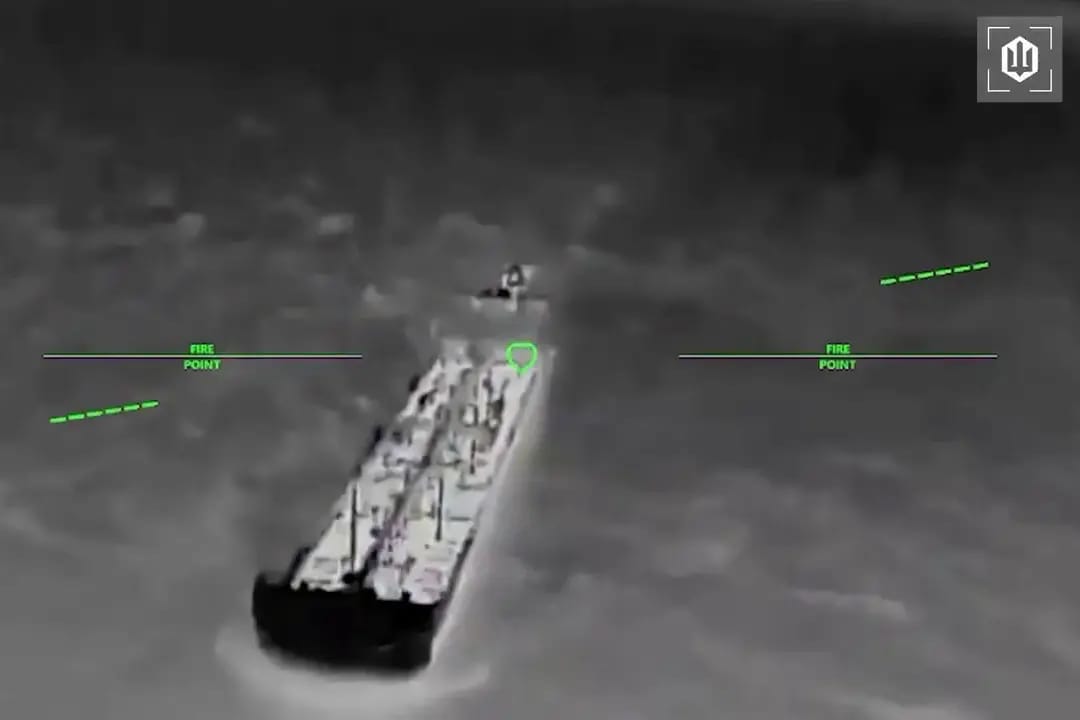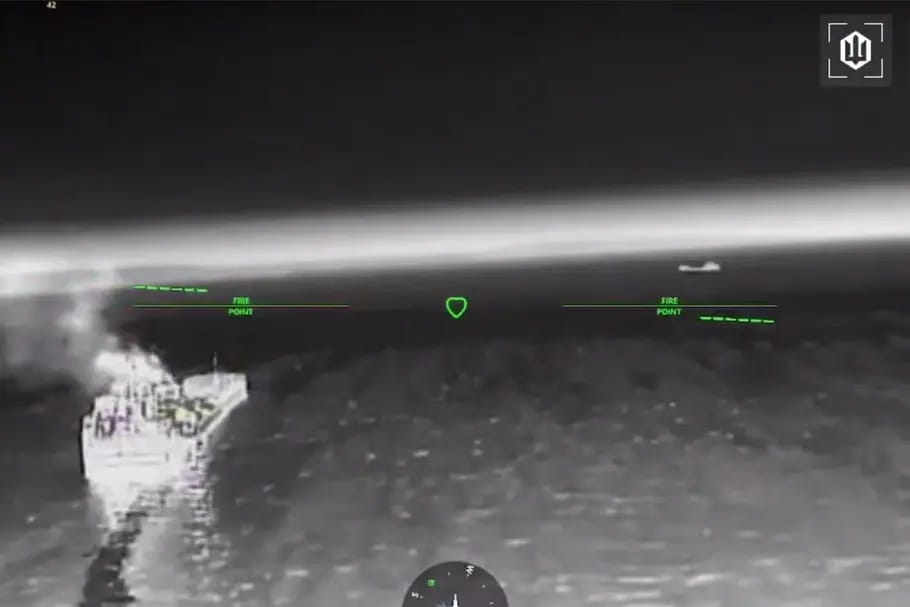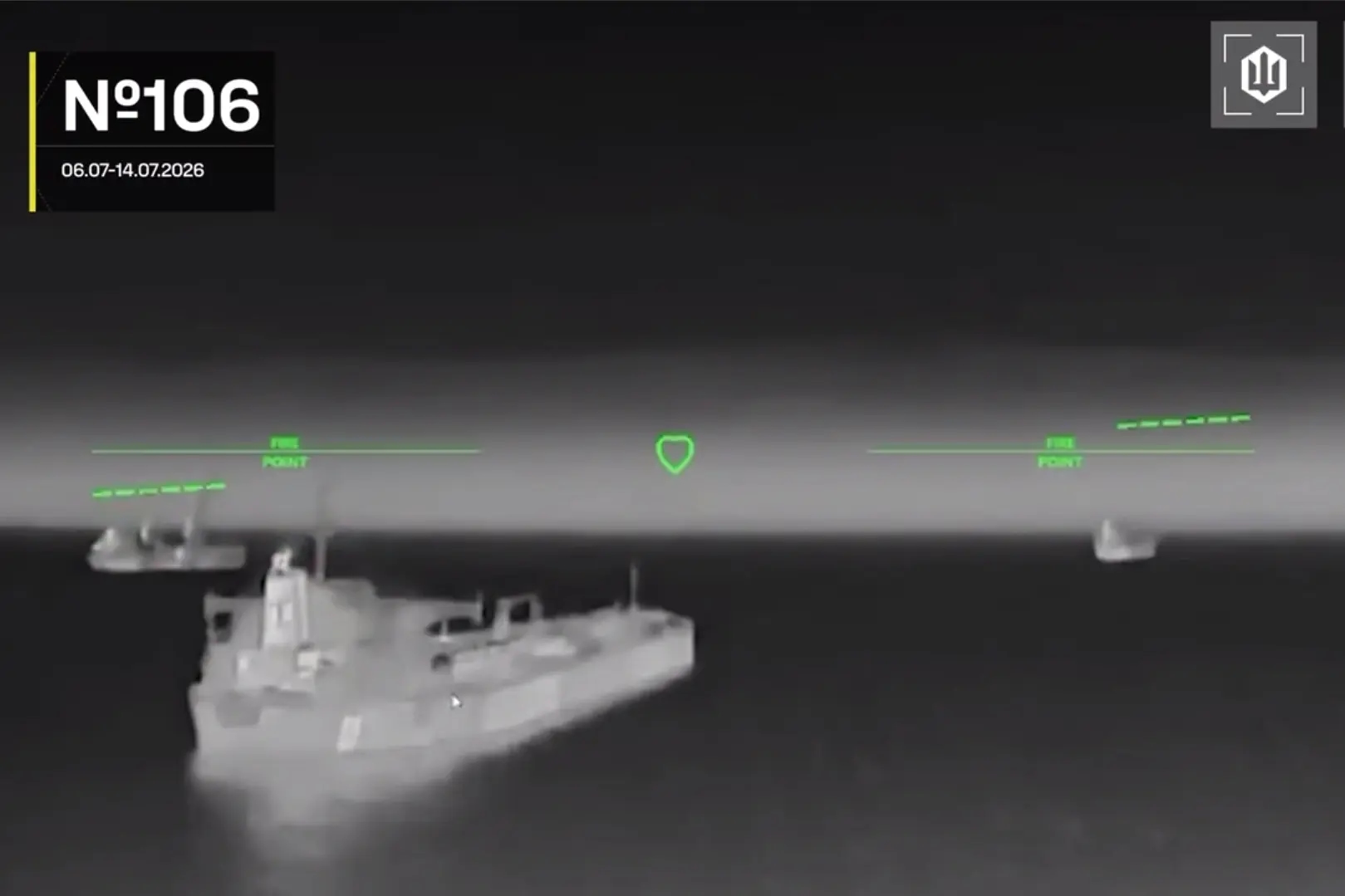
On the morning of July 14, Robert “Madyar” Brovdi, the commander of Ukraine’s Unmanned Systems Forces, reported strikes on another 15 vessels in the Sea of Azov — five tankers, five dry cargo ships, and one tugboat came under attack. In all, more than 100 civilian ships have been hit in the area over the past nine days.
In his post, Brovdi said the strikes hamper deliveries of scarce gasoline to Russian-annexed Crimea, leaving railways and fuel tanker trucks as the only available options to supply the peninsula. Those land routes are also risky, as they, too, can be targeted by Ukrainian strikes.
“The paralysis of Russia’s ‘feeder’ fleet — small and medium flat-bottomed ‘courier’ tankers about 140 meters long, with a capacity of 7,000 tons — as an important part of Russia’s shadow fleet effectively makes it impossible to export ‘black gold’ from Russian port oil transshipment bases and oil depots through the Volga-Don Canal and the Sea of Azov to larger tankers,” Brovdi wrote, adding thatUkrainian drones have attacked 116 vessels over the past nine days.
Responding to the news of the latest strikes, the Russian Transport Ministry’s press service said that it was “taking all necessary measures to ensure cargo logistics” in the Sea of Azov amid increasingly frequent Ukrainian attacks.