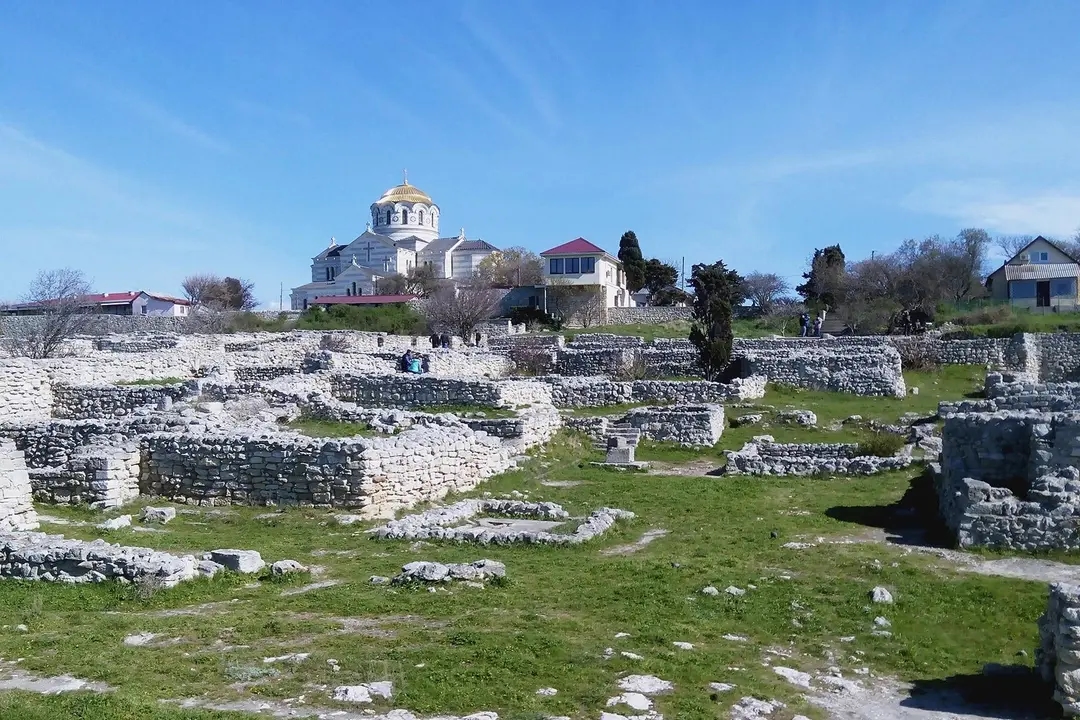
UNESCO’s World Heritage Committee has added the ancient city of Tauric Chersonese to its list of World Heritage in Danger, with the site’s “chora,” or surrounding agricultural lands belonging to the city-state, also included in the designation. The decision was made during the committee’s 48th session in Busan, South Korea.
UNESCO said new “unauthorized excavations, large-scale construction projects, and removal of artefacts” undertaken by the “occupying de facto authorities” have caused “irreversible damage to the archaeological site’s integrity and authenticity.”
The work was carried out without authorization from the relevant Ukrainian authorities, and UNESCO said the threat to the site had been established. The organization called on all parties involved in preserving the site to refrain from actions that could cause further irreversible damage.
Ukrainian Foreign Minister Andrii Sybiha welcomed UNESCO’s decision, writing on X that Chersonese is being destroyed by the Russian occupation authorities. He said the decision should help promote international cooperation to protect the monument.
Chersonese, founded by Dorian Greeks in the fifth century BCE, is considered to be one of the most important ancient sites in the northern Black Sea region. UNESCO added the city and its adjacent agricultural lands — the “chora” — to the World Heritage List in 2013. After Russia occupied and illegally annexed Crimea in 2014, the organization lost access to the site and assessed changes there largely through satellite images. Monitoring showed that large new structures had appeared on the site and in its buffer zones, while archaeological work had continued since 2014.
In 2024, the Russian occupation authorities opened a museum and church complex called “New Chersonese” (“Novy Khersones”) near the ruins. The project, which covers more than 23 hectares and includes an amphitheater and youth centers, was built by the Russian Ministry of Defense. The Ukrainian service of the BBC reported that the complex was built on the site of ancient Greek temples and the city necropolis, which contained unique burial and memorial structures. Archaeologists said bulldozers worked on an area with a cultural layer up to 10 meters deep, where tens of thousands of artifacts may have been located.