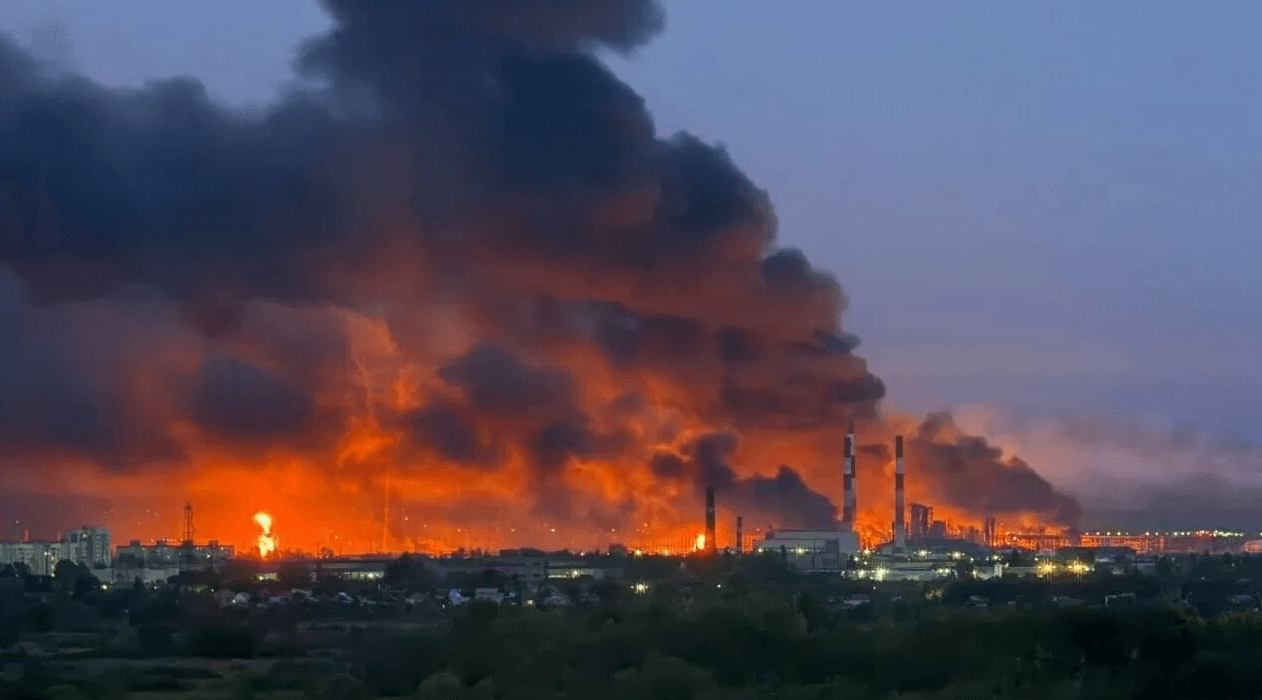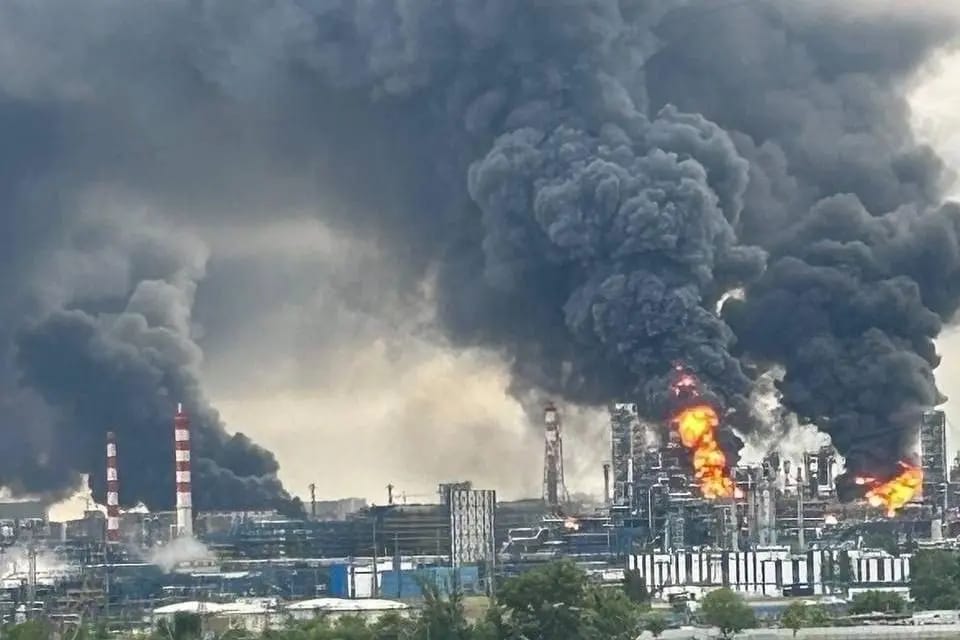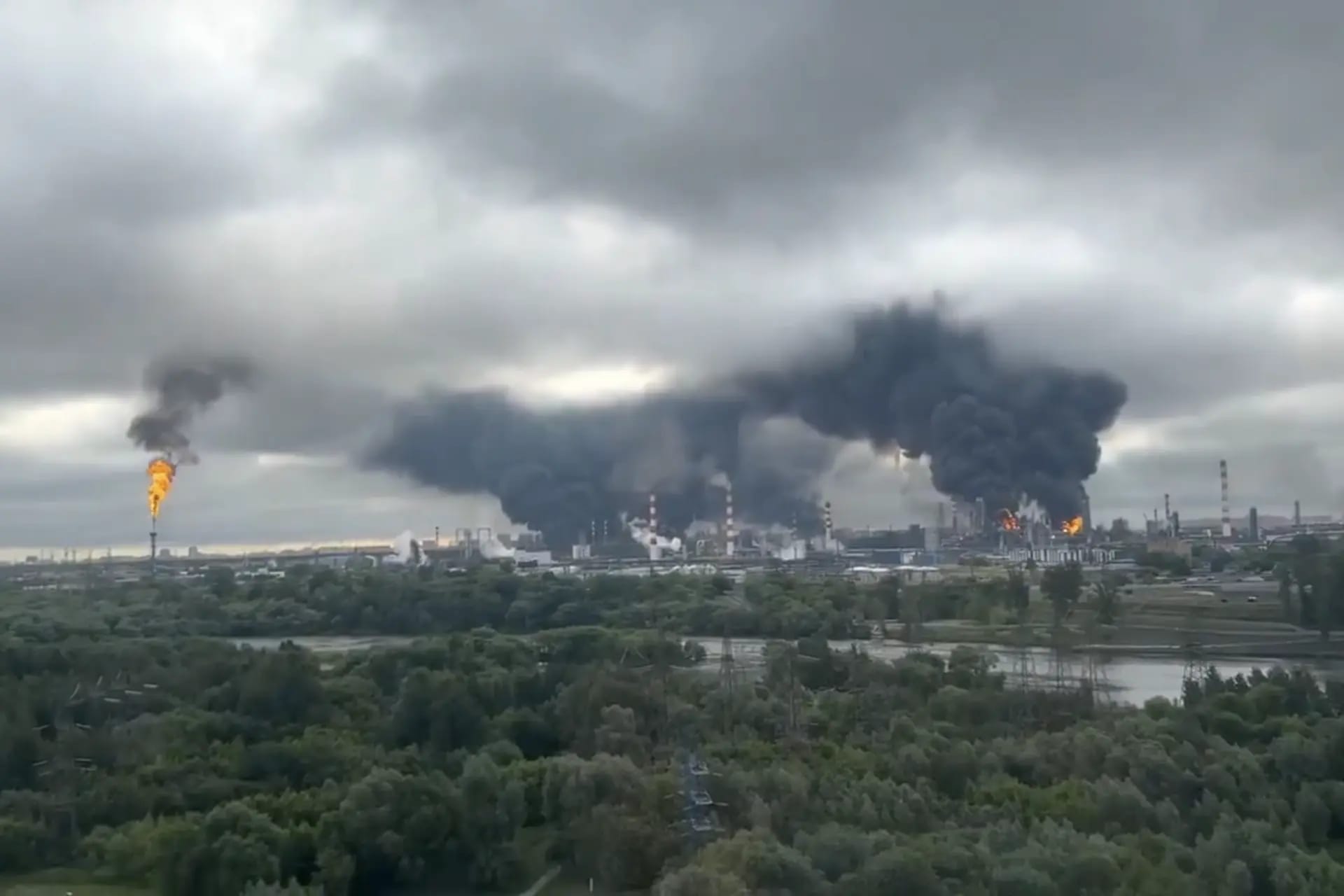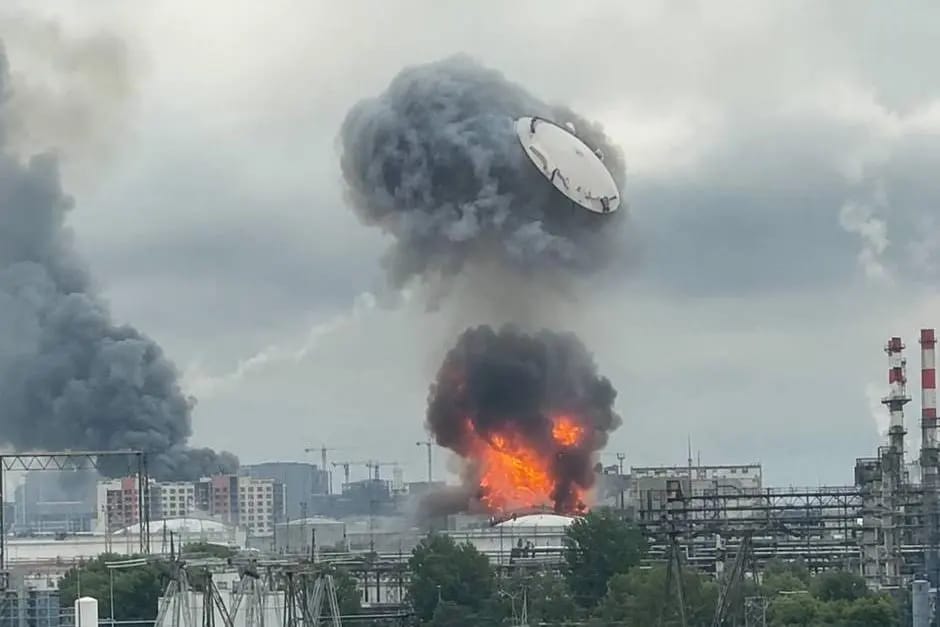
Drone attacks on major oil refineries in central Russia have caused the country’s gasoline output to fall by 25% year-on-year, Reuters reported recently, citing calculations by industry sources for the first twenty days of June. According to the same estimates, production over the past week was also down 25% when compared with March, the month that Ukrainian strikes on Russian refineries intensified.
The sources said daily gasoline output fell from an estimated 120,000 metric tons in March to about 110,000 tons in April and 100,000 tons in May. Production stayed near May levels in early June but fell sharply after two major producers — the Moscow Oil Refinery and TANECO in Tatarstan — halted operations over the past week.
The shutdowns removed about 15,000 tons a day from the market, cutting daily output to roughly 85,000 tons. That is about 25,000 tons below summertime domestic demand, which industry specialists put at a minimum of 110,000 tons a day. Reuters’ sources said refineries with spare capacity can cover only about 5,000 tons of the shortfall.
The gap is being partly covered by supplies from Belarus, estimated by traders at 100,000 to 150,000 tons a month, and by inventories built up by oil companies and independent traders in late winter and early spring. Industry sources also said Russia has begun increasing seaborne gasoline imports.
Reuters’ sources said Russia could boost supplies by lowering fuel quality requirements to the Euro-3 standard. Since December, refiners have been allowed to use up to 42% aromatic compounds, compared with 35% under the Euro-5 standard, potentially boosting gasoline production by as much as 200,000 tons a month.
Other possible measures include resuming the use of monomethylaniline (an octane-boosting additive that has been banned under Euro-5 rules for the past decade) and sending naphtha from simpler refineries to plants where primary processing has stopped but high-octane component units are still running.
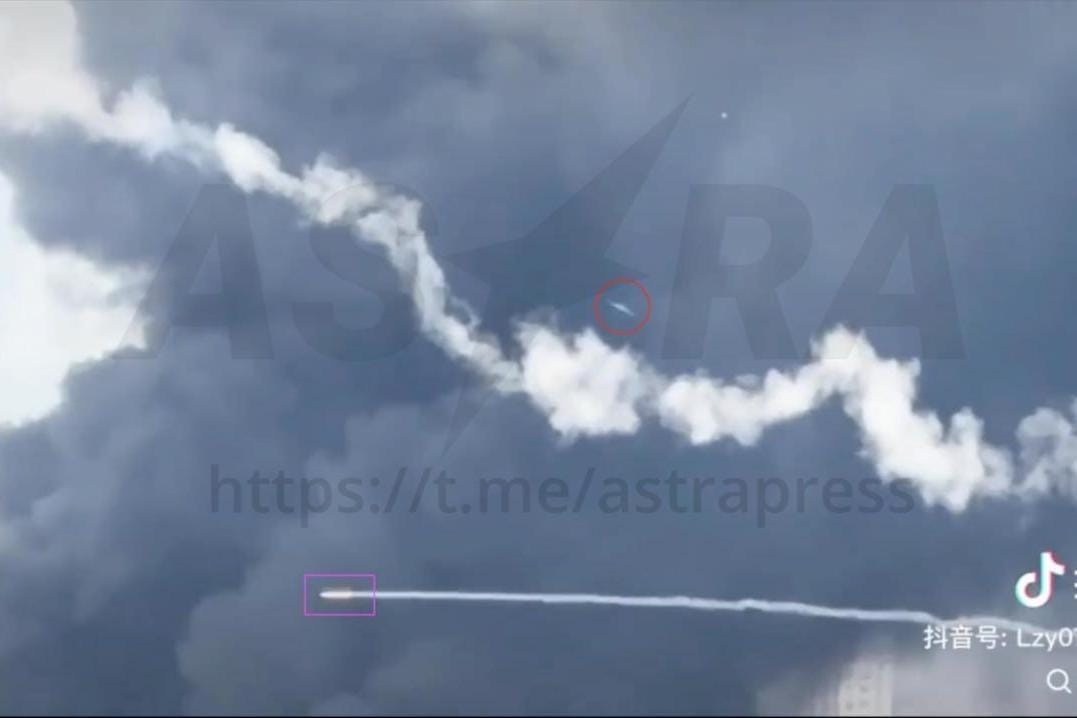
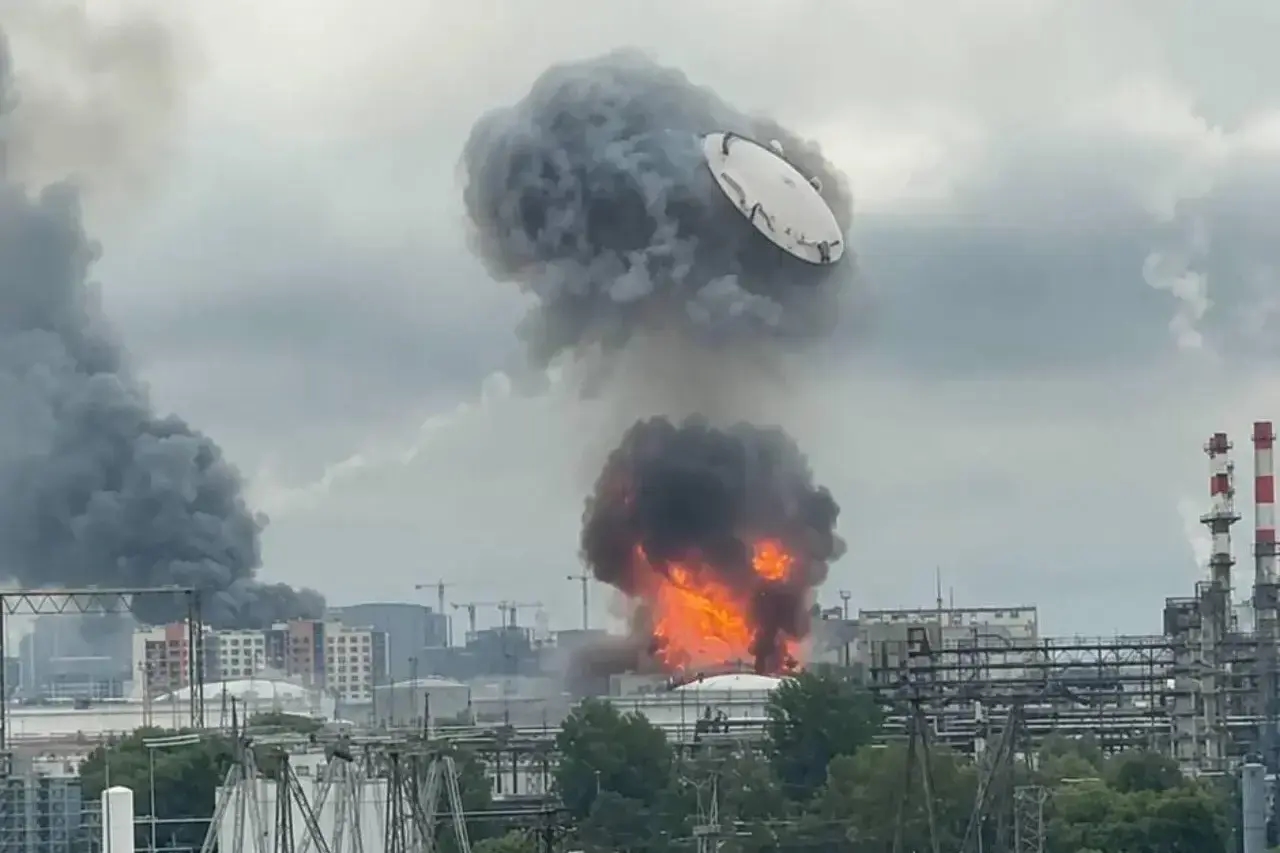
Ukrainian drones last attacked the Moscow Oil Refinery in the city’s southeastern district of Kapotnya overnight into June 18. Open source intelligence (OSINT) analysts said the strike hit several key production units at the plant, which supplies up 40% of Moscow’s gasoline, about half of its diesel, and covers up to 70% of the Moscow Region’s demand for gasoline and aviation kerosene.