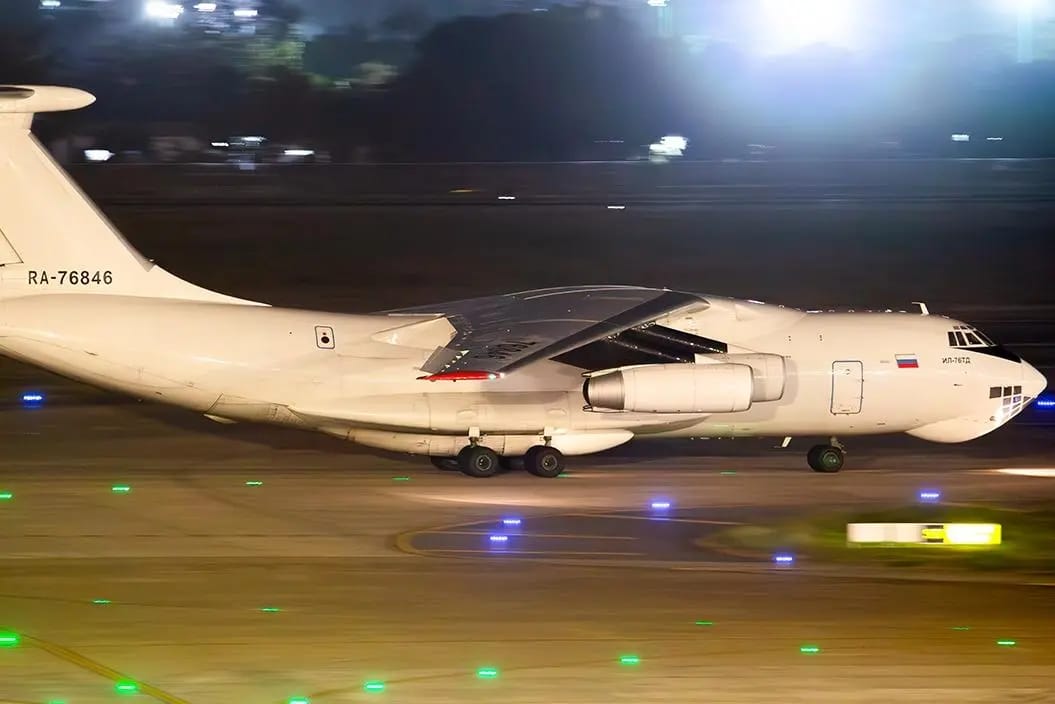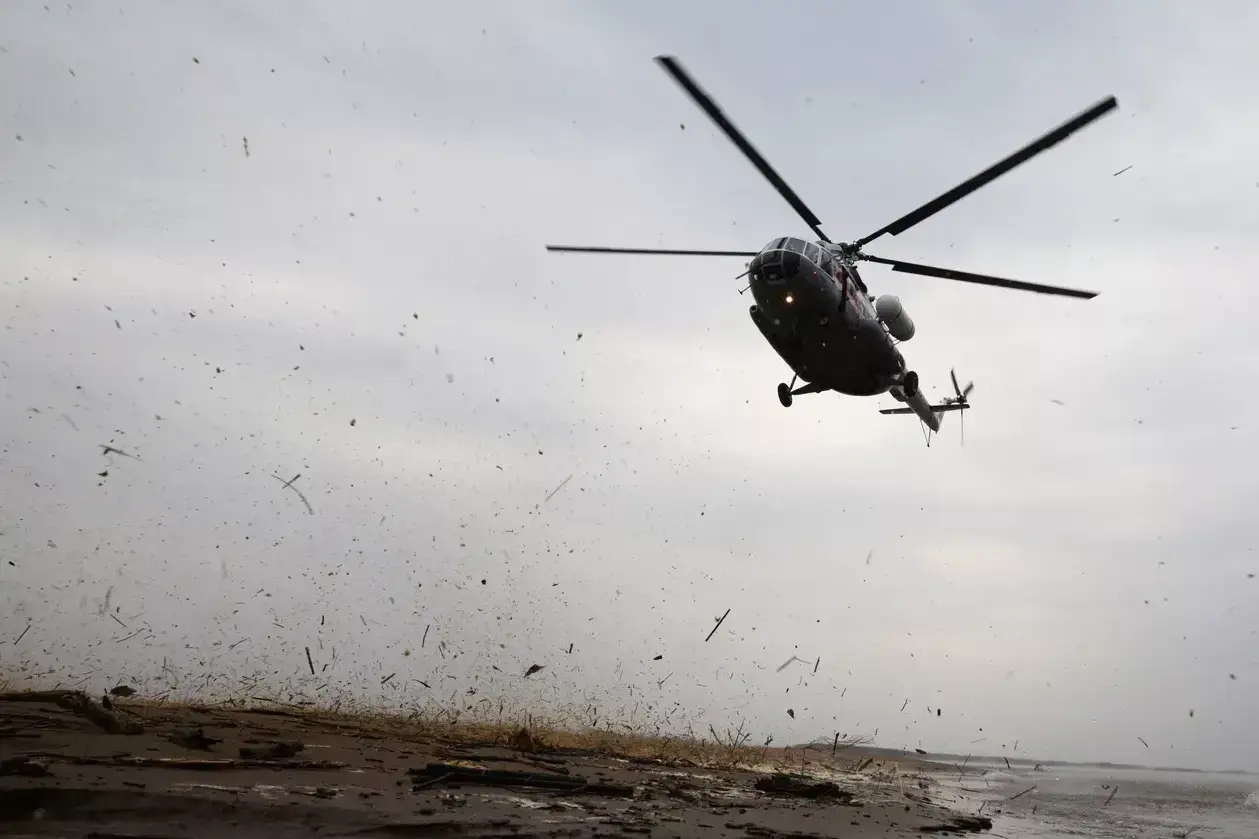
Russia plans to produce 72 Mi-8MTV-1 helicopters at the Kazan Aircraft Plant over the next two years, including 37 by the end of 2026, according to minutes from a meeting attended by Russian Deputy Trade Minister Gennady Abramenkov and more than 40 representatives of defense enterprises and state agencies. The document was reviewed by the private intelligence and analytics company Dallas.
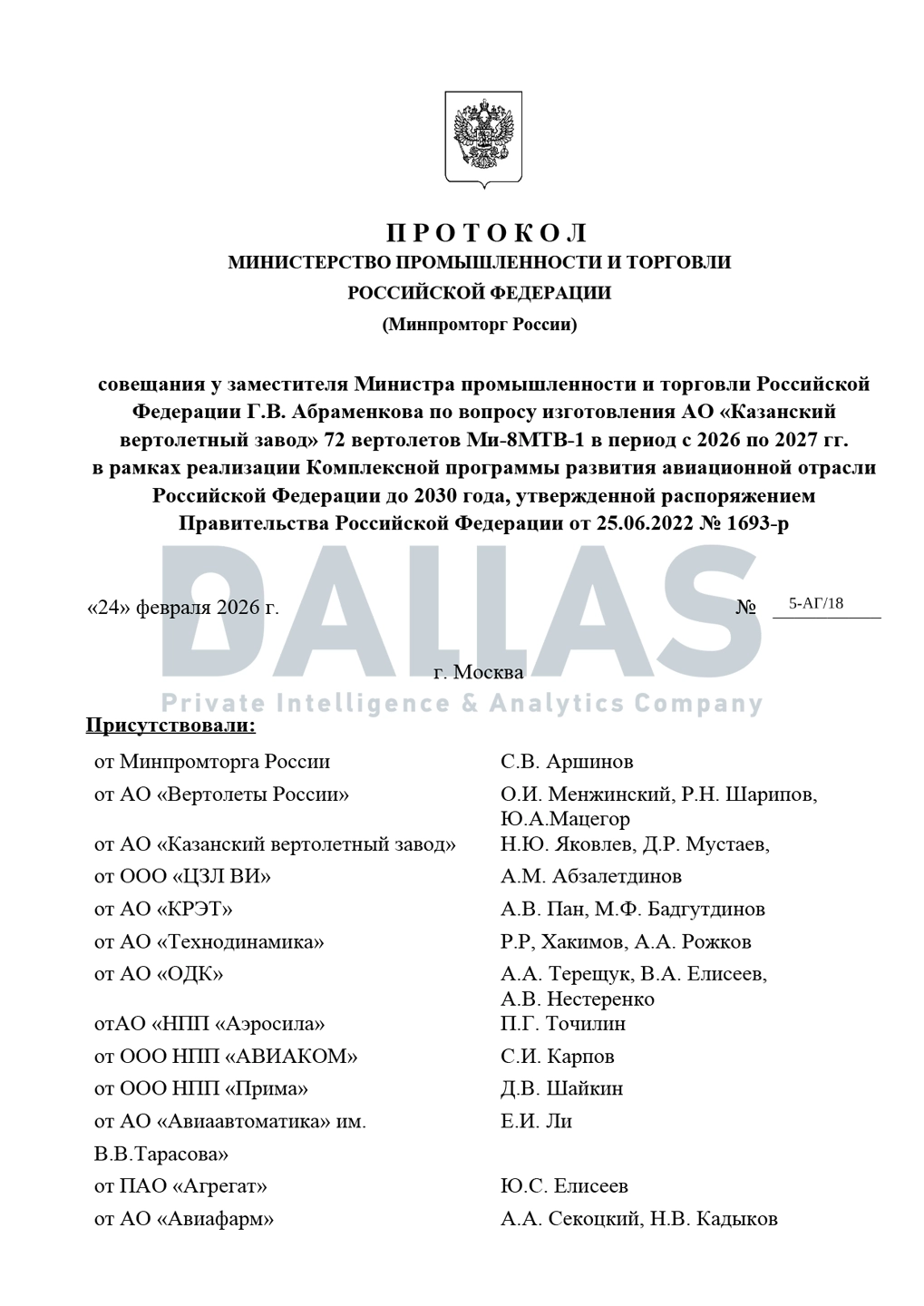
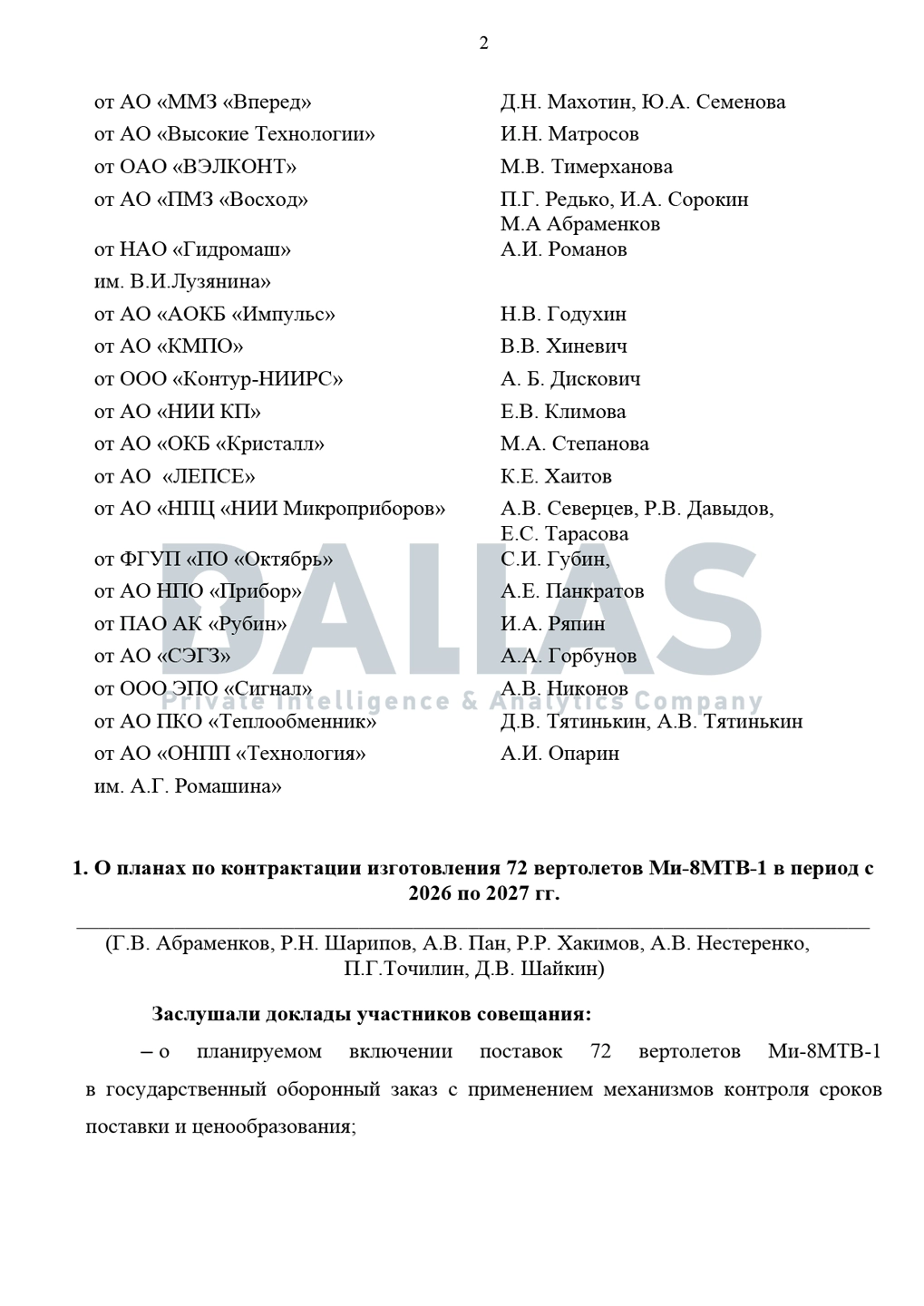
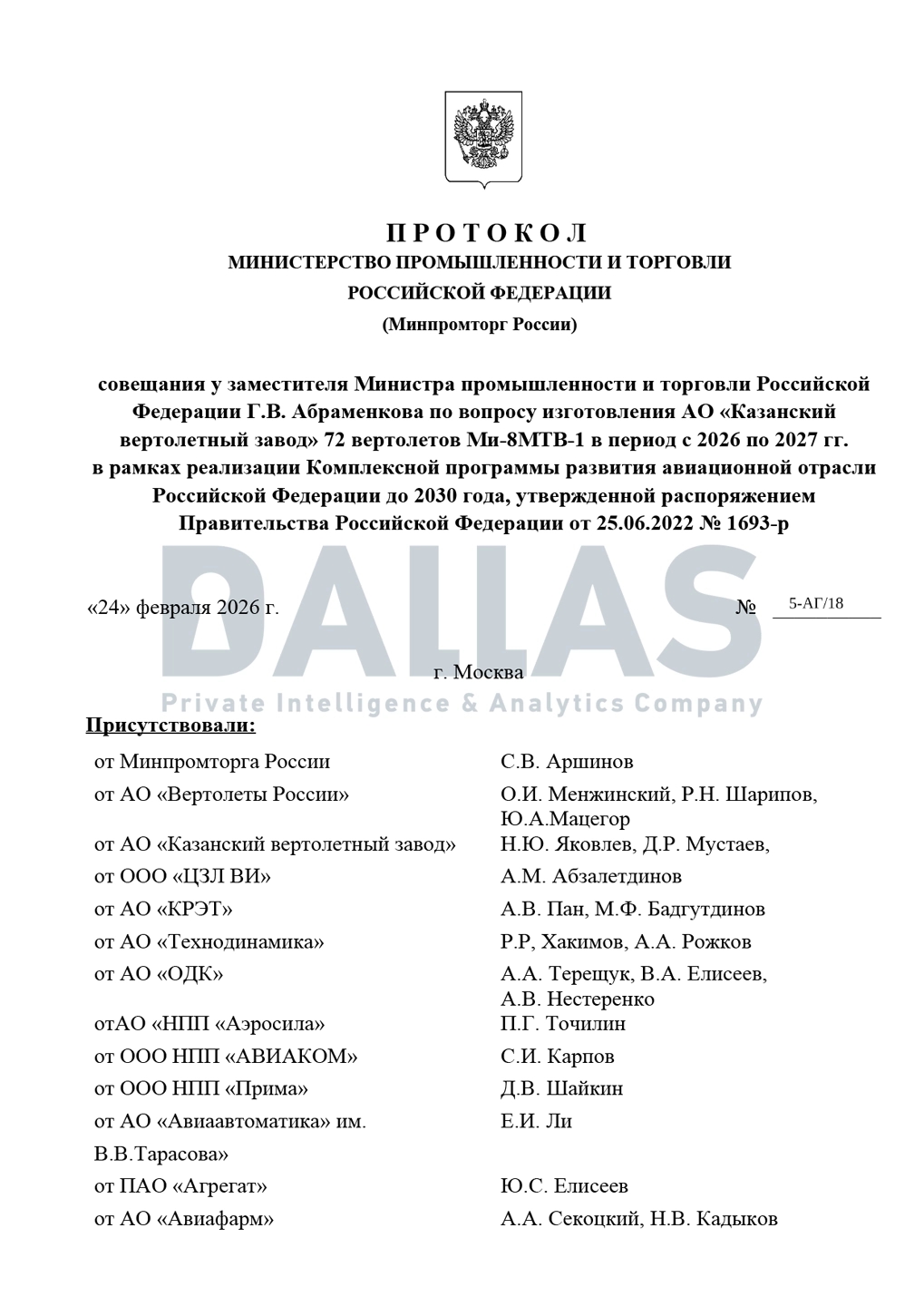
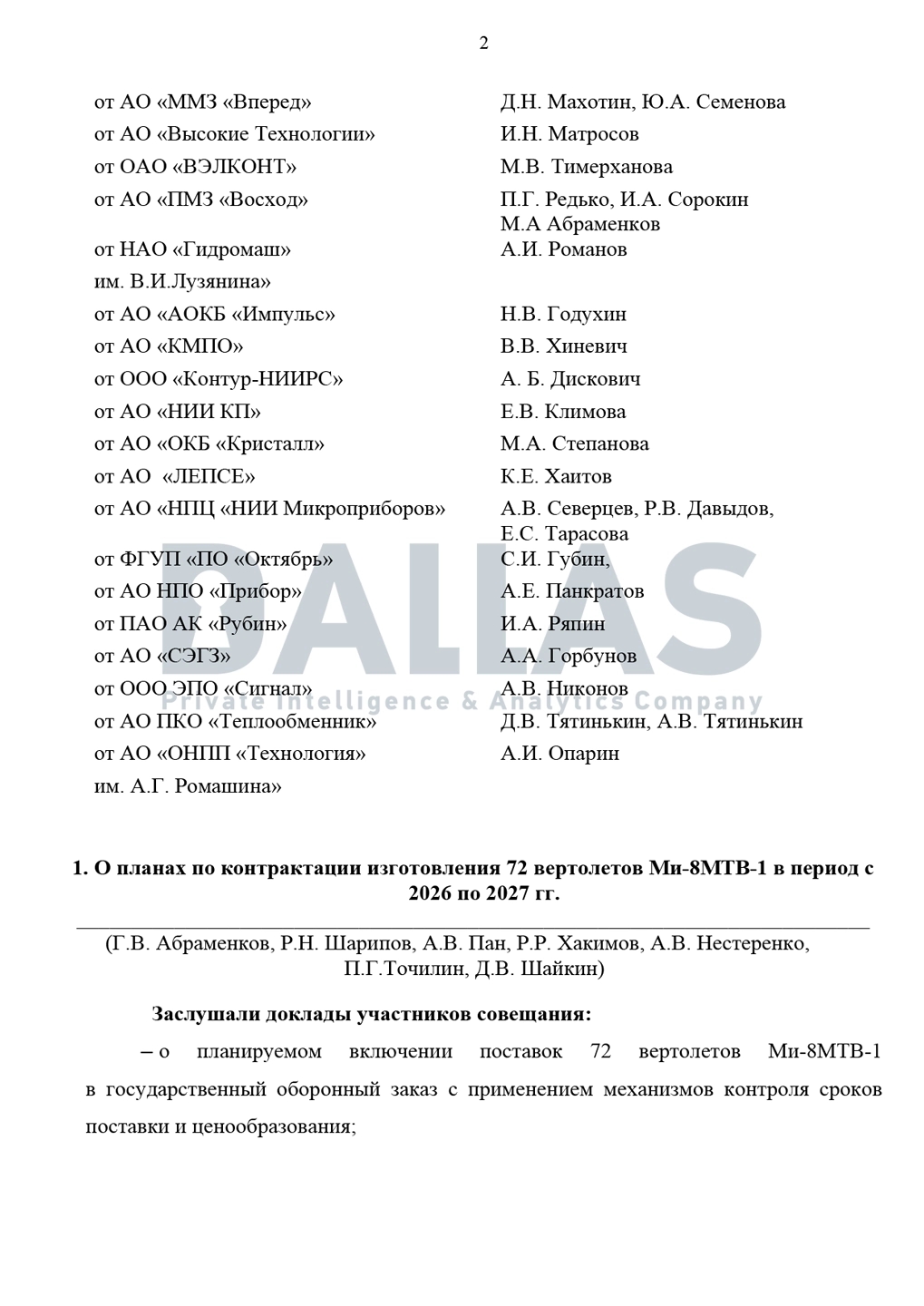
Analysts with Frontelligence Insight had previously estimated that Russia could produce about 20 military Mi-8 helicopters a year at aircraft plants in Kazan and Ulan-Ude. However, according to the minutes of the Industry and Trade Ministry meeting, a much larger number is planned — all at a single plant. There is no precise data on production at the Ulan-Ude plant, but because component supplies for Mi-8 helicopters are usually split roughly evenly between the two sites, the investigation’s authors say the two plants together could produce up to 160 helicopters over two years.
Even if only the Kazan Helicopter Plant fulfills the production plan, that would be enough to effectively compensate for Russia’s losses in this segment of aviation during the war against Ukraine, the investigation’s authors said. In their assessment, by 2027 such efforts could restore the Russian army’s ability to conduct large airborne operations at a level close to what it possessed before the full-scale invasion.
Russia’s expansion of transport and assault aviation could pose a threat to NATO countries. Given their proximity to Russia, any potential ground invasion would almost inevitably include a significant airborne component. Dallas Analytics noted, however, that the minutes also point to problems inside Russia’s military-industrial complex, including a lack of finalized contracts, shortages of advance financing, and the risk of supply disruptions due to long production cycles.
Production also depends on cooperation among dozens of enterprises, making the system vulnerable to external pressure and sanctions. The investigation’s authors separately note that United Engine Corporation will be able to begin supplying engines for the Mi-8 only in September 2026, while deliveries of onboard electronics and avionics from the Radio-Electronic Technologies Concern depend on the receipt of advance payments.
The minutes also refer to the need to calculate how many helicopters can actually be built in 2026, meaning even the stated plan for 37 aircraft remains uncertain. The document indicates that money from Russia’s National Wealth Fund could be used to support production.
The Mi-8 remains one of the Russian army’s key multipurpose helicopters. At the start of the full-scale invasion of Ukraine, such aircraft were heavily used in airborne operations, including at Antonov Airport in the Kyiv suburb of Hostomel. However, after taking serious losses the role of the aircraft changed. Mi-8 helicopters are now more often used for evacuations, search-and-rescue missions, unguided rocket attacks from a pitch-up maneuver, and operations against both aerial and naval drones.