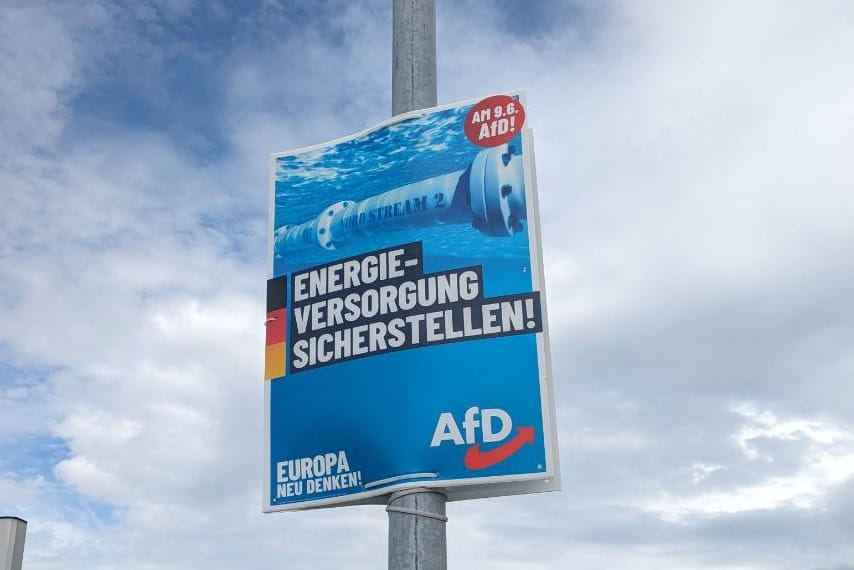
The far-right Alternative for Germany (AfD) party could come to power for the first time in the federal state of Saxony-Anhalt, where the party is already leading in polls. Its local leader, Ulrich Siegmund, has promised to toughen policy toward migrants, “de-ideologize” schools, restore Russian-language classes, and resume student exchanges with Russia. Political analyst Dmitri Stratievski explained to The Insider why an AfD victory in one state could become a problem for all of Germany, and why the German far right’s pro-Russian slogans resonate especially in the country’s east.
The AfD is close to forming a one-party state government
The AfD could come to power for the first time in Saxony-Anhalt, an eastern state that was formerly part of East Germany, according to a recent report by Deutsche Welle, citing polling data. Several months ahead of the September elections to the state parliament, the party’s support stands at about 41%.
That level of popularity could allow it to form a one-party government. The current governing coalition in the 97-seat Landtag, or state parliament, consists of the Social Democrats, the Free Democrats, and the Christian Democrats. By number of seats, the AfD currently ranks second with 23, behind the Christian Democratic Union, which has 40.
At the regional level, the far-right party has been classified as a “confirmed right-wing extremist” organization by the regional branch of the State Office for the Protection of the Constitution, Germany’s domestic intelligence body. Law enforcement authorities have accused the AfD of contradicting the basic principles of Germany’s democratic order, including by promoting a concept of “the people” based on ethnic origin rather than legal equality. The party, in turn, called the decision politicized.
Dmitri Stratievski, a political analyst and director of the Berlin Center for East European Studies, told The Insider that AfD’s rise to power in one region would be a “serious problem” at the federal level.
“If the Greens do not pass the threshold and AfD gets, say, 42.5% to 43%, it is entirely possible that the party would have a real chance to form the government of Saxony-Anhalt on its own. Importantly, Germany is still a country with a bicameral parliament. In addition to the Bundestag, there is the Bundesrat, the chamber of the federal states, where all federal states are represented. Roughly a third of laws passed by the Bundestag require approval in the Bundesrat. German history has seen more than one case, including quite recently, when a law was passed by the Bundestag but vetoed by the Bundesrat, and eventually failed.
Let’s examine a hypothetical situation: AfD becomes the governing party in Saxony-Anhalt. Admittedly, the state is small and not densely populated, so the AfD’s political weight or vote reserve would be very limited compared with major federal states such as North Rhine-Westphalia, Hesse, Bavaria, or Baden-Württemberg.
But, as is well known, serious political battles also take place among democratic parties. It is entirely possible that in the event of a political conflict between democratic parties — say, between the Social Democrats, the Christian Democrats, and the Greens — that very AfD vote from Saxony-Anhalt could be decisive in preventing a bill from passing.
If the AfD comes to power in any federal state, naturally including Saxony-Anhalt, it would mean not only a reshaping of the political landscape in that state, but also serious, I would say fundamental, changes at the federal level. The AfD would thereby become a serious, established player in federal politics, effectively one of the governing parties, although, of course, it would not join the federal coalition.”
The far right in Saxony-Anhalt promises to restore Russian classes in schools and resume student exchanges
Ulrich Siegmund, the AfD’s leader in Saxony-Anhalt, told DW that if his party comes to power, he intends to ensure that all migrants denied asylum in Germany are detained and deported. He also called for reforms of the education system.
“We are going to de-ideologize the curriculum. That means everything ideologically introduced into it in recent years will be removed,” he said.
DW noted that the AfD opposes diversity programs, including seminars on combating racism and education on LGBTQ+ issues. Siegmund also called for Russian-language courses, like those that existed in the East German era, to return to the state’s schools, and for student exchange programs with Russia to resume.
“Why should we now change the direction of cultural policy just because these are the current moods, the spirit of the time? We do not think this is a good idea. We want culture to be separated from that trend,” he said.
The politician also supports lifting sanctions against Russia.
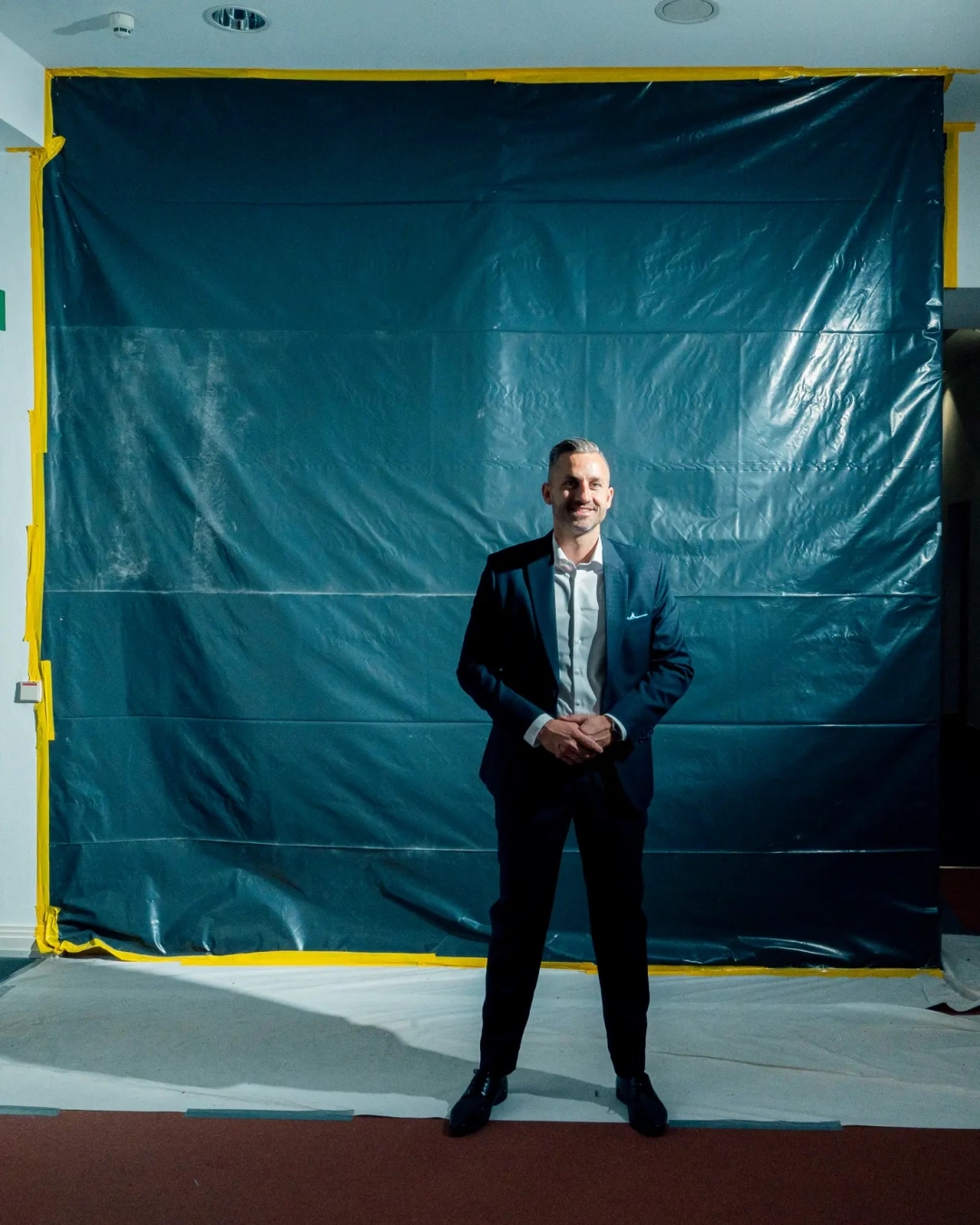
Stratievski said the pro-Russian position can be explained by eastern Germany’s historical proximity to the Soviet Union and by the current attitudes of part of the electorate.
“The AfD, as is well known, is an entirely populist party, and in the past it very often made pipe-dream promises to its own voters or potential voters that cannot be implemented in practice within Germany’s political system.
AfD politicians very often mix up the three levels of government in Germany — federal, state, and municipal, or communal — and deliberately confuse the electorate by making proposals at, say, the municipal or state level that cannot be implemented without the federal level.
But populism alone is not enough to live on, so AfD is trying to professionalize. And this is exactly why the proposal to resume, introduce, or expand Russian-language teaching in schools is interesting. Education issues really do fall under state authority, and if AfD were to come to power, that proposal could be implemented in practice.
Why Russian? I see several reasons, based on the following background. First, Alternative for Germany often demonstrates a pro-Russian course and supports Kremlin narratives. Those narratives find understanding among the party’s regular voters, so such pro-Russian signals and messages are entirely natural for the party.
We also should not forget that Saxony-Anhalt and Mecklenburg-Western Pomerania — the two states where elections will be held in September — are in eastern Germany. And in eastern Germany, traditions of a certain friendship with Russia remain strong to this day. In this idea of friendship with Russians, many people confuse today’s Russian Federation with the Soviet Union. Naturally, during the East German period, Russian was the dominant foreign language in this area and a compulsory subject in the education system, and somehow this was passed down in families. Learning Russian is more natural there than, for example, French or Spanish.
And finally, the third factor is the AfD’s attempt to play on opposition to Western narratives or, as they like to say, the Western mainstream. The message is: whereas pro-Western values were actively imposed on eastern Germany after the reunification, we oppose them in favor of a more global — or supposedly more global — way of thinking, and we seek to normalize relations with Russia, including in this form.”
Saxony-Anhalt party leader accused of nepotism and named in high-profile “secret meeting near Potsdam”
At the start of the year, the AfD branch in Saxony-Anhalt, led by Siegmund, became embroiled in a nepotism scandal. According to Der Spiegel, Siegmund’s father was listed as working in the office of another AfD lawmaker, Thomas Korell, and was earning more than 100,000 euros a year. The scandal also affected other party representatives in the state: Media reports described the employment of relatives of AfD lawmakers and functionaries in parliamentary offices and the Landtag faction.
Siegmund was also mentioned in an investigation by the independent outlet Correctiv about a secret meeting of right-wing politicians near Potsdam, where a plan for the mass deportation of migrants from Germany was discussed. The report said the leader of AfD’s parliamentary group in Saxony-Anhalt attended the meeting along with other party representatives. There, Siegmund said the “street scene must change” and that foreign restaurants should be put under pressure so that their owners would find it “as unattractive as possible to live in Saxony-Anhalt.”
After the publication, Siegmund said through lawyers that he had attended the meeting as a private individual and denied any intention to “illegally deport people.