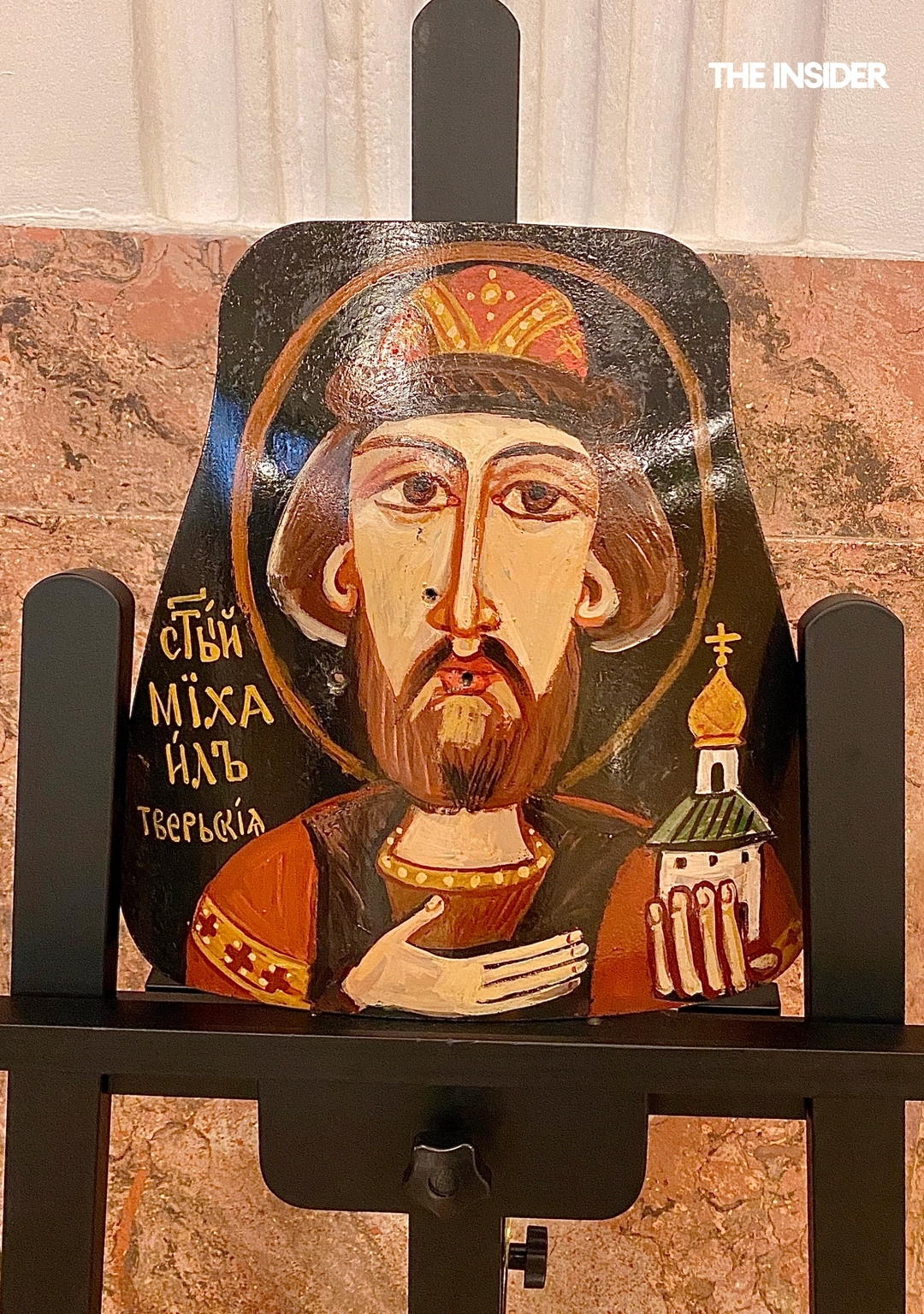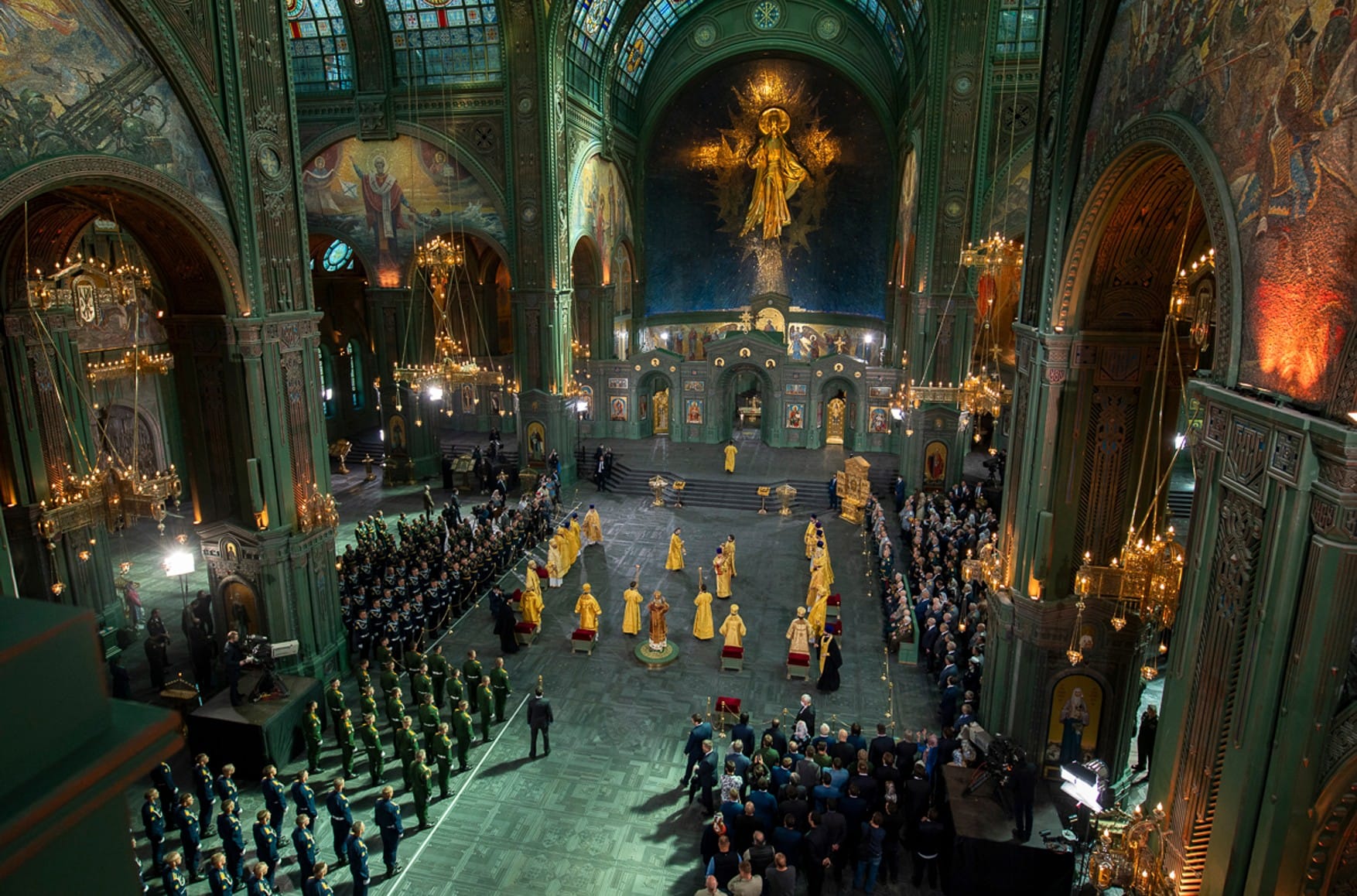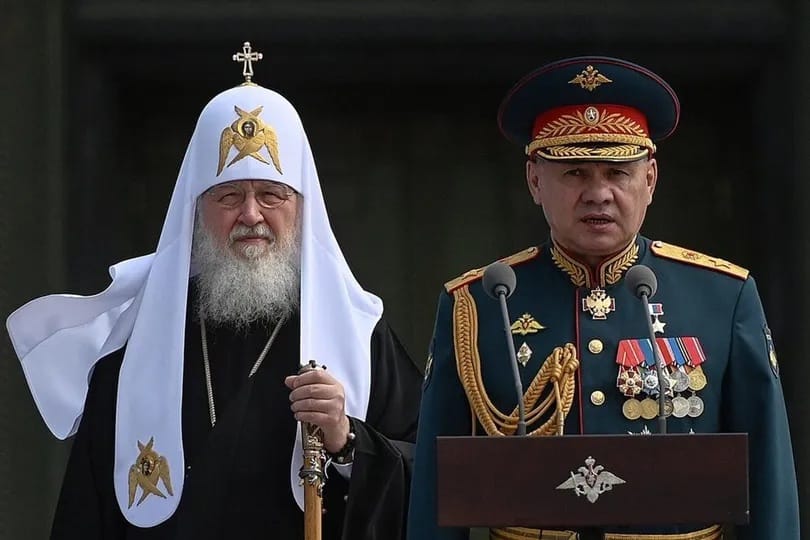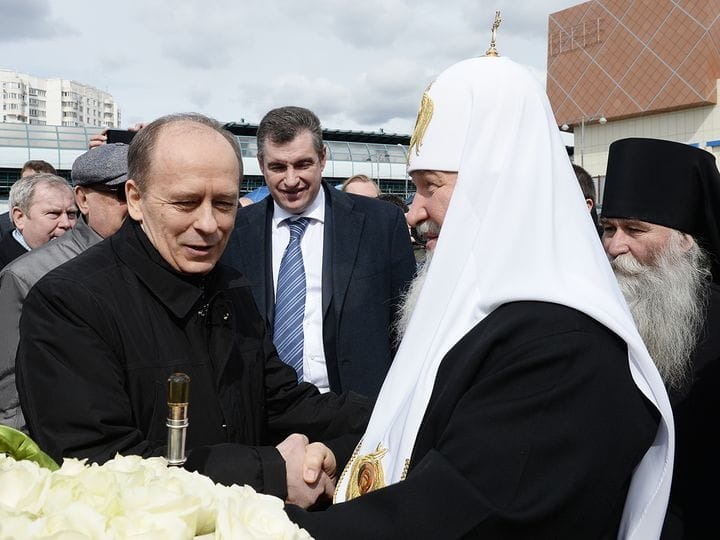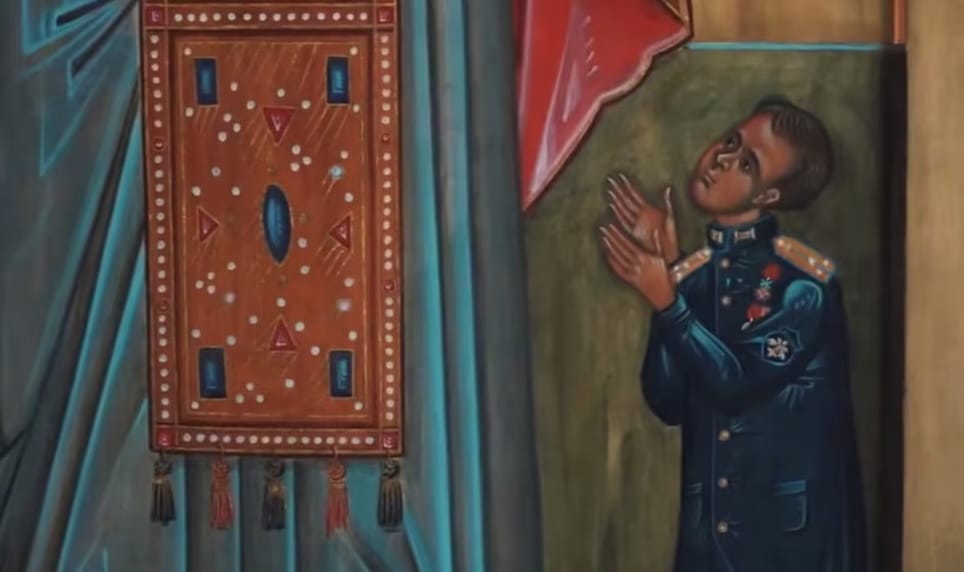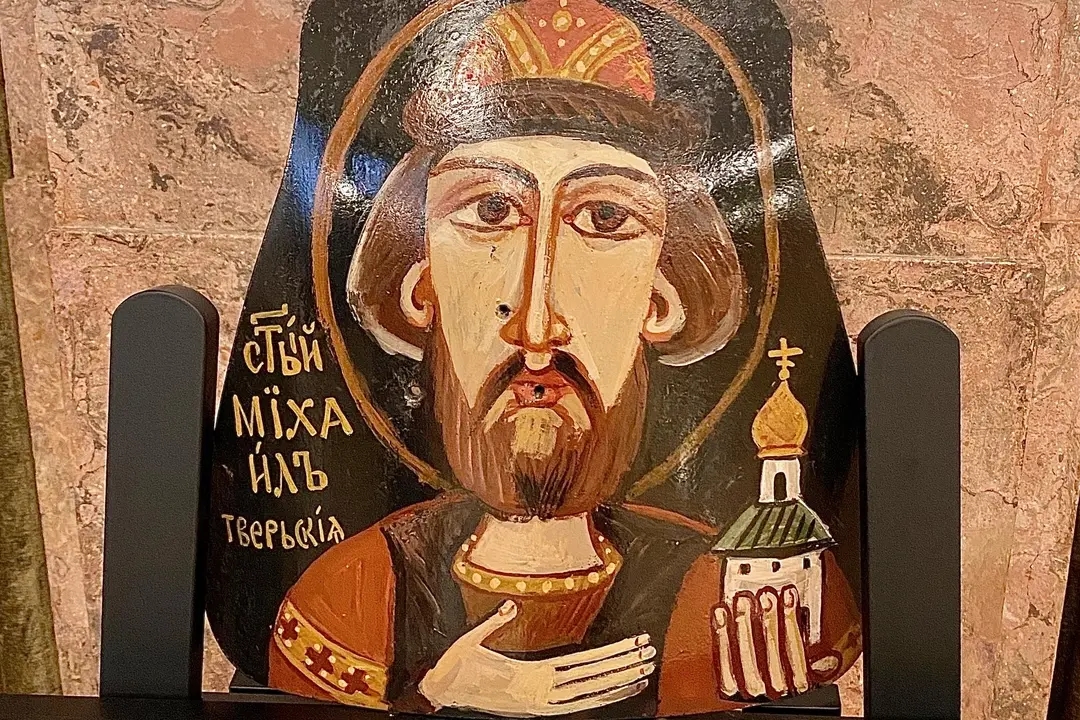
An exhibition of Orthodox icons painted on armor plates — steel inserts placed in body armor to protect against bullets and shrapnel — worn by Russian soldiers in Ukraine has opened at the Lenkom Mark Zakharov Theater in Moscow. The organizers claim the plates saved Russian soldiers’ lives in Ukraine. Some of the exhibits are visibly damaged.
Most of the plates bear round marks from small-caliber bullets, but several others show damage from larger munitions. Some plates are badly warped along the edges and have torn marks, apparently from mine or blast damage. All the images painted on the body armor plates have been consecrated, according to the exhibition description.
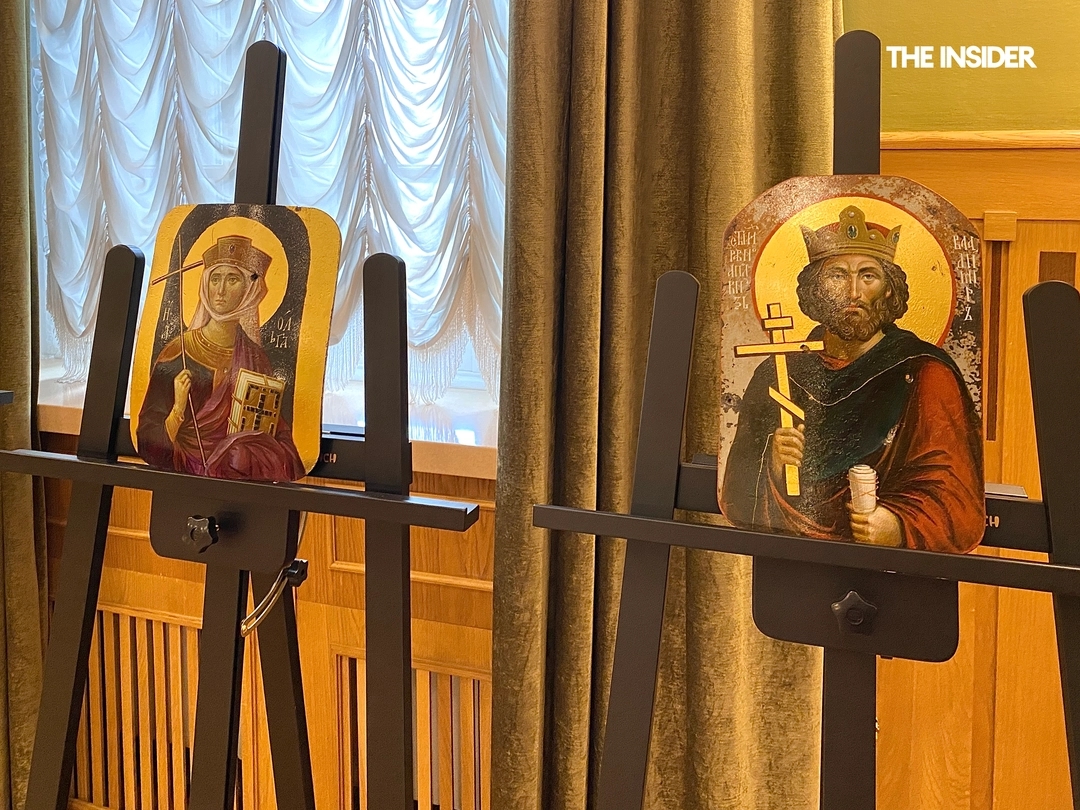
The exhibition occupies one of the theater’s lobbies, with works displayed along the walls on special stands. The admission is free but limited to those attending stage productions at the theater. Several icons are displayed on the way to the lobby, in hallways leading to staircases.
The idea of painting the images of Russian Orthodox saints on armor plates came from the clergy at Moscow’s Danilov Monastery, according to the exhibition description.
“Young artists enthusiastically took up the idea. Students from the V.I. Surikov Moscow State Academic Art Institute and the S. Andriyaka Academy of Watercolor and Fine Arts volunteered to transfer sacred faces onto armor scorched by war,” the description says.
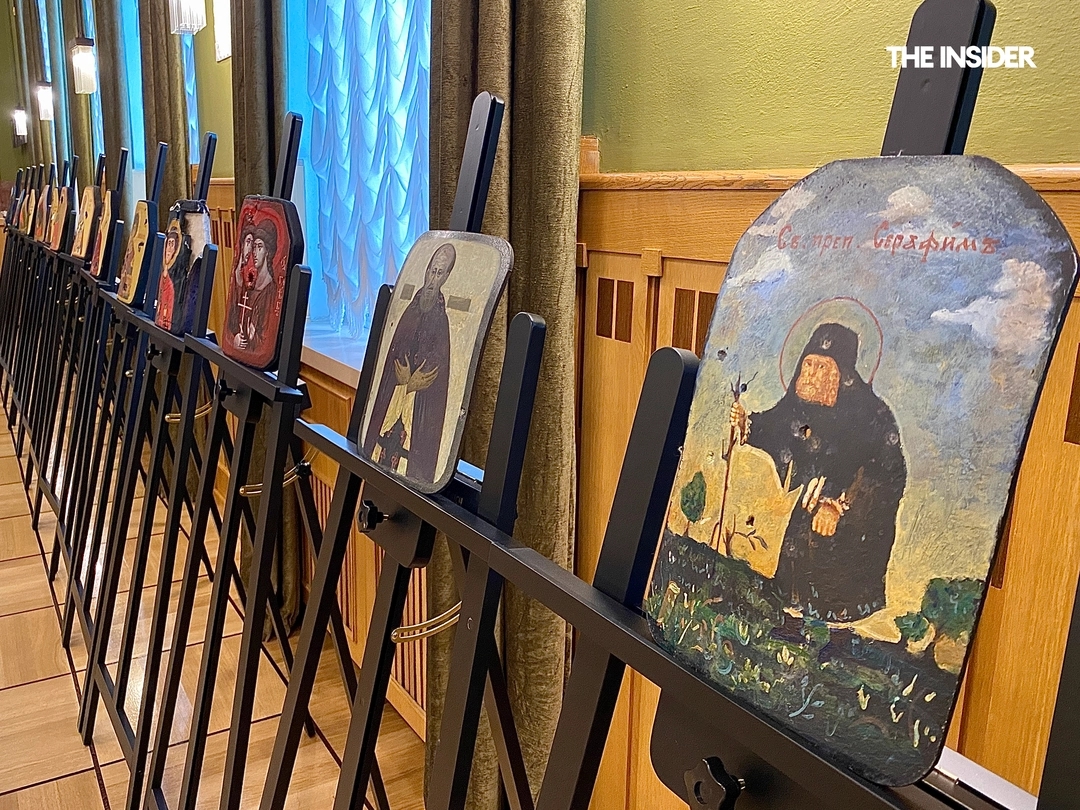
The names of students and teachers who contributed to creating the icons on the armor plates are not indicated; the works are anonymous.
“We received these body armor plates straight from the front, untreated, with their wounds, in blood,” said Professor Anatoly Lyubavin, rector of the Surikov Institute. “The students had to prepare the surface, prime it, let it sit for a while, and then begin work using icon-painting techniques.”
Among the locations from which the plates came are Bakhmut, Chasiv Yar, Avdiivka, and Myrnohrad. All of those cities were fully or almost fully destroyed during intense fighting and were occupied, fully or partially, by Russian forces.
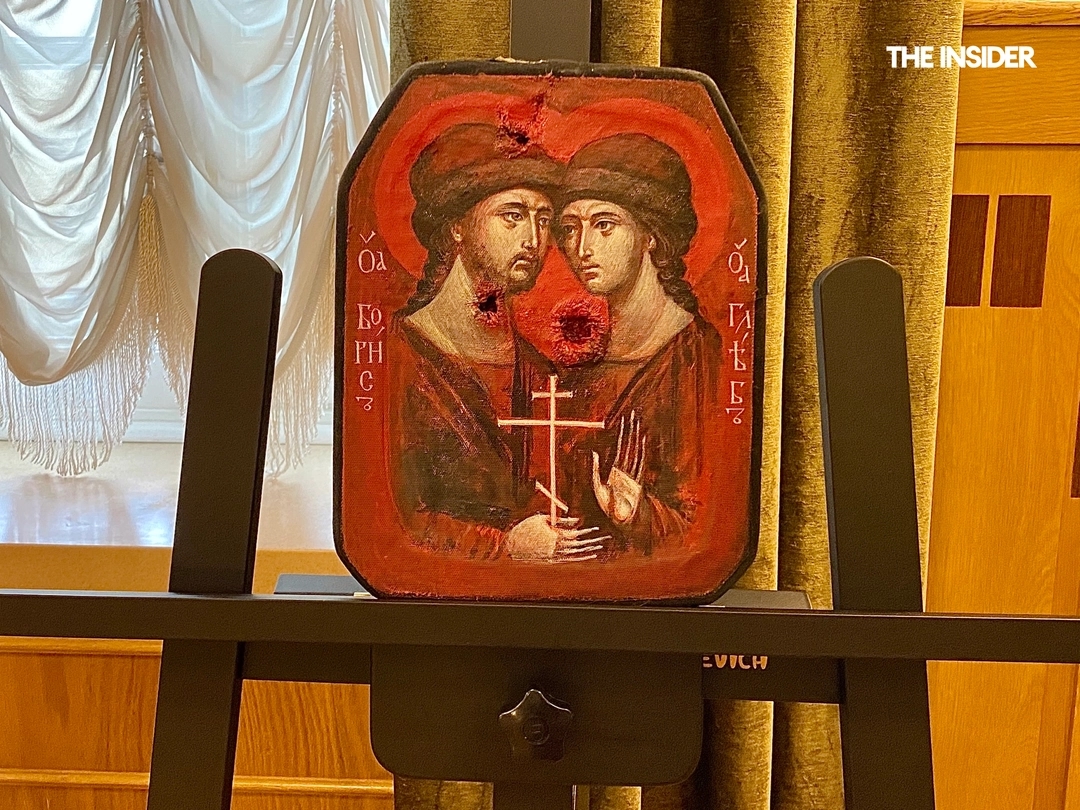
The exhibition is part of the “Russian Style: Steel” project, which has been on display in multiple Russian cities since 2024. The icons painted on armor plates have also been brought to Donetsk. The project’s ideologist is artist and pro-government activist Anton Belikov, a vocal advocate of Russia’s invasion of Ukraine whom pro-Kremlin Russian media have described as an “Orthodox philosopher.”
In 2016, Belikov vandalized an exhibition on the war in Donbas at Moscow’s Sakharov Center, splashing paint on works by photographers Alexander Vasyukovich of Belarus and Sergei Loiko of Ukraine, winners of the Direct View competition. The images showed Ukrainian soldiers, some of whom had already been killed.
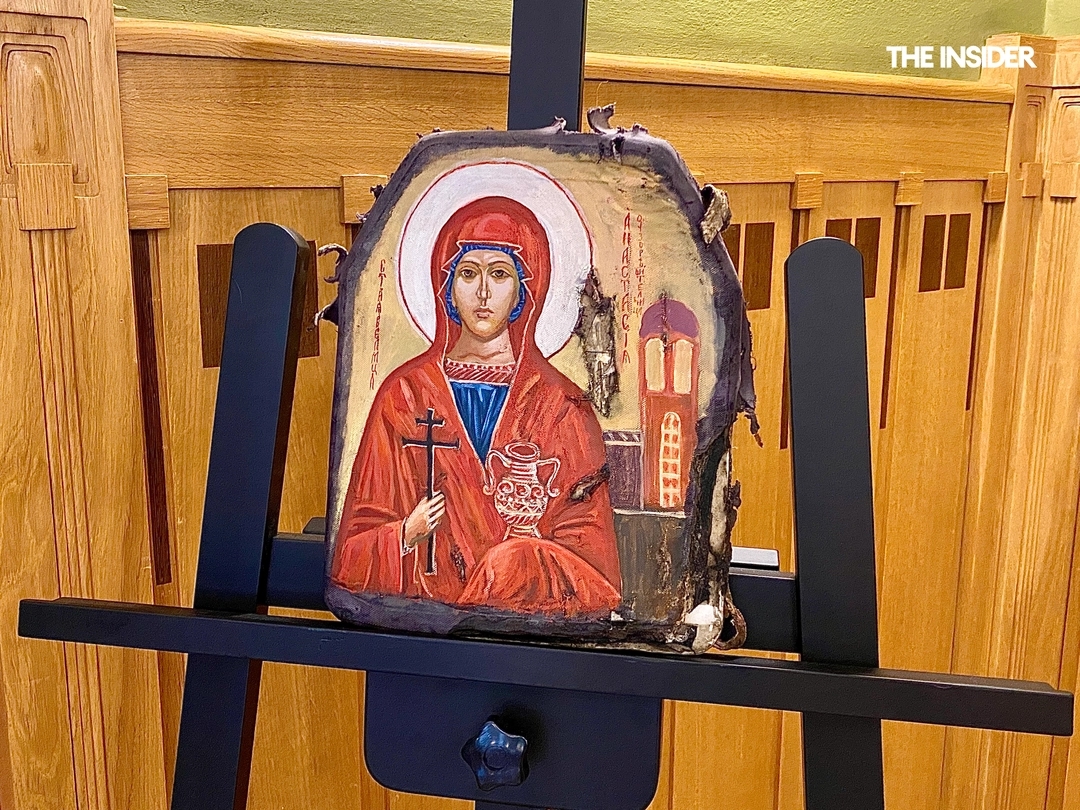
The body plate armor project’s curator is Svetlana Cheprova, a pro-war artist who has organized several exhibitions, mostly in the field of Orthodox art. She raises funds to buy equipment for Russian soldiers, criticizes the West, and voices support for Russia’s invasion in comments to the media.
In late April, the icons were displayed on Smolenskaya Square across from the Russian Foreign Ministry building. Foreign Ministry spokeswoman Maria Zakharova gave a speech at the opening ceremony. The organizers initially announced that the exhibition would run at Lenkom from May 7 to 14, but as of May 19, the works were still in place.