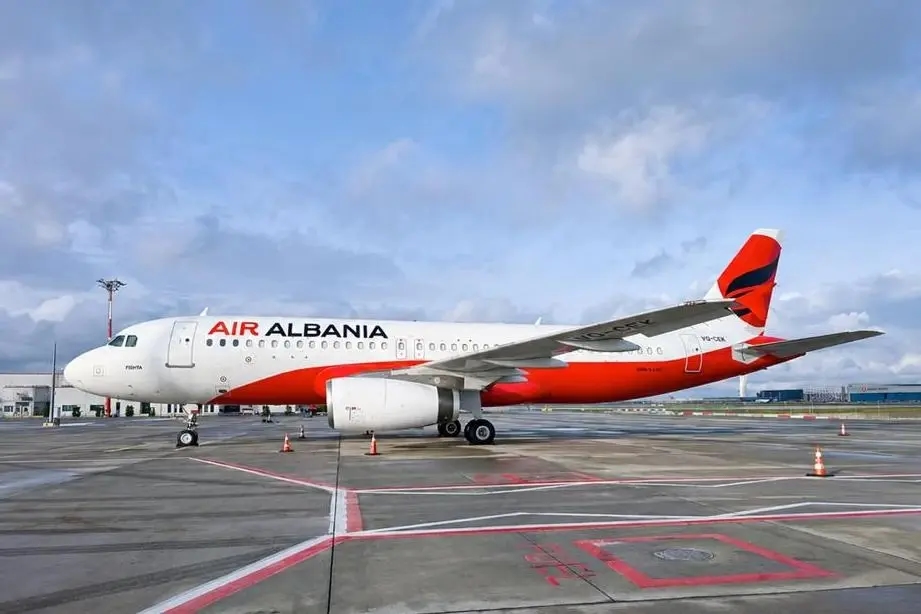
An Airbus A320 bearing the Russian registration number RA-73899 arrived at Moscow’s Vnukovo Airport on May 15, according to a report by the aviation-focused Telegram channel “Aviation Mezzanine.” The channel said Russian airline Severo-Zapad is the aircraft’s new owner. The Planespotters project also lists Severo-Zapad as the aircraft’s new operator.
The aircraft in question is an Airbus A320-232 with serial number 4934, previously carrying the Cayman Islands registration VQ-CEK. Built in 2011, the plane was originally operated by the UAE airline Etihad Airways. In 2022, the aircraft was transferred to the U.S. company GA Telesis and was leased to Air Albania. In 2025, the plane returned to GA Telesis and was placed in storage in Istanbul. On April 14, 2026, the aircraft flew to Muscat, Oman, and on May 15 arrived in Moscow with the Russian registration RA-73899.
This is not the first case of its kind. In 2024, the airline Severo-Zapad already imported an Airbus A320neo with serial number 8774 into Russia.
Suspicious requests
U.S. aviation parts supplier GA Telesis was previously a notable Western lessor in Russia’s aviation market. After Russia’s full-scale invasion of Ukraine, it was among many aircraft leasing companies unable to recover planes from Russia because of international sanctions and countermeasures imposed by Russian authorities.
GA Telesis leased two Airbus A319 aircraft and their engines to Rossiya Airlines. After sanctions were imposed, the aircraft remained in Russia without the lessor’s consent. In 2022, GA Telesis’ Irish subsidiary sued Rossiya Airlines and its parent company, Aeroflot. In 2023, the company said the claims had been settled, with compensation paid by Russian insurer NSK Insurance Company. The settlement amount was not disclosed. Under the agreement, GA Telesis withdrew its claims against NSK, Rossiya Airlines and Aeroflot over the two Airbus A319s and their engines.
After the start of the full-scale invasion, GA Telesis began receiving a large number of suspicious inquiries from firms based in the UAE and former Soviet countries, including Kazakhstan and Tajikistan, according to reporting by Forbes Ukraine. According to company founder Abdol Moabery, many of the firms had been established shortly before contacting GA Telesis and sought to buy aircraft parts apparently intended for Russian airlines.
GA Telesis began requiring documents showing which airline and specific aircraft the parts were intended for. Moabery said potential buyers usually stopped responding after those requests. “We have a large legal department that monitors compliance with all regulations and laws. But not everyone has one,” he said.
Context
After the start of the full-scale war and the imposition of EU and U.S. sanctions, Russia was effectively cut off from legally acquiring new Airbus and Boeing aircraft, as well as from leasing, maintenance services, and spare parts. The Airbus A320 is one of the core aircraft types in Russia’s civilian fleet, while the majority of domestic air travel in Russia relies on Airbus and Boeing planes.
The aircraft with serial number 4934 passed through several countries, including Turkey and Oman, and changed registration before arriving in Russia. The case shows that sanctions-evasion schemes and channels for supplying Western aviation equipment remain active.
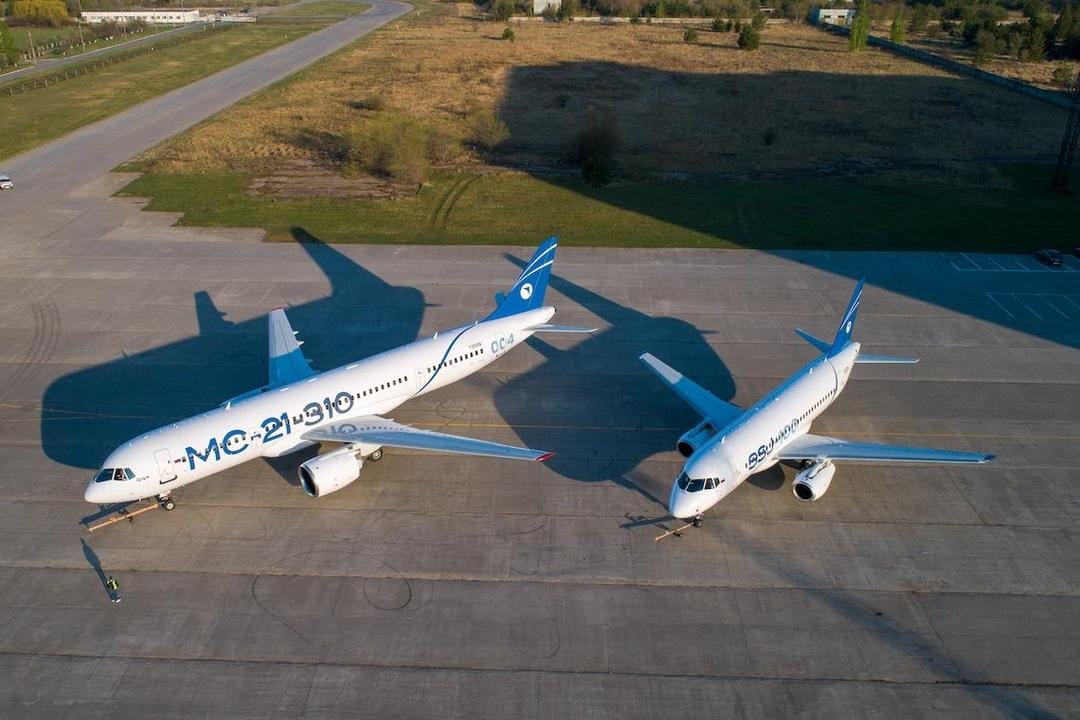
Despite official statements about “import substitution” and reliance on the SSJ and MC-21 programs, whose serial production was recently once again postponed until 2027, Russian civil aviation remains critically dependent on Western aircraft. Years after sanctions were imposed, Russia is still obtaining Airbus planes through semi-legal “gray” market channels.