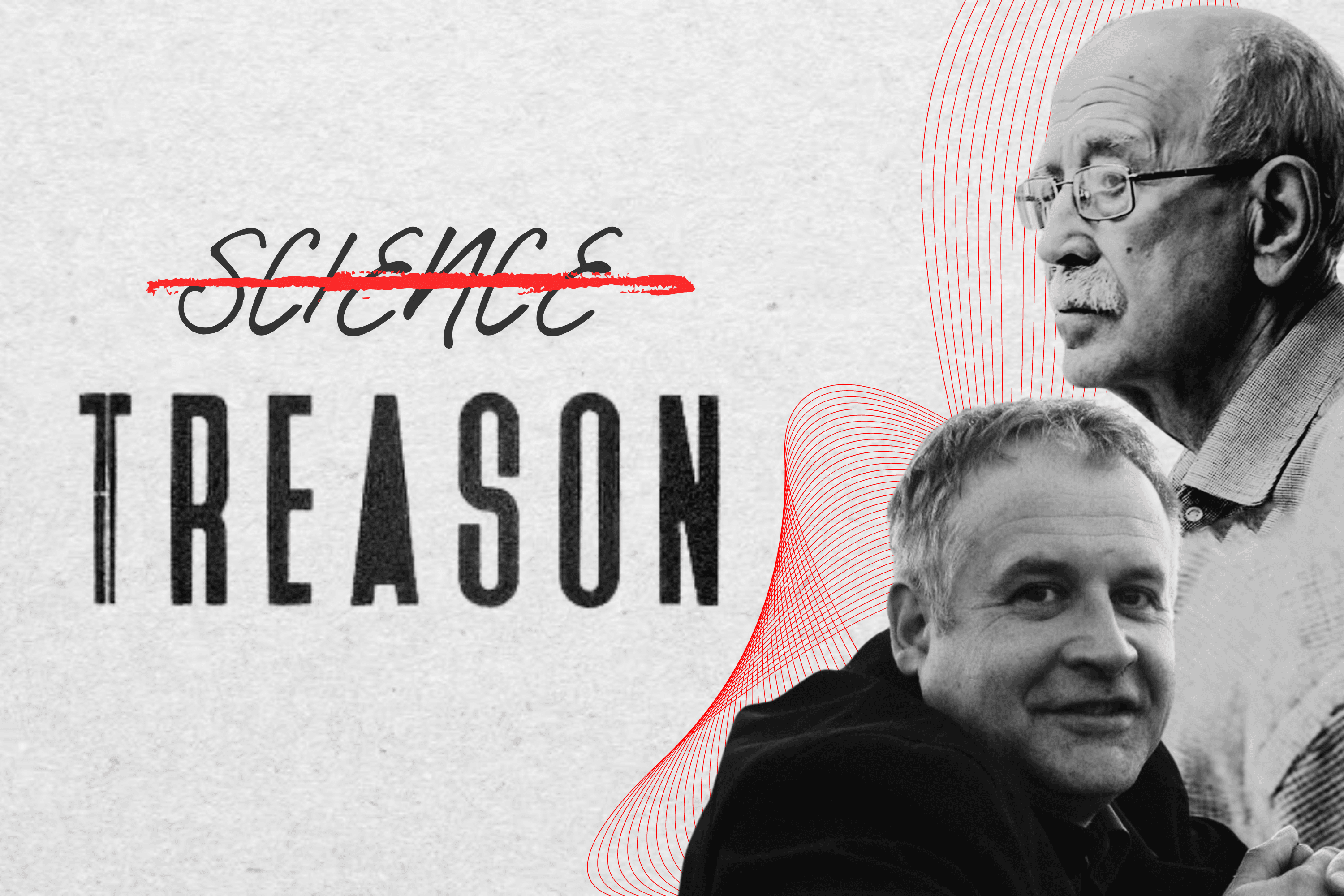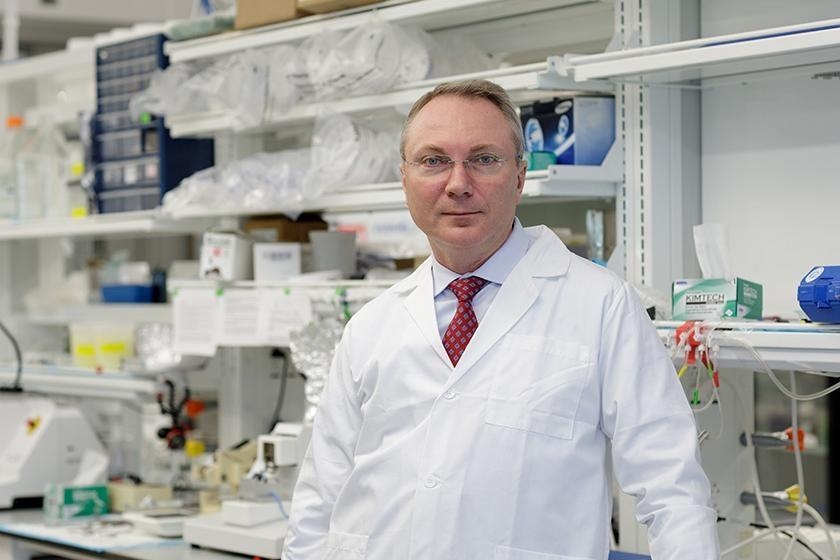
Russia’s Ministry of Justice has added Igor Efimov, Professor of Biomedical Engineering and Medicine at Northwestern University in Chicago, to its registry of “foreign agents.” According to the ministry, Efimov has been spreading “false information” about decisions made by the Russian authorities and interacting with organizations designated as “undesirable.” Also added to the registry were philosopher Mikhail Epstein, Free Russia Foundation project coordinator Anton Mikhalchuk, activists Yevgeny Malyugin and Andrei Agapov, and the Cyprus Daily News media outlet.
Efimov’s laboratory at Northwestern University studies the mechanisms of cardiovascular diseases and develops new diagnostic and therapeutic methods, including implantable, interventional, and wearable bioelectronic devices for treating heart disease.
In 2025, Efimov co-led a Northwestern University study focused on developing the world’s smallest pacemaker. The device is smaller than a grain of rice and can be injected into the body with a syringe. It is activated by light pulses from a soft wearable sensor placed on the patient’s chest and dissolves inside the body once temporary cardiac pacing is no longer needed. The study was published in the journal Nature, and the device was tested on animal models and on human hearts obtained from deceased organ donors.
The pacemaker is intended primarily for newborns with congenital heart defects, who often require temporary cardiac pacing after surgery. “Our main motivation was children,” Efimov said in a Northwestern University release. According to him, about 1% of children are born with congenital heart defects, and many of them need pacing after surgery – only for a few days, but that period is critically important.
TIME included the millimeter-sized pacemaker developed by the scientists in its list of the best inventions of 2025, noting that the wireless dissolvable device could change the treatment of congenital heart defects in children, as conventional temporary pacemakers with wires are associated with risks of tissue scarring and other complications.
In an interview with the independent Russian outlet T-invariant, Efimov explained that in conventional temporary pacemakers used after heart surgery, the electrodes are attached to the heart, with wires brought outside the body and removed about a week later. In some cases, this procedure damages the heart muscle. “Our goal was to create a miniature device that would not have to be removed from the chest cavity. It would dissolve on its own once it was no longer needed,” Efimov said.
According to Efimov, the device has not yet entered clinical practice: in order to begin human trials, researchers must submit an application to the U.S. Food and Drug Administration and gather additional safety and reliability data. Efimov said that an optimistic timeline for the wide adoption of the new technology is about five years.
In the same interview, he said that 99% of members of the Russian-American Science Association (RASA) oppose the war and stand with Ukraine, and that the association is helping scientists and students who left Russia after the start of the full-scale invasion.
In a conversation with The Insider, Igor Efimov linked the Justice Ministry’s decision to his work with the Russian-American Science Association, which had previously been designated an “undesirable organization”:
“It was expected. Quite recently, the Russian-American Science Association was declared an ‘undesirable organization.’ I was one of its founders and its first president. In addition, I have never concealed the fact that I do not consider the current Russian government legitimate. So none of this comes as a surprise to me.
It will not affect my life in any way. I have practically nothing left in Russia: no property or other ties. I had an honorary affiliation with the Moscow Institute of Physics and Technology, my alma mater, but when the full-scale war began, I wrote to Rector Dmitry Livanov the very next day saying that I was severing all ties with MIPT because my relatives were being bombed. I have family living in Ukraine – in Poltava and Kyiv. They were literally being bombed that day.
It reminds me of what happened a hundred years ago. Chicago, where I now live, was once home to Academician Vladimir Ipatieff. After the revolution, he stayed in Russia, despite being a monarchist, a lieutenant general in the tsarist army, and a member of the Imperial Academy of Sciences, because he considered himself a patriot. He helped build the chemical industry, but in 1930 he realized he would soon be arrested, and so he had to leave. In 1937 he was publicly expelled from the Academy of Sciences and stripped of Soviet citizenship. There is nothing new about this.”
Efimov’s case is not the first involving a Russian scientist working abroad. This past April, Russia’s Ministry of Justice designated chemist Alexander Kabanov a “foreign agent.” For many years, Kabanov has worked on methods for targeted drug delivery in cancer treatment and is considered to be one of the pioneers in the field of nanotechnology-based drug delivery. He participated in Russia’s “megagrant” program and now heads the Center for Nanotechnology in Drug Delivery at the University of North Carolina at Chapel Hill. The scientist himself also linked the ministry’s decision to his anti-war stance and his role as co-head of the Russian-American Science Association.