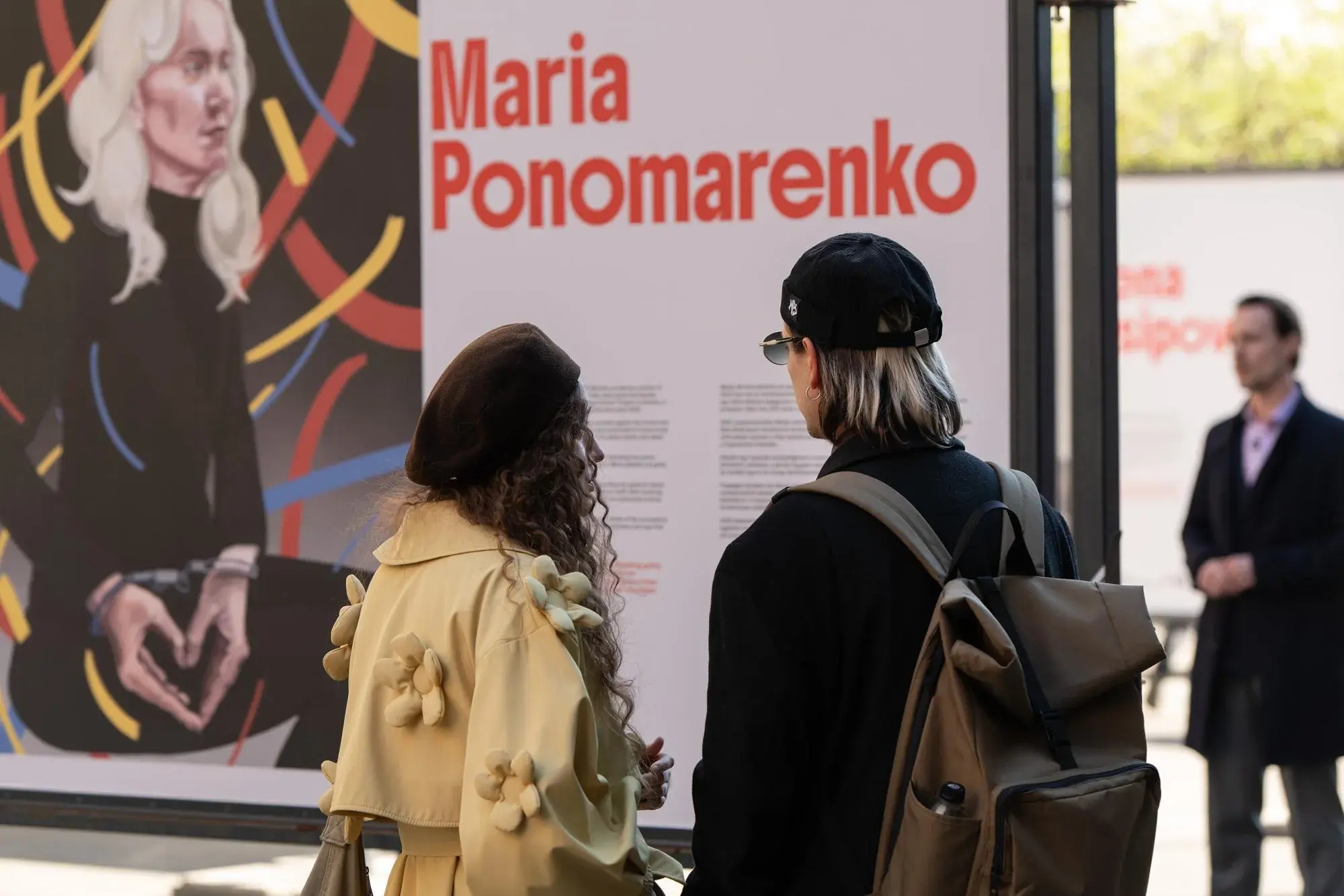
Against the backdrop of the Hungarian parliamentary elections, Budapest is hosting an outdoor exhibition titled Women Against War, dedicated to Russian women political prisoners. The exhibition opened on April 9, three days before the April 12 vote, at Madách Imre Square. It will run until April 30.
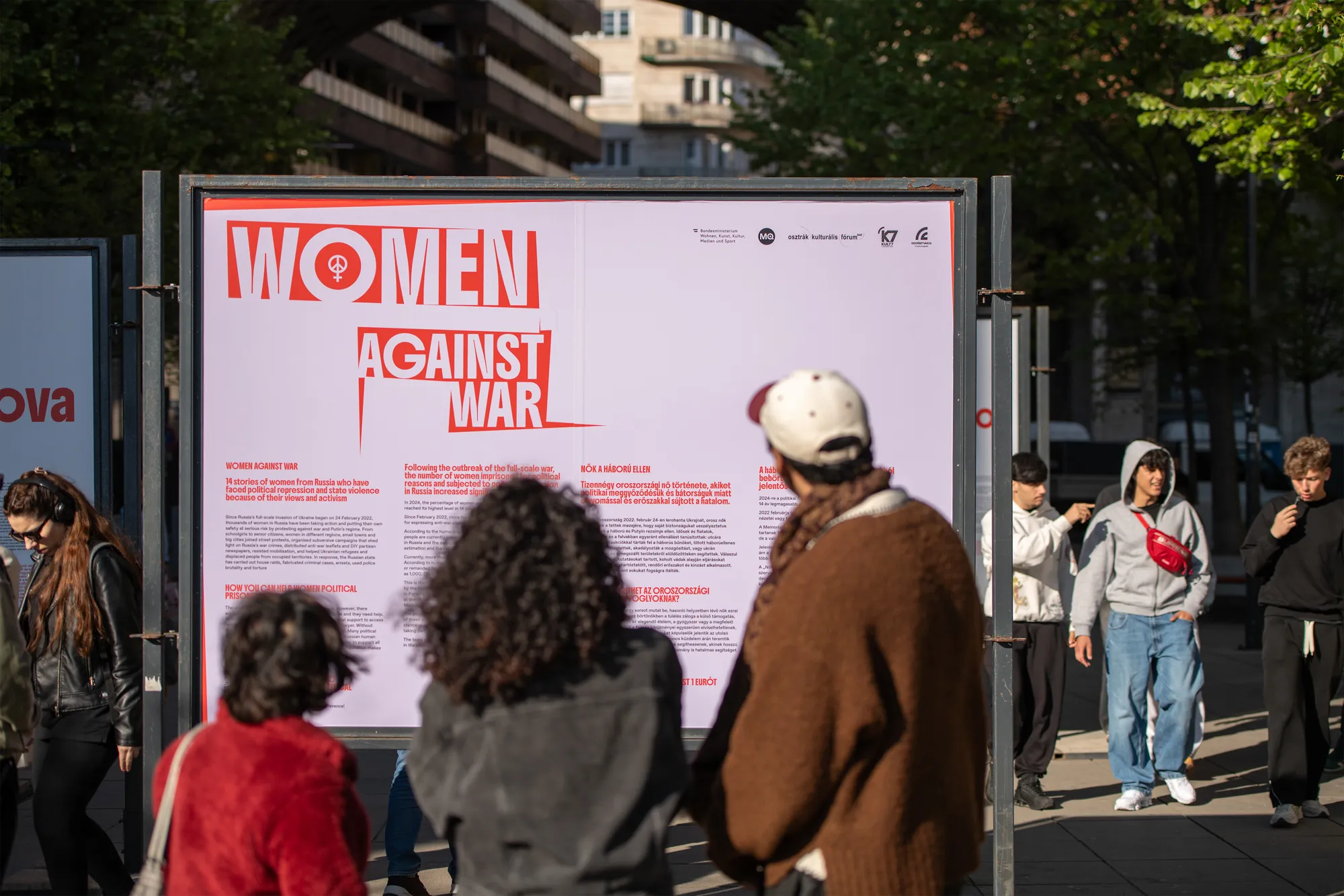
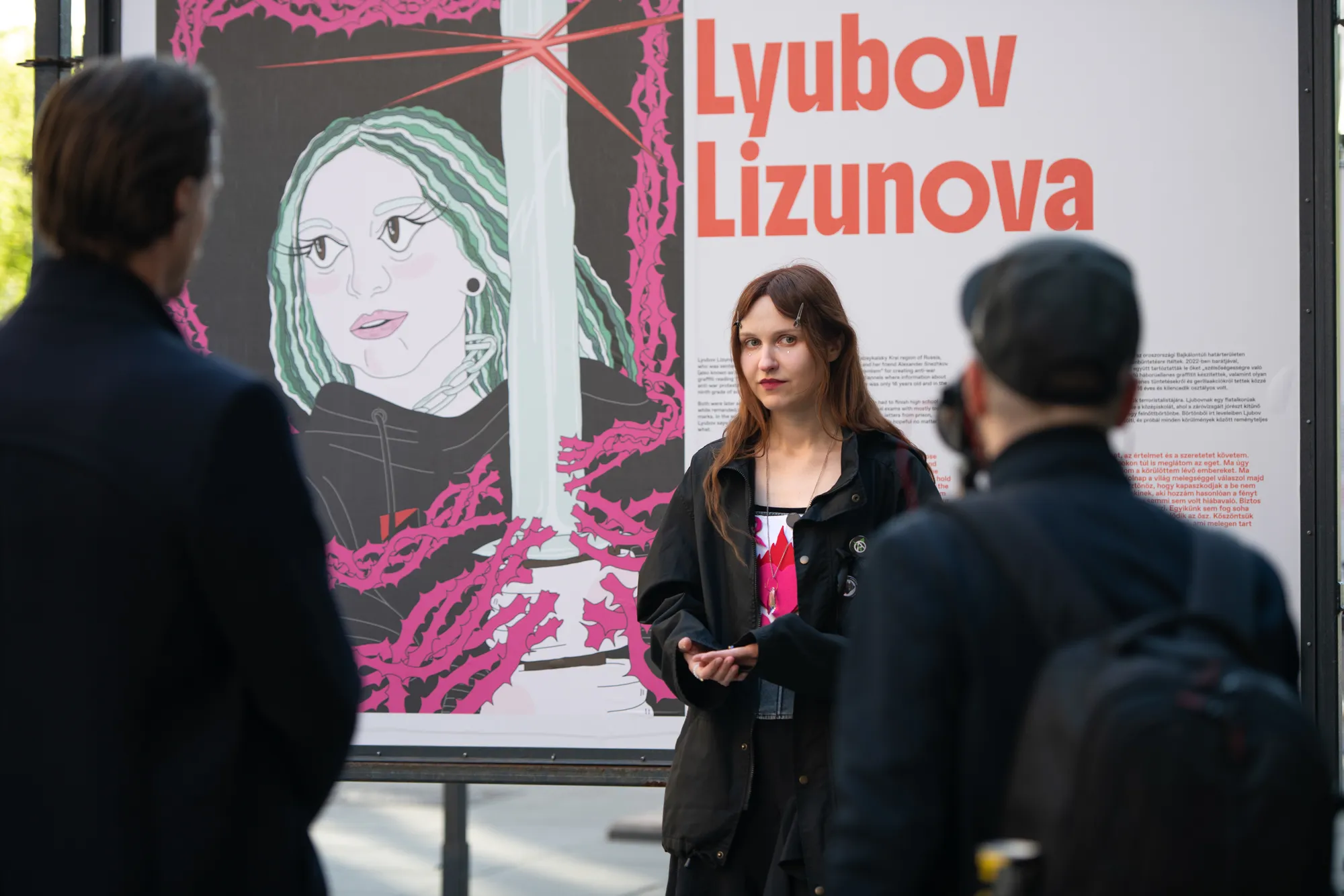
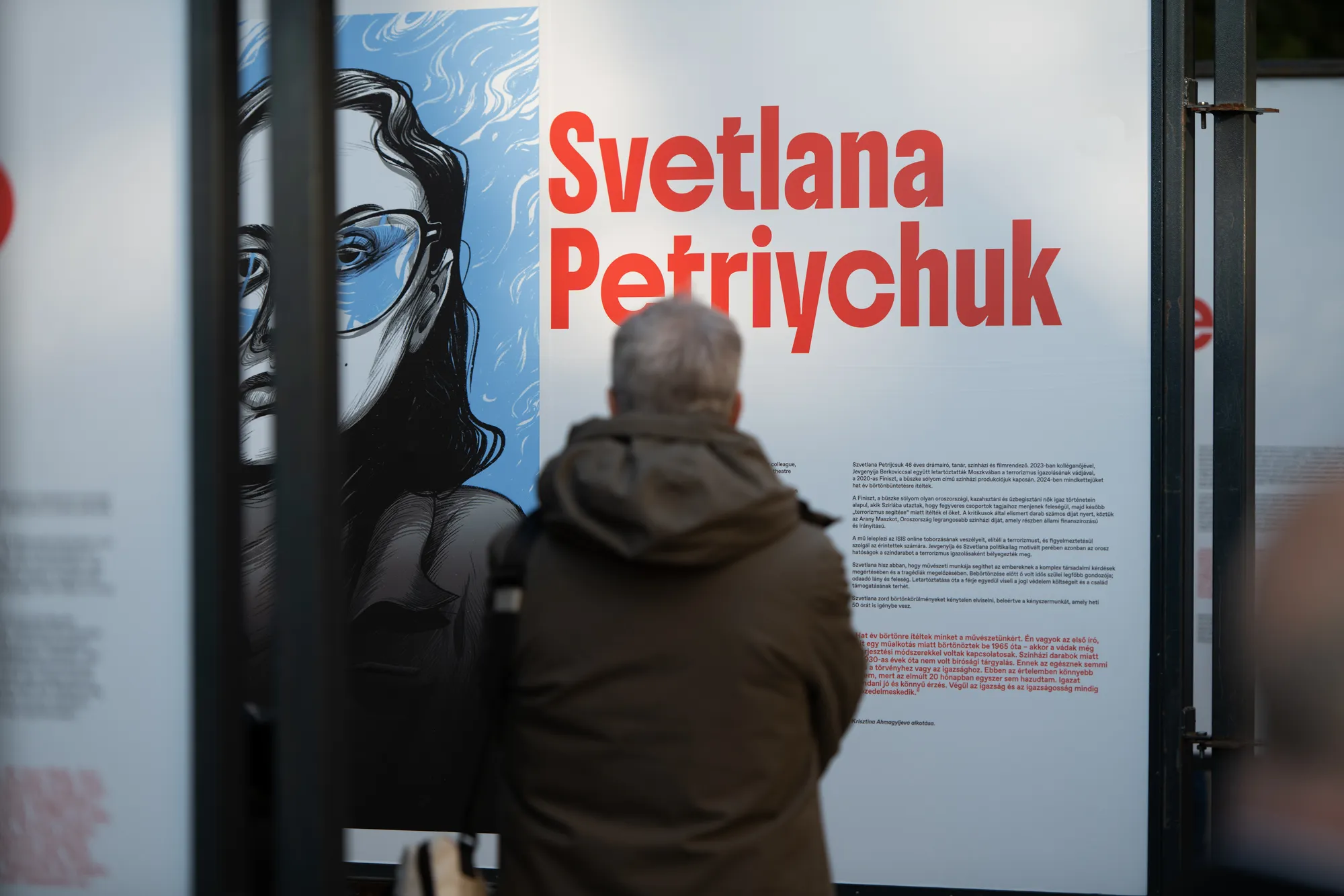
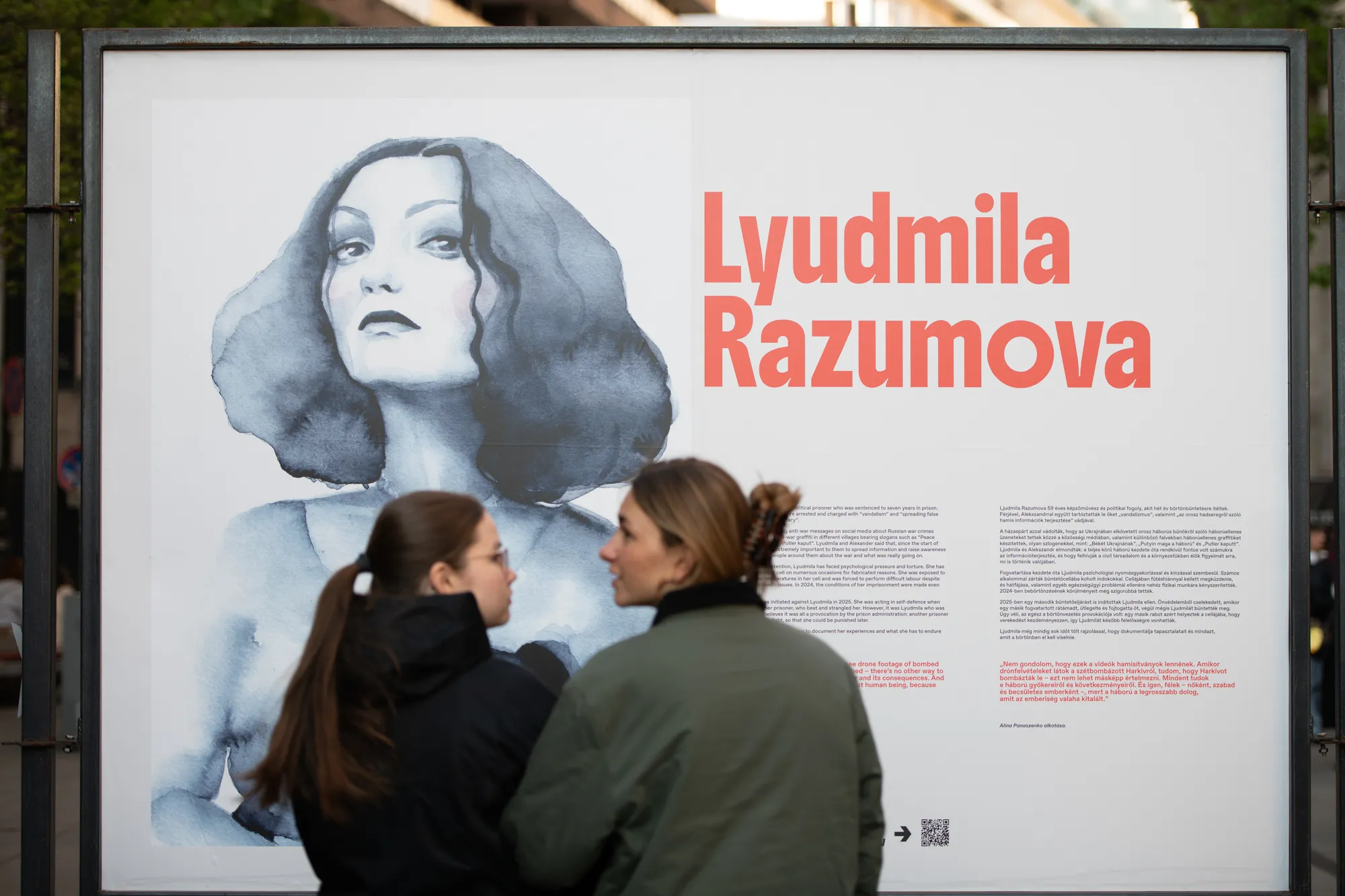
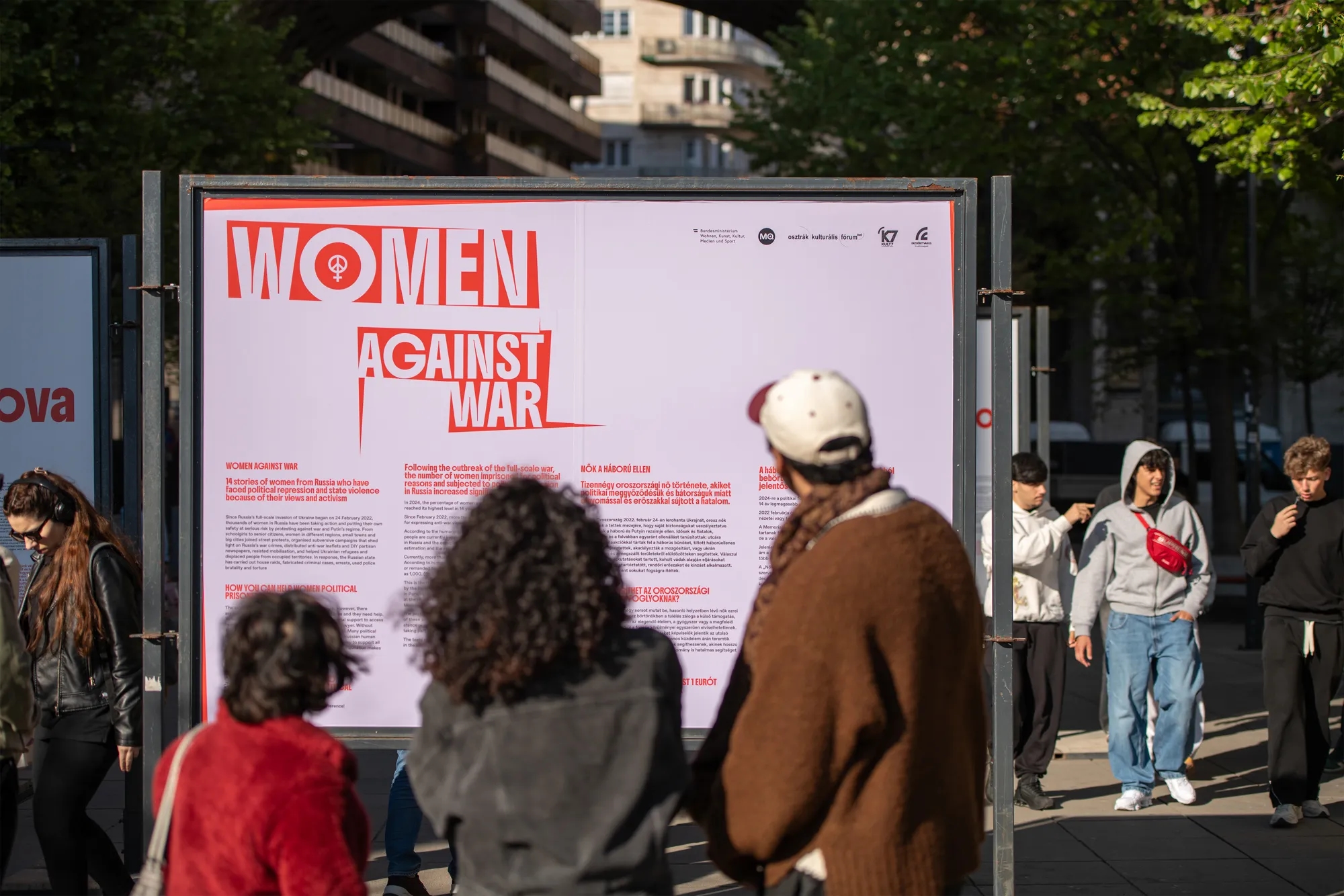
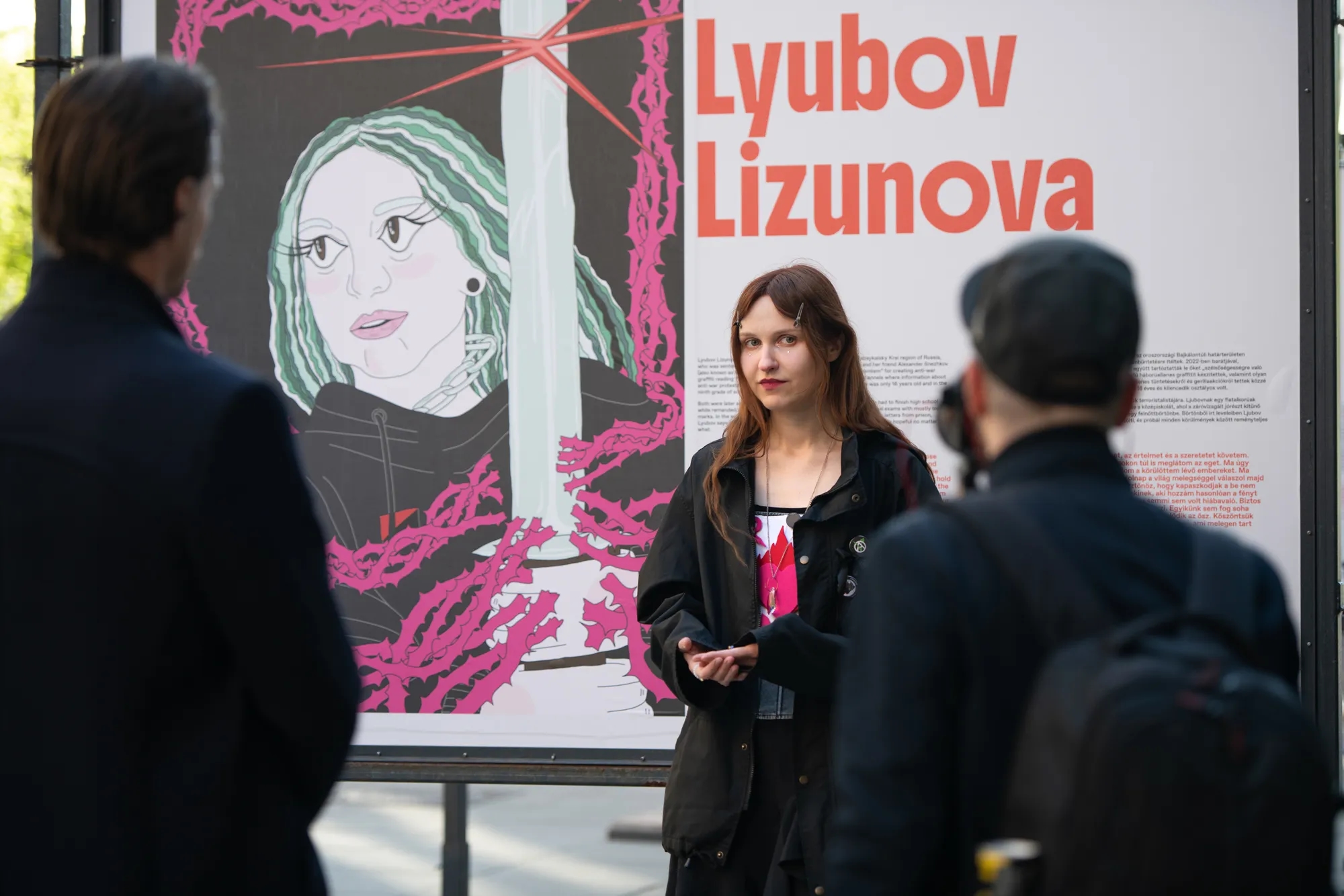
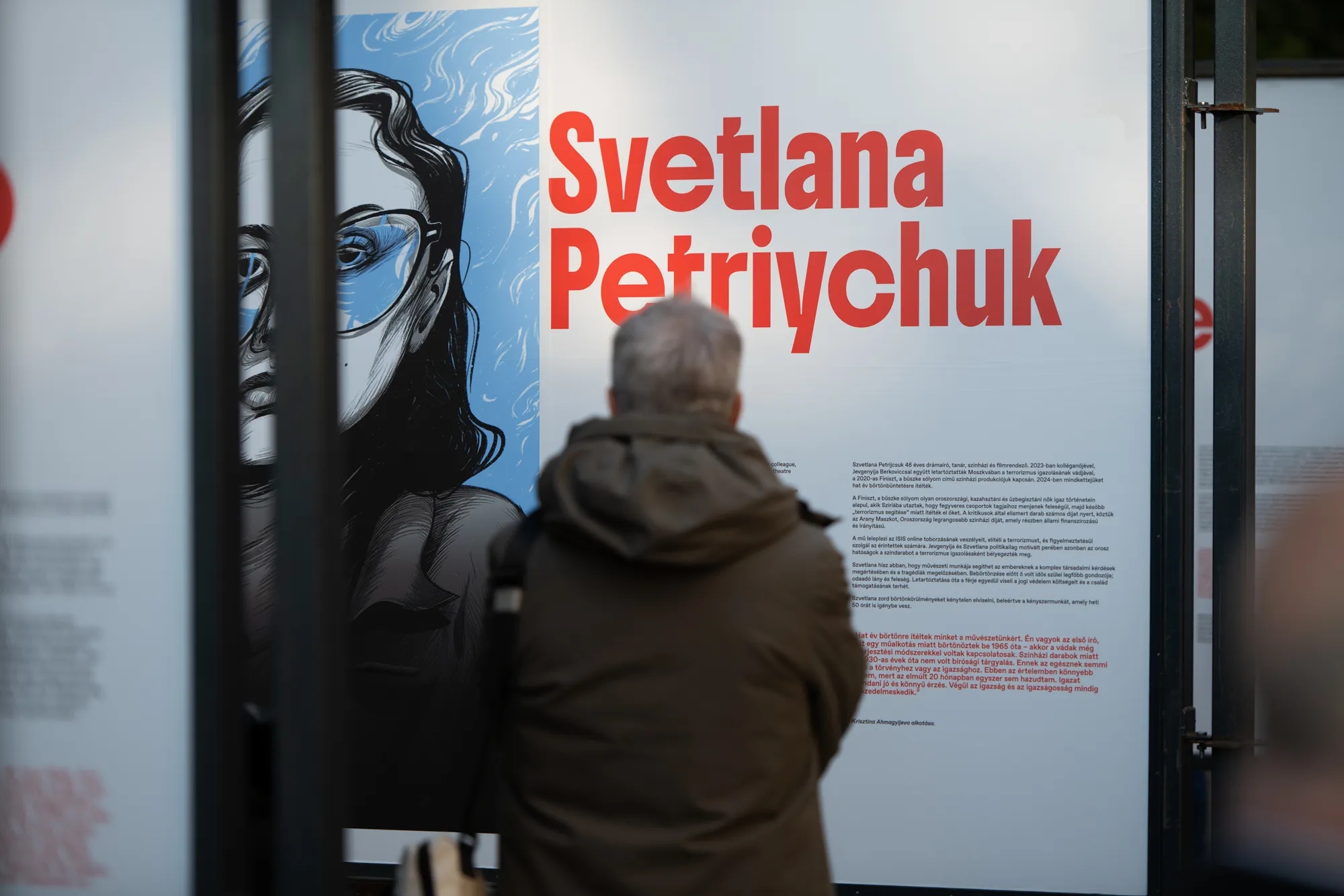
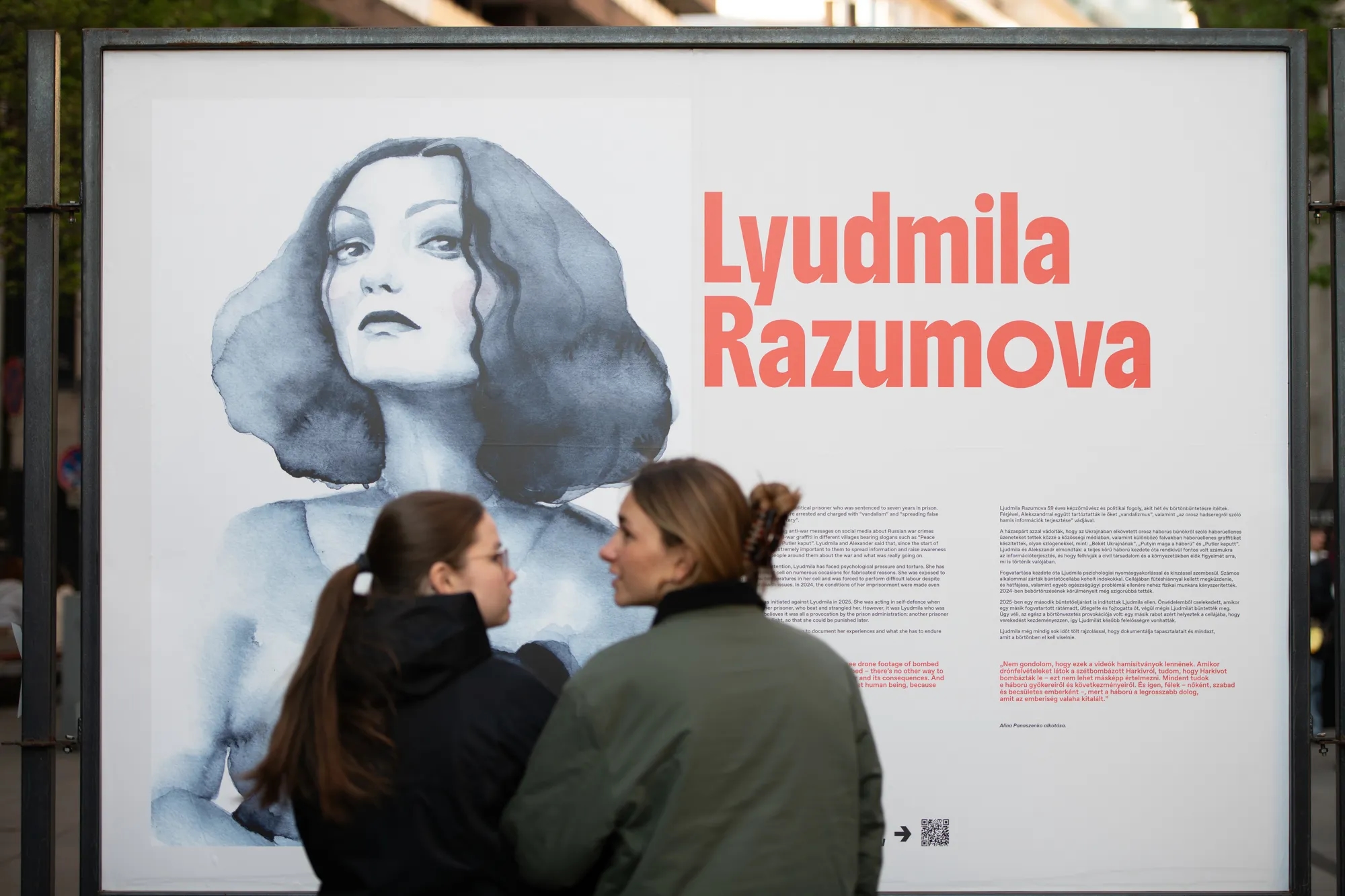
The project was organized by members of the Feminist Anti-War Resistance (FAS). The exhibition features 14 portraits of women who have been persecuted in Russia for their anti-war stance and civic activism. The works were created by artists from Russia and Belarus, with some participating anonymously due to the risk of persecution.
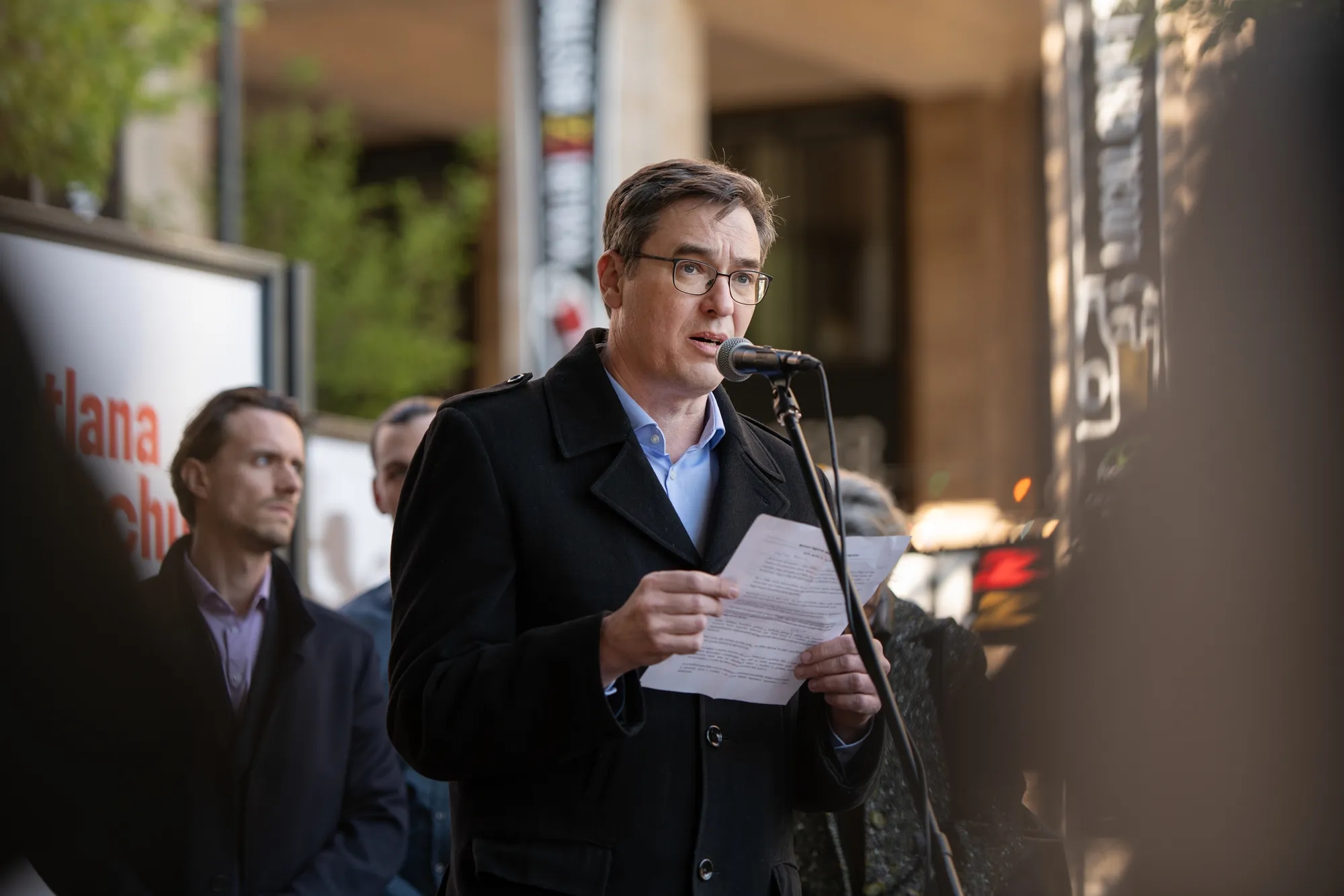
Speaking at the opening, Budapest Mayor Gergely Karácsony linked the exhibition to the elections taking place in the country:
“It would not be an exaggeration to say that Sunday’s elections are, among other things, about whether we will stand with the women in these portraits or with their jailers and tormentors. These elections can help us show that we, Hungarians, have preserved our moral compass — the very compass that Hungary’s government lost at least ten years ago.
We will all have the opportunity to show that Hungary is not its government, which initially only sought to blur the line between aggressor and victim, between good and evil, and then either openly took the side of the aggressor or became a vassal of evil. I am confident that this exhibition will help those who are still undecided to make a decision.
The fact that this exhibition, after Paris and Vienna, is now accessible to anyone in the heart of Budapest is a declaration. It is a stance — a demonstration that we have preserved our moral compass, a silent cry that we are capable of drawing a clear line between good and evil, a quiet but unambiguous statement that we, the residents of Budapest, stand on the side of good.”
Organizers noted that holding the exhibition in Hungary on the eve of parliamentary elections was a political choice. Ties between the government of Viktor Orbán and Kremlin officials had become increasingly obvious by the run-up to the vote, and the exhibition itself was intended to draw attention to human rights violations in Russia and to support public debate.
Co-curator of the exhibition and FAS activist Lyolya Nordic said at the opening that the project is not only anti-war but also anti-authoritarian in nature.
“We believe that the Putin regime poses a threat to human rights, in particular women’s rights, not only in Russia and not only in Ukraine, but worldwide. And it is crucial for us to launch this exhibition in Budapest, as Hungary and Russia have had highly problematic historical ties, especially given the rightward shift in politics, conservative values, and anti-human rights sentiment, and this causes us serious concern. We are here today because we want to build bridges between Russian civil society and Hungarian civil society that both stand for human rights, against fascism, against authoritarianism, against war, and against violence,” she declared.
The activist also cited the recent decision by the Supreme Court of Russia to designate the international Memorial human rights network as an “extremist organization,” noting that this deprives political prisoners of support. Speaking about the elections in Hungary, she added that Russian authorities have an interest in keeping right-wing politicians in power in Europe and have sought to influence election outcomes.
The exhibition features portraits of Oksana Baulina, Yevgenia Berkovich, Maria Bontsler, Ramilya Galim (Saitova), Nadin Geisler, Polina Yevtushenko, Olga Nazarenko, Tatyana Laletina, Lyubov Lizunova, Lyudmila Razumova, Maria Moskaleva, Yelena Osipova, Svetlana Petriychuk, and Maria Ponomarenko.
The works were created by artists Kristina Akhmadiev, Daria Apakhonchich, artemis, p. b., Dasha Burleshina, Alisa Gorshenina, Baba Pasha, Alina Panasenko, Maria Rakhmaninova, and Alexandra Skochilenko, among others. Other artists are participating anonymously.