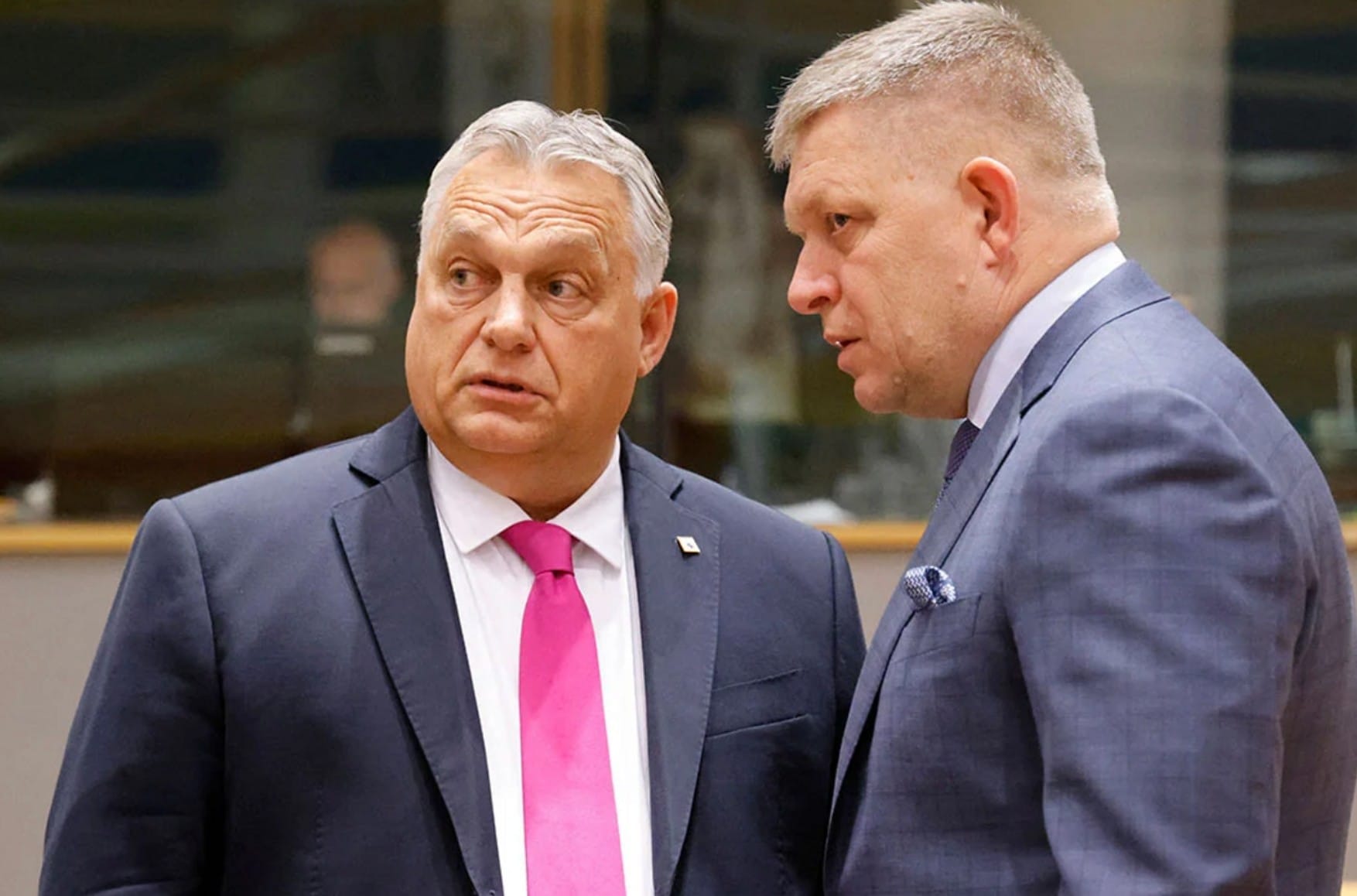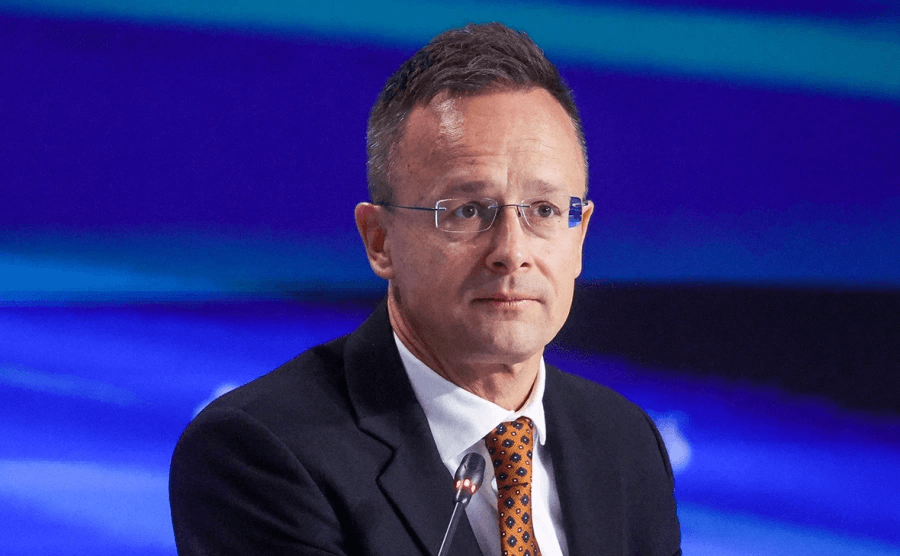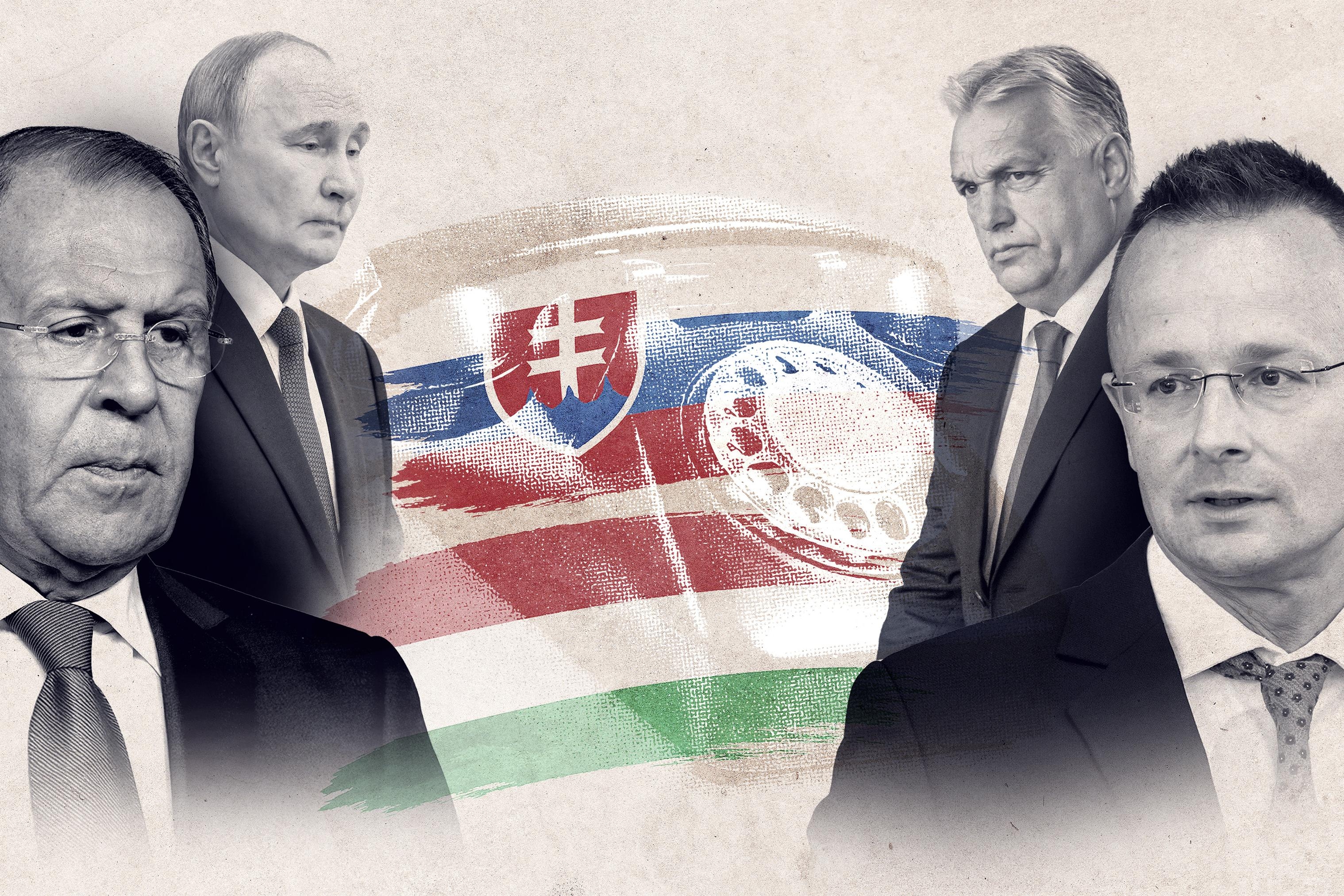
A hotline between Hungarian Foreign Minister Péter Szijjártó and Russian Foreign Minister Sergey Lavrov gave Moscow strategic information on critical EU issues, according to transcripts and audio recordings of calls reviewed by The Insider and its investigative partners. The materials indicate that Szijjártó acted on behalf of the Kremlin, including by pushing to remove sanctioned oligarchs from EU blacklists, including the sister of billionaire Alisher Usmanov. In another conversation, with Russia’s deputy energy minister, Szijjártó said he was doing his best to block an EU sanctions package and offered to try to save Russian entities from sanctions, adding that Slovakia’s government was also helping the coordinated Russian-Hungarian effort.
This is a joint investigation with FRONTSTORY.PL, VSquare, Delfi Estonia, and ICJK.
“I am calling on the request of Alisher”
Just an hour after Hungarian Foreign Minister Péter Szijjártó arrived in Budapest from St. Petersburg on August 30, 2024, he received a phone call from his Russian counterpart, Sergey Lavrov. Lavrov said Szijjártó had been quoted all over the Russian media following his visit.
“Did I say something wrong?” Szijjártó nervously inquired.
“No, no, no. They were just saying that you are pragmatically fighting for the interests of your country.”
The reason for Lavrov’s call was a request: the Russian oligarch Alisher Usmanov was looking to have his sister, Gulbahor Ismailova, removed from EU sanctions lists and Szijjártó had promised to help. Usmanov, a Russian-Uzbekistani tycoon, amassed his wealth in mining, industry, telecoms, and media. He has been described as one of Putin’s favorite businesspersons, one with “particularly close ties” to the Russian president.
“Look, I am calling on the request of Alisher and he just asked me to remind you that you were doing something about his sister,” Lavrov said.
“Yeah, absolutely,” Szijjártó answered. “The thing is the following, that together with the Slovaks we are submitting a proposal to the European Union to delist her. We will submit it next week and as the new review period is going to be started it's gonna be put on the agenda and we will do our best in order to get her off.”
Lavrov was happy and expressed his appreciation for Szijjártó’s “support and your fight for equality in all fields.”
The main purpose of the conversation accomplished, Lavrov and Szijjártó proceeded to bond over their shared disdain of the European Union, particularly countries with a pro-Ukraine orientation.
Both criticized Josep Borrell, then the EU’s High Representative of Foreign Affairs and Security Policy, whom Lavrov called his “biggest disappointment” and Szijjártó disparagingly characterized as the “European Biden.” The Spanish socialist, Lavrov noted, had been far more “reasonable” when he only represented the interests of Madrid as foreign minister, prior to his appointment to the European Commission, in which capacity a commissioner cannot prioritize his native country over the bloc in general. “So you cannot, you cannot name your country, but you must name your gender, right?” an incredulous Lavrov asked of Szijjártó, who had summarized these bureaucratic protocols.
Before hanging up, the Hungarian cooed about the new Gazprom headquarters he’d visited in Russia, adding, “I am always at your disposal.”
Seven months later, Ismailova was removed from the EU sanctions list.
Transcripts and the audio recording of the Lavrov-Szijjártó call were obtained and confirmed by a consortium of investigative news outlets consisting of VSquare, FRONTSTORY, Delfi Estonia, The Insider, and the Investigative Center of Ján Kuciak (ICJK). We confirmed it independently with sources in more than one country and additionally consulted the authenticity of the audio recording with Cauth.AI, members of WITNESS Deepfake Rapid Response Force.
The Hungarian Kim Philby
This call between the two foreign ministers, one of several between 2023 and 2025, highlights the exceeding comity between Szijjártó, who represents an EU and NATO member, and Lavrov, who represents a nation that has invaded and occupied a European country while waging a hybrid war that includes acts of arson and sabotage carried out against countries on NATO’s eastern flank. The calls traffic in sensitive information about the internal deliberations of both Budapest and Brussels, which are doubtless of interest to the Kremlin. They also provide clearcut evidence of how Russia is secretly behind the efforts of Hungary and Slovakia to hinder EU sanctions against Russian individuals or entities.
In his exchanges with Lavrov, Szijjártó comes across as deferential, bordering on obsequious. “If you remove names and show these conversations to any case officer, he will swear that this is a transcript of an intelligence officer working his asset,” one senior European intelligence officer said after reviewing a printout of the conversations.
Transcripts and the audio recording of the Lavrov-Szijjártó call, as well as Szijjártó's calls with other Russian government officials, were obtained and confirmed by a consortium of investigative news outlets consisting of VSquare, FRONTSTORY, Delfi Estonia, The Insider, and the Investigative Center of Ján Kuciak (ICJK). We confirmed it independently with sources in more than one country and additionally consulted the authenticity of the audio recording with Cauth.AI, members of WITNESS Deepfake Rapid Response Force.
The apparent willingness of Szijjártó, as a high official of the Hungarian government, to quietly act in Russia’s interests at the EU level may help explain why Moscow is investing significant effort in keeping Viktor Orbán and his pro-Kremlin Fidesz party in power.
Independent polling suggests Orbán is trailing badly ahead of the April 12 parliamentary election, with the center-right Tisza party, led by challenger Péter Magyar, holding a strong lead. As Orbán’s campaign struggles, Russia is reportedly stepping in to assist in covert ways, too. According to VSquare’s earlier report, the Kremlin has assigned Sergey Kiriyenko – a deputy chief of staff to Vladimir Putin and a key architect of Russia’s political influence operations – to covertly support Orbán’s campaign. Kiriyenko previously played an integral role in shaping election interference activities in Moldova.
At the same time, Orbán’s campaign has increasingly echoed Kremlin narratives: staging provocations against Ukraine and accusing opposition figures and critics of acting as Ukrainian proxies or spies while dismissing or ridiculing allegations of their own ties to Russia.
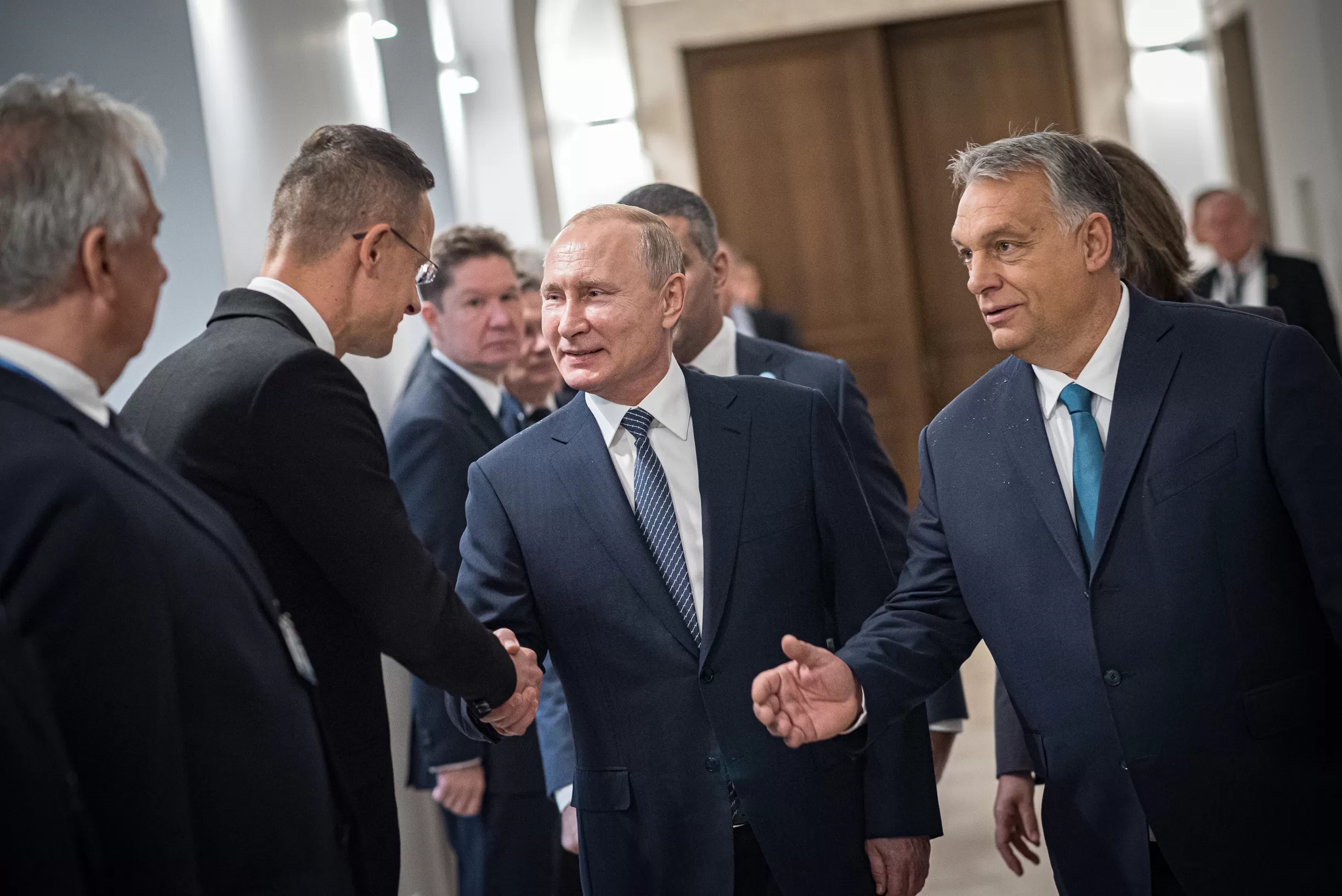
Szijjártó’s chumminess with Lavrov, while previously alluded to in the press, has never before been documented with leaked phone calls demonstrating the full extent of their collusiveness.
Apart from delivering on what he was asked to do, Szijjártó routinely kept Lavrov informed of details of supposedly confidential discussions by European diplomats.
For instance, in the same August 30, 2024 call with Lavrov, just after their discussion about delisting Ismailova, Szijjártó also revealed the details of the EU Foreign Affairs Council meeting that he participated in the day before.
“And that was crazy, you know, when Landsbergis said that we contribute 12% of each rockets and missiles,” Szijjártó told Lavrov, referring to Lithuania’s then-foreign minister Gabrielius Landsbergis, who had argued that Russia partly finances its war through gas and oil profits from European customers such as Hungary and Slovakia.
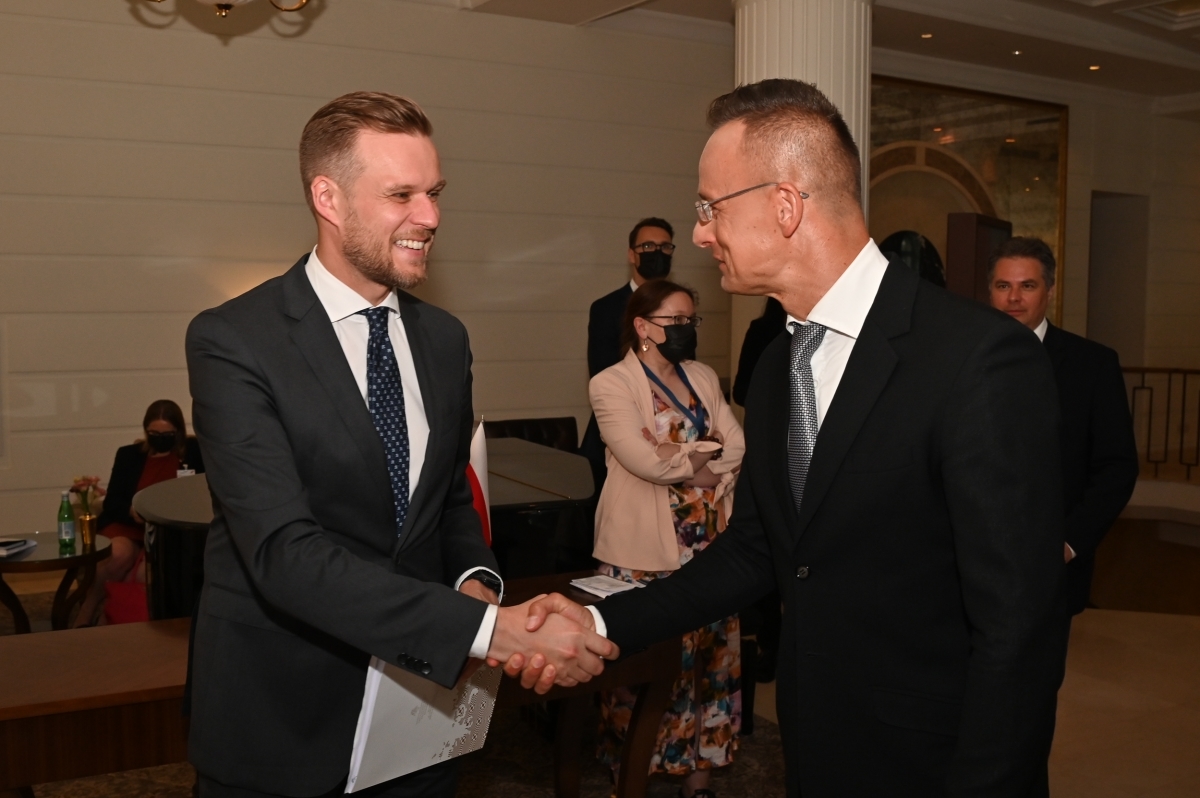
“I said, my friend, you are not right, because the Europeans contribute much more… it's not only the Slovaks and us who are buying gas and oil from Russia directly but all of you who are buying the same from them through…India, Kazakhstan.”
When reached for comment, Landsbergis confirmed the behind-the-scenes details of the EU foreign ministers’ meeting. “I can verify that this is a real exchange during one of the Foreign Affairs Councils,” Landsbergis said. “It seems that all this time Putin had, and still has, a mole in all European and NATO official meetings. If the integrity of these meetings is to be maintained, it would be appropriate to ban Hungary from all of them. Every generation has a Kim Philby” – a reference to the notorious Cold War-era KGB spy in the British Secret Intelligence Service. “Apparently Péter Szijjártó is playing the role with enthusiasm.”
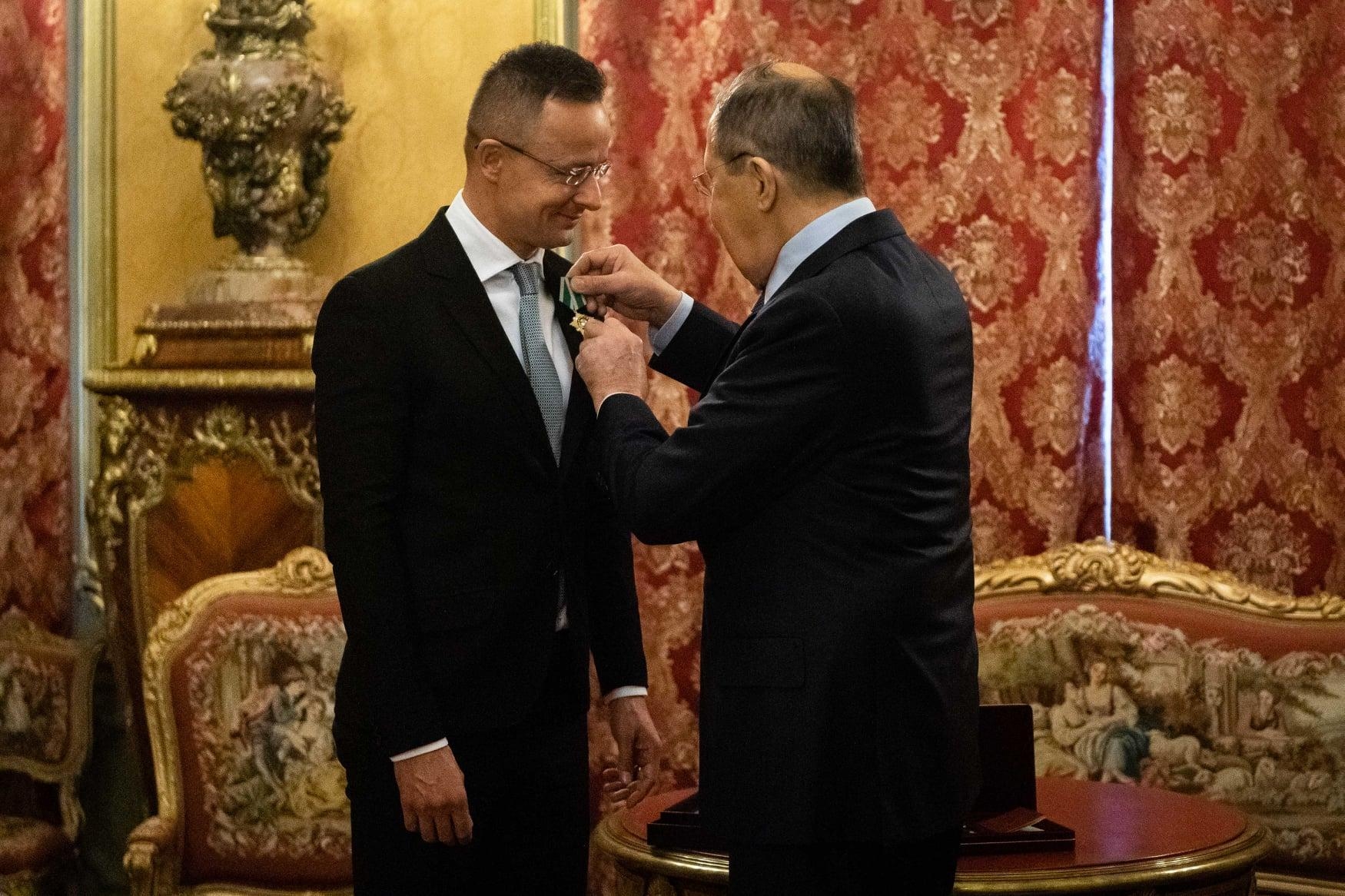
That analogy goes slightly deeper than mere rhetorical flourish. Philby and Szijjártó both received the highest Soviet or Russian award that can be given to a foreigner: the Order of Friendship. Szijjártó’s was officially awarded by Vladimir Putin, but physically bestowed upon him by Lavrov on December 30, 2021.
Striking off names
Szijjártó’s efforts to get Usmanov’s sibling delisted from EU sanctions was not the only case in which he worked to relax economic penalties on well-connected Russians. Ismailova was removed alongside Russian businessman Viatcheslav Moshe Kantor and the country’s sports minister, Mikhail Degtyaryov. As reported by RFE in March 2025, the move came after Hungary and Slovakia threatened to block the six-month extension of EU sanctions – including asset freezes and visa bans – targeting Russian-linked entities and individuals (Lavrov among them).
A European diplomat closely involved in the sanctions negotiations among the 27 EU member states said that, while it has long been suspected that Hungary and Slovakia had been leaking details of negotiations to Moscow, it was valuable that there was now hard evidence to prove it.
“Hungary is clearly fulfilling political orders from Russia,” this source said when reporters showed them parts of the transcripts of the two ministers’ phone calls.
“Hungary is clearly fulfilling political orders from Russia,” a European diplomat said when reporters showed them parts of the transcripts of the two ministers’ phone calls.
While the EU has sanctioned about 2,700 Russian citizens and entities due to their role in enabling Russia to conduct its full-scale war against Ukraine, the bloc must vote every six months on whether to extend the sanctions. Decisions are made by consensus, meaning all 27 member states must agree. This gives Hungary outsized leverage, as it can threaten to block the continuation of the entire sanctions regime if specific people are not delisted.
The same European diplomat, talking to the reporters on the condition of anonymity in order to be able to reveal details of the process, said that Hungary and Slovakia usually start the negotiations with a longer list of Russian names they demand to be delisted. “They don’t use legal arguments, they just say they don’t want those people on the sanctions list for political reasons,” the source explained.
As negotiations progress, Budapest and Bratislava usually whittle their list down to only two or three people, as was the case with Ismailova, Kantor, and Degtyaryov.
Ismailova is one of Usmanov’s two sisters. She has been sanctioned by the UK, United States, Ukraine, and Estonia. Tallinn re-sanctioned her after she was removed from the EU list at Hungary and Slovakia’s orchestration.
Usmanov himself is sanctioned by a host of jurisdictions including the EU, the United States, Canada, and the UK as a result of Russia’s full-scale invasion of Ukraine.
In its Russian Asset Tracker, OCCRP linked the oligarch to more than a dozen luxury properties across Europe, as well as to bank accounts, boats, and aircraft. According to that project, the minimum value of Usmanov’s assets exceeds $3.4 billion.
A representative of Usmanov’s told OCCRP at the time that he had never benefited from the Russian government, nor from the privatization of state holdings. The representative said that Usmanov’s capital was obtained solely through transparent investment and asset management, adding that the ownership of most of Usmanov’s properties had been transferred to his family, and that he could only use them on a rental basis.
Joachim Nikolaus Steinhöfel, the Hamburg-based legal representative for Usmanov and Ismailova, declined to answer questions about the nature of the discussion between Lavrov and Szijjártó about his clients. “Your questions are based on the impermissible assumption that my clients were somehow aware of confidential conversations allegedly held between third parties,” Steinhöfel wrote in an email, adding that “in recent years, many prominent contemporary political leaders have spoken out regarding the need to lift the sanctions against A. Usmanov. This applies even more to the lifting of sanctions against his sister, who was subjected to these measures in an absurd manner solely due to her family ties.”
Steinhöfel also mentioned that over the past four years, Usmanov has won more than twenty court cases against media outlets, public figures, and politicians “who disseminated various false statements about him.”
Since being sanctioned, Usmanov and his two sisters have taken extensive efforts to relieve themselves of the burden, going so far as to file lawsuits against media outlets. His other sister, Saodat Narzieva, managed to get her name off the EU list after just five months.
With Russia, Hungary, and Slovakia having succeeded with Ismailova’s delisting last year, the only remaining sibling is Usmanov himself.
During the latest round of sanctions extension negotiations in March, Slovakia and Hungary continued to press the bloc to have him removed as well.
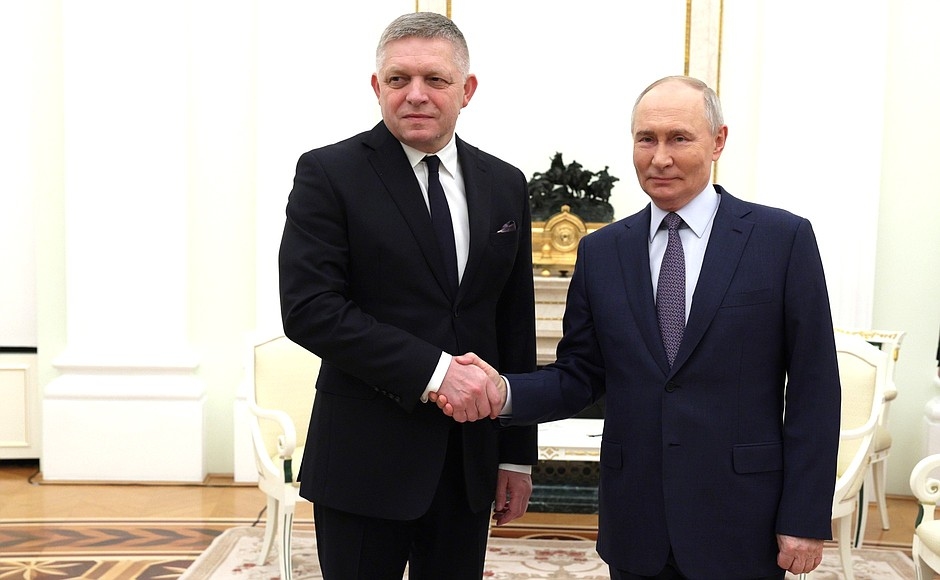
“This time the negotiations went through Friday night until early Saturday morning on March 14, when Slovakia finally said it agreed to prolong the sanctions with Usmanov’s and [Mikhail] Fridman’s names on the list,” according to the EU diplomat quoted earlier.
If the 27 member states hadn't agreed to this by March 15, sanctions against all 2,700 people and entities would have expired.
In their efforts to get the Usmanov family back into international markets, Hungarians and Slovaks are supported by a powerful non-EU ally. At the beginning of March, before the key round of the latest negotiations, Turkish President Recep Tayyip Erdogan sent a letter to Slovak Prime Minister Robert Fico, calling him “a dear friend.”
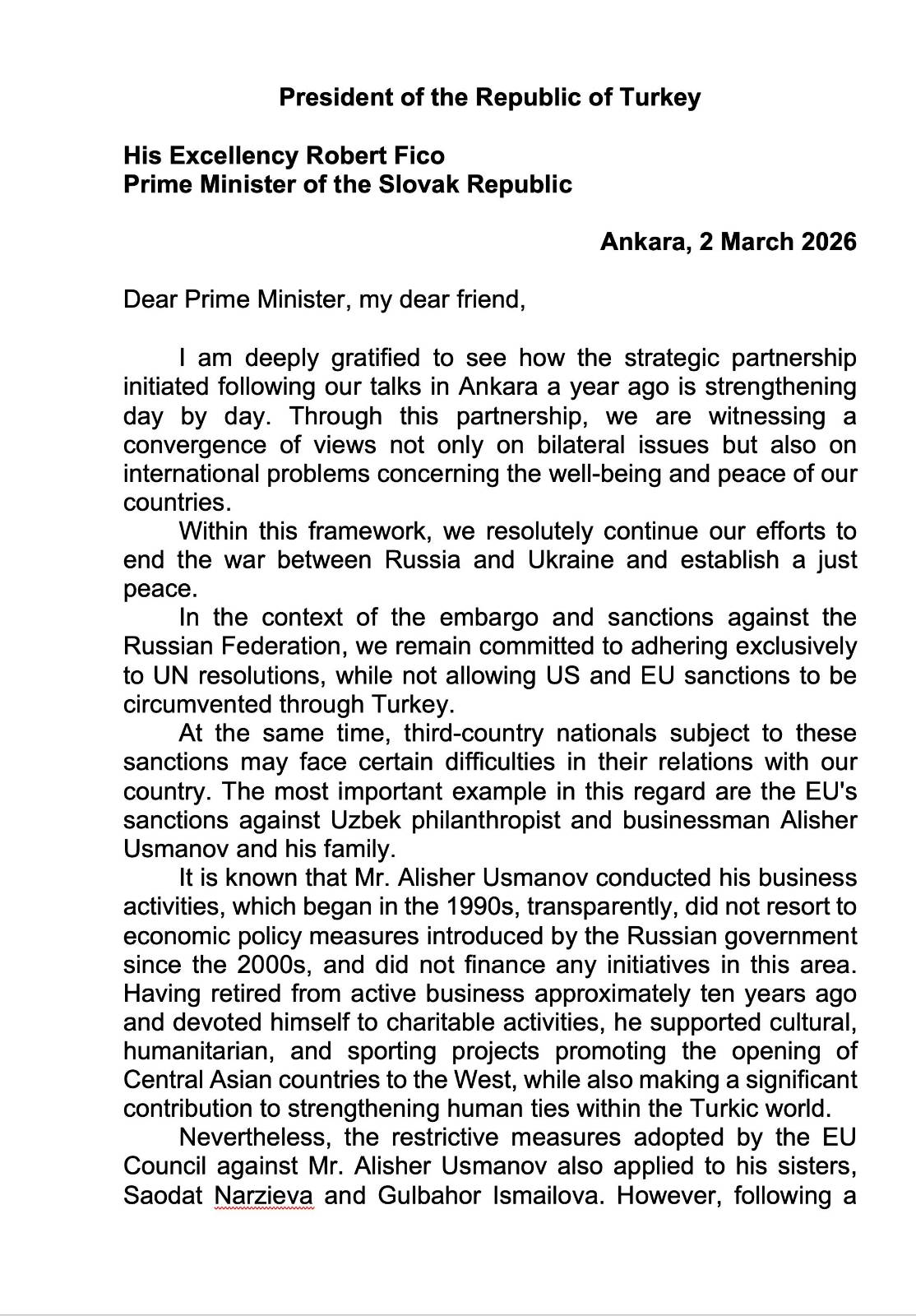
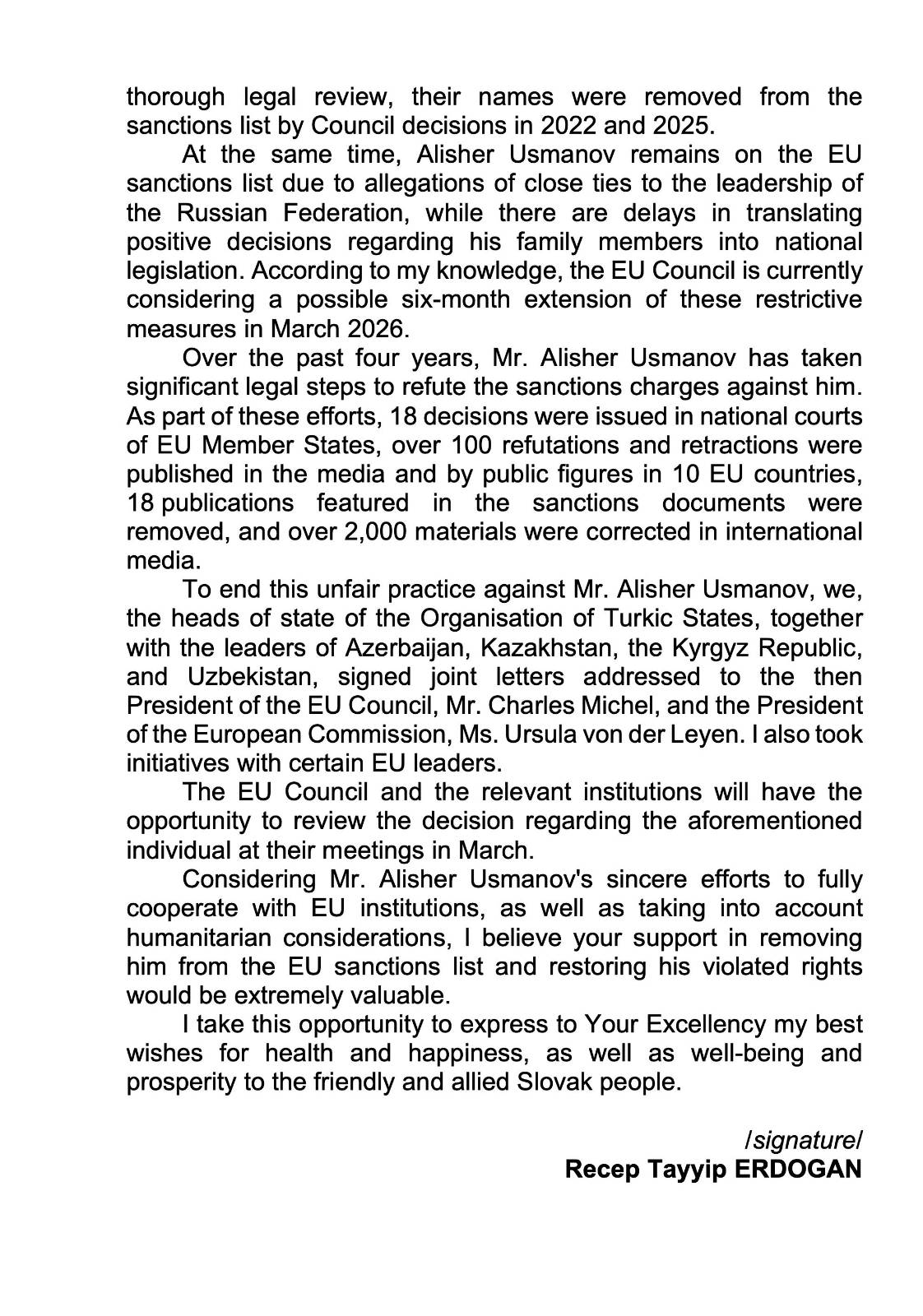
Erdogan praised Usmanov’s transparency and charitable nature: “he supported cultural, humanitarian, and sporting projects promoting the opening of Central Asian countries to the West, while also making a significant contribution to strengthening human ties within the Turkic world.”
The Turkish President also informed Fico about joint letters that the Organisation of Turkic States, along with the leaders of Azerbaijan, Kazakhstan, the Kyrgyz Republic, and Uzbekistan, sent to then then-President of the EU Council, Charles Michel, and to the President of the European Commission, Ursula von der Leyen. “I also took initiatives with certain EU leaders,” added Erdogan, calling the sanctions against Usmanov and his family members an ”unfair practice.”
The EU diplomat involved in the EU’s sanctions negotiations confirmed that the letter to get Usmanov off of the list in the last round of sanctions negotiations was submitted by Slovakia and signed by Erdogan. Hungary supported delisting both Usmanov and Fridman, the Russian billionaire who co-founded the financial giant Alfa Group.
“I find it peculiar that third countries want to influence the EU's sanctions decisions and their orders are presented by Hungary or Slovakia,” the diplomat said. “The EU conducts legal assessments to decide about sanctioning but then we will have a political order to withdraw one or another name from the list. The EU needs to make those decisions itself.”
"Negotiations on the regular semi-annual review of the sanctions regime for undermining Ukraine’s territorial integrity concluded on March 15, 2026,” the Slovakian Ministry of Foreign Affairs said in a statement to the consortium partners. It declined to “comment on or disclose details of its negotiating positions or those of other member states, as the negotiations are confidential." The office of the Slovak prime minister Robert Fico did not comment on our questions.
Fighting sanctions
Economic relief for Ismailova and Usmanov isn’t the only case in which Hungary secretly acted on the Kremlin’s behalf in Brussels.
We have obtained material on a separate conversation in which Szijjártó reported to another high-ranking Russian official, Deputy Energy Minister Pavel Sorokin, that he was doing his best to “repeal” a crucial EU sanctions package targeting Russia’s shadow fleet of false-flagged oil tankers — the means by which Moscow evades Western energy sanctions.
In one conversation with Sorokin, a London-educated former Morgan Stanley banker and Putin’s “secret weapon” in blunting Western energy sanctions, Szijjártó offered to remove Russian banks proposed for designation by the EU. Szijjártó even asked the Russian to provide him with arguments as to why doing so would be in Hungary’s interest.
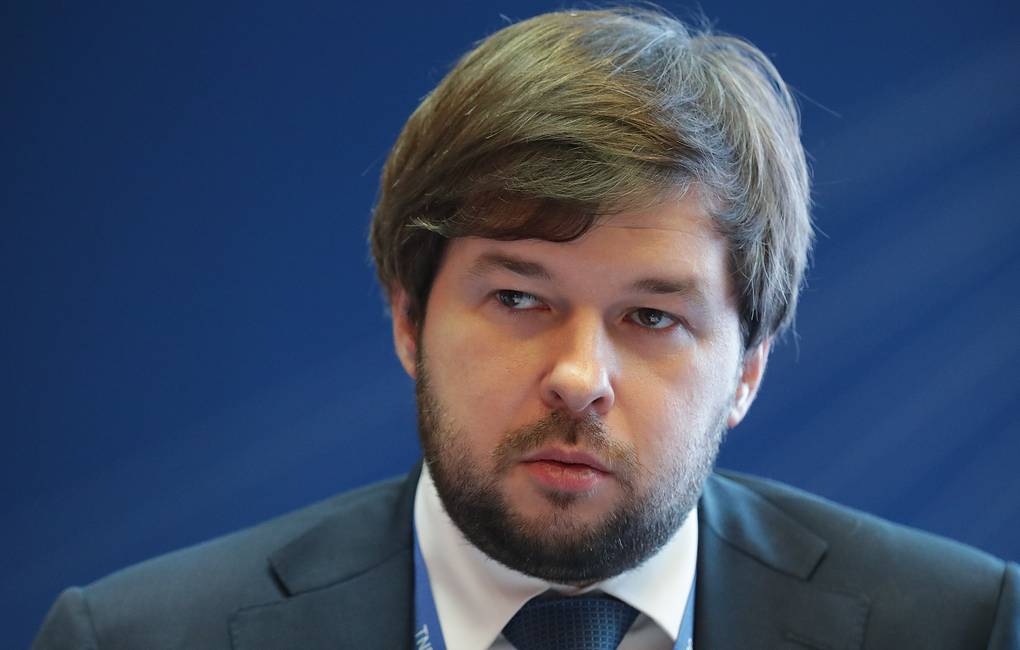
In a June 30, 2025 phone call with Sorokin, Szijjártó complained that the EU refused to show him documents related to the proposed sanctioning of 2Rivers, a Dubai-based company trading in Russian oil. “[B]ecause they say that there is no clear Hungarian interest that they can identify, and therefore Hungary cannot legally ask them to be removed from the list,” Szijjártó elaborated after Sorokin asked why Budapest was cut out of the loop.
According to the EU, 2Rivers, formerly known as Coral Energy, has been one of the key players in selling Russian oil via its own shadow fleet of tankers and concealing the origin of crude from Russian state energy giant Rosneft, now under U.S. sanctions. 2Rivers then sells the crude above the internationally capped oil price and feeds Russia’s war machine with vital revenue. In December 2024, the UK sanctioned 2Rivers and its oil trading network.
It is unclear what interest Hungary – a landlocked country that receives oil through pipelines – could have in trying to preserve Russia’s shadow fleet operations. But the benefit to Russia is obvious.
After reporting that he was unsuccessful with 2Rivers, Szijjártó shared details with Sorokin on where the then-ongoing negotiations on the EU’s 18th sanctions package stood.
The Hungarian foreign minister explained to the Russian official that the vote was not yet on the agenda thanks to a postponement arranged by Hungary and Slovakia, one that would remain in effect until the EU agreed to “make an exception” for those countries and “allow us to continue buying Russian gas and oil.”
The 18th sanctions package was proposed by the European Commission on June 10, 2025, but Szijjártó announced publicly on June 23 that Hungary and Slovakia were blocking it. Officially, he claimed that this was “in response to European Union plans to phase out Russian energy imports.” In his call with Sorokin a week later, however, Szijjártó talked very differently about Hungary’s real activities and goals in Brussels.
Szijjártó told Sorokin that he was fighting against the whole sanctions package and trying to save as many Russian entities as possible. “I’m doing my best to have it repealed. The thing is that I have already removed 72 [entities] from the list, but there were 128. I'm trying to continue, but I have to say that this is in the interest of Hungary,” Szijjártó said.
“I've already removed 72 [Russian entities] from the list, but there were 128. I'm trying to continue, but I have to say that this is in the interest of Hungary,” Szijjártó told Russia's Deputy Energy Minister Pavel Sorokin.
It is not clear from the conversation exactly what 72 and 128 Russian entities Szijjártó referred to.
“If they [Sorokin’s staff] can help me identify the direct and negative effects on Hungary, I would be very grateful,” he added, “because if I can show something like that, you would give me a completely different opportunity.”
The call is proof that the Hungarian foreign minister not only uses Russian-authored talking points when attempting to dilute EU penalties on Russia — he actively seeks them out from Russian officials.
According to Kinga Redłowska, a leading sanctions expert and the Head of CFS Europe at the London-based think tank RUSI, “Legally it remains a politically legitimate basis for a Member State to withhold consent in a unanimity-based system. Hungary’s use of this argument serves a dual purpose. Domestically, it allows Viktor Orbán to reinforce an anti-Ukrainian narrative. At the EU level, it provides leverage to extract concessions in unrelated areas, such as EU funding or rule-of-law disputes.”
While this strategy may help Orban and his embattled government, enabling an aggressive neighbor to capture and hold more sovereign European land runs counter to Hungary’s national interest. “Weakening sanctions risks bolstering Russia’s war economy, undermining the broader security interests of all EU member states, including Hungary itself.”
“Weakening sanctions risks bolstering Russia’s war economy, undermining the broader security interests of all EU member states, including Hungary itself.”
The conversation between Szijjártó and Sorokin also touched on Russian banks that were in the crosshairs of the EU’s 18th sanctions package. “[S]hare the names of those banks with me, I can check if they are on the list or not, I’ll check the legal grounds and then I’ll do my best,” Szijjártó told Sorokin. “I know they want to put Sankt Petersburg Bank on the list, which I managed to remove; they also wanted to put another bank related to the Paks project on the list, and I managed to remove it.”
After weeks of delays by Hungary and Slovakia, the European Union finally adopted its 18th sanctions package on July 18, 2025. 2Rivers was included in the package, prompting it to begin the process of dissolution. The measures also dealt a significant blow to Russia’s shadow fleet and its efforts to circumvent oil sanctions.
However, it remains unclear how much greater the impact might have been without Szijjártó’s efforts.
In March 2026, the Washington Post reported that Szijjártó has been regularly sharing information over the phone with Lavrov during breaks in EU talks, almost in real time. “Every single EU meeting for years has basically had Moscow behind the table,” a European security official told the Post, which did not have the verbatim transcripts of these calls.
Polish Prime Minister Donald Tusk and Gabrielius Landsbergis, the former Lithuanian foreign minister, almost immediately confirmed the Post’s reporting. “The news that Orbán’s people inform Moscow about EU Council meetings in every detail shouldn’t come as a surprise to anyone. We’ve had our suspicions about that for a long time. That’s one reason why I take the floor only when strictly necessary and say just as much as necessary,” Tusk posted to X.
In March 2026, Politico reported that “the EU is limiting the flow of confidential material to Hungary and leaders are meeting in smaller groups.”
Hungary’s government dismissed such reports as “pro-Ukrainian propaganda”, while Szijjártó, who acknowledged frequent communication with Lavrov, said the Post article on his alleged leaks is “fake news.”
This strategy appears to be backfiring. Szijjártó was recently booed by protesters at a campaign event, with shouts of “traitor” and “Russian spy” leveled at him. All an angry Szijjártó could shout back was that the hecklers would have to pay three times as much for gas and oil if it weren’t coming from Russia.
Neither Lavrov nor Szijjártó replied to requests for comment on this investigation.
Hungary’s interference in EU sanctions policy began within months of Russia’s full-scale invasion, and what started as isolated vetoes hardened over four years into a systematic, semi-institutionalised lobbying effort for Kremlin-linked figures — later joined by Slovakia.
Hungary’s interference in EU sanctions policy began within months of Russia’s full-scale invasion, and what started as isolated vetoes hardened over four years into a systematic, semi-institutionalised lobbying effort for Kremlin-linked figures.
In June 2022, Hungary held the entire sixth EU sanctions package hostage — including the landmark partial Russian oil embargo — until Patriarch Kirill, a former KGB agent and the head of the Russian Orthodox Church, was removed from the list, with Prime Minister Viktor Orbán personally intervening on the grounds of “religious freedom.”
From 2022 onwards, Hungary also began blocking Latvia’s repeated attempts to add Iskander Makhmudov and Andrei Bokarev — the billionaire co-owners of Transmashholding, a producer of components for infantry combat vehicles since the onset of the war. Latvian diplomats attributed this move to Transmashholding’s existing joint ventures in Hungary with companies linked to the man who would become Hungary’s minister of defense, Kristóf Szalay-Bobrovniczky.
The full stakes of that protection became clearer in March 2026, when The Insider and Der Spiegel revealed that Bokarev was the “ideological architect and principal backer” of Center 795 — a secret assassination directorate established by Russian General Staff order in December 2022, staffed by elite GRU and FSB veterans and embedded inside the Kalashnikov Concern in order to use its payroll and facilities as cover.
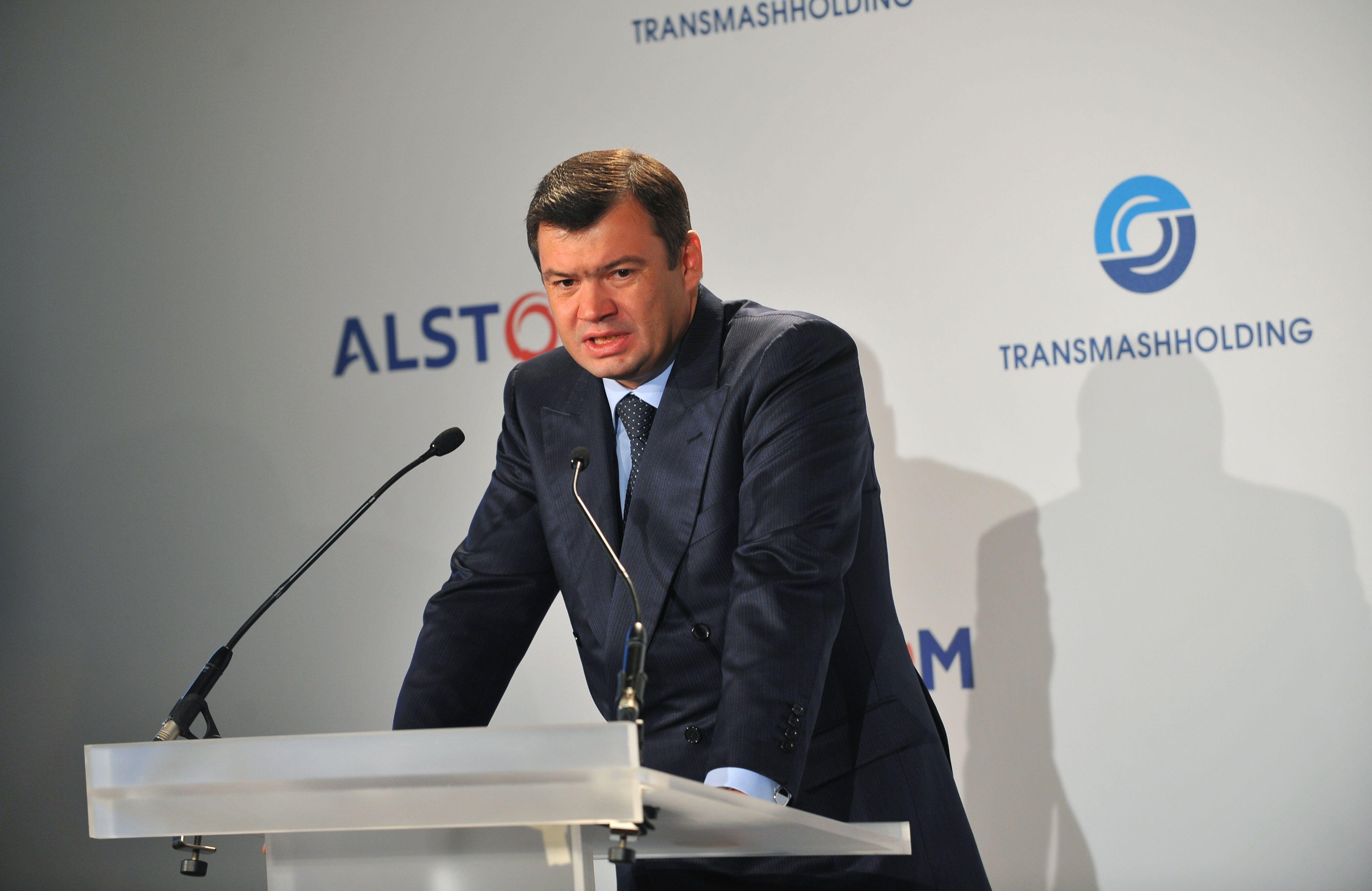
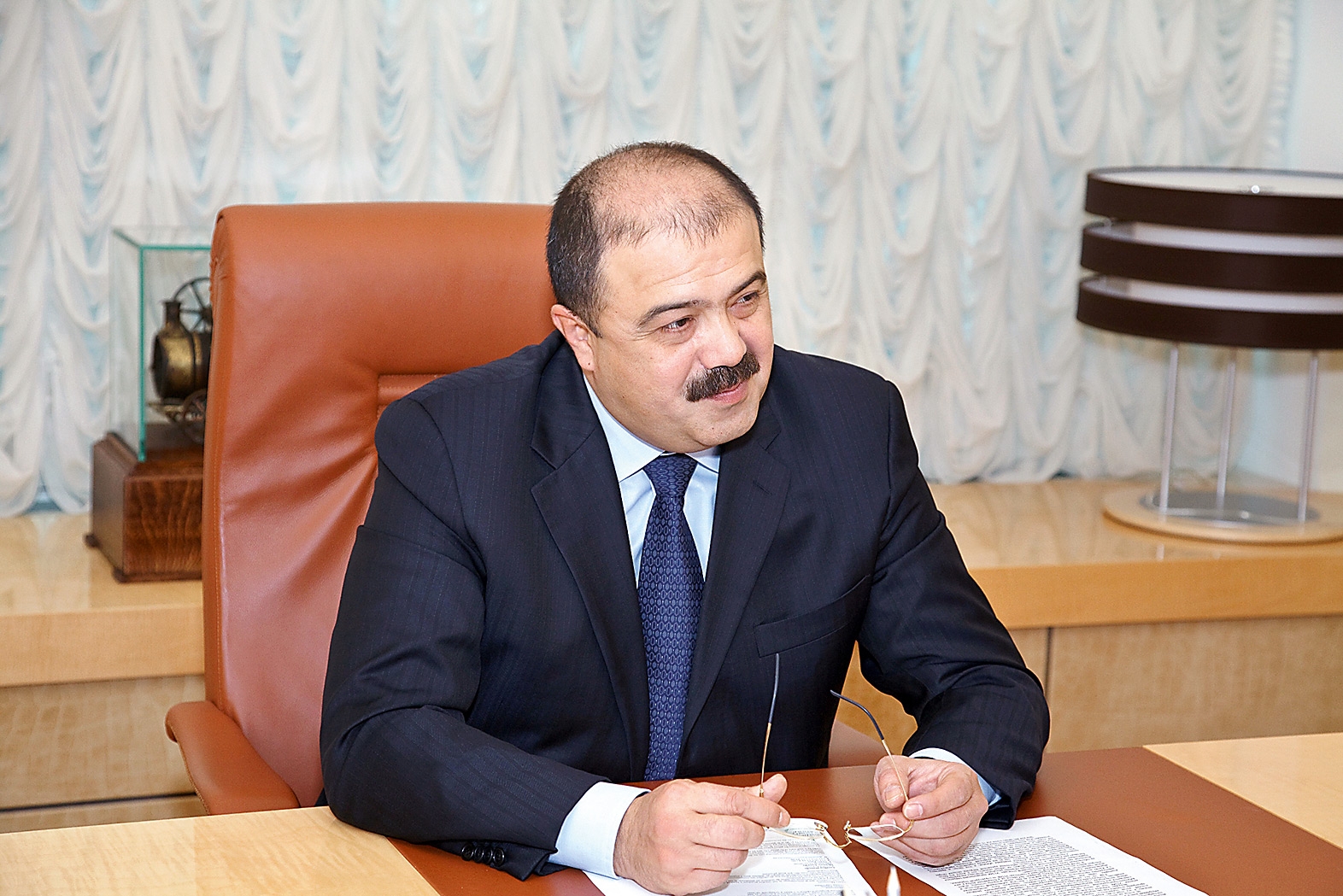

In February 2024, Hungary failed in its attempt to delist oligarchs Usmanov, Kantor, and Nikita Mazepin — a former Formula 1 pilot and the son of fertilizer and chemicals tycoon Dmitry Mazepin — from the individual sanctions list. The following month, Slovakia secured the removal of Jozef Hambálek, a Slovak national and European head of the Russian nationalist Night Wolves motorcycle club, in what was described as a transactional swap: Slovakia backed Hungary’s broader list in exchange for Budapest supporting Hambálek’s removal.
In September 2024, Hungary finally secured the removal of Nikita Mazepin, while Violetta Prigozhina – the mother of the late Wagner Group chief Yevgeny Prigozhin – was also removed from the list (though there is no indication that the latter was at Hungary's request). In December 2024, Hungary again saved Patriarch Kirill from sanctions, along with Russia’s UN Ambassador Vasily Nebenzia.
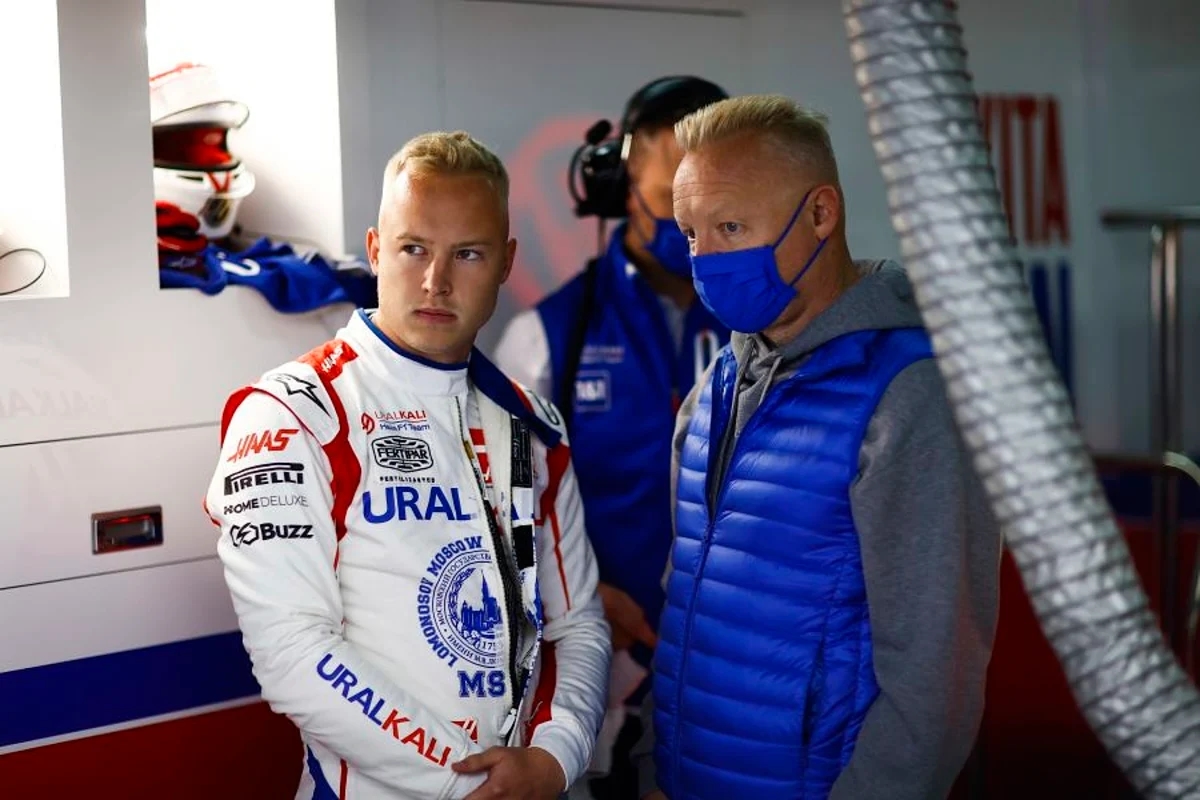
In February 2025, Hungary extracted another Kirill exemption during negotiations on the 16th EU sanctions package, as well as saving the Russian Olympic Committee and two Russian football clubs (CSKA Moscow and FC Rostov) from sanctions. Viktor Orbán’s government then went on – with Slovakia’s support – to succeed in the already mentioned removal of Kantor, Degtyaryov, and Ismailova from the EU’s sanctions list in March 2025.
In February 2026, Hungary vetoed the entire 20th sanctions package outright — the first time Budapest had gone that far — blocking new restrictive measures that had been intended to mark the fourth anniversary of the invasion while citing a dispute over oil flows through the Druzhba pipeline. Both Viktor Orbán and Robert Fico use the issue of the Druzhba disruption for domestic political campaigning purposes.
Most recently, in March 2026, Slovakia threatened to veto the six-month renewal of the entire existing individual sanctions list unless Usmanov and Fridman were immediately removed. However, EU diplomats called what came next one of the strangest U-turns they had witnessed: Bratislava, backing down without securing the removal of either. Hungary, likewise, dropped its list of seven names.