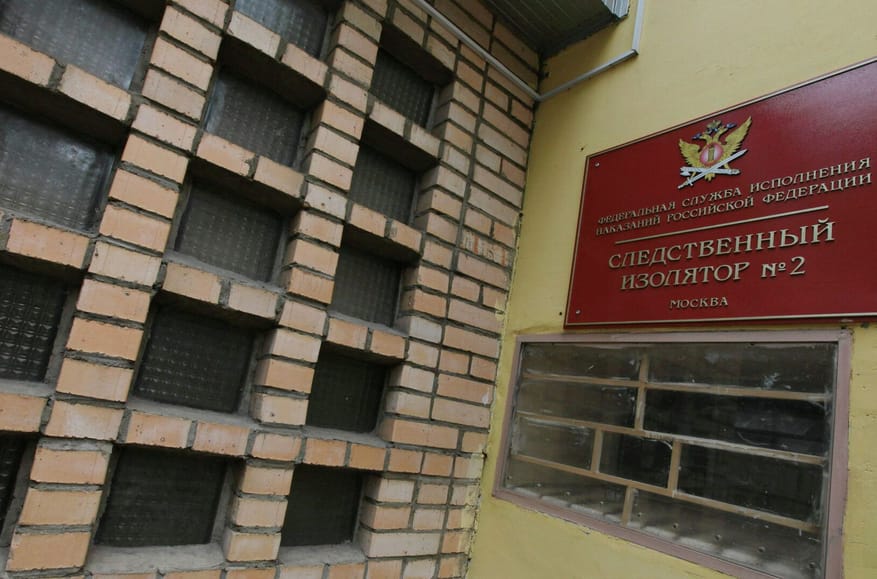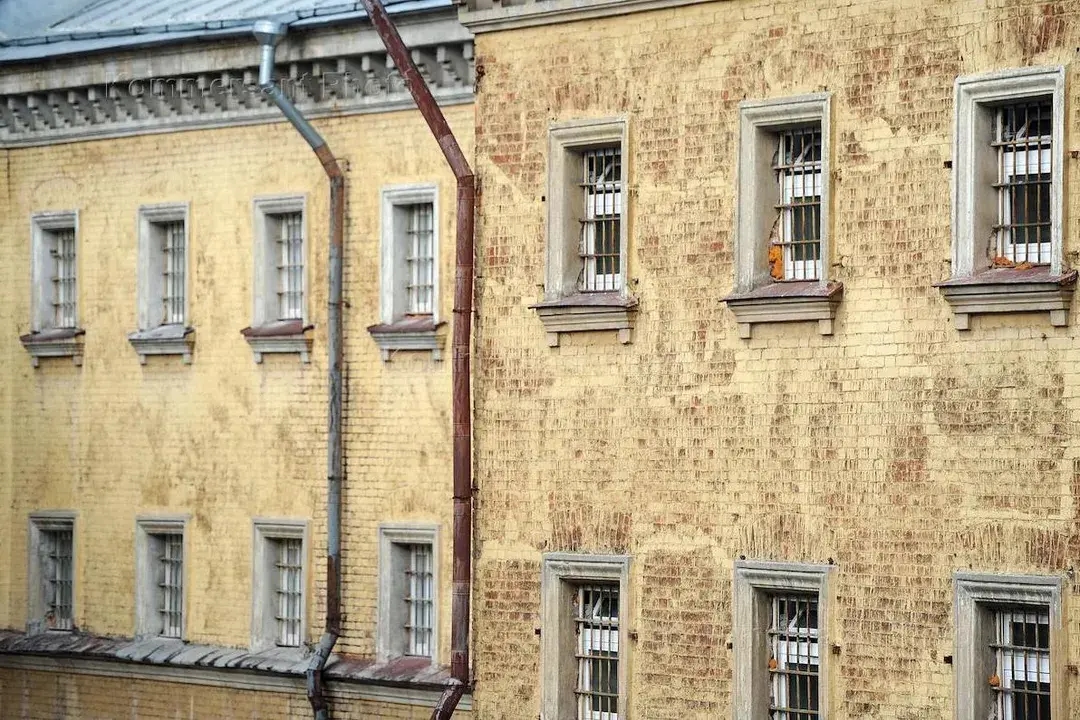
Russia’s Federal Security Service (FSB) has taken control of seven pretrial detention centers (SIZOs) previously run by the Federal Penitentiary Service (FSIN), according to data from the state registry of legal entities reviewed by The Insider. The transfer was not accompanied by public statements from either agency and had not previously been reported in the media. In connection with the move, leadership changes took place in at least four facilities — including Lefortovo in Moscow, as well as centers in Krasnodar, Rostov-on-Don, and North Ossetia.
The transfer followed the entry into force of a law allowing the FSB to operate its own detention centers, which took effect on Jan. 1, 2026.
Registry data show that in March 2026, founding documents for seven SIZOs were amended, replacing FSIN with the Russian Federation represented by the FSB as the founder. The facilities were also renamed and are now listed as SIZOs of the FSB or its regional directorates.
The changes occurred in two stages. Lefortovo SIZO was re-registered on March 2, 2026, while the remaining facilities were re-registered on March 23.
The facilities transferred to the FSB are:
- SIZO-2 FSIN (Moscow, Lefortovo)
- SIZO-3 FSIN (St. Petersburg)
- SIZO-4 FSIN (Rostov-on-Don)
- SIZO-5 FSIN (Krasnodar)
- SIZO-6 FSIN (Vladikavkaz)
- SIZO-7 FSIN (Chelyabinsk)
- SIZO-8 FSIN (Simferopol)
All of these were centrally managed detention centers, reporting directly to FSIN rather than to regional authorities. After the transfer, only one such facility remains within FSIN — SIZO-1 on Matrosskaya Tishina Street in Moscow.
Leadership changes follow transfer to FSB
Leadership changes were also made at several facilities following the transfer.
At Lefortovo, Dmitry Yelkin was replaced by Alexander Pavlov. Little is known about Pavlov, though leaked data indicate that as early as 2022 he arranged food deliveries to the Lefortovo address, suggesting a possible link to the facility or to the FSB’s investigative department located there.
At the former SIZO-5 in Krasnodar, Yevgeny Grudinin took over as head on March 23, 2026. Available data suggest he previously served in security agencies, including as an operative in the FSB’s Krasnodar region office in Krymsk in 2007. Later data leaks associate his name with FSB internal security units.
At the former SIZO-4 in Rostov-on-Don, leadership changed shortly before re-registration. According to registry data, Mikhail Mukhonkov became head on March 4, 2026. He is believed to have ties to the FSB, having been affiliated in 2020 with Military Unit 02035, part of the FSB’s Rostov Region directorate.
At the former SIZO-6 in Vladikavkaz, Bagir Karsanov was appointed head on March 23, 2026. Data leaks repeatedly link him to the FSB, including its North Ossetia-Alania directorate, particularly in the Prigorodny district.
In some facilities, leadership did not change after the transfer. For example, the former SIZO-3 in St. Petersburg is still headed by Andrei Maksimov. Previously published data indicate that before working at the detention center, he served in the FSB investigative unit for St. Petersburg and the Leningrad Region and was involved in the “Network” case. His move to the SIZO occurred before its formal transfer to the FSB. Similarly, leadership at SIZO-7 in Chelyabinsk remained unchanged.
Information about the leadership of the FSB-run SIZO in Simferopol in Russian-occupied Crimea (formerly SIZO-8) is restricted in the registry. Such restrictions are allowed by law at the request of the legal entity, while similar data for other facilities remain publicly available. Previously, Rauf Idrisov had been listed as the head of the institution.
FSB regains authority over its own detention centers
The law allowing the FSB to operate its own pretrial detention centers came into force on Jan. 1, 2026. It provides for the transfer of centrally managed FSIN facilities to the security service and grants the FSB authority to detain and escort defendants.
In effect, this restores a system that existed before 2005, when detention centers were part of the FSB structure. They were transferred to FSIN as part of Russia’s commitments to the Council of Europe.
In practice, some detention centers had already been effectively controlled by the FSB. This includes Lefortovo, which has traditionally held defendants in cases involving treason, espionage, and terrorism, along with high-ranking officials who face charges of various sorts. Among those held there were former Economy Minister Alexei Ulyukayev, former Khabarovsk Region governor Sergei Furgal, and journalist Ivan Safronov.
Lawyer Ivan Pavlov, founder of the human rights project Pervy Otdel (lit. “Department One”), told The Insider that the transfer was a “professional necessity for the [security services],” citing insufficient infrastructure amid a sharp increase in cases handled by the FSB.
Another lawyer from Pervy Otdel, Yevgeny Smirnov, said the handover of detention facilities to the FSB is already already affecting both the working conditions for lawyers and the treatment of detainees:
“It is still difficult to assess how much harder it will become for lawyers to work and for detainees to be held in these facilities, but there is no doubt things will get worse. Already, defense lawyers report stricter checks at entry and during meetings, though a transition period lasting several months is still underway.
It is important to note that these detention centers were already de facto under FSB control, with their own rules and requirements, and staff were often recruited directly from the FSB. The most well-known example is Lefortovo head Mikhail Svinolup, who worked for many years as an FSB investigator and later moved to the detention center.”
Lawyer and human rights advocate Nikolai Polozov also warned of worsening conditions, saying the transfer would increase pressure on defendants:
“What will change? A lot will change, because this effectively becomes a fully closed system. FSB investigators place people in custody through compliant courts, and then inside the detention center they can operate freely. Their own personnel guard the facility, without interference from FSIN staff. Investigators can hold people as long as they want, invent grounds to prolong cases, extract confessions, use torture.
Everything bad that existed in Russian detention centers can now be multiplied two or three times. This will be the FSB prison system. There will also be problems with access for lawyers: if an investigator does not want to grant permission, how do you get in? Go to court, file an appeal. We all know exactly what kind of courts we're talking about.
What is happening is undoubtedly a crackdown. It is the erosion of all these institutions, the abandonment of even the limited rights that formally remained. In effect, it makes it easier to achieve the desired metrics. What are their metrics? Clearance rates and convictions. That is the path they are taking.”