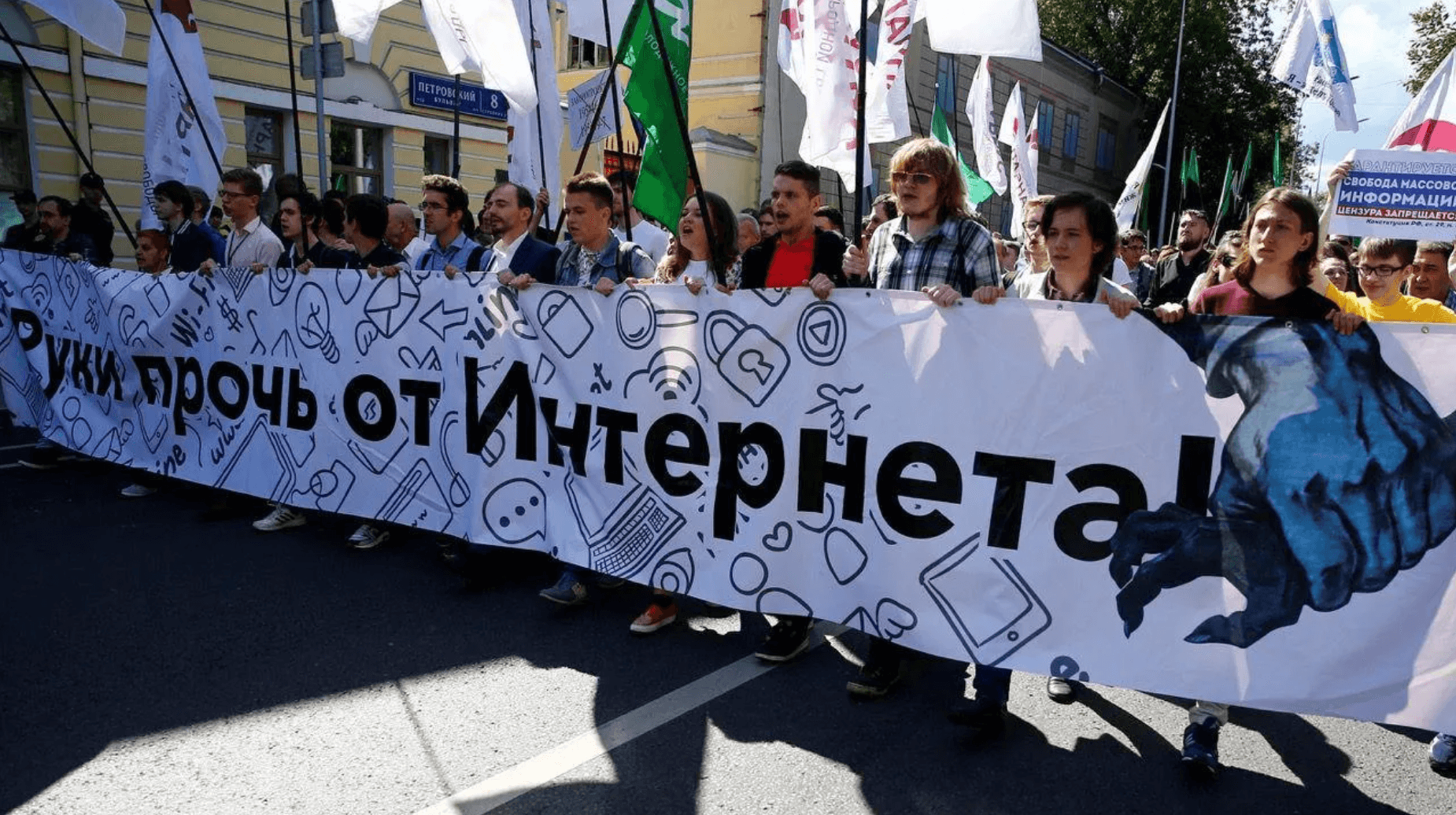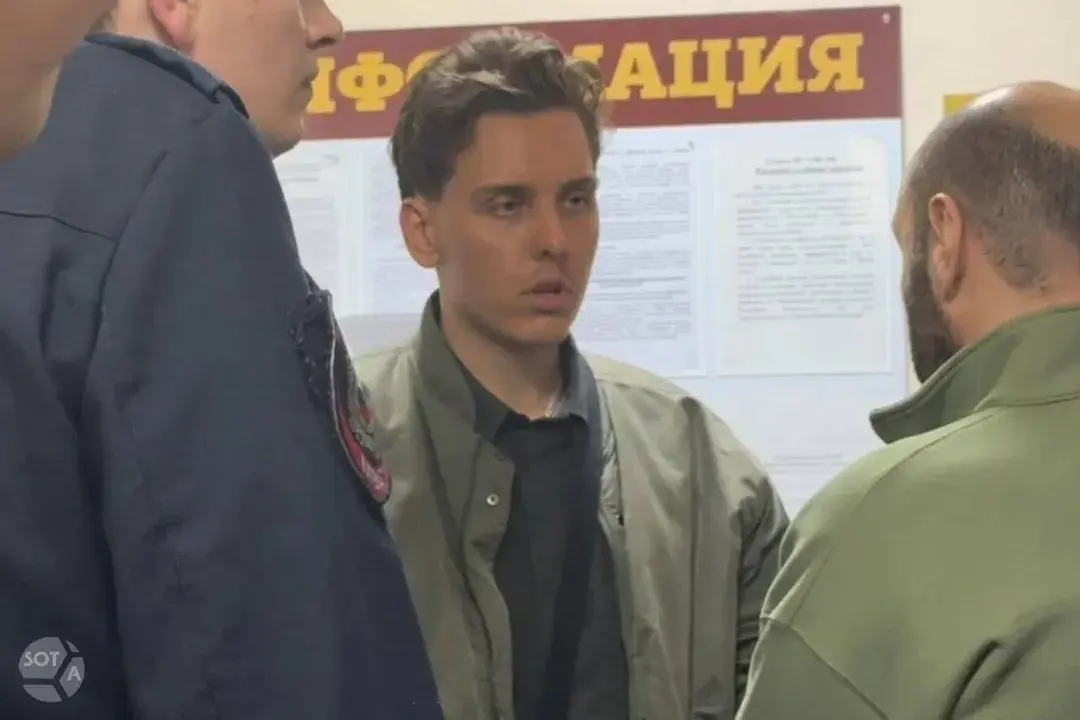
Moscow's Zamoskvoretsky District Court earlier today ordered the arrest of three participants in a protest against internet blockages held on the city’s Bolotnaya Square on Sunday. Vladislav Azarochkin, Alexander Shelestov, and a woman identified only as “Susanna” were accused of petty hooliganism, Article 20.1 of Russia’s administrative code. Azarochkin and Shelestov were sentenced to 15 days in custody, while Susanna was given 10 days, according to a report by the rights group Slovo Zashchite (lit. “Word to the Defense”).
Moscow’s Meshchansky District Court also sentenced Ekaterina Wagner, who was detained at the protest, to 15 days in jail. She was charged with “disobeying police” and “violating the established procedure for holding a public event.”
According to reporting by the independent outlet Mediazona, the same court sentenced three men — Yaroslav Polyakov, Mikael Markaryan, and a man whose family requested his name stay out of the public domain — to 15 days behind bars on the same charges of “disobeying police,” bringing the total amount of protesters jailed in Moscow earlier today to seven.
According to Wagner’s lawyer, her client did not take part in any unauthorized actions and had simply been out walking with her nephews. One of them, Artur Wagner, has a second-degree disability. He was detained together with his aunt but was later released. Artur said that officers threatened to beat him and to “sit him on a bottle” — referring to a commonly used form of sexualized torture or humiliation — at the police station and record it on video. As a result, the defense says, Artur was forced under pressure to testify against his aunt, saying she had “urged him to go to the protest.” It was also reported that his bank card was taken.
Azarochkin’s lawyer said his client was beaten by police officers in a vehicle. After the court hearing, Azarochkin managed to call his girlfriend and said he was continuing to be beaten in a police transport van. The Moscow police deny that claim.
Shelestov told the court that at the police station officers called him a protest coordinator, demanded that he unlock his phone, and spent an hour examining its contents. Shelestov stressed that he had nothing to do with organizing the rally.
Susanna said she had simply been standing in the square and had not shouted any slogans. According to her, the police report said she had used obscene language, which she denied. She also said the court refused to review body camera footage that could have supported her account.
In all, at least 18 people were detained at nationwide protests against internet blockages, according to a report by the rights group OVD-Info. The group said 13 were detained in Moscow, two in St. Petersburg, two in Kaluga, and one in Voronezh. Among those detained were four minors. Two people were beaten. According to the independent outlet SotaVision, one of those detained in Moscow came to the square carrying a placard reading “No to war.”
Authorized rallies against internet shutdowns had been planned across Russia for March 29, but local authorities banned all of the announced demonstrations. By The Insider’s count, at least six organizers have been jailed — two were detained and four others came under pressure.
The nationwide protests scheduled for March 29 were announced by Dmitry Kisiyev, the former head of opposition politician Boris Nadezhdin’s campaign headquarters. His team filed requests to hold demonstrations in 28 cities across 17 regions. At the same time, the Telegram channel and chat “Scarlet Swan” attempted to hold rallies in Moscow and St. Petersburg around the same issue. Despite the authorities’ bans, protests still took place in several Russian cities.