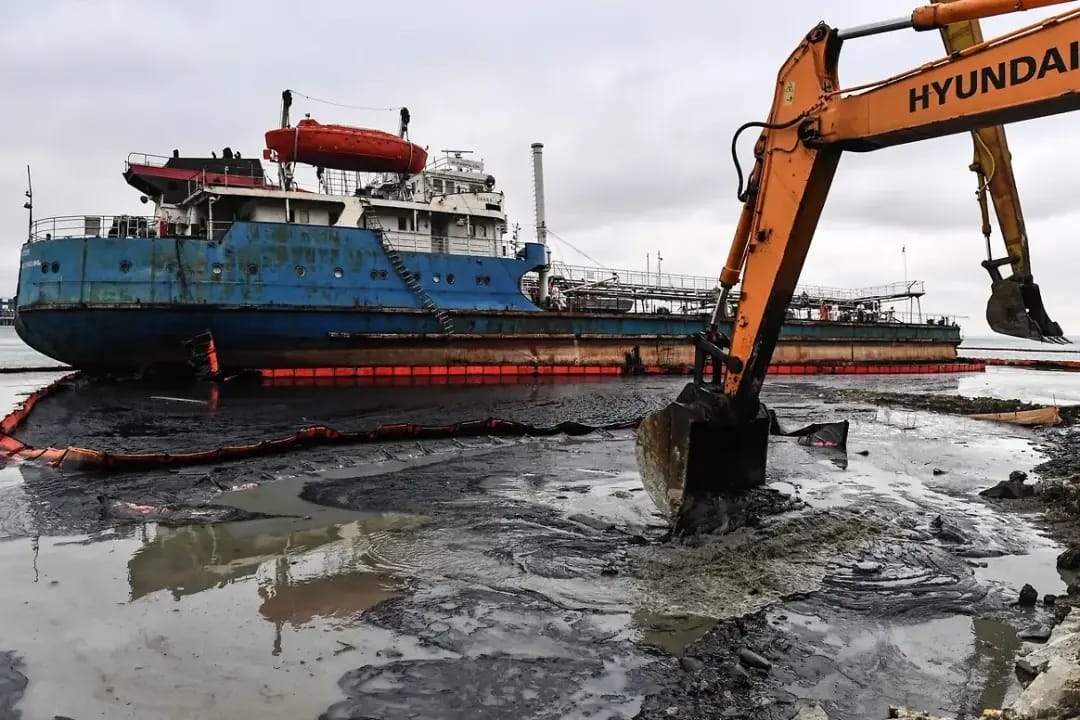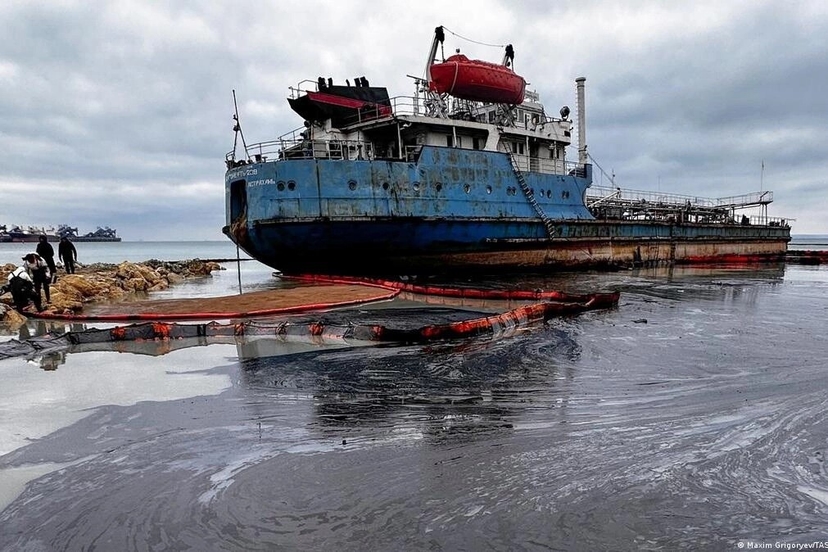
Russia has still not fully addressed the consequences of the wrecks of the Volgoneft-212 and Volgoneft-239 tankers in the Kerch Strait in December 2024. As a result, as many as 120,000 cetaceans have died, and petroleum residue is still drifting through the sea. Although a Russian court ordered the tankers’ nominal owners to pay billions of rubles in damages, the money is unlikely to be recovered. The main beneficiary of the shipments — state-owned energy giant Rosneft, which is headed by longtime Putin ally Igor Sechin — escaped liability altogether. Meanwhile, the family of a senior executive whose responsibilities included chartering the vessels and whose company delayed their unloading is building a boutique winery near the city of Sevastopol in Russian-occupied Crimea, not far from beaches polluted with heavy fuel oil.
A joint investigation by The Insider and the Center of Journalistic Investigations.
The wrecks of the Volgoneft-212 and Volgoneft-239 tankers in December 2024 were only one of a series of environmental crises in the Black Sea region linked to Russia’s full-scale war in Ukraine. Others include pollution caused by the destruction of the Kakhovka dam, vegetable oil spills following strikes on ports, and the impact of military operations on marine wildlife.
Who was responsible
In the case of the Black Sea disaster, Russia was obligated to comply with a range of international obligations it had undertaken. Articles 94 and 194 of the UN Convention on the Law of the Sea (UNCLOS) require states to prevent and respond to marine pollution, and articles 204 and 205 require governments to observe, measure, and analyze risks to the marine environment and publish monitoring results. In practice, however, it was Greenpeace that carried out the monitoring and satellite-image analysis.
The International Convention for the Prevention of Pollution from Ships (MARPOL) provides for sanctions and investigations following maritime accidents. Responsibility for enforcing those requirements rested with the harbor master of Port Kavkaz, the Russian Classification Society (RCS), and the Kerch Strait Vessel Traffic Service (VTS). The RCS is a federal autonomous institution under Russia’s Transport Ministry that classifies and provides technical oversight of inland and river vessels and mixed “river-sea” vessels. It is required to record restrictions on operating areas and seasonal regulations in a vessel’s classification documents and verify that actual operating conditions comply with the vessel’s class.
In practice, the RCS failed to enforce those restrictions. The Volgoneft-212’s classification documents permitted it to operate in the Black Sea only through Oct. 31, before harsher winter weather set it. The owner of the Volgoneft-239 listed a similar restriction through Nov. 20.
Independent environmentalist Dmitry Lisitsyn and environmental lawyer Natalya Lisitsyna noted that the Volgoneft-239 was listed in the RCS register with vessel status “08 — Documents suspended.” That meant the tanker was not legally permitted to go to sea at all. Nevertheless, despite having invalid documents, the vessel loaded 4,300 metric tons of petroleum product at the port of Azov and then sailed off to deliver the cargo. The Volgoneft-212, meanwhile, remained at sea after its permitted operating season had expired.
The Volgoneft-239 arrived at Port Kavkaz on Nov. 6 but received no instructions from the charterer about where to unload, remaining at the port’s Anchorage No. 453 until Nov. 30. The vessel’s owner contacted several agencies, including the RCS, but instead of halting the operation of a ship without valid documents, the RCS said it was prepared to consider extending the vessel’s permitted operating season in the area.
The second authority that should have prevented the tankers from remaining at sea during a storm was the Kerch Strait VTS, operated by the state-owned Rosmorport company. The service coordinates vessel movements and anchorage, requests information about ships’ navigation-area restrictions, and provides relevant information to the harbor master.
On Nov. 18, 2024, a VTS operator allowed the Volgoneft-212 to anchor at Anchorage No. 453 outside the port’s waters. On Dec. 3, the service approved an anchorage for the tanker in the Black Sea — outside its permitted navigation area.
As winds intensified, both Volgoneft tankers sheltered near Cape Yantarny on the Taman Peninsula before the VTS instructed them to move to the Zavetnoye vessel shelter near Cape Takil on the Crimean Peninsula. While the ships were already underway, the service informed them that there was no room at the shelter and directed the Volgoneft-212 and Volgoneft-239 to another location near Cape Takil.
On the morning of Dec. 15, winds strengthened to 25 meters per second, and waves reached four meters. Both tankers were wrecked.
The harbor master of Port Kavkaz is responsible for setting the daily schedule for vessel movements and placement in the port area. In December 2024, that position was held by Yevgeny Skorchenko.
The Volgoneft-212 submitted a prior request to be allowed to enter the port on Nov. 18. The document noted the seasonal restrictions and the prohibition on operating in the Black Sea after October. Despite those restrictions, an employee of the State Port Control Inspectorate accepted the application, and the daily movement schedule was later approved. Neither the RCS, the VTS nor the harbor master ordered the Volgoneft-212 and Volgoneft-239 out of prohibited waters, canceled their schedules, or barred them from anchoring.
Neither the RCS, the VTS, nor the harbor master ordered the two vessels out of prohibited waters, canceled their schedules, or barred them from anchoring
The systemic nature of the problem is underscored by the fact that 50 other mixed river-sea vessels — with O-PR, M-PR and M-SP classifications — were sheltering from the storm alongside the two tankers near Cape Yantarny. For most of them, operating in the Kerch Strait in December carried significant risk.
Just two days after the wrecks, another tanker, the Volgoneft-109, issued a distress signal near Port Kavkaz. The vessel suffered damage to a cargo tank but was able to anchor safely.
The role of Russian regulators in creating the conditions for the accident is also documented in an investigation by the independent outlet Important Stories, which found that another 11 Volgoneft-class tankers went to sea in late 2024 and the first month of 2025 despite restrictions in their classification certificates. At least 44 Volgoneft tankers unloaded at Port Kavkaz during that period. In other words, roughly one in four vessels operated on the route in violation of established technical standards.
How the government tried to clean up the spill
After the tanker wrecks, Russian authorities attempted to contain the damage but never fully eliminated the source of the pollution. During the first week, nothing was done to limit the spread of petroleum products. For the Volgoneft-212, the installation of booms began on Dec. 20, 2024 — but only after heavy fuel oil leaks had been detected.
In the case of the Volgoneft-239, it was not until Dec. 28 — 13 days after the wreck — that the first 250 meters of containment booms were installed around the stern section of the vessel, which had run aground near Cape Panagia.
Installation of the booms, which eventually extended just over two kilometers, was not completed until Jan. 13, 2025. By then, patches of mazut — a heavy residual fuel oil commonly used in Russia and other former Soviet countries — had been recorded not only along the Kerch Peninsula but in six municipalities in Russian-annexed Crimea, from Yalta to Feodosia. In Sevastopol, severe pollution during that period caused large numbers of dead European anchovies to wash ashore.
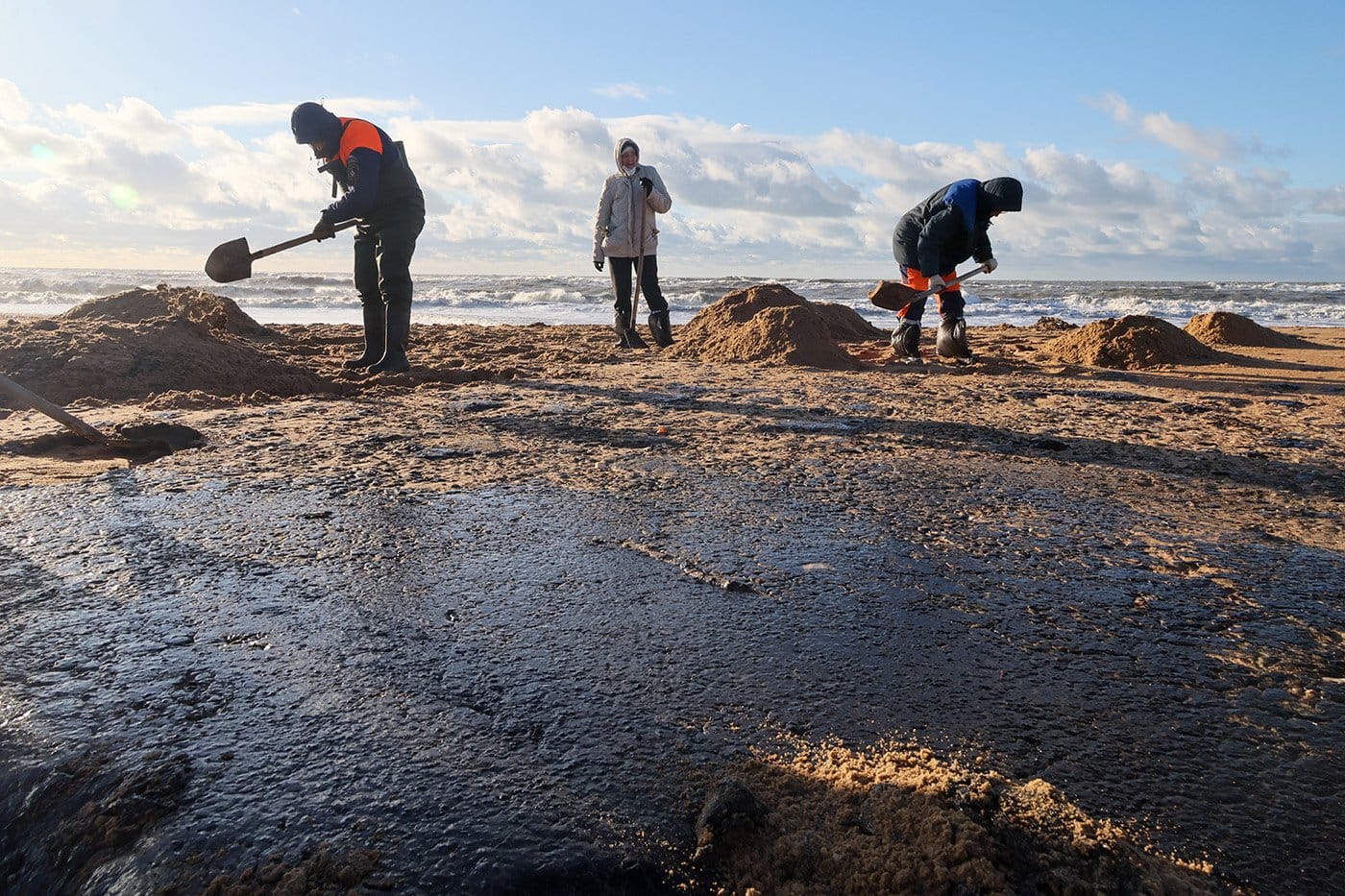
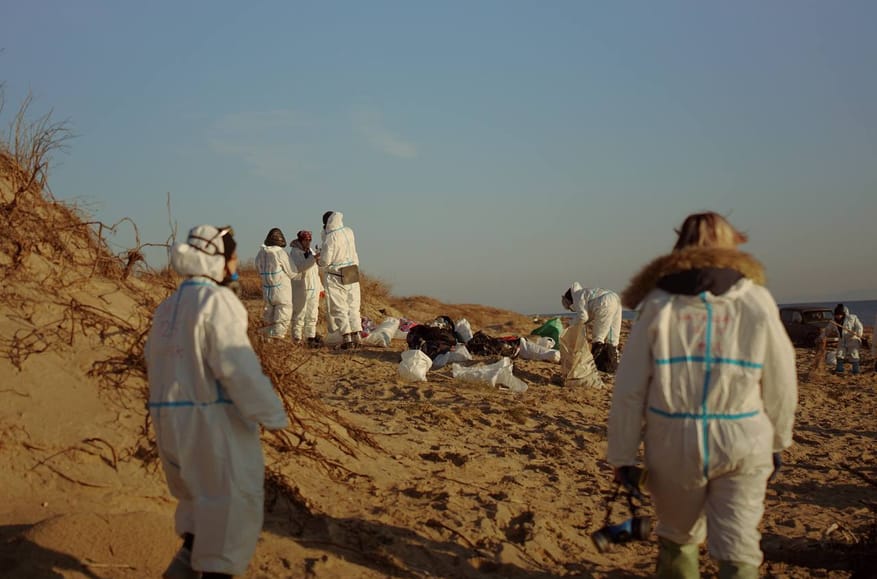
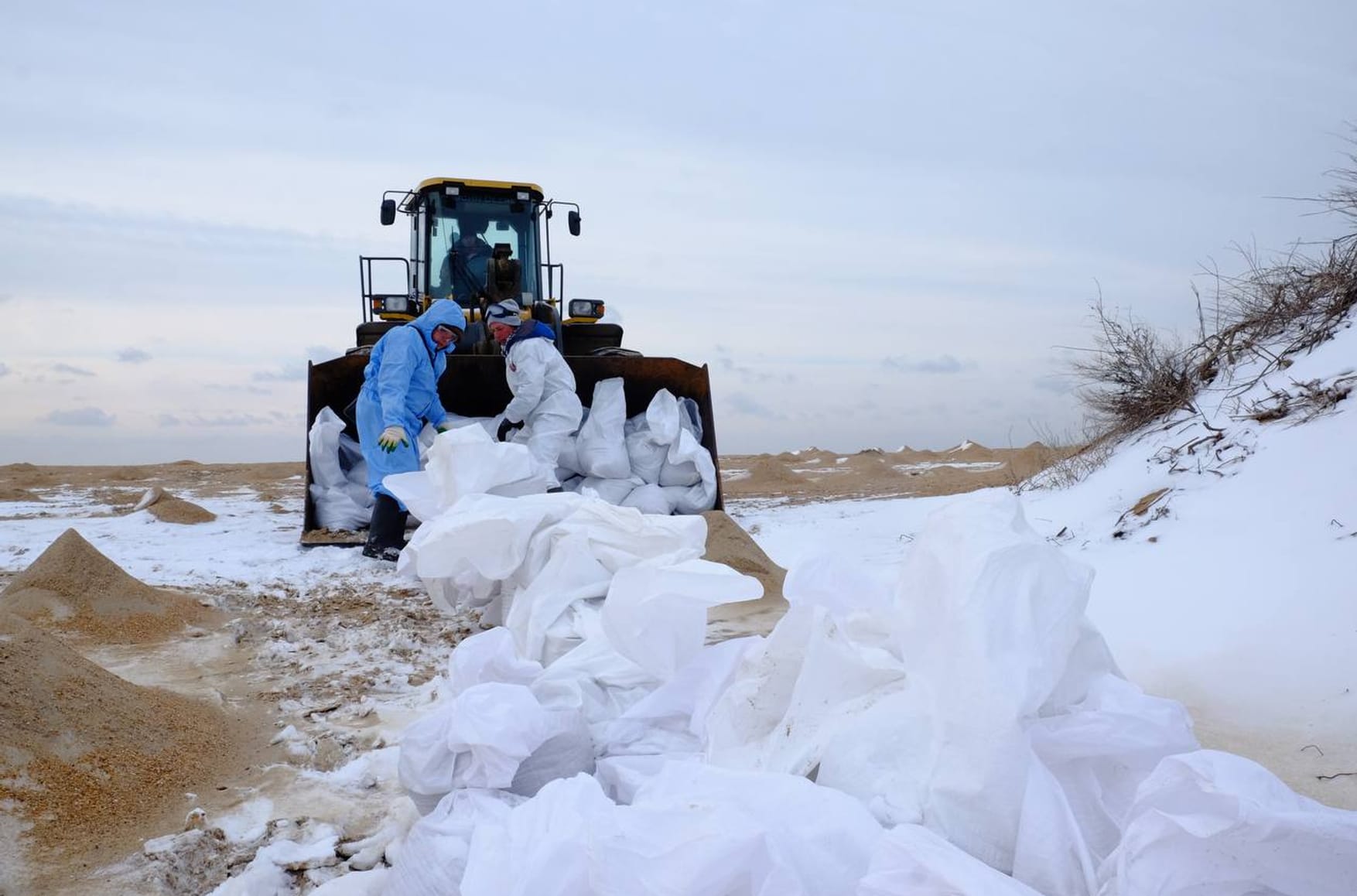
Authorities largely focused on collecting contaminated sand from beaches while heavy fuel oil continued leaking from submerged sections of the vessels. The first attempts to address the source of the pollution itself came only a month after the accident. On Jan. 17, 2025, workers began pumping fuel oil from the grounded stern section of the Volgoneft-239. That work was completed in the spring.
The first attempt to address the source of the pollution itself came only a month after the accident
The main sections of the tankers that sank in the Kerch Strait remained unsealed throughout the warm season of 2025. The first of three cofferdams — protective structures installed over the submerged wreckage — was initially scheduled for Oct. 10, but installation was only completed a year after the accident — on Dec. 12, 2025. In February 2026, the government allocated up to 5.8 billion rubles ($72.3 million) to manufacture and install additional cofferdams and carry out related work.
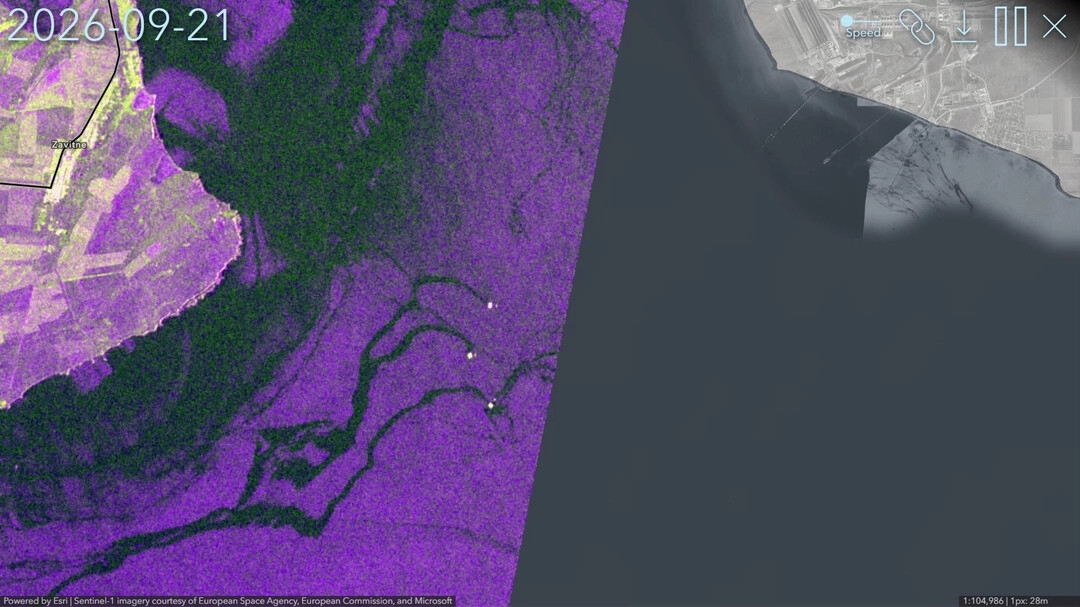
On Aug. 21, 2026, a Russian government commission announced the pumping of heavy fuel oil from the sunken tanker fragments had been completed. Independent observers, however, cautioned that the “completion of pumping” only meant Russian authorities had stopped the work — not that the leaks had ended.
The Sky Eye monitoring channel published a series of satellite images taken between Sept. 4 and Sept. 21, 2026. The images clearly show slicks extending from the cofferdams built over the submerged bow and stern sections of the Volgoneft-212 and Volgoneft-239.
Why the entire Black Sea region was affected
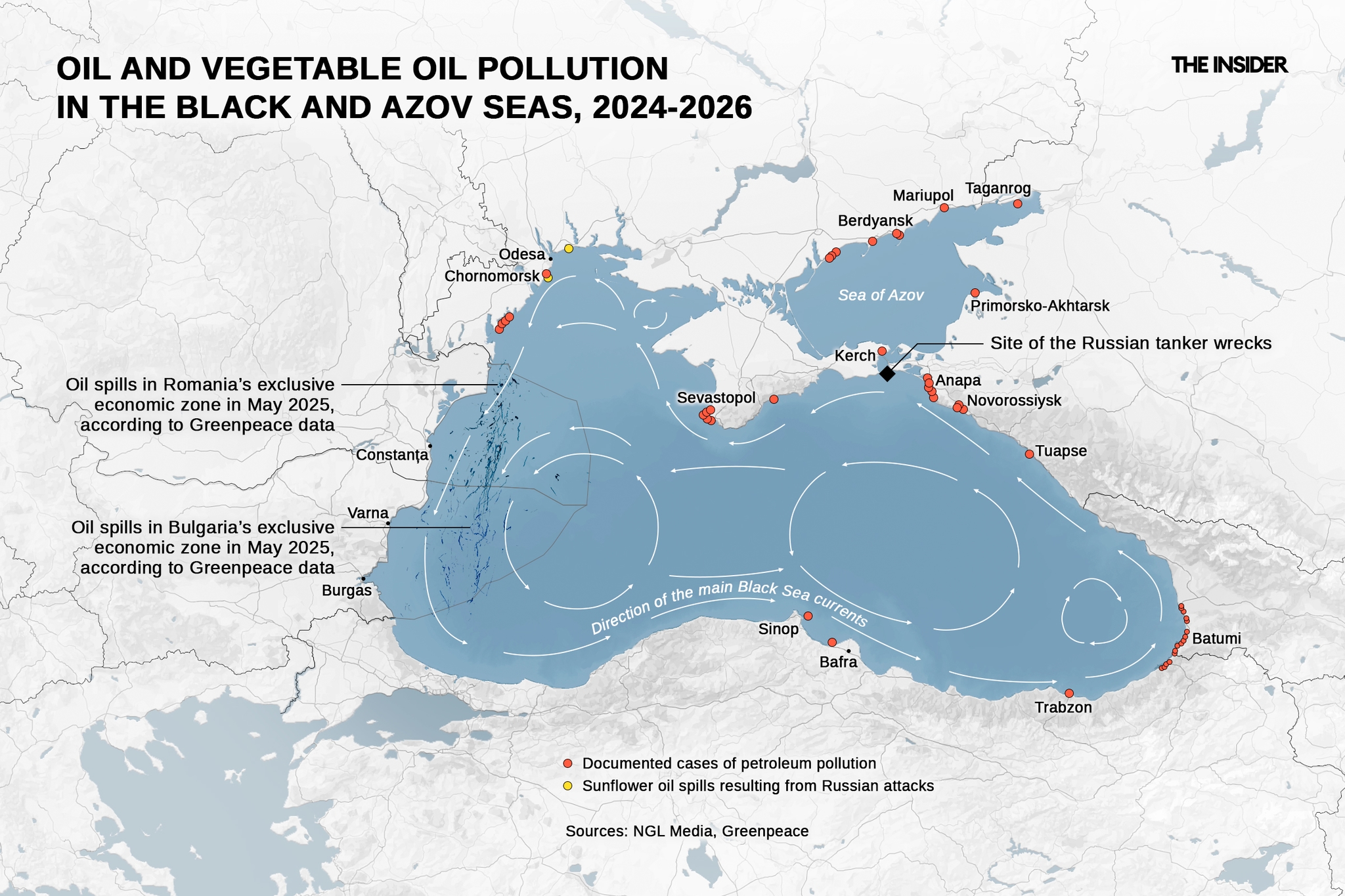
The area where the two tankers sank lies within the Black Sea’s main current system. Known as the Rim Current, it is a large cyclonic circulation that moves counterclockwise around the sea: eastward along Turkey toward Georgia, and west and southwest from the Kerch Strait and Crimea toward Ukraine, Romania, Bulgaria, and the Bosporus. As a result, heavy fuel oil from the wrecks did not remain near Russia’s coast but spread through the wider basin.
In June 2025, a team of researchers from Ukraine, Japan, and Singapore published an OpenDrift model, which concluded that heavy fuel oil had entered the main current and could have reached the coasts of every Black Sea country. As of the time of publication, they had already identified more than 80 cases of petroleum pollution recorded during the first six months after the accident.
In addition to specific reports of contamination, The Insider analyzed satellite-monitoring data published by Greenpeace CEE and SkyTruth covering the exclusive economic zones of Bulgaria and Romania. The images show that the total area of petroleum slicks increased tenfold from January to May 2025.
Satellite images show that the area covered by petroleum slicks increased tenfold from January to May 2025
In Bulgaria’s exclusive economic zone, an image from Dec. 21, 2024, showed a single slick covering 1.59 square kilometers. By Jan. 20, 2025, a new slick covering 15.77 square kilometers had been detected. Pollution in Bulgaria’s EEZ peaked in late April and early May, and slicks totaling 32.79 square kilometers were recorded on April 25 — by May 14, their total area had risen to 78.99 square kilometers.
Reports of contamination in late January are consistent with mathematical modeling showing that heavy fuel oil can move an average of 15 to 25 kilometers per day depending on Black Sea hydrodynamics. On that basis, fuel-oil fractions could have traveled from the Kerch Strait toward Odesa and onward to the Bulgarian and Turkish coasts over the course of two to three months.
Heavy fuel oil thickens as it cools, forming clumps that can remain suspended in the water column or settle on the seabed. As the water warms or when storms occur, the oil can begin to move again, rising toward the surface. The oil’s winter thickening followed by spring warming was likely behind the large slicks detected in Bulgarian and Romanian waters. Nevertheless, authorities in both countries avoided making any public accusations against Russia when heavy fuel oil pollution began approaching their shores.
On March 4, 2025, black, sticky and viscous petroleum deposits were found along a 100- to 150-meter stretch of Eforie Nord beach in Romania. The deposits followed the surf line, strongly indicating that they had been carried ashore by the sea. Staff from the Dobrogea-Litoral Water Basin Administration (ABADL) took samples and carried out cleanup work.
On March 31, 2025, inspectors found 1.5 metric tons of a mixture of sand and petroleum products on a beach in Varna, Bulgaria. They confirmed that the pollution came from the sea rather than from a source on land, but after inspections of 12 vessels in the Port of Varna, no source was identified. Prosecutors in Varna brought no charges, concluding that the pollution was not large-scale and had not caused significant environmental damage. Nevertheless, new contamination continued to be recorded for more than three weeks.
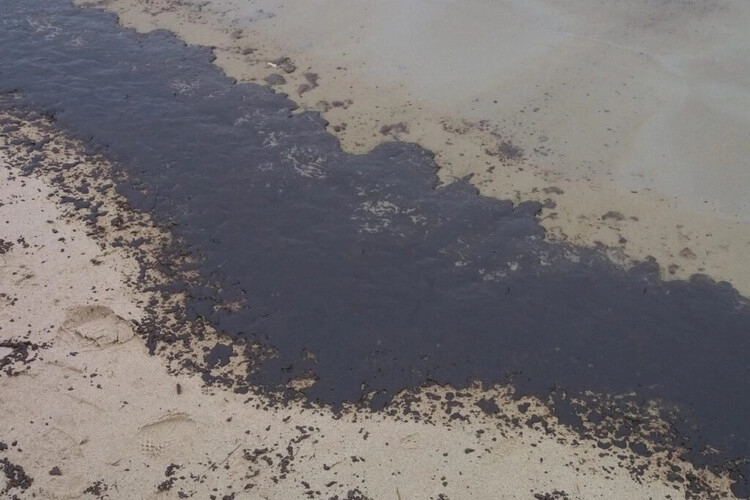
Government officials in Black Sea countries said vessels were a likely source of the pollution. For example, when Romanian ABADL director Stelică Hagi commented in October 2025 on the possible causes of the large petroleum slicks, he cited ships failing to comply with environmental requirements. Notably, photographs from Romanian and Bulgarian beaches clearly show streaks, patches, and clumps characteristic of heavy fuel oil rather than the thin film or rainbow sheen associated with oily bilge water discharged from engine rooms.
Beginning in January 2025, environmentalists in Georgia and Turkey found birds coated in heavy fuel oil, with volunteers reporting such finds along the coast from Gonio to Ureki, including in Batumi, Kobuleti, Poti, and Anaklia. In early January 2025, traces of oil were also observed on beaches and on birds’ feathers along the Turkish coast between Sinop and Trabzon. The early reports were likely linked to seasonal bird migration. Petroleum products themselves were then documented on the coast of Abkhazia in July 2025.
The gap between obligations and action
Only chemical analysis of samples would establish that Bulgarian and Romanian beaches were contaminated specifically by heavy fuel oil from the Volgoneft tankers. Such analyses were either not conducted, or their results were not officially published.
Still, the timing of the contamination is consistent with the OpenDrift transport model, and the characteristic viscous black deposits are visually distinct from the thin films and rainbow sheens typical of bilge-water discharges from ships.
Reports of heavy fuel oil pollution did not stop in spring 2025, with dozens of new cases being recorded throughout 2025 and 2026. Between June 1 and June 30 alone, regional environmental inspectorates in Burgas and Varna and the Black Sea Basin Directorate received more than 200 reports of heavy fuel oil contamination on beaches in 11 municipalities: Tsarevo, Sozopol, Primorsko, Burgas, Pomorie, Nessebar, Byala, Varna, Shabla, Avren, and Kavarna. Once again, no specific source was identified, even if authorities were able to rule out contamination caused by a land-based source.
Government agencies in Ukraine, Romania, and Bulgaria — including foreign ministries, environmental ministries, maritime administrations, and environmental inspectorates — should have documented the pollution and its possible connection to the wreck, sent diplomatic notes and requests for information to Russia, collected and preserved samples, satellite imagery, and AIS vessel-tracking data, contacted the International Maritime Organization, the U.N. Environment Programme, and the Black Sea Commission, and demanded that Russia investigate, impose sanctions, and provide compensation.
In practice, however, Romania and Bulgaria publicly limited themselves to noting that the pollution originated at sea and did not conduct comprehensive monitoring. Ukraine was the only Black Sea country to document the pollution and appeal to international institutions.
How the war increased cetacean deaths
The environmental impact of the heavy fuel oil spill, other pollution, and the ongoing invasion can be seen particularly clearly in cetacean deaths. Cetaceans sit near the top of the Black Sea food chain. Three endemic subspecies live in its waters: the Black Sea harbor porpoise, the Black Sea bottlenose dolphin, and the Black Sea common dolphin.
According to the International Union for Conservation of Nature’s Red List of Threatened Species, the Black Sea harbor porpoise and bottlenose dolphin are classified as endangered (EN), while the Black Sea common dolphin is classified as vulnerable (VU). The most reliable scientific estimate available, produced by the EU’s ASI/CeNoBS project in 2019, put the Black Sea population at around 60,400 common dolphins, 26,462 bottlenose dolphins, and 29,465 harbor porpoises.
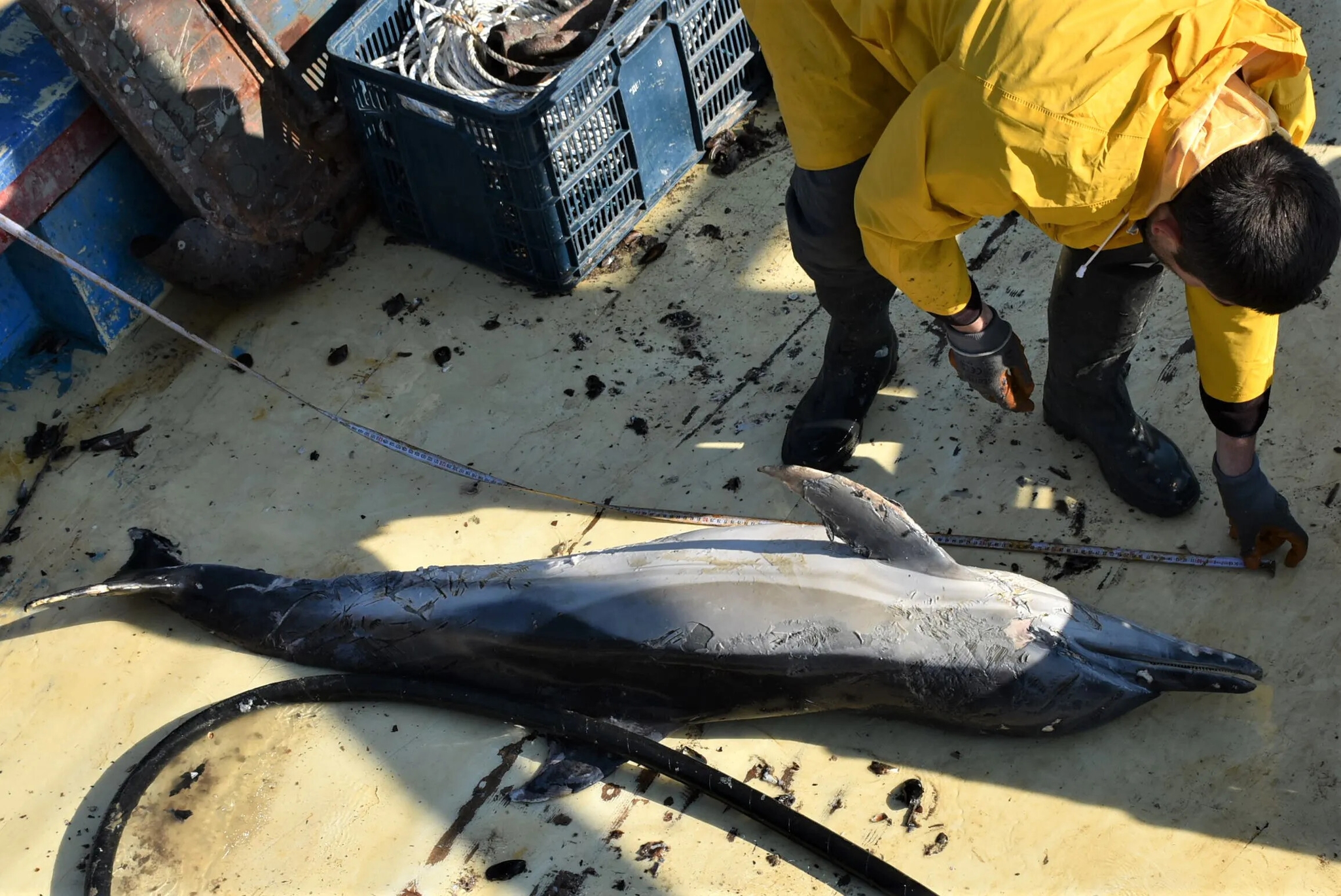
Before the full-scale war, the main human-caused source of cetacean deaths was accidental entanglement in commercial fishing nets targeting other species. Between 11,800 and 16,200 harbor porpoises alone died this way each year — between 4.6% and 17.2% of the species’ population, depending on the estimate used. However, Russia’s aggression and disregard for environmental protection created a range of additional threats.
Four major clusters of threats
Military operations
Ship- and submarine-mounted sonar, naval mine explosions, missile launches, and the use of aerial bombs generate noise that can prevent cetaceans from hunting and from communicating with one another.
Petroleum spills
Even after the Volgoneft tanker disaster, Russian authorities did not tighten oversight of vessel safety. On April 7, 2026, an oil slick detected approximately 10 kilometers, northwest of Anapa was linked to the tanker Sofia. Satellite analysis put the slick’s area at 581 square kilometers, and the Russian-Norwegian environmental outlet Bellona estimated that 300 to 350 metric tons of petroleum products had been released.
Destruction of the Kakhovka dam in June 2023
The dam’s destruction sent large amounts of contaminated freshwater into the Black Sea, along with chemical pollutants and waste.
Vegetable oil spills following strikes on port infrastructure
On April 26, 2026, a Russian strike on the Ukrainian port of Chornomorsk destroyed a storage tank containing 6,000 metric tons of sunflower oil, with most of the oil spilling into the sea.
The effect of those four factors on cetacean mortality can be estimated only partially. The most specific scientific assessment was published in a study presented at the 34th conference of the European Cetacean Society. Data collected by 20 scientists from Black Sea countries recorded 913 cetacean strandings from January through October 2022: 297 in Turkey, 277 in Bulgaria, 203 in Romania, 124 in Ukraine, and 12 in Georgia. That was at least twice the average recorded in previous years.
A more alarming estimate comes from Ivan Rusev, head of the scientific department at Ukraine’s Tuzly Estuaries National Nature Park, who said that around 2,500 carcasses were found along the coast in 2022. Using an estimate by U.S. researchers that only about 5% of dead animals wash ashore, he estimated that at least 50,000 cetaceans died during the first year of the invasion and more than 120,000 over the course of the full-scale war.
At least 50,000 cetaceans may have died in the Black Sea during the first year of the full-scale war and more than 120,000 over the course of the invasion
Available data reliably show that cetacean mortality doubled during the first year of the full-scale war, while expert estimates suggest that even more animals died after the tanker wrecks. While Russia’s military operations and petroleum spills are damaging the entire Black Sea ecosystem, most Black Sea countries are documenting only a limited share of that damage.
All Black Sea countries except for Russia have ratified ACCOBAMS — the Agreement on the Conservation of Cetaceans of the Black Sea, Mediterranean Sea and contiguous Atlantic area — requiring them to protect cetacean habitats, conduct monitoring, and investigate mass deaths. In Bulgaria and Romania, bottlenose dolphins and harbor porpoises are listed in Annex II of the EU Habitats Directive 92/43/EEC. All cetaceans are subject to the strict protection requirements of Annex IV of the directive.
The gap between commitments on paper and action in practice is visible at the data-collection stage. Bulgaria, Romania, and Ukraine submit data on discovered cetaceans to the ACCOBAMS stranding database, but even in Romania, where the PONTICCET project conducts postmortem research, samples are collected inconsistently. In one group of nine stranded cetaceans, for example, gastrointestinal samples were taken from only two; the remaining animals received only external examinations.
Experts point to several major gaps among countries not directly involved in the fighting. Georgia and Turkey supplied no data to the ACCOBAMS database for 2025, and necropsies remain incomplete. There is also no basin-wide system for comparing causes of death with pollution, bycatch, and military factors.
In 2024 and 2025, ACCOBAMS recommended that countries strengthen national stranding networks, cooperate with its emergency task force, and expand their capacity to conduct postmortem examinations. The recommendations amount to an acknowledgment that current implementation is inadequate. As a result, in the fifth year of the full-scale war, it is still impossible to reliably determine how many marine mammals died because of heavy fuel oil and how many because of military activity.
How Rosneft stayed out of the main lawsuits
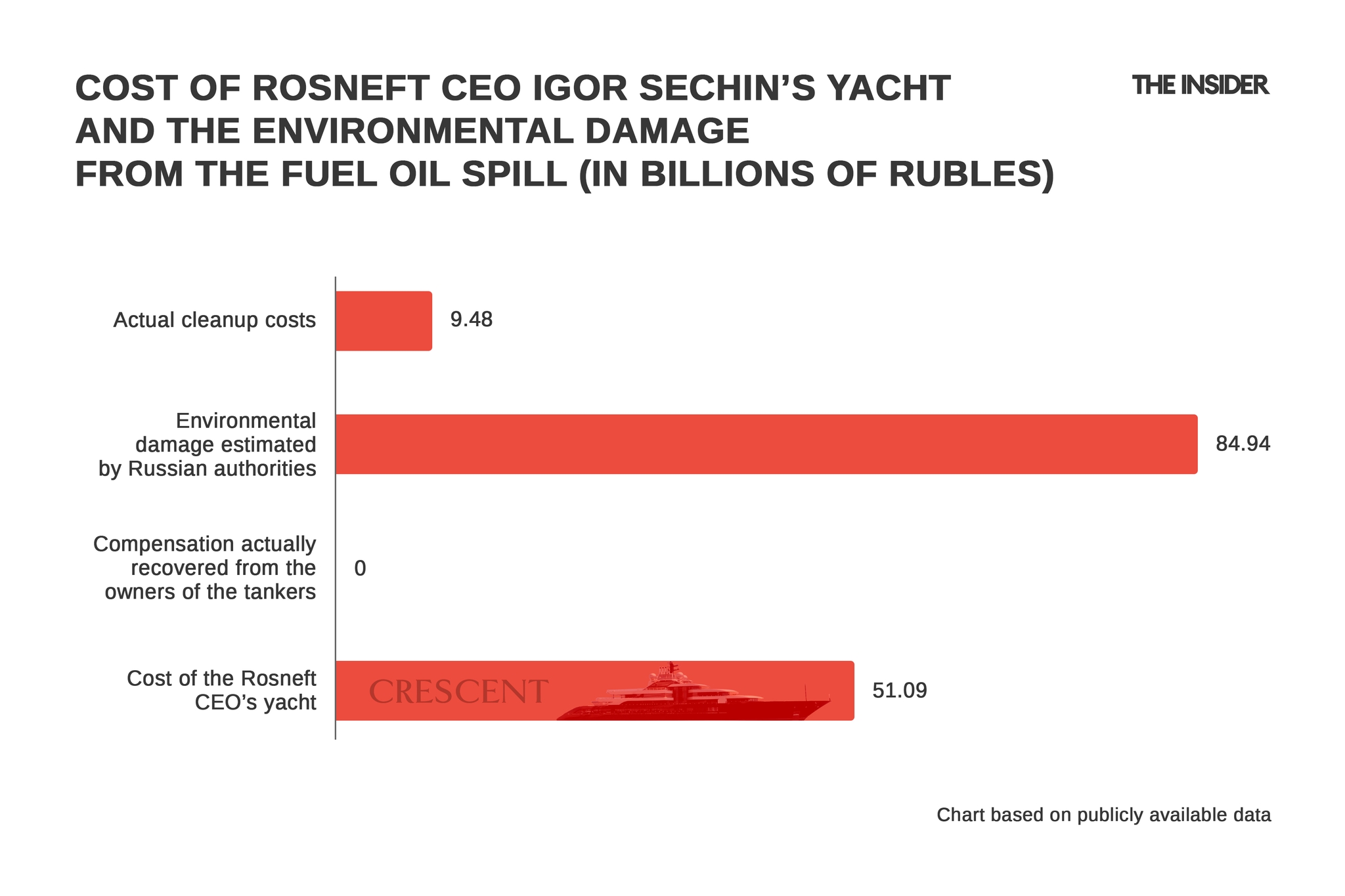
Russia’s Federal Service for Supervision of Natural Resources, known as Rosprirodnadzor, estimated the environmental damage caused by the December 2024 spills at 84.94 billion rubles ($1.05 billion). The figure is necessarily incomplete because it covers only Russian territory and Russian-occupied territory, excluding Ukraine and other Black Sea countries.
Actual spending on the cleanup was almost nine times lower than the agency’s damage estimate. According to The Insider’s calculations, which were based on Russian government funding decisions, less than 10 billion rubles ($124.2 million) was spent on cleanup, monitoring, examination of the wreckage and construction of the cofferdams. Yet even those smaller costs are unlikely to be recovered from the parties responsible for the accident.
Less than 10 billion rubles was spent on cleanup, monitoring, wreck inspections and cofferdams, compared with an estimated 85 billion rubles in damage
The court found the tankers’ formal owners liable for the damage, even though their assets were clearly insufficient to cover it. In the case of the Volgoneft-212, the court ordered Kamatrasoil LLC and Kama Shipping LLC to pay 49.46 billion rubles ($614.4 billion).
At the time of publication, 179 enforcement proceedings had been registered against Kamatrasoil. In 60 cases, bailiffs were unable to locate the company, and in another 73 they reported that the debtor “has no property.” On July 27, 2026, the Perm Region Arbitration Court accepted a bankruptcy petition filed by the tax authorities against Kama Shipping over 65.7 million rubles ($816.2 million) in debt.
In the case of the Volgoneft-239, the defendant was Volgatransneft CJSC. Since September 2025, bailiffs have repeatedly returned enforcement cases against the company, saying they could not establish “the location of the debtor or its property.”
Since June 2026, three proceedings have been closed “because the debtor was declared bankrupt” (although no corresponding information had appeared in the bankruptcy register as of publication). Another 87 enforcement proceedings against the company had previously been closed. In 20 of those cases, the tanker owner “had no property,” while in 18 bailiffs were unable to locate the debtor.
The principal beneficiary of a system in which a fifty-year-old tanker with expired documents can go to sea while nominal companies are left as defendants in subsequent lawsuits is Russia’s largest oil producer, Rosneft, headed by Igor Sechin.
Rosneft owned the heavy fuel oil being transported aboard both Volgoneft tankers, and both vessels were chartered by Rosnefteflot JSC, a company within the Rosneft group. Although the charterer delayed unloading the vessels for more than a month after they arrived near Port Kavkaz, Rosnefteflot was named neither as a defendant nor as a third party in the lawsuits.
Rosneft owned the heavy fuel oil carried by both Volgoneft tankers, while Rosnefteflot JSC chartered the vessels
Igor Sechin has been a close personal associate of Vladimir Putin’s for decades. Sechin met Putin while working at the Leningrad City Council and served under him on the St. Petersburg mayor’s office Committee for External Relations from 1990 to 1996. He later became deputy head of the presidential administration and chief executive of Rosneft.
Sechin’s position in Russia’s informal power hierarchy is illustrated by the fact that journalists have dubbed the Sixth Service of the Federal Security Service’s Internal Security Directorate “Sechin’s special forces.” In disputes with oligarchs and officials, Sechin has repeatedly relied on security agencies in cases that resulted in arrests. Sechin’s own salary is several times higher than those of comparable executives in other countries, totaling 4.5 billion rubles ($55.9) a year, or about 18.5 million rubles ($235,000) per working day.
Beyond informal ties, financial flows directly connect Sechin’s business interests with Putin’s family. Rosneft subsidiary Arctic Research Center provided more than 600 million rubles ($7.5 million) to the Innopraktika foundation run by Putin’s daughter Katerina Tikhonova. In addition, Marat Kabaev — the father of Alina Kabaeva, widely reported to be Putin’s partner and the mother of his children — also became a co-owner of Taimyr Oil, a major Rosneft contractor.
Notably, the amount Russian authorities spent cleaning up the heavy fuel oil released by the Volgoneft tankers was less than 20% of the value of Sechin’s yacht.
A winery near the polluted coast
One of the key figures involved in the circumstances that kept the tankers in the Black Sea from their arrival in early November until mid-December was Andrei Bogatenkov, then the acting CEO of Rosnefteflot JSC.
Rosnefteflot transports Rosneft petroleum products by sea and river. According to industry media, during the navigation season the company uses more than 150 river-sea tankers and tug-and-barge units to move fuel from refineries. Rosnefteflot chartered both tankers involved in the disaster. Bogatenkov’s responsibilities included vessel selection and transportation safety.
A year after the tanker disaster, Bogatenkov returned to the Asian market, where he had previously worked, joining the board of Indian refiner Nayara Energy (formerly Essar Oil) in 2025 as a nonexecutive director.
Nayara Energy owns India’s second-largest refinery and a retail network, boasting more than 6,000 gas stations. Its largest shareholders are Rosneft itself, through Singapore-based Rosneft Singapore Pte. Limited, and Kesani Enterprises Company Limited, each with a 49% share. Kesani is owned by Singapore-based Trafigura and Russian investment company United Capital Partners.
Andrei’s wife, Nadiya Bogatenkova, is the sole owner of eight companies with combined assets worth 161 million rubles ($2.0 million). Four of the firms are involved in viticulture and winemaking in Russian-occupied Crimea, while one, Sarsona Bay, is an agricultural enterprise that owns a winery project of the same name in Sevastopol.

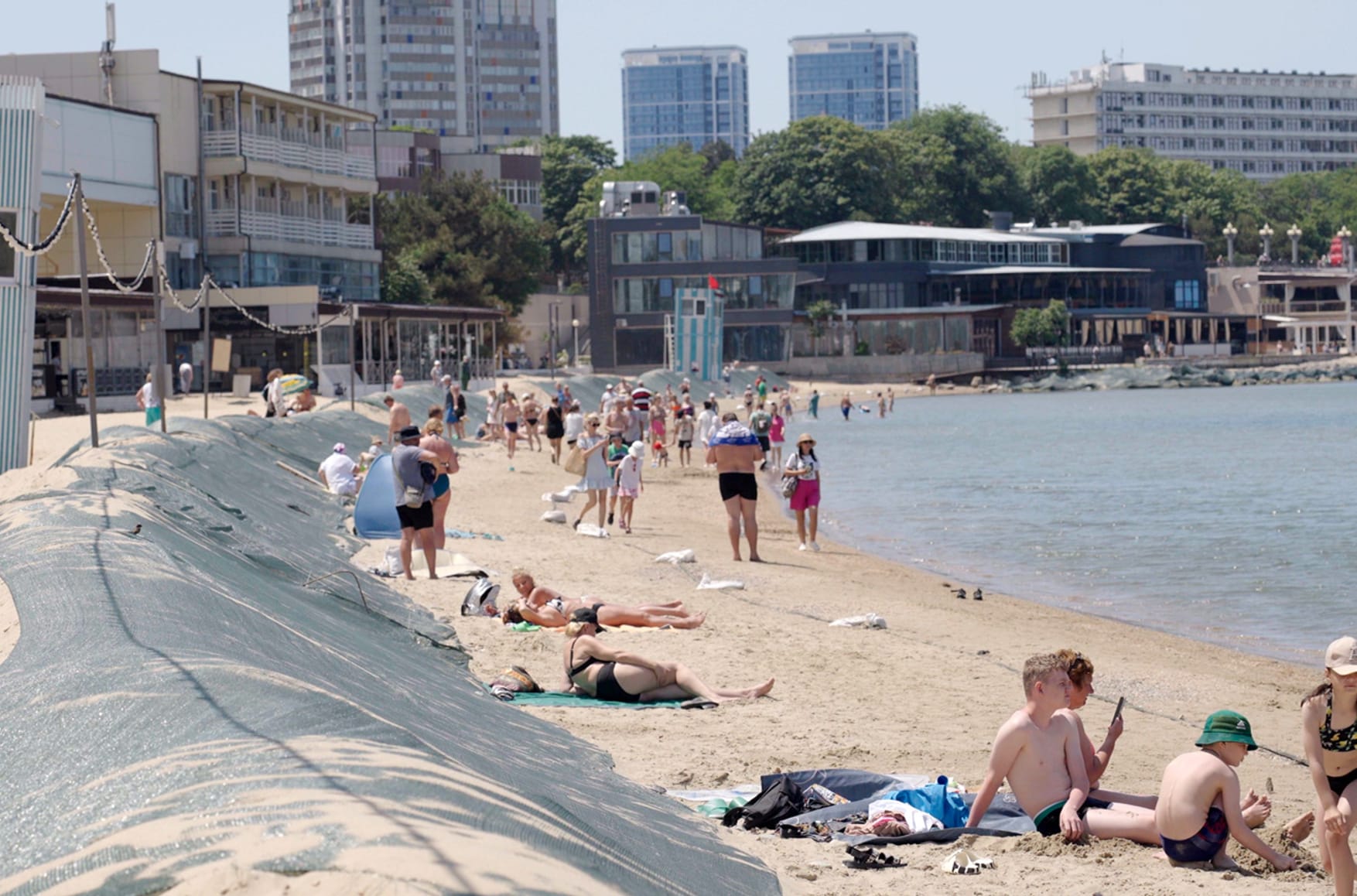
In an ironic twist, Nadiya planted the family’s first vineyards not far from beaches polluted by heavy fuel oil carried by her husband’s company. Sarsona’s first four hectares of vines were planted near Belbek airfield in 2025. Lyubimovka beach lies only several hundred meters from Belbek, and Crimea’s emergency services were still removing patches of heavy fuel oil there in May 2026.
In an ironic twist, Nadiya planted the family’s first vineyards near beaches polluted by heavy fuel oil carried by her husband’s company
Nevertheless, the Bogatenkov family’s plans appear unaffected. While Andrei works in India, Nadiya is preparing to plant another 10 hectares of vineyards in Krasny Mak near Bakhchysarai.
EU sanctions on Crimea have not brought a halt to the couple’s initiatives either. French oenologist Rodrigo Leite consulted on the planting, while Crimean winemakers use barrels made by French cooperage Cadus, whose exports to Russia have been prohibited since 2022.
For 2027, the Bogatenkovs are planning construction of a winery and a “high-end agritourism cluster” with a 20-room boutique hotel and restaurant. The project’s architect is Alexander Balabin, who previously designed the Skalisty Bereg winery for Dmitry Medvedev.

The Black Sea connects its countries through shared currents, but not through a shared system of accountability. Without comparative testing of samples, investigations into wildlife deaths, and interstate claims, damage remains unproven in court, and those responsible for the ecological disaster remain out of reach of international justice. Cleaning beaches is necessary, but it cannot replace other essential steps: identifying the source of the pollution and holding those responsible accountable.
This investigation was developed with the support of Journalismfund Europe.