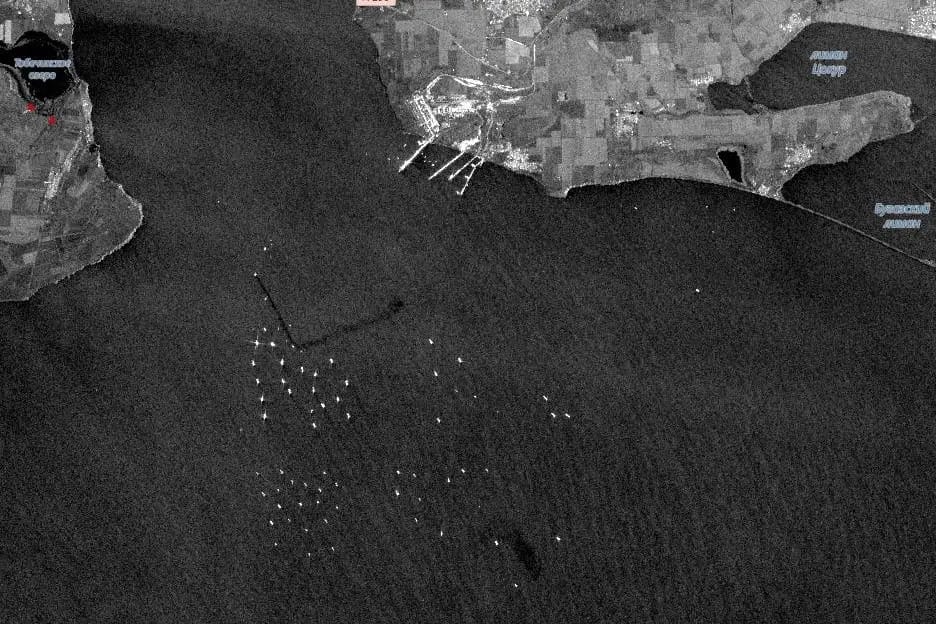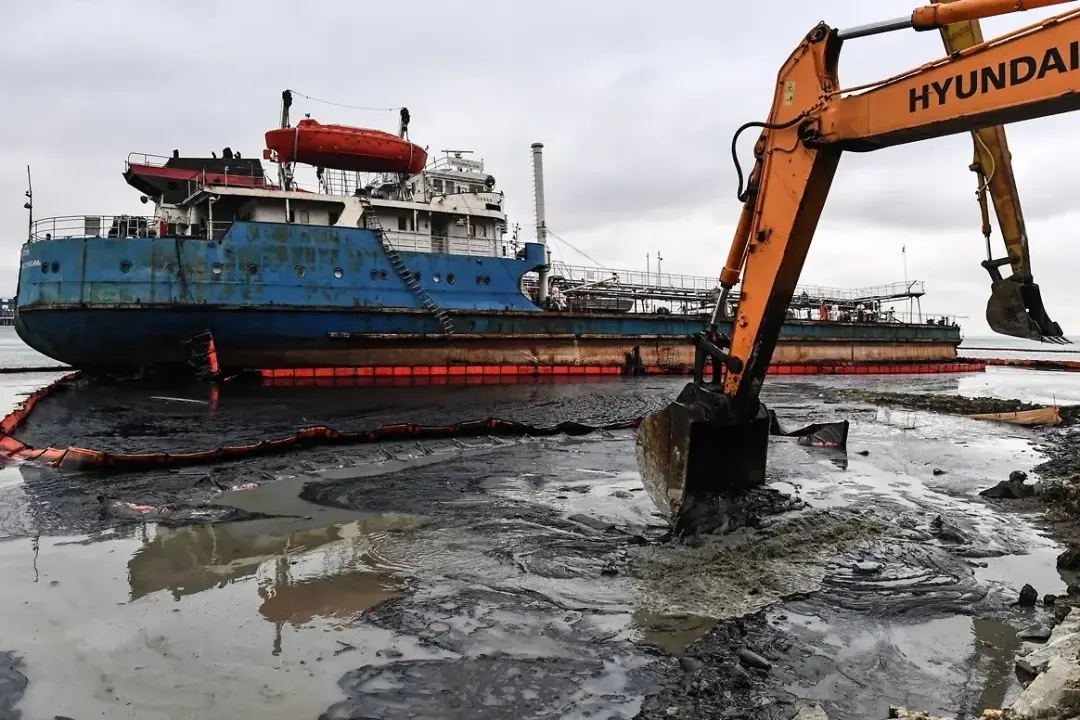
The owners of the Volgoneft-212 and Volgoneft-239 tankers, both of which split in two amid a storm in the Kerch Strait on Dec. 15, 2024, may pay less than one-hundredth of 1% of the real damage caused to the Black Sea ecosystem. According to The Insider’s analysis, all three companies linked to the tankers have minimal assets and a yearslong history of unpaid obligations to creditors. Bankruptcy proceedings have been initiated against two of them. The 4.2 million rubles recovered from two companies in a lawsuit by Russia’s Marine Rescue Service will likely be the only payments made by the tanker owners in the fuel oil spill case. That is about 0.0049% of the total claims filed by Rosprirodnadzor, Russia’s environmental regulator.
The Volgoneft-212 and Volgoneft-239 were carrying close to 8,500 tons of low-grade heavy fuel oil owned by Rosneft, which was simultaneously the owner, shipper, and consignee of the cargo, which began leaking from both ships after they broke in half. Although the effects of the spill spread to coastal waters of Turkey, Georgia, Romania, and Bulgaria, only Ukraine has officially recognized a link between local pollution and the accident involving the two tankers.
Following the incidents, the head of the Institute of Water Problems at the Russian Academy of Sciences (RAS) called the spill “the most serious environmental disaster in Russia since the beginning of the 21st century.”
Volgoneft-212: Two shell companies and 100 enforcement cases
In April 2025, Rosprirodnadzor assessed the environmental damage from the wreck of the tankers at 84.9 billion rubles. To recover damages to the Black Sea ecosystem, the Black Sea-Azov Marine Department of the Federal Service for Supervision of Natural Resources filed suit. The court allocated responsibility between the owners and charterers of the tankers as follows: Kama Shipping, owner of the Volgoneft-212, and KamaTransOil, which leased it, must pay 49,460,085,849 rubles for the fuel oil spill; meanwhile, Volgatransneft must compensate the state 35,483,862,830 rubles for damages caused by the wreck of the Volgoneft-239.
The formal owners of KamaTransOil LLC are listed as Viktor Fyodorovich Selkov and his two sons, Alexei and Konstantin. The company’s assets at the end of 2024 were valued at 111 million rubles. In 2025, the company did not publish financial statements.
Nineteen enforcement proceedings totaling 55.39 billion rubles have been opened against KamaTransOil, with most of that amount related to the claim described above. Notably however, in most of the company’s previous 179 enforcement cases (totaling a relatively modest 17.27 million rubles), creditors were unable to recover their money. In 60 proceedings, bailiffs said they could not establish the debtor’s location, while in 73 other cases the debtor supposedly had no assets.
According to the enforcement case database, bailiffs were unable to find assets belonging to the company for nine years. The earliest enforcement case against KamaTransOil that was returned to the claimant was dated Jan. 30, 2017.
The chances of recovering tens of billions of rubles from Kama Shipping LLC are also extremely low. On July 27, 2026, the Arbitration Court of the Perm Region accepted an application by Interdistrict Federal Tax Service Inspectorate No. 21 for the region to declare the company bankrupt.
The company’s founders, Larisa Frolova and Konstantin Selkov, have financial problems of their own. Frolova has already gone through personal bankruptcy proceedings, while Selkov was entered in Russia’s register of disqualified persons in 2020 for repeatedly failing to file for his own bankruptcy.
Unlike KamaTransOil, Kama Shipping did not avoid paying debts, but its payment discipline deteriorated sharply after the tanker wrecks. There are now 82 enforcement proceedings open against the company, the earliest dating to February 2025. The Federal Tax Service office for the Omsk Region has already asked a court to declare Kama Shipping bankrupt.
The July 27, 2026, ruling by the Arbitration Court of the Perm Region suggests that the debtor’s assets are expected to be sold to satisfy creditors’ claims. The court appointed a financial manager and ordered the debtor to provide a list of company property, as well as lists of creditors and debtors. Given that the entire procedure is being conducted to repay a debt of 65 million rubles, recovery of 49 billion rubles in damages appears practically impossible.
Volgoneft-239 and a preventive bankruptcy
The owner of the Volgoneft-239, which must compensate 35,483,862,830 rubles in damage caused to a body of water, is Volgatransneft CJSC. The company’s assets were valued at 457.65 million rubles as of Dec. 31, 2025, meaning compensating Rosprirodnadzor for even part of its claim appears almost impossible. Since September 2025, bailiffs have returned five enforcement proceedings to companies and government agencies that had unsuccessfully tried to collect debts from the oil transport firm.
For example, on Sept. 25, 2025, an enforcement case was returned to the Gorodets Ship Repair Plant, which had tried to recover 2.19 million rubles from Volgatransneft. The reason given was the “impossibility of establishing the location of the debtor or its property.” Three more enforcement proceedings were returned to other claimants with the same wording.
The most serious sign in this context is the pension fund’s unsuccessful attempt to collect debts. Its enforcement case was returned “because the debtor was declared bankrupt.” At the time of publication, the enforcement case register was the only source of information about the company’s bankruptcy. There were no bankruptcy notices for Volgatransneft in Russia’s Unified Federal Register of Bankruptcy Information, the Unified State Register of Legal Entities, or the company insolvency register maintained by the business newspaper Kommersant.
Rosneft CEO Igor Sechin’s yachts could cover two-thirds of the environmental damage
Both wrecked tankers were closely linked to Rosneft. Russia’s Transport Ministry confirmed that at the time of the wrecks, both tankers were carrying fuel oil belonging to Rosneft, which was simultaneously the owner of the petroleum products, the shipper, and the consignee.
The independent investigative outlet Important Stories has shown that in the six months before the disaster, the Volgoneft-212 loaded fuel oil twice at Rosneft’s Saratov refinery and once carried petroleum fuel from Rosneft’s Syzran refinery. Volgatransneft CJSC, which owned the Volgoneft-239, won a tender in 2017 to transport 1.5 million metric tons of Rosneft petroleum products worth more than 3.3 billion rubles.
Notably, the value of just two superyachts belonging to Rosneft CEO Igor Sechin is equivalent to about two-thirds of the environmental damage caused by the spill. The Amore Vero, seized in France, is valued at $120 million, while the Crescent, detained in Spain, is valued at $600 million. At the current exchange rate, selling the superyachts could bring in 59.39 billion rubles, covering 69% of the total damage.
Everyone will pay — except for Rosneft
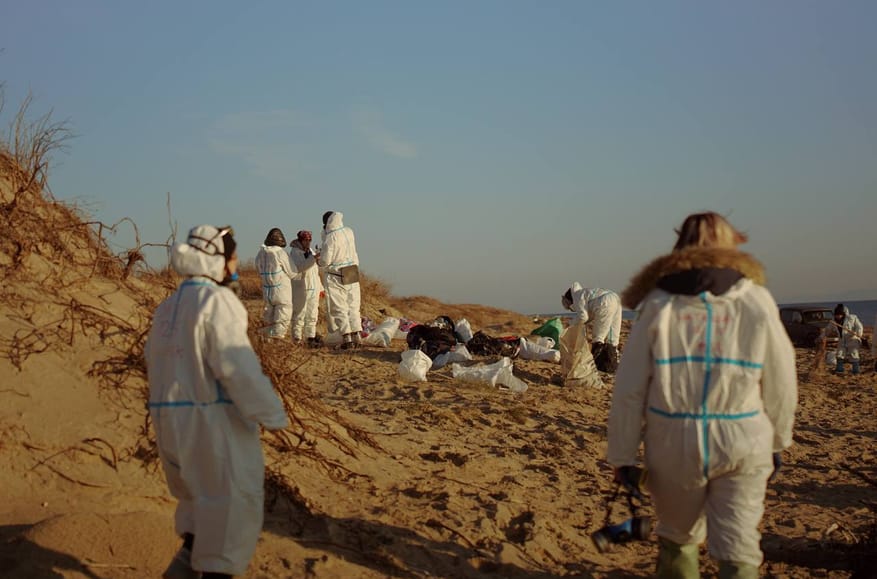
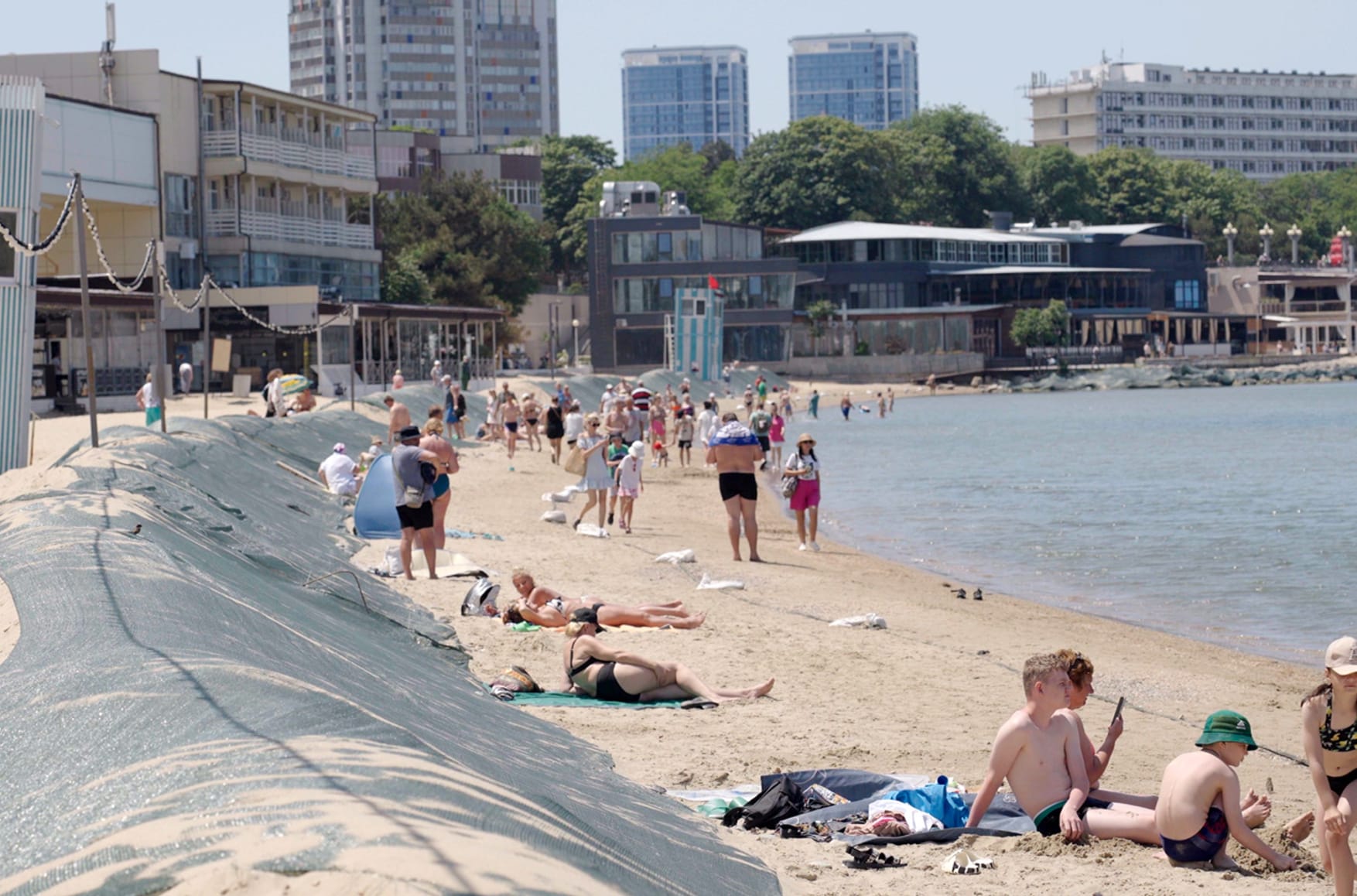
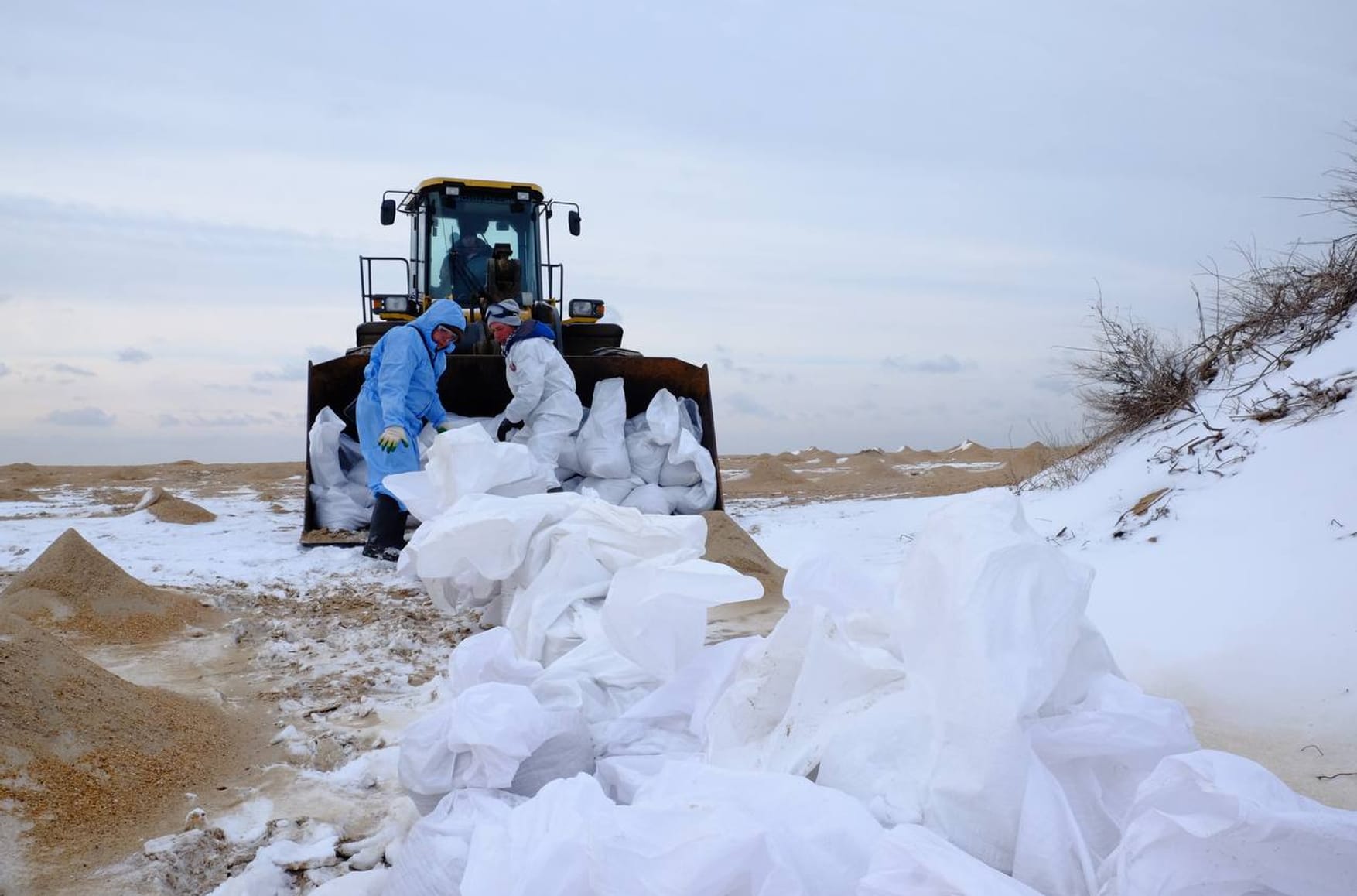
The sums described above relate only to claims by Russia’s environmental regulator against the tanker owners, but the real number of victims and the total damage are much higher. In Russia, fishing companies lost catches, beach and hotel owners lost customers, and agencies that cleaned up the spill were not compensated for their work. And Russia itself is only one of the affected parties.
In June 2025, scientists from Ukraine, Japan, and Singapore modeled Black Sea currents as part of the OpenDrift project to show how fuel oil spilled near Kerch reached the coasts of Turkey, Georgia, Romania, Bulgaria, and Ukraine. The model showed how environmental disasters in those countries were linked to the wrecks of the Russian tankers.
Yevgeny Simonov, an expert with the Ukraine War Environmental Consequences Work Group (UWEC) told The Insider that “in terms of impact on the overall marine ecosystem, a spill of this scale affects all countries in the Black Sea region because it affects large populations of species, such as seabirds. Any Black Sea country can claim environmental damage even if a specific fuel oil discharge did not reach its coast.”
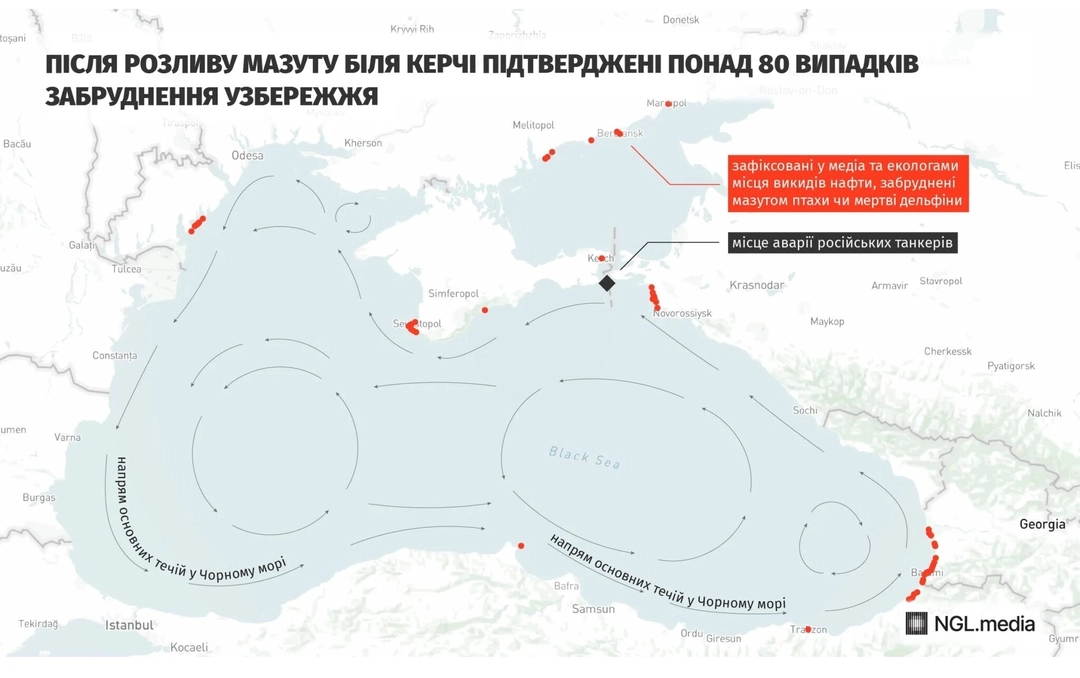
In July 2025, an elevated concentration of petroleum products was recorded on the coast of Abkhazia, a Russian-backed breakaway region of Georgia. Although media reports linked it to the December 2024 fuel oil spill, Abkhazia’s Moscow-backed authorities ignored those reports — while also saying its beaches were safe for swimming.
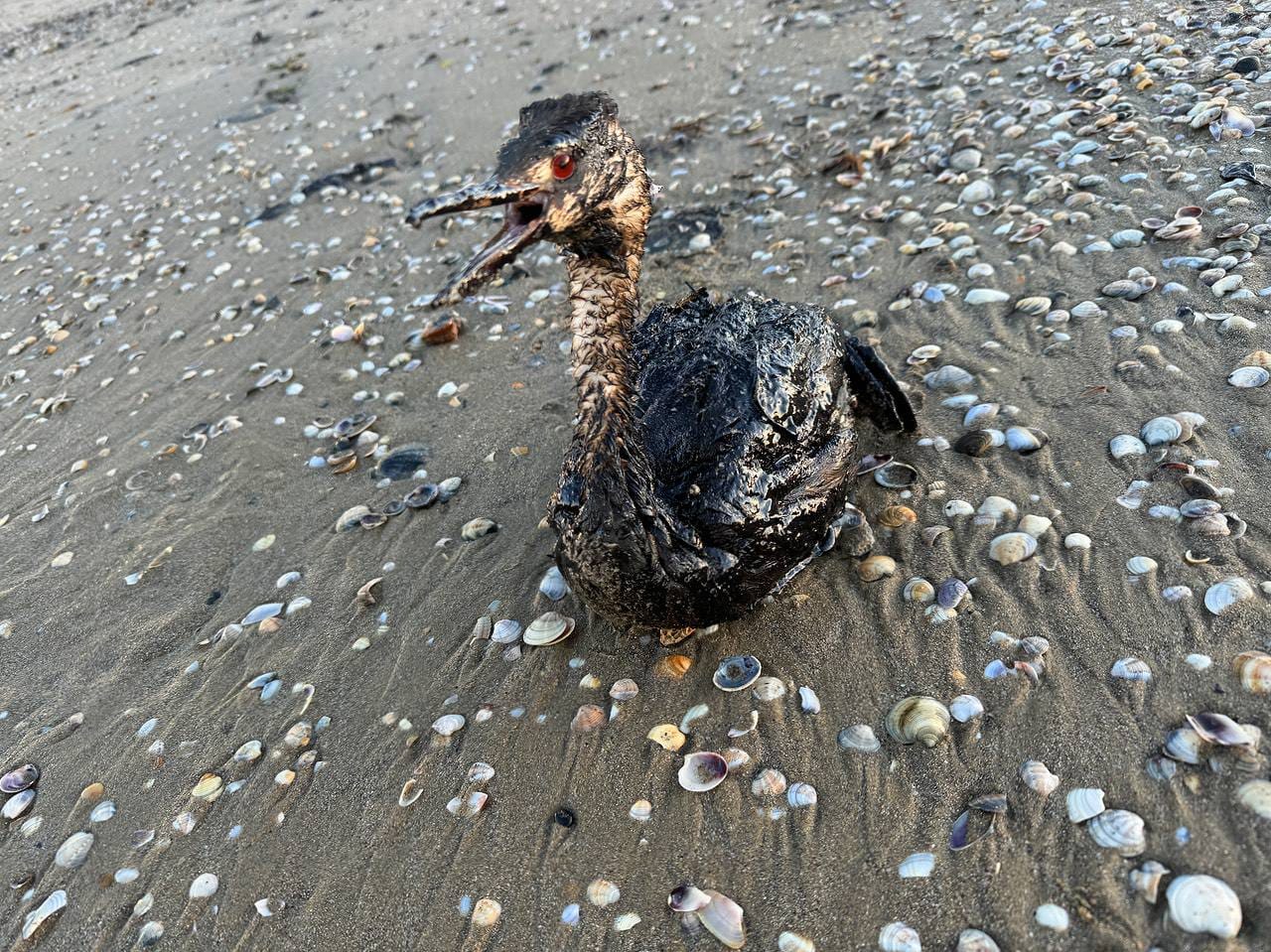
Then, in 2025, Turkish media reports and environmental assessments recorded mass deaths of birds covered in fuel oil along Turkey’s Black Sea coast. Although the bird deaths were attributed to the wrecks of the tankers near Kerch, Turkish authorities did not issue an official response.
Ukraine was the only country to link environmental consequences to the wrecks of the Russian tankers, reporting on fuel oil that had washed ashore in the Tuzly Lagoons, Serhiivka, and the Lymanske community in the Odesa Region.
In addition to Rosprirodnadzor, which is seeking compensation for harm to the water environment, the Arbitration Court of the Krasnodar Region is hearing lawsuits filed by the Marine Rescue Service, the administration of the city of Anapa, and the Temryuk District Administration in the Krasnodar Region. As a result, the main payers in the Marine Rescue Service’s lawsuit were insurance companies: Absolut Insurance paid Rosprirodnadzor 200.5 million rubles, and VSK paid 199.4 million rubles. KamaTransOil and Kama Shipping got off with modest payments of 1.6 million and 2.6 million rubles, respectively.
Russian authorities even considered a mechanism to compensate for the fuel oil spill through international funds. Russia is one of 126 member states of the International Oil Pollution Compensation Funds, or IOPC Funds. According to the funds’ reports, in 2025 the IOPC director held informal discussions with a Russian delegation, which said that “the question of whether to make a formal application to the 1992 Fund was still under consideration.”
Russia’s plans to seek compensation through the IOPC are also indirectly hinted at by the fact that the fund is listed as a third party in a case heard by the Arbitration Court of the North Caucasus District.