Elite European horses worth hundreds of thousands of euros continue to appear in Russian stables, including those owned by the daughter of the late Wagner Group co-founder Yevgeny Prigozhin and the wife of former Kalmykia leader Kirsan Ilyumzhinov. The European Union banned exports to Russia of horses worth more than 300 euros in the spring of 2022, qualifying them as luxury goods. Yet The Insider found eight horses in customs records that were imported from the EU in 2024. Some were declared at just 1,800 to 2,000 euros, although their actual value could run into the millions. From 2025 onward, information on such shipments disappeared from customs databases, but European horses have continued to turn up in Russia nevertheless. Market participants told The Insider that animals are still being brought in through Lithuania and Kazakhstan at a transport cost of about 10,000 to 12,000 euros. Experts interviewed by The Insider said such sales amount to direct violations of EU sanctions law.
In recent years, equestrian sport has become a popular pastime among Russia’s elite. Premium clubs around Moscow and St. Petersburg stable horses belonging to Russian businesspeople, lawmakers, officials, and members of their families. Keeping a single horse at one of these clubs costs at least 1.5 million rubles ($18,500) a year.
The Russian Equestrian Federation is headed by Marina Sechina, the former wife of Rosneft chief Igor Sechin. She has led the federation since 2016 and was reelected to a third term in October 2024.
Before 2022, one of the main goals for Russian riders and horse owners was participation in international competitions. Horses were often kept and trained in Europe, and Russian riders regularly competed in Spain, Italy, France, Germany, and the Netherlands. After Russia launched its full-scale invasion of Ukraine, however, equestrian sport was affected by sanctions and international restrictions.
In 2022, the International Equestrian Federation (FEI) suspended Russian and Belarusian athletes, horses, and officials from international competitions, though it later eased the restrictions, allowing them to compete individually under neutral status. To qualify, an athlete must not be under contract with the Russian or Belarusian armed forces or national security agencies and must not publicly support the war. Neutral participants compete without a national flag and do not formally represent the Russian Federation.
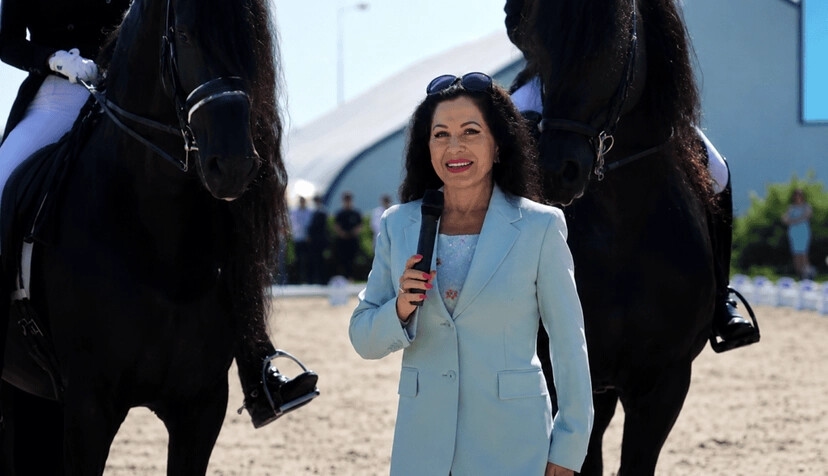
In June 2025, Maria Gref, the daughter of Sberbank CEO German Gref, received neutral status. Her father is under sanctions imposed by the EU, the United States, the United Kingdom, and several other countries. To obtain the status, Maria Gref signed a declaration confirming that she met FEI criteria, including that she did not support the war.
Cheap only on paper
The issue is not only whether Russian athletes can compete, but also where they can obtain high-quality sport horses, since exports of such animals to Russia from the EU are prohibited. As The Insider found, however, bringing a horse into Russia is not particularly difficult.
According to customs records, eight elite-breed horses were brought into Russia from Europe in 2024. Additionally, several other European-origin horses returned to Russia after competitions in Uzbekistan, but those imports had a lawful basis.
According to customs records, eight elite-breed horses were brought into Russia from Europe in 2024
Four breeding horses arrived from Lithuania on Feb. 3, 2024. The recipient and contract holder was Moscow-registered Horse Expert LLC, whose primary business is horse transportation. The sender was listed as an unnamed Lithuanian company acting on behalf of Samat Lesbekovich Lesbekov — a methodologist at an equestrian school in Kyrgyzstan and a steward at international competitions.
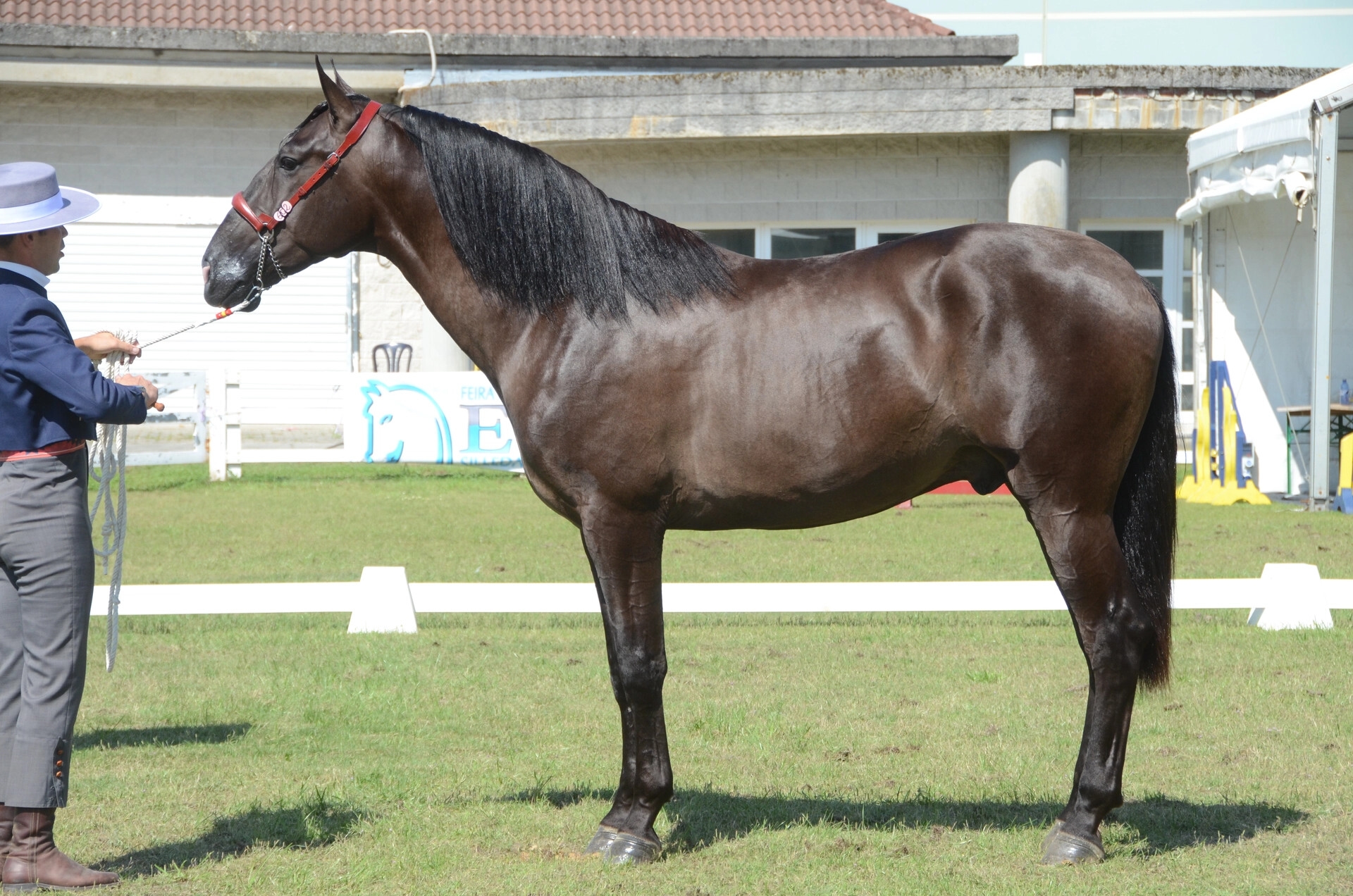
One of the horses, a black purebred Spanish stallion named CALIFA CLVI, was born in Spain in 2019. Its invoice value was listed as 2,000 euros. In Spain, the horse took part in national breed shows but was not registered as a sport horse in the FEI database. It is also not listed as a sport horse in the Russian Equestrian Federation database.
The second horse was a bay Oldenburg stallion born in 2023. The declaration does not give its name but lists a microchip number — DE 418180523123 — which shows that the horse was bred by the Oldenburg Association for Sport Horse Breeding in Germany.
The organization, headed by Paul Schockemöhle, specializes in breeding elite sport horses for show jumping and eventing, disciplines in which horses negotiate obstacles. According to the declaration, the horse’s invoice value was 1,800 euros.
The third horse was a bay Oldenburg mare born in 2022, microchip number DE418180532822, with an invoice value of 1,800 euros. Its chip likewise indicates that it is an elite sport horse bred for show jumping or eventing.
The fourth was RUBIO AG, a bay stallion born in Spain in 2021. Its invoice value was listed as 2,000 euros. The stallion does not appear to have competed in either Spain or Russia.
A horse sales expert told The Insider that CALIFA CLVI could be worth between 20,000 and 70,000 euros. The animal’s health, however, plays a major role in determining its value. If a veterinary examination found a serious malady, that could indeed reduce the horse’s value to the 2,000 euros listed on the invoice.
Importantly, Ilya Shumanov, managing partner of the investigations bureau TriTrace Investigations, noted that even the declared prices of 1,800 and 2,000 euros are far above the EU’s 300-euro export threshold:
“The February shipment appears, based on its characteristics, to fall under the EU sanctions ban. Breeding horses under the relevant commodity code are included on the list of luxury goods. Describing the horses as intended for breeding creates no exemption for such transactions and does not remove them from the sanctions regime.”
Four more horses arrived in Russia from Latvia on Aug. 31 and Sept. 3, 2024. Both customs declarations appear suspicious.
The sender was well-known international trainer Yulia Katok, who also breeds and sells sport horses. The recipient was Bitrade LLC, a company in Russia’s Saratov region that specializes in transportation.
The declarations describe the animals as recreational, sport, and pedigree horses originating in Germany. The invoice value for both shipments was listed as zero rubles, while their customs values were 201,524.40 rubles ($2,500) and 198,522.60 rubles ($2,450), respectively. The declarations do not list the horses’ names, microchip numbers, or the legal basis for their import.
Shumanov said the shipments may have involved horses being returned after previously leaving Russia.
“It looks as though the horses were exported from the Eurasian Economic Union and then returned, with the original shipment treated as an error. In principle, that should still be restricted under EU sanctions decisions.”
Leaving no customs trail
In 2025, Russian customs stopped adding data to databases available to customs brokers. The horses themselves, however, continued — and still continue — to appear in Russian stables. Registration records for some can be found in the database of the Russian Equestrian Federation.
In December 2025, for example, the federation issued a Russian passport to a Dutch Warmblood gelding named Nilavsco Keizersberg. The federation’s website says the horse belongs to Veronika Prigozhina, the younger daughter of the late Wagner mercenary group founder Yevgeny Prigozhin.
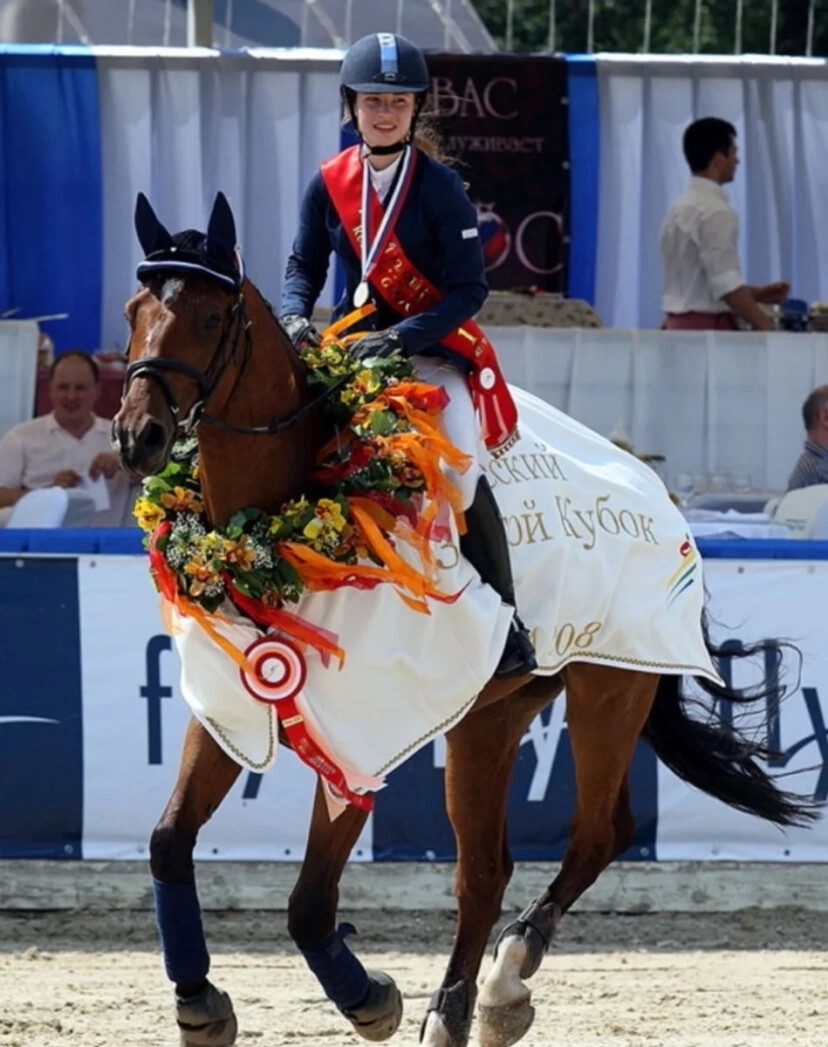
Nilavcko Keizersberg was born in the Netherlands in 2018. According to the FEI database, through late October 2025 the horse competed in international show-jumping events with a Spanish rider, most recently in Valencia, Spain.
In July 2026, the Dutch gelding competed in Russia for the first time with Veronika Prigozhina at the Leningrad Region Governor’s Cup. For three consecutive days, the pair finished 13th on courses with obstacles 120 and 130 centimeters high. By August, however, their results had improved, and Prigozhina and her horse won a regional competition.
The 21-year-old Prigozhina also competes on other horses: Cascallo B, Ditara, and Fauna KG. Before 2022, she competed on them in Europe, but after the war began the horses were moved to Russia. Her FEI profile states that she is barred from international competitions “until further notice.”
Diana Ilyumzhinova, the wife of former Kalmykia leader Kirsan Ilyumzhinov, also brought a horse to Russia in 2025. She trains in dressage at the elite Otrada equestrian complex outside Moscow and owns two other horses with a combined estimated value of about 200,000 euros.
Her new horse, DoorHan, is an Oldenburg stallion born in Germany in 2020. The FEI database contains no record of the stallion competing internationally, though it may have competed at the national level. According to the Russian Equestrian Federation database, DoorHan received a Russian passport in April 2025. That July, he made his debut with Ilyumzhinova at the Moscow dressage championship and immediately took first place in the young-horse category.
A year earlier, a Westphalian stallion named Diamond, born in the Czech Republic in 2020, received a Russian passport. The horse belongs to Daria Gusakova, who holds Russia’s “Candidate for Master of Sport” athletic rank (a Soviet-era classification still used in Russia) and competes with him in show jumping. Gusakova trains at a youth sports school in the Moscow region.
In 2023, the Russian Equestrian Federation issued a passport to Total Match, a Dutch Warmblood gelding born in the Netherlands. Since 2025, he has regularly competed in dressage at Prix St. Georges and Intermediate level with rider Yekaterina Zoshchuk. She trains at the premium Novy Vek club near Novaya Riga, an affluent suburban corridor west of Moscow.
In May 2026, Zoshchuk received neutral status, allowing the Russian rider to compete internationally without the country’s flag or anthem. According to the FEI database, she has not yet competed internationally.
As of late May, the FEI had approved neutral status for 174 representatives of Russian equestrian sport.
How the horses are brought in
The Insider spoke with trainers and athletes from Russia, Ukraine, and the EU. They said horses continue to be brought into Russia through Lithuania and Kazakhstan. Transportation costs about 10,000 to 12,000 euros, including delivery from origin to destination and customs fees. Veterinary certificates are charged separately.
Horses are brought into Russia through Lithuania and Kazakhstan, at a transportation cost of about 10,000 to 12,000 euros
There can be difficulties at the border. One trainer from a Moscow-area club said a client’s horse, imported in mid-August, spent 2½ months at the Lithuanian border. Another source told The Insider of a delay lasting about six weeks.
“They bring them through Lithuania and Belarus, yes. It costs around 10,000. The only thing is that they periodically shut the whole thing down, so there’s a chance the horse won’t go anywhere at all, or it can sit there for several weeks or longer,” one source said.
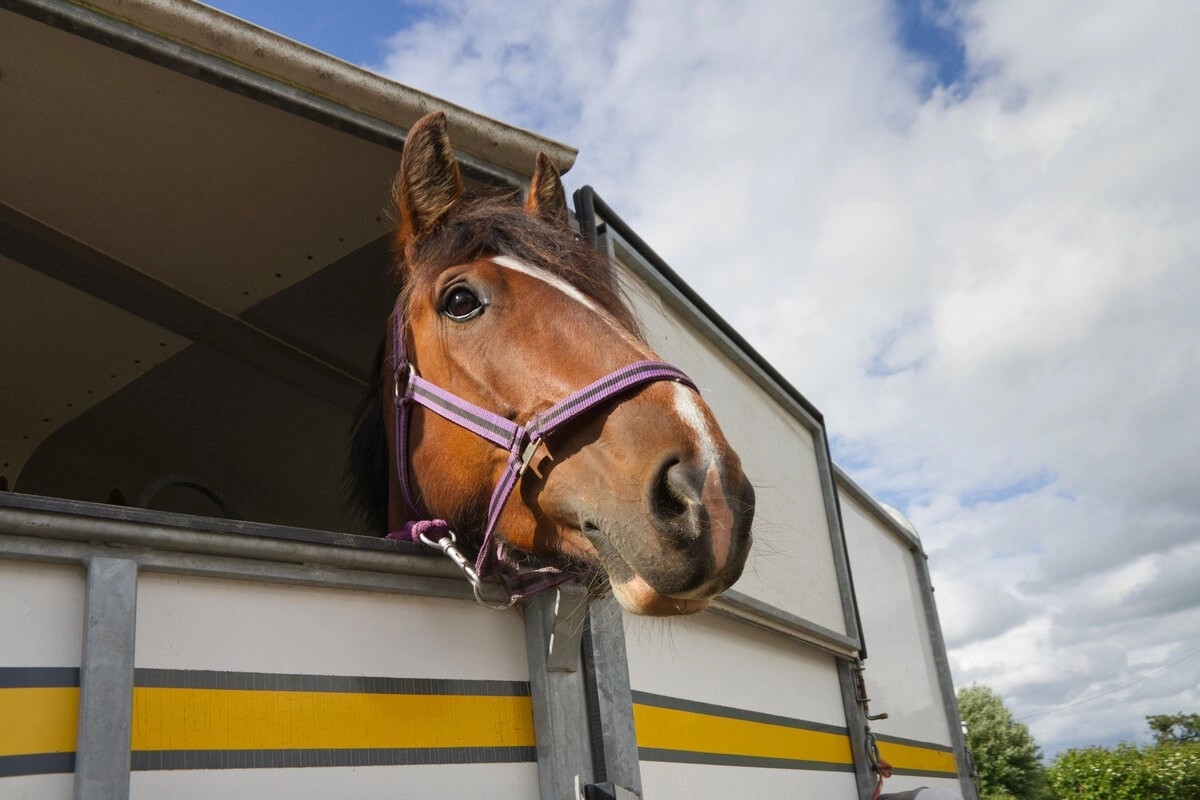
Market participants said many European breeders and riders have refused on principle to sell horses to Russia since the full-scale invasion began. Others, however, care primarily about the money.
Vladislav Netyaev of Transparency International Russia said information about imported horses may be entirely absent from customs databases for several reasons: records involving influential people may have been deliberately removed, customs officials may have intentionally entered a different commodity code, or the horse may have been imported under the guise of another type of cargo.
Buying in Europe, delivering to Russia
GetHorse is one of the best-known services helping Russian riders find elite horses in Europe. It was founded by equestrian athlete Alisa Yermakova (now Alisa Mukhanova). According to the project’s website, she initially traveled to Europe to buy sport horses for herself before expanding the service to help clients select horses and arrange paperwork and transportation.
The website also outlines the buying process. Clients provide Alisa with their preferred breed, age, training level, and other criteria, and she sends suitable options within two weeks. A trip is then arranged to view the horses in person.
The trip typically lasts three days and includes visits to several stables. Alisa also offers access to an expert who can assess the horses and help the buyer choose. The selected horse undergoes a veterinary examination, and after payment, professional transporters deliver it to Russia. Alisa says she handles the veterinary and customs paperwork.
A correspondent for The Insider contacted Alisa Yermakova while posing as a prospective buyer. Yermakova said she would send a selection of horses from Germany, the Netherlands, and Denmark and arrange a trip to view them, but later stopped responding.
How sellers evade sanctions — and what penalties they face
Linda Zilberte, an expert in European law and an attorney in Amsterdam, stressed that the purchase of a horse by a Russian citizen inside the EU followed by shipment to Russia violates EU Regulation 2022/428, explaining that under the regulation, the ban applies not only to purebred breeding horses but also to racehorses, show-jumping and dressage horses, as well as ordinary riding and recreational horses.
Zilberte described three methods sellers and buyers may use to carry out such transactions.
First, a horse may be purchased in the EU by a citizen of a third country, who then transports it to Russia through Lithuania or another EU country bordering Russia. Such an intermediary would, of course, conceal the fact that the seller knows the identity of the actual Russian beneficiary. This would be considered sanctions circumvention. The same applies to an EU-based buyer who subsequently hands the horse to a transporter outside the EU for delivery to Russia.
Second, the seller may state a different final purpose in the customs declaration — breeding, participation in competitions, or veterinary treatment abroad — in order to conceal the horse’s true destination. Presenting the transaction not as a sale but as a gift, lease or temporary export for competition, followed by failure to return the horse, would fall into the same category. Such strategies may work because shipments involving live animals can receive less scrutiny than goods or financial transactions. They would nevertheless still violate the regulation.
Third, the parties may simply get lucky. Unlike ordinary goods or weapons, horses are living animals and are primarily subject to veterinary border controls rather than specialized customs checks for sanctions compliance. Customs authorities may therefore simply fail to connect the horse’s transit with applicable sanctions restrictions.