The prosecutor's office in the Russian city of Nizhny Tagil proposed scrapping payments to recruiters who sign up contract soldiers for the war in Ukraine, citing a rise in fraud cases. Amid a shortage of willing volunteers, Russia has developed a vast state-backed intermediary recruitment market, with multilayered networks of middlemen, “ready-made creatives,” and region-specific rates. The Insider examined several of the schemes and traced how money from regional budgets reaches private headhunters. Spending on recruitment alone, excluding payments to contract soldiers, may run into billions of rubles a month, and private recruiters can receive up to 1.25 million rubles (almost $15,000) for bringing in a single soldier.
In the fifth year of Russia's war of aggression in Ukraine, the Russian army continues to lose tens of thousands of soldiers every month. As of Aug. 28, 2026, Mediazona and the BBC had confirmed by name the deaths of 242,747 Russian servicemen — and these are only the deaths that have become publicly known. Actual monthly losses of killed and wounded exceed 30,000, and direct recruitment of contract soldiers is no longer enough to replace them.
The state now separately funds organizations that seek out and recruit people for the war in Ukraine. The Insider examined court records, NGO reports, procurement requests, and internal materials from recruitment agencies, reconstructing the chain through which some of this money flows – from regional budgets to intermediaries and ultimately to the individuals who bring recruits directly to military enlistment offices.
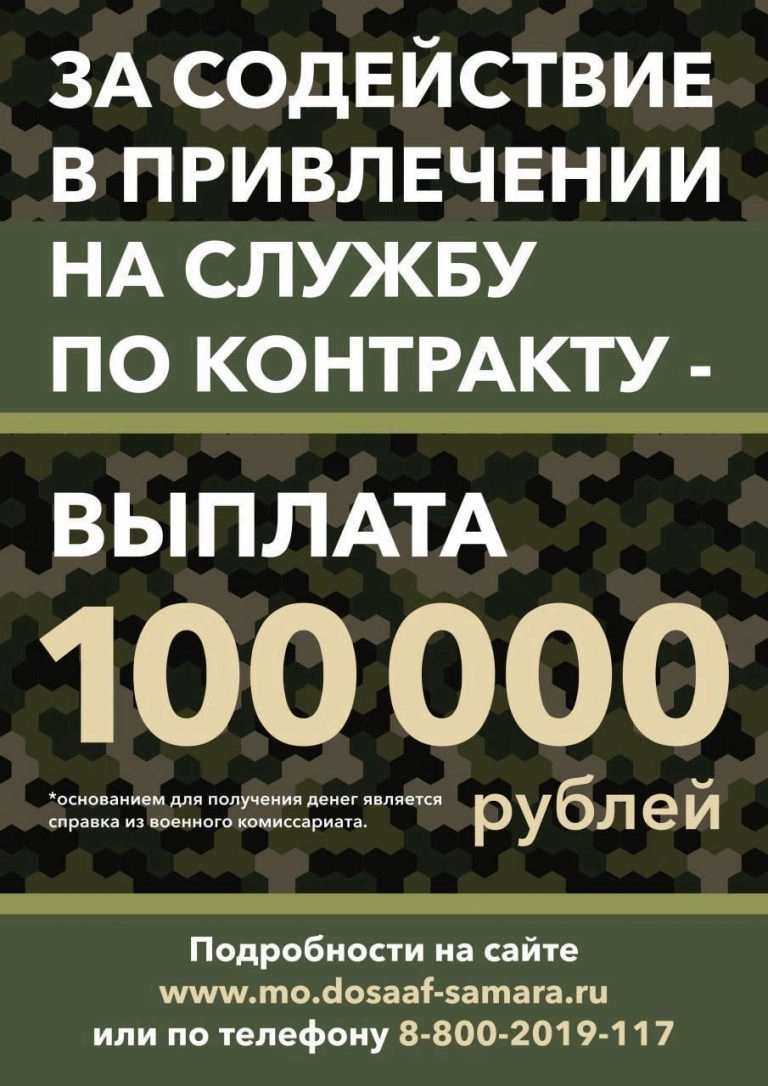
A million rubles per head: the cannon-fodder market
As recently as 2024, Ivanovo’s Center for Creative Solutions was engaged in activities that had little to do with military recruitment. For example, the organization ran a quiz called “Favorite Ivanovo Region” at polling stations during the presidential election, with prizes including tickets to sporting events and a car. Another of its projects, “Urban Treasures: A Family Quest,” received a regional grant of almost 1 million rubles (almost $12,000).
On July 4, 2025, Ivanovo businessman Dmitry Gruzdev took over as head of the organization. That same month, the regional budget allocated funds for an entirely different purpose: “financing costs associated with providing services to attract and select candidates for military service under contract.” The Center for Creative Solutions was among the recipients of this funding.
The Insider found that a November 2025 order by the regional government awarded the center a 260 million ruble ($3.1 million) subsidy specifically for recruiting and selecting prospective contract soldiers. The sums it received were on an entirely different scale from its previous earnings from civilian quizzes.

In 2025, the organization received 1.06 billion rubles ($12.5 million), and a similar amount under the same budget line was awarded by the Moscow Region government to the non-profit Dobryye Dela (Good Deeds), which then passed the money on to its contractor, Russia's Agency for Communication Strategies.
As is often the case, the Center for Creative Solutions and Dobryye Dela appear to be the main distributors of budget funds to a long chain of other organizations. They outsource most of the work to private contractors, who in turn often subcontract it.
One such subcontractor emerged through an ordinary commercial dispute. In February 2026, Nizhny Novgorod businessman Alexander Kondratyev sued the center in the Nizhny Novgorod Region Arbitration Court, seeking 24.78 million rubles ($297,000) in unpaid debt. Court documents identify the contract as being for the “provision of services to attract and select candidates for military service under contract.” In March, the parties reached a settlement, with the Center for Creative Solutions acknowledging the full amount of the debt.
The court documents make it possible to determine how much the recruiter earned per contract soldier, as the debt was the result of two certificates of completed work. Kondratyev was owed 12.98 million rubles ($153,000) for November and another 11.8 million ($139,000) for the first half of December.
Both sums divide evenly by 590,000 rubles: the first amounts to 22 such payments and the second to 20. In other words, Kondratyev appears to have been paid 590,000 rubles (just under $7,000) for each contract recruit, with the two certificates covering 42 people.
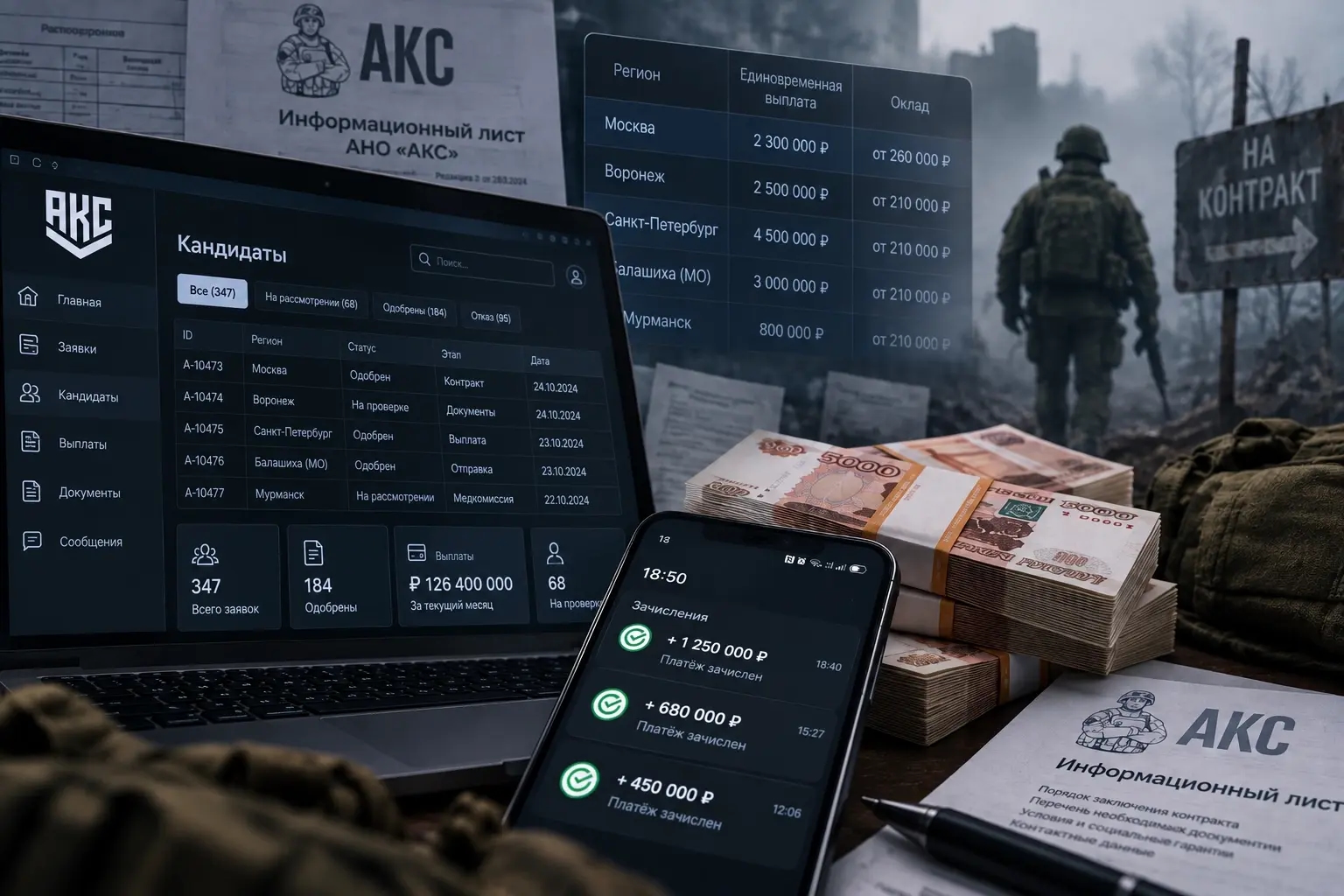
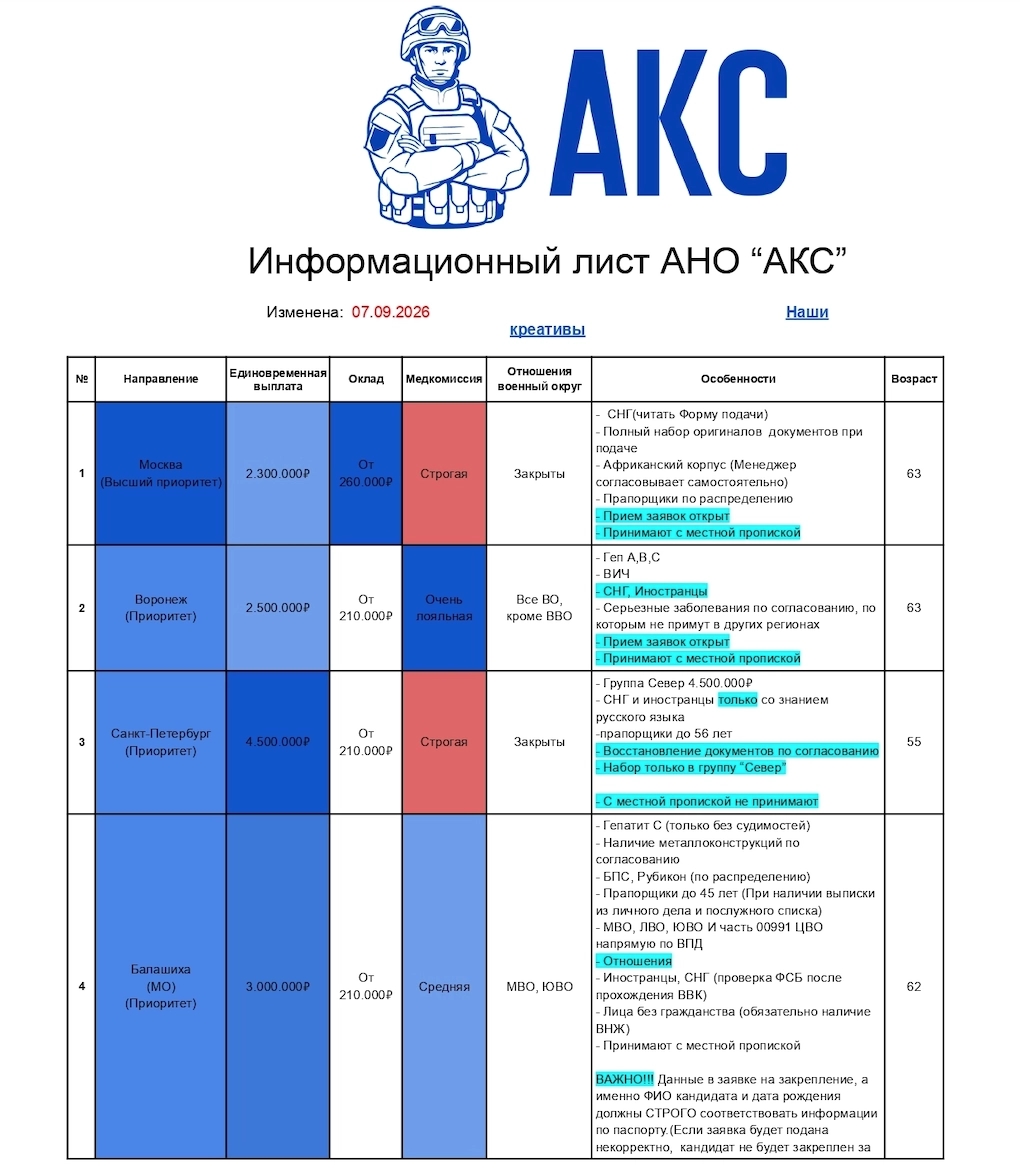
In virtually all similar schemes in different regions examined by The Insider, recruiters are paid only after a candidate signs a contract, and the commission varies considerably. For example, at the previously mentioned Agency for Communication Strategies, one of the largest recruitment organizations, a recruiter gets 1.25 million rubles ($14,700) for a person who signs a contract through Moscow. Through Orenburg, the rate is 850,000 rubles ($10,000) “per head”; through Voronezh, 680,000 ($8,000); and through Balashikha, 530,000 ($6,250). In other areas, the rates ranged from 150,000 to 450,000 rubles ($1,750 to $5,300).
Debtors, addicts, bankrupts: recruiters target the vulnerable
Instructions for recruiters from the Agency for Communication Strategies (ACS) reveal who makes up the main pool of prospective contract soldiers. Its “target audiences” include former prisoners and Wagner PMC members, bankrupts, clients of microfinance organizations, residents of economically depressed regions, 18- and 19-year-olds with limited educational prospects, people with gambling or substance addictions, and “socially vulnerable groups.” They also include people who face legal trouble, particularly if they have not yet been convicted.
ACS advises recruiters to seek potential targets through advertising platforms and by buying ads in social media communities.
A recruit’s suitability directly affects the payment: if a prospective soldier fails a stricter medical examination in one region, he can simply be sent to another. An internal ACS information sheet divides medical commissions into “strict,” “moderate,” “lenient,” and “very lenient.”
Moscow, for example, is listed as having a strict commission. Voronezh, on the other hand, is described as “very lenient,” accepting recruits people with hepatitis A, B, or C, HIV, and “serious medical conditions subject to approval that would disqualify them in other regions.”
“Very lenient” Voronezh accepts people with hepatitis A, B, or C, HIV, and “serious medical conditions subject to approval”
Ufa’s commission is also described as “very lenient”: candidates with hepatitis, psoriasis, HIV, and “serious medical conditions subject to approval” may be accepted there. Orenburg and Cheboksary, meanwhile, are designated as merely “lenient.”
Under certain conditions, candidates with a Group III disability, diabetes, hypertension, missing organs, blindness in one eye, psychiatric or addiction records, signs of self-harm, or a history of tuberculosis may still be eligible to sign a contract.
Bonuses for recruiters
Although organizations like the Center for Creative Solutions and the Agency for Communication Strategies do not recruit soldiers themselves, they do provide smaller private businesses with the infrastructure for recruitment: up to 400,000 rubles ($4,700) per recruit, along with “ready-made creatives,” CRM, scripts, and training for new recruiters. The service works with candidates for contract military service from across Russia and attempts to maximize the number of contracts signed through Moscow, where bonus payments are higher.
For people looking to sign a contract, the organization can select a destination, arrange travel, meet them on arrival, and help with accommodation, food, medical examinations, and paperwork.
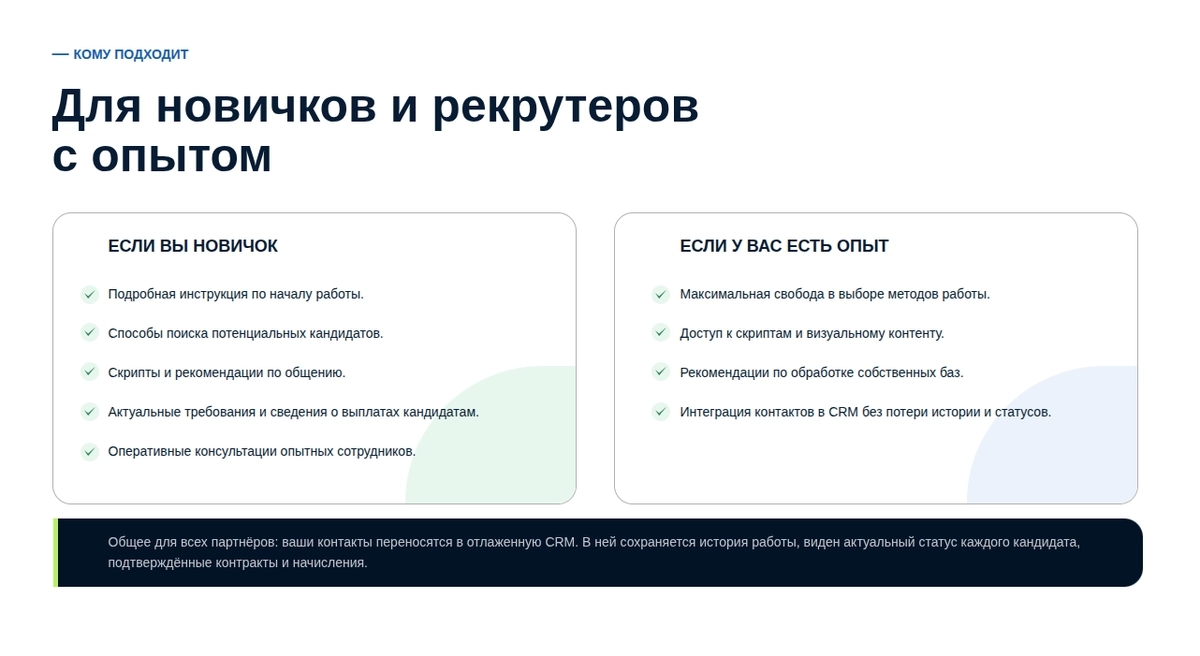
The page for prospective recruiters states the job’s purpose plainly: “The partner’s task is to get the candidate to sign a contract.” Payment is tied to that outcome – “for one signed contract.” The site promises that earnings are “unlimited.”
The Contract Call service is run by sole proprietor Fyodor Shchepetov, whose main business is “other personnel recruitment.” Public sources identify Shchepetov as a political consultant, conflict-resolution specialist, and internet technologist. He also serves on the public council of Rosprirodnadzor, Russia’s environmental regulator.
The demand for personnel in military recruitment is clearly substantial. Recent job postings offer “military recruiters” up to 300,000 rubles ($3,550) for each contract recruit they bring in, with no experience required and training provided. The job involves handling incoming inquiries, conducting initial interviews, “working with objections,” and managing candidates in Bitrix24 through to the final result.
“Military recruiters” are offered up to 300,000 rubles per contract recruit, with no experience required
The Agency for Communication Strategies has also launched a referral program called “Bring a Colleague.” Partners are promised an additional 100,000 rubles ($1,200) if a recruiter they refer brings in someone who signs a contract through Moscow, and 50,000 rubles ($600) if the contract is signed through another region.
In short, the agency pays not only for new contract soldiers but also for new recruiters who supply them. According to ACS itself, more than 250 “partners” work with the organization, and it has helped arrange more than 6,000 contracts.
How much does it cost the state to recruit one soldier?
There is no fixed price per recruit in this market, as payments vary widely from region to region. Much also depends on the numerous intermediaries involved. In the schemes examined by The Insider, recruiters who directly bring candidates to the point of signing a contract can receive the ruble equivalent on more than $10,000, but a substantial share of the money is absorbed by the intermediary organizations participating in the process.
Adding only the recruiter’s fee and the contract soldier’s enlistment bonus, the total can be much higher. For example, for a contract signed through St. Petersburg, ACS promises the soldier 4.5 million rubles ($53,000) and the recruiter 150,000 ($1,750). According to Re:Russia’s calculations, by mid-May 2026 the average “effective” bonus in the regions where a large share of contracts are signed had reached about 2.74 million rubles ($32,300).
In some schemes, the two visible payments – to the contract soldier and the recruiter – already total 4.65 million rubles per person
The scale of the spending becomes even more evident when these sums are compared with the rate at which the army is being replenished. CSIS estimates that in 2026 Russia has been recruiting an average of 27,000 new service members a month. Applying Re:Russia’s estimate of an average effective bonus of 2.74 million rubles, one-time payments to new contract soldiers alone would amount to about 74 billion rubles a month ($872.4 million).
As for recruiters, even using 300,000 rubles ($3,550) per contract soldier as a rough benchmark would put direct payments to the middlemen at more than 8 billion rubles ($94.3 million) a month.
After four years of war, Russia has built a system in which the army’s need for manpower has created a rapidly growing market fueled by public money. A region allocates the funds, an intermediary gets the contract, a recruiter searches for “leads,” and a person placed at the disposal of the Russian military machine.
As long as the Russian army continues to suffer losses, this market will persist. The state may even increase its funding, and professional recruitment agencies will devise ever more “creative” approaches to get their share of the outlays.