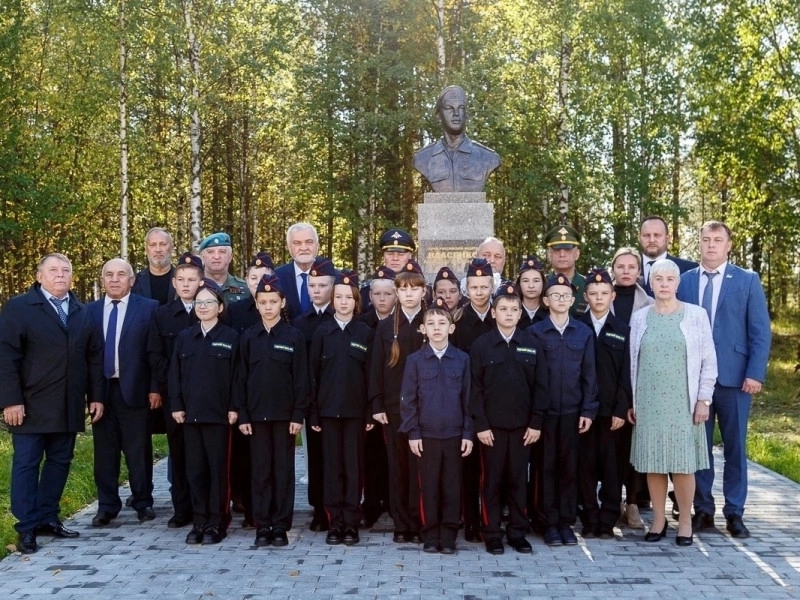
On Sept. 2, schools across Russia’s Komi Republic held lessons in courage dedicated to Alexander Vlasenkov, a corporal who was killed fighting in Ukraine. By decree of Vladimir Putin, Vlasenkov was posthumously awarded the title of Hero of Russia. A monument and several memorial plaques have been erected in his home region, and a museum dedicated to him has opened at his former school. On the day of the lessons, schoolchildren watched a film about Vlasenkov and learned about his life. The campaign to glorify the fallen corporal’s “feat” was spearheaded by Alexander Matovnikov, a former member of Putin’s security detail who also happened to advise Vlasenkov to volunteer for the war. However, as The Insider has found, Vlasenkov had been placed on a special Interior Ministry register for pedophilia and went to the front to evade police supervision and escape massive debts.
Expelled from the Interior Ministry university after trying to rape a teenager
Alexander Vlasenkov, a world and Russian junior champion in hand-to-hand combat, took out 500,000 rubles in loans in his own name between 2019 and 2021, and nearly another 400,000 rubles using his grandmother’s passport. By then, he had spent a year evading both debt collectors from RVS LLC and court bailiffs. He even skipped a promotional event in Kaliningrad, fearing he would be detained at the airport during a police check.
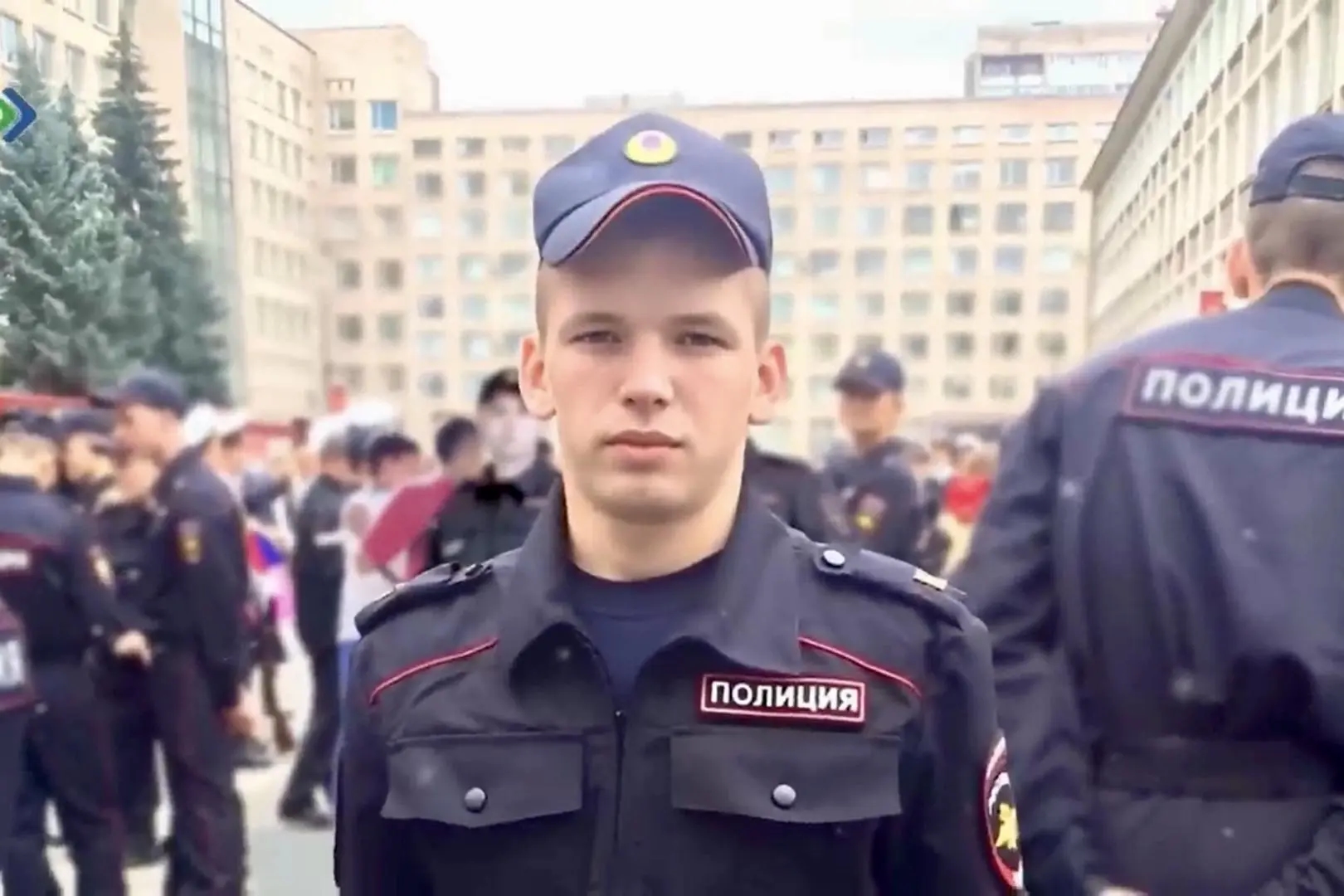
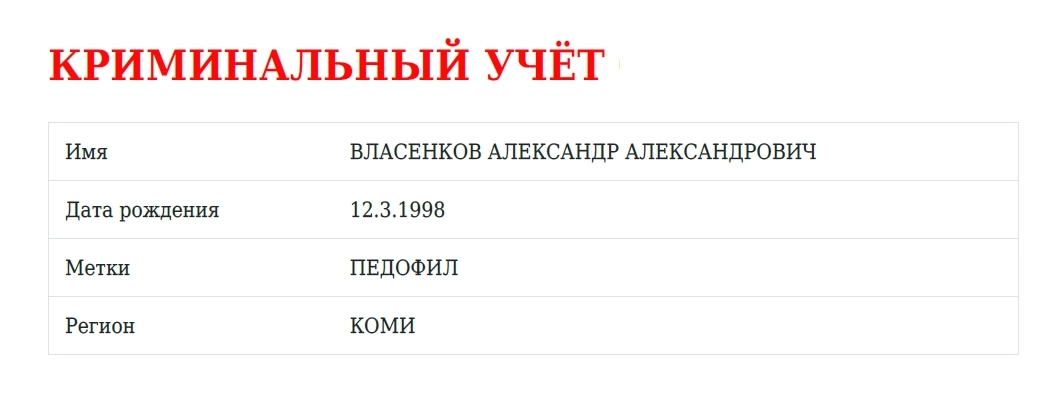
Police officers also made regular visits to Vlasenkov due to the fact that he was on a special Interior Ministry register for pedophilia, a legacy of his days as a cadet at the St. Petersburg University of the Interior Ministry, where he tried to rape a 13-year-old boy before being scared off by passersby.
The university authorities quickly swept the scandal under the rug, but Vlasenkov, who was in his second year, was immediately expelled. Mandatory military service in the air defense forces, however, spared him from prison.
After being demobilized in 2019, Vlasenkov found work as a coach in Irkutsk before police officers came to the school and warned its management about their new trainer's sexual proclivities. Vlasenkov was eventually forced to return home to the village of Chim in Russia’s Komi Republic and live with his grandmother, Zoya Ivanovna, who had raised him. That grandmother, incidentally, is well known throughout the area and is fondly called “our craftswoman” for her decades of work making unique dolls.
It wasn't Vlasenkov's first homecoming. In 2015, when he won the Russian junior hand-to-hand combat championship, the entire village turned out to welcome him, and a red carpet was rolled out in front of his school. The second return home was far less triumphant — Vlasenkov took a job as an electrician, and occasionally, at the request of his first coach, Khodzhar Isaev, he gave hand-to-hand combat seminars. He was deeply afraid that the local police officer supervising him might reveal something about his past.
The village of Chim has a population of just 297. It boasts a community center located in a barracks and an orphanage where Vlasenkov’s grandmother worked all her life. Most of the houses are in a dilapidated state, and there is virtually no work.
In early 2022, desperate to climb out of debt, Vlasenkov turned to his brother Igor and his coach Isaev for financial help. But his brother, who lived in Syktyvkar, was heavily in debt himself, while Isaev said he was ill and spending large amounts of money on expensive treatment. He died in 2023.
Vlasenkov then traveled to Moscow to seek help from the International Hand-to-Hand Combat Federation (IHCF). He was well known there: in 2009, he won the national Children of Beslan Memorial Tournament, took first place in the "My Republic Is a Sporting Republic" competition, and in 2015 became the Russian junior hand-to-hand combat champion.
In Moscow, Vlasenkov was received by Alexander Matovnikov, chairman of the IHCF supervisory board and a former member of Putin’s security detail. A colonel general, Matovnikov has served as deputy commander-in-chief of Russia’s Ground Forces since January 22, 2020. Pro-Kremlin media have described him as a “true Russian officer.”
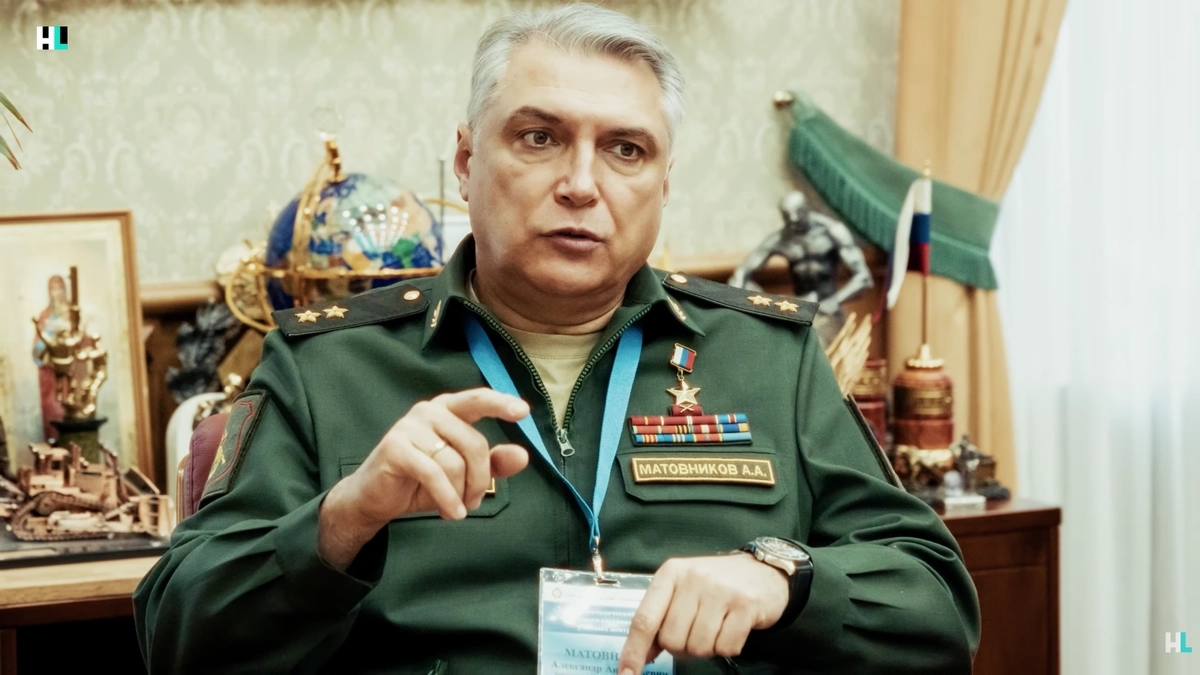
However, the general told Vlasenkov that the federation had no spare money and advised him to volunteer for the “special military operation,” which Vlasenkov did. The State Duma only banned people suspected of pedophilia from signing contracts to serve in the “special military operation” in 2024.
Vlasenkov served as a reconnaissance sniper with the 200th Coastal Defense Brigade, attached to the Northern Fleet (military unit 08275). He was killed on Sept. 2, 2022, during fighting near the village of Udy in Ukraine’s Kharkiv region.
The awards office
Vlasenkov’s story might have gone unnoticed, like the deaths of hundreds of thousands of other Russians who signed a contract with the Ministry of Defense. But General Matovnikov, the man who had advised him to volunteer for the front, changed all that.
After the disastrous start to the “special military operation,” Kremlin propaganda needed heroes, and Vlasenkov was an ideal fit: a young man from the provinces, practically an orphan, an athlete and a champion. That was when the campaign to build up his fresh image began.
Propaganda needed heroes, and Vlasenkov was an ideal fit: a young man from the provinces, practically an orphan, an athlete and a champion
Matovnikov himself began his career at the KGB’s Alpha Special Operations Center, eventually rising to become the unit’s first deputy commander. He took part in the storming of the hospital in Budyonnovsk in 1995 after it was seized by Shamil Basayev’s gang and was one of the commanders of the counterterrorism operations to free hostages at the Dubrovka theater in Moscow in 2002 (known as the Nord-Ost siege) and at the school in Beslan in 2004 (where hundreds of people were killed).
Matovnikov was later assigned to the security detail of Chechen head Akhmad Kadyrov as the FSB’s representative and acquired the nickname “Chekist.” On May 9, 2004, Kadyrov was killed in a bombing at Dynamo Stadium in Grozny. Matovnikov was in Moscow at the time, celebrating Victory Day.
Matovnikov’s immediate superior is Alexei Dyumin, who has been touted as a possible successor to Putin. After Dyumin moved to the Defense Ministry, Matovnikov took over his post as head of the Special Operations Service, serving as a deputy head of the GRU. In that capacity, Matovnikov repeatedly traveled to Syria on inspection missions. He did not take part in combat, but Putin awarded him the Hero of Russia title in 2017.
This past June, the Navalny LIVE YouTube channel published an investigation into how Matovnikov built his career under Putin, turning the war into a source of multibillion-ruble enrichment.
By the time of Russia’s full-scale invasion of Ukraine, Matovnikov was serving as deputy commander-in-chief of Russia’s Ground Forces. Through the Defense Ministry’s press service, pro-Kremlin media, and Z-bloggers, he set the propaganda machine in motion to promote Vlasenkov's memory.
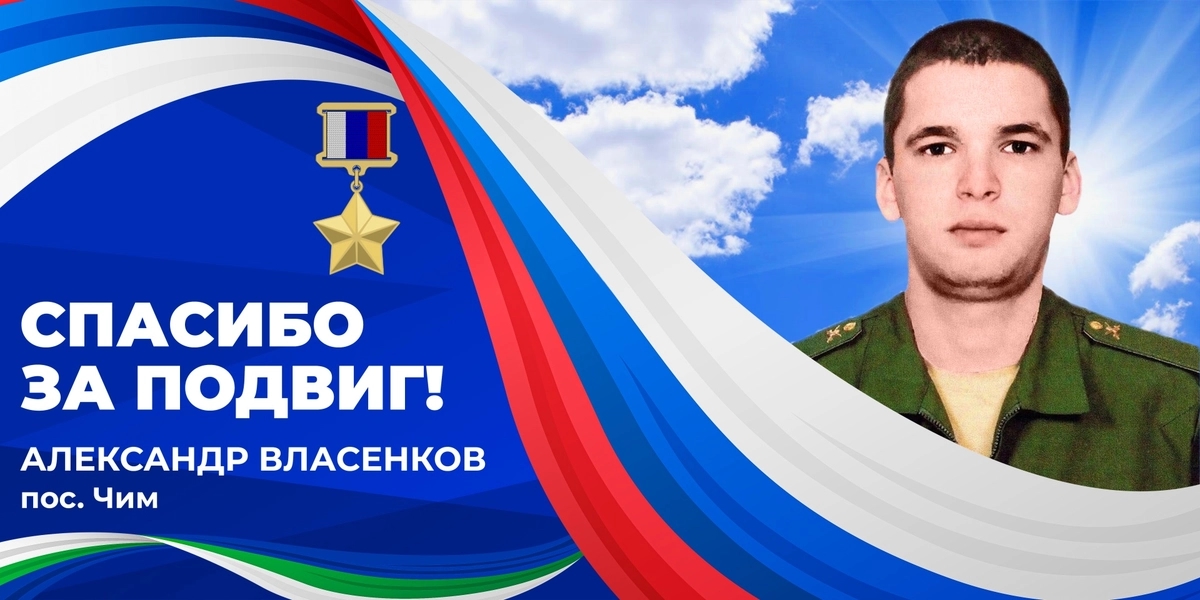
On Oct. 22, 2022, a month and a half after Vlasenkov’s death, Putin issued a decree posthumously awarding him the title of Hero of Russia. His grandmother, however, was not invited to the Kremlin — the award was presented to her at the Komi Republic's regional administration building in Syktyvkar.
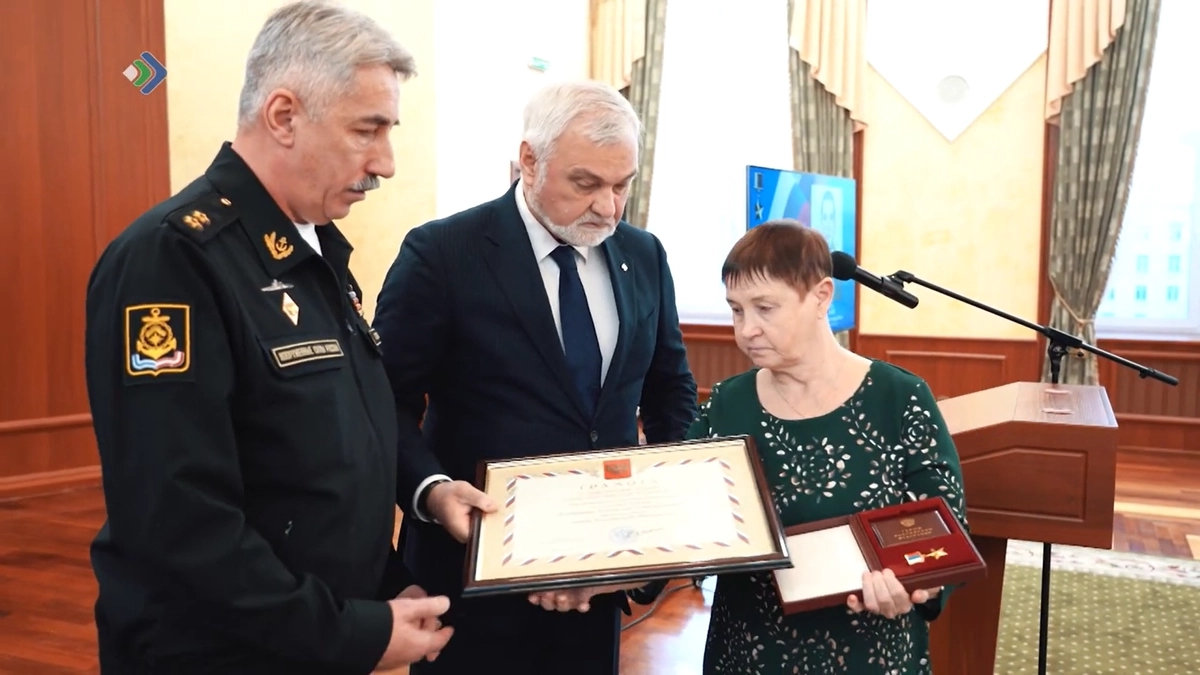
A source for The Insider in the Presidential Administration explained how such awards are processed:
“In short, Vladimir Vladimirovich doesn’t deal with routine matters — he has plenty of other things to worry about. State orders, medals, and certificates of honor are handled by Vladimir Osipov, head of the Presidential Directorate for State Awards. He is also a former KGB officer, and the president trusts him completely. Or they are handled by his deputy, Ivan Kalashnikov, who came to the Presidential Administration from the Ministry of Construction.
Before the start of the special military operation, there was stricter oversight: candidates were checked for criminal records and anything questionable in their backgrounds. But now all those checks have become pointless — the guys are overwhelmed. The Defense Ministry submits nominations for awards in huge batches, and half of those killed have criminal records.
Initial checks are carried out by the department responsible for preparing documents for state awards, headed by Irina Valyaeva, whose husband is a military pilot.
Heroes of Russia are a separate matter. If the candidates come from the FSB or intelligence services, their cases are handled by the department responsible for classified documents within the awards directorate. Irina Mitetele is responsible for processing the paperwork in those cases.
Sometimes a nomination may have a note attached saying, ‘Request from Slutsky, LDPR,’ or ‘From Zhdanov, SVR,’ or ‘Vavilov, Almaz-Antey,’ or simply ‘from Rotenberg.’
The documents then go to the presidential administration office. Its computers already contain completed, numbered forms bearing seals and Vladimir Vladimirovich’s facsimile signature — all you have to do is enter the surname. Award ceremonies at the Kremlin are timed to coincide with various dates. For the most part, the documents are sent to military enlistment offices in the deceased recipient’s place of residence. That’s the whole process.”
"He asked us to call him Shurik"
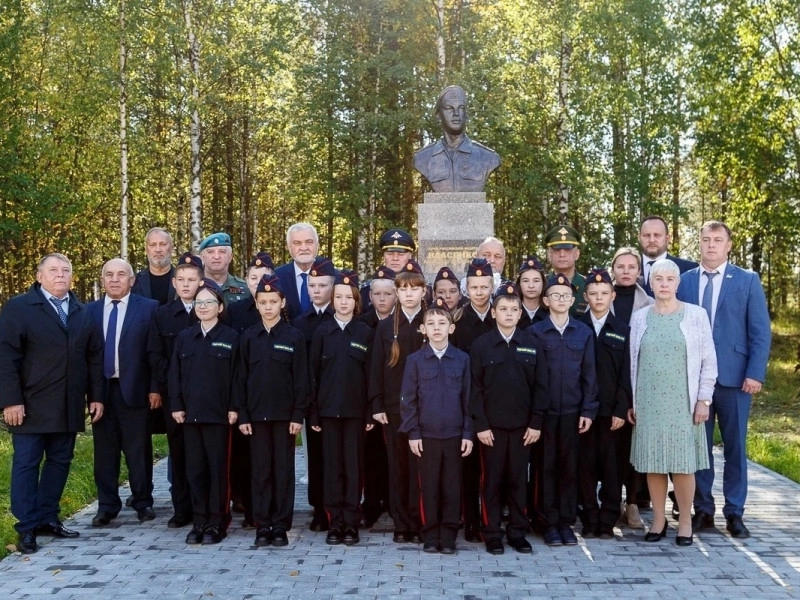
State propaganda went into full gear to glorify Vlasenkov. A monument was erected in his hometown, and at the school he attended, a museum was opened with funding from Transneft-Sever JSC. Among the exhibits is the desk used by the slain mercenary.
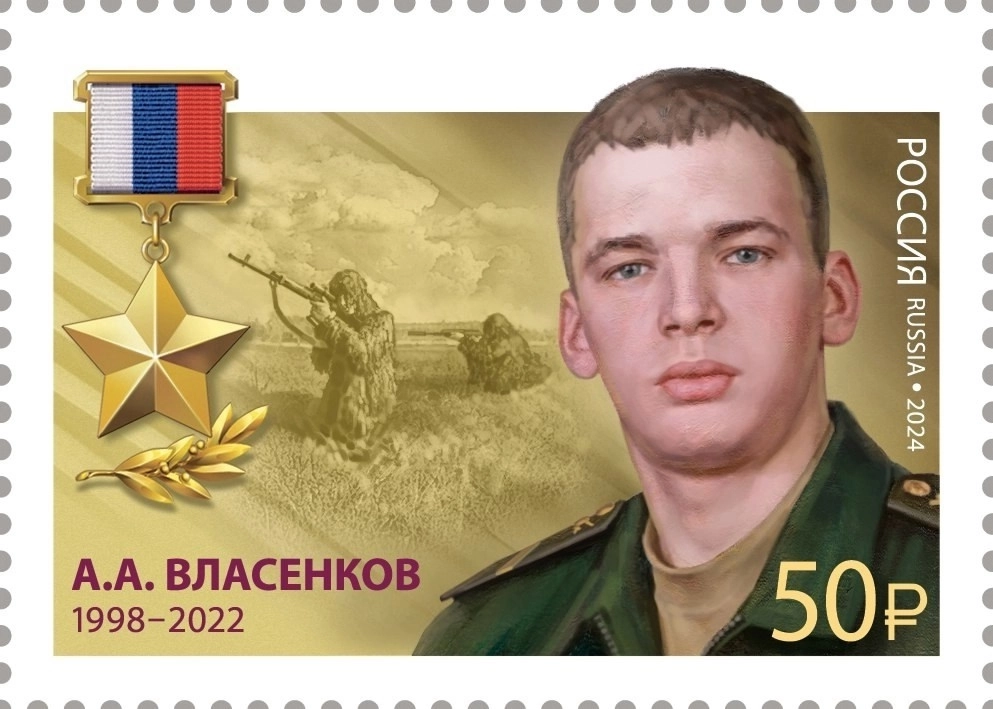
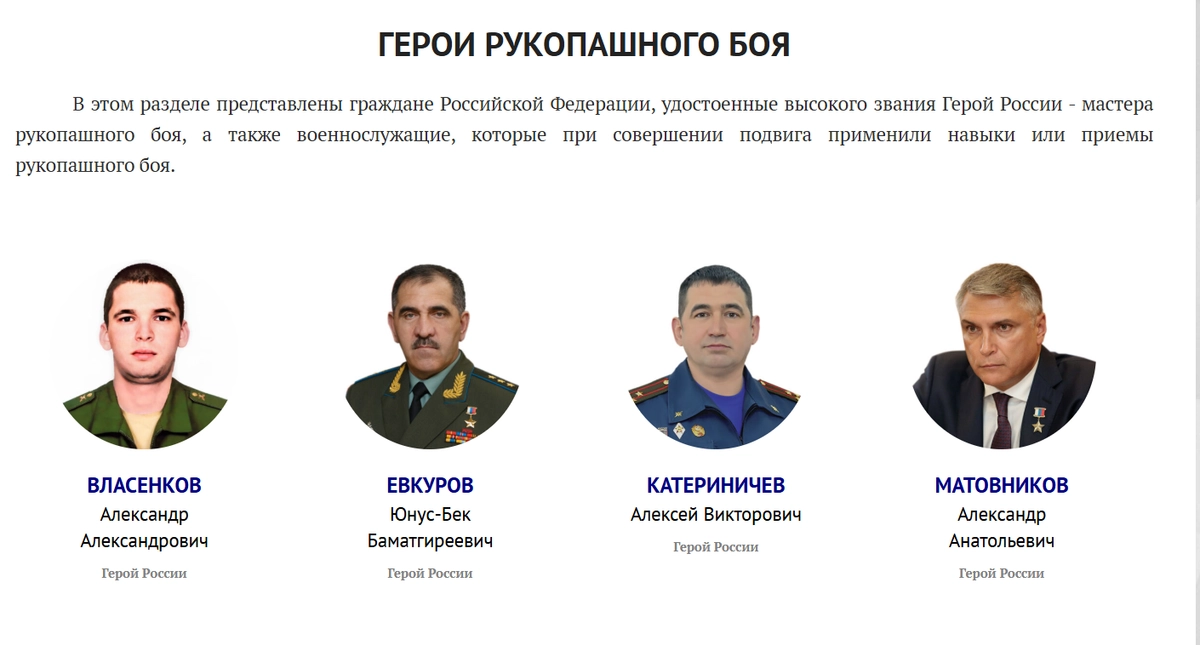
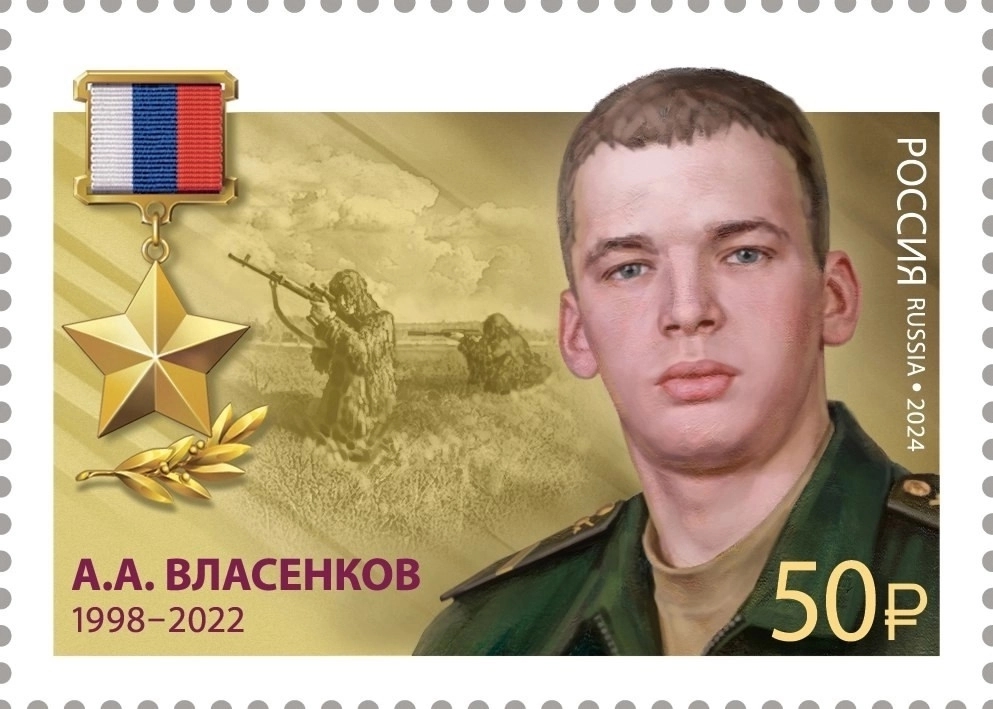
A postage stamp was issued soon afterward, and a photo of Vlasenkov was posted on the website of the All-Russian Federation of Applied Hand-to-Hand Combat (AFPRB). He appears alongside Matovnikov, Deputy Defense Minister Yunus-Bek Yevkurov, and Alexei Katerinichev, a former FSB officer who was killed near Kherson in September 2022 in a Ukrainian missile strike.
In December 2022, the Komi Republican Television Channel (YURGAN) released a documentary titled Alexander Vlasenkov’s Last Height, produced in the style of a Soviet propaganda film.
The film makes no mention of the fact that Vlasenkov had effectively fled to the front to evade police supervision and court bailiffs. Instead, it dwells on the purported details of his final battle near the village of Udy:
“When Vlasenkov saw that the nationalists had decided to surrender, he believed: here it is, another victory! So he stepped forward toward the raised white flag. Perhaps Vlasenkov wanted to save the lives of those who had realized that there was no point in resisting. But the enemy proved treacherous and, instead of surrendering, met our soldiers with bullets. The hero shielded his comrades with his body.”
“He asked us to call him Shurik. I still keep his poems,” his first teacher, Nina Torlopova, says in the film.
“One of Alexander’s favorite subjects was history. The Order of the Patriotic War made an indelible impression on him,” the narrator says.
“He was never afraid to take responsibility and always tried to help. And patriotism was not just a word to him,” says Abdusator Niyazov, the military commissar for Udorsky District, reading from a teleprompter.
The propaganda piece ends on an equally bombastic note: “He always strove for the heights, and he conquered this height too, although it turned out to be his last.”