Late last month, European gas prices climbed above €100 per megawatt-hour for the first time since 2022, tripling the level seen before the U.S.-Israeli war against Iran began. European Energy Commissioner Dan Jørgensen warned of another energy crisis and a difficult winter in which households could be forced to choose between heating and eating. In 2022, Europe lost most of its Russian pipeline gas; this time, Qatari liquefied natural gas (LNG) has all but disappeared after an Iranian strike on Ras Laffan. The EU is heading into winter with its lowest gas reserves in a decade and must now compete with Asia for U.S. LNG. As a result, Europe is importing record volumes of Russian LNG from the Yamal project, but long-term contract deliveries will be banned starting in 2027. For Europeans, that means an expensive winter, as energy already accounts for nearly half of eurozone inflation, which accelerated to 3.8% in September despite the European Central Bank raising interest rates two times this year.
In 2022, Europe paid the price when Russia ended most pipeline gas deliveries. Now it is paying for the near-disappearance of Qatari LNG from the global market. After Iran struck Qatar’s Ras Laffan complex on March 19, gas prices rose as high as €62 per megawatt-hour before falling to €44 following an April ceasefire. But prices began rising again in late summer, and on Oct. 28 the benchmark futures contract at the Netherlands’ TTF gas hub climbed above €100 per megawatt-hour for the first time since December 2022. The new crisis still has a Russian dimension: in recent months, the European Union has been importing record volumes from Russia’s Yamal LNG project, while Washington has proposed restoring Russian gas supplies to Europe as part of a hypothetical peace plan for Ukraine.
A storm in prices
There are three immediate reasons for the surge in prices.
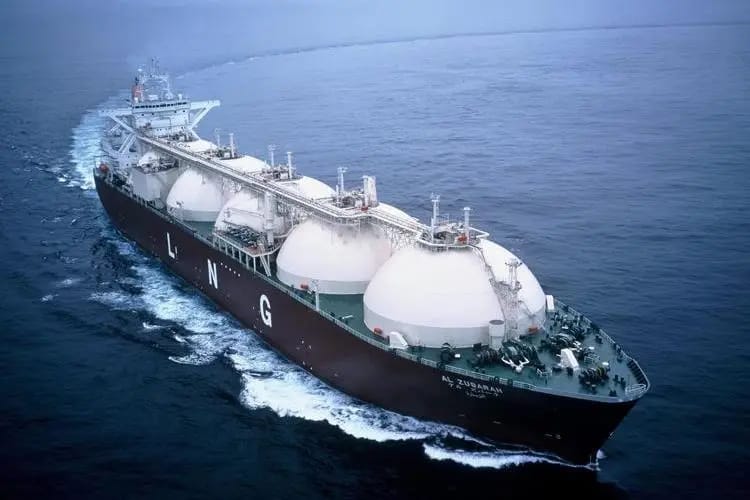
The first is the Strait of Hormuz. Before the war in Iran, Qatar accounted for around 19% of global LNG exports. However, in the first six months of 2026 it, shipped just 18 cargoes, compared with 509 a year earlier. Iranian missiles disabled two production trains at Ras Laffan that had a combined annual capacity of 12.8 million metric tons; repairs are expected to take three to five years. QatarEnergy extended force majeure on some contracts through early November, while attacks on vessels in the strait increased in early October.
Qatar, which accounted for about 19% of global LNG exports before the war, shipped just 18 cargoes in the first six months of 2026, compared with 509 a year earlier
The second is Europe’s record-low gas reserves for this time of year. Underground storage facilities are 75% full, compared with 93% at the end of October 2022. Forecasts of an approaching cold spell and unplanned disruptions in Norway have added to market anxiety in recent days.
The third is competition with Asia for uncommitted cargoes. Asia’s share of U.S. LNG exports rose from 16% in summer 2025 to 29% in summer 2026, according to data intelligence firm ICIS.
In 2025, after replacing much of its Russian pipeline gas with LNG delivered by tanker, the EU received 45% of its gas imports in liquefied form. That has made European prices less dependent on long-term pipeline contracts and more sensitive to the global spot market, meaning developments in the Persian Gulf now significantly affect European prices.
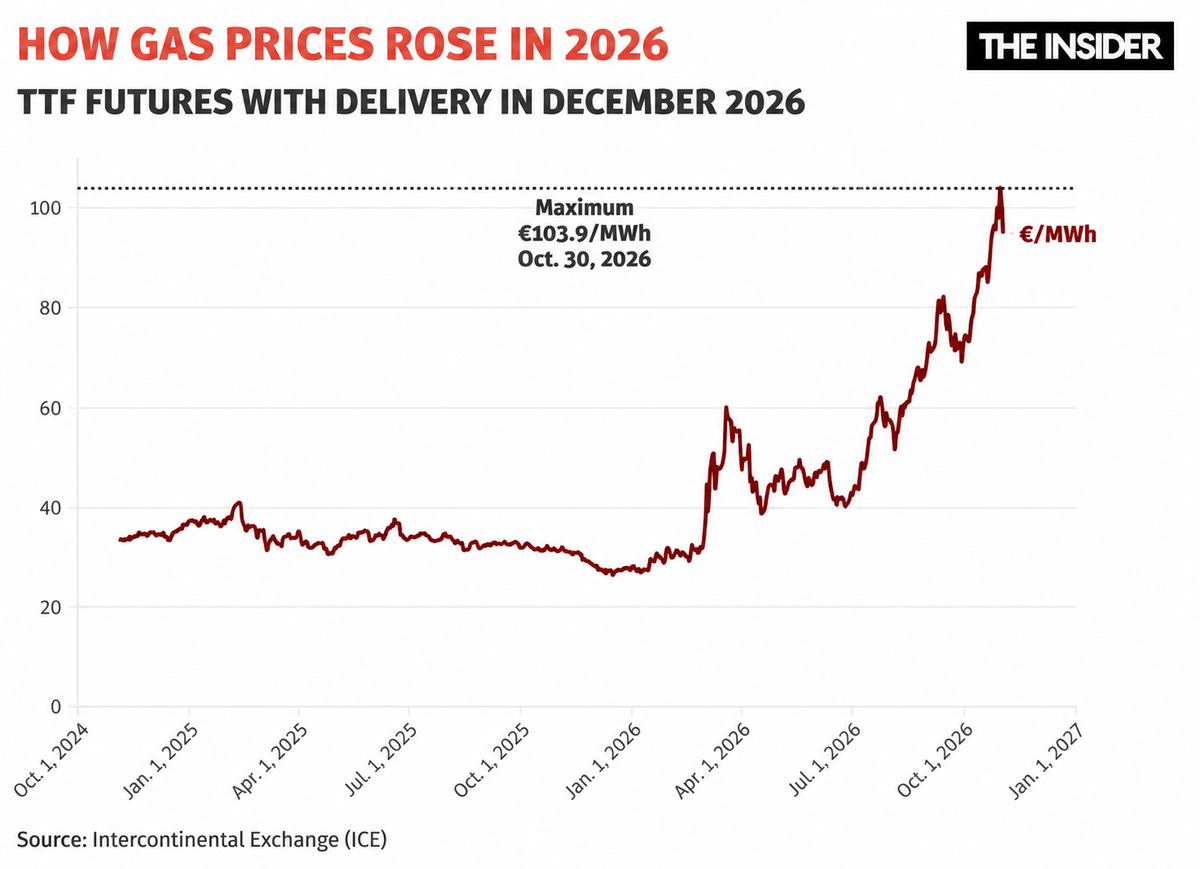
The current price levels are exceptional. In 2019-2020, gas in Europe cost an average of €10-14 per megawatt-hour, and in 2023-2025, it averaged €35-40. Today it is around €100.
The resemblance to 2022 is largely limited to the price level and Brussels’ calls for voluntary conservation. EU gas demand is now about 20% below its precrisis level, according to an estimate by the EU Agency for the Cooperation of Energy Regulators (ACER). Europe has reduced gas consumption partly by expanding renewable energy and partly because industrial output has fallen, with some plants closing because gas and electricity became prohibitively expensive.
Outside Europe, the picture varies widely. The Asian JKM LNG benchmark rose to nearly $30 per million British thermal units (MMBtu) in mid-October. Since €100 per megawatt-hour is roughly equivalent to $33 per MMBtu, European gas has broadly reached Asian price levels. U.S. Henry Hub prices, by contrast, remain at a mere $3 per MMBtu. That gap helps determine where U.S. LNG tankers go.
The situation is likely to persist for several more months, and the market does not expect a quick easing. In September, Bank of America raised its average fourth-quarter TTF forecast to €100, about 20% above the level seen in mid-September.
Where Europe’s gas comes from
EU domestic production in 2025 totaled 33 billion cubic meters and covered only about 10% of consumption, which reached 339 billion cubic meters. Imports totaled 289 billion cubic meters, while dependence on imported gas stood at 87.6%, with the remainder coming from storage. The bloc’s largest producers are Romania, the Netherlands, and Germany, but none can substantially increase production this winter.
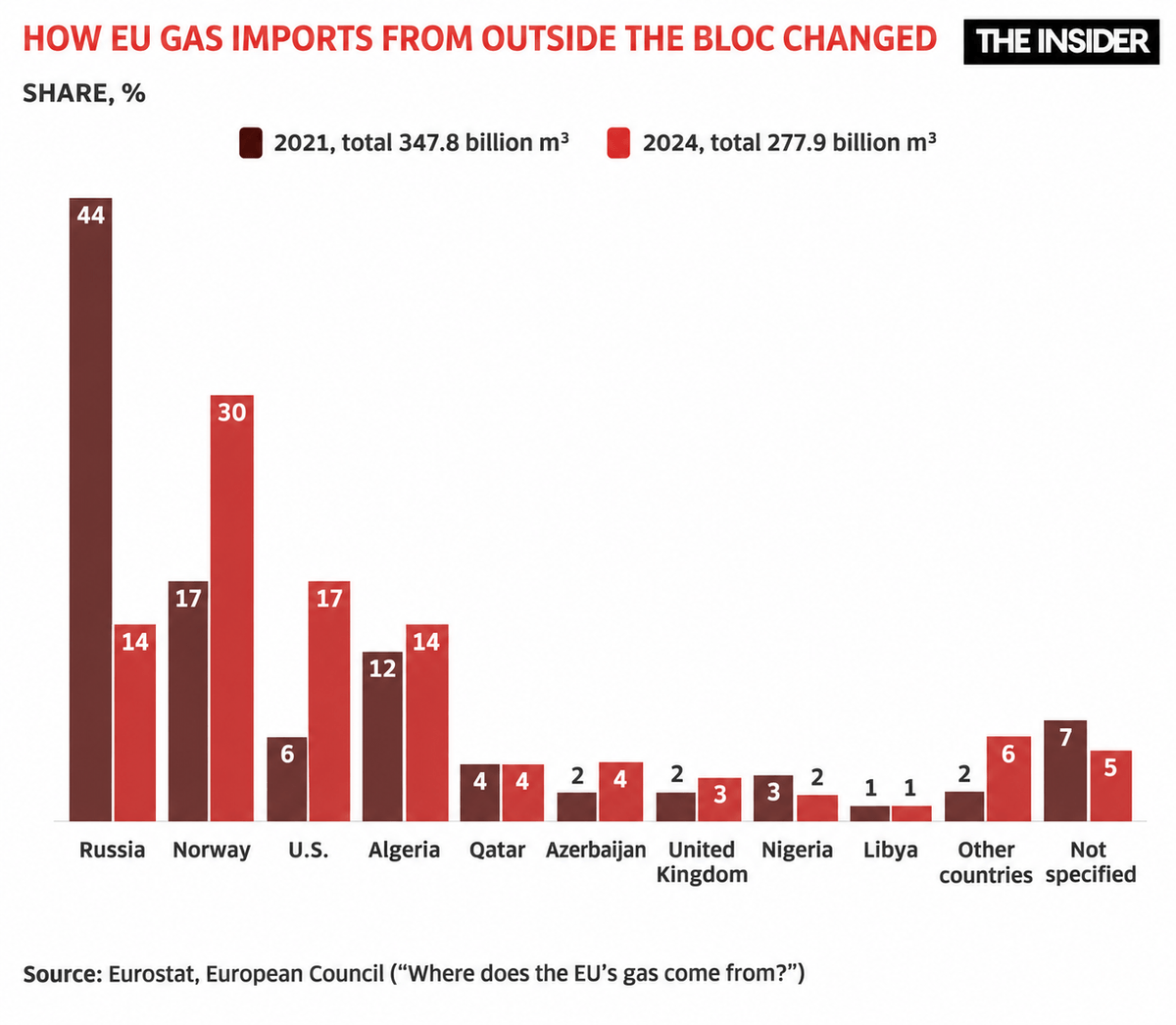
At the beginning of 2026, before the war in the Persian Gulf, imports were divided as follows: Norway supplied 30.9% (89.3 billion cubic meters), almost entirely by pipeline; the United States provided 26.2% (75.6 billion cubic meters), all as LNG; North Africa supplied around 13%, mostly through pipelines from Algeria and Libya plus Algerian LNG; Russia came in at 12.5% (36 billion cubic meters), through both pipelines and LNG; Azerbaijan’s 3.9% was delivered by pipeline; and Qatar’s 3.7% arrived entirely as LNG.
In 2021, Russia had supplied the EU with more than 150 billion cubic meters of gas, while the United States supplied only 18.9 billion. Then, over the course of four years, U.S. deliveries quadrupled, while Russian supplies fell by more than fourfold. In LNG imports specifically, the U.S. share reached 57.9%, Russia’s was 13.5% and Qatar’s 8%.
Although Qatar’s direct share of EU supply is relatively small — last winter it provided 7% of LNG and about 4% of total gas imports — the indirect impact of losing those volumes has been enormous. Virtually no significant amount of Qatari gas reached the EU over the summer, leading LNG imports to fall by 14%, and U.S. LNG’s share of Europe’s gas balance to rise to roughly 30%. Russian gas, including both pipeline gas and LNG, currently accounts for about 11% of supplies.
ACER estimates that the war in Iran added between €18 billion and €33 billion to the EU’s gas import bill. The Hormuz crisis hits Europe mainly through prices because Asian countries deprived of Qatari gas are simply bidding away U.S. cargoes. Even after an interim U.S.-Iran agreement came into effect in June, LNG tanker traffic through the strait remained well below prewar levels. The U.S.-based Institute for Energy Economics and Financial Analysis (IEEFA) expects Europe to receive two-thirds of all its LNG from the United States in 2026.
Amid high prices, the European Commission agreed to lower its Dec. 1 gas-storage target from 90% to 80%. Jørgensen had earlier urged governments to voluntarily reduce consumption, and on Oct. 29 energy ministers discussed preparations for possible gas disruptions but adopted no mandatory demand-reduction measures. Their only decision was a declaration on releasing strategic petroleum-product reserves.
While the EU and Canada are considering a long-term LNG agreement, Eni and TotalEnergies have already made a final investment decision on Cyprus’ Cronos gas field. Those additional supplies, however, will not become available before 2028.
Higher prices, lower demand
According to Eurostat’s latest complete data, natural gas accounted for 20.6% of the EU’s gross available energy in 2024, second only to oil and petroleum products at 37.8%. Gas had accounted for 23.5% in 2011 and 23.7% in 2020. That means nearly the entire decline came during the crisis years of 2022-2023, when industrial production fell and households cut back on heating.
The decline is even more striking in absolute terms. EU gas consumption fell from 404 billion cubic meters in 2021 to 326 billion in 2023. It rose to 339 billion cubic meters in 2025, partly because of weak hydropower generation. The International Energy Agency (IEA) expects European demand to fall by more than 2% this year as expensive gas loses ground to renewables, which generated nearly half of the EU’s electricity in 2025.
Gas plays a smaller role in electricity generation than in the overall energy mix, generating 16.7% of all EU electricity in 2025 (slightly less than wind power at 16.9%). Gas-fired generation peaked in 2019 at 569 terawatt-hours and then declined for five consecutive years before rising to 466 terawatt-hours, a year-on-year increase of 8%.
More than 60% of the energy consumed by EU households goes toward heating, and gas remains the largest single household energy source. In 2024, it accounted for 29.4% of household final energy consumption, more than electricity at 26.9%. And while solar power can displace some gas in the energy system during summer, winter heating demand is much harder to replace.
Gas in the EU is used primarily for heating, which accounts for more than 60% of household energy consumption
Under the EU Energy Efficiency Directive, the bloc’s final energy consumption in 2030 must not exceed 763 million metric tons of oil equivalent, compared with 901 million in 2024. The IEA expects European gas demand to decline 8% between 2024 and 2030, with the Ember energy think tank projecting a similar decline. Most of the drop, according to IEA calculations, will come from the power sector, where gas-fired generation in European OECD countries is expected to fall by one-quarter by 2030.
Storage starts winter from a low base
EU underground gas storage facilities were 72% full on Oct. 1 and 75% full on Oct. 21. But by Nov. 1, they had slipped slightly to 74.6%, the lowest level for this time of year in a decade. On Oct. 1, it was the lowest reading for that date since records began in 2011. For comparison, storage was around 83% full on Oct. 1, 2025.
The picture varies sharply across EU member states. As of Nov. 1, according to data from AGSI+, Italy’s storage facilities were 91% full, France’s 87%, the Netherlands’ 66%, and Germany’s only 61%. German storage facilities are the largest in the EU and help supply Austria, the Czech Republic and Switzerland. Germany was supposed to reach 70% by Nov. 1.
The EU is heading into winter with storage facilities below target, and Germany is the biggest concern
There are three reasons for the shortfall. First, Europe began refilling storage from a very low base after last years’ cold winter left facilities depleted to 28%. Second, the market offered little incentive to build inventories because for much of the summer season, gas was no cheaper than in the winter, making it unprofitable for traders to increase reserves. Third, as noted above, the war in Iran made Qatari LNG scarce and expensive, meaning exchange-traded gas at the end of summer cost roughly twice as much as it had a year earlier.
Under the European Network of Transmission System Operators for Gas (ENTSOG) base-case scenario, storage will fall to 29% by the end of next March. In the event of a cold winter with scarce LNG and a complete halt to Russian pipeline supplies through TurkStream, stocks could fall to between 11% and 21%, depending on LNG availability. IEEFA estimates that under such a scenario the EU would probably have to cut winter consumption by 7%, or about 14 billion cubic meters.
The Netherlands has subsidized storage injections since July while lowering its national storage target to 64%. Germany does not plan to establish its own strategic gas reserve until next year, and the 24 terawatt-hours’ worth of supplies would cover only 18 days of a normal winter or 10 days of an extreme one. The European Commission, however, insists there is no immediate threat of supply disruptions.
Weather remains the decisive variable. El Niño could bring Europe a mild winter, which would reduce demand for heating and gas-fired power generation, as noted by the Oxford Institute for Energy Studies. But if the winter turns cold, Europe will again compete with Asia for every available LNG cargo. Under such a scenario, the current €100 price may prove to be far from the peak.
Goodbye, Yamal
The EU’s phaseout of Russian gas was formalized in Regulation (EU) 2026/261, which entered into force on Feb. 3. Since March 18, supplies under contracts signed or amended after June 17, 2025, have been prohibited, and restrictions on existing contracts are being phased in: since April 25, new short-term contracts for Russian LNG have been banned, and since June 17, pipeline gas supplied under short-term contracts has been prohibited. Long-term Russian LNG contracts will be banned starting Jan. 1, 2027, and a ban on all remaining pipeline gas will come into effect on Sept. 30, 2027 (with a Nov. 1 date possible in some exceptional cases).
For now, Europe is buying ahead of the ban. During the first nine months of the year, EU ports received a record 12.18 million metric tons of LNG from the Yamal LNG project, up 9.5% year-on-year and equal to 85% of the project’s shipments by volume. The cargoes were worth €7.88 billion. Over the same period, 13.2 billion cubic meters of gas flowed through TurkStream, up 1.4%.
The volumes that will disappear next fall amount to about 33 billion cubic meters annually, according to an IEA estimate. The ban on Russian LNG alone will reduce imports by roughly 7 billion cubic meters this winter. Most of that gas will be replaced with U.S. LNG, meaning Europe’s dependence on Moscow will increasingly be replaced by dependence on Washington. At the same time, Donald Trump recently postponed new sanctions targeting Russia’s energy sector.
Practical alternatives include new LNG projects that are scheduled to be completed in 2027 and 2028, along with a rapid restoration of transit through the Strait of Hormuz. Hungary and Slovakia are the weakest links in the EU plan. Budapest challenged the regulation before the EU Court of Justice in February, while Hungary and Slovakia have asked Brussels for greater flexibility.
Private initiatives have also intensified. Reuters reported that Trump’s son-in-law Jared Kushner and Kremlin special envoy Kirill Dmitriev discussed bringing a U.S. investor into the Nord Stream pipelines. On Oct. 19, the European Commission rejected suggestions that purchases through the pipelines could resume.
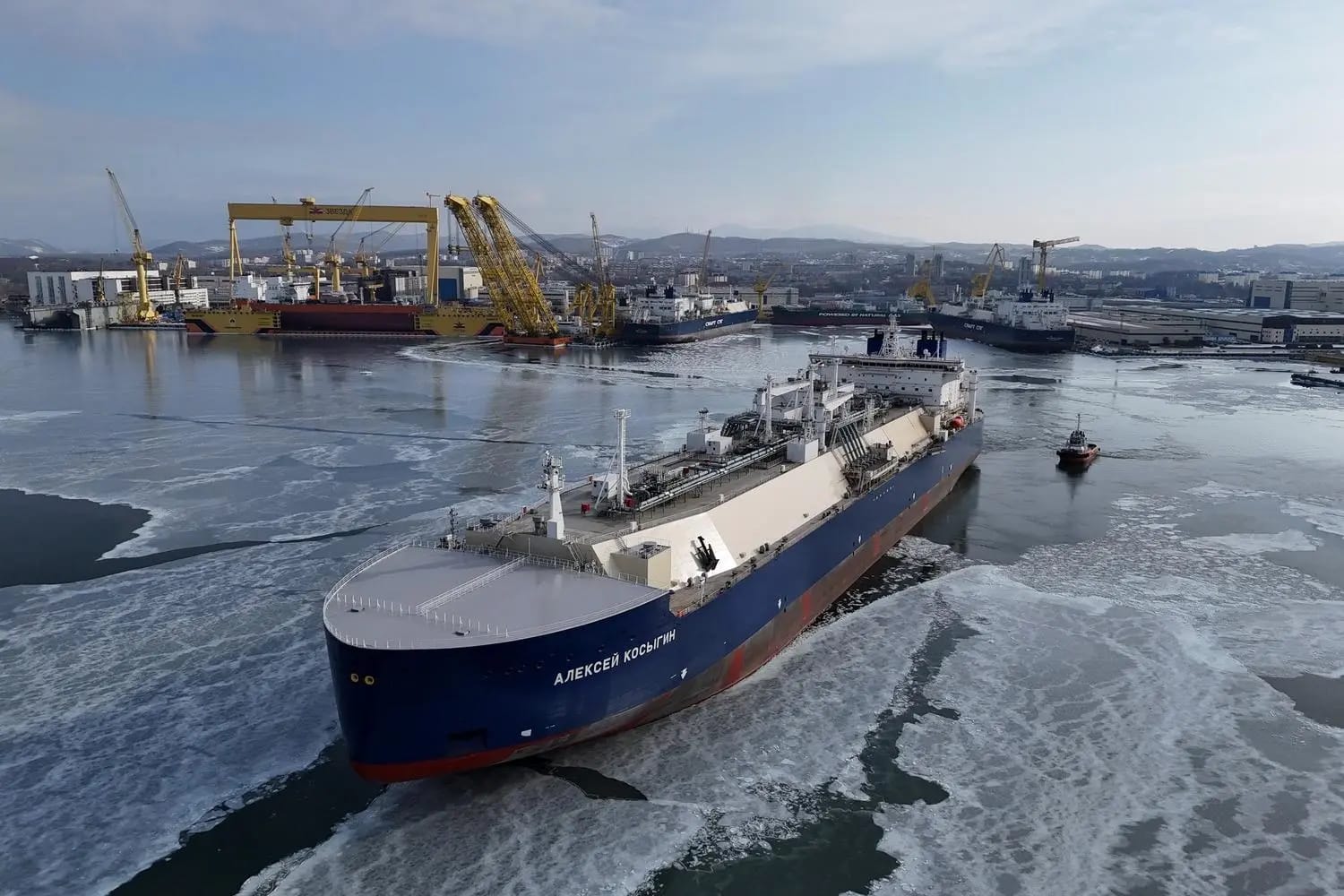
Novatek CEO Leonid Mikhelson says the Russian company will sell gas “all over the world.” Because the Northern Sea Route is closed to direct Asia-bound voyages during winter, NOVATEK plans to build receiving infrastructure in Vietnam. Mikhelson said TotalEnergies would sell its share of Yamal LNG outside Europe after 2027, an option permitted under the EU’s 21st sanctions package.
The U.S. Graham Act poses a more tangible future risk. The sanctions law threatens the Arc7 ice-class tanker fleet serving NOVATEK’s project, although the White House suspended its main sanctions provisions beginning Oct. 16.
China, meanwhile, pays substantially less for gas delivered through the Power of Siberia pipeline than Russia’s other customers do. According to Russia’s Economic Development Ministry, China paid an average of $240.30 per 1,000 cubic meters in 2025, compared with $406.50 for other customers outside the former Soviet Union — a discount of 41%.
Power of Siberia 2, meanwhile, remains stalled because China is demanding prices comparable to those on Russia’s domestic market. As a result, the record 38.8 billion cubic meters pumped to China in 2025 comes nowhere close to compensating Gazprom for lost European revenue, whether measured in volume or in price.
Russia has not recovered from the loss of the European market. For now, it is earning money from the final months of Yamal sales to Europe, but the EU market is closing on a fixed timetable, and China cannot provide an equivalent replacement.
Who will pay?
Expensive gas has already reached consumers. Eurostat data show that eurozone inflation accelerated to 3.8% in September, up from 3.2% in August, significantly higher than the 2.2% recorded a year earlier. Energy — including fuel, gas and electricity — rose 19% over the year and contributed 1.7 percentage points to inflation, nearly half of the total increase in prices.
The winter impact will be softened somewhat because household gas bills include components that do not depend on wholesale prices. Taxes and levies accounted for about 31% of household gas charges in 2025. In simplified terms, for a €100 gas bill, €31 would consist of taxes and levies and €69 would go towards the gas itself and its delivery. Even if that entire latter portion doubled, the total bill would rise to €169 despite the commodity price doubling (and in reality, the increase would be smaller because network charges are also largely insulated from wholesale prices).
Even so, the increase will be significant. For a gas-heated home that consumes 10,000 kilowatt-hours between November and March, the cost of the gas alone will rise by roughly €600, according to a Euronews calculation. Electricity is also becoming more expensive because gas-fired plants continue to set the market price during periods of peak demand.
Other prices follow. Gas is needed to make fertilizers, steel, glass, and chemicals, and companies pass higher input costs on to consumers. Research published by VoxEU shows that gas shocks push core inflation higher and keep it elevated longer than oil shocks, especially when inflation is already high, even if the effect can take more than a year to work its way through to service prices.
How quickly wholesale prices reach household bills depends on the country. In September the ECB surveyed national central banks, finding that in countries accounting for more than half of eurozone energy consumption, higher wholesale gas prices now reach consumers within one to three months, while in countries accounting for about one-third of consumption, the delay is six months to a year.
Bills rise fastest in the Netherlands, where energy prices to consumers adjust almost immediately. In France, Italy, and Spain, Oxford Economics estimates that consumer gas prices will rise within several months. Germany and Austria rely more heavily on fixed-price contracts lasting 12 to 24 months, meaning the peak impact there will arrive roughly a year later.
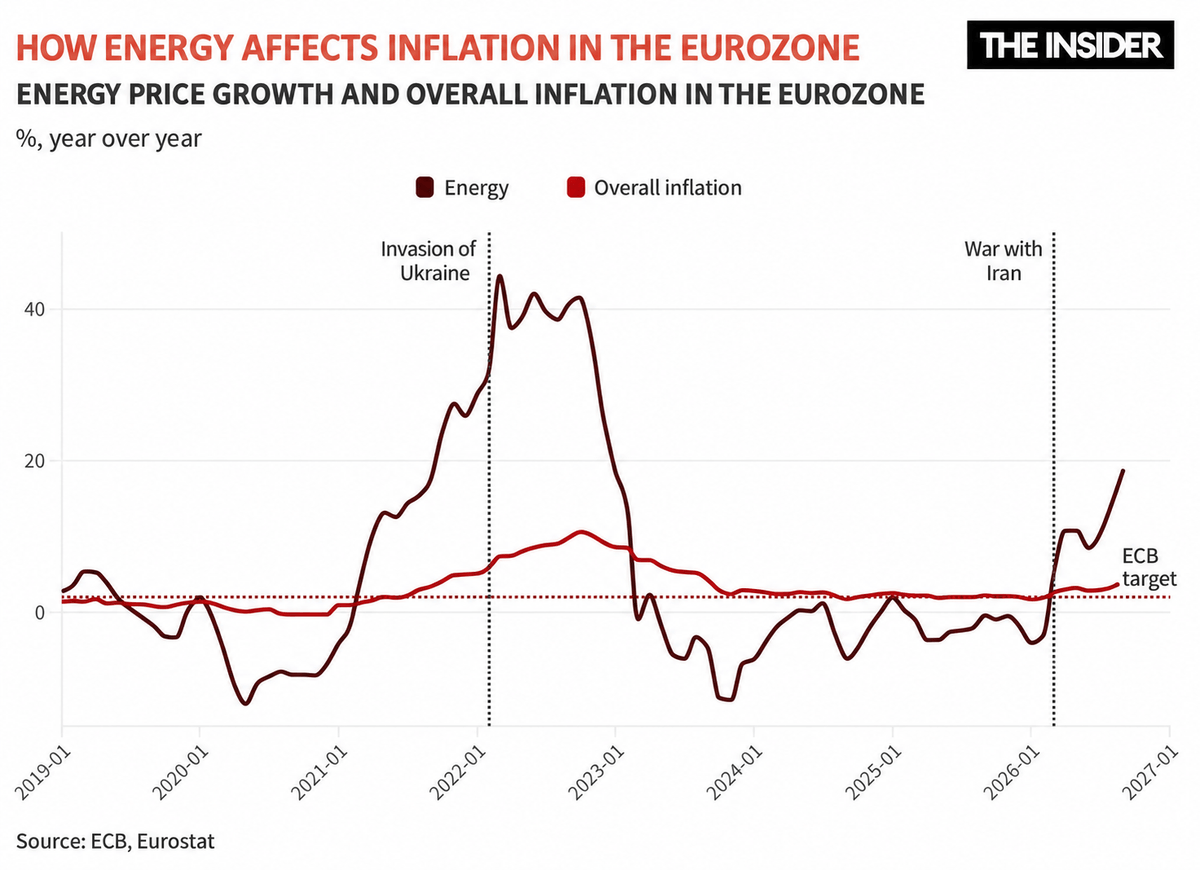
The ECB has already responded, raising interest rates in June and September — the first increases since 2023 — bringing the deposit rate to 2.5%. For households, that also means more expensive mortgages and loans. On Oct. 29, the central bank held rates steady but warned that higher energy costs threatened to accelerate inflation and slow economic growth.
The ECB’s September forecast projects inflation of 3% for 2026 as a whole and 2.5% in 2027, the consequence of a projection that energy prices for the fourth quarter of 2026 will be almost 15% higher than those seen in 2025. However, the forecast was based on prices in mid-August, when December TTF futures traded at around €63. Since then, gas prices have risen by roughly another 50%.
Wood Mackenzie estimates that the LNG market may not return to balance until 2028. Although inflation remains well below the level seen in 2022, when it exceeded 10%, forecasts suggest Europe is heading into another expensive winter, and inflation is likely to remain above the ECB’s 2% target through at least 2027.
Overall, three factors beyond the control of European bureaucrats will determine the severity of the price rise: the weather, the situation in the Strait of Hormuz, and the volume of U.S. LNG diverted to Asia. Under ENTSOG’s base-case scenario, current reserves should be just enough to get the continent through a normal winter. In the event of another cold weather, however, IEEFA estimates that the EU would have to cut consumption by about 7%.