A new wave of Ukrainian strikes has hit Russia’s largest oil refineries, targeting plants that account for more than half of the country’s total capacity. As a result, the ongoing fuel shortage will worsen as stockpiles accumulated during the pause are depleted, with the freight transport and retail sectors likely to suffer the most economically. Overall, the domestic diesel shortage could become particularly acute in winter — mere months after Moscow claimed to have sufficient surpluses to resume exports (including to the United States). It is already clear that the much discussed "diesel deal" benefited neither side, as not a single tanker carrying Russian fuel ever reached American shores. It will probably go down in history as yet another short-lived and futile PR project by the U.S. president.
The United States never accepted a single tanker of Russian diesel. Unlike Donald Trump, American companies are not prepared to trade with Russia. Russia could not place the fuel in Brazil either, as it proved easier for buyers there to purchase cheaper fuel from neighboring countries.
That does not mean the world has a surplus of diesel. On the contrary, diesel remains a scarce commodity on the global market. The average retail price in the United States was $6.10 a gallon on Nov. 10, compared with $3.69 at the beginning of February (before the war in Iran constrained shipping through the Strait of Hormuz). In the EU, it was €2.15 a liter on Nov. 9, compared with €1.59 on the eve of the war with in the Middle East. In Russia, the exchange price of winter diesel set a record of 92,500 rubles ($1,130) per ton on Oct. 1.
In a purported effort to bring prices down, on Oct. 9 the U.S. Treasury issued General License No. 135, authorizing transactions involving Russian diesel — including imports into the United States — until April 7, 2027. Paradoxically, however, the Russian government extended its ban on diesel exports until Jan. 31, retaining exceptions only for certain deliveries to the global market.
The question remains: if there is enough fuel, why is Moscow maintaining the ban, and if there is not enough, what did Washington expect to achieve by lifting the sanctions? The answer can be found not in the halls of the U.S. Treasury, but at Russia’s oil refineries.
A quarter down
It is extremely difficult to say exactly how much diesel Russia is producing today. In late September, Moscow's Decree No. 686 rendered the last remaining public data (including refinery throughput and output, as well as exchange transactions in diesel and gasoline) classified. The only option is therefore to rely on estimates by industry sources and analysts.
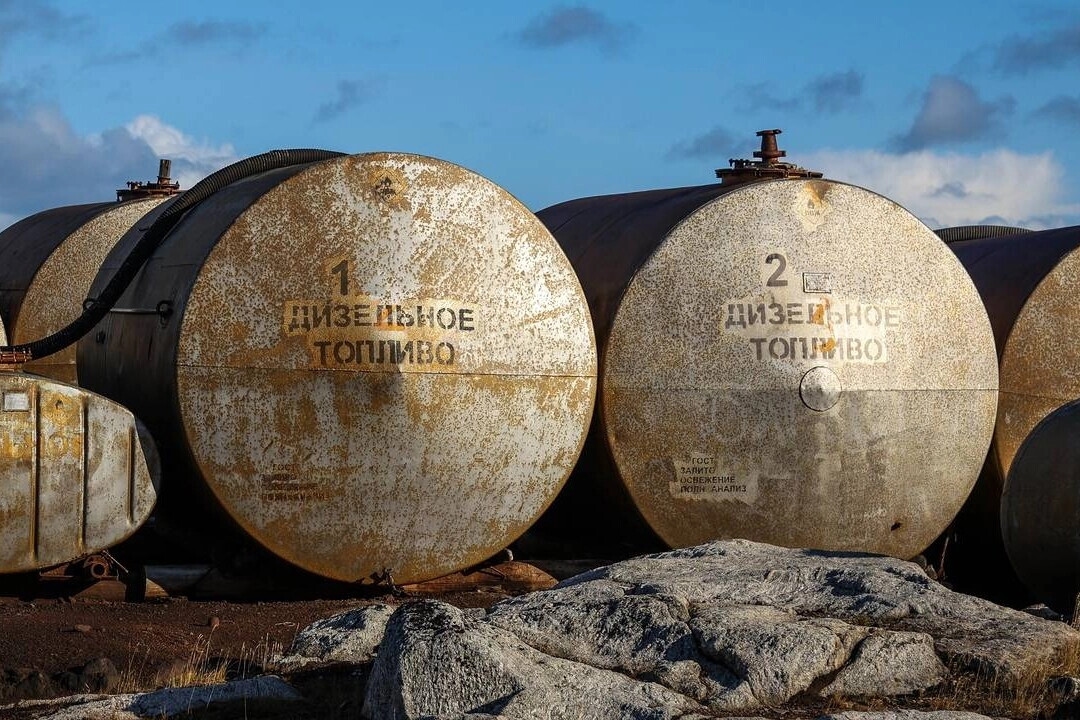
Experts estimate that Russia produced about 85 million tons of diesel in 2025 — roughly 230,000 tons a day —while domestic consumption stood at 46–54 million tons. Historically, production was around double domestic demand, and roughly half of Russian refineries' output was exported.
According to Reuters, production in March 2026 was a healthy 7.5 million tons — approximately 240,000 tons a day. However, two consecutive months of decline followed, with April coming in at 6.5 million tons and May's figure falling to around 5.9 million.
At the beginning of autumn, production was still holding at roughly 175,000 tons a day, but in the first half of October, it fell to about 160,000 tons before rising again to nearly 180,000 tons — about a quarter below the March level. Rosstat data indirectly confirm the picture: September 2026 output of petroleum products and coke fell by 17% year-on-year.
Even Rosstat’s official figures show a 17% decline in petroleum-products and coke output in September
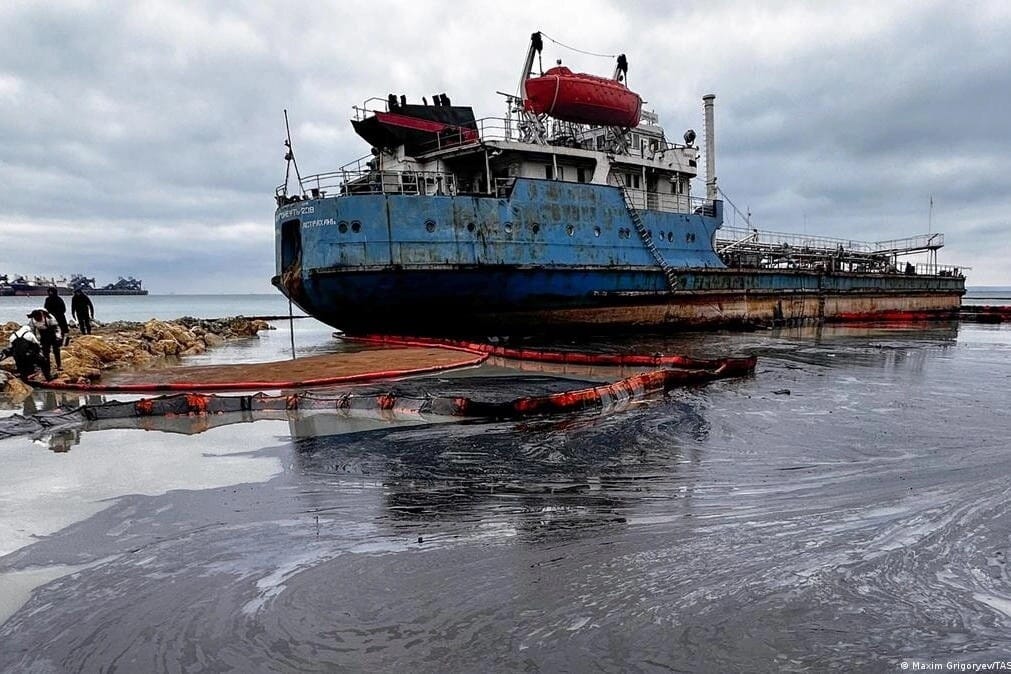
Six refineries produce about half of Russia’s diesel, and four of them have already been attacked this month. The Omsk refinery caught fire on Nov. 11 but did not report a shutdown for repairs. Kirishinefteorgsintez (Kinef) was hit on Nov. 9; the Volgograd refinery was hit on Nov. 13 (the fourth time this year that it has halted refining); and NORSI in Kstovo caught fire on Nov. 1. The remaining two are Permnefteorgsintez, which was last attacked on Sept. 25 (just as it was due to complete repairs after an August strike), and TANECO in Tatarstan, which has not yet been hit (although the neighboring Nizhnekamskneftekhim plant was also attacked in November).
As early as September, three of the six had either stopped or sharply reduced output after drone attacks. Kinef shut down completely, while the Volgograd refinery and NORSI significantly reduced their output. According to Kpler, the average throughput of Russian refineries was about 3.8 million barrels a day in the summer and recovered to approximately 5 million only by the end of October; the October average was around 4.3 million barrels a day.
Winter is coming
When it comes to diesel, the composition of output matters more than the quantity. Russia critically needs so-called winter diesel, which can withstand temperatures of –30°C thanks to the inclusion of anti-freezing components. Yet Russia traditionally produces little of it, and the fuel is not exported due to the lack of major buyers with similarly cold climates. That makes it unprofitable to increase production or build up large stocks, even though the government calls on refineries to raise output every year. Notably, for small- and medium-sized refineries, procuring equipment for producing winter diesel was beyond their means even before the war.
There are no recent data broken down by diesel type, and the latest public estimates date back to 2022. According to Petroleum Trading, of the 78 million tons of diesel produced that year, about 14 million tons (less than one-fifth) were winter grades. The Energy Ministry estimated demand for those grades at roughly 20 million tons.
The shortage of winter fuel has traditionally been covered with a substitute: a mixture of summer diesel and kerosene. In autumn 2025, Decree No. 724 exempted this fuel from excise duty until May 1, 2026. Refineries equipped with dewaxing units can produce winter and arctic grades without additives. In 2022, new units at the Omsk refinery and TANECO were expected to increase output. Both plants were attacked in 2026, but it is not known which units were damaged.
Ukraine’s military intelligence service claims that, by the end of September, 15 of Russia’s 38 main refineries had been knocked out and another 12 had reduced production. The figures cannot be independently verified. One risk this winter is that, if attacks resume, strikes could shift from gasoline capacity to light gas oil — the feedstock for both winter diesel and aviation kerosene.
Who will face the shortage
Domestic Russian consumption of ordinary diesel typically falls to about 140,000 tons a day in October as the harvest ends and the summer freight season winds down. With output at about 180,000 tons, the safety margin is nearly 30% — well below the 80% margin claimed by Deputy Prime Minister Alexander Novak, who on Oct. 30 assured the public that winter diesel was “sufficient, given the production plans of the companies, naturally.” But those plans changed after the Ukrainian attacks in November, potentially wiping out the entire margin.
For now, the shortage is regional and grade-specific. In St. Petersburg, the share of filling stations with diesel available fell from roughly 70% to less than 40% over the course of a week. Economist Janis Kluge has written that Russia was still producing enough diesel in October and that the shortage was caused by the logistical challenge of moving fuel through nearby Primorsk.
On Oct. 26, diesel was unavailable at 29 of 214 filling stations in Tambov Region. In Sverdlovsk Region, some Tatneft stations stopped selling it. By Nov. 9, Rosneft stations had introduced sales restrictions in Karelia (where drivers on the highways could buy no more than 50 liters of diesel) and in Ulan-Ude.
Restrictions were also reported in the Transbaikal, Arkhangelsk, and Penza regions, and Krasnoyarsk Krai. Once the reserves that were accumulated during the pause in Ukrainian refinery attacks run out, the acute shortage will spread, albeit unevenly.
The first to suffer will be cold regions with long, expensive supply chains and dependence on one or two refineries, namely the Northwest, Eastern Siberia, and the Far East, where winter and arctic diesel are required. For everyone else, diesel will become substantially more expensive. Prices for winter diesel traditionally peak at the beginning of October, but this year, they will likely remain at record highs for far longer.
Freight transport will be hit hardest, as fuel is its main variable cost (accounting for 30% of the bill for a typical long-haul trip). Retail, however, will suffer as a consequence. According to the ATI.SU exchange, average road-haulage rates rose 17.5% from late May to mid-July and by 28.8% year-on-year. By Sept. 5, the ATI.SU freight-cost index had reached an all-time record of 2,443 points.
The army, which is supplied centrally, will probably be affected last.
Racing the drones
This year has shown clearly that, during intense Ukrainian drone campaigns, Russian refining capacity is knocked out faster than it can be repaired. According to the International Energy Agency, in the first eight months of the year Ukrainian drones successfully struck Russian refining facilities roughly once every three days.
Repairs to key units take months, according to Kpler, and refineries are often hit again before repairs are complete. From May to September, refinery throughput fell by 1.5 million barrels a day. During the July pause, about 1 million barrels a day of capacity were restored, and by the end of October refining had risen to approximately 5 million barrels a day.
The lull did not last long. After Trump’s announced “energy truce” collapsed on Oct. 30, Ukraine attacked key Russian refineries, knocking out another 30% of refining capacity. “Taking into account the strikes on Omsk and Volgograd, the attacks hit facilities producing about 55% of Russia’s marketable gasoline, with roughly the same share of domestic supplies,” says Sergei Vakulenko, a senior research fellow at the Carnegie Russia Eurasia Center in Berlin. Vakulenko notes that there are still no precise data on the damage, and he does not rule out the possibility that the plants may need to shut down completely.
Moscow’s export promises are becoming increasingly unrealistic. Russia planned to export about 2.15 million tons of diesel in November, including 500,000 tons under its deal with the United States. But 2.15 million tons in November means about 72,000 tons a day. With domestic demand at 140,000 tons, refineries would have to produce more than 210,000 tons a day — far more than they were producing at the end of October.
Does maintaining the export ban mean the government expected a shortage? In part. Officially, the ban was extended to keep the domestic fuel market stable. The quotas allow the authorities to regulate exports manually, depending on what is happening at the refineries.
But the ban has a second function: it keeps domestic prices down. The December ICE gas-oil futures contract closed at $1,298 per ton on Nov. 13. Interseasonal diesel was trading on the Russian exchange that day at $737 per ton. Even after freight and discounts are taken into account, unrestricted exports would quickly pull fuel out of the domestic market, and the budget is already spending huge sums on the fuel-price damping mechanism. In October, for example, payments to oil companies exceeded 550 billion rubles ($6.7 billion).
The Ukrainian military did what sanctions could not
Until recently, Russia was a major diesel exporter, supplying around 40 million tons to the global market in 2025. For comparison, its seaborne exports of diesel and gas oil amounted to 1.8 million tons in June, compared with 3.35 million tons a year earlier. After Moscow announced its export ban on July 8, the spread between gas-oil and Brent prices rose to a then-record $60 a barrel, later climbing to nearly $95 at the end of September. From the start of the year through Oct. 20, Russian diesel exports fell 41% year-on-year.
Nevertheless, the main driver of the price increase was not the strikes on Russian refineries but the war in Iran. According to the IEA, Middle Eastern petroleum-product exports amounted to 1.9 million barrels a day in September, compared with 4.7 million before the start of the conflict. The price of diesel also set a historic high in September, reaching $200 a barrel. Russia’s situation intensified the price shock, but it did not cause it.
Strikes on Russian refineries intensified the price shock, but the shock was caused by the US war with Iran
The Trump administration was actively trying to bring fuel prices down before the Nov. 3 midterm elections. In addition to the diesel deal with Russia, the United States applied direct pressure on Ukraine, which Trump and his Treasury secretary, Scott Bessent, publicly blamed for aggravating the crisis. But prices did not fall.
Between Oct. 9 and 28, retail diesel in the United States rose from $6.28 to $6.35 a gallon. Not a single tanker reached the United States, with New Jersey Governor Mikie Sherrill warning operators of the state’s ports and terminals that accepting Russian diesel could result in criminal liability.
A group of U.S. senators issued a similar warning to banks, port authorities, and fuel distributors. As a result, the tanker Agioi Fanendes, carrying 40,000 tons of fuel, left Primorsk on Oct. 22 and was due to unload on Nov. 7. Insead, it slowed down, changed its status to “awaiting instructions,” and turned toward Canada. Two other tankers listed under the Trump–Putin diesel deal headed toward Brazil and the Mediterranean. Brazilian traders rejected the offer because the price was too high compared with American diesel.
The sharp rise in fuel prices also contributed to the Republicans’ defeat in the midterm congressional elections. Although oil and diesel prices fell temporarily in early November, that was primarily due to hopes of de-escalation around Iran, not expectations of Russian supplies.
As for sanctions, the European Union’s embargo and price cap, in force since 2023, did not remove Russian diesel from the global market. Instead, Russian supplies were redirected to Turkey, Brazil, and other buyers. This year, the physical volume of Russian exports was constrained more by drones and Moscow’s own export ban than by U.S. sanctions, which is why relaxing the sanctions did not add to supply.