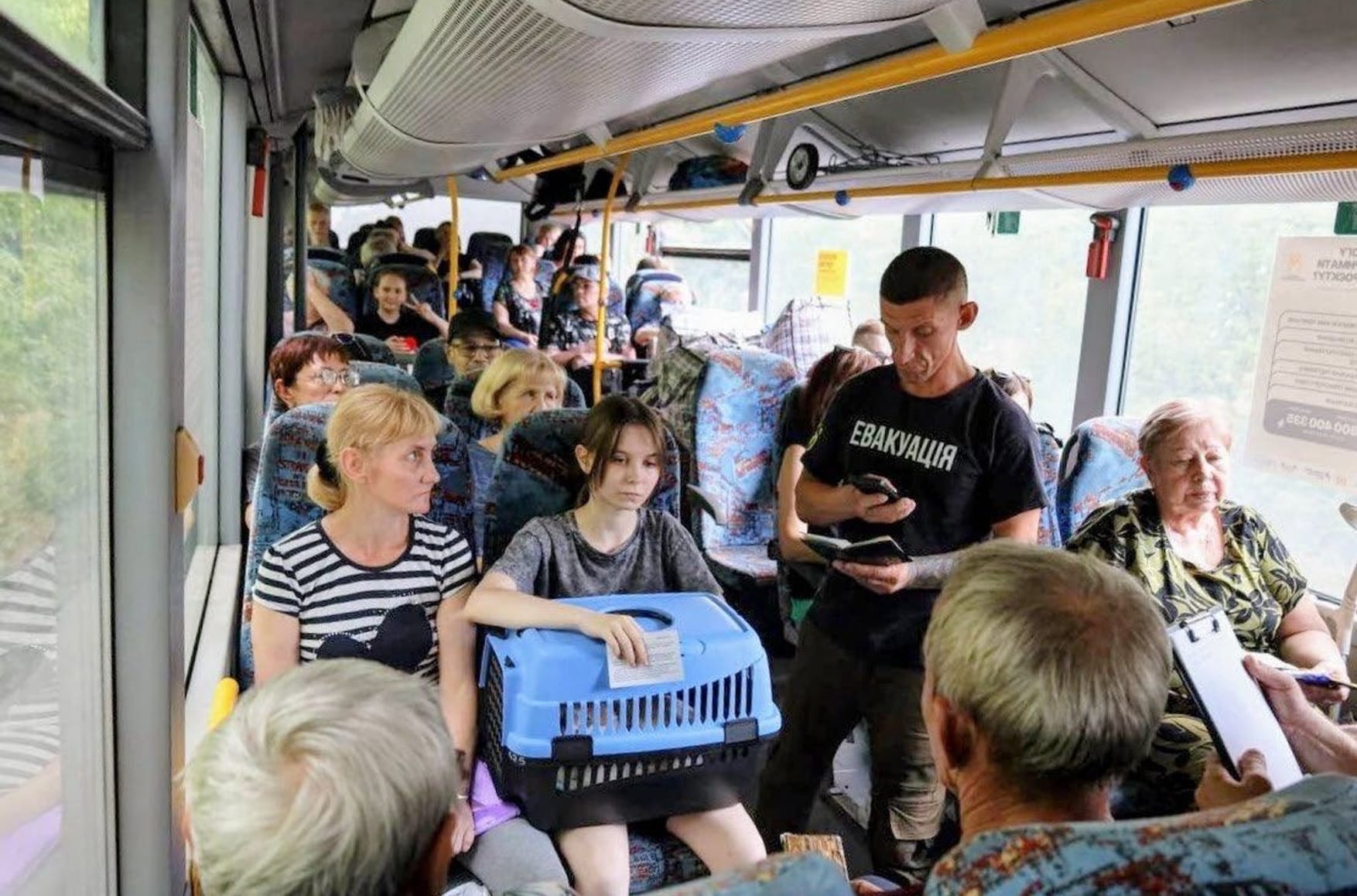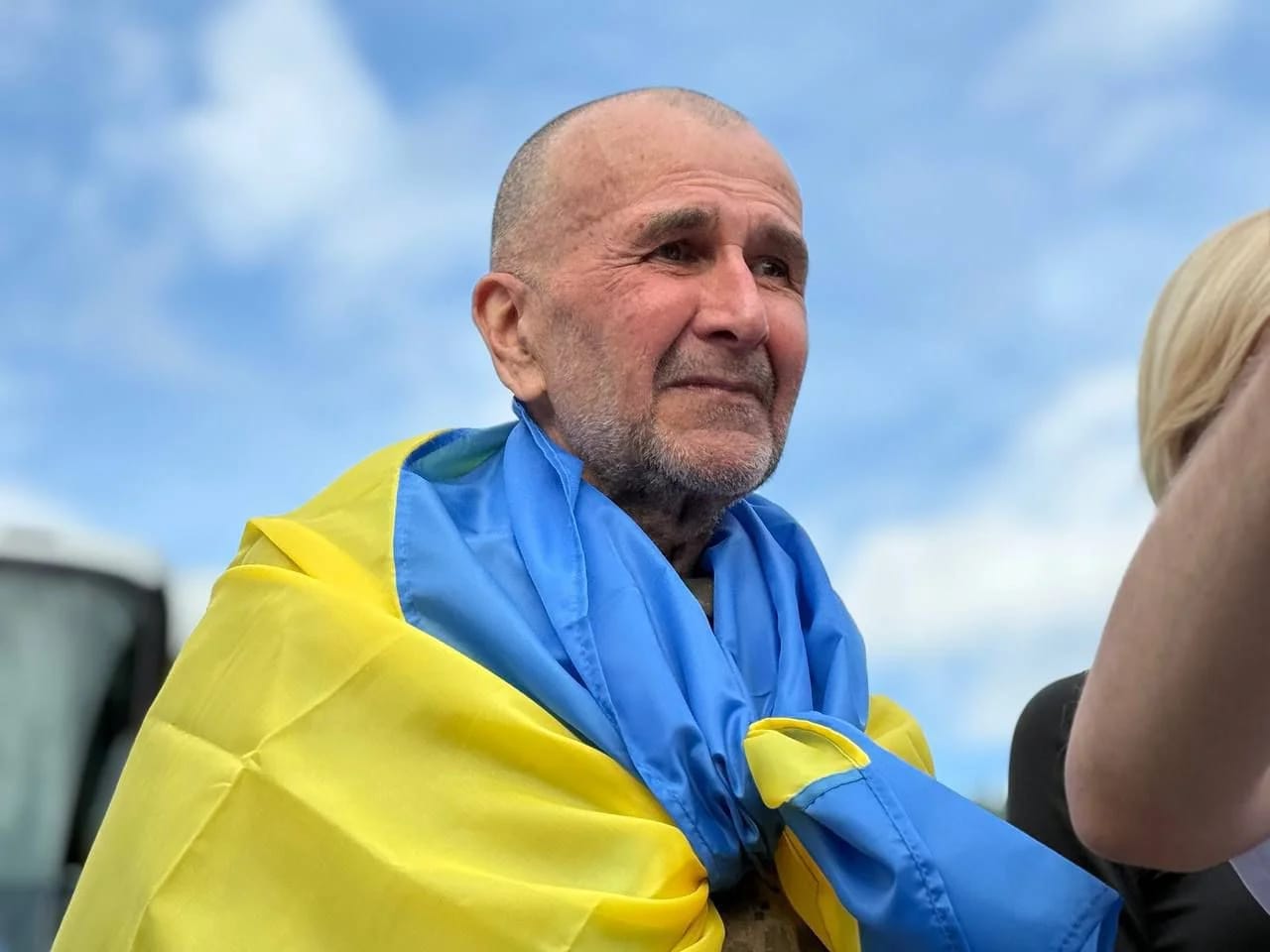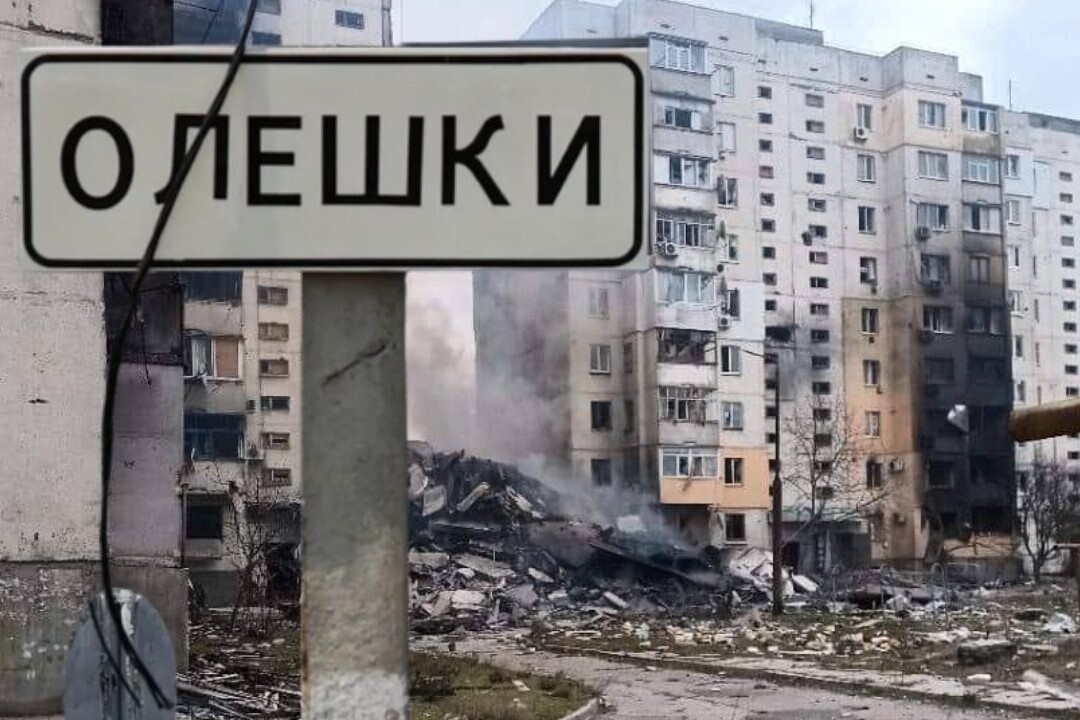
The largest humanitarian operation of the war in Ukraine — the evacuation of residents from Russian-occupied Oleshky — was completed on October 31. After safely returning to Ukrainian-controlled territory, several residents who evacuated from the besieged town told The Insider what they had endured over four and a half years of Russian occupation.
The condition of life in the Ukrainian town of Oleshky, located on the Russian-occupied eastern bank of the Dnipro River, had been precipitiously declining for months before a localized ceasefire was agreed to in late October. Residents were given the choice to evacuate, and could opt for buses that would take them either to Russia, or, ultimately, back to Ukraine. At the insistence of the Russian side, no official figures were released on the number of Oleshky residents who left the town, let alone of where they chose to relocate. However, journalists' estimates suggest that considerably more buses carrying residents to Ukraine left the town than those heading to Russia.
Anastasia
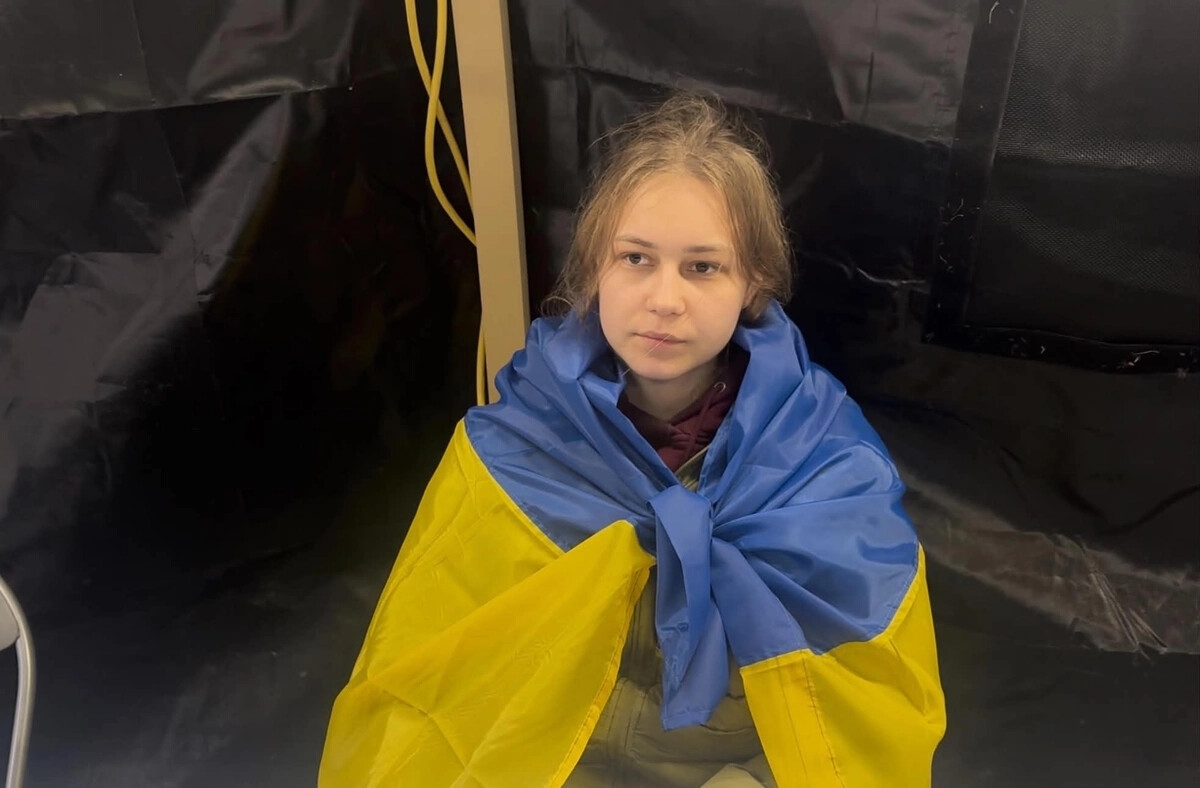
I was born in Oleshky and have spent all 17 years of my life here — before the war, throughout the siege, and until the evacuation.
On February 24, 2022, my mother woke me up and told me the war had started. By 5 or 6 a.m., Russian tanks and soldiers were already outside our fence. Then came the helicopters, planes, and shelling. We hid in the basement. We took in my grandmother, who lived in the town center, near the Dnipro. We spent the next 10 days in the basement without going outside. I was 13 at the time. We also hid the belongings of our neighbors who were serving in the military and burned their uniforms and documents. They stayed with us for a while before managing to leave.
After that, we lived at my grandmother's house, but later had to move to another house in Oleshky.
My grandfather helped build the Antonivskyi Bridge. We were even proud that the Russians hadn't managed to destroy it right away. My grandfather cried when Russian forces blew it up during their retreat.
Then came the destruction of the Kakhovka Dam. That was probably one of the most devastating events. We lost everything. Our house by the Dnipro was completely flooded. We couldn't get there until three months after the hydroelectric plant was blown up. Even then, we had to go by boat.
The power went out after the dam's destruction and was never restored. Food supplies then became scarce. There was no gas either. We had nothing. We cooked over open fires, setting up bricks, putting plates on top, and cooking on them.
We hardly ever left the house because it was dangerous outside. Russian soldiers could simply come in and check our documents. If they didn't like something, they could take you away — and that was it, you would disappear without a trace. Young women were especially vulnerable; they could simply be raped. A woman I knew tried to leave but was detained at a checkpoint. From what I heard, she was raped and then taken to Crimea and held in a basement. I don't know what happened after that. I knew her personally, and it was horrifying.
A year before the evacuation, even ambulances could no longer get through. Russian soldiers claimed the roads were mined. Whether that was true, nobody knew. But no one could leave, and everyone had to survive on whatever supplies they had stored. Those living in private houses could at least grow something. People in apartments had a much harder time. They were genuinely starving.
My mother, brother, grandmother, grandfather, and I lived mainly on buckwheat, rice, pasta, and vegetables. We had food reserves. We knew supplies could run short, so we had prepared for that.
Pensions and some other assistance were distributed at the beginning of the occupation, but later it became increasingly difficult to collect them. People had to travel to Skadovsk [80 kilometers away]. At first, people arranged powers of attorney to collect the money, but once the siege began, leaving was impossible. People survived as best they could. Those who had money could buy something, but prices sometimes included markups of as much as 1,000%.
Ukrainians dropped humanitarian aid from the air. Sometimes we managed to get some. We'd hear from other people that aid had been dropped, go to the site, and collect it.
The phone signal where we lived was very poor. Sometimes it took up to half an hour just to find a spot with reception.
A month ago, our neighbor was killed in an explosion. We went over immediately because another man who had been nearby and escaped unharmed ran straight to our house. Another neighbor, a woman about 70 who lived across the street, also disappeared. Her friend, another neighbor of ours, was worried. She said it wasn't like her to stay away, and she hadn't come by for two days. We climbed over the fence. The doors were open, the key was still in the lock, everything was in its place, but the woman was nowhere to be found.
I don't know how many people died, starved to death, or disappeared without a trace. There were dozens of people we knew personally; the number of people we didn't know could be in the hundreds or even thousands.
Before the siege, we used gasoline-powered generators. Later, those who had solar panels relied on them. Some people watched television, others listened to the radio. We occasionally watched Ukrainian television too. For a while, only Russian channels were broadcasting. We didn't watch them. I don't know who believed what they heard on Russian television and radio. We didn't discuss such things with strangers — it was dangerous.
Why didn't people leave earlier? Everyone had their own circumstances. Some had no money; others had relatives they couldn't abandon. Some were still clinging to their homes and belongings. I know that when the evacuation took place, some of those who supposedly chose Russia actually stayed in Skadovsk. We went to Ukraine because we are Ukrainian and were born in Ukraine.
We realized that this evacuation was our last chance to reach safety in Ukraine — not Russia, not the occupied territories, but Ukraine itself. That's why we decided to go.
Those who remain there need liberation and support. Something must be done to show them that they haven't been forgotten.
Anastasia's mother, who asked not to be named
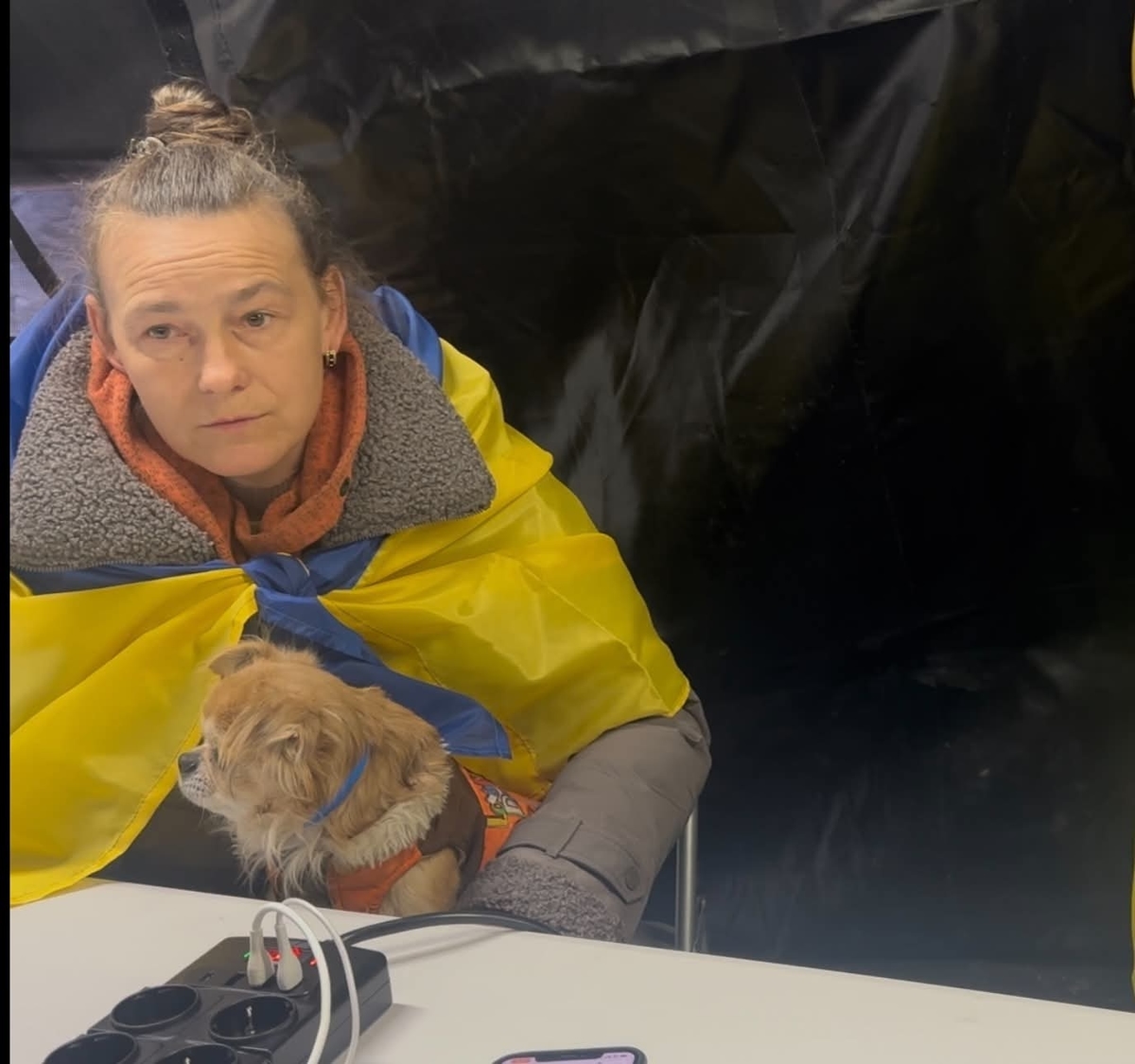
About a thousand people remain in Oleshky. People have also been unable to leave nearby settlements. Solontsi, Kardashynka, and Hola Prystan have not been demined, and people are still living there. Many are elderly or have limited mobility. There are children and young people, too. You understand, they're burying children there. I hid my own children, for example. I didn't want anyone to know they were there. Whenever anyone asked, I would say, “They're not here. They've left.”
Russian soldiers often asked us, “Why don't you leave?” They would brazenly barge into people's homes —armed — or simply kick the doors in. They'd search the houses or look for somewhere to stay — whatever they felt like doing.
Russian soldiers took my husband away back in 2022. To this day, we don't know what happened to him. He is considered missing. Without a Russian passport, you can't approach any government agency to ask questions or make inquiries. So I was unable to find out anything about him.
We tried to make inquiries back in 2022, but they hinted that we shouldn't, because it would end badly. I was told, “Do you want to end up like your husband, with your legs broken?” But we kept hoping he would come back, so we stayed in Oleshky for a long time.
I really want to thank Melania Trump because, honestly, I didn't believe the evacuation would happen. It was only when we heard that some vehicles were on their way that we realized the evacuation really was going ahead.
Vladimir Vasilyevich
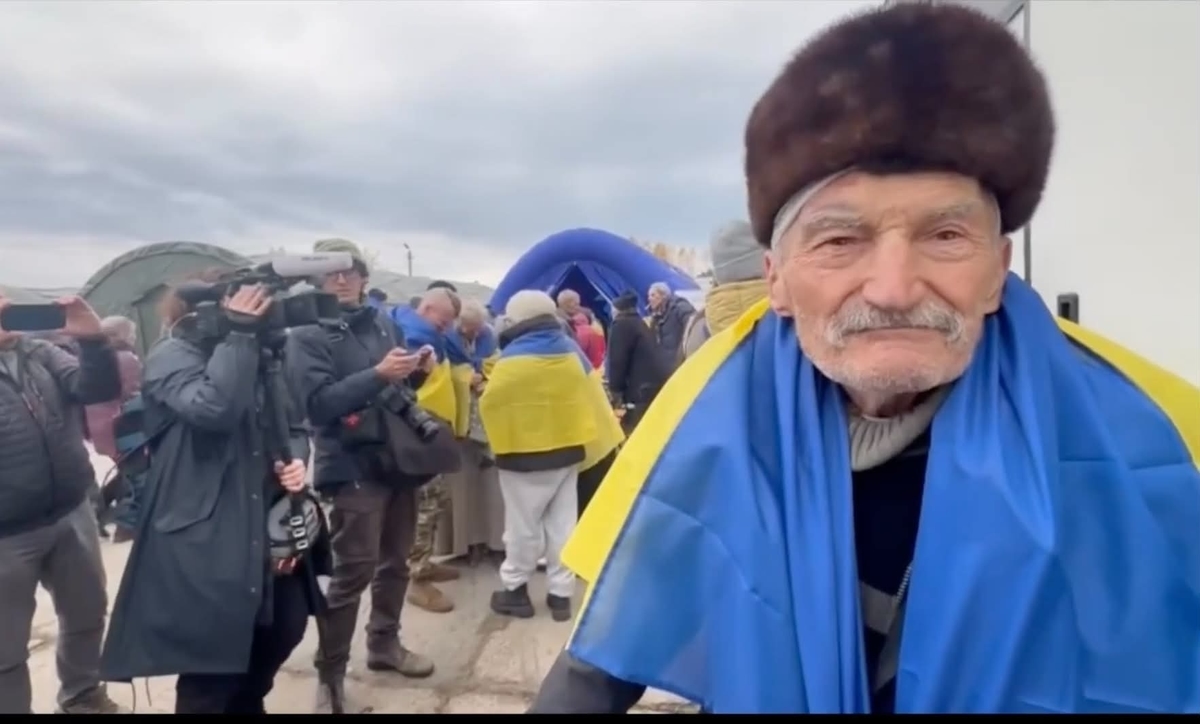
We're actually from Kherson, but we've lived in Oleshky for five years. We bought a house from my sister, and the war caught us there. The worst was when the blockade began. It was like Leningrad [during WWII]. During that time, I was hospitalized seven times. For the past three weeks, there hasn't been a single medicine available. Food was scarce, too. I lost 20 kilograms over the past year. I'll turn 80 in two weeks. I've become very weak, and one illness after another has taken hold.
The Russians distributed humanitarian aid until the final year. Previously, they gave out decent pasta, salt, and grains, but in the last year all we got was two small cans of condensed milk. Try living on that for a month. And that was only for pensioners. There was no bread at all throughout the last year.
Previously, they gave out decent pasta, salt, and grains, but in the last year all we got was two small cans of condensed milk. And that was only for pensioners. Try living on that for a month
Pension payments were stopped. For the second year running, we couldn't get to Skadovsk, the only place where pensions were paid out. The roads there were mined. Some people managed to reach Radensk by bicycle or on foot. Sometimes, men trying to get through were killed, although a man traveling with a woman might be allowed to pass. Many people died on the roads while trying to escape — or simply trying to get around.
We had no electricity or gas at all for the past three years. There was nowhere to buy gas cylinders either. I scraped together the money to buy solar panels and batteries. But they ran out of charge quickly, and they were very expensive.
Sometimes humanitarian aid was dropped by drones. Prices at our market were three to ten times higher than in cities outside the blockade.
On June 17, a shell hit the corner of our house. Fortunately, we weren't sleeping in that room. It damaged the bread maker and some canned food and shattered the window.
Tatyana Vasilyevna
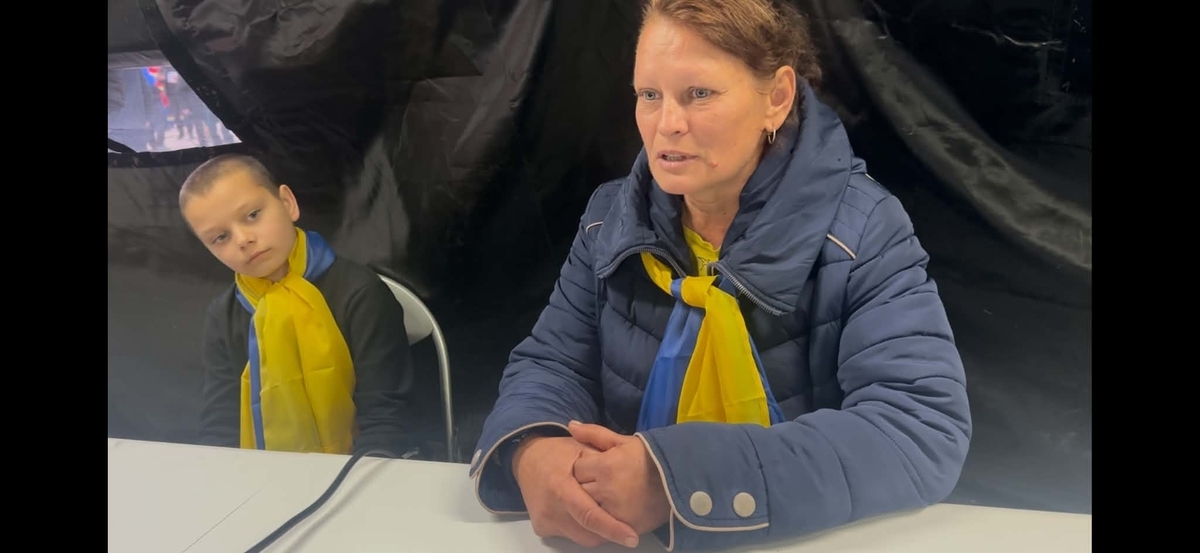
We hadn't left Oleshky before because we were afraid of filtration screening. Interrogations there last three to five hours, and people are sometimes driven to the point of having strokes. But now we've decided to take that risk. Here, we've been promised accommodation for three months while we adjust to our new circumstances.
When the war began, I didn't understand at first what was happening. I'm a seamstress, and I'd been working until four in the morning. I finished my work and heard explosions. Then came the APCs, KAMAZ trucks, and tanks. I watched it all and asked my husband, “Is this really a war, or are they shooting a movie?”
At first, when the Russians had just arrived, they did whatever they pleased, driving around in tanks. One soldier, holding an assault rifle, asked me why I wouldn't accept rubles. Initially, we flatly refused to sell our homegrown produce — potatoes, strawberries, and raspberries — for rubles. I thought Ukraine would soon return, so why would I need Russian money? But gradually, the hryvnia disappeared from circulation.
Russian soldiers were often high on drugs or drunk. They would shout, “We're soldiers, we're here to save you, and you have to help us.” They took our last food. I personally know of a family of acquaintances who sold food at the market and were shot dead over it. The soldiers came to take their food. The man objected, and they killed the whole family.
Russian soldiers were often high on drugs or stoned, and drunk. They would shout, “We're soldiers, we're here to save you, and you have to help us”
I don't know exactly how many people were beaten to death there. There's a store near our house. People were robbed, beaten, and sometimes beaten to death right outside it. It made me furious. When the soldiers came to the market, they were polite, laughing and smiling. But once they left, they started doing things that were simply beyond comprehension. You understand?
An acquaintance of ours, Yarik, was killed in a drone strike. Another man, Vova, worked at a pharmacy, selling medicines. They interrogated him so brutally at a checkpoint that he came home and died of a stroke. Our acquaintance Igor Bilous was also tortured and beaten because he had served in the [war in the Donbas]. They held him for a month, and he lost 30 kilograms. He said he had barely survived. He spent a month in the hospital, then another month going for dressing changes. They beat him particularly badly about the head.
In general, anyone out on the street after noon could simply be killed for no reason.
At the beginning of the year, vehicles were still bringing us food because the shops had already closed. But they started hitting mines, and after that nobody came anymore. The area was completely sealed off and mined. But we're Ukrainians — we're good at stocking up. Somehow, we managed to lay in enough food for six months.
An acquaintance of ours, Oleg, was recently traveling when he hit a mine and was killed instantly. Yuliana Latysheva was also killed in a mine explosion, while her twin sister Diana survived. Just a few days ago, Andrei hit a mine too. He survived but was injured.
If this is occupied territory, the Russians should be responsible for it, but they aren't. They don't care that the hospitals have no medicines. There was no electricity after the hydroelectric power plant was blown up. Everyone had to fend for themselves — some installed solar panels, others bought generators.
At the beginning of the war, Russian soldiers were well-groomed, but later, as their forces began taking losses, they started sending all sorts of riffraff and homeless people. We even had one walking around in a woman's coat and a pink hat. We used to joke that even our homeless people didn't dress like that. Basically, they just threw on whatever they found in bombed-out houses.
On the day of the evacuation, we arrived at the meeting point at 8 a.m., but didn't leave until 2 p.m. There were so many people. We stood in the rain and got soaked.
We were in the line of people heading to Ukraine when a Russian man asked me, “Why aren't you going to Russia?” He wasn't a soldier but one of the evacuation organizers. He approached other people, too. I cautiously replied, “Well, I don't know. Somehow, Ukraine feels closer to me.” He said, “Well, you should think it over. Russia is a big country, after all.”