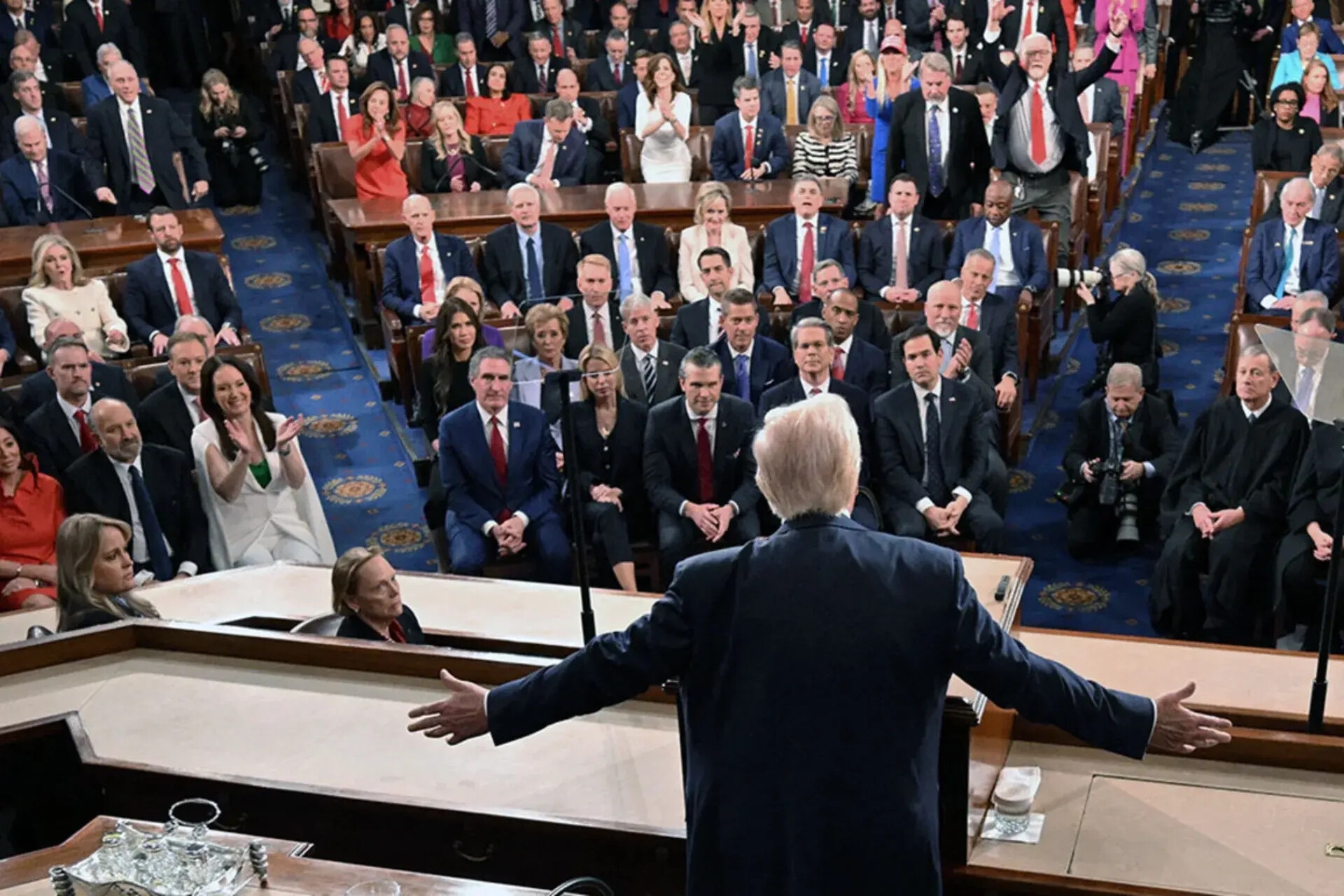
The Democrats have a good chance of winning majorities in both chambers of Congress this Tuesday, but even if they succeed, the country faces an uphill battle. Full control of Capitol Hill would allow the Democrats to pass legislation that the president must either sign or veto, and they could also put personal pressure on cabinet secretaries by summoning them to Senate hearings. The White House, however, has a formidable arsenal of obstruction tactics: the veto, bureaucratic delays, national security exceptions, and memorandums that turn direct congressional orders into mere recommendations. The power struggle between the two main branches of government is likely to get bogged down in the third — the courts, where the balance has historically tipped in favor of the Oval Office.
On Oct. 16, just two days before Senator Lindsey Graham’s “Sanctions from Hell” Act was due to take effect, Donald Trump suspended its implementation. Invoking a standard loophole — the president's authority to suspend sanctions when the executive deems it to be in the interests of national security to do so — Trump effectively hit the pause button on legislation that Congress had spent months working to pass. The fact that lawyers deemed the move illegal did not deter him.
The move was not unprecedented. In 2017–2018, the first Trump administration delayed implementation of the CAATSA sanctions against Russia, despite the law having been approved by majorities in both chambers of Congress. Still, Trump’s latest pro-Kremlin move has heightened tensions between the branches of government ahead of America's mid-term elections, and tens of millions of Democratic voters are hoping their ballots will enable Congress to exert direct influence over the president’s actions for the remainder of his final term in the Oval Office.
One of the main points of contention is military support for Ukraine and economic pressure on Moscow, but the struggle over the balance of powers also extends to other issues: ties with the EU and NATO, arms supplies to Taiwan, and domestic policy issues including security along the southern border, immigration rules, and changes to tax legislation. But will a Democratic majority in Congress be able to impose its will on the president across all of these fronts? Probably not.
Can a Democratic majority in Congress impose its will on the president? Probably not
The legislative and executive branches of the United States government are independent and often at odds. Congress controls the federal budget and passes laws, but the legislature has no administrative machinery of its own to enforce them. Capitol Hill cannot directly manage the Department of Defense, Customs and Border Protection, the Internal Revenue Service, or the diplomatic corps, as these agencies fall under the purview of the White House.
As a result of this division of powers, legislation passed by Congress amounts to little more than a blueprint. Whether it involves allocating funds for the Ukrainian Armed Forces, financing additional border patrols in Texas, or regulating tariffs, implementation requires the cooperation of the executive branch. Even when Congress manages to override a presidential veto, the law is handed over to agencies whose heads — loyal to the White House — have the legal and bureaucratic means to delay, revise, or limit its implementation.
Trump won't be removed from office
Congress’s dealings with the U.S. president are often associated with the threat of impeachment. In practice, however, impeachment has become more of a symbolic weapon than a genuine political threat. Once an opposition party secures a simple majority — 218 seats in the House of Representatives — it can initiate impeachment proceedings against the president and members of his cabinet. Actually removing them from office, however, is virtually impossible.
Over the entire course of the nation's history, the House of Representatives has impeached presidents four times: Andrew Johnson in 1868, Bill Clinton in 1998, and Donald Trump in 2019 and 2021. Cabinet officials have faced impeachment only twice: Secretary of War William Belknap in 1876 and Secretary of Homeland Security Alejandro Mayorkas in 2024. None of these proceedings resulted in removal from office, and that precedent is extremely unlikely to be broken anytime in the foreseeable future given the fact that removing an official from office requires 67 votes in the Senate. Even under the rosiest of election scenarios, the Democrats are not expected to top 55 seats — and reaching that total would involve flipping control in states like Texas (likely) and South Carolina (unlikely but still possible).
Any impeachment proceeding that fails to secure a two-thirds vote from the senators present is guaranteed to end in acquittal
In practice, the limitations of impeachment are offset by Congress's strongest instrument of leverate: the so-called “power of the purse.” Congress is responsible for assembling packages of financial and military assistance for allies and mandating cuts the budgets of federal agencies. The president must spend appropriated funds strictly on the programs for which they were designated and cannot unilaterally freeze them or redirect them to serve his own political ends. Under this system, the real battle between the branches of government is fought behind closed doors in congressional appropriations committees.
When the White House resorts to bureaucratic manoeuvres to delay or sabotage programs it opposes, Congress can respond with “financial strangulation,” in which lawmakers try to tie the administration's hands by passing legislation that spells out in minute detail exactly what the government may spend money on, within what time frame, and under what rules. Yet even then, a president acting in bad faith and determined to get his way has a range of legal and semi-legal tools that can be used to indefinitely delay the implementation of congressional directives.
The result is a perpetual tug-of-war: Congress draws up increasingly detailed rules, while White House lawyers and financial officials look for ways around them. Both sides have leverage, of course, but the president tends to have more of it.
What a simple majority can do
By exercising Congress’s exclusive control over federal spending, a simple majority in the House of Representatives can earmark billions of budget dollars for weapons purchases for the Ukrainian military. Congress can also pass legislation barring the White House from unilaterally lifting sanctions on Russian banks, its energy sector, or the shadow fleet. With control over both chambers, a Democratic majority can prevent the White House from redirecting such funds towards its own domestic policy priorities (for example, building a wall along the U.S.-Mexico border).
However, given that the vast majority of bills are subject to the threat of a Senate filibuster — which requires 60 votes to break — Republicans will retain some leverage even in the likely event that they lose their majorities in both chambers.
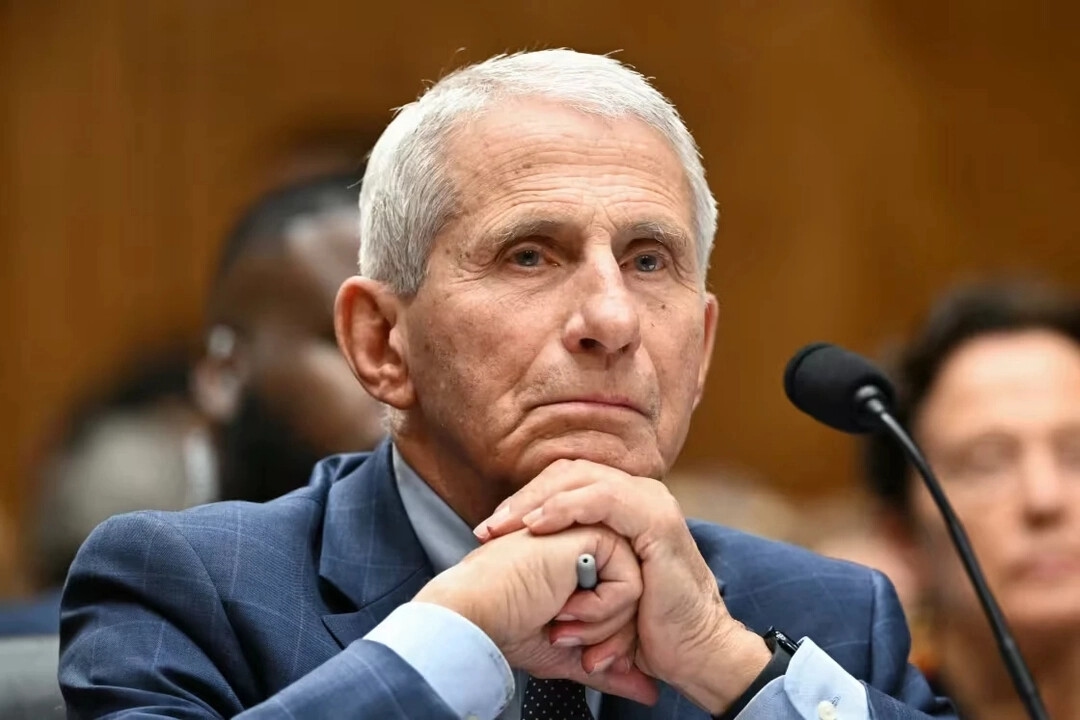
Beyond controlling federal spending, a congressional majority gains access to investigative and personnel powers. Chairmanships of relevant committees give lawmakers quasi-judicial authority, chief among them the power to issue subpoenas. When a committee orders senior State Department or Treasury officials to appear at hearings or produce confidential records, the officials in question face legal consequences in the event that they ignore the demand.
Refusing to testify or to turn over correspondence can constitute a criminal offense — contempt of Congress, which is theoretically punishable by up to a year in prison. Meanwhile, 51 votes in the Senate give the majority the power to block nominees it considers unsuitable or excessively radical for positions such as federal judgeships, deputy cabinet posts, and ambassadorships.
Still, even if a sweeping bill providing military aid for Kyiv and laying out restrictions on the Russian economy were to pass both chambers, the president would still have ample opportunity to sabotage its provisions.
The presidential veto
If the president firmly opposes a bill, he can exercise his veto power and send it back to Capitol Hill. The Constitution gives Congress a way to overcome a veto, but doing so requires a two-thirds majority in both chambers. Given the deep partisan divisions, securing such a consensus is virtually impossible, so a presidential veto usually kills an initiative outright.
Lawmakers, of course, are aware of this mathematical obstacle, and they have developed another strategy for overcoming presidential resistance. Controversial initiatives, including military aid packages for allies and new sanctions regimes, are deliberately incorporated into major pieces of legislation — such as the annual defense budget or a bill funding the federal government.
These are known as must-pass bills, and since the president has no line-item veto power, he must either sign the bill with its unwelcome geopolitical provisions intact or else refuse to approve the entire federal budget. The latter option inevitably triggers a government shutdown — forcing federal agencies to suspend operations, closing national parks, and halting pay to hundreds of thousands of U.S. military personnel, border agents, and federal employees.
The president has no line-item veto and cannot strike individual provisions he opposes
The prospect of such a serious domestic crisis and the accompanying political fallout usually forces the president to back down and sign the legislation. But given Trump's confrontational style and the Democrats' emphasis on their responsibility to the country, it is likely that they, rather than the president, will end up being the party that makes the most concessions.
Alongside the threat of a government shutdown, Congress has another powerful instrument of financial pressure: a vote to raise the federal debt ceiling. Refusing to raise the borrowing limit threatens to trigger a technical U.S. default, a collapse in the Treasury bond market, and panic on Wall Street. By attaching military aid for Ukraine or economic sanctions against Russia to a debt-ceiling bill, Democrats could try to corner the White House, betting that Trump would not risk sending the stock market into a tailspin.
But the executive branch has a range of ways to circumvent even this ultimatum. As a first step, the Treasury Department can resort to “extraordinary measures,” shifting funds between government accounts and buying the White House up to six months of breathing room without congressional involvement. Once those measures are exhausted, the White House could order the Treasury Department to prioritize payments at its discretion — fore example, by continuing to pay interest to Treasury bondholders out of current tax revenues while freezing domestic social programs and shifting the blame for the crisis onto uncooperative lawmakers.
Ultimately, the winner will be whichever side has the nerve to inflict real economic damage on the country in pursuit of its policy objectives. At present, there is little doubt that Trump is the most cynical player on the American political stage.
How the administration can sabotage laws
Even when a bill successfully passes both chambers of Congress, the executive branch has a formidable arsenal of tools to block its implementation without resorting to a presidential veto. The simplest is to invoke national security exemptions.
In most sanctions and defense legislation, lawmakers traditionally leave the president a loophole allowing him to suspend certain provisions if they are deemed to threaten U.S. strategic interests. This is precisely the mechanism Trump used in October 2026 to the block energy sanctions against Russia contained in the “Sanctions from Hell” bill. Using the same rationale, the White House could halt the transfer of missile systems already approved for delivery to Kyiv byciting critically depleted Pentagon stockpiles and the resulting threat to U.S. defense capabilities.
If a new law contains no such loopholes, the administration can resort to outright violations of existing legislation (specifically of the Impoundment Control Act of 1974, which prohibits the White House from unilaterally withholding appropriated funds and requires the executive branch to spend them strictly for the purposes authorized by Congress). The president could deliberately ignore this requirement and order funding for Ukraine to be frozen, temporarily blocking assistance while the dispute moves through potentially lengthy court proceedings.
An equally effective tactic involves good old-fashioned bureaucratic red tape. Implementation of a law can become bogged down in endless interagency reviews and additional audits. Historical precedents include the freeze on military aid to Ukraine in 2018–2019, ostensibly pending a review of corruption in the country. At the time, the State Department and Treasury spent months delaying the imposition of mandatory anti-Russian sanctions under the CAATSA law.
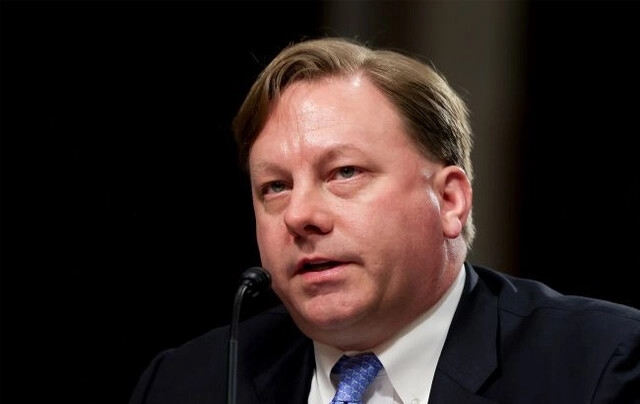
The main instrument for orchestrating such delays is the White House Office of Management and Budget (OMB). Little known to the general public, this agency acts as the president's chief accountant. Not a single dollar in military funding can be released by the Treasury without OMB officials signing off on it. In 2019, it was OMB Deputy Director Michael Duffey who, acting on instructions from the Oval Office, marked the box labeled “freeze,” halting military deliveries authorized by Congress with a single stroke of his pen.
Even when financial and bureaucratic obstacles have been overcome, the president still has levers of pressure at the logistical and diplomatic levels. Acting as commander-in-chief, he can order the Department of Defense to suspend training programs for foreign military personnel or delay the issuance of export licenses required for arms shipments abroad. As a final obstacle, the Pentagon can cite a lack of available transport aircraft to move military equipment to Europe.
These are not the only tools the White House has at its disposal. When Congress sends the president a budget packed with various restrictions, he can formally sign it, avoiding a government shutdown, while simultaneously issuing an official memorandum to his administration declaring that specific provisions of the law — such as a requirement to deliver weapons to Kyiv within 30 days — unconstitutionally encroach upon his exclusive powers as commander-in-chief. George W. Bush used just such a maneuver to circumvent congressional restrictions in 2005 after Congress attached the McCain Amendment — prohibiting torture and cruel treatment of detainees held at U.S. military bases — to the must-pass defense budget. In effect, Bush told his subordinates that if national security required harsh interrogation methods, Congress's blanket prohibition should be treated as merely advisory.
In 2017, Congress passed the previously mentioned CAATSA, which imposed mandatory sanctions on Russia and restricted the White House's ability to lift them without congressional approval. Facing the prospect of a veto override, Trump signed the legislation but immediately issued a statement declaring several of its provisions blatantly unconstitutional. He explicitly argued that Congress's attempts to dictate the timing of diplomatic decisions encroached on the president's exclusive authority, thereby giving the Treasury and State Departments legal cover to delay the implementation of sanctions past the deadlines set by lawmakers.
Forcing administration officials to cooperate
Although Congress has virtually no chance of successfully prosecuting the U.S. president in the event that he refuses their subpoenas, but Congress has several ways to punish officials for refusing to testify — and the president's pardon power, which he would undoubtedly seek to invoke, does not cover all of them.
The most common option is conventional criminal prosecution. When an official refuses to respond to a subpoena or to produce documents, Congress votes to hold them in contempt and refers the matter to the Department of Justice for prosecution.
This, however, is where presidential protection works most effectively. First, Prosecutors are subordinate to the president, and historically the Justice Department has simply refused to bring charges against sitting administration officials, citing the separation of powers. Second, even if the case reaches court, contempt of Congress is a federal criminal offense, meaning the president has full constitutional authority to pardon — even preemptively, before a verdict is handed down.
To circumvent this obstacle, Congress can file a civil lawsuit. Rather than asking the Justice Department to send an official to prison, lawmakers take the matter to federal court themselves. If a judge hears the case and issues an order compelling the official to produce the documents, continued defiance can then be treated as civil contempt, an offense that the Supreme Court has ruled the president has no power to pardon.
In practice, however, no federal judge has ever jailed a sitting cabinet secretary over an institutional dispute between Congress and the White House. Instead, invoking the separation of powers, courts have limited themselves to fines or declaratory rulings, avoiding the physical detention of senior government officials.
In theory, since presidential pardons offer no protection against charges of violating state laws, Congress can refer its investigative findings to state attorneys general. Lawmakers can also summon senior executives from banks, trading firms, and insurance companies involved in the logistics of Russian diesel shipments to testify, threatening to revoke their licenses. But the White House can counter these measures, too, by blocking cooperation between government agencies and congressional committees, by invoking executive privilege, by shifting investigations to Justice Department agencies loyal to the president, and by granting confidential security assurances or special exemptions to private entities involved in evading sanctions.
There is also a more radical means of applying pressure, one invoked only during acute political crises: Congress's inherent contempt power. In the early days of the American republic, Congress would send its own sergeant-at-arms to physically arrest a defiant cabinet official, bring them to the Capitol, and lock them in a designated room. Because this is not a criminal punishment but an internal congressional enforcement mechanism, the president's pardon power does not apply at all.
Congress sent its own sergeant-at-arms to physically arrest a defiant cabinet official, bring them to the Capitol, and lock them in a designated room
Congress has not exercised its inherent contempt power to make arrests since the 1930s, and today, if an armed House sergeant-at-arms attempted to arrest the secretary of defense or secretary of state, he would inevitably encounter the federal agents assigned to protect them. Such an attempt would trigger a direct physical confrontation between the security forces of the two branches of government, precipitating an unprecedented constitutional crisis.
Thus, although members of the president’s cabinet enjoy no absolute immunity, the capacity of Congress to punish them for non-compliance with the law is limited. Additionally, the Democrats are unlikely to have the nerve to take such unprecedented steps, whereas few doubt Trump’s willingness to disregard every conceivable norm and provoke conflicts on an unprecedented scale.
An all-out Senate blockade
The Senate has another powerful lever: it alone has the authority to confirm appointments to all key federal positions, from cabinet secretaries and agency heads to ambassadors, federal judges, and senior military officers. However, it has little power over officials already confirmed by a previous Senate, as removing them through impeachment would require the same seemingly unattainable 67 votes.
Still, in the event of vacacancies, the president would have to resort to legal loopholes when faced with a hostile Senate. One option is to appoint “acting” officials, whose terms are limited by law but can potentially be extended through a range of controversial maneuvers. Trump is likely to rely on this approach, knowing that legal challenges to his actions could take months or even years to resolve via the courts.
The Senate has another weapon at its disposal: refusing to confirm any of the president’s nominees. Every administration needs Senate confirmation for thousands of appointments, ranging from ambassadors and federal judges to deputy secretaries overseeing logistics and finance. Under the system envisioned by the Founding Fathers, a Senate that refuses to hold confirmation hearings can effectively paralyze the machinery of government. The assumption is that a president cannot run a trillion-dollar economy with just a handful of advisers and will eventually have to trade the unfreezing of the budget for confirmation of his nominees.
The threat that courts might invalidate decisions made by officials whose appointments had not been confirmed by the Senate sometimes prompts the president’s staff to abandon straightforward reliance on “acting” appointments and devise elaborate workarounds involving fictitious positions, delegated signing authority, and retroactive ratification of documents.
When judges began overturning decisions made by unlawfully appointed Department of Homeland Security (DHS) officials in 2020, the department began formally delegating signing authority to lower-level employees. The president’s appointee continued to make the policy decisions, but the documents bore the signature of a duly authorized official whose authority the courts did not question. Meanwhile, White House lawyers began inventing positions for loyalists that had no basis in law.
For example, in 2019, Ken Cuccinelli did not have the required tenure to be legally appointed acting deputy secretary. However, to circumvent the restrictions, officials created a fictitious position for him: “Senior Official Performing the Duties of the Deputy Secretary.” This allowed him to sidestep the time limits imposed by the Federal Vacancies Reform Act (FVRA) and oversee immigration policy while the courts spent months examining the legality of the arrangement.
In some cases involving key departments, the administration exploits conflicts between federal statutes. During a leadership crisis at the Department of Justice in 2018, Trump appointed Matthew Whitaker acting attorney general under the general provisions of the FVRA. The opposition and several states filed lawsuits arguing that, under the department’s own governing statute, the position should instead go to Rod Rosenstein, the Senate-confirmed deputy attorney general. While the courts spent months resolving the conflict, Whitaker remained in charge of the department.

If a court ultimately rules that an appointment was unlawful and invalidates an official’s directives, the White House resorts to retroactive ratification. In September 2020, a court ruled that Chad Wolf had illegally headed the Department of Homeland Security and struck down his directives. In response, the administration briefly installed Peter Gaynor, whose place in the official line of succession was beyond question, as acting head of the department. He signed a memorandum formally ratifying all of Wolf’s previous directives, then immediately delegated his authority back to Wolf. It took the court several months to resolve the issue, and by then, Trump had found new ways to push through his appointments.
At the highest judicial level, the administration’s main weapon has been emergency applications to the Supreme Court, handled through what is known as the “shadow docket.” When federal judges issue preliminary injunctions blocking presidential orders on procedural grounds, the White House turns directly to the Supreme Court, seeking to lift those injunctions temporarily to allow its policies to take effect while lengthy appeals proceed.
The scale of this practice has changed dramatically in recent years. Under George W. Bush and Barack Obama, the Justice Department sought emergency stays of lower-court rulings a total of just eight times over the course of 16 years. The Trump administration, by contrast, made more than 40 such applications, and in 28 cases, the Supreme Court’s conservative majority sided with the administration, either fully or in part. This allowed Trump to implement controversial policies on immigration restrictions, government spending, and the rollback of environmental regulations, despite lower courts having blocked them.
A war of all against all
The presidential veto is likely to become Trump’s default response to congressional legislation. He is prepared to reject any Democratic initiative that runs counter to his political vision, shifting the blame for a possible government shutdown or stock market panic onto lawmakers. However, Trump’s uncompromising approach often alienates moderate Republicans. Bipartisan coalitions have already emerged in Congress, including Republicans such as Senator Tom Tillis and Representative Don Bacon, who openly criticize concessions to Russia and call for renewed support for U.S. allies.
The most optimistic scenario for Ukraine is that Democrats will persuade enough Republicans to support aid to Kyiv to enable them to put effective pressure on Trump. After all, the president’s approval ratings are low, and his political career is entering its lame duck phase. In 2028, the Republican Party will already have to answer plenty of uncomfortable questions from voters as the Trump era draws to a close, and removing the Ukraine issue from that list might appeal to several Republican lawmakers.
The most optimistic scenario for Ukraine is that Democrats will persuade enough Republicans to support aid to Kyiv
In particular, Senators and representatives from politically competitive states and districts will increasingly join Democrats in voting to override presidential vetoes on issues of national security, tariffs, and the preservation of alliances (similar to what happened in 2017, when Congress passed the CAATSA sanctions law with 98 votes in the Senate and 419 in the House).
Over the next two years, the confrontation between the legislative and executive branches is likely to shift increasingly to the courts. By forcing lawmakers to seek judicial remedies, the president will move the battle onto terrain where the judiciary, particularly the Supreme Court, leans conservative. For Ukraine and America’s other international partners, this means that billions of dollars in approved aid could remain blocked for years while the two branches of government fight out their differences. The advantage in this struggle will go to whoever has the nerve, audacity, and cynicism to press ahead regardless of the consequences. As the events of the past two years have shown, that is Donald Trump.