Scientists still have no convincing answer as to whether medicine can substantially extend human life, but enormous sums are being invested in research on the subject: in March 2026 alone, the U.S. government agency ARPA-H allocated $144 million to developing biomarkers of aging and testing drugs to slow it. According to the WHO, by 2050 the number of people over 60 worldwide will double to 2.1 billion, while the number over 80 will triple to 426 million. Alongside extending lifespan, this makes extending youth – that is, increasing the healthy and productive years of life – an increasingly urgent goal. So far, however, the most advanced anti-aging treatments are available only to the very wealthy – and they almost always prove to be quackery.
- 1.From Brown-Séquard to Altos Labs
- 2.A lifelong experiment
- 3.A serious attempt: epigenetic clocks
- 4.Why the U.S. does not approve anti-aging drugs
- 5.Candidate No. 1
- 6.Things are finally moving
- 7.The bigger the budget, the fewer the promises
- 8.The offshore biohacking bonanza
- 9.Putin’s modest anti-aging program
- 10.130 years later
For millennia, people have long tried to restore their youth and extend their lives. Gilgamesh sought plants of rejuvenation. China’s first emperor, Qin Shi Huang, took mercury. Six other Chinese rulers died from an “elixir of immortality.” And one of them unsuccessfully drank menstrual blood. But attempts to extend youth through scientific means began relatively recently – in the late 19th century.
From Brown-Séquard to Altos Labs
1889. Seventy-two-year-old French physiologist Charles-Édouard Brown-Séquard injected himself with an extract from the testicles of dogs and guinea pigs and said he had experienced a “return of strength and increased capacity for work.” A century later, calculations showed that the dose of testosterone in the extract was roughly four orders of magnitude below what was required, meaning any result was merely a function of the placebo effect.
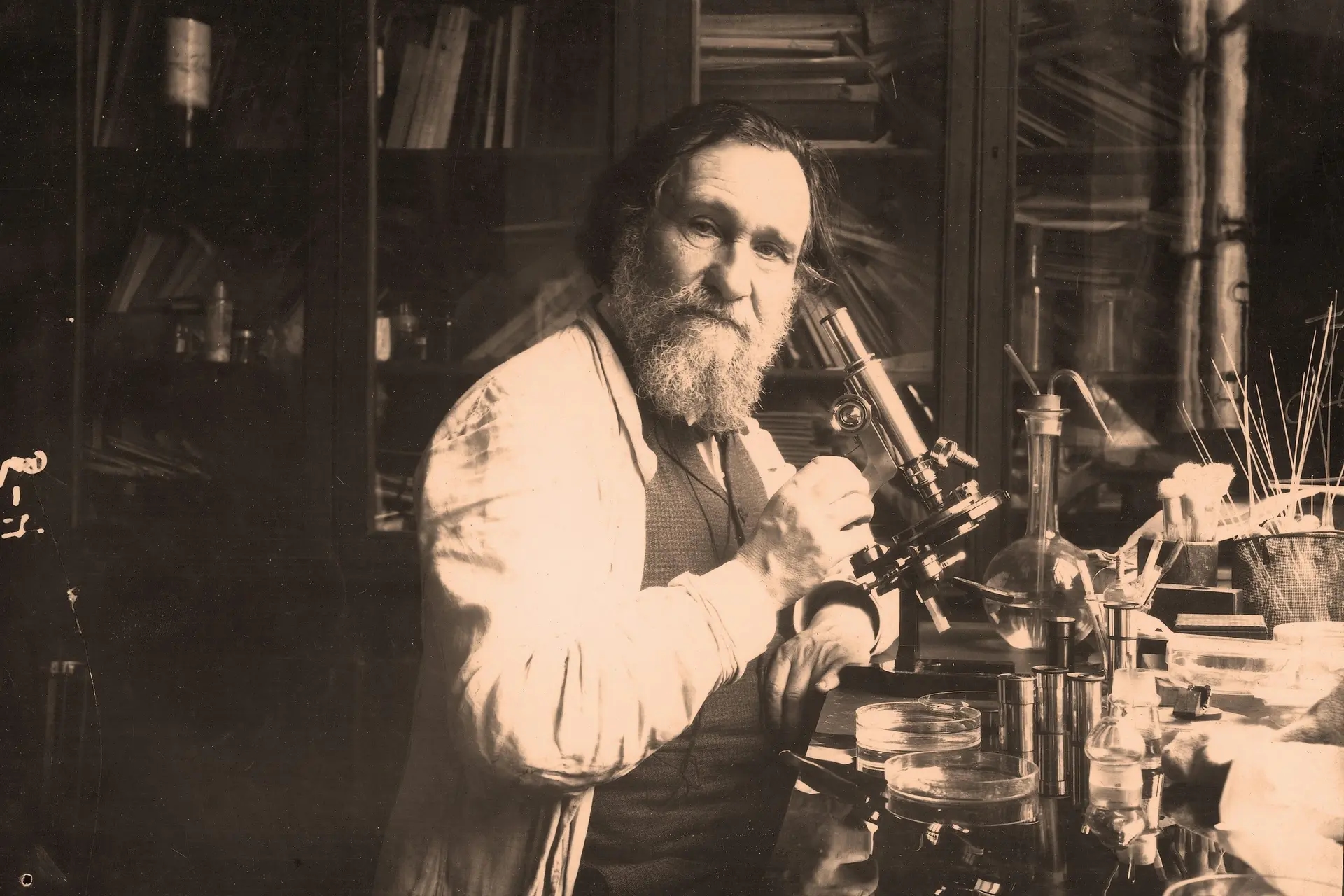
1903–1907. Russian biologist Ilya Mechnikov founded scientific gerontology and the doctrine of orthobiosis (a complete and happy life cycle ending in a peaceful natural death). In 1904, he delivered a lecture in Paris titled “Old Age,” linking aging to putrefactive bacteria in the large intestine while attributing Bulgarian longevity to the consumption of sour milk.
A year later, Bulgarian microbiologist Stamen Grigorov isolated from Bulgarian yogurt the bacterium that would be named Lactobacillus bulgaricus. Mechnikov embraced the discovery, consumed a pure culture of the bacterium himself for the rest of his life, and set out his sour-milk hypothesis in his 1907 Studies of Optimism. The hypothesis quickly became a commercial proposition as sellers of fermented dairy products promised customers longevity long before there was any evidence to support the claim.
1912–1937. German physiologist Eugen Steinach began performing vasectomies on elderly men, believing the procedure would increase the production of sex hormones. More than a hundred Viennese doctors and professors underwent it. Sigmund Freud opted for the procedure at 67, while William Butler Yeats did so at 69 and claimed to have experienced a “second puberty,” prompting the press to dub him an “old man with glands.” But this, too, proved to be a placebo effect.
1920. French surgeon Serge Voronoff performed the first transplantation of chimpanzee testicular tissue into a human, and by the early 1930s, more than 500 men in France and thousands worldwide had undergone this form of “rejuvenation.” But by 1935 it had become clear that the transplanted tissue was rejected and that the reported improvements were due to autosuggestion.
1926–1928. Russian physician Alexander Bogdanov founded the world’s first blood transfusion institute in Moscow and experimented on himself with blood exchanges involving other people, seeing them as a means of “physiological collectivism.” In 1928, the experiments ended with his death – the result of one of the exchange transfusions.
1930–1946. Ukrainian pathophysiologist Alexander Bogomolets linked longevity to the condition of connective tissue and won government backing to produce antireticular cytotoxic serum (a preparation intended to stimulate wound healing and slow aging). He was awarded the Stalin Prize in 1941 and the title of Hero of Labor in 1944. In 1946, Bogomolets died at 65, and four years later his doctrine was declared unscientific.
2013–2026. Google founded Calico to study the biology of aging, while Yuri Milner’s Altos Labs raised $3 billion for life-extension research. In the U.S., the PROSPR program support efforts to extend people’s lifespan and healthspan.
A lifelong experiment
In 2020, the WHO counted one billion people over 60 worldwide. By 2030, it projects, that number will reach 1.4 billion, and by 2050, 2.1 billion. Over the same period, the number of people over 80 will triple to 426 million.
Life-extension research, however, still faces several natural obstacles. To prove that a technology has actually added years to someone’s life, it is necessary to wait for those years to pass, meaning trials can take decades, with control groups numbering in the tens of thousands aging alongside the study groups. An experiment capable of demonstrating an effect can outlive both its investor and its principal investigator.
To prove that a technology has actually added years to someone’s life, you have to wait for those years to pass
It is hardly surprising, then, that of the three measures of longevity – how long someone lives, how long they remain in good health, and how much their lab markers change – the market is most interested in the third. This creates demand for markers that change within months and can provide a rough estimate of future effects.
Along with that demand comes the temptation to pass off a surrogate marker as a real result.
A serious attempt: epigenetic clocks
Researchers are constantly working on surrogate measures that reliably reflect biological aging. So far, the most successful example is the epigenetic clock. The model was trained to estimate a person’s age from chemical markers on their DNA that change predictably over time.
The first such clocks were published in 2013: a universal clock, developed by U.S. researcher Steve Horvath and designed to work with data from any tissue in the body, and one developed by fellow American Gregory Hannum using data from blood cells. In the second generation, PhenoAge (2018) and GrimAge (2019), the model learned to predict mortality and disease rather than simply chronological age. The third generation, the DunedinPACE epigenetic clock (2022), measures the rate of biological aging: the number of biological years a person ages in a single calendar year.
There are three main criticisms of epigenetic clocks. Early versions showed considerable variability when the same sample was analyzed again: results depended on the reagent batch and the laboratory, so the same test tube could produce age estimates differing by several years. In 2022, the clocks were recalibrated, reducing that variability.
The second criticism is that it is impossible to predict how long any particular person will live. Mortality is higher among people with faster-running clocks than among those with slower ones. But this does not work as a practical prediction for any one person, because lifespan is shaped by genetics, past illnesses, lifestyle, and chance, while the model is trained on an average population pattern.
Lifespan is shaped by genetics, past illnesses, lifestyle and chance, while the model is trained on an average population pattern
The third criticism focuses on the divergence between different clock models. Horvath’s clock may show the same person as younger than their chronological age, while GrimAge may show them as older. Which is closer to the truth, and what accounts for the discrepancy, remain subjects of debate.
All of these are examples of a broader problem that can be illustrated by one story. Patients who have suffered a heart attack often develop irregular heart rhythms – extra beats visible on an ECG. In the 1980s, drugs emerged that eliminated these irregularities, making the ECG look more normal. But when a trial was completed, the drug group turned out to have twice as many deaths as the placebo group.
A measure used in an experiment becomes evidence only after it has been validated against actual outcomes – and epigenetic clocks have yet to reach that point.
Why the U.S. does not approve anti-aging drugs
The U.S. is the world’s largest market in the field of anti-aging biotech. In 2024, it was home to 57% of the world’s longevity companies and accounted for 84% of all venture investment in the sector.
But the U.S. drug-approval system requires a treatment to be indicated for a specific disease on the FDA’s list – diabetes, hypertension, dementia, and so on. Aging is not on the list and is mentioned only as a risk factor for actual illnesses, meaning a company developing a molecule that targets the mechanisms of aging has to choose a disease on the FDA’s list and prove the drug works against it. As a result, the anti-aging industry talks about defeating aging, while the regulatory filings for drugs developed for that purpose list conditions such as “heart failure” or “liver fibrosis.”
To resolve this contradiction, scientists proposed the TAME trial, which the FDA approved 15 years ago. Three thousand people aged 65–79 will be divided into two groups and followed for six years at 14 research centers. One group will take metformin, the other a placebo.
It might seem like a routine study, but instead of measuring a single disease, the researchers propose tracking several outcomes at once: heart attacks and strokes, cancer, dementia, and death. They hope that slowing aging will show up across several diseases at once, and if successful, the study would give regulators a framework for evaluating such drugs. Unfortunately, its launch is still delayed, as the organizers are still raising funds.
Meanwhile, life-extension drugs for dogs are already being approved in the U.S. Loyal is developing LOY-002, a drug for dogs over 10, with its indication stated explicitly: life extension. In February 2025, the FDA’s veterinary division agreed that the data submitted were sufficient to support such a claim, and a second drug targeting the same goal has also received FDA support.
The difference lies in the more flexible requirements: unlike human drugs, veterinary drugs can receive conditional approval while developers continue to collect data. And a dog’s lifespan fits within a timeframe that is foreseeable for both the company and its investors.
Candidate No. 1
The first approved geroprotector for humans may turn out to be a drug already sitting on pharmacy shelves. At a conference on aging in Copenhagen in the summer of 2025, executives from Novo Nordisk and Eli Lilly suggested an idea later echoed in an editorial in Nature Biotechnology: GLP-1 receptor agonists – semaglutide and related drugs – could well become the first longevity drugs.
In patients with obesity and diabetes, these drugs reduce overall mortality and cardiovascular events, with only about one-third of the cardiovascular benefit being explained by weight loss. The rest is attributed to anti-inflammatory and other mechanisms – effects that act throughout the body.
In a study of 108 participants, semaglutide slowed the rate of aging measured by DunedinPACE by about 9%. The author, however, makes an important qualification: slowing individual biological processes and rejuvenating a person are two entirely different things. “We’re not saying that semaglutide reverses aging or makes people younger. We’re seeing a signal that it may slow some biological processes of aging,” cautions Michael Corley, the study’s lead author.
Things are finally moving
In the spring of 2026, the U.S. agency ARPA-H awarded up to $144 million under its PROSPR program to seven recipients: four university teams and three biotech companies.
The interventions being tested are unremarkable: metformin, rapamycin, semaglutide, and calorie restriction. Nothing exotic – all the drugs have long been approved for other indications, and half are available at regular pharmacies. Yet the agency has agreed to use functional changes as outcomes: how fast a person walks, how they perform on cognitive tests, how well they maintain their independence, and how often they are hospitalized.
One team is developing a composite measure designed to predict mortality, disease onset, and hospitalization over a 20-year horizon, and a Phase 3 trial will test whether three approved drugs slow age-related declines in physical and mental function in healthy people over 60. Biomarkers are also part of the program – including chemical markers on DNA – but their role is secondary; they will be measured against functional outcomes.
PROSPR is built around the goal of evaluating trial results within three years using measurements that can be taken at home with wearable devices. It is a direct attempt to solve the problem at the heart of this story: the endpoint lies decades in the future, while money and human resources are spent for years.
The program’s goal is stated openly: to pave the way for the approval of drugs that target aging itself. In parallel, in 2024 the agency launched the PATH project for the Buck Institute (with a contract worth up to $52 million).
In other words, a precedent has been set. For the first time, the government has funded an effort to answer a question that had been sidestepped for more than a century: can a person at 70 retain the abilities they had at 60? And how can that be measured in a way that regulators will accept?
The bigger the budget, the fewer the promises
Companies investing serious money in the fight against aging tend to be cautious and avoid grand promises. Life Biosciences raised $80 million and took its cellular rejuvenation program into clinical trials for a narrow indication – optic neuropathy, with the effect assessed by an ophthalmologist based on the patient’s vision.
Altos Labs launched in January 2022 with $3 billion from Yuri Milner, Jeff Bezos, and ARCH Venture Partners. Its president, Hans Bishop, made clear at the time that the company was focused on extending healthy life, while extending overall lifespan would be an “incidental consequence.” It was a disarming formulation: a company with a budget the size of a small country’s was distancing itself from the promise of a longer life that anti-aging clinics routinely sell.
Calico, founded by Google in September 2013 to defeat aging, remained silent about its results for 12 years. In November 2025, its partner AbbVie ended the collaboration after investing about $1.75 billion in the research, but its drug, Fosigotifator, failed trials as a treatment for amyotrophic lateral sclerosis. In other words, the most highly funded anti-aging effort of the decade ended in a very public failure.
Clinics, meanwhile, have no qualms about aggressively marketing rejuvenation services: hormone therapy, cellular treatments, infusions, and biomarker panels. MIT Technology Review describes the market as being built around interventions that lack evidence. The market’s poster boy is billionaire Bryan Johnson, who has turned the daily publication of his own test results into a genre of its own.
The offshore biohacking bonanza
Over the past 12 years, aging research has received funding on a scale that gerontologists of the last century could only have dreamed of, but the money has come from a relatively small circle. Calico was founded with funding from Larry Page and Sergey Brin. Altos Labs received $3 billion from Jeff Bezos and Yuri Milner. Sam Altman, the head of OpenAI, invested $180 million in Retro Biosciences. All these people have one thing in common: they can buy almost anything except extra years of life.
They and their somewhat less wealthy peers are buying anti-aging treatments for themselves. Ambrosia once offered clients plasma from young donors for $8,000 a liter or $12,000 for two liters, but in February 2019 the FDA warned that the procedure had not been tested in clinical trials and that it carried risks of infection, allergic reaction, and adverse cardiovascular effects. The company shut down that same day.
On the Caribbean island of Roatán in Honduras, startup Minicircle offers gene therapy to boost production of the protein follistatin for $25,000 per injection. The treatment has no FDA approval, the company has published very few clinical-trial results, and it chose the site in a special economic zone with looser regulations. Bryan Johnson underwent the therapy himself for free, but neuroscientist Christine Glorioso put her conclusion bluntly in Fortune: interventions like these will sooner or later kill someone through cancer or liver failure.
Fountain Life, a clinic founded by Peter Diamandis and Tony Robbins, sells an annual program for $19,500–$21,500 that includes whole-body MRI, a CT scan of the heart’s blood vessels, more than 100 blood markers, genome sequencing, and epigenetic tests. Across the industry, annual costs range from $10,000 to $150,000. Johnson himself spends about $2 million a year on his protocol.
In short, the people whose companies spend years guiding drugs through the approval process and carefully framing their claims about extending life are themselves buying treatments that sidestep that process: transfusions of other people’s plasma, injections on an island governed by looser regulations, and annual memberships built around dozens of tests. Billionaires’ money is funding both halves of the industry at once – genuine science in the laboratory and the sale of hope in the clinic.
Putin’s modest anti-aging program
Russia is trying to address these challenges through the national project “New Technologies for Health Preservation.” It comprises five federal projects: management of medical science, development of drugs and medical devices, biomedical and cognitive technologies, and production of medicines in demand. The fifth, particularly interesting project is titled “Regenerative Biomedicine, Preventive Medicine Technologies Ensuring Active and Healthy Longevity.”
The program was designed by Mikhail Kovalchuk, head of the Kurchatov Institute and brother of an oligarch believed to be Vladimir Putin's money manager. The genomics program is overseen by Putin's daughter Maria Vorontsova, an endocrinologist by training.

According to The Wall Street Journal, the program brings together tissue bioprinting, cryotechnologies, xenotransplantation (using organs grown in mini-pigs), and gene therapy targeting cellular aging. Its stated goal is to save 175,000 lives by the end of the decade.
Estimates of the project’s cost vary widely. The WSJ put the program at $26 billion, though when the national project was launched, industry media reported that a mere 210 billion rubles ($2.5 billion) would be allocated. As elsewhere in the world, the hype is backed by little substance. Only about 1.85 billion rubles ($22 million) is earmarked through 2030 for work directly related to aging and longevity.
Alexander Ostrovsky, who founded Invitro and 3D Bioprinting Solutions before leaving Russia in 2022, summed it up succinctly: “If there are no publications, there are no real results, and their claims should probably be viewed as aspirations, if not dreams.”
The identity of the main client, meanwhile, is well known: Putin. After all, he is the one who told Xi Jinping about the possibility of extending human life to 150 years.
130 years later
Ostrovsky’s remark goes to the heart of every life-extension project. Since Brown-Séquard, technologies and budgets have changed dramatically, but the pattern remains the same: promises outpace evidence, and instead of demonstrating longer lives, scientists point to changes in individual parameters that can be measured quickly.
The 72-year-old physiologist’s sense of well-being, the number of patients treated with Bogomolets’ serum, the number of technologies introduced under the national project, the figure on a biohacking clinic report – all are measures of activity, while the real question is how many additional years people actually live. In Russia, where men live about 68 years on average, longevity is a pressing issue. And how success is measured matters: by the number of technologies introduced or by the number of people who reach 70 in good health.
The Russian program lists technologies and funding and expects results by 2030. But there is no sign of publications, controlled trials, or clearly defined endpoints. Nor is it clear what will happen to its funding amid sanctions and the protracted war.
The U.S. PROSPR program differs in one crucial respect: experts agreed in advance on how trial success would be measured and chose criteria that people themselves can assess. Walking speed, memory, independence, and hospitalization rates are measurable outcomes that directly reflect health.
In a few years, we will know whether the program works, and the answer may well be disappointing. Metformin and rapamycin may well prove to have no beneficial effect on healthy people in their 60s, but even such an outcome would still provide the first real answer in 130 years to the question of whether life can be extended – instead of yet another empty promise of immortality.