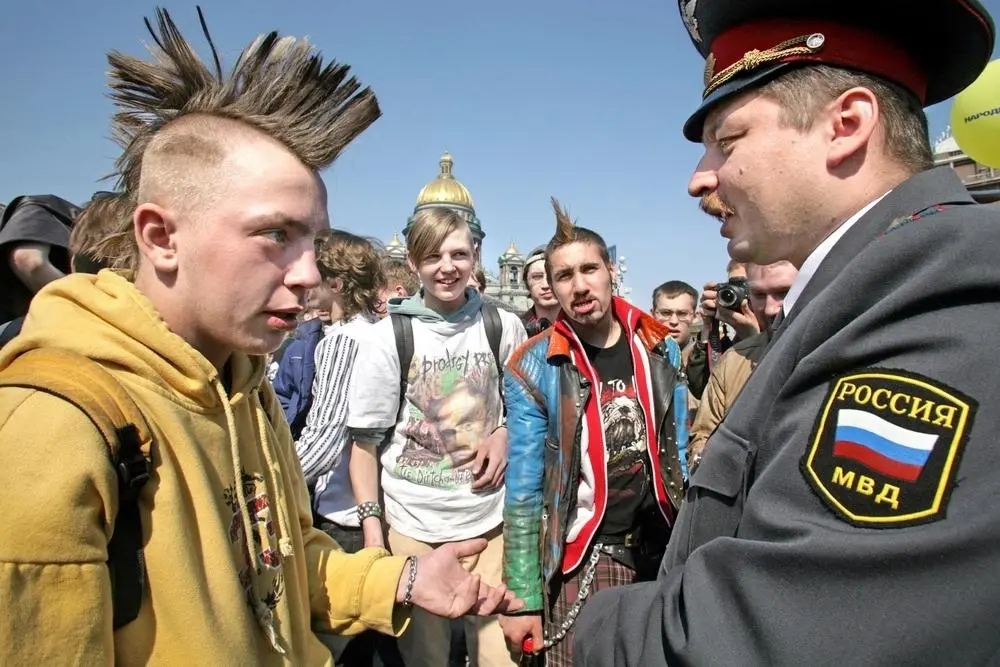
Over the past year, Russia’s security forces have increasingly targeted the country’s punk and metal music scenes. Thirty-five years after the collapse of the Soviet Union, Russia is again persecuting members of subcultures — people once known in Russian as neformaly, or “nonconformists.” Concerts are being banned and broken up, songs are censored, people are fined for wearing the “wrong” clothing, while police and judges are relying on anti-extremism laws that are becoming increasingly harsh. The targets are not necessarily rebellious young people — sometimes they are even older citizens who are largely loyal to the state. In some ways, the current bans are even stricter than those imposed in the USSR.
On March 14, the annual black metal festival “Funeral of Winter” was underway at the Territoriya club in Yaroslavl. When the second band took the stage, about 30 police officers and representatives of other law enforcement agencies burst into the hall. One security officer climbed onto the stage with an assault rifle and ordered the musicians to stop playing and lie on the floor.
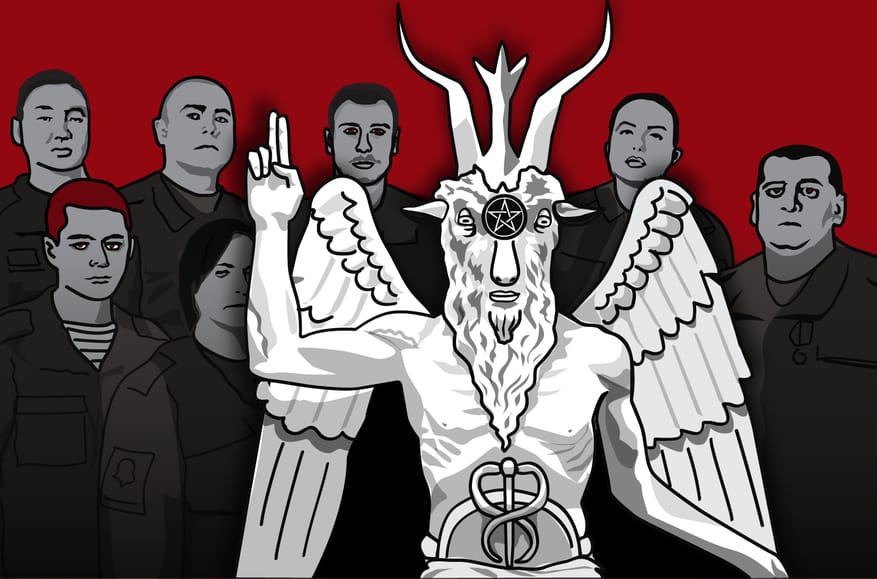
Citing witnesses, the publication RusNews reported that the phones and passports of performers and audience members were seized. Women were later released, while men were stripped and forced to lie on the floor for several hours. Security forces checked their tattoos and marked some of them with the words “f***ot” or “fascist.” “People were kept in the club until the middle of the night. Those with tattoos of Baphomet” — a goat-headed occult symbol — “had ‘f***ot’ written on them. Those with runes got ‘fascist,’” Yekaterina (name changed), a metal band manager and acquaintance of some of the victims, told The Insider.
One of the officers involved in the raid introduced himself as a military enlistment official. The detainees were brought to him one by one and offered the chance to go fight in Russia’s war against Ukraine. One concertgoer was a U.S. citizen; he was forced to say on video that he loves Russia.
According to RusNews, some men had their long hair — a common attribute of black metal fans — cut off. Yekaterina told The Insider that some had their beards shaved as well. “In the spirit of Peter the Great,” she said, referring to the Russian tsar who famously forced the empire’s nobles to shave their beards as part of his Westernizing reforms.
Some men had their long hair cut off — a common attribute of black metal fans. There were also reports that beards were shaved off
The official version was presented by the Kremlin-controlled news agency RIA Novosti: “A concert by right-wing radical groups called ‘Funeral of Winter’ was stopped. It was organized by the Yaroslavl nationalist music-adjacent group VLSKVLT.” Of the 130 people present, 23 were detained.
Rock poet and producer Alexander Yelin said the events reminded him of the late Soviet period. “I remember how in 1986, when I was organizing concerts, the cops really did consider all rockers fascists. Now the old men quickly remembered what it was like in the 1980s,” he said.
Unwanted concerts
The Yaroslavl incident was the harshest example, but it is far from the only Russian concert to have been broken up by the police over the past year. A month earlier, on Feb. 7, security forces raided Moscow’s Eclipse club during a performance by the black metal band “Nechist” (loosely translated as “Evil Spirits”). Ten people at the event were detained, with state-aligned media reporting that the “security forces disrupted a gathering of Satanists.”
“It feels like everything in Moscow is so calm and cloudless that the security services have absolutely nothing to do. There is no other work, so they have to launch a ‘witch hunt’ and catch men nearing 50 at underground rock concerts for the crowd’s amusement,” Sergei “Lazar” Atrashkevich, guitarist for the popular metal band Arkona, wrote of the incident. He later either deleted or hid the post.
Many commenters said the security forces had intended to disrupt a different event but went through the wrong door. Musician Igor (name changed) confirmed that account to The Insider, saying that a “gothic ball” was supposed to take place in a neighboring hall at the same club and was targeted over alleged “LGBT propaganda.”
“The organizers canceled the ball in advance, but the cops still needed to fight LGBT people, so they broke up the concert. As a result, that propaganda allegation, not Satanism, was written into the reports. As far as I know, one of the organizers was badly beaten at Eclipse. An acquaintance of mine was on her way to the concert but was a little late. By then there were flashing police lights everywhere, and no one was being let inside,” he said.
Before that, there had been a series of raids on punk concerts. On Jan. 6, Moscow police broke up Harvest Fest at the MO[TRI] bar (also known as “Motyga”). Witnesses said people were forced face down on the floor, their phones were checked for subscriptions to “undesirable” channels, and several visitors were beaten.
In 2025, law enforcement raided punk concerts in Yekaterinburg three times, disrupting a music festival at the Syndrome bar that May. “They checked everyone’s documents, messengers on their phones, tattoos, and asked about their attitude toward left-radical movements and the ‘special military operation,’” human rights project OVD-Info reported.
In June, police broke up another concert at the same venue. In July, they raided the New Bar club, this time joined by representatives of the right-wing radical movement Russkaya Obshchina (Russian Community). Guests were asked about their views on the war in Ukraine and on LGBTQ+ people.
Punks appear to be targeted not for their appearance but as potential supporters of the political. They were not given haircuts or threatened with fines over symbols, but their tattoos were checked. More broadly, the search for “extremist” tattoos is a relatively new practice that entered common use in filtration camps in occupied parts of Ukraine. During filtration, tattoos were a critically important signal for security forces, an OVD-Info lawyer told The Insider on condition of anonymity.
“Tattoo checks began to be conducted selectively after the start of the war. You can’t punish someone for them — what public danger is there? Under Russian law, liability can arise only for public acts — so, in essence, if a tattoo is not visible, there should be no consequences,” the lawyer said.
That is the theory. In practice, detainees with the “wrong” sort of tattoo are often threatened with criminal prosecution. Yekaterina, the metal band manager, cited the example of friends who were detained at the Yaroslavl concert. Security forces told them their tattoos were “fascist” and that if they did not have them removed, they could face criminal prosecution.
After the concert raids, fear spread throughout the subculture, Yekaterina said. “Before every performance, I look out from the stage and don’t know what will happen — will they f*ck us up, or not? Besides, concerts for us and many other bands are now often not allowed.”
On social media, fans complain about concerts being canceled “for technical reasons.” Events are rarely banned openly and publicly, but it does happen. This past spring in Kemerovo, a denunciation by Russkaya Obshchina led to the Molly Fest tribute festival and a performance by the project 2rbina 2rista (pronounced “Turbina Turista,” or “Tourist Turbine”) being cancelled.
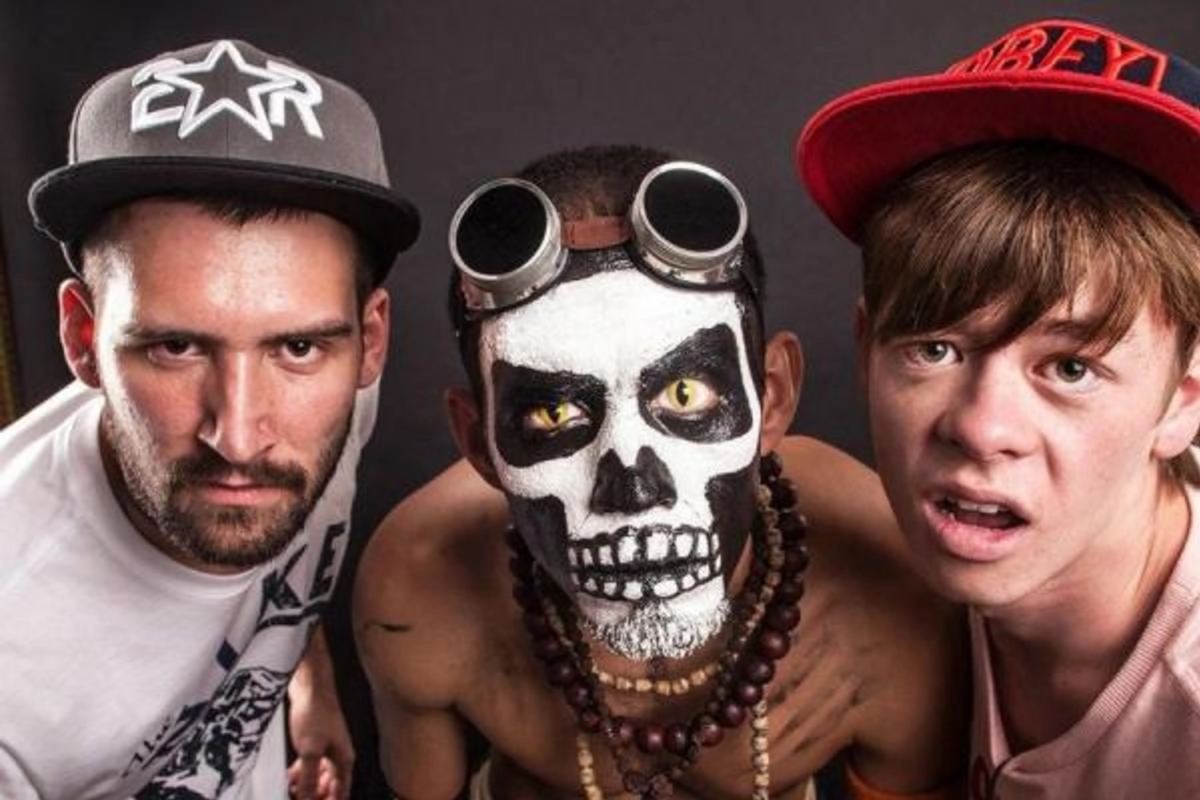
The situation with the Molly Fest tribute event was more or less clear. It was supposed to feature songs by Poshlaya Molly (lit. “Vulgar Molly”), a band that left Russia after the start of the full-scale invasion of Ukraine. 2rbina 2rista, meanwhile, was targeted due to the fact that the group performs provocative alternative hip-hop and appears onstage in skeleton makeup. “Their ‘art’ is an explosive mix of profanity, violence, and sexual perversion. Such ‘art’ is a direct blow to our children’s psyche and an attempt to destroy our cultural code,” Russkaya Obshchina said. Regional authorities backed the denunciation.
Forbidden words
There are rules of the game for musicians, and they are very strict. On March 1, a revised law on drug propaganda took effect, making any mention of banned substances liable to be considered propaganda. Publishers and artists are removing “incorrect” songs from streaming platforms or else rerecording them, while also eliminating references to Satan and same-sex relationships.
Everyone on the metal scene has had to adapt. Lyrics are being rewritten and censored by both longtime provocateurs such as Korrozia Metalla and conformist classics such as Aria. Alexander Yelin, who writes lyrics for Aria, said the band now faces many denunciations.
“They have long been playing ordinary heroic themes — normal subject matter for heavy metal. There has been no pacifism since the early albums. If you look at the setlists from recent concerts, there are no songs mentioning the Antichrist or the devil. They also don’t sing ‘Angel Dust,’ because it is about drugs,” he said.
The restrictions affect both “peaceful” songs and also those featuring descriptions of gore. One person who spoke to The Insider said a Beatles cover concert in St. Petersburg in 2025 barred performers from playing “Imagine” and “All You Need Is Love.” But black metal has been hit especially hard, Yekaterina said. “They sing about death, blood, guts, and dismemberment. I think many people in power see references to the war in Ukraine in those words.”
“They sing about death, blood, guts, and dismemberment. I think many people in power see references to the war in Ukraine in that”
The Soviet Union also censored lyrics, but the system was much more flexible. There were state-run amateur arts centers where musicians could come and explain that the content of a song did not violate anything. That is impossible today.
“Many of my colleagues who played back in Soviet times remember that you could just sat that your song mentioning heroin was about fighting the drug mafia. That doesn’t work now,” Yekaterina said. “A ‘Rock Against Drugs’ festival is impossible in principle. Sing about heroin and criminal punishment will follow. No one cares about semantics. The same goes for ‘Satanism.’ The state does not care that the plots are taken from the Bible, or that the musicians are baptized and religious people.”
Sergei Mirov, a lyricist for Mashina Vremeni and Sekret and the author of books on the history of Russian rock, also believes the current bans are stricter than those of the Soviet era.
“In the USSR, you could use Beatles music in a cartoon — the bad guys performed to it in ‘Shaybu! Shaybu!’ You could explain that youth rebellion was about how bad life was in capitalist countries. But now the authorities have learned the PR law that any mention is good. And just as Putin never said Navalny’s name, certain topics cannot be raised in songs, regardless of context,” he said.
At the same time, some performers have benefited from the bans thanks to the cancellation of foreign musicians’ tours and the departure of opposition artists, Yelin explained. He cited Radio Tapok, a metal project that “openly zigs” — Russian slang that can refer to Nazi-style salutes or far-right, ultranationalist posturing, but also to support for the current Kremlin authorities — and draws strong crowds. “If a person with long hair and tattoos comes to Radio Tapok, nothing will happen to him. At another event, he could be beaten, shaved and humiliated,” Yelin said.
Satan’s jacket
Metal fans cannot be described as an openly protest-minded audience. Among those attending “Funeral of Winter” in Yaroslavl, for example, were a police officer and a National Guard employee. According to Yelin, many older heavy music fans have built careers in state structures and can even shield their favorite artists from persecution. Nevertheless, their appearance and symbols have become a source of danger. Older metal fans have it easier: because of their long hair, “they are mistaken for priests,” Yekaterina said. Police are more likely to target younger members of the subculture.
People have begun thinking about how to dress, musician Igor told The Insider. “In subculture chats, people wrote about someone in Moscow being stopped, either on the street or in the metro, over Slayer merch and fined. Everyone is shocked.”
Another musician, Dmitry, whose name has been changed, told The Insider that in April 2025, he was forcibly given a haircut at a police station. A drunk man had attacked him in the courtyard of a Moscow apartment building, and Dmitry injured the man while fighting him off. The Insider has voice messages in which the musician describes what happened after he was detained by the police: “They beat me until I had a bloody nose and shaved me with clippers. A cop pinned me with his knee, grabbed me by the hair, and started shaving.”
Stories about people being punished for “incorrect” subculture symbols often make their way into the media and onto social networks. In September, 19-year-old Elina G. was fined in Zelenograd under the article on “displaying extremist symbols.” Police detained her over drawings on her jacket and bag: a pentagram and the “Leviathan cross” (a symbol almost entirely unknown to the general public). Judges decided it was one of the symbols of the Church of Satan, which Russia considers to be an extremist organization. In court, Elina admitted she had drawn on the clothing herself because she listens to heavy music, but she said she had no connection to Satanism. Elina was fined, and her belongings were confiscated.
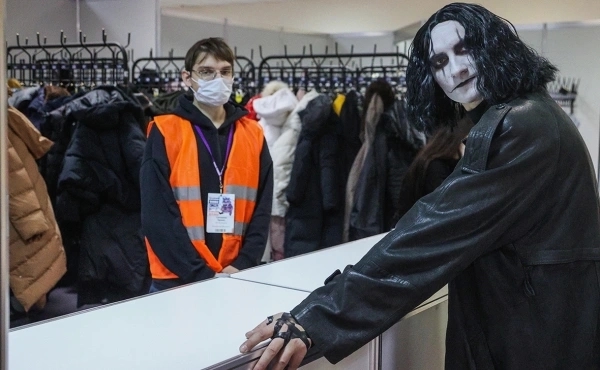
In November, authorities in St. Petersburg jailed cosplayer Artyom Repin for 12 days. He had come to the themed NecroComicCon festival holding a goblet and a book bearing a pentagram along with the words “Satanic Rituals.”
In mid-April 2026, a resident of Severodvinsk, identified as Alexei K., was fined 1,000 rubles after he showed up for an appointment at a prosecutor’s office wearing a hoodie and pants bearing a pentagram and an image of Baphomet. Official reports again referred to the “international Satanism movement, banned on the territory of the Russian Federation” in justifying the fine. The Russian authorities have increasingly used the language of “international movements” as legal constructs to criminalize and persecute loosely defined groups or identities.
Even if one sets aside the legality of banning “Satanism” itself, most of those arrested have no connection to those religious practices. Musician Igor said he thinks the police and judges are aware of that fact.
“Everyone understands perfectly well that no one is eating children or raping goats. And no one is holding any rituals. Young and not-so-young people simply listen to a certain kind of music and go to concerts,” he said. “I think this is just the usual crackdown on dissent — an attempt to lump everyone together.”