During a late-January roundtable discussion in the State Duma on the topic of government support for Russian cinema, director Alexei German Jr. spoke out against excessive regulation in the industry. In effect, he was making the argument that the rules around censorship should be clarified in order for filmmakers to better understand what is permitted and what is not. In recent years, an increasing number of Russian films have received major awards and high praise from critics, yet they ultimately fail to reach theaters and remain inaccessible to the public. A refusal to grant a distribution certificate can be triggered by anything from complaints by “public activists” to pressure from law enforcement agencies. At the same time, the Kremlin’s expected boom in “patriotic cinema” has not materialized, and cinema attendance across the country continues to fall.
Censors against “The Wind”
According to film critics, the best Russian film of 2025 was The Wind by Sergei Chliyants. The National White Elephant Award honored the film in several categories, including Best Screenplay. The script had been written nearly 30 years ago by Pyotr Lutsik and Alexei Samoryadov, neither of whom lived to see this particular work appear on screen.
For viewers familiar with their earlier films (particularly The Outskirts and Wild Field), the storytelling style was no surprise. The narrative unfolds like a folk tale, set in a dark and mysterious visual world filled with ominous characters who seem to have stepped out of the works of Andrei Platonov.
More surprising is that the screenplay material, which usually ages quickly, not only did not become outdated over the course of several decades but instead gained unexpected relevance. Consider the film’s final scene: the protagonist, Ivan, desperate to bring his dead young wife back to life, decides to go to war — not a specific war, but an abstract one.
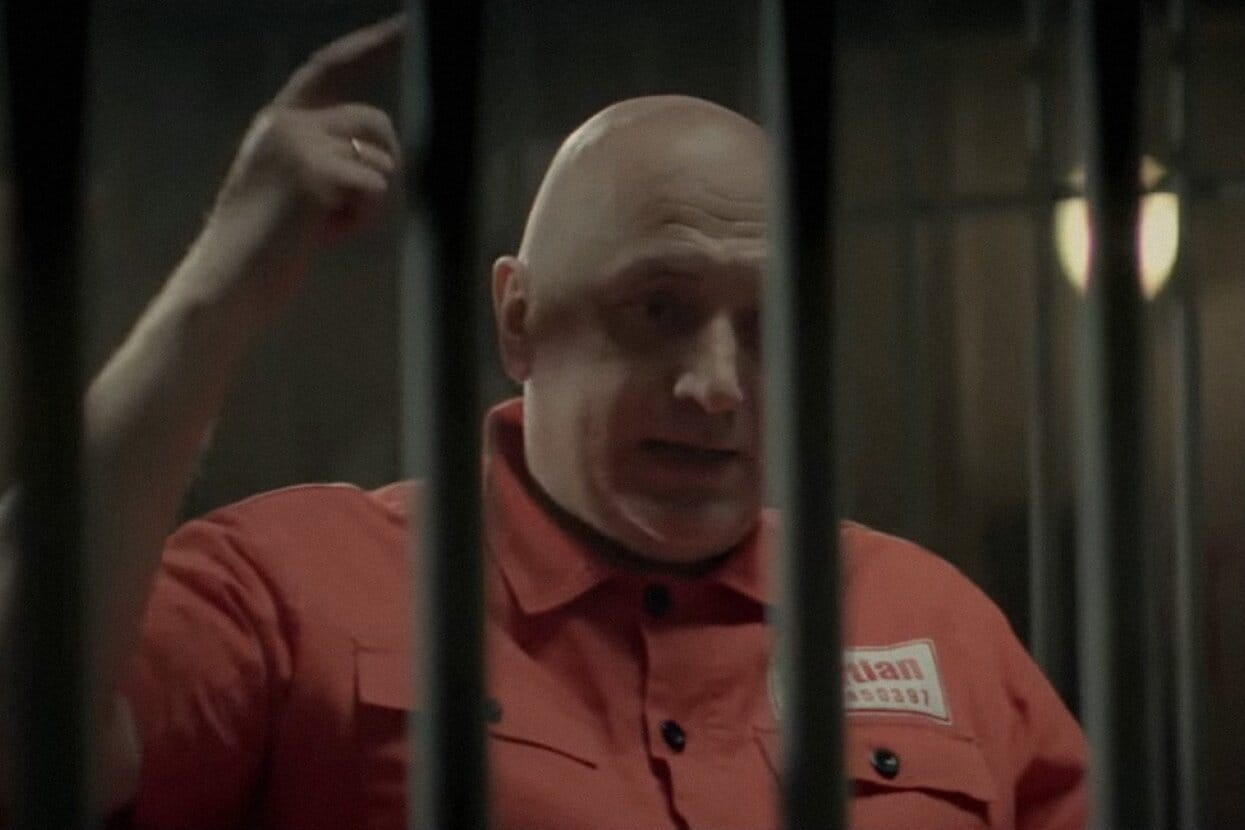
“No one escapes war. Not a nation, not a person. And Moscow will not buy its way out,” a captain with the face of a fanatic tells new recruits. “The time has come to stand up for the motherland. Our great-grandfathers did not spare their lives. Why should we seek another fate? Why should we listen to outsiders? Do they love us? For a thousand years they did not love us, and now suddenly they do?”
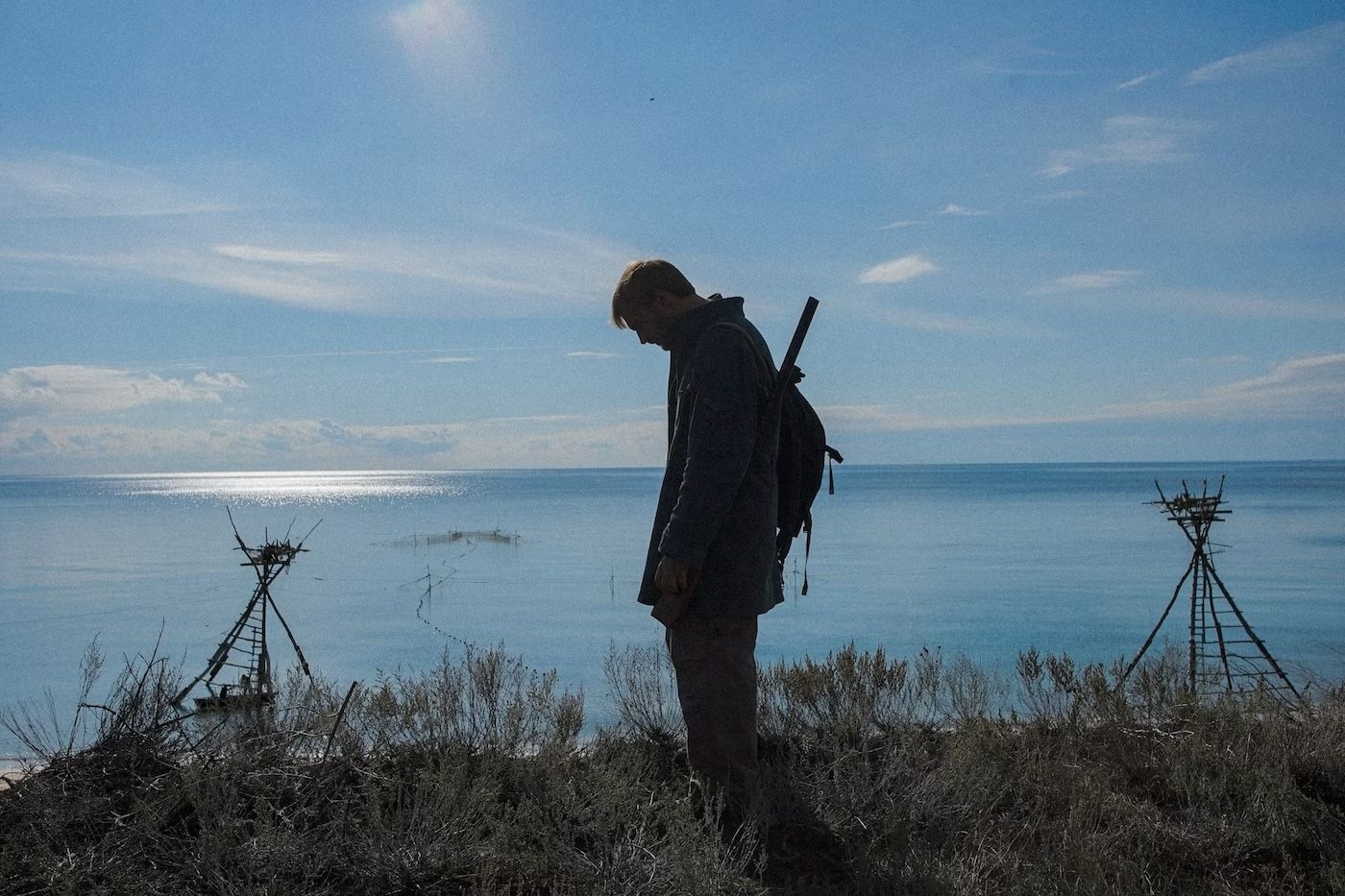
Had this captain been played by an actor like the absurdly pro-war Ivan Okhlobystin, the scene might have shifted toward deranged farce and self-parody. Instead, the role is performed by a serious dramatic actor, leaving little room for dark humor. In the end, the character Ivan quietly goes to war — because the only alternatives in the wild Russian hinterland are poverty, theft, or the murder of one’s own people.
The Wind was supposed to premiere in October 2024 at the Mayak film festival in the Black Sea resort town of Gelendzhik, which has become one of the central platforms for Russian cinema since the Kinotavr festival ended in 2022.
But the intelligence officer responsible for monitoring the project’s investor apparently had not initially been familiar with the film’s content, which from the perspective of someone in uniform did not properly reflect the current narrative of the “special military operation.” As a result, The Wind was barred from the Mayak festival, and its director, who is not a public figure, was sent to the Russian-occupied front-line Donbas Region for a series of “creative meetings.”
In the end, the film was first screened in March 2025 at the Spirit of Fire international film festival in Khanty-Mansiysk, where it won the grand prize.
Alice no longer lives here
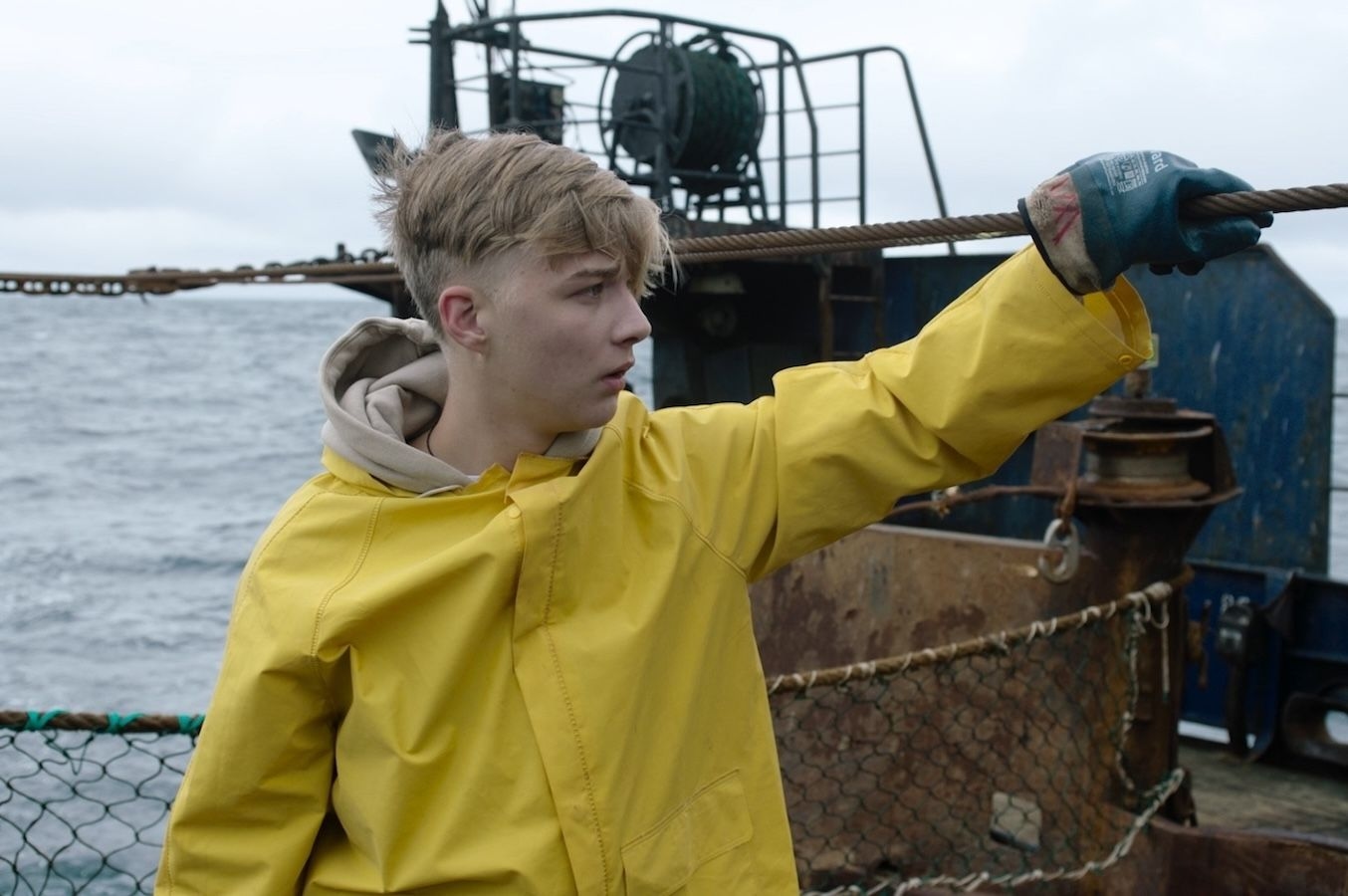
One of the favorites of previous White Elephant awards was Snegir (“Bullfinch”), based on the novel Three Minutes of Silence by Georgy Vladimov, first published in 1969 (though the film’s events were moved to the present day). Films of this type were once categorized as “the moral education of the Soviet person,” or “cinema of moral anxiety.”
In the plot, two very young friends arrive for an internship aboard a fishing trawler. Weakness and then betrayal by one of them leads to the death of the other. The film is completely free of common Hollywood clichés. Instead, it recalls psychological cinema in the tradition of Sergei Solovyov or Ilya Averbakh. Critics could hardly fail to admire it.
Somewhat surprisingly, the film also won strong support from the Golden Eagle awards jury led by Kremlin-friendly film director Nikita Mikhalkov, which gave Snegir four prizes, including Best Film.
But even here the story has its complications.
Snegir beat the ambitious project The Challenge, the first film ever shot in space. Among the producers of the latter were Senator Dmitry Rogozin (formerly of Roscosmos) and Channel One chief Konstantin Ernst. According to rumors, the result caused displeasure in the presidential administration, as the usually “loyal” Golden Eagle judges did not give The Challenge a single statuette save for a special prize awarded by the organizing committee to actress Yulia Peresild, well-known in Russia for her trip into space with director Klim Shipenko. Even the category for Best Visual Effects went to Snegir.
Despite Snegir’s official success, its creators Boris Khlebnikov and Natalia Meshchaninova have released no new films. Together with Alexander Sokurov, they are among the most respected Russian filmmakers who have remained in the country following the start of the full-scale invasion of Ukraine, and in practice, they have been pushed out of the profession. It is unclear whether this is connected to Khlebnikov’s signing of the collective “No to war” letter in February 2022 or to his cooperation with Igor Mishin, the general producer of the online cinema service Kion. Mishin was forced out of the industry after law enforcement searched his country house in 2025.
The most respected Russian filmmakers who stayed in the country after the start of the full-scale invasion of Ukraine have been pushed out of the profession.
In 2021, Khlebnikov and Mishin created the comedy series Comrade Major, about an eccentric FSB officer “eager to do good.” After pilot episodes were screened, the project never appeared on any online platform. Yet in August 2022 it somehow received a distribution certificate, allowing it to be shown in movie theaters. However, no cinema used that opportunity.
Natalia Meshchaninova had no connection to Comrade Major and did not sign any letters protesting the war. Artistically, she is primarily known for depicting stories dealing with everyday life, moral dilemmas, and family themes.
However, her sharp modern interpretation of those topics nevertheless displeases defenders of “traditional values.” Her film One Small Night Secret, shown in February 2023 at the Rotterdam International Film Festival despite sanctions, tells the story of a 14-year-old girl subjected to sexual coercion by her stepfather behind the facade of a seemingly happy family.
Another project, the series Alice Cannot Wait, focuses on a teenage girl who learns she is irreversibly losing her eyesight. She decides to sell her virginity to raise money for surgery. If the operation fails, she plans to at least enjoy life while she can.
At the online cinema festival New Season in 2022, the project won in the category for Most Anticipated Series, but after premiering on the START video platform, “activists” known for filing denunciations appealed to Russia’s communications regulator Roskomnadzor. The series was banned over its alleged purveyance of “information that must not be distributed through audiovisual services.”
One Small Night Secret appears to have had a somewhat better fate. The film has been allowed to exist — albeit only on online platforms, none of which have chosen to purchase it.
One Small Night Secret has been allowed to exist — albeit only on online platforms, none of which have chosen to purchase it.
These cases are not limited to filmmakers who sign protest letters or challenge “traditional family values.” Klim Shipenko, the director of the aforementioned The Challenge, has his own skeleton in the closet. His film December, about the suicide of poet Sergei Yesenin, has been prevented from reaching theaters since October 2022. There is no official explanation for the ban, while the unofficial one holds that the film shows “Chekists who are too bloody.”
How “shelves” were cleared during Perestroika
In May, 40 years will have passed since the legendary Fifth Congress of Soviet Filmmakers in the Kremlin, which in effect opened the era of Mikhail Gorbachev’s glasnost in the USSR. Among other decisions, the Congress ordered the creation of a conflict commission within the Union of Cinematographers to review so-called “shelved” films, meaning movies banned by censorship. The commission was headed by film critic Andrei Plakhov.
By his account, the commission initially suspected that there might be two or three dozen such films. Many of them were already well known, including Trial on the Road by Alexei German, A Bad Anecdote by Alexander Alov and Vladimir Naumov, Repentance by Tengiz Abuladze, and The Lonely Voice of Man by Alexander Sokurov. The commission recommended that these films be released with priority distribution.
Later the commission turned to less well-known films, among which The Commissar by Alexander Askoldov proved to be an undisputed masterpiece. After that came films that had been edited at the demand of censors, and their original versions eventually reached screens — including Ilyich’s Gate by Marlen Khutsiev, released in Soviet theaters under the title I Am Twenty, and The Story of Asya Klyachina, Who Loved but Did Not Marry, also known as Asya’s Happiness, by Andrei Konchalovsky.
Some time later, the commission concluded that manipulating the number of film prints was also a form of censorship. Who could have seen Otar Iosseliani’s film Pastoral given that only about 15 copies were printed for the entire country? The situation was no better for Andrei Tarkovsky’s Mirror or the films of Kira Muratova. Documentary filmmakers and animators also had their own “shelves,” as did television productions (even if, in Soviet times, the latter category was far smaller than it is today).
In 1986, the USSR’s Union of Cinematographers concluded that manipulating the number of film prints was also a form of censorship.
The conflict commission worked for two years, reviewing more than 250 films. This was during a period when the authorities still held a monopoly over filmmaking: production proposals had to be approved by officials, and films were produced at state studios. In the 1980s, the Soviet Union produced about 150 feature films each year, along with roughly the same number of films in other formats. All of them were regulated by permits issued by the state film committee, Goskino. Without such a document a film could not be released.
Similar certificates exist today, although they are called distribution licenses. However, today a film can also be released without any official approval simply by uploading it to a personal YouTube channel.
That is what happened with Alexander Sokurov’s film Fairytale. In 2023, after the Ministry of Culture refused to grant the film a distribution certificate, television personality Ksenia Sobchak posted it online and accompanied the screening with a public discussion featuring the director.
How the “shelves” are being filled today
Nevertheless, a new “shelf” is clearly filling up. This signals not only the growth of total censorship in modern Russia, which is already evident, but also the decline of the entire filmmaking process in the country. It is telling that the Golden Eagle and Nika film awards, which in theory represent opposing factions of the Russian film community, in practice receive state support and commit themselves not to include films without distribution certificates in their nomination lists.
In the case of the Golden Eagle awards this is understandable. In the case of Nika, traditionally considered the oldest and most democratic Russian film prize, it is harder to explain. Yet Sokurov’s Fairytale was not nominated, even though the director had received the Nika award for Honor and Dignity several years earlier.
The experience of the White Elephant award is important. The prize not only supported Fairytale, naming it the best film of the year, but also continues to evaluate the filmmaking process without observing censorship restrictions. Among the recent winners of the White Elephant award are Ilya Khrzhanovsky’s project DAU, in which four of the ten episodes were denied distribution certificates, Rezo Gigineishvili’s film Patient No. 1, which has no certificate and was never even submitted for one, and the previously mentioned One Small Night Secret.
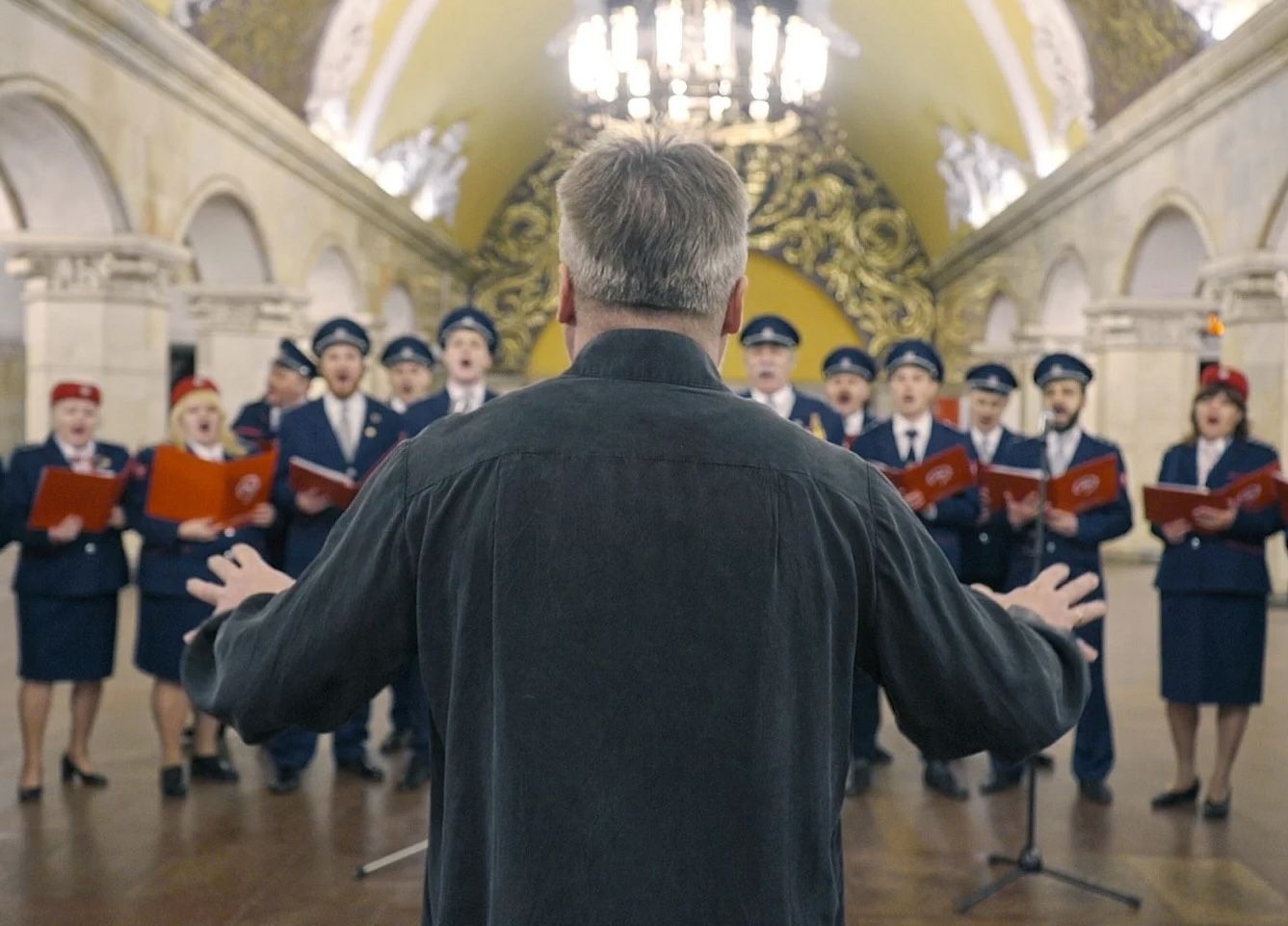
The award also supports independent documentary filmmaking. In 2025 critics named the film The Doors Are Closing the best documentary of the year. The film, whose title echoes the familiar announcement on the Moscow subway, follows a choir of Moscow metro employees traveling to perform at a military patriotic celebration in Russian-occupied Crimea. Director Yana Isaenko subtly shows how, against the background of war, human connections and the contours of a world that traditionally sees itself as “outside politics” begin to collapse.
In general, whether a film has a distribution certificate or not doesn’t have much effect beyond the festival circuit (and in practice, by banning Fairytale, the Ministry of Culture only increased interest in it). Some lists of banned films include Captain Volkonogov Escaped, directed by Natasha Merkulova and Alexei Chupov. But that film actually has a distribution certificate issued in August 2021, which has never been revoked. The decision not to release the film in theaters belongs to the producers — and their caution is understandable. A confrontation with “outraged activists” can bring both reputational and financial losses, while releasing a film in theaters requires investment.
The historical and ethnographic film Nuuchcha by Vladimir Munkuev, a prizewinner at international film festivals in Karlovy Vary and Tallinn, also received a distribution certificate. It was issued in August 2021 and the theatrical premiere was scheduled for April 2022.
However, in February of that year the film was accused of being Russophobic, and since then the situation has remained unresolved. There is no formal ban, but there is also no certainty that the film could be released without provoking a scandal. Censorship and self-censorship go hand in hand.
Yakutia under suspicion
Nuuchcha was made in Yakutia, where a local film industry has flourished in recent years, driven by audiences wanting films in their native language and by directors determined to keep making movies on budgets far smaller than those typical in Moscow. But in Russia, projects that do not originate with the federal center often draw suspicion, which is part of the reason why at least three Yakut films are now either formally or informally banned, including Dmitry Shadrin’s comedy The Candidate, which was denied a distribution certificate in October 2023, and Stepan Burnashev’s psychological thriller Aita.
At least three Yakut films are now either formally or informally banned in Russia.
The main character of Aita, a Yakut man with the Russian name Nikolai, is involved in the investigation of a criminal incident. After a teenage party, 16-year-old Aita attempts suicide and later dies, but not before leaving behind a note naming a possible offender, Afonya. In the monoethnic settlement where the film takes place, there is only one person by that name: a Russian police officer.
The investigation has only just begun, but the settlement is already in turmoil, demanding vigilante justice. For safety reasons, the suspect is kept at the police station, but the crowd is ready to storm it. Nikolai himself feels no sympathy for Afonya. Under different circumstances, he might have joined the crowd. But he is the head of the police department, effectively the only authority in the settlement. Thus the hero, risking his life, protects the Russian man until another Afonya is found in a neighboring settlement — a Yakut by ethnicity, the girl’s peer and lover.
The film is made with a finely honed understanding of genre and a dense sense of everyday authenticity. At the box office, it earned back its budget tenfold, which sounds almost fantastical for Russian cinema today.
Nevertheless, in September 2023, the consumer safety watchdog Rospotrebnadzor intervened in Aita’s fate. The film’s distribution certificate was revoked with the verdict that “the picture demonstrates inequality among persons on the basis of nationality.” Yakutia’s head, Aisen Nikolayev, publicly backed director Stepan Burnashev. The regional newspaper Yakutsk Vecherny even ran an issue with the headline “Roskomdisgrace” (“Roskompozor”). Seventy critics and film scholars signed an open letter in defense of the film. Rospotrebnadzor was accused of lacking the professional expertise needed to evaluate works of art.
None of it helped. In the end, Aita was acquired by the international streaming platform Amazon Prime Video, and now viewers around the world can see it. But in Russia, the film is available only on pirate services.
Make it clear
On Jan. 29, the State Duma held a roundtable discussion on “State support and paths for the development of domestic cinematography.” Nearly all the key figures in the industry took part, from Culture Minister Olga Lyubimova to film director, actor, and producer Fyodor Bondarchuk. As it turned out, lawmakers had accumulated quite a few complaints about Russian film production — some disliked the re-imaged Soviet cartoon Cheburashka, others Buratino, another re-released popular mainstay. But above all, the State Duma sincerely does not understand why the great patriotic cinema that ought to be filling movie theaters still has not appeared. After all, Western distributors have already long since left Russia, yet instead of showing up for the types of films the Kremlin is backing, audiences have chosen to leave theaters largely empty.
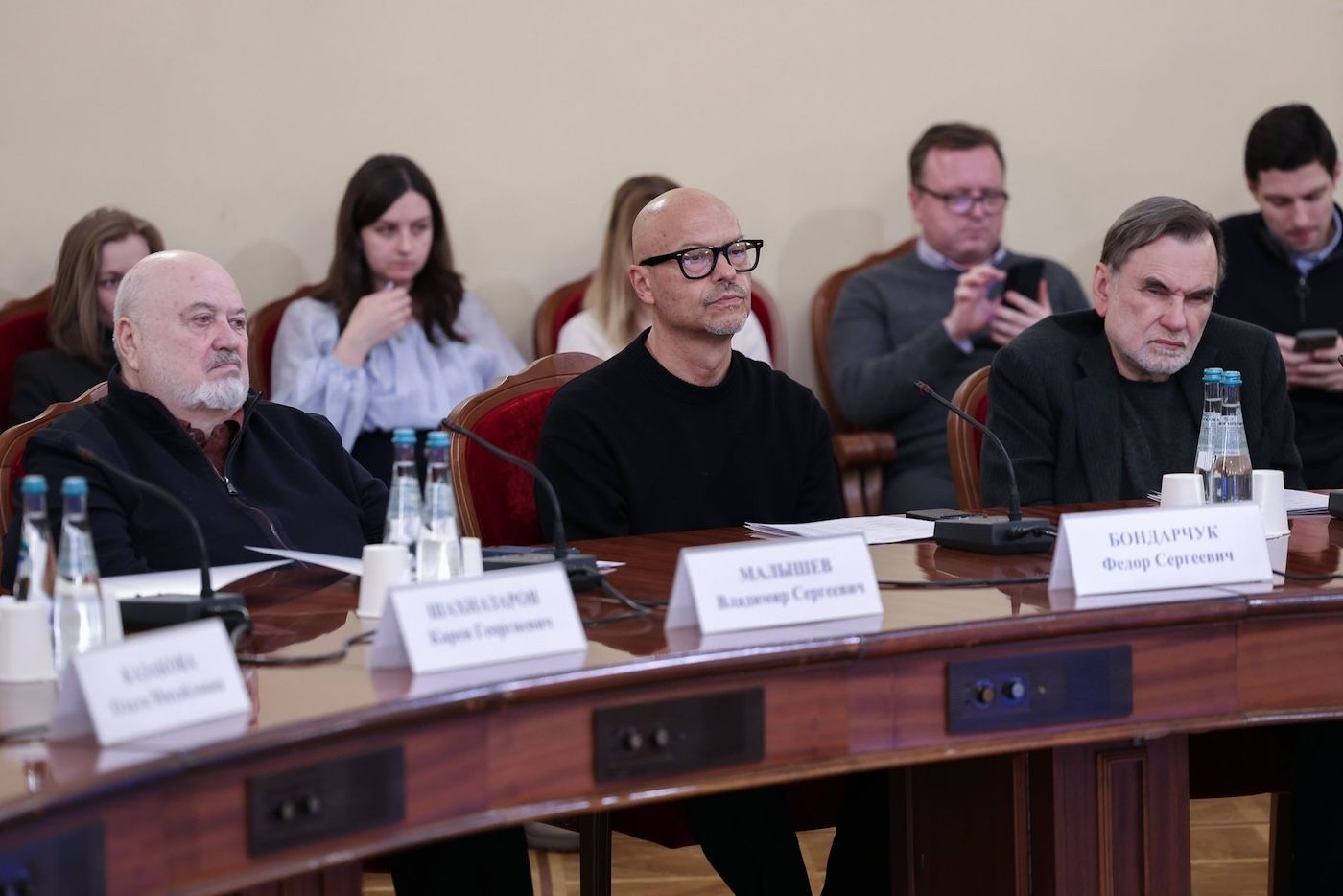
The discussion at the Duma would likely have passed unnoticed had it not been for the remarks of director Alexei German Jr., who in cautious terms spoke out against oversight by state agencies. “If we keep multiplying supervisory bodies, we will simply suffocate,” he argued. He also criticized censorship, saying, “Excessive regulation right now may hinder the development of domestic cinema.” All of this was voiced less in defense of creative freedom than out of pure pragmatism. The industry needs rules so that it can follow them. “It is very important for us to understand,” German said, “what we are allowed to talk about and what we are not.”
Last summer, Mikhail Shvydkoy, Vladimir Putin’s special representative for international cultural cooperation and also a theater producer and critic, published a column on a similar theme in the government’s official newspaper, Rossiyskaya Gazeta. In Shvydkoy’s view, it is primarily the quality of works that suffers due to the many “requirements that are difficult to formalize from a legal point of view” and the lack of uniform rules. “You cannot create while keeping on your desk decrees of the president of the Russian Federation and law books that include not only the Civil Code but also the Criminal Code,” Shvydkoy wrote.
Given all of the above, it is not difficult to conclude that the more pragmatic part of the cultural establishment is trying to negotiate with the state over the boundaries of its censorial role in artists’ lives. Artists, in time, would presumably come up with ways to get around those boundaries, as they did in Soviet times. But Shvydkoy himself seems to understand how difficult such a task would be.
“It would be far more honest to return to censorship, handled by professionals rather than bureaucrats from various agencies, who themselves do not fully understand what they are supposed to fear in order not to lose their jobs. Yes, restoring the institution of censorship would not be cheap. It would require not hundreds but thousands of enlightened servants of the state. But perhaps only that could preserve a healthy environment in the creative sphere.”
In essence, this is a call to restore the Soviet era of stagnation, when the newspaper Pravda hung on every post, Georgy Daneliya made films like Autumn Marathon, and every artist clearly knew what was allowed and what was not. But such rules are the product of long and compromise-laden relations between artist and state. Does the current state need such relations, given that under its command are squads of “public activists” capable, at nothing more than a signal from above, of smashing a Vadim Sidur exhibition, dousing an unwanted artist with paint in a public place, or “canceling” any film or play, while another part of society has either left the country or has been buried under a pile of repressive laws?
For the authorities, it is much easier to keep both the intelligentsia and the people, as the classic said, “in a state of permanent astonishment,” declaring through their spokespeople and thinkers that the children’s film Cheburashka, based on an iconic Soviet-era cartoon character, is “a harmful film product that corrupts our children” (in the words of lawmaker Dmitry Pevtsov). Or, more dramatically still: “The appearance of Cheburashka coincides with the transition to petty-bourgeois values and infantilism. That is how the USSR collapsed. Cheburashka destroyed it” — or, at least, that’s what happened according to the words of philosopher-provocateur Alexander Dugin.