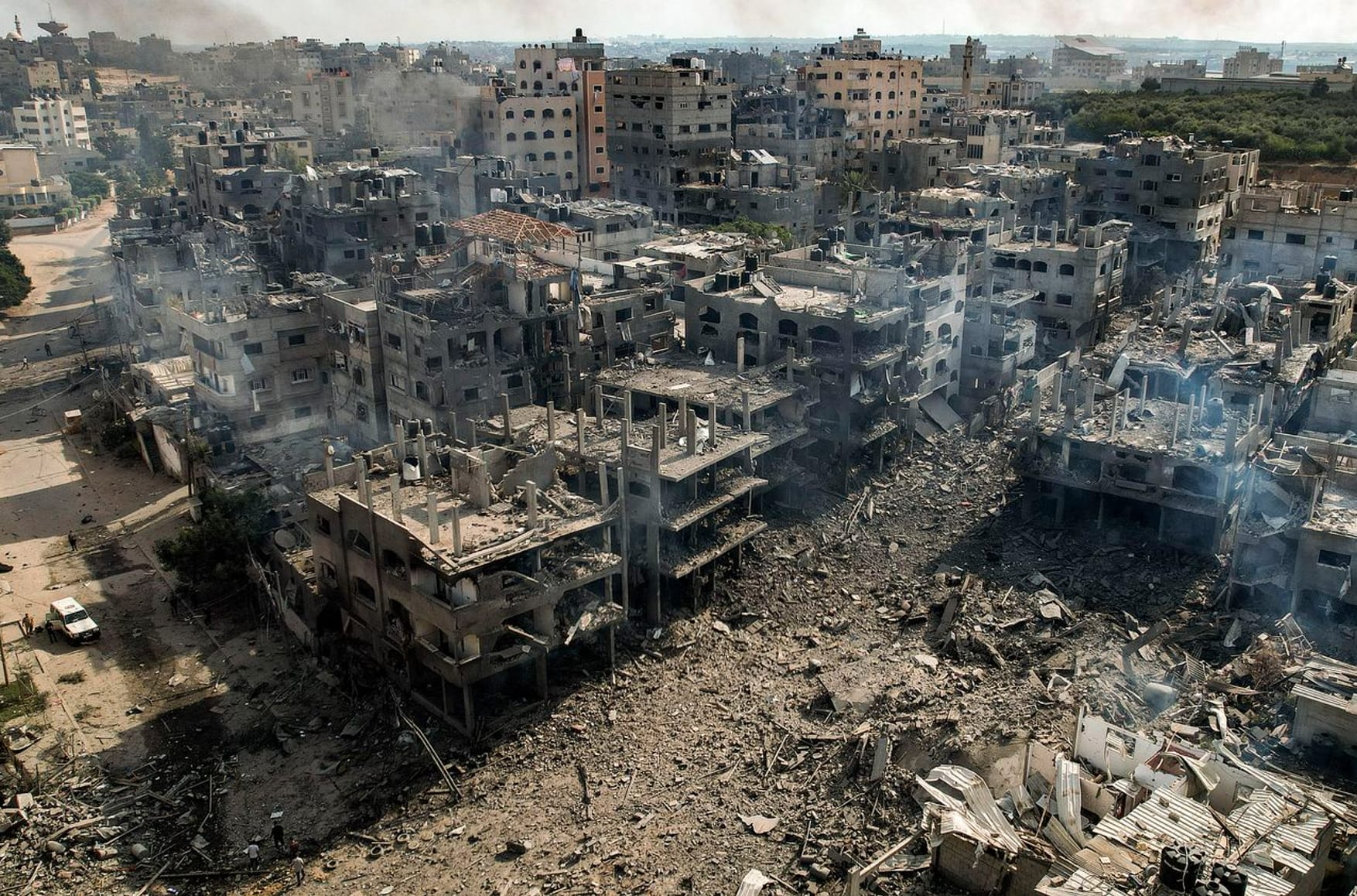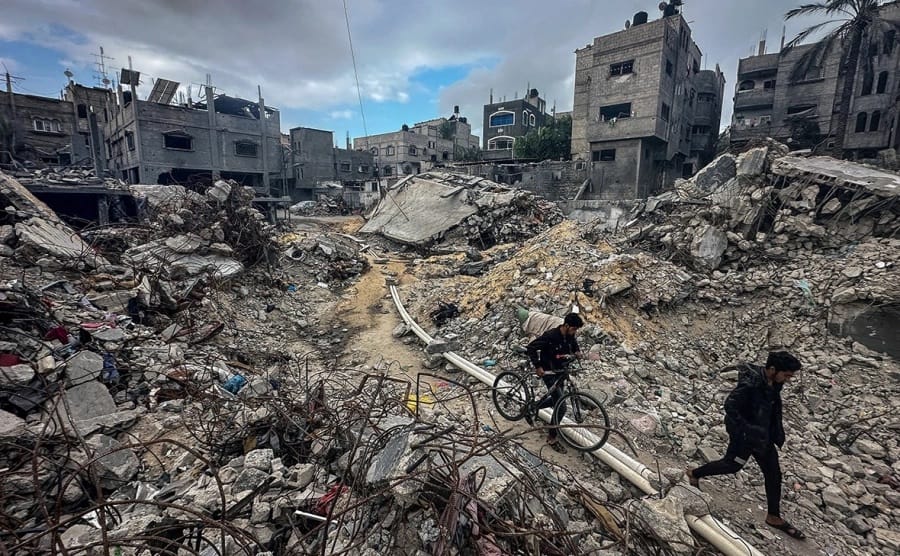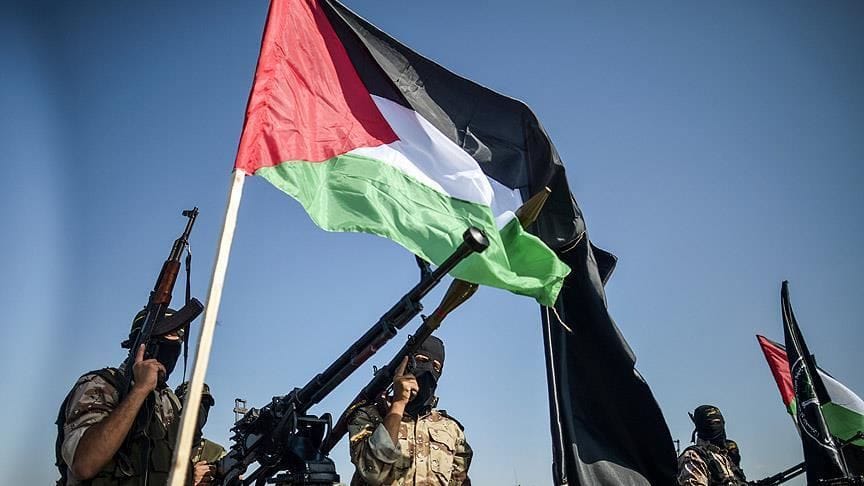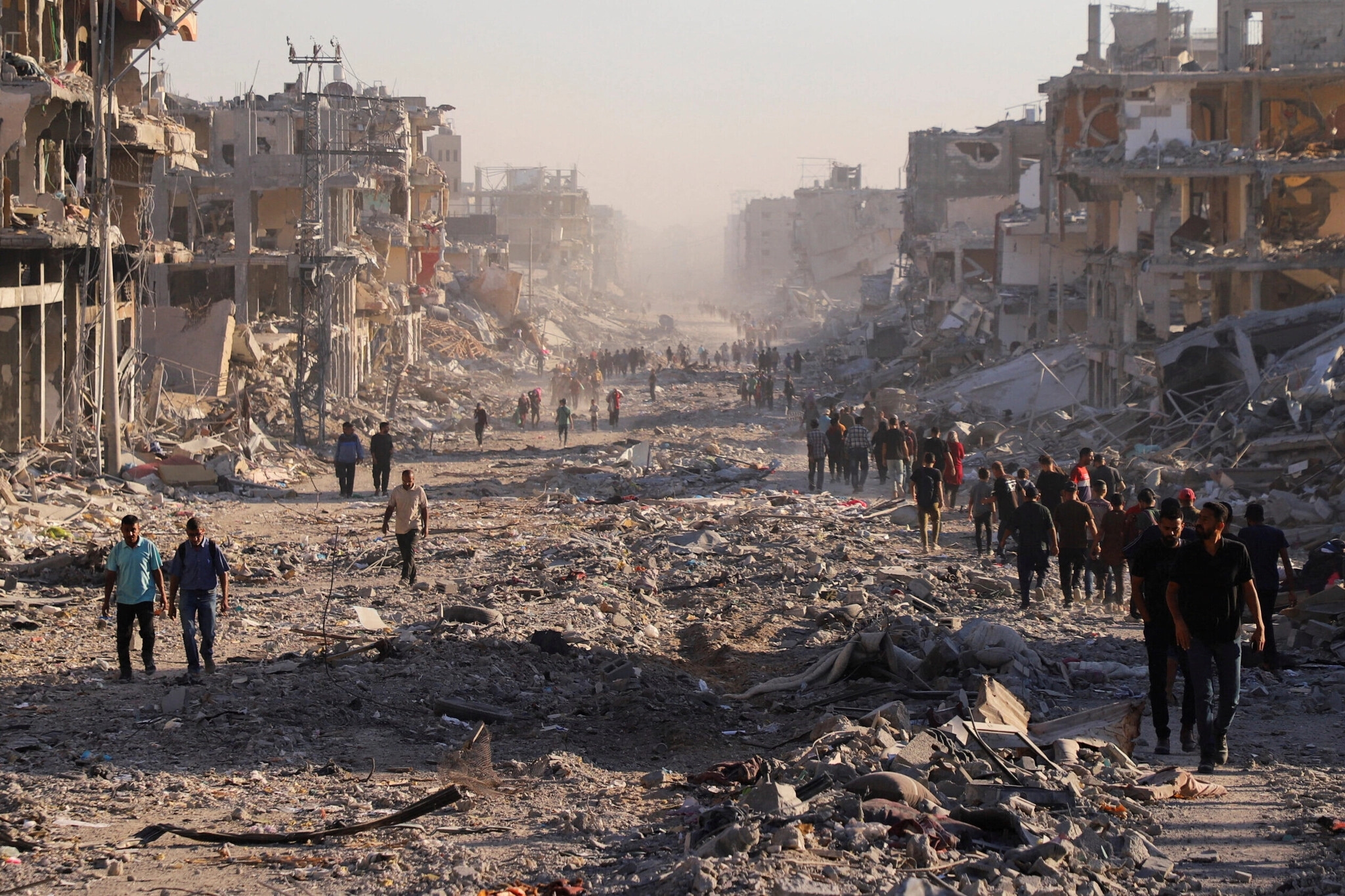
Three years after the October 7 attack, Hamas has been significantly weakened. However, despite formally yielding power after the ceasefire, the group continues to control the lives of most of the population of the Gaza Strip, and it may even be preparing new attacks. Israel has destroyed a significant part of the terrorists’ military infrastructure and eliminated many field commanders, but the group remains potent. Support for Hamas among Palestinians is falling, but an alternative administration is yet to be established, and negotiations on disarmament have reached a dead end.
Threats of unclear origin
“We are ready to carry out another attack like the one on October 7,” Hamas authorities reportedly warned last month. According to Israeli newspaper Ynet, representatives of the Gaza-based group requested that UN Special Coordinator Ramiz Alakbarov pass the message along to the Israeli authorities, and he did so, informing the head of Israel’s Coordinator of Government Activities in the Territories (COGAT), Major General Yoram Halevy, who quickly notified the country’s political and military leadership.
On Oct. 24, Israel’s Channel 13 released excerpts from a memo by Halevy addressed to Prime Minister Benjamin Netanyahu. According to the document, Hamas representatives justified their position with reference to the ongoing operations of the Israel Defense Forces (IDF) in Gaza, the shifting of the “yellow line” marking the boundary of the Israeli military presence in the strip, and the cancellation of Palestinian parliamentary elections. All of this, Hamas claims, is causing the group to lose control of the territory.
The memo said that Hamas does not intend to put up with this situation and is ready to stage an attack along the lines of the October 7 massacre wherever the opportunity arises: in Israel, including Judea and Samaria (the West Bank), or abroad. Halevy called the warning unusual in its directness and harshness. According to Channel 13, Israeli security agencies are checking how real the threat really is.
The memo said that Hamas is ready to repeat an attack along the lines of the October 7 massacre
Meanwhile, Hamas representative Hazem Qassem denied the authenticity of the Ynet report, saying that the group had not passed any threats against Israel through a UN employee. He also stressed the group’s commitment to the ceasefire agreement and cautioned that such reports could be exploited as part of the campaign ahead of the Oct. 27 Knesset elections. At the same time, the Saudi newspaper Asharq Al-Awsat reported that the published program of Alakbarov’s visit to Gaza on Oct. 11–12 did not include meetings with Hamas leaders.
A representative of Alakbarov’s office confirmed to the outlet that during his latest trip to the Strip the diplomat did not meet with any of the group’s leaders. However, according to a local UN employee, on Oct. 11 Alakbarov visited the al-Shifa medical complex and met with representatives of the hospital and the healthcare system. This visit was also not in the official program. Notably, at the start of the war in Gaza, Israel called al-Shifa one of Hamas’s command centers, and in January 2024, U.S. intelligence also confirmed the assessment that the hospital complex was used to direct combat operations.
Nevertheless, regardless of whether Hamas actually threatened Israel, the appearance of these reports a few days before the elections potentially benefited both Israeli camps: Netanyahu’s supporters, by reminding them of a security threat, and his opponents, by demonstrating the ineffectiveness of the prime minister’s Gaza policy. In any case, it is clear that Hamas retains significant resources both inside Gaza and beyond the strip.
What remains of Hamas’s military potential
According to an assessment by Israeli security agencies published by Haaretz, Hamas still has between 30,000 and 40,000 members — data that were presented to Israel’s political leadership and the American military. The figures are comparable to the group’s prewar strength: before Oct. 7, 2023, the IDF estimated it at about 30,000 militants.
Israeli security officials believe that Hamas has restored a significant part of its underground infrastructure in areas not controlled by the IDF. The group still has weapons depots, including in territories that Israeli ground forces did not enter for fear of endangering the hostages taken on October 7.
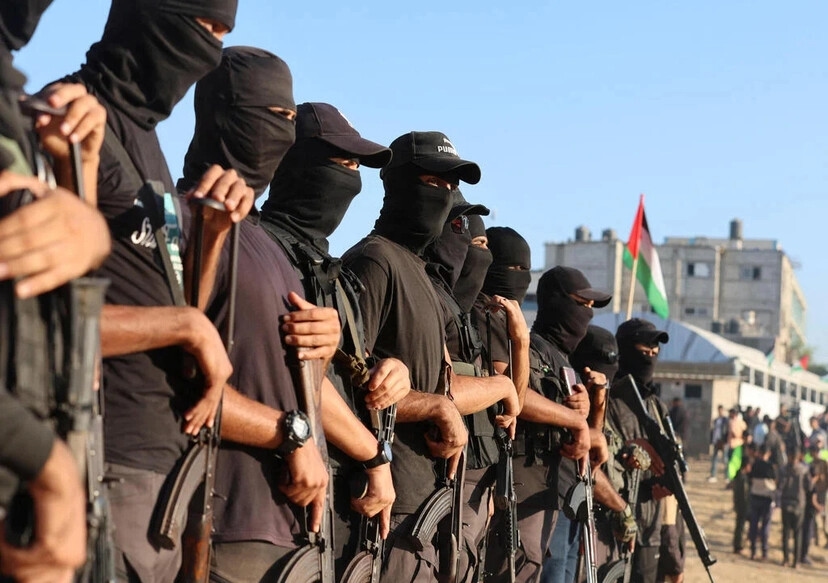
At the same time, these assets do not mean Hamas has regained its former combat capability. According to Ynet, the group is actively recruiting new fighters, but they are inferior to the experienced combatants who were killed in the war with Israel. In particular, the group has retained some of the fighters of Nukhba, the special assault unit of Hamas’s military wing, but opportunities for training are limited.
Full-scale field training creates a risk of detection and Israeli strikes, so much of the training is theoretical. Hamas’s command has also suffered serious losses. According to Israeli sources, since October 2023 some key positions have seen six or seven replacements, with each successive appointee less experienced than the previous one.
The group’s capabilities for rocket attacks launched from Gaza also remain limited. According to Israeli estimates, Hamas’s current stockpile is significantly lower than before the war, numbering in the hundreds.
At the same time, according to Israeli sources, Hamas has no shortage of new recruits. Sources interviewed by Ynet link this to the ideological indoctrination of young Palestinians and the opportunity to receive income amid mass unemployment and the destruction of Gaza’s economy. However, the group cannot provide all of the recruits with full weaponry. Payment is not easy either. According to Ynet, Hamas is struggling financially. At 3,000 shekels ($900) per fighter, paying its soldiers a full salary requires the equivalent of around $30 million a month.
Sources of funding
One of the main sources of funding for Hamas is trade and smuggling. The group continues to profit from trade in the Gaza Strip, including through fees on commercial deliveries and smuggled goods. Despite the Israeli blockade and other restrictions, not only humanitarian cargo but also goods from Israeli-authorized private importers continue to enter Gaza.
Smuggling is also prevalent. A range of goods Israel has banned or restricted from entering — from cigarettes and mobile phones to fuel, construction materials, and medical equipment — are brought in illegally through commercial and humanitarian deliveries (leading to periodic investigations in Israel itself).
In October, Hamas tried to increase fees on official trade. According to COGAT, the organization demanded that Palestinian importers pay 10,000 shekels ($3,000) for each truck of goods entering Gaza and sell about 30% of goods for cash. Cargo deliveries to Gaza were temporarily halted.
Hamas demanded that Palestinian importers pay 10,000 shekels for each truck of goods entering Gaza
Hamas representatives confirmed to Reuters that they were indeed trying to collect money but called the payments voluntary contributions to a fund to help the needy. They explained the demand for cash payments by a shortage of banknotes. A few days later, traders told COGAT that Hamas had withdrawn its demands. The Israeli side denied receiving an independent confirmation but still decided to gradually resume commercial imports. To prevent payments from going to Hamas, traders were ordered to settle accounts by bank transfers with documentary confirmation of the transactions.
As for smuggling, Mohammed Barbakh, a representative of the Hamas-linked Ministry of Economy in Gaza, told the Associated Press that up to 20% of the value of illegally imported goods is charged if the trader declares them to the strip’s authorities himself, and up to 80% if undeclared cargo is discovered by the regulatory bodies. Hamas officials have estimated that the revenues collected from such “fees” between the October 2025 ceasefire and August 2026 totaled up to $100 million.
Besides trade, in its March 2026 report the U.S. Treasury Department names Iranian support as one of the continuing sources of funding for Hamas. At the same time, it notes that some of the group’s former sources of funding have been seriously damaged by American sanctions and the war in the Gaza Strip. However, the March report does not reflect the consequences of the U.S.-Israeli military campaign against Iran that began on Feb. 28. Subsequent U.S. intelligence points to serious damage to Iran’s economy and financial system but does not specify exactly how much Tehran’s aid to Hamas has decreased.
U.S. materials also name Turkey as a place of operation for Hamas’s financial intermediaries. In particular, on July 23 the U.S. Treasury Department imposed sanctions on El-Kahira for General Trading, which had allegedly transferred hundreds of thousands of dollars to Hamas. The company provided informal banking services conducting money transactions outside the ordinary banking system using both fiat money and cryptocurrency. U.S. authorities also uncovered its ties to organized criminal groups in Sweden.
Besides direct transfers and operations through financial intermediaries, Hamas received income from foreign investments. According to the U.S. Treasury Department, the group owned stakes through affiliated businesspeople in companies and real estate in a range of countries that included Turkey and Sudan. Before the start of the war in Gaza in October 2023, the value of these assets was estimated at more than $500 million. However, by March 2026, sanctions had substantially weakened this financial network, and its significance as a source of income for Hamas had declined.
Additionally, Hamas receives donations from organizations presenting themselves as charitable. According to the U.S. Treasury Department, structures linked to financing Hamas operated in Turkey, Algeria, the Netherlands, France, and Italy. Some of them concealed the ultimate recipients of the funds from their donors. In its March 2026 report, the Treasury Department stated that as of early 2024 such donations could have been bringing Hamas up to $10 million a month.
Hamas receives donations from organizations presenting themselves as charitable
Another case concerns a UK-registered humanitarian organization. On July 31 the U.S. Department of Justice announced the arrest in the UK of Muhammad Yusuf Hasna.
According to the investigation, Hasna coordinated the delivery of cash and goods with a senior Hamas representative in Gaza, as well as their distribution through warehouses controlled by affiliated organizations. The prosecution claims that humanitarian cargo was sent on the instructions of Hamas leadership and that its actual recipients were concealed. Hasna has been charged with financing terrorism and providing material support to Hamas.
Cryptocurrency transactions and networks of exchange offices also play a significant role. For transfers, Hamas uses a network of intermediaries and exchange companies operating outside the ordinary banking system. In its March report, the U.S. Treasury Department lists the transport of cash, informal money transfers, the assistance of financial institutions, and operations with digital assets. Exchange offices make it possible to receive funds through intermediaries in different countries, not limited to direct bank transfers to a sender in Gaza.
One of the networks previously identified by American authorities is Al-Markaziya, which operated in Turkey and the Gaza Strip. According to the U.S. Treasury Department, it provided transfers worth tens of millions of dollars from Iran’s Islamic Revolutionary Guard Corps to Hamas and Islamic Jihad, including with the use of cryptocurrency.
Digital currencies allow Hamas not only to transfer money through intermediaries but also to receive donations directly from supporters abroad. According to FBI materials, the group’s military wing, the Izz ad-Din al-Qassam Brigades, has been experimenting with such fundraising since 2019, using Telegram and special websites with instructions for transferring cryptocurrency to attract donations.
During an investigation in September 2026, the U.S. Department of Justice reported seizing approximately $560,000 in cryptocurrency intended for Hamas’s military wing. The FBI also took control of some of the websites and servers through which the group collected donations.
It is no accident that Israel targets not only Hamas fighters but also participants in its financial network. In late September, the IDF announced that since the start of the war in 2023 it had eliminated 16 individuals who were allegedly involved in transferring more than a billion dollars through dozens of exchange offices in Turkey and Gaza. In recent months the number of such attacks has increased. Targets included heads of major exchange networks through which, according to the IDF, the group received millions of shekels in foreign currency.
As Asharq Al-Awsat writes, traders increasingly prefer electronic payments and refuse to accept cash, especially worn banknotes. At the same time, employees of Hamas structures and fighters of its military wing still receive salaries in cash. Intermediaries have appeared in the strip who exchange cash for electronic funds with a commission of up to 10%. According to the publication, payments are made about once every 40–50 days and amount to about 60% of previous earnings (but not less than 1,200 shekels).
How Hamas keeps power in Gaza
Military losses and financial difficulties have not cost Hamas its power in the strip. Israel presently controls approximately two-thirds of Gaza’s territory, but most of the strip’s population is concentrated in the remaining part, where Hamas continues to manage administrative and security tasks.
At the same time, the group has formally already given up direct governance: in July its governing bodies announced the end of their activities pending the transfer of powers to the National Committee for the Administration of Gaza that was created back in January.
However, no one stepped in to assume the released powers. Israel demands Hamas’s disarmament and rules out its participation in future governance, while the group itself seeks the inclusion of some of its police officers in the new security structures. Shaath’s committee has yet to start work. Israel has not allowed entry either to members of the committee or to Palestinian police officers who were supposed to ensure the security of the new administration.
Israeli authorities fear that Hamas will retain de facto control over the strip even after a formal transfer of power. The training of new police officers has also stalled. As The Times of Israel reported on Sept. 9, citing representatives of Donald Trump’s Board of Peace, 16,500 out of 283,000 applicants passed Israeli vetting. However, Israel did not allow them to leave for training in Egypt and did not guarantee their return after training.
Meanwhile, the issue of Hamas’s disarmament remains unresolved. At the end of July, Trump announced a new 15-point road map providing for Hamas’s disarmament, the transfer of governance of Gaza to a Palestinian technocratic committee, and a phased withdrawal of Israeli troops. However, Hamas allowed the transfer of weapons to the control of a Palestinian committee but refused to hand them to Israel or foreign forces and demanded an end to strikes and the withdrawal of the IDF. Israel insisted on complete disarmament before any further withdrawal of troops.
In central Gaza some municipal services continue to operate, while in the north and south administrative links are more severely disrupted amid a growing influence of local clans and armed groups. The remaining Hamas officials maintain the registration of residents, utility services, the distribution of resources, and conflict resolution. In areas where Hamas’s regular police are inactive, the group uses other security structures such as the covert unit Quwwat al-Radaa, which suppresses discontent, fights crime, and maintains order. The research organization ACLED also described the activities of the Sahm (Arrow) unit, which detains alleged Israeli collaborators, punishes theft, and engages in clashes with rival armed groups.
The administrative monopoly of Hamas also affects the distribution of humanitarian aid. During the war, Israel categorically rejected civil coordination with Hamas and obstructed attempts by humanitarian organizations to cooperate with the group. However, over the past year the situation has changed. International organizations have to deal with Hamas because it retains control over administrative mechanisms and aid delivery channels. Sometimes such coordination takes place with Israel’s tacit consent.
At the same time, attempts to create an alternative system of governance have so far yielded no results. One option envisaged starting reconstruction in territories already under Israeli control, without waiting for the transfer of power across the whole strip. However, the initial plans had to be substantially scaled back. In July The Guardian reported that the Board of Peace had abandoned a comprehensive program for rebuilding Gaza in favor of a small pilot project in the south of the strip.
The plan was to create a residential district with a Palestinian administration, police force, and a limited international presence. However, this pilot project has still not been implemented. In October, The Telegraph reported that the Board of Peace was claiming preparatory work continues and that more active steps are possible after elections in Israel and the U.S. are completed. However, given that the formation of a new Israeli government is dragging on (and that Trump has lost the support of a majority in Congress), quick progress is unlikely.
At the same time, Hamas is trying to maintain its influence on Palestinian politics. The first parliamentary elections since 2006 had been scheduled for Nov. 28. This past August, the group began negotiations on a joint electoral list with Islamic Jihad, supporters of Mohammed Dahlan — the former head of Palestinian security forces in Gaza who has been living in the UAE after being expelled from Fatah after a conflict with Palestinian Authority head Mahmoud Abbas.
An option was discussed under which the list would include independent candidates rather than representatives of the groups, allowing Hamas to retain political influence without direct participation in power. However, the elections were postponed. According to expert assessments, Fatah’s leadership feared defeat in the elections: the movement was losing support and remained split for several reasons, including the conflict between Abbas and Dahlan. As of today, the elections, both parliamentary and presidential, have been scheduled for Sept. 11, 2027.
Hamas is losing support, but is there a replacement?
Hamas’s control over a significant part of Gaza does not imply that the group enjoys its previous level of support among Palestinians. According to the Palestinian Center for Policy and Survey Research, while Hamas was supported by 35% of residents of Gaza and the West Bank at the end of 2025, that share declined to 24% in August 2026 and to 19% in October. For comparison, in September 2023, shortly before the October 7 attack, 34% of decided voters were ready to vote for Hamas in parliamentary elections and 36% for Fatah.
In polling this past October, 27% of respondents in Gaza supported Hamas, against 13% in the West Bank. Support for Fatah in both territories was 22%, and another 33% of respondents chose no party. At the same time, 56% express a willingness to vote for a hypothetical new independent list of public figures and professional managers unaffiliated with the existing parties. The new committee for governing Gaza is trusted by 42% of Palestinians — a figure that goes as high as 60% in the strip. These results point to demand for an alternative to the traditional Palestinian parties, but the poll does not reveal a single political force capable of replacing Hamas.
The new committee for governing Gaza is trusted by 42% of Palestinians, compared to 33% of Gazans supporting Hamas this past October
According to the same poll, in hypothetical parliamentary elections the independent list of Palestinian businessman Bashar Masri and the list of supporters of Marwan Barghouti — a Fatah leader serving a life sentence in Israel — would each receive at least 22% of the votes. A joint list of Hamas and Dahlan supporters would get 20%, and the official Fatah list 13%.
Answers to other questions in the study are also notable. In October, 42% of respondents named negotiations as the most effective way to end the Israeli occupation and create a Palestinian state; 33% chose armed struggle, and 18% chose mass nonviolent resistance.
In September of 2023, 53% of Palestinians considered armed struggle the most effective alternative, and in December of that year, the figure stood at 63%. In both cases, only 20% favored negotiations. At the same time, in Gaza the share of supporters of armed struggle has risen over the last two months from 21% to 37%, while in the West Bank it fell from 32% to 29%. However, these sentiments, like support for Hamas and Fatah, change periodically depending on circumstances.
Changes are also visible in Gaza’s social media. Orit Perlov, a researcher at Israel’s Institute for National Security Studies who analyzed Palestinians’ social media posts, notes that Hamas’s disarmament, previously considered an almost taboo topic, has become the subject of open discussion, including among supporters of the group. Perlov identifies three main positions.
Opponents of Hamas demand that the group give up its weapons to end the war and rebuild the strip. Some of its supporters would approve of the transfer of heavy weapons to a Palestinian structure in exchange for the withdrawal of Israeli troops, hoping to preserve the group as an organized force. Others oppose disarmament, fearing that surrendering such weapons would not stop Israeli military operations but would deprive Palestinians of the ability to offer armed resistance and would intensify the internal struggle for power.
As Perlov observes, more fundamental questions are increasingly being discussed: the achievements of armed struggle and the price Gaza’s residents have paid for it. However, it cannot be ruled out that both Palestinians and Israelis would have to pay a still higher price to pay for the continuation of the hostilities.
Will there be a new war?
Discussion of the scenario in which large-scale hostilities in Gaza resume was part of the Israeli election campaign. The parties’ proposals ranged from far-right plans to establish full Israeli control over the strip and resettle its residents to attempts to achieve Hamas’s disarmament by diplomatic means while preserving the possibility of a military operation.
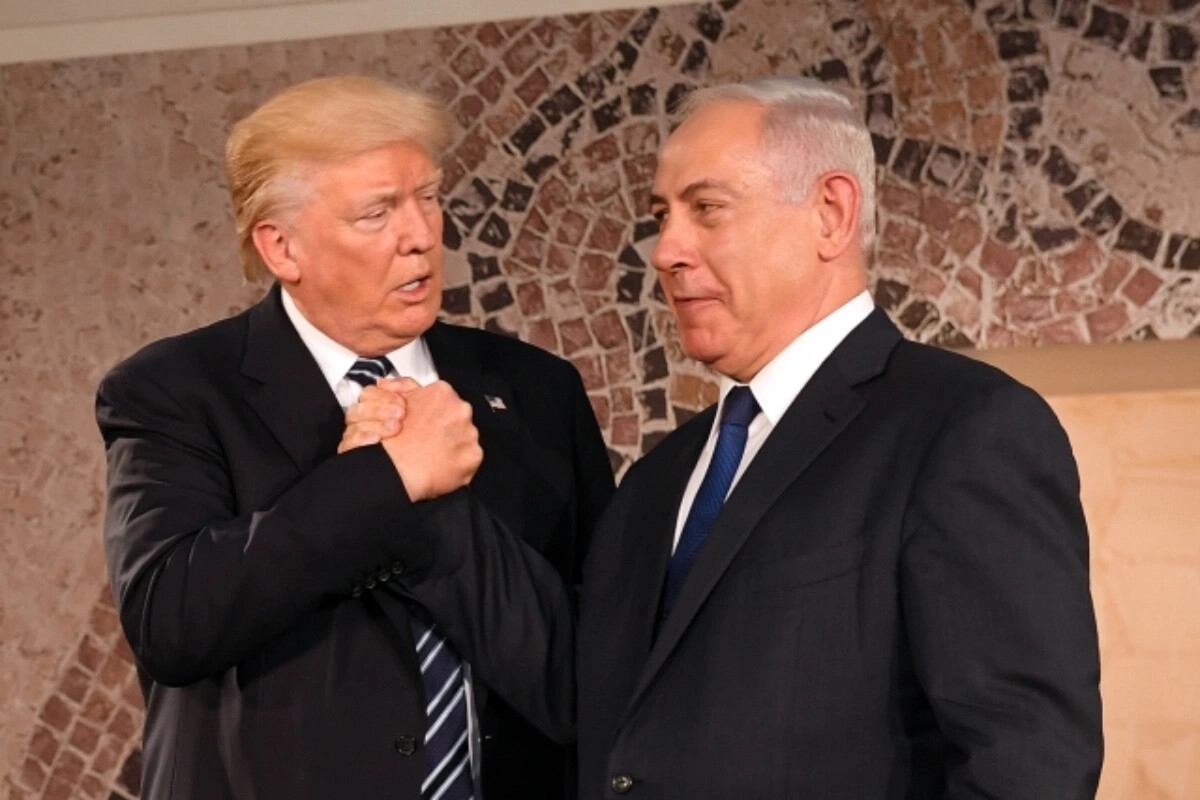
Itamar Ben-Gvir, leader of the far-right Otzma Yehudit party, advocated for a full takeover of the strip and encouraged the emigration of Palestinians. Benjamin Netanyahu’s Likud insists on preserving Israel’s freedom of military action in the strip and makes any further withdrawal of troops beyond the “yellow line” conditional on Hamas’s disarmament. Likud, like its allied far-right parties, rejects handing governance of Gaza to the Palestinian Authority. Netanyahu himself has expressed a readiness to resume hostilities if Hamas does not lay down its weapons.
Netanyahu’s main rival in the race for prime minister, Yashar party leader Gadi Eisenkot, promised to end Hamas rule in Gaza and destroy its military wing within 18 months of coming to power. He says this can be achieved either within Trump’s plan, which provides for the group’s disarmament, the handover of civilian governance to a Palestinian committee, and the deployment of international stabilization forces, or through a military operation.
Gadi Eisenkot, whom Israel’s president has entrusted with forming a government, promised before the elections to deprive Hamas of power in Gaza and destroy its military wing within a year and a half
But Gaza is not the only possible vector of a new escalation. Hamas is also trying to strengthen its positions in the West Bank. As Neomi Neumann notes, the group exploits Palestinians’ discontent with the actions of their own administration as well as of Israel, including military raids and attacks on Palestinians by radical groups of the settler movement. To expand its influence, Hamas also relies on religious and community networks.
In Israel, there are fears that Palestinian armed groups may try to organize a large attack on Israeli communities and military facilities in the West Bank. The Israeli army and the Shin Bet security service regularly conduct operations in the West Bank — detaining those suspected of preparing terrorist attacks, seizing weapons, and destroying the infrastructure of armed groups. In January 2025, the IDF began the large-scale Operation Iron Wall against armed cells in Jenin and Tulkarm, primarily in the Palestinian refugee camps located there. The military deployed armored vehicles, drones, and aircraft in order to occupy the territories of the camps and destroy hundreds of buildings, as well as roads and other infrastructure. The operation is in fact ongoing, as Israeli troops remain in the camps and carry out raids and detentions in other areas of the West Bank as well.
According to ACLED, an international think tank that collects and analyzes information on political violence and armed conflicts, in the first nine months of 2026 the number of Palestinian attacks on Israeli military personnel and settlers fell to 53; over the same period in 2025, it was 408. Researchers linked only three attacks directly to Hamas, with the rest being carried out by lone individuals and unidentified armed groups. ACLED attributes the decline in terrorist activity partly to Israeli raids, which disrupt the work of armed cells and make their recovery harder.
Against this backdrop, a similar model is being considered for Gaza as well: Israel could give up direct governance of the strip’s civilian life while retaining intelligence capabilities and freedom to conduct operations against Hamas’s armed formations. Back in 2024, ACLED analysts noted that Israel would probably try to preserve the ability to conduct such operations in Gaza by analogy with the West Bank.
However, there is a substantial difference between the two territories. In the West Bank, Israel maintains a permanent military presence and a network of settlements. In Gaza, however, the Israeli settlements were evacuated back in 2005, and now the Israeli army controls only part of the strip behind the “yellow line.”
The main uncertainty concerns what will happen if power is handed over to new Palestinian structures. If Israel fully withdraws its troops from the strip, Hamas may gradually rebuild its military potential and continue to influence events through structures it controls, even formally giving up power. An alternative scenario is regular IDF operations against armed formations, as in the West Bank. But this would require that Israel either hold part of Gaza’s territory or ensure the ability to return there after withdrawing troops. Such a policy is fraught with new armed clashes and international criticism, especially if the Israeli military presence drags on.
Finally, Israel may leave everything as it is: block the new Palestinian committee of technocrats from governing the strip, postpone any large-scale reconstruction of Gaza, and refuse to cooperate with the Palestinian Authority. As a result, Hamas will continue to govern the part of Gaza from which Israeli troops have been withdrawn, although its military capabilities and influence will be limited. However, for how long Israel will be able to keep Hamas in such a position remains an open question.