Russia’s intensifying repression during the ongoing full-scale invasion of Ukraine has affected not only traditional government critics, but also officials inside the system itself. According to researchers at the CEDAR center, from the beginning of 2023 through mid-2026, one in 10 mayors of large and midsize cities, 9% of senior regional officials, and around 8% of ministerial-level administrators were named as defendants in criminal cases. Overall, the rate of arrests among officials has risen fivefold since the start of the full-scale war in Ukraine, with Russia’s regional elites bearing the brunt of the campaign. Growing economic problems and declining revenues are fueling a new redistribution of property. Unsurprisingly, Moscow’s security services are playing a central role.
Since May 2024, seven deputy governors serving under Krasnodar Krai governor Veniamin Kondratyev have been detained (even as Kondratyev himself remains in office). Over the past year and a half, Russian law enforcement authorities in the region have arrested seven deputy governors, a former mayor of the resort city of Sochi, the regional transport minister and two of his deputies, the head of the Kuban Cossack Host, and a former chairman of the regional court.
During a search at the mansion of deputy governor Andrei Korobka, who is responsible for the agricultural sector, investigators found four million dollars, seven million euros, and 31 million rubles in cash. Former construction deputy governor Sergei Vlasov signed a contract with the Defense Ministry after he was convicted; he went missing after his first assault mission. And on Aug. 5, former Sochi Mayor Alexei Kopaygorodsky was sentenced to 15 years in prison.
Officially, this is an anti-corruption campaign. In practice, the Kuban (the common name for southern Russia’s Krasnodar Krai) represents the clearest example of how the country’s regional governments have been reshaped since the war began. As long as Russia had enough resources, the federal center tolerated the rents collected by the regional governors and their teams. However, now that resources are scarcer, the fight over them has become more intense, and established patronage streams are becoming prizes to be seized.
Kuban is not the only example. Officials are being hunted across the country, but redistribution takes place only where there is something valuable to be gotten.
A fiefdom in exchange for loyalty
Political scientists describe this kind of system as neopatrimonial. From the outside, it looks like a formal system of official offices, powers, regulations, laws, and courts. Inside, however, are patron-client networks that fill those positions, making decisions and distributing resources for the benefit of a privileged few.
Under such an arrangement, the governor does the bidding of the federal patrons above him while coordinating the activities of his own deputy governors, mayors, and agency chiefs. The federal center effectively gives him the region as a source of rents, and, in exchange for the loyalty he directs upward, the governor distributes fiefs below in the spheres of construction, land use, subsidies, and roads. His subordinates control the cash flows making their way through these spheres of activity, sharing the proceeds with the governor in exchange for his protection.
The governor receives the region from his patron as a source of rents, ensures loyalty upward, and distributes fiefs in the areas of construction, land, subsidies, and roads
Kormlenie — literally “feeding” — is a Russian term rooted in the historical practice that saw officials draw their income from the territories they governed. Today, it is commonly used as shorthand for patronage-based access to public resources. The practice is formally illegal, but authorities often tolerate it so long as the political balance remains stable. The arrangements also leave evidence behind — kickbacks, property registered to relatives, and contracts awarded to favored firms — giving investigators material for criminal cases that can be activated against subordinates when needed.
Protection in this system comes from the practical influence of a patron, not their formal office. A governor with a powerful federal patron can blunt attacks by rival security-service clans, which of course have their own powers (including those of arrest and asset seizure). A governor whose patron has been weakened or departed their post loses that protection, and his positions are then gradually occupied by clients of other, stronger patrons. Formally, the structure remains unchanged, made up of the same deputy governor posts and the same ministries.
As long as there are enough resources in the system, conflict is rare. When the quantity of resources shrinks, however, groups that once tolerated someone else’s collection of rents begin making claims on them, and if a governor can no longer protect his clients, the security services gain an opening to enter the region to begin “fighting corruption.”
Open season
The shrinking resource base is visible in the numbers. From January through July 2026, the federal budget deficit reached 6.46 trillion rubles, 1.7 times the amount budgeted for the entire year. Oil and gas revenues are declining, the war demands ever more spending, and the old model in which every group had enough room to collect rents no longer works.
As the economy has tightened, the hunt for spoils has intensified. According to CEDAR, the number of arrests of senior officials rose from 21 in 2022 to 110 in 2025, with the annual risk of arrest for a senior official reaching close to 2%. The FSB participates in nearly 90% of such cases, up from 76% in 2018, with the value of confiscated assets jumping from 90 billion rubles in 2022 to 1.6 trillion rubles in 2025. Re concluded that such campaigns serve to consolidate power rather than to actually eradicate corruption.
There is a fiscal logic to this, but it is secondary. Prosecutor General Igor Krasnov said the state received 500 billion rubles in assets from corruption cases in 2024. But those assets consisted mainly of real estate, stakes in companies, and leasing rights, none of which can directly plug a budget deficit. In fact, confiscations function more as a performance indicator for the security services than a source of readily available cash (even if they make for a nice “bonus”).
Most importantly though, the nationwide surge in such law enforcement actions serves as a signal from above: the federal center has effectively given the security services a license to hunt, even if who hunts whom in any particular region is determined locally, according to the balance among elite groups.
The simultaneous surge across the country indicates a signal from above: the federal center has effectively given the security services a license to hunt
In some places, such as Kuban, arrests have been followed by the replacement of entire networks. Elsewhere, however, certain officials have been swapped out while the real power brokers remain unchanged.
Why Kuban: A governor without a patron
Kuban illustrates this logic in its purest form. Kondratyev has no powerful active patron in Moscow, and that proved to be his undoing.
Kondratyev was elevated to the governorship in 2015 by Alexander Tkachev — then Russia’s agriculture minister and previously governor of the region. But Tkachev’s group has lost considerable influence in recent years, and Kondratyev never acquired new protection at the federal level despite overseeing one of the country’s wealthiest regions.
Kuban contains major agricultural businesses, ports, resorts, roads, and extensive construction interests. In figures, that amounted to 5.9 trillion rubles in gross regional product and about 1 trillion rubles in investment in 2025.
But that pie is shrinking as well. Investment in the region fell 20% in real terms that year, while construction volume declined 30%. Once resources contracted and federal groups began making claims on other people’s fiefs, Krasnodar became an ideal target — there was plenty to take, and no one powerful enough to defend it.
The Krasnodar Krai became an ideal target — there is plenty to take and no one powerful enough to defend it
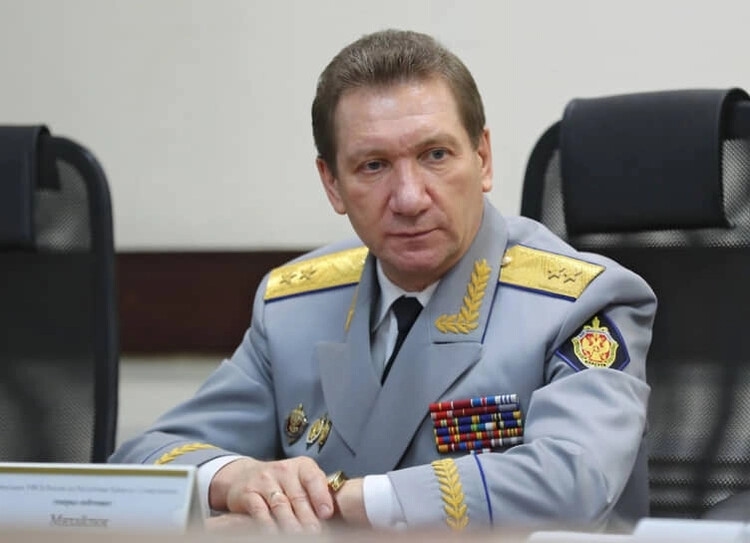
The wave of law enforcement action in Kuban began in the spring of 2024 and accelerated sharply in 2025. That same year, Leonid Mikhailyuk took over the regional FSB directorate after heading the security service in Russian-occupied Crimea and Sevastopol.
Krasnodar journalist Alexander Savelyev links the campaign’s intensification directly to Mikhailyuk’s arrival. According to Savelyev’s sources, the general was “sent there specifically to look for money that the budget apparently does not have enough of.”
Kondratyev’s team is being dismantled while the governor himself is left in place. Removing him would offer a public signal that a redistribution is underway. Keeping him, by contrast, allows fiefs to be taken over quietly — Kondratyev’s clients disappear, and their positions are occupied by clients of stronger outside patrons.
How the fiefs are redistributed
As a result of the criminal cases, assets and posts move from one elite group to another. In Kuban, the officials overseeing the region’s construction sector have been replaced one after another. Sergei Vlasov was detained in May 2024 and sentenced in December 2025 to 11 years for taking a bribe. His successor, Alexander Nesterenko, was sentenced in August 2026 to nine years for approving substandard school repairs in the occupied Kherson region, with damages estimated at 146.7 million rubles. And the next official overseeing construction, Dmitry Maslov, lasted less than a year.
Maslov and his successor, Sergei Lagutin, have one agency in common: Rostekhnadzor, Russia’s industrial, technological, and nuclear safety regulator. Maslov headed the agency’s North Caucasus department for five years, and Lagutin served there as deputy head. Alexander Trembitsky, a former head of the same department, has led the entire federal agency since 2021.
Trembitsky’s current deputy, Vadim Sergeyev, followed the same route through the North Caucasus department and Kuban’s construction sector. Notably, Alexander Trembitsky, Jr. also served as a deputy governor on Kondratyev’s team. Since October 2022, he has represented the regional legislature in Russia’s Federation Council, the upper house of parliament.
Construction, in other words, is passing to a group with its own direct connection to a federal agency. And while there is no direct evidence that Rostekhnadzor’s chief personally arranged the appointments, the personnel pattern is clear: one post after another in Kuban’s construction sector is going to the elder Trembitsky’s former subordinates.
A similar pattern can be seen in the Cossack sector. Alexander Vlasov, a deputy governor and ataman — a leader of the Kuban Cossack Host — was sentenced in October 2026 to 14 years in prison. The court said he ordered the theft of some equipment bought with a 100 million-ruble subsidy for Cossack volunteers and had it sold through a classified-ad website.
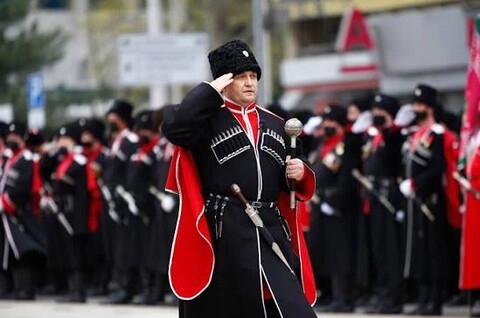
Vlasov was replaced by Alexander Agibalov, who since 2020 had worked in the Sakhalin and Khabarovsk regions, fought in the war, and become ataman of the Ussuri Cossack Host. He returned to the Krasnodar Krai with combat credentials and a career built outside the local system.
The core of the governor’s team has also been hit. Korobka — who, like Kondratyev, is a native of the Dinskaya district — was the only deputy governor who had served alongside him continuously since 2015. According to a report by the Kub Mash Telegram channel, searches of Korobka’s estate turned up permits for 15 types of weapons issued in the governor’s own name.
Kommersant’s sources believe such arrangements could not have operated without the presence of powerful patrons. In a lawsuit brought by the Prosecutor General’s Office, a court transferred to the state 114 properties belonging to Korobka, along with assets worth 8 billion rubles and lease rights to 12,500 hectares of fertile land.
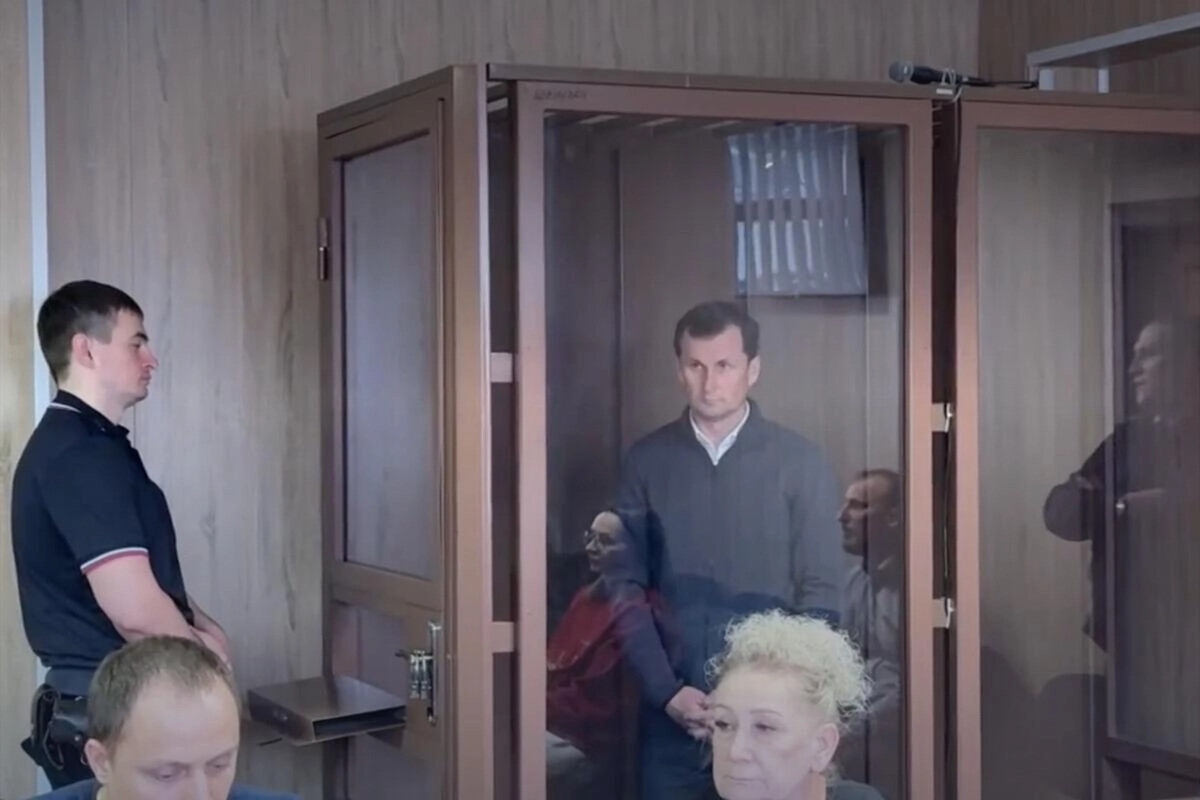
In October, a court released Korobka from pretrial detention under travel restrictions, but by then his property had already been transferred.
In March 2026 the authorities seized assets worth about 1.6 billion rubles from Alexei Kopaygorodsky and people associated with him. Additionally, the Prosecutor General’s Office sought more than 120 properties and stakes in 27 companies from former Deputy Gov. Anatoly Voronovsky and his associates in the road-building sector. In January 2026, authorities detained serving Transport Minister Alexei Pereverzev and two of his deputies. In 2025 alone, courts in the region confiscated assets worth more than 76 billion rubles.
Belgorod: The same scenario taken to its conclusion
In summer 2025, authorities detained Belgorod region deputy governor Rustem Zainullin and former deputy governor Vladimir Bazarov in a case involving alleged theft during construction of fortifications along the Ukrainian border. Governor Vyacheslav Gladkov had brought Bazarov with him from Sevastopol, and by the time of his arrest, Bazarov was already serving as deputy governor of the neighboring Kursk region, where he was once again overseeing construction.
According to the Prosecutor General’s Office, nearly 1 billion rubles was stolen from the fortification program. In July 2026, a court sentenced Zainullin to 20 years in a penal colony and Bazarov to 19.
Gladkov was supported by figures close to Sergei Kiriyenko, the powerful Kremlin official responsible for domestic politics. But that patron’s influence was only sufficient to protect the governor himself, not his team. Amid a conflict with the Defense Ministry and FSB over widespread communications shutdowns in May 2026, Gladkov resigned early, and in June he was appointed Russia’s ambassador to Abkhazia.
Gladkov was supported by Sergei Kiriyenko’s circle, but the patron only had enough influence to protect the governor himself, not his team
The networks were then replaced. After commanding a brigade formed from units of the self-proclaimed “Donetsk People’s Republic,” taking part in the Kremlin’s “Time of Heroes” program for war veterans, and serving as deputy governor of the Irkutsk region for a few months, in May General Alexander Shuvayev became the new governor in Belgorod.
When the regional legislature approved Shuvayev’s government in October, not a single member of the previous team retained deputy governor status. The government was headed by Vladimir Zverkov, a former deputy prime minister of the Russian-controlled “Donetsk People’s Republic” who had previously spent more than a decade working at Russia’s Economic Development Ministry.
The Finance Ministry went to Andrei Zakharov, formerly finance minister of the occupied part of Zaporizhzhia region. Construction, housing and utilities, and roads were assigned to Alexei Gerzhik, who had worked in the Moscow city and Moscow regional governments and, after the invasion, on reconstruction in the Ukrainian territories that Russia calls its “new regions.” Security went to Eduard Petrukhin, a former first deputy director of Russia’s Federal Penitentiary Service.
Belgorod followed the same pattern as Kuban — first criminal cases against the governor’s team, then the governor’s departure, followed by the transfer of assets — only there, not even the governor kept his post.
The prize is easy to understand. Belgorod is an agricultural and metals-producing region where authorities expected to see more than 217 billion rubles in investment in 2025. Large amounts of federal money also flow through the border region, earmarked for the construction of fortifications and the reconstruction of homes damaged by shelling.
In the Belgorod Region, the security services dismantled the circles around two governors in succession. While Gladkov was still in his post, they imprisoned several close associates of his predecessor, Yevgeny Savchenko, who had ruled the region for 27 years. His deputies Konstantin Polezhayev and Yevgeny Glagolev were among those sentenced. On Sept. 22, it emerged that Polezhayev, who had signed a contract with the Ministry of Defense following his conviction, had been killed in the war in Ukraine.
Chuvashia: “An absolutely toothless region”
In Chuvashia, there is almost nothing to divide. Oleg Nikolayev was appointed to serve as head of the republic in 2020 after the scandal-driven resignation of Mikhail Ignatyev. There are no powerful players in the region apart from billionaire Viktor Vekselberg, and political scientist Sergei Markelov calls the republic “an absolutely toothless region” that was handed to A Just Russia (a nominally opposition party loyal to the Kremlin) for the sake of interparty balance.
Nevertheless, the hunt is underway there too, and criminal cases are plentiful. Transport Minister Vladimir Osipov, appointed by Nikolayev, was detained in December 2023 after searches connected with road contracts. Deputy Prime Minister and Construction Minister Pavel Danilov was detained in Moscow in March 2024, with investigators alleging he received 50.5 million rubles in exchange for helping secure government contracts. Nikolayev fired the next construction minister, Mikhail Koleda, “for loss of confidence” after he helped arrange contracts worth 1.5 billion rubles without competitive bidding. In October 2026, former First Deputy Prime Minister and Finance Minister Mikhail Nozdryakov ended up in a Moscow pretrial detention center.
Nikolayev is filling the vacant posts from his own bench. Sergei Artamonov, who had headed the republic’s Agriculture Ministry since 2015, became prime minister. The Finance Ministry went to a former finance minister from neighboring Mordovia. Nikolayev’s aide Natalia Voskresenskaya was appointed deputy prime minister. None of the new appointees has an independent line into a federal agency.
Compared with Kuban, the amounts available to siphon off are modest, a function of the size difference between the two regional economies. Kuban’s gross regional product in 2025 reached 5.9 trillion rubles, with fixed-capital investment of about 1 trillion. According to an estimate by Expert RA, Chuvashia’s respective figures were around 700 billion rubles and 100 billion rubles. One-third of the republic’s budget revenue comes from the federal government, and its most notable infrastructure asset — the district heating networks in Cheboksary and Novocheboksarsk — has been operated by the Vekselberg-affiliated firm T Plus since 2021, effectively putting it off-limits.
To make any real money from government contracts, one has to occupy a ministerial post — and after a series of arrests, those offices have become dangerous places to sit — the risk is high, and the potential reward is comparatively small.
Chuvashia shows the limits of the neopatrimonial system. The license to hunt operates there just as it does everywhere else — and arrests continue — but mostly for the purpose of boosting law enforcement performance indicators — the federal center pads its statistics while gaining leverage over the governor, the governor keeps his post by sacrificing his own people, and outside networks do not move into the republic.
In Chuvashia, arrests continue mainly for performance indicators — the federal center boosts its statistics and gains leverage over the governor, who keeps his post by sacrificing his own people
In sum, in Kuban, the governor’s network has no protection and the prize is enormous; his team is dismantled, people from Rostekhnadzor and the front take their places, and the governor remains in place simply to provide a false sense of continuity. In Belgorod, where the prize was substantial, the governor’s team was imprisoned, the governor was removed, and the local government was rebuilt by outside networks. In Chuvashia, there is no protection, but there is little worth taking; arrests continue, while the governor fills the vacancies from his own bench. Overall, arrests happen everywhere, but the owners change only where there is something worth seizing.
Nowhere to run
The purges are changing the behavior of those officials who remain free. They effectively have two options: demonstrate loyalty, or face a choice between jail and the front. Since 2024, signing a contract with the military has been enough to have criminal proceedings suspended.
However, the Kuban cases show that, for senior officials, neither option works particularly well. The front-line escape hatch has effectively closed for the upper echelon, as Ataman Alexander Vlasov was arrested shortly after telling a council of Cossack leaders that serving the Motherland was a “great honor,” going so far as to announce that he was joining the Kuban brigade. Kopaygorodsky volunteered for the war after resigning but was detained in occupied Luhansk in September 2024. And Sergei Vlasov’s contract helped him leave prison after he had already been sentenced, but it did not save him: he went missing after his first assault operation.
Demonstrations of loyalty offer no better protection. In a neopatrimonial bargain, loyalty is a condition of the deal, not a service for which one receives extra protection. The case is opened over the fief, not disloyalty, so additional displays of devotion change nothing.
The case is opened over the fief, not disloyalty, so additional displays of devotion change nothing
Personal popularity provides no protection either, and it may even arouse suspicion. Khabarovsk region Gov. Sergei Furgal was arrested in 2020 at the height of his popularity. Belgorod’s Gladkov, one of the country’s most recognizable governors, first lost his team and then his post. The Kremlin does not need genuinely popular governors; it prefers unremarkable administrators such as Kondratyev.
The ritual of loyalty can, however, protect the patron. On April 7, the day Korobka was arrested, Kondratyev met Patriarch Kirill, declaring that “Kuban without faith is not Kuban.”
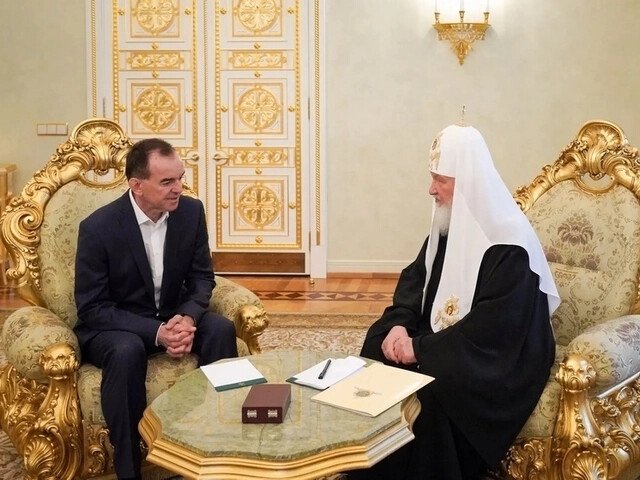
The next meeting took place in the Kremlin, where the governor reported to presidential chief of staff Anton Vaino on the region’s development. Kondratyev kept his job while his team continued to shrink.
Fear has another side: paralysis. The authors of the CEDAR report note that in such an environment, the rational choice is either to make no decisions at all or to take whatever option still can before it is too late.
Who wins
Three players benefit. The federal center redistributes fiefs to more loyal and manageable groups without bearing the political cost — after all, formally at least, it is “fighting corruption.” The FSB gets performance statistics and increased leverage over a weakened governor. And groups with their own links to federal agencies — such as the Rostekhnadzor network in Kuban construction, war veterans in the Cossack structures, or veterans of occupation administrations in Belgorod’s government — receive the newly vacant sources of rents.
The losers are the officials who actually come in for punishment, even as the formal structure of the region remains intact — the same posts, the same offices, the same governor still in place. Kondratyev remains precisely because he now threatens no one and lays claim to nothing: he is a convenient facade masking the takeovers underway below the surface.
The same pattern can be seen elsewhere as well. Former Krasnodar Mayor and State Duma lawmaker Yevgeny Pervyshov, who served at the front and completed the Kremlin’s “Time of Heroes” program, became acting governor of the Tambov Region in November 2024, replacing Maxim Yegorov. In summer 2025, Yegorov — by then a former governor — was detained on charges of bribery.
Belgorod offers a possible preview of how the process could end: the governor will leave office with his standing intact, while control of the most lucrative portfolios will pass to outsiders.
For now, the key unanswered question in Kuban is who will take over the region’s most valuable portfolio — agriculture — after Korobka. The appointment could indicate which federal power group has ultimately secured control over the region.