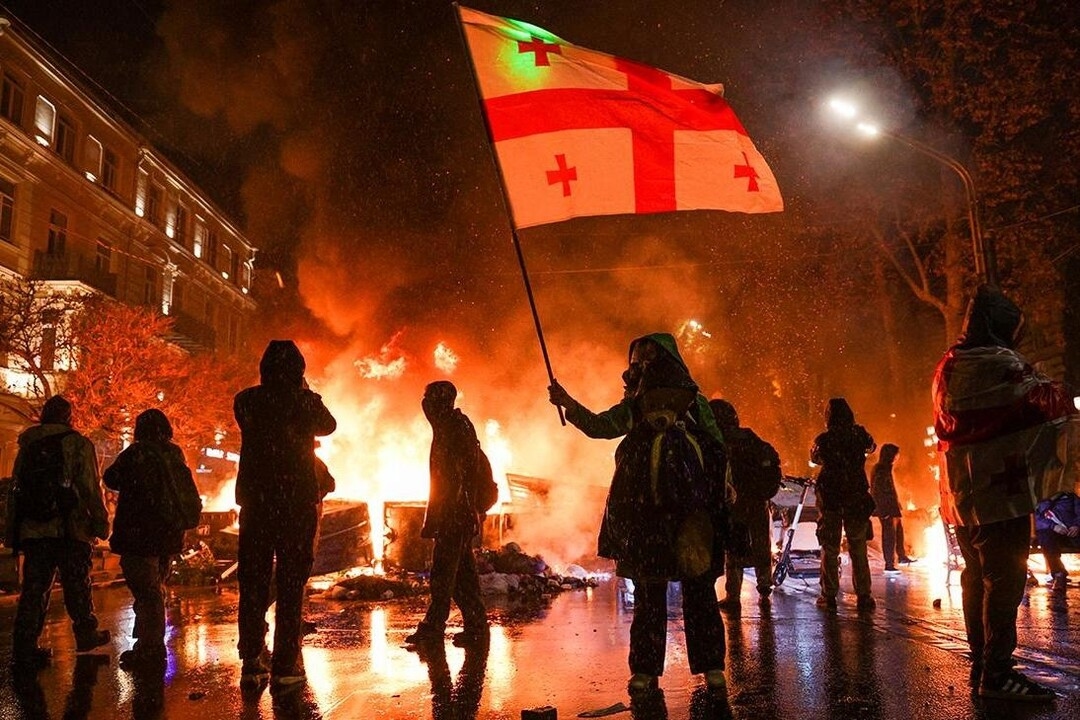
The Constitutional Court in Tbilisi has begun hearing a case brought by the ruling Georgian Dream party, which seeks to ban the country’s five main opposition parties. Just a few years ago, Georgia was considered a model of democratic development in the region. Now, the authorities have not only halted the EU integration process, they have also stepped up political repression. Censorship of the media has intensified, human rights organizations face economic sanctions, and at least 90 political prisoners sit in jail. Georgia has even developed its own version of Russia's politically motivated online monitoring agency Roskomnadzor, arresting citizens for their comments posted to social media. Nevertheless, civil society continues to resist the government’s authoritarian course, maintaining a mass protest movement that is still going strong after two years of uninterrupted demonstrations.
- 1.How Georgia changed course
- 2.Repression intensifies
- 3.A divided opposition
- 4.Foreign nationals face intimidation
- 5.“No care, no medication”
- 6.Drug policy as a symbol of authoritarianism
- 7.Society wasn't ready for the crackdown
- 8.Who supports Georgian Dream, and why?
- 9.The façade of a multi-vector foreign policy and a shift toward Russia
How Georgia changed course
On Oct. 29, Georgia’s Constitutional Court held another hearing in a case brought by the ruling Georgian Dream party, which seeks to ban the activities of the country's most prominent opposition parties. The lawsuit is radical even by the standards of established autocracies, and it is all the more shocking given the fact that as little as a decade ago Georgia was still considered a democratic success story. And yet, while society staggers under each new assault against normality, the government strikes harder.
The weakening of democratic institutions, restrictions imposed on citizens' fundamental rights, and the shrinking space for civil society in Georgia are all interconnected, according to the EU’s 2025 human rights report, published in August. According to the EU, some cases of police brutality against protesters amounted to torture or inhuman or degrading treatment. And no one in power is held accountable.
Independent media are facing increasingly notably severe restrictions. Amendments to the Law on Broadcasting and the Law on Transparency of Foreign Influence prohibit foreign funding for media outlets, but in the hands of Georgian Dream, they function less as safeguards and more as a convenient justification for punishing journalists who violate the principles of “fairness and confidentiality” in their content.
Sometimes, it really does feel like all of this happened overnight. As recently as 2018, when neighboring Armenia carried out a series of democratic reforms, Georgia was still regarded as the leading democracy in the South Caucasus. As Tigran Amiryan, founder of Armenia's Cultural and Social Narratives Laboratory, wrote in a 2024 article : “For many years, Georgia was a leader in democratic transformation in the South Caucasus. The country’s aspiration to become part of Europe — or at least Eastern Europe — was not merely an ambition of Georgian civil society; it was reflected in a clearly articulated action plan.”
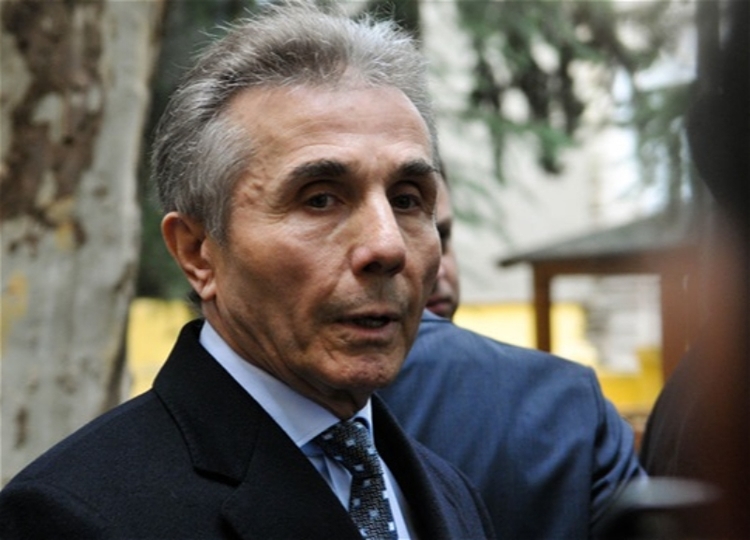
The Georgian Dream party, which came to power in 2012, was suspected from the outset of harboring ties to Moscow. Its founder and leader, Bidzina Ivanishvili, amassed a fortune in Russia through business deals with oligarchs close to Vladimir Putin. According to OCCRP, his family still owns high-value real estate in the Russian capital and holds accounts with Sberbank. The extent to which these connections influence Ivanishvili’s policies remains unclear, however, as the Georgian government continues to formally distance itself from the Kremlin. Georgia, for instance, has yet to restore full diplomatic relations with Russia, which were severed after the 2008 war. There have been worrying signs, however, including the expulsion of Russian opposition activists and journalists. Ivanishvili evidently does not want a falling-out with Moscow. Since 2022, numerous anti-war rallies have been held in Tbilisi and other Georgian cities, but the authorities have consistently refrained from taking a position on the Russia-Ukraine war.
The crackdown has been underway for several years. In October 2021, former Georgian President Mikheil Saakashvili (who had indeed entered the country illegally after a stint in Ukraine) was arrested in a highly publicized move. In late 2023, Georgia was granted EU candidate status, but by then it was already clear that the government was shifting the country’s political course in the opposite direction. In March of that year, the ruling Georgian Dream party introduced its Law on Transparency of Foreign Influence in parliament. It was immediately dubbed the “Russian law” because of its similarity to Russia’s legislation on “foreign agents.”
Although parliament passed the bill in a first reading, mass protests persuaded the government to withdraw it. Georgia was granted EU candidate status largely thanks to the efforts of civil society — not the actions of the government — European Commission President Ursula von der Leyen said in November 2023.
The following year, Georgian Dream was better prepared to weather its citizenry's resistance. Despite promising not to revive the “Russian law,” it was pushed through parliament. Police responded to the resulting wave of protests with much greater aggression, using special equipment against demonstrators and carrying out mass arrests. For the first time, the authorities also deployed "titushki" — groups of plain clothes hired thugs who attacked activists, journalists, and opposition figures.
Repression intensifies
In the October 2024 parliamentary elections, Georgian Dream won an official 53.93% of the vote, securing 89 of the 150 seats in parliament. However, the election was marked by the the blatant abuse of democratic norms. The authorities mobilized public-sector employees and pensioners, warning them that an opposition victory would lead to the legalization of same-sex marriage and Georgia's entry into the war in Ukraine. Anticipating opposition protests, the authorities brought busloads of government workers and pensioners from across the country to Tbilisi for a counter-rally. Marching down Rustaveli Avenue with EU flags, the participants genuinely believed they were demonstrating against war and gay people while supporting European integration.
Opposition protests did indeed erupt, but not immediately after the election results were announced. Instead, they began a month later when the ruling party announced that it was suspending Georgia’s EU accession process until the end of 2028. Prime Minister Irakli Kobakhidze made the announcement on Nov. 28 in response to a European Parliament resolution condemning “the worsening democratic crisis in Georgia following the parliamentary elections and alleged electoral fraud.” The European Parliament called for new free elections to be held within a year and proposed targeted sanctions.
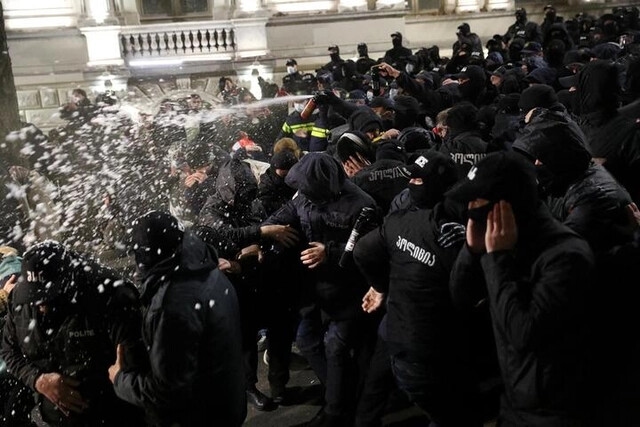
In late November 2024, during the first days of the renewed protests, demonstrators erected barricades and threw firecrackers at police, who responded with unrestrained force — attacking protesters with water cannons and tear gas and carrying out mass arrests. Opposition leaders and media workers were also subjected to raids and arrests.
According to journalists’ estimates, the authorities arrested nearly 400 people during the first 10 days of the winter protests. Transparency International Georgia now counts 90 political prisoners in the country of 3.8 million. They include journalist Mzia Amaglobeli, sentenced to two years in prison for slapping a police chief, and poet Zviad Ratiani, who received a two-year sentence for “insulting a police officer.” During the mass protests, demonstrators received support from many diplomats and major businesses, but the authorities were prepared for this too — some officials were dismissed, while assistance funds set up by businesspeople to help protesters pay their fines were frozen.
A turning point came on Dec. 14, 2024, when Georgia held its presidential election. Pro-European incumbent Salome Zourabichvili, who had refused to recognize the results of the parliamentary election, was replaced by former footballer Mikheil Kavelashvili, a Georgian Dream loyalist. Zourabichvili initially refused to leave the Presidential Palace but eventually did so on Dec. 29, the day of Kavelashvili’s inauguration.
That same day, Kavelashvili fast-tracked a series of laws targeting protesters. These included a ban on covering one’s face and sharply increased fines for blocking roads and defacing property with graffiti. The Prosecutor General’s Office subsequently launched criminal cases against three organizations providing legal assistance to detained protesters — the Tbilisi Human Rights House, Sapari, and the Social Justice Center — charging them with “sabotage” and “hostile activities on behalf of a foreign power” and freezing their bank accounts.
On the day of his inauguration, the new president banned protesters from covering their faces and sharply increased fines for blocking roads and defacing property with graffiti. The Prosecutor General’s Office also opened criminal cases against human rights organizations over alleged “hostile activities on behalf of a foreign power”
In September 2025, a Georgian court handed down its first high-profile sentences against a group of activists in a case that became known as the “Trial of the Eleven.” All 11 protesters were sentenced to two years in prison under the provision criminalizing group actions that violate public order.
The largest wave of arrests came on Oct. 4, 2025, the day of the municipal elections, when a crowd of demonstrators toppled the metal barriers at the entrance to the Orbeliani Presidential Palace and broke into its courtyard. The authorities immediately branded the incident an “attempted coup,” while Zourabichvili (who was still president at the time) called the storming “a staged incident and a provocation by the regime aimed at discrediting peaceful protest.”
More than 60 protesters were charged with inciting the violent overthrow of the constitutional order, group violence, and seizing or blocking a strategic facility. Fifteen received prison sentences.
President Mikheil Kavelashvili later pardoned three of those arrested to mark the religious holiday of Mariamoba. Pardons on religious holidays are a longstanding practice among the Georgian authorities. For example, in late August 2026, they pardoned Russian national Denis Kulanin, who had also been arrested during the protests, on charges of damaging a police vehicle.
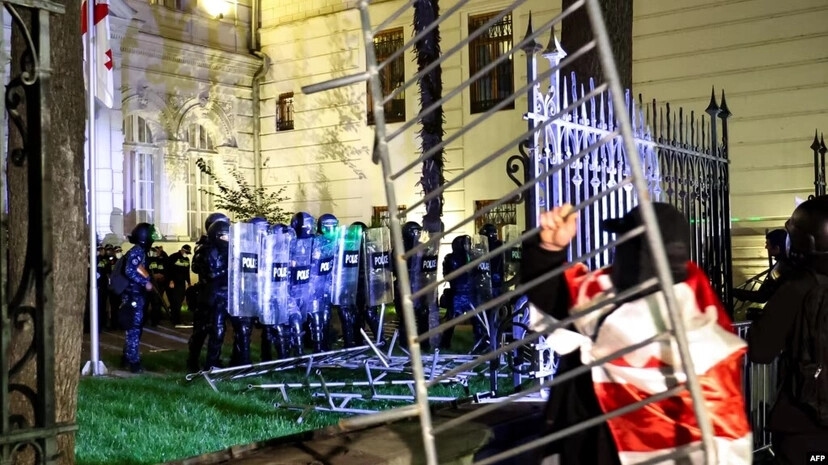
The attempted storming of the Presidential Palace exposed the Georgian opposition’s disorganization and lack of a clear strategy. As human rights activist Marina Meskhi recounted: “I simply couldn’t understand the opposition figures, Paata Burchuladze, for example, who called for the storming. Suppose they had entered the palace. What then? It was unclear what they were trying to achieve. They are now in prison, unable to communicate with anyone, so we cannot even know what they themselves think about what happened.”
One of the political prisoners in the Oct. 4 case is Nana Sander, a Georgian citizen who had lived in Germany for 16 years. She returned to Georgia to join the protests and, as she put it, to “defend the Georgian people’s right to have a voice.” Unlike most other defendants, Sander was charged with more than simply participating in the unrest. She received a seven-year prison sentence for organizing group violence and publicly calling for the violent alteration of the constitutional order or the overthrow of the government.
The same sentence was handed down to the rally’s actual organizers: opera singer and opposition figure Paata Burchuladze, and politicians Murtaz Zodelava and Irakli Nadiradze. Sander said that she had been beaten in prison, ordered to strip in front of five staff members (including the prison director), and subjected to sexual harassment.
Georgian national Nana Sander, who had emigrated to Germany and was arrested at a protest, was beaten in prison, ordered to strip in front of five staff members, including the prison director, and subjected to sexual harassment
Daily protests continued after the October events. On Jan. 1, 2026, the continuous protest movement reached its 400th day, even if the demonstrations had become much smaller. The last rally to draw thousands of people took place on May 26, 2026, Georgia’s Independence Day. One reason for the decline in attendance was growing exhaustion in the absence of any visible change. “It is very difficult for some people to keep going. We have our own lives, jobs, and children,” one protester said.
Another important factor was the tightening of legislation. The new restrictions go beyond higher fines for wearing masks, using pyrotechnics, and blocking roads: organizing large demonstrations has also become more difficult in practical terms. Under the new laws, organizers of demonstrations “on roadways or in pedestrian zones” must notify the Interior Ministry at least five days in advance. The police then have three days to reschedule or relocate a protest if they believe it could obstruct the movement of “vehicles or pedestrians.”
Nevertheless, protests are still taking place in Georgia, and a large-scale demonstration is expected in late November to mark the second anniversary of the start of the protest movement.
A divided opposition
Following the 2024 elections, all four opposition blocs that cleared the 5% threshold — the Unity National Movement, Coalition for Change, Strong Georgia, and Gakharia for Georgia — refused to recognize the results or take part in the new parliament’s work. In October 2025, however, Gakharia for Georgia reversed course and had 11 of its deputies take their seats in parliament.
The party’s leader, former Prime Minister Giorgi Gakharia, went into exile after two criminal cases were opened against him in November 2025. Party representative Giorgi Sharashidze explained the decision to return to parliament by saying that a boycott as a form of protest “had failed to stop Georgian Dream’s machine of evil or prevent the authorities from making decisions that harm the country.”
The other opposition parties, however, continue to boycott parliament. In March 2026, nine of them announced the formation of a united alliance, issuing a joint declaration stating that they would neither recognize the Ivanishvili regime nor participate in institutions that lend it legitimacy. However, six months later, Akhali party secretary Tengo Tevzadze said that the alliance had become dysfunctional, effectively ceasing to exist because of internal disagreements.
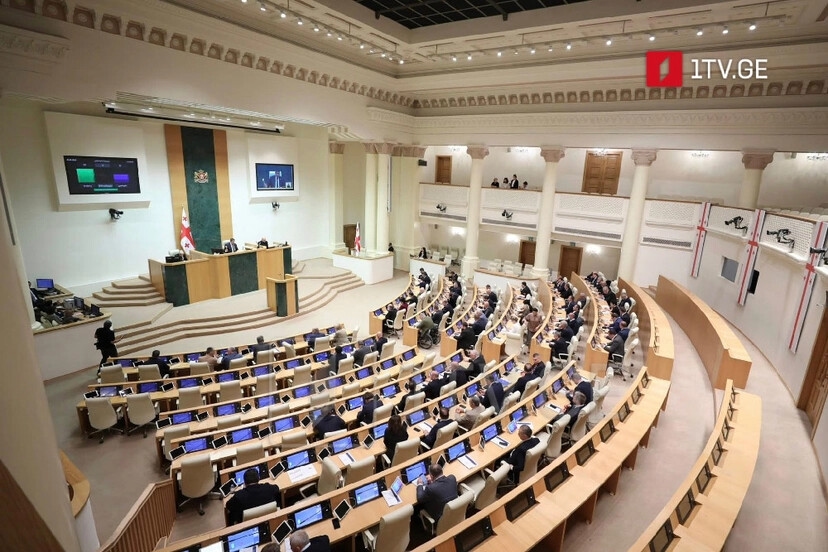
One factor undermining the opposition is the sweeping crackdown on its leaders launched by the authorities after Georgian Dream’s victory in the 2024 elections. Nika Melia, a member of the Coalition for Change, was sentenced to 18 months in prison for splashing water on a judge during a preliminary hearing in a case in which he was accused of insulting a police officer. Elene Khoshtaria, leader of the Droa party, received the same sentence for writing “Russian Dream” on an election poster featuring Tbilisi’s mayor. Levan Khabeishvili, chairman of the United National Movement, was sentenced to two years and six months in prison on charges of promising a bribe to a public official and publicly calling for the overthrow of the government.
In September 2026, former Defense Minister and United National Movement leader Giorgi Baramidze was arrested on charges of “treason against the homeland, namely sabotage,” over his remarks about the Georgian-Abkhaz war. Eight other opposition politicians are facing charges in the “sabotage case” — accused of passing information to foreign states, receiving funding for subversive activities from “hostile forces” (prosecution witnesses have named the CIA and USAID), and “radicalizing political protests.” Three of the defendants — Khoshtaria, Melia, and Mikheil Saakashvili himself — are already serving prison sentences in other cases.
These charges echo the government’s public rhetoric about its opponents. Prime Minister Irakli Kobakhidze has called the opposition “foreign agents,” while Georgian Dream deputy chairman Levan Machavariani has claimed that the EU is funding a “network of agents” inside the country to foment a revolution.
The prime minister has called the opposition “foreign agents,” while Georgian Dream’s deputy chairman claims that the EU is funding a “network of agents” inside the country to foment a revolution
Machavariani has also accused the EU's “ruling class” of having lost touch with its fundamental values and failing to serve the interests of the European people. He claims that European voters did not give their representatives a mandate to pursue what he described as “far-left, pseudo-liberal ideology,” “LGBT propaganda,” “uncontrolled illegal migration,” or “funding the Russia-Ukraine war until the last Ukrainian.”
Against this backdrop, Georgian Dream has filed a petition with Georgia’s Constitutional Court seeking to ban opposition parties. On Oct. 6, a panel of judges referred the petition to the court’s Plenum for consideration.
Even so, the opposition has failed to agree on a common protest strategy. The Lelo–Strong Georgia bloc is calling for closer cooperation between opposition parties and a renewed campaign in the regions. Tengo Tevzadze, secretary of the Akhali party insists that the opposition needs to mobilize for mass rallies. The United National Movement, meanwhile, is holding smaller demonstrations demanding the release of Mikheil Saakashvili and other political prisoners; they are also urging the United States to pass the MEGOBARI Act, a bill aimed at reassessing U.S. relations with the Georgian authorities.
Foreign nationals face intimidation
Among those sentenced for taking part in the protests are several Russian nationals: Denis Kulanin (who was later pardoned), Anastasia Zinovkina, Artyom Gribul, and Anton Chechin. Although Zinovkina, Gribul, and Chechin are officially serving sentences for drug possession, Transparency International Georgia has included them on its list of political prisoners.
Police arrested Chechin on Dec. 3, 2025, following a protest against the suspension of Georgia’s EU integration process. His lawyer, Giorgi Chkheidze, said that Chechin had also been detained after a protest on Nov. 18, with police officers warning him at that time to “stop and keep quiet.” In September 2025, a Tbilisi court sentenced Chechin to eight years and six months in prison on drug possession charges.
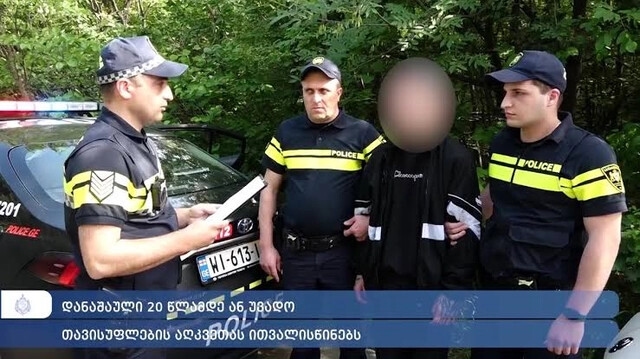
Anastasia Zinovkina and Artyom Gribul were searched and arrested in December of the same year. The prosecution claimed that, according to “operational information from a confidential source,” the two Russians had been distributing drugs at protest rallies.
The police say they found a total of 16 grams of the psychostimulant α-PVP in their pockets. At trial, Gribul said that after being detained, he was put into a car, where police officers took his jacket and slipped a packet of drugs into one of its pockets. Like other detainees, Gribul and Zinovkina had attended protests against the suspension of Georgia’s EU integration process. Before that, they had also taken part in protests in Russia.
During Anastasia Zinovkina’s closing statement, Judge Nino Galustashvili repeatedly interrupted her, preventing her from finishing her speech. However, human rights activists and journalists recorded its key passages, which included Zinovkina's call for mercy toward political prisoners and her vow to continue the political struggle:
“I have always been a brave person. Now I know that mercy exists. I call on you to make a revolution. Love is a revolution, mercy is a revolution — mercy for people whose lives, freedom, health, money, and future are being taken away by these terrorists... They have turned us into martyrs, but I promise I will not give up. I will fight with all my strength, and I am not afraid.”
Georgian nationals were also arrested on drug possession charges following their participation in protests. They included: journalist and Coalition for Change member Nikoloz Katsia, who was detained on his way to a rally on Rustaveli Avenue; Tedo Abramov, who was likewise arrested while heading to a protest; and doctor Giorgi Akhobadze, who had actively participated in the demonstrations and provided medical assistance to people injured by police. Yet while the Georgian activists were acquitted and released, the Russian nationals were convicted.
Georgian activists were acquitted and released, while the Russian nationals were convicted
Marina Meskhi attributes the difference to procedural factors: “The Russians supposedly had neutral witnesses — the interpreters. Drug planting has a long history in Georgia; it happened even under the previous government. Eight people convicted in such cases won at the European Court of Human Rights. Following those rulings, Georgia’s Constitutional Court ruled that arrests in drug-related cases must be video-recorded to prevent evidence from being planted and that neutral witnesses must be present. By using female interpreters as supposedly neutral witnesses, the police circumvented the Constitutional Court’s ruling.”
Besides the Russians, two Ukrainians — Sergey Kukharchuk and Ruslan Sivakov — also became victims of state repression during the protests. Both were sentenced to two years in prison for violating public order.
Stanislav Dmitrievsky, a Russian human rights activist living in Georgia, believes that Zinovkina, Gribul, and Chechin were targeted because of their outspoken political views. “The prosecutor’s office is still offering them the chance to admit guilt and reach a plea deal in exchange for their release. But the young men say they are unwilling to confess to something they did not do and insist that these cases are politically motivated,” he told The Insider. “This is a form of terrorism: choosing a victim simply because they are a convenient target for intimidating everyone else. You no longer see the Russian anti-war community at protests in Georgia. Everyone is intimidated, and everyone understands that their position here is precarious. This case has been a very effective way of targeting Russians and Ukrainians.”
The human rights activist also linked the harsh sentence handed down to Nana Sander to the authorities’ desire to send a message to Georgians living abroad that they should not interfere in the country’s domestic affairs.
“No care, no medication”
Political prisoners in Georgia frequently complain about their conditions of detention. “The women in the prison are living in terrible conditions,” Zinovkina said. “We don't even dream of freedom — all we want is conditions like those in the men's prison in Gldani. We want to see doctors, to be able to buy medication, and to have fresh food available in the prison shop. The cells in the women's prison are about nine square meters — with four beds, a table, a bench, and a bedside cabinet. There is barely any room for the women to move around.”
Marina Meskhi adds that Zinovkina’s back problems prevent her from sleeping on a standard prison mattress: “She has been diagnosed with bulging and herniated discs. Her request for an orthopedic mattress has gone nowhere. It has to be prescribed by a prison doctor, but he refuses to do so. The standard mattresses there are so bad that even someone with a healthy back could develop problems.”
Nana Sander, who is serving her sentence in the same prison, has also spoken about her health problems: “I have heart failure and back pain... They haven't even done an ECG. My jaw was swollen, but they did no X-ray, nothing. They prescribed antibiotics and said the X-ray machine was broken... No care, no examinations, no medication.”
Meskhi also recounts how she tried to send Alexei Navalny’s autobiography to Zinovkina: “I had sent the same book to Denis Kulanin, and it was accepted. But the rules for parcels are much stricter in the women’s prison. In the end, they refused to accept the book because, they said, something had been handwritten in it. What they meant was the phrase ‘Russia will be free’ on the last page, written in Navalny’s own hand. I had to tear out that page.”
“This barrack-room mentality seems to have developed over many years,” Meskhi explains. “Prison staff are used to dealing with ordinary inmates, who generally try not to make demands or complain. Now they have political prisoners, who are more inclined to stand up for their rights. But if you protest, argue, and file complaints, you can get a lot of things moving.”
Drug policy as a symbol of authoritarianism
Drug policy has long been a politically sensitive issue in Georgia. In May 2018, Tbilisi saw the so-called Techno Protest in response to police raids on the city’s nightclubs. Thousands of young people and electronic music fans gathered outside parliament on Rustaveli Avenue, staging a two-day rave featuring DJs and dancing. Eventually, Interior Minister Giorgi Gakharia came out to meet the crowd, apologizing for the police actions and promising an investigation.
The protests did not lead to immediate changes in drug policy but highlighted the need for reform. In the following years, Georgia took steps toward liberalizing its drug laws, including permitting the personal use of marijuana.
However, the country’s shift toward authoritarianism and intensifying repression have been accompanied by a tougher approach. The acquisition and possession of marijuana, previously decriminalized, have once again become subject to harsh penalties. The list of prohibited substances has been expanded, and penalties have been introduced for those refusing to take drug tests.
The crackdown goes beyond legislative changes, with police stepping up street searches. In July, Georgia’s Interior Ministry reported that around 5,000 people had been held liable for drug-related offenses in the first half of 2026, an 85% increase over the same period last year.
According to Davit Kiknadze, head of the Interior Ministry’s Central Criminal Police Department, those detained include both Georgian citizens and foreign nationals. Against this backdrop, reports emerged in August that all 14 prisons in Georgia had run out of space. A total of 1,830 foreign nationals are currently behind bars in the country, accounting for 14.8% of the overall prison population.
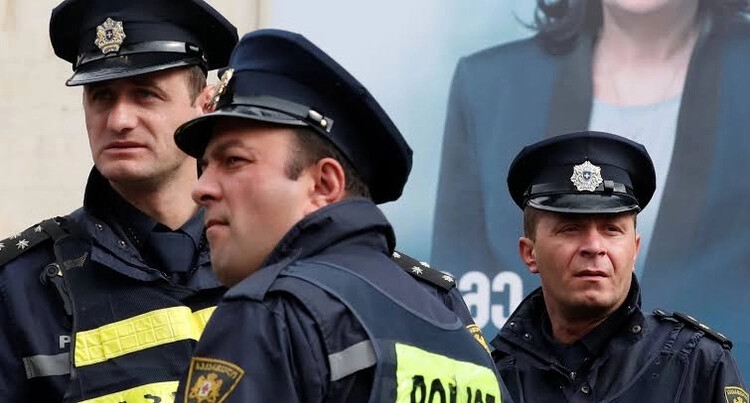
Although the available statistics do not establish that law enforcement officers are specifically targeting foreigners, there are indications that this may be happening. In recent months, several have been arrested for carrying prescription medications containing substances banned in Georgia.
In June 2026, police at Tbilisi Airport arrested 22-year-old Canadian national Simon Rowenski. He had arrived in Georgia with a prescription bottle of Adderall, prescribed by his doctor in Canada to treat ADHD. After Rowenski spent two months in detention, his family paid a fine of 30,000 lari (approximately $11,000), and he was released under a plea agreement and allowed to return to Canada.
A similar case occurred in July 2026, when British national Matthew Roy Desmond entered Georgia carrying prescription painkillers for his back. After three months in custody, Desmond’s lawyers managed to reach a deal with the prosecution, and he was released from the courtroom after agreeing to pay a fine of 100,000 lari (approximately $37,000), followed by deportation from Georgia.
Russians living in Georgia have also reported an increase in police checks, an emigrant who wished to remain anonymous told The Insider:
“Previously, police mainly stopped people who looked unconventional, such as men with dyed hair. Now, it feels as though they stop just about everyone, although men still seem to be the main targets. I've been searched twice in the past few weeks.
The checks have become more intrusive. Police search your backpack, go through your phone, and look at your messages and photos. Presumably, they're looking for correspondence with drug dealers or pictures of drugs. For example, when they were going through my photo gallery, they took an interest in a picture of an avocado seedling. An acquaintance of mine had wanted to give it to someone before leaving the country and had taken a photo of it.”
Society wasn't ready for the crackdown
The speed of the political transformation caught Georgian society off guard, human rights activist Stanislav Dmitrievsky explained:
“After the civil war of the early 1990s, Georgia developed as a democratic state governed by the rule of law, and until 2024, Georgian Dream also stuck to that rhetoric. Then, suddenly, everything changed within a matter of months. In Russia, this process took many years. Until 2012, NGOs operated under relatively normal conditions, and Russian civil society had time to develop the tools it needed to resist and continue its work. Yes, people were harassed and repressed, but that work remained possible until 2022. In Georgia, however, everything collapsed almost overnight.
Working for an NGO had been prestigious in Georgia. It was a well-paid job that carried considerable social standing. There was extensive cooperation with the authorities and many worthwhile joint programs. And then, all of a sudden, the government says: ‘Stop. We're not going to Europe, and anyone who thinks otherwise is an enemy.’ Within a few months, laws were passed that stigmatized the entire independent sector as an enemy. Naturally, people were unprepared for this.
Human rights organizations suddenly faced a whole range of urgent problems — securing funding for organizations under pressure, and dealing with numerous criminal cases and state inspections. There were also administrative cases involving thousands of people. Georgia had grown accustomed to the idea that whenever large numbers of people took to the streets, the authorities had no choice but to respond. But the government behaved just as it does in Russia and Belarus. These are Russian-style rules: you can be hauled off to jail just for standing on the sidewalk. All of this came as a shock.
After the civil war and the wars in Abkhazia and South Ossetia, Georgian society had developed a deep aversion to violence. The authorities, however, proved ready to use it. Ukrainians managed to break this cycle during the second Maidan uprising. When the Verkhovna Rada was about to vote on all those copies of Russian laws, tens of thousands of people took to the Maidan and stopped them from being passed. Here, people don't want violence.”
Even the close-knit personal ties characteristic of a small society have not shielded Georgia from the spike in repression. Marina Meskhi attributes this to the ideological indoctrination of the security forces:
“It's the same system as in Russia: a repressive apparatus. The special forces who dispersed the demonstrations are thugs who have been thoroughly brainwashed and ideologically indoctrinated. They've been made to believe that we're all enemies, some kind of foreign agents funded from abroad. And they receive decent salaries and serve the authorities loyally.
Georgia has a poor population living in remote villages where there is no decent education or prospects. People from these communities choose to join the security forces. It's like Russians who go to fight in Ukraine — they do it to escape poverty.”
Who supports Georgian Dream, and why?
Opinion polls conducted ahead of the 2024 elections suggest that, despite the ruling party’s sharp political turn, it still enjoys between 20% and 30% support — a figure well below the 54% it officially received in the elections. Researchers Tamara Khoshtaria of Ilia State University in Tbilisi and Veronika Pfeilstifter of the Institute for Caucasus Studies at the University of Jena analyzed opinion polls and concluded that “those most likely to support the protests are young people (aged 18–34), residents of the capital, supporters of Georgia’s EU accession, and those who distrust pro-government television channels.”
But geography does not tell the whole story. Tamara Khoshtaria identifies media consumption habits as “the most significant factor determining support for a particular party”: viewers of Imedi TV, Rustavi 2, and POSTV are considerably more likely to support Georgian Dream, while viewers of other channels tend to favor opposition parties.”
A study by CRRC-Georgia helps explain why pro-government television coverage resonates with Georgian voters. According to the findings, nearly half of Georgian Dream supporters believe in the existence of a “Global War Party” — a fictional political entity invented by the authorities to describe an international coalition of forces allegedly seeking to drag Georgia into a war with Russia, undermine its sovereignty, and use its territory to advance their own geopolitical interests.
Georgian Dream made extensive use of fears that Georgia could be drawn into a war with Russia during its election campaign. Billboards appeared across the country depicting devastated Ukrainian cities alongside slogans such as “Say no to war! Choose peace!”
Under this logic, the opposition is portrayed as serving foreign interests, while Georgian Dream casts itself as the party that keeps Georgia on its European path while preventing it from being drawn into another armed conflict.
The façade of a multi-vector foreign policy and a shift toward Russia
The Georgian authorities continue to voice support for Ukraine’s territorial integrity. Yet Georgia has refused to join most Western sanctions against Russia, and the United States has identified Kremlin agents of influence among Georgian officials.
Back in 2021, Carnegie Europe Caucausus expert Thomas de Waal observed that Georgian Dream's approach to relations with the West followed the models of Azerbaijan and Turkey: control the media, courts, and elections, invoke “Georgian values,” yet maintain working relations with Washington and Brussels, as well as Moscow. After Georgian Dream came to power in 2012, Tbilisi resumed economic ties and some diplomatic contacts with Moscow, a move that researchers Bidzina Lebanidze and Kornely Kakachia attribute to the Georgian elite's conviction that the country had to take Russia's interests into account, even if the rapprochement had to remain discreet due to civil society's opposition to fostering closer ties with the Kremlin.
The situation changed after 2022, when Georgian Dream began moving more openly away from its pro-European course. Erekle Gozalishvili, a researcher at the University of Regensburg, uses the term “pseudo-hedging” to describe the appearance of a multi-vector foreign policy masking an actual shift toward Russia. This does not mean that the Kremlin is running the country, he notes. Rather, closer ties with Russia have proved useful to Georgian Dream as a means of consolidating its grip on power at home.
Per Ekman, a researcher at the Stockholm School of Economics, argues that the Georgian authorities have exploited Russia’s full-scale invasion of Ukraine to manufacture an external enemy capable of justifying the repression of civil society at home. “Russia’s war against Ukraine allowed Georgian Dream to present itself as the party of peace and stability, while portraying anyone critical of the ruling party as seeking to drag Georgia into war,” he concludes.