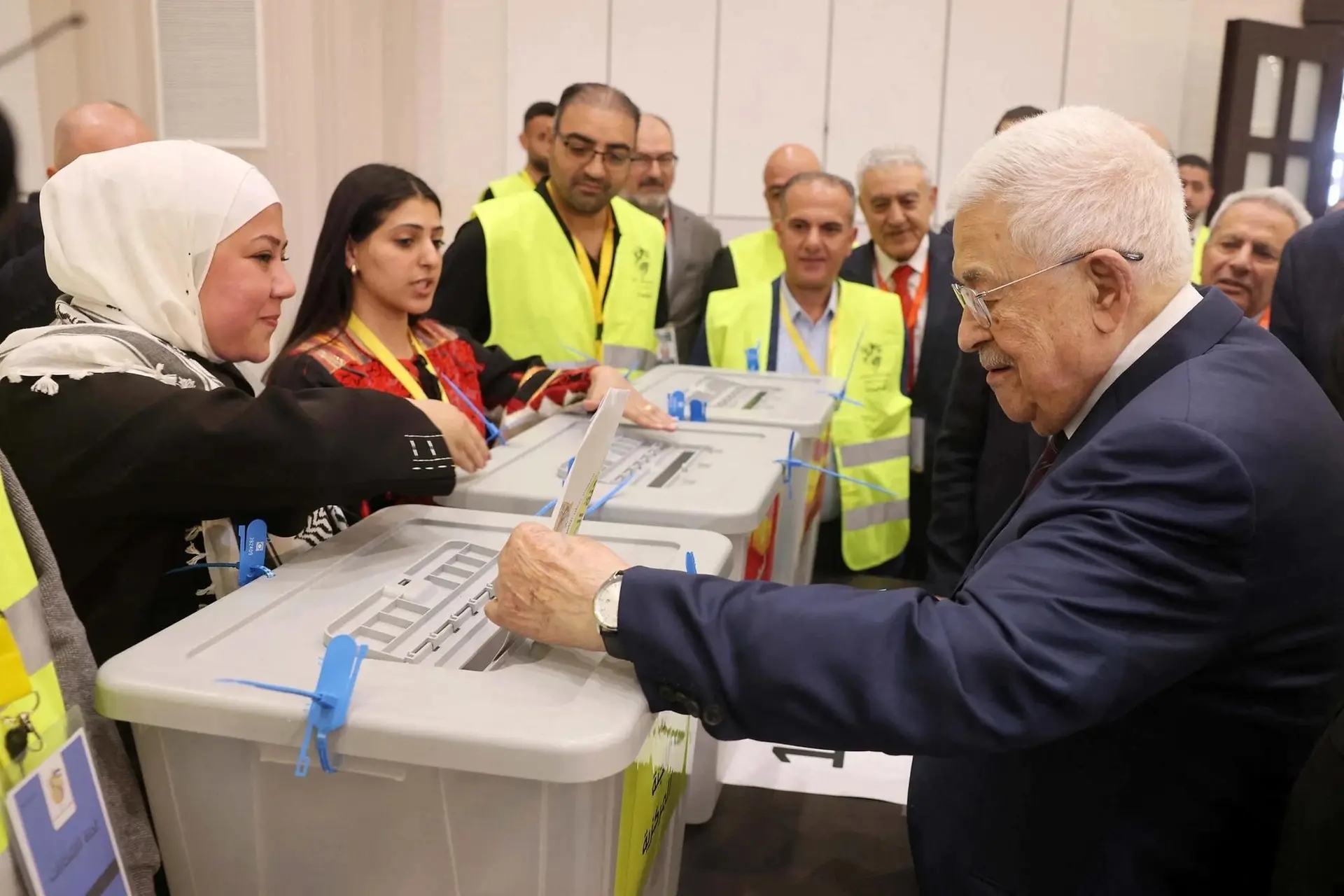
On Oct. 10, Palestinian "president" Mahmoud Abbas announced that parliamentary elections would be postponed. The vote, which had been scheduled for Nov. 28, will now be pushed back all the way to next September. If it takes place, the election will be the first since Hamas defeated Abbas's Fatah party at the polls all the way back in 2006. This time around, Fatah again feared the electoral appeal of the Islamist movement — especially after it managed to form an unprecedented alliance with Palestine's Marxists and liberal democrats.
In 1996, the inaugural elections to the Palestinian Legislative Council saw the moderate Fatah party take 50 of the parliament's 88 seats. The victory came at least in part thanks to the Islamist Hamas movement's choice to boycott the vote. However, in 2006, the next elections saw Hamas take 74 seats in the expanded 132-seat chamber, and the Council was disbanded in 2007 after an armed struggle for control over the Gaza Strip broke out between Fatah and Hamas. Power in Palestine has been divided ever since, with Hamas ruling over Gaza and Fatah retaining its authority in the West Bank.
Elections 2.0
Palestinian President Mahmoud Abbas of the Fatah party first officially announced new elections in 2021, but they never took place. Abbas said he had postponed the vote indefinitely because Israeli authorities had refused to allow polling stations to open in East Jerusalem, home to around 400,000 Palestinians. Abbas’s critics argued at the time that the president was simply afraid his party would suffer a crushing defeat to Hamas even if the moderates' allies in the Palestinian Liberation Organization (PLO) remained on side.
Nevertheless, even after more than two decades in power, not even Mahmoud Abbas can postpone elections indefinitely. The longer voting has been delayed, the more questions Palestine's foreign partners and donors have raised about the legitimacy of Abbas and his cabinet. Fatah was thus forced to announce parliamentary elections, to be followed several months later by a presidential vote.
The latest attempt to hold elections to choose a new Palestinian Legislative Council was scheduled for Nov. 28, 2026. The veteran Palestinian president appeared to have chosen an almost ideal moment for himself and his party: Hamas had been severely weakened by years of war with Israel in Gaza, and against this backdrop, support for the Islamist group plunged so far that Fatah had its first chance in years of winning a majority. Moreover, the local council elections held in April 2026, including in one municipality in the Gaza Strip, ended in a decisive victory for Fatah candidates. That big win, however, was made possible by the fact that the vote was held under rules devised by Fatah itself and approved by Abbas and his associates.
Against the backdrop of the war in Gaza, support for Hamas has collapsed, giving Fatah its first chance in years to win a majority of the Palestinian vote.
One condition for parties and blocs to participate in local elections was their formal endorsement of the Palestine Liberation Organization’s (PLO) official positions when it came to a peaceful resolution of the Israeli-Palestinian conflict involving the “coexistence” of two states side by side. Hamas and other Islamist groups have never accepted these terms and were therefore barred from participating in the elections. Fatah can certainly claim its victory as an achievement, but it is difficult to call it either fair or convincing.
The rules governing local elections were established by the Palestinian election commission, which is controlled by Abbas, and its judgements apply to all elections. In principle, then, Hamas and similar parties and groups could simply have been barred from the 2026 parliamentary vote as well.
Hamas is working on its own electoral list
However, Palestine’s foreign partners and donors — the United States, the Arab monarchies, and the European Union — repeatedly stressed that only elections involving all significant political forces can restore their confidence in the legitimacy of the Palestinian authorities. At the same time though, foreign governments openly say that Hamas must renounce violence and pursue Palestinian statehood exclusively through peaceful means if it is to return to mainstream politics, leaving Fatah some room to maneuver.
Formally, Hamas has become less radical since 2017, when its new charter declared the group's goal to be the establishment of an independent Arab state not across “all of historic Palestine,” but only within the borders of the Gaza Strip and the West Bank, which the UN recognizes as Palestinian territories. Yet the idea of seeking a peaceful resolution to the conflict with Israel— has still not become the dominant position among the radicals.
A shift to exclusively political methods of pursuing Palestinian independence is being discussed within Hamas as one way to save an organization severely weakened by the war, but no final decision has been made. This appeared to give Abbas's election commission a way to keep Hamas off of the ballot without losing the support of its foreign patrons, who also do not want to see militant thugs in parliament.
Hamas’s strange allies
Yet it seems the "Palestinian street" was less susceptible to such arguments as to why Hamas ought to be kept off the ballot, and the cautious, seasoned Abbas was unwilling to risk mass anti-government protests that could strip Fatah of its remaining levers of power. And so instead of holding pseudo-elections that excluded the most popular party, he chose to postpone the vote once again. The likely reason is that Hamas was already working hard to build a broad coalition of parties and movements willing to run on a joint list.
Cautious Abbas is unlikely to risk barring Hamas from the elections in the face of mass anti-government protests, and the radicals are working precisely toward that scenario
Foremost among the groups ready to back Hamas was Palestinian Islamic Jihad. Although the group isHamas’s closest ideological counterpart, it had never participated in elections and had shown utter contempt for attempts to negotiate a political settlement to the Israeli-Palestinian conflict, regarding Israel’s destruction as the only possible path to an independent Palestine. True to its motto — “Islam, jihad, and Palestine” — Islamic Jihad had operated since its founding in the 1980s exclusively as a militant organization, not a political one.
But after a long, exhausting war in Gaza that destroyed the core forces and most of the arsenals of both Hamas and Islamic Jihad, the latter now risks losing its influence altogether. Thousands of its fighters have been killed or fled abroad, along with many of its most experienced commanders and ideologues. In short, Islamic Jihad faced a choice: cling to its longstanding refusal to engage in politics and risk almost certain oblivion, or try to enter parliament, help form the Palestinian cabinet, and thereby survive.
Islamic Jihad is at least a logical ally for Hamas, given the two groups’ closely aligned militant Islamist ideologies. However, the Marxist Popular Front for the Liberation of Palestine (PFLP), a virtually atheistic organization, is a different matter altogether. For the Front’s members, the war against Israel is not religious, but rather part of a global struggle between imperialism and the nations resisting it. Inspired by Mao Zedong and the Vietnamese communists, PFLP members have never dismissed the importance of political means, but have regarded them as secondary to armed struggle.
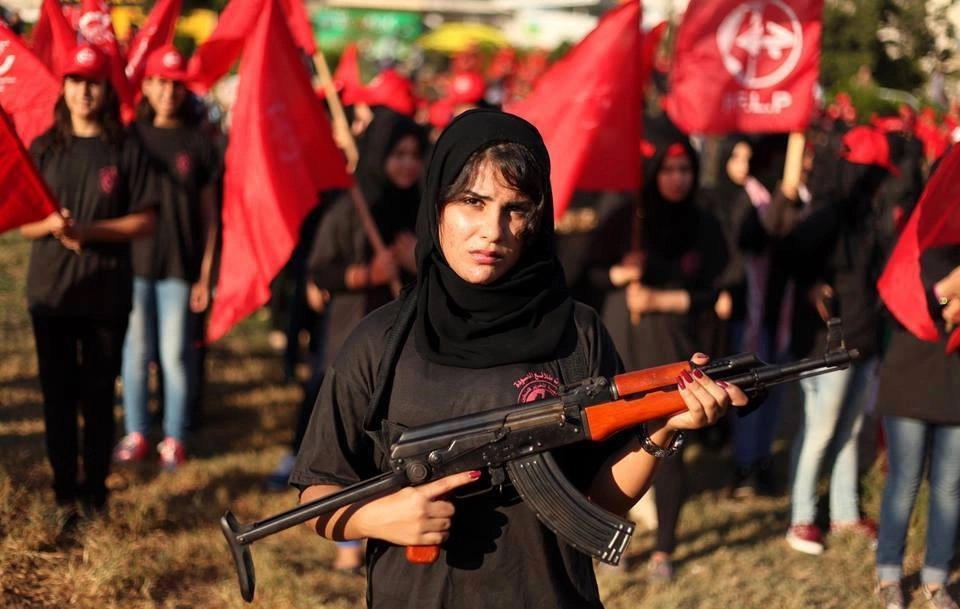
Ideologically, PFLP was once much closer to secular Fatah, with which it remains affiliated through the Palestine Liberation Organization (PLO). Inside the contentious tent of the PLO, however, the Front is the main opponent of Abbas’s party. The Marxists interpret the PLO's commitment to a peaceful resolution of the conflict differently from their Fatah partners, believing that armed struggle can work hand in hand with diplomacy. In this regard, at least, they are indeed closer to Hamas.
The Marxists believe that peace with Israel can be pursued alongside armed struggle for Palestinian independence, bringing them closer to the Islamists
The Islamist-Marxist bloc may have differing visions for Palestine’s future, but its members agree that Israel is the main obstacle to the creation of a truly independent Palestinian state. Fatah, meanwhile, is viewed as an outdated organization that abandoned violence and bet on a “peace process” that has demonstrably failed to deliver genuine Palestinian independence. A joint electoral list, had negotiations to form one succeeded, would therefore have been a natural extension of the longstanding cooperation between the leading Palestinian Marxist and Islamist factions.
The Democratic Front for the Liberation of Palestine (DFLP) takes a similar position — it remains a member of the PLO but favors Hamas’s methods over Fatah’s. Also Marxist, the DFLP spent years wavering between Fatah and Hamas before ultimately siding with the jihadists. It was reportedly among Hamas’s likely allies in the parliamentary elections.
Particularly noteworthy are potential coalition members that not only share Fatah’s ideological or historical roots but actually emerged from Palestine’s main party of compromise before switching sides to join its principal rival. One such group is the Popular Resistance Committees, founded by Fatah officials who became disillusioned with their party’s commitment to peaceful solutions and turned to radical Islam.
Hamas’s allies include former Fatah officials who grew disillusioned with the party’s pacifism and turned to radical Islam
The most revealing case, however, is that of the Democratic Reform Bloc, led by former Fatah Central Committee member Mohammed Dahlan. In the 1990s, he belonged to the inner circle of Fatah founder Yasser Arafat and headed the party’s branch in the Gaza Strip. He ran it like his personal fiefdom, earning the region the nickname “Dahlanistan.”
In 2007, Hamas seized control of Gaza and drove Dahlan out. He held various posts in the Palestinian government under Abbas for several more years, but Abbas eventually ousted him too, accusing him of murdering Arafat, whose death is officially considered to have been the result of natural causes. Dahlan now divides his time between the United Arab Emirates and Serbia, where he became a citizen in the 2010s. He remains popular in Gaza and is so eager to return to Palestinian politics that he is prepared to forge an alliance with Hamas, which until relatively recently was his chief enemy.
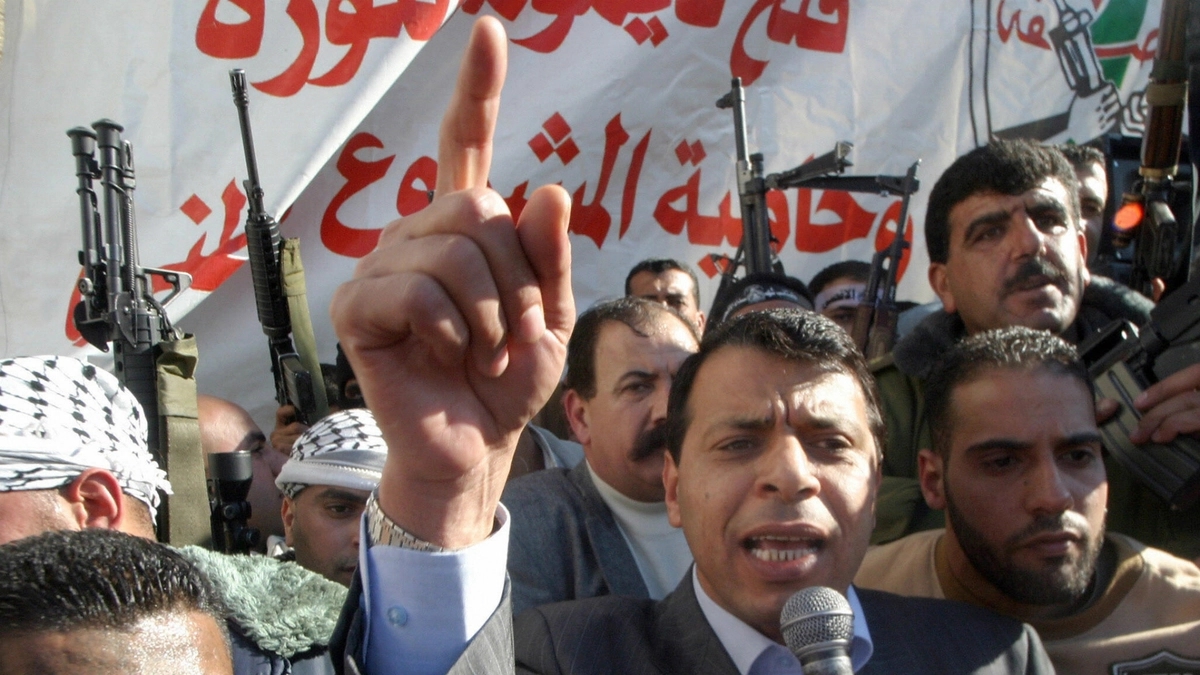
Dahlan’s bloc, incidentally, is the only one of the groups mentioned above that does not appear on the lists of terrorist organizations maintained by Israel, the United States, or the European Union.
What about Israel?
This raises an obvious question: why would Israel, which controls virtually all lawful political activity in the Palestinian territories, allow a bloc of parties and organizations designated as terrorists to participate in elections? Why not simply block the vote if Abbas changes the rules to allow the Hamas-led coalition onto the ballot? Alternatively, why not prevent the elected parliament from functioning properly by arresting or otherwise removing the most notorious Palestinian lawmakers?
There were surely people in the Israeli government who considered these options. But they could hardly ignore the fact that Israel’s rejection of the previous Palestinian elections, held in 2006, had contributed to the current war in Gaza. At the time, Israel did everything it could to prevent a parliament dominated by Hamas from exercising its legislative powers, and the radicals responded by discarding parliamentary norms and simply seizing power in Gaza, killing or driving out hundreds of their opponents. One obvious way to prevent a repeat of this scenario is to bring Islamists into nonviolent politics and demonstrate that parliamentary methods can deliver better results than bombs and guns.
One obvious way to prevent a repeat of the massacre Hamas carried out in Gaza is to bring Islamists into nonviolent politics
Arab countries, too, expected both Abbas and Israel to allow the broad opposition coalition to participate in the elections. Abbas quite literally depends on these Arab partners for his survival, as without their financial backing and diplomatic support, his administration is doomed. Israel, of course, is in a stronger position, but Donald Trump has already included the Israel-Hamas conflict on his list of wars he claims to have personally ended. He could threaten the Israeli government by withholding military and financial aid unless it made certain concessions.
In short, had these disparate forces been allowed to contest the Palestinian elections, a broad coalition of Islamists, Marxists, and defectors might well have taken power. Its members would have been ready to set aside their longstanding grievances against one another simply to oust the thoroughly discredited Fatah and its long-serving leader, Mahmoud Abbas.
With time running out, Abbas decided not to take the risk. Most likely, he secured at least Israel’s agreement regarding the postponement. But although much can change between now and next September, it is hard to imagine Fatah's electoral prospects dramatically improving anytime soon.