The White House has been forced to publicly address Donald Trump’s relationship with his most loyal aide, Natalie Harp. Democrats have raised questions about Harp’s influence within the administration, and speculation has also arisen about a possible romantic relationship between the president and his much younger aide. But the opposition’s concerns center less on Trump’s private life than on Harp’s extraordinary access to the president and the role she plays in matters of both domestic and, at times, foreign policy.
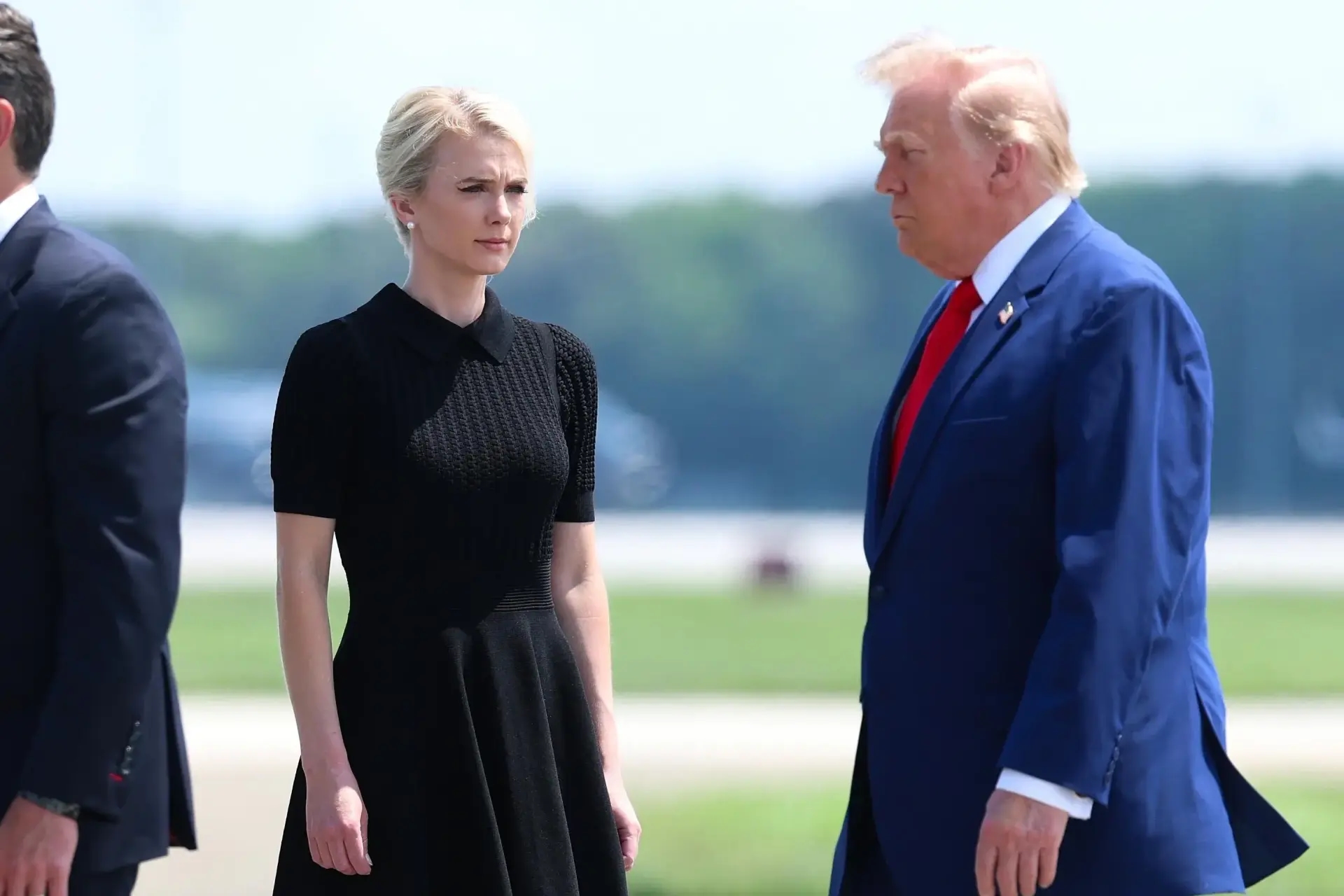
Anyone following Donal Trump’s public appearances — from meetings at the White House to foreign trips to IndyCar races in Washington — can often spot a young blond woman near the president. Her name is Natalie Harp, and she serves as a presidential aide. White House staffers have described her as working seven days a week and devoting herself completely to Trump, while the president is said to trust her more than most of his other aides.
Trump as savior
Harp grew up in a conservative California family. She was home-schooled, and her parents wanted her to lead a religious life.
She first attracted attention during Trump’s first term, when she published several videos and articles describing her experience with cancer and what she said was medical malpractice. Harp criticized Democratic politicians and said she had survived only because she gained access to experimental treatment that, she argued, became possible because of a law that Trump signed in 2018 — even if medical and legal experts have questioned whether her access to that treatment was actually connected to Trump’s legislation.
Harp nevertheless continued to insist that Trump had saved her life. In 2019, she repeated the story on Fox News. Trump noticed and invited her to speak at the Republican National Convention, where she again recounted her version of her experience, thanked the president for saving her life, and criticized his political rival Joe Biden.
Harp actively supported Trump’s reelection campaign and repeated his claims that the 2020 election had been rigged. When Trump supporters stormed the U.S. Capitol on Jan. 6, 2021, Harp posted more than 150 messages on social media in support of the president.

Harp later became a television host for the conservative One America News Network, where she worked until 2022. That’s when she was offered a role with Trump’s campaign.
Despite not initially holding a formal title, Harp quickly became close to the candidate, regularly accompanying him at official events. In October 2023, when Trump had to appear in court in New York in connection with one of his several criminal cases, Harp reportedly caused a scene when there was no seat for her in the car carrying the defendant.
Campaign staffers began calling Harp a “human printer” thanks to her work scouring social media and the conservative press for flattering posts and articles about Trump, which she would then print out for him, helping strengthen the information bubble around the candidate. Some staffers were alarmed by Harp’s closeness to Trump and even tried to limit their contact.
The extent of Harp’s admiration for Trump is visible in letters she wrote to him during a 2023 trip to Scotland and Ireland, as New York Times reporters Maggie Haberman and Jonathan Swan described in their book, Regime Change. In one, Harp apologized to Trump for calling him because of trouble at customs and for walking behind his golf cart during a visit to a golf club. “I never want to bring you anything but joy. I’m sorry I lost my focus. You are all that matters to me. I don’t want to ever let you down. Thank you for being my Guardian and Protector in this Life,” she wrote.
“You are all that matters to me. Thank you for being my Guardian and Protector in this Life,” Harp wrote to Trump in 2023
In another letter, she complained of emotional burnout, writing that she wanted to spend more time with Trump: “I would like to hear every conversation, because those are the moments when your soul gets to rest and you can forget your worries — even if only for a few moments…. You have every right to tell me off, even using a strong word if necessary, when I deserve it, because no one knows me better or cares about me the way you do.”
Natalie’s brother, Preston Harp, who is estranged from her, told journalists that his sister had been obsessed with U.S. presidents since she was 16 and had written them numerous letters, including to George W. Bush during the Iraq War. But it was only with Trump, he said, that she was able to fulfill her dream of becoming part of a president’s inner circle.
The president’s confidante
After Trump returned to the White House in 2024, the 35-year-old Harp was formally appointed as one of his aides, but Secret Service personnel assigned to protect Trump were deeply concerned about their relationship. For more than a year, she refused to undergo the standard background investigation required of White House staffers who have access to sensitive information, consenting only after the Secret Service began openly raising concerns and after a personal directive from the president.
Harp arranges Donald Trump’s meetings, continues to supply him with printouts of flattering social media posts and media articles, and is almost constantly at his side — including during visits to his golf clubs (which have effectively become presidential residences). Many Republican politicians say that when they want to get something to the president, they now approach Harp first rather than going through the White House staff.
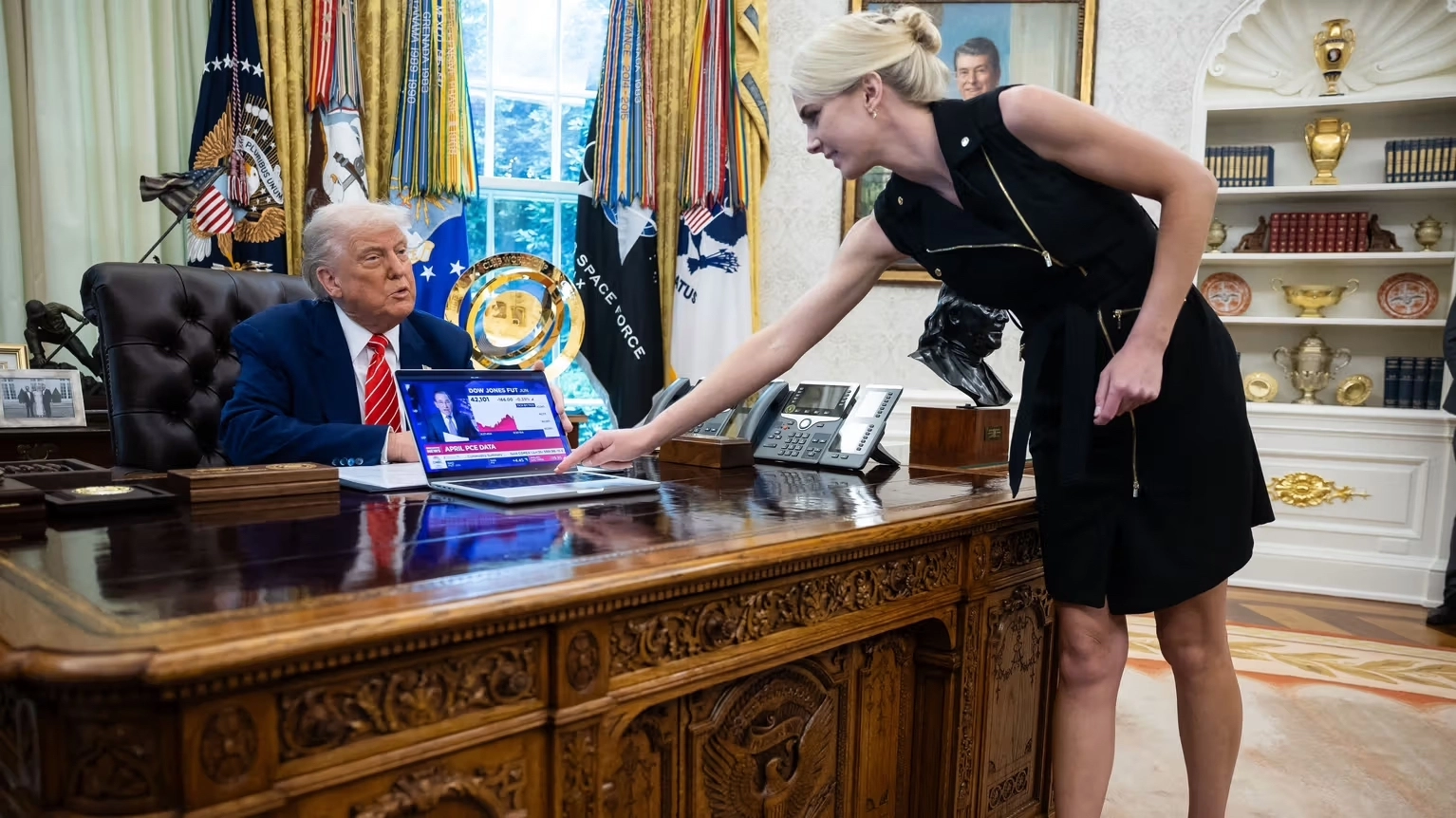
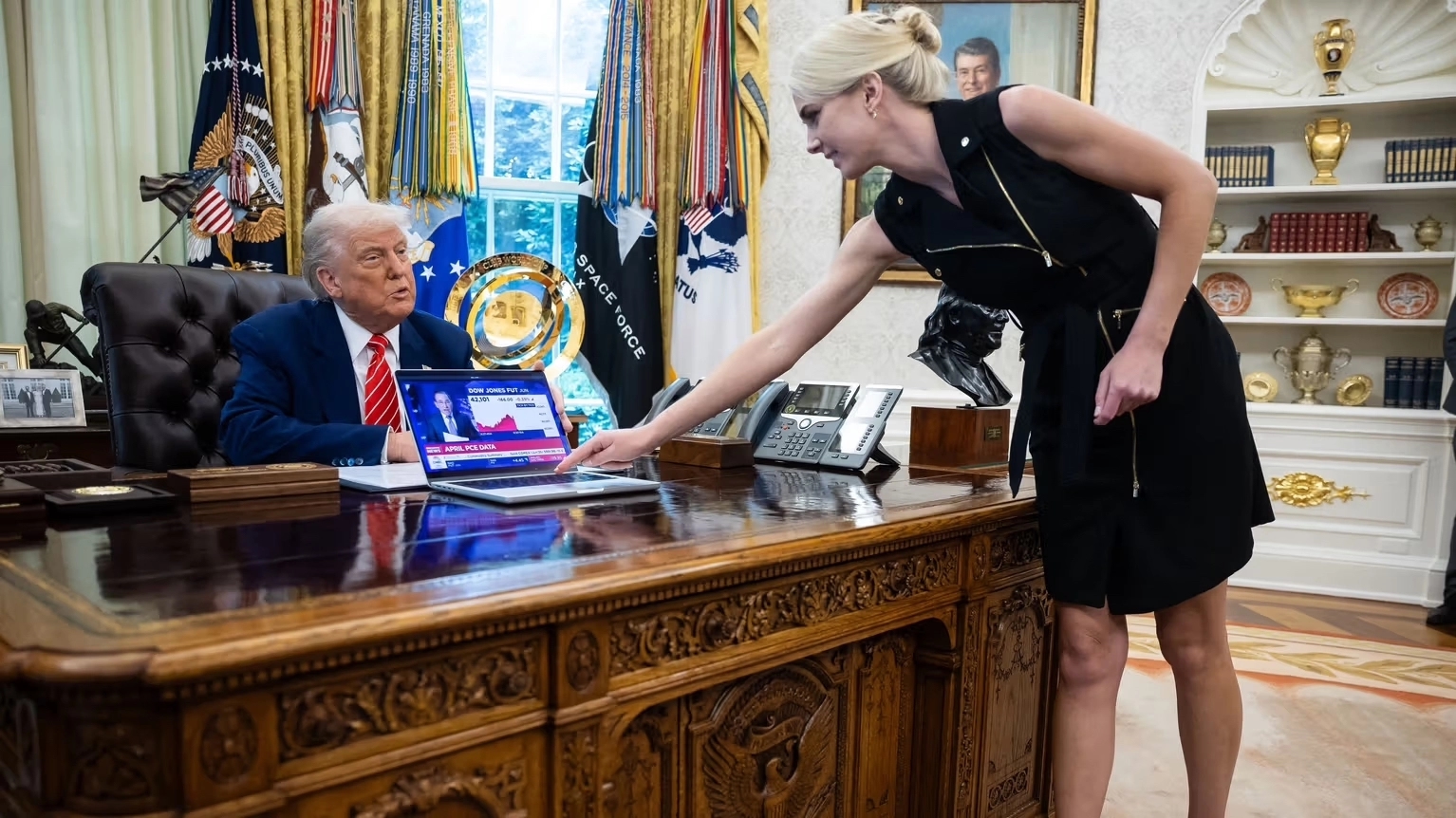
Harp is also responsible for managing the president’s account on his Truth Social platform and is even said to write most of its posts, which are often published late at night, on weekends, and even on holidays. Before publication, Harp prints draft versions of the text and gets Trump’s personal approval, often without notifying the White House press office.
At times, that has led to controversy, including when Trump’s account posted an artificial intelligence-generated image depicting him as Jesus Christ. Trump later said he had thought the image showed him as a doctor.
The president was also criticized for posting a video depicting former President Barack Obama and former first lady Michelle Obama as monkeys. The White House blamed the “mistake” on an unnamed staffer, but sources cited by The Independent said Harp was the person behind the post.
As a result, she has been named as one of the defendants in a lawsuit involving a decision by Trump Media & Technology Group to offer early access to Trump’s social media posts in exchange for $100,000 a month. The plaintiffs argue that such a practice is illegal because presidential statements constitute official information and advance access to them cannot be sold.
Harp’s unquestioning loyalty and willingness to do whatever it takes to please Trump have not gone unnoticed. The president once said Harp was the only person who loved him as much as his wife and children did, adding that all of his other staffers would eventually leave to make money, while Harp would never abandon him.
The president once said Harp was the only person who loved him as much as his wife and children
According to financial disclosures, Trump gave Harp a $45,000 gift last Christmas — equivalent to nearly one-third of her annual salary. Needless to say, previous presidents had not given cash gifts to their subordinates.
The degree of Trump’s trust in Harp was also evident in a recent episode surrounding his departure from Turkey. After the NATO summit in Ankara on July 8, security officials warned Trump of a possible assassination attempt by Iranian authorities. He was therefore advised to leave the luxury Boeing jet that Qatar had given him for presidential use and was secretly driven in an airline catering truck to another aircraft. The White House press pool, Secretary of State Marco Rubio, Treasury Secretary Scott Bessent, and most White House staff remained aboard the Qatari “presidential” jet. Harp, however, was among the small number of people Trump took with him.
The Lewinsky effect
Until recently, Harp had attracted relatively little attention from the American press, but their interest rose sharply after a statement by Democratic Sen. Jon Ossoff of Georgia prompted an unusually fierce response from the White House.
On Aug. 16, speaking at a campaign rally in Atlanta, Ossoff criticized Trump over the war with Iran and what he described as the president’s neglect of domestic problems. “The president sleeps through his meetings. He golfs and trades stocks — see, he doesn’t want to do his job. He wants to build his ballroom and travel with Natalie on their apparently defenseless flying palace gifted by the Emir of Qatar,” the senator said.
“The president sleeps through meetings. He wants to build his ballroom and travel around with Natalie,” the senator said
The next day, White House communications director Steven Cheung called the senator “Jon Jackoff” and “the biggest cuck loser in politics.” Cheung also accused Ossoff of radicalism, extremism, and hatred of America.
Deputy White House press secretary Davis Ingle carried on in a similar tone: “Jon Ossoff is a cringeworthy, feminine theatre kid cosplaying as Barack Obama. Nobody gives a shit what this lightweight loser says.”
Stephen Miller, the White House deputy chief of staff and a leading architect of the Trump administration’s immigration policy, piled on. Miller, who regularly calls the president’s political opponents “traitors” and “enemies of civilization,” said Ossoff’s comments struck him as “one of the most vile things” he had seen in American politics.
Republican lawmakers also came to Harp’s defense, accusing Ossoff of insinuating that the president and his aide might be romantically involved.
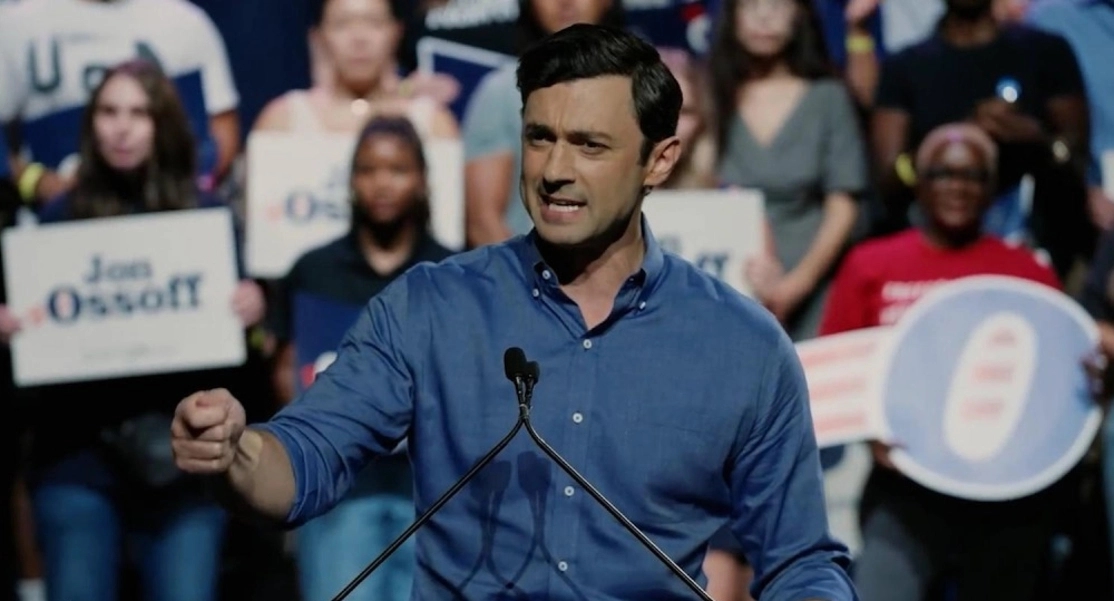
The intensity of the administration’s response only fueled interest in Harp. Investigations into the aide’s background and her position in the administration became front page news, andtelevision networks and social media commentators began discussing her relationship with Trump at length.
In a recent poll, 42% of Americans said they still had questions about Harp’s role in the White House, while only 22% said they were satisfied with the information available about her. Even among Republican respondents, 29% said they wanted to know more, while 35% were content with what they already knew.
The poll also showed that the once little-known aide had succeeded in becoming a recognizable figure: 16% of respondents said they had heard “a great deal” about her, while 23% had heard “a fair amount.” About 28% had heard only a little, while only 33% had still heard nothing at all. It is a level of public recognition that many members of Congress — and even some members of Trump’s Cabinet — might envy.
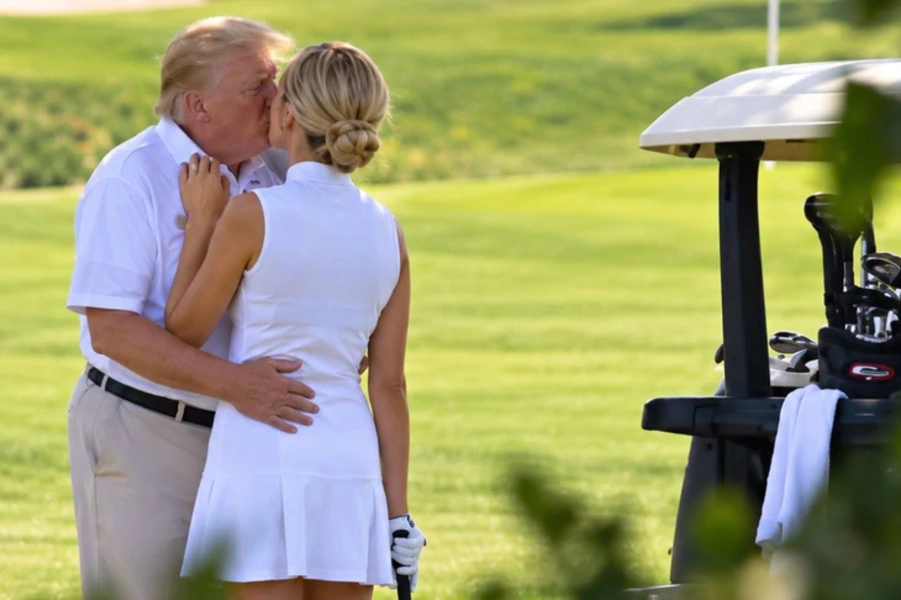
Now, after the appearance of an artificially generated photo that purported to show Trump and Harp kissing, the confusion among ordinary Americans is likely only to grow — meaning Trump will have to keep explaining who Natalie Harp is and what role she actually plays. Is this woman, described as having been “obsessed” with presidents, a danger to the United States? Has she exceeded her authority, effectively becoming the voice of an elderly president?
The story of Bill Clinton and White House intern Monica Lewinsky led America’s first presidential impeachment in over a century, and Trump, too, could face political trouble as the November elections approach, particularly given that some members of his own team also appear to be unhappy with Harp’s role. Democrats are already doing more than demanding a congressional investigation into the presidential aide’s activities — they are also calling on the Office of Government Ethics to examine the matter.
Republicans have so far managed to postpone a Democratic-initiated vote on the impeachment of Pentagon chief Pete Hegseth until after the mid-term elections. But an investigation into Harp’s activities may not be so easy to obstruct.