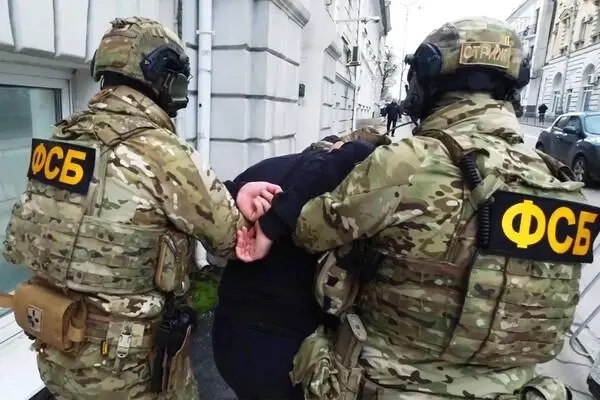
The Russian authorities have increasingly begun using repressive tactics to force dissidents out of the country. Security officers may say so outright during detentions, or it may be inferred from the conduct of investigators who, after opening a criminal case, do not immediately arrest a suspect, leaving them an opportunity to flee. Numerous examples suggest that pressuring people to leave is a deliberate policy. Rita Flores, a former member of Pussy Riot who collaborated with the FSB for three years, said she had acted at the security service's behest when working to persuaded other artists to leave Russia. Forcing “enemies of the regime” abroad is nothing new — the FSB has essentially revived a favorite practice of the Soviet-era KGB.
- 1.“You and your loved ones will be the ones crying”: The final warning to Pavel Krisevich
- 2.“We’ll put him in prison, or you get him out”: How Philippenzo was forced out of Russia
- 3.“I was simply forced out of the country”: Surveillance and arrests as a means of forcing people to leave
- 4.Signals to politicians and public figures
- 5.How dissidents were forced out of the USSR
In August 2026, former Pussy Riot member Rita Flores revealed that in 2023 she had been pressured into working as an undercover informant for the FSB. Flores said she gathered information on artists and activists — including their individual plans, connections, habits, and activities. Those she was assigned to target included street artist Philippenzo and performance artist Pavel Krisevich.
Both later left Russia under pressure from the security services, and Flores admitted that she had helped push them out at the FSB’s request. Her handler viewed emigration as one of two ways to resolve the “problem”: either they leave the country or they would go to prison. The demand to leave can be made explicitly or conveyed through hints, as can be observed in the cases of sociologist Boris Kagarlitsky and of politician Boris Nadezhdin.
“You and your loved ones will be the ones crying”: The final warning to Pavel Krisevich
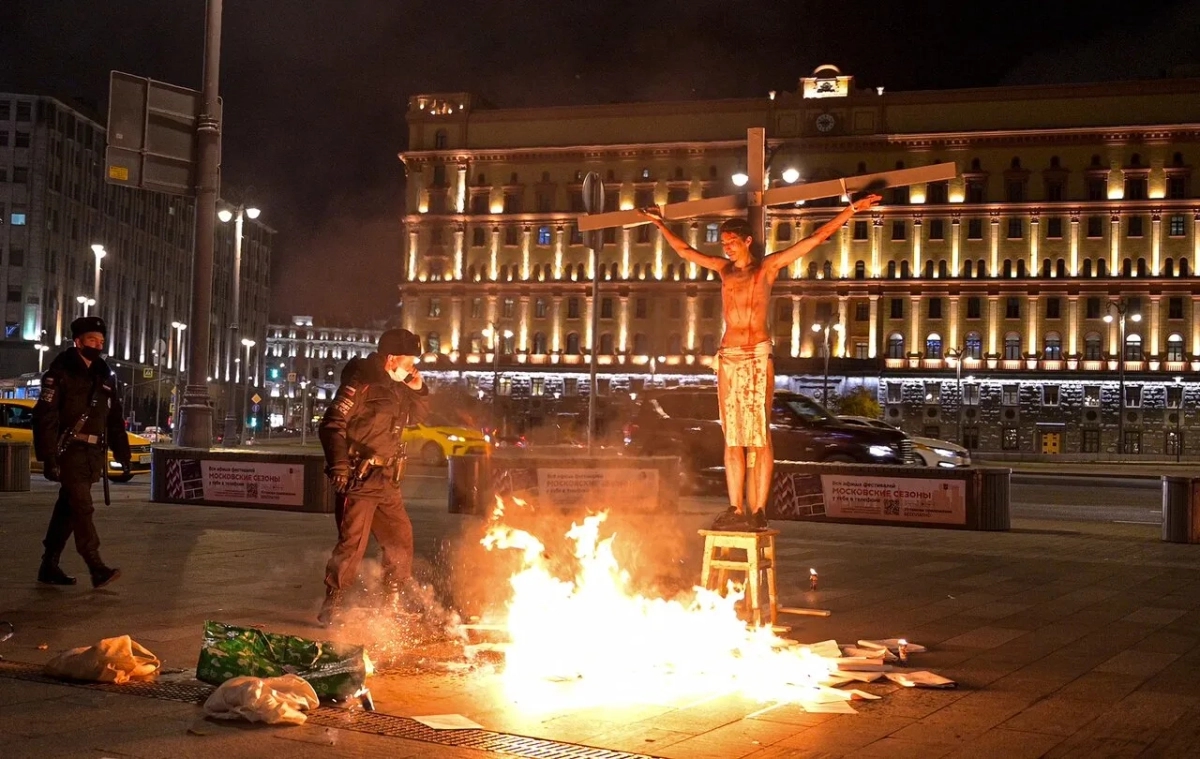
Artist Pavel Krisevich was released from a penal colony in January 2025 after serving three and a half years for a protest performance in Red Square. According to Rita Flores, when Krisevich resumed staging performances, her FSB handler made it clear that he would have to stop or face prison again. She began pressuring Krisevich to leave Russia.
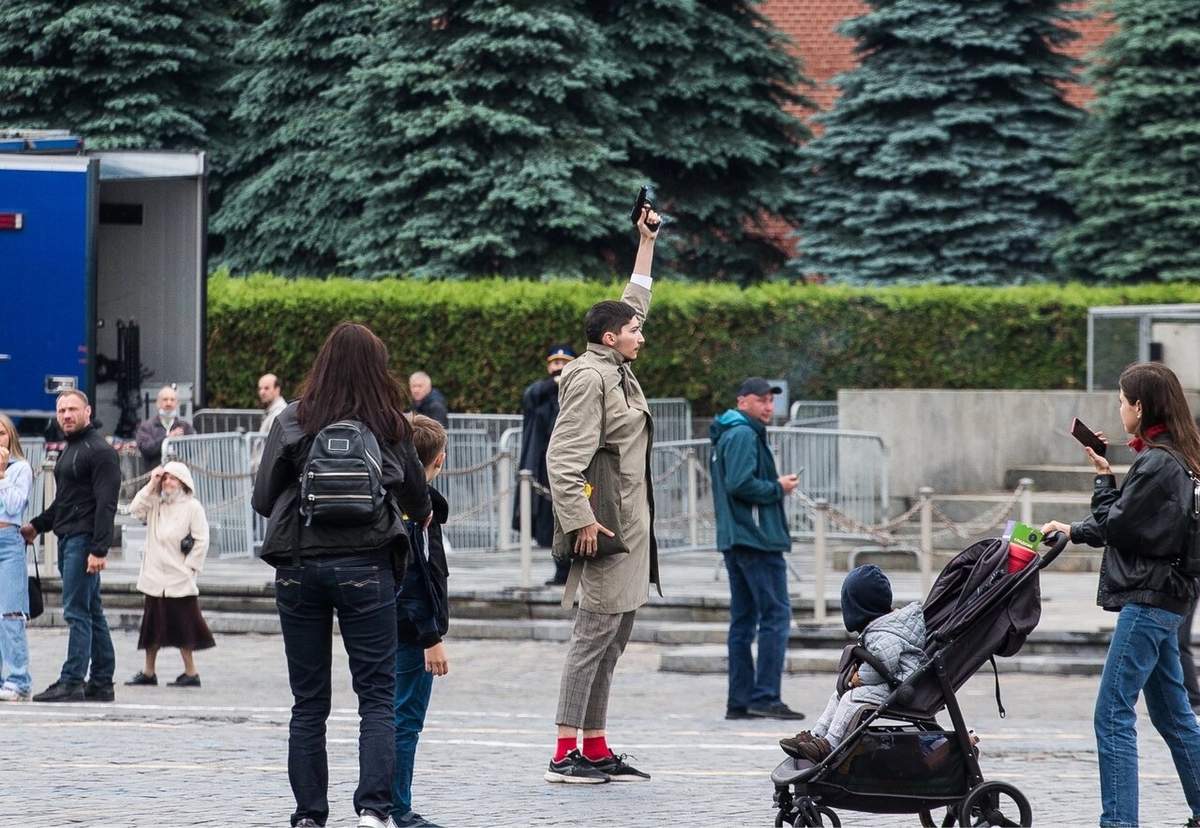
During this period, he was placed under administrative arrest several times, and his home was searched. Then in late 2025, during his last arrest, Krisevich was taken from his cell to a dark room where two FSB officers were waiting. They made him face the wall and threatened him: “We warned you; you and your loved ones will be the ones crying. Pack your things and leave, or we’ll lock you up.”
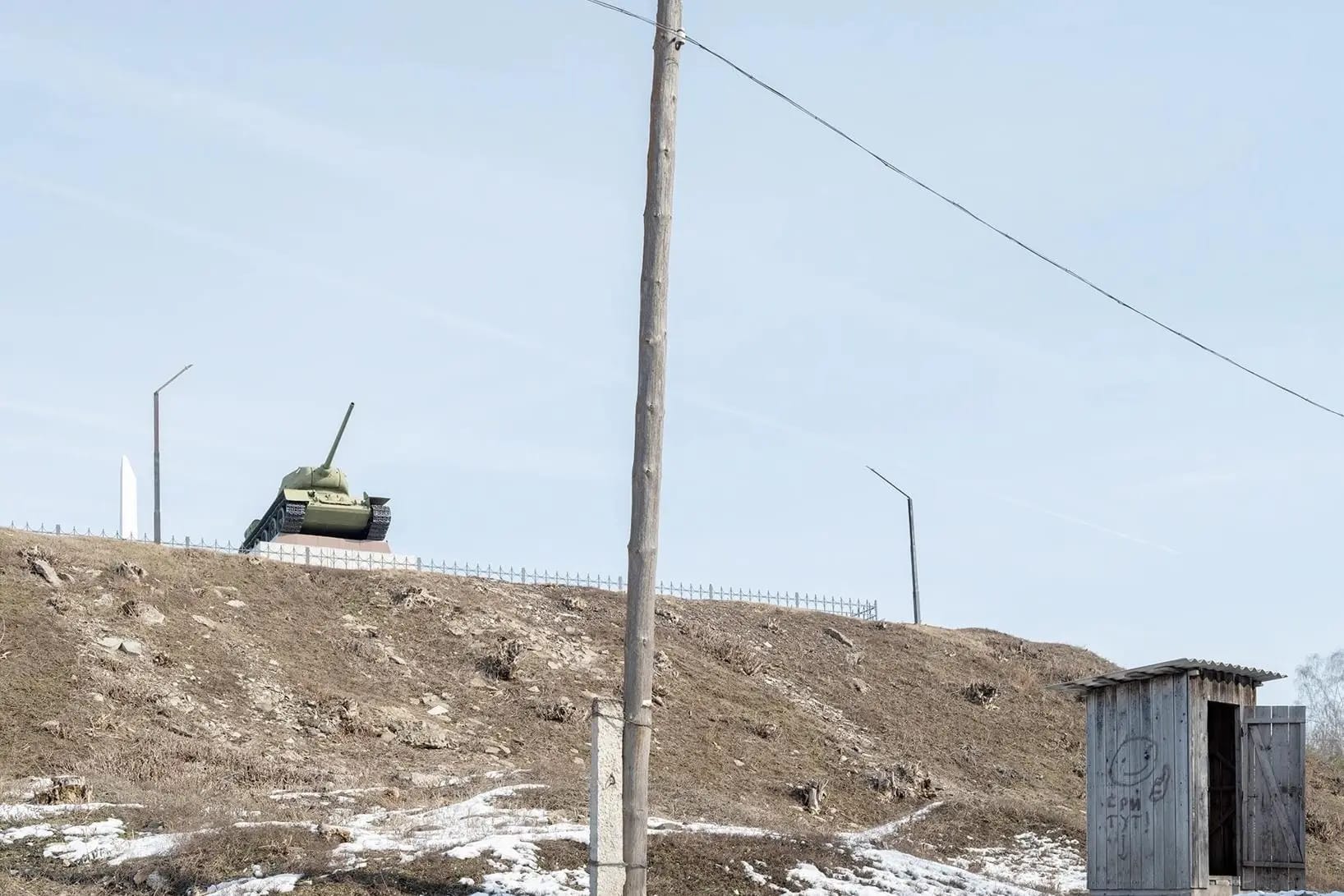
The performance that had led to his latest arrest was provocative: dressed as a cowboy, Krisevich climbed onto a monument to a Soviet S-75 surface-to-air missile in Istra, outside Moscow, recreating a scene from Stanley Kubrick’s Dr. Strangelove in which Major Kong rides an atomic bomb toward its target.
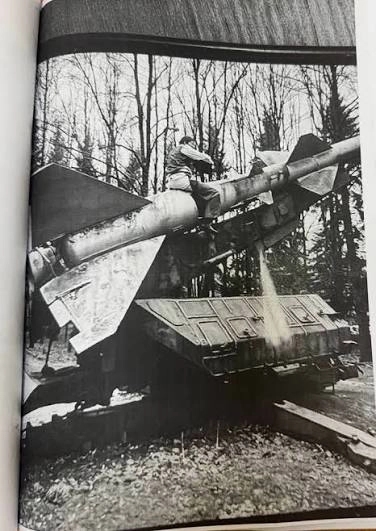
Krisevich later explained that the performance was about the fact of society growing accustomed to war, weapons, and talk of the possible use of nuclear weapons. He had originally intended to keep the photo shoot under wraps and publish the pictures only after leaving Russia or in a free Russia. He understood that another public performance could expose him to criminal prosecution. However, he was detained almost as soon as filming began.
Krisevich had shared his plans for the performance with Rita Flores, but it remains unclear whether the FSB learned about it from her or from another source. “At some point, my handler Ivan said that either he stops, or we arrest him during the performance,” Flores said in an interview.
At some point, my handler Ivan said, “Either he stops, or we nab him at the next performance”
After two consecutive administrative arrests and a direct ultimatum from FSB officers, Krisevich decided to leave Russia. Released in late December, he discussed the situation with his wife and soon left the country.
Later, commenting on Rita Flores’s interview, Krisevich stressed that he had left not because of her attempts to influence him, but because of a direct warning from FSB officers: “It was the FSB officers who persuaded me to leave. They came to see me at the special detention center and told me outright: either I leave or they put me in prison.”
“We’ll put him in prison, or you get him out”: How Philippenzo was forced out of Russia
On June 12, 2023, a huge graffiti mural appeared beneath the Elektrozavodsky Bridge in Moscow bearing the word “Izrossilovanie” — a portmantaeau word combinging "Russia" and "rape" — along with Russia’s coat of arms. It was an anti-war work by artist Philippenzo, whose real name is Filipp Kozlov. At the time, he wrote that “there is no other word” to describe what was happening in the country.
Philippenzo had already come under scrutiny from the security services several times. In 2022, he was fined three times under the law on “discrediting” the army, including over his “Zinc Is Ours” graffiti depicting coffins — this one a play on the 2014 slogan "Crimea is ours" and the material that Russian military coffins are made of.
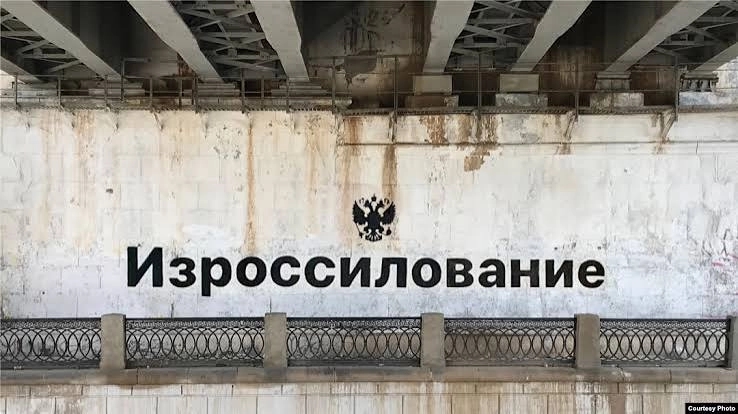
After the graffiti appeared, police came to Philippenzo’s home, and he temporarily left Russia. Then on July 29, Philippenzo returned from Georgia and was detained at Domodedovo Airport. He was initially sentenced to 15 days in detention for disobeying police orders. Shortly before his term expired, he was given another 15 days on the same charge before being released on August 26.
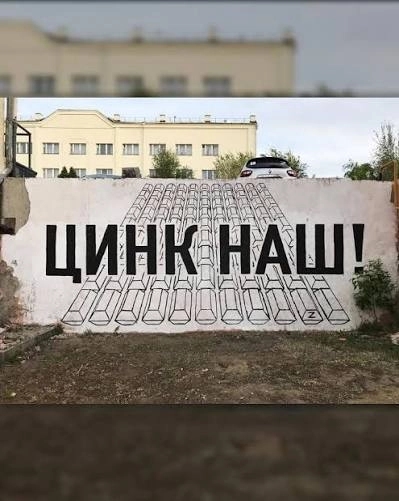
A few days later, Philippenzo noticed he was being followed. He later recounted that Rita Flores had hinted that he was under surveillance. “A criminal case had already been opened against me, so they tailed me for four days before coming to search my home,” the artist said.
On August 31, police searched Kozlov’s home and studio. It also emerged that he was facing a criminal case on charges of vandalism motivated by political hatred over the “Izrossilovanie” graffiti.
Only three years later did it emerge that the FSB had explicitly considered forcing Philippenzo to leave Russia as an alternative to imprisoning him. “We’ll put him in prison for this [the ‘Izrossilovanie’ piece] — lock him up good and proper. Or, if you can, get him out of the country as soon as possible,” Flores recalled her handler saying.
She said she then began pressuring the artist to leave, even deliberately picking a fight with him. Philippenzo later confirmed to the independent outlet Agentstvo that Flores had warned him he was under surveillance and, after the searches, urged him to leave Russia immediately.
By October of 2023, it had become publicly known that Philippenzo was in Lithuania. That same month, Russia’s Interior Ministry put him on its wanted list.
“I was simply forced out of the country”: Surveillance and arrests as a means of forcing people to leave
In August of 2023, St. Petersburg street artist BFMTH was sentenced to 15 days of administrative detention. Three hours before his release, an unidentified man in plain clothes and a medical mask approached him at the detention center.
“Listen, buddy, if you don’t leave after you get out, you’re f**ked,” the artist recalled being told. He suspected the man was an officer from Center E, the FSB's anti-extremism unit.
Listen, buddy, if you don’t leave after you get out, you’re f**ked.
By then, BFMTH was already known for his political street art — including a portrait of Vladimir Putin behind bars, a poster reading “The country is big, there’s enough z-land for everyone,” and other anti-war and anti-government works. In the summer of 2023, he embarked on a tour of Russian cities, planning to create new works in Moscow, St. Petersburg, the Moscow region, Samara, and Rostov-on-Don. In St. Petersburg, his performance was titled “The Thousand-Year Russian World,” while in Moscow it was called “Your Adults Are F**king Monsters.”
In Moscow, BFMTH was detained two days after arriving and was sentenced to 15 days in detention, ostensibly for disobeying police orders. He believed the arrest was targeted: police were waiting for him outside the house where he was staying. One officer later hinted that he knew about the artist’s latest work in Moscow.
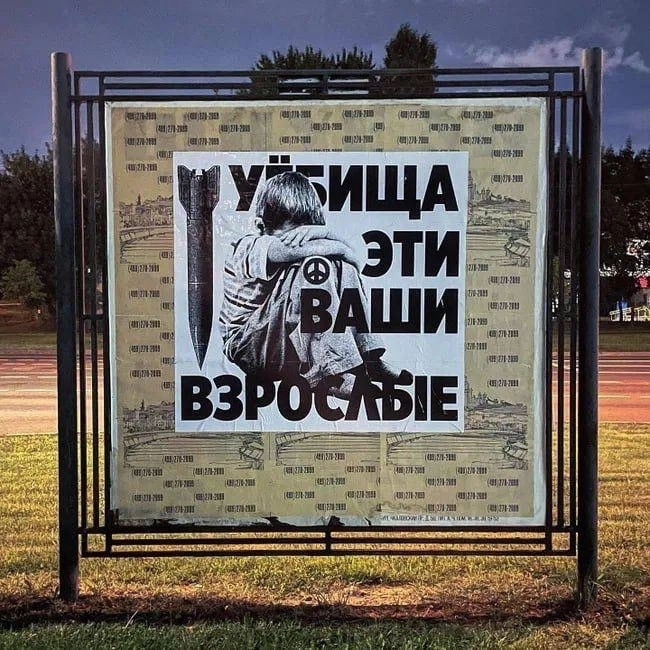
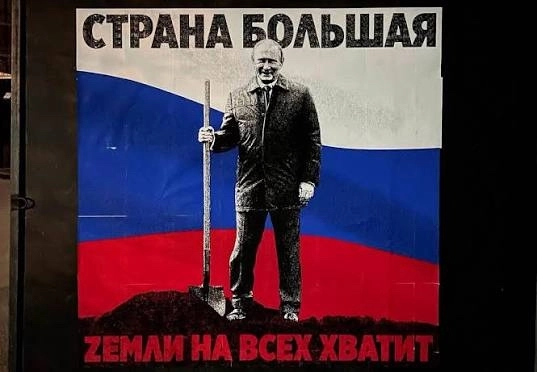
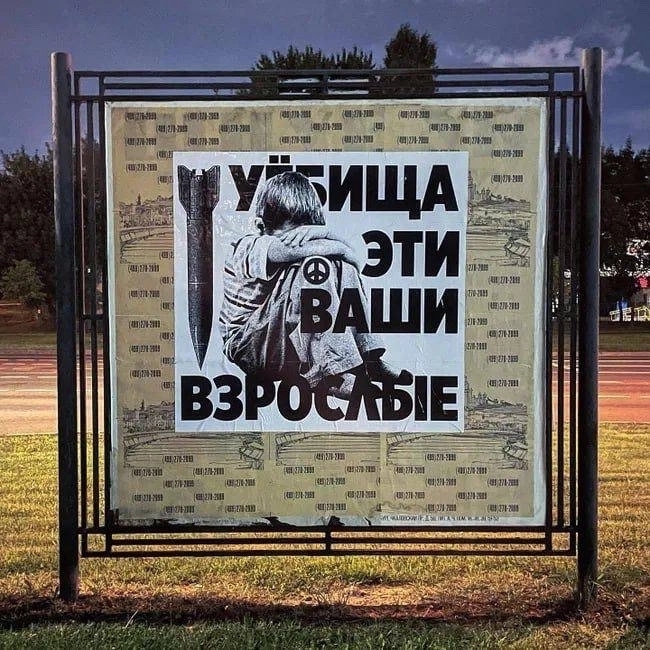
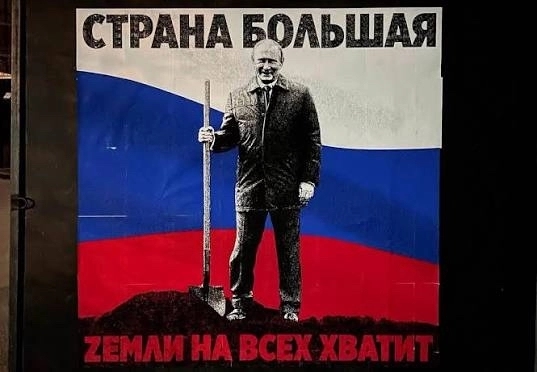
After his release, BFMTH initially had no plans to leave Russia. He went to the town Murom, hoping to lie low there for a while, but the very next day a car appeared outside his rented apartment, and several people began conspicuously following him around. They “weren’t exactly trying to hide,” he said. The same car followed him to the bus station, and one of the people tailing him later turned up at the railway station as well.
The pressure continued. Before his train to Kazan, police officers approached BFMTH and said they needed to search him for drugs. The search was conducted in the presence of witnesses, but no drugs were found, and he was released. When the artist arrived in the Tatarstan capital, police were already waiting for him on the platform. One officer told him, “I hope you leave the city very soon.” He then ordered BFMTH to buy tickets by 9 a.m., warning, “Otherwise, we’ll have a different kind of conversation.”
The artist bought a ticket to Yerevan, but even during a transfer in Sochi, he was detained again and questioned about why his name appeared in police databases.
Until then, BFMTH had been determined not to emigrate, intending to continue making street art in Russia. However, after several days of threats, surveillance, and detentions, he changed his mind. “Now it’s simply dangerous for me to visit any Russian city — I’ll be detained as soon as I arrive. I was simply forced out of the country,” he said from Yerevan.
It’s simply dangerous for me to visit any Russian city – I’ll be detained as soon as I arrive. I was simply forced out of the country
In all three cases, the security services were less interested in imprisoning the artists than in putting a stop to their activities inside Russia. Krisevich’s performance, Philippenzo’s graffiti, and BFMTH’s posters attract attention precisely because they appear in Moscow, St. Petersburg, or other places where the authorities seek to control both public spaces and political expression. In exile, an artist can continue working, but stripped of the original context, their work no longer has the same political impact.
It is also clear why the FSB prefers to let artists go abroad rather than locking them up at home: imprisoning an artist can draw even greater attention to their work inside Russia and trigger an international campaign on their behalf.
Signals to politicians and public figures
The same approach has been applied to politicians and prominent intellectuals.
In the summer of 2026, Boris Nadezhdin, who rose to prominence after attempting to run in the 2024 presidential election, was preparing to take part in the State Duma election campaign. In July, he was designated a “foreign agent,” subjected to administrative penalties, barred from leaving the country, and then summoned to the Investigative Committee.
Nadezhdin himself linked the pressure to his plans to participate in the Duma campaign. Yet on July 21, the day he received the summons, the travel ban unexpectedly disappeared from the Gosuslugi government services portal. The very next day, he was able to fly to Astana.
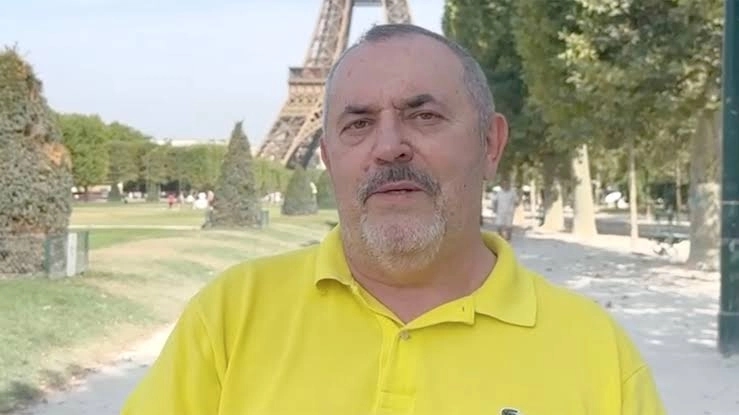
For the authorities, this was a far more convenient outcome. Nadezhdin had campaign experience and name recognition from the presidential race, making him a potential asset to independent candidates running for the State Duma even if he withdrew his own candidacy. At the same time, imprisoning someone who had recently sought the presidency would inevitably have generated unwanted political fallout.
Another telling example is the case of sociologist Boris Kagarlitsky. In July 2023, he was arrested on charges of “justifying terrorism.” But on Dec. 12 of that year, the court unexpectedly imposed only a 600,000-ruble ($7,250) fine and ordered his release from custody.
The prosecution appealed the verdict, demanding a prison sentence. Kagarlitsky had two months to leave the country but chose to remain in Russia. On Feb. 13, 2024, the fine was replaced with a five-year prison sentence.
This sequence of events communicated the FSB's clear message: leave, or go to prison. The authorities evidently preferred Kagarlitsky to emigrate; otherwise, they would not have released him and left him two months to flee the country.
In fact, Kagarlitsky's imprisonment brought precisely the consequences the authorities wanted to avoid. An international solidarity campaign formed around the prominent left-wing figure, with British socialist politician Jeremy Corbyn, French presidential candidate Jean-Luc Mélenchon, Greek left-wing party leader Yanis Varoufakis, Amnesty International, and dozens of other politicians and intellectuals from countries as far-flug as Brazil calling for his release.
How dissidents were forced out of the USSR
Forcing prominent opponents of the regime to leave the country is nothing new. For years, the KGB used similar tactics against dissidents and “anti-Soviet” writers. In the most prominent cases, the choice between exile and imprisonment was even discussed at the level of the Politburo.
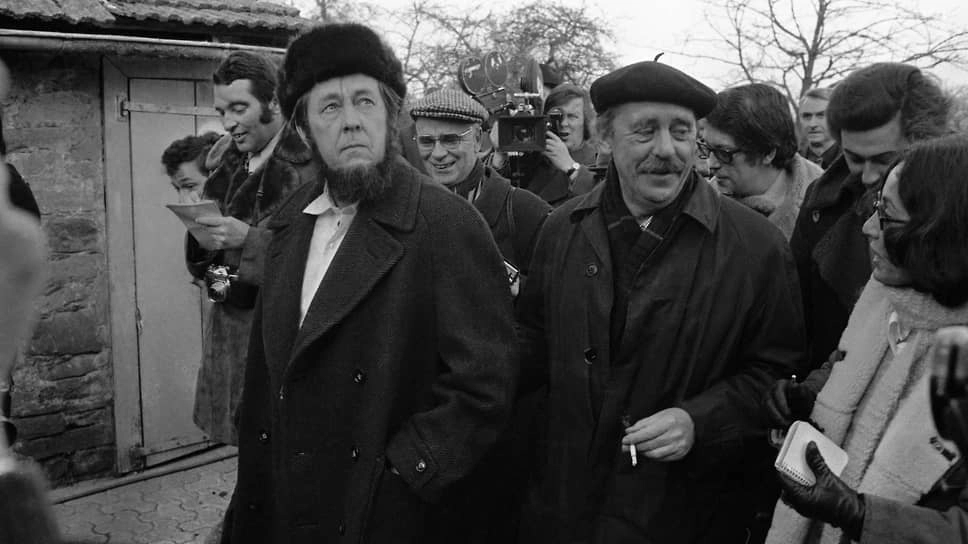
By early 1974, Alexander Solzhenitsyn was already one of the best-known Soviet writers in the West. He had received the Nobel Prize in Literature in 1970 but had not traveled to Stockholm for the award ceremony, fearing the authorities would refuse to let him return to the USSR. By January 1974, his magnum opus The Gulag Archipelago was being published abroad. The Soviet leadership regarded the book as a direct political challenge.
On Jan. 7, 1974, Solzhenitsyn’s fate was discussed at a Politburo meeting. General Secretary Leonid Brezhnev took a pragmatic approach from the outset: Soviet law allowed Solzhenitsyn to be imprisoned, he said, but the leadership needed to consider “whether it would be to our advantage” and how “Western propaganda” might exploit a trial. KGB Chairman Yuri Andropov proposed an alternative: “I believe Solzhenitsyn should be expelled from the country against his will.”
Nikolai Podgorny, chairman of the Presidium of the Supreme Soviet, framed the choice bluntly: “Let’s see what would be more advantageous for us, a trial or expulsion.” Podgorny favored a trial, fearing that Solzhenitsyn would continue to damage the USSR from abroad. Foreign Minister Andrei Gromyko, meanwhile, warned that forced expulsion could also provoke an international campaign against Moscow. KGB head Andropov argued that delaying a decision would be even worse and therefore proposed preparing for Solzhenitsyn’s expulsion while simultaneously opening a criminal case (though Andropov, too, considered expulsion preferable to imprisonment).
Andropov proposed preparing for Solzhenitsyn’s expulsion while simultaneously opening a criminal case, but considered expulsion the preferable option
The Politburo formally opted for criminal prosecution that January, but Andropov continued to press for Solzhenitsyn’s expulsion. Then, on Feb. 7, the KGB submitted a separate proposal to Brezhnev to send the writer to West Germany.
The plan was carried out just days later. Solzhenitsyn was arrested on Feb. 12, stripped of his Soviet citizenship the following day, and forcibly deported to West Germany. He returned to Russia only in 1994.
In 1972, the authorities used a similar tactic to force poet Joseph Brodsky out of the USSR. By then, he had already endured a show trial over his “social parasitism,” along with forced psychiatric treatment and internal exile in the Arkhangelsk region. After returning to Leningrad, he continued to face persecution and restrictions on publishing his work.
On May 10, 1972, Brodsky was summoned to the Office of Visas and Registration (OVIR). Until then, he had had no intention of leaving the country. At OVIR, an official whom Brodsky described as “a colonel, at least” told him:
“All right, Brodsky. We want you to submit all your [emigration] papers within three days. If you submit them by Friday, we’ll give you an answer quickly. After that, we’ll be entering a busy period. Vacations and so on.”
Brodsky accepted the offer but described his departure as involuntary, interpreting the reference to a “busy period” — later recalled as “hot days” — as a direct threat.
Solzhenitsyn and Brodsky were not exceptions. In the 1970s and 1980s, dozens of dissidents, writers, and artists were forced out of the USSR in a similar way.
In 1980, for example, writer and dissident Lev Kopelev obtained permission to travel to West Germany for research after being expelled from the Writers’ Union, barred from working in his profession, and summoned to the Lubyanka. Two months after his departure, Kopelev and his wife were stripped of their Soviet citizenship, effectively preventing them from returning. Kopelev later said, “I am not an emigrant. I did not want to leave.”
The Russian authorities have evidently revived this tactic, seeking to remove prominent figures from the country’s public and political life in ways that carry the least political cost. Imprisoning a well-known artist, intellectual, or politician can trigger public outcry, a solidarity campaign, and an international backlash. Once they leave Russia, however, they are likely to lose their influence inside the country.
The same approach does not apply to people unknown to the wider public. In their cases, the security services impose prison sentences without hesitation, knowing such repressive acts are unlikely to provoke significant public backlash.