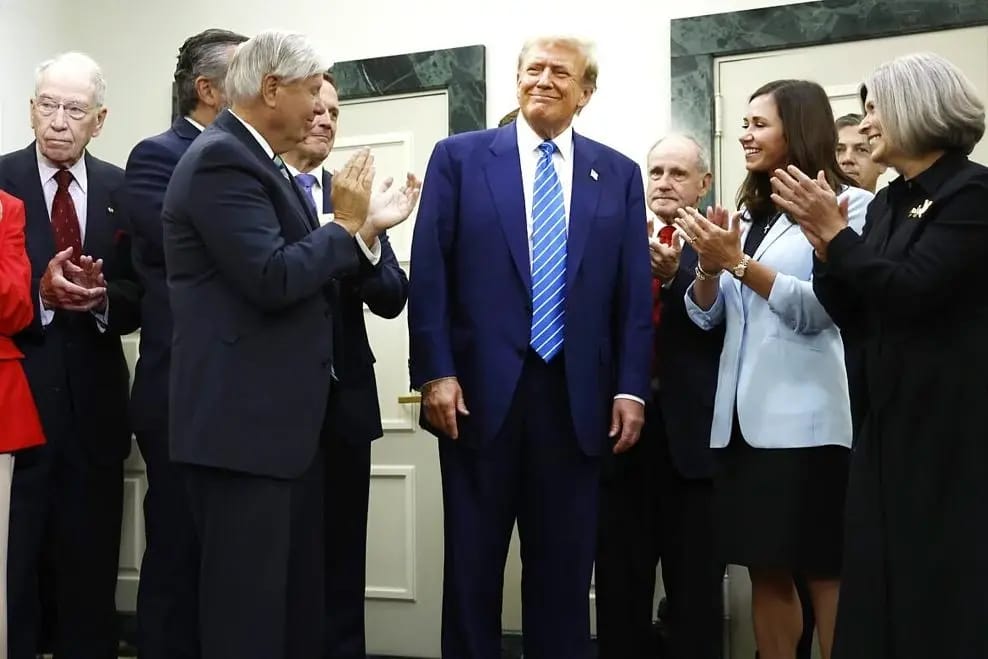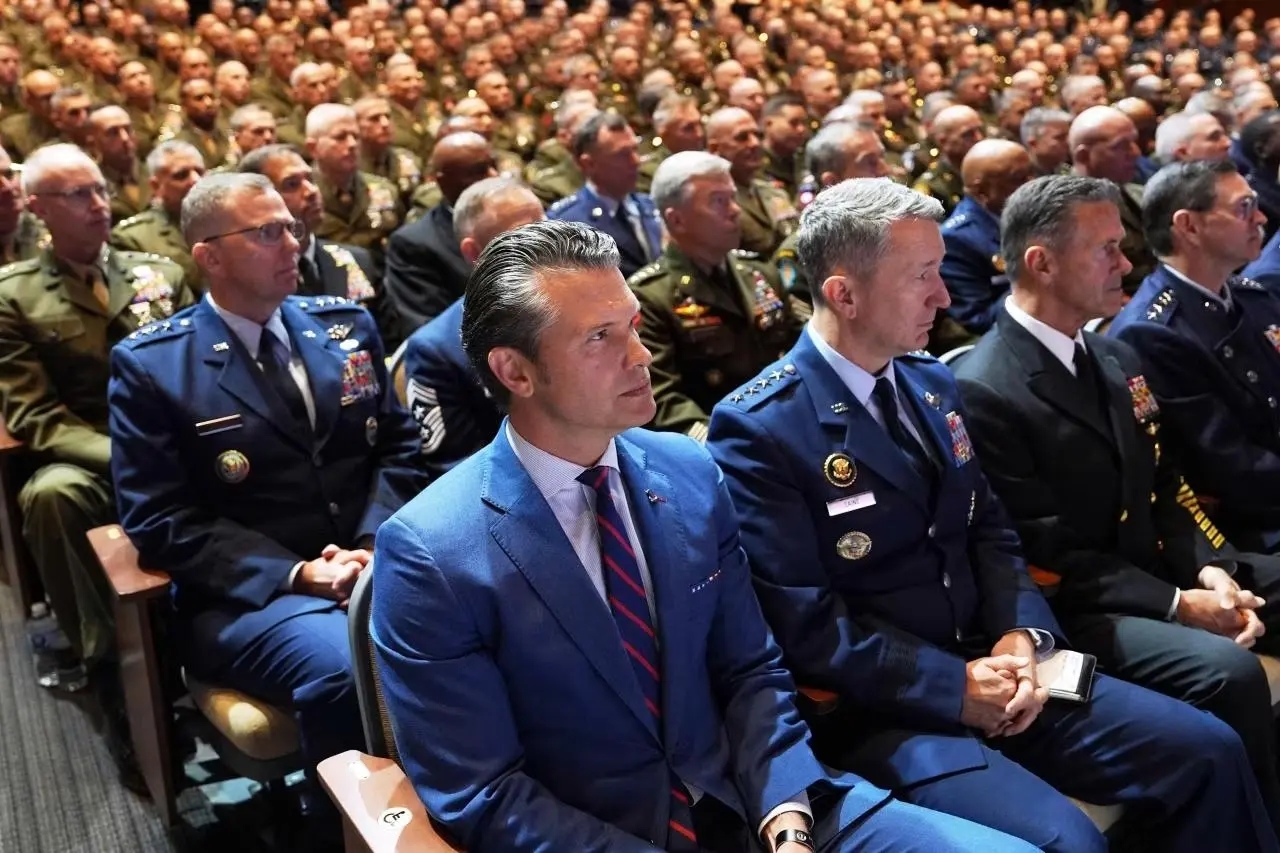
Despite the “strange war” Donald Trump is waging against Iran, the purges at the Pentagon have continued unabated in recent months. Secretary of Defense Pete Hegseth has fired some generals without warning and blocked others from promotion, all while using the Pentagon’s civilian leadership to impose Donald Trump’s political and cultural agenda on the military. Meanwhile, the world’s most powerful fighting force is running short of ammunition, its personnel are exhausted, and its staffing levels have been depleted. Experts say Hegseth has created (or, at the very least, exacerbated) many of these problems himself — focusing more on political issues and the loyalty of his generals than on supplying the military and ensuring the competence of his subordinates.
The blitzkrieg drags on
Criticism of Pete Hegseth had been building for months before some Republicans in Congress finally began challenging the Trump administration’s agenda when it comes to military affairs. Finally, it was Republican Congressman Thomas Massie of Kentucky who, on Sept. 15, introduced eight articles of impeachment against the defense secretary in the House of Representatives. Three accuse Hegseth of launching the war ing Iran without congressional authorization, while the others concern alleged abuses against civilians, the legality of military operations against drug traffickers and Yemeni Houthis, and the reprisals against Senator Mark Kelly after the Arizona Democrat called on service members to refuse to obey unlawful orders.
Other Republicans, however, secured enough votes to postpone consideration of Massie’s motion until November — after the midterm elections. Congress is likely to take the matter up in the future provided that Democrats gain control of the chamber (as polls currently suggest that they will).
There are ample grounds for criticism of Hegseth. The war launched by the United States and Israel in February was initially intended to swiftly decapitate the leadership in Tehran, resulting in a pro-Western shift. The allies achieved the first objective but not the second: after the old leadership was eliminated, power in Iran consolidated in the hands of the Islamic Revolutionary Guard Corps, which has not been afraid to escalate the conflict.
In September, the war shifted toward oil exports and maritime routes, with the U.S. beginning to strike Iranian oil tankers and Tehran responding with attacks on commercial vessels. Iranian missiles also began striking ever closer to American ships, and shortly after Saudi Arabia asked the United States for military assistance, Iranian attacks damaged a critical overland pipeline that had become an alternative to the waterborne route. Iran-backed Houthis also recently seized footholds in another part of the region’s maritime corridor, the Bab el-Mandeb Strait.
The U.S. administration is now being forced to plan for a long war. Vice President JD Vance and Secretary of State Marco Rubio reportedly even warned Trump that Iran could continue resisting until the end of his term — meaning early 2029 — a message that is consistent with what Hegseth is hearing from his own generals. According to the Washington Post, as early as August the military’s top commanders told the Pentagon chief that the war could not continue indefinitely at its current pace given that U.S. Central Command, which oversees the Middle East, has kept more than 50,000 troops on heightened combat readiness for months.
As early as August, the military’s top commanders told Hegseth that the war in Iran could not continue indefinitely at its current pace
Generals are concerned that the operational tempo is increasing, service members are growing exhausted without relief, and rotations may not come until early 2027 (or even later). Meanwhile, stocks of precision-guided weapons are not being replenished.
When the aircraft carrier USS Abraham Lincoln recently pulled into port in Thailand after a 286-day deployment – one of the longest in the U.S. Navy's modern history – sailors complained about poor living conditions, a lack of variety in their food, and their deteriorating psychological state. Trump, however, responded that the carrier had been at sea for “not long enough.”
Chief of Naval Operations Daryl Caudle said outright that the Navy could not sustain the current level of operations against Iran with no end date in sight and sailors already stretched to their limits. Even U.S. convoys helping tankers pass through the Strait of Hormuz are now operating on a limited schedule and no longer providing 24-hour air-defense coverage. The United States is, of course, still capable of waging war against Iran, but its problems are mounting — and not only in the Middle East. As forces have been pulled in from other regions, deterrence of other potential U.S. adversaries, above all China and Russia, has weakened, generals warn.
Generals vs. the secretary
The resource shortage is compounded by strained relations between the secretary and the military leadership. For the past year and a half, Hegseth has systematically purged the top brass, removing officers he considers disloyal to his political agenda.
Although the U.S. military is subordinate to civilian political leaders, the armed forces have traditionally enjoyed considerable professional autonomy. The assessments of the Joint Chiefs of Staff have often differed from what politicians wanted to hear, and military leaders themselves handled operational planning and execution, assessed military risks, developed doctrine and standards, and made promotion recommendations.
Trump and Hegseth began “purging” the military leadership almost immediately after the current administration came into office. The president fired Joint Chiefs Chairman Charles Brown, while Hegseth ousted then-Chief of Naval Operations Lisa Franchetti and several other senior commanders — without making any allegations of misconduct against them. Brown later indirectly criticized the administration for politicizing military appointments.
More recently, Hegseth has shifted from firing officers to controlling who gets promoted. He has personally intervened in promotion lists drawn up by the military, removing many officers he considers unacceptable. According to media reports, participation in programs connecting with Diversity, Equity, and Inclusion (DEI) was among the reasons some officers fell out of favor. In one instance, Hegseth removed all three women and two African American officers from a list of candidates for rear admiral. During the war with Iran, Hegseth also forced Army Chief of Staff Randy George to retire.
For the officers who remain, this inevitably raises the question of where the line now lies between professional assessments of their service and political loyalty. The upheaval in the Army continued when Army Secretary Dan Driscoll left his post in late August. The civilian head of the Army and one of its leading advocates for accelerated modernization, Driscoll was also Hegseth’s biggest rival for influence — and a potential successor as SecDef.

However, the personnel shakeups have not eliminated professional disagreements within the military leadership. As reported by U.S. media, in August the commanders of European Command, Indo-Pacific Command, and Southern Command, along with the Chief of Naval Operations, formally objected to extending the deployments of some forces stationed in their regions.
This was not a refusal to follow orders — which the generals and admirals were still required to carry them out. However, they still made clear that they considered the decision risky. Hegseth has yet to respond, and the dissenting commanders remain in their posts for now.
Where are the weapons, Hegseth?!
Personnel conflicts are only part of the problem. Even setting aside Hegseth’s relationship with the generals and its impact on military readiness, the armed forces simply lack sufficient ammunition and equipment. The U.S. is burning through its expensive weapons far faster than the American defense industry can replenish them. Meanwhile, cheap Iranian drones are creating a stark cost imbalance between offense and defense: Tehran can force the United States and its allies to spend many times more to intercept a drone than it costs to launch one.
According to The Washington Post, the U.S. has already expended 850 Tomahawk cruise missiles used against fortified targets, along with more than 1,000 missiles for Patriot air-defense systems and THAAD interceptors. In addition, CNN has reported that by August the United States had used about half of its prewar stockpile of Patriot missiles and roughly 80% of its THAAD interceptors. The U.S. also lost at least 45 MQ-9 Reaper heavy drones – about a quarter of its prewar fleet — as the slow, expensive UAVs proved relatively easy targets for Iran and its allies.
The United States has not only reduced its ability to strike, but also left its regional allies without adequate air defenses. They were willing to spend their oil revenues on American systems, but there are no longer enough of the systems to go around. It is hardly surprising that the Gulf monarchies are now turning to Ukraine for technology and expertise in countering cheap drones – the very experience Kyiv has gained through years of war with Russia.
The United States is learning the same lesson. The global drone market was already valued at $20 billion in 2025 and is expected to exceed $50 billion by 2034. The U.S. intends to take a leading position, albeit belatedly, with the Pentagon investing about $1 billion in the Drone Dominance initiative to produce up to 200,000 attack drones by 2027. Young people who until recently competed in drone racing are now winning half-billion-dollar Pentagon contracts to produce “killer drones” costing $5,000 apiece, and a whole new crop of companies is vying for billions of dollars being distributed by the Pentagon.
By 2034, the global drone market is expected to exceed $50 billion, and the United States wants to take a leading position
But once again, the key issue is Hegseth's arbitrary personnel shakeups, which could undermine combat readiness. After Randy George was forced out, the Army’s new leadership disbanded a 600-member experimental battalion that had spent nearly a year specializing in drone warfare — in part by absorbing lessons from Ukraine.
The Pentagon says a dedicated unit is no longer necessary and that drone skills should be spread throughout the Army. But lawmakers from both parties are demanding an explanation for why the experiment is being ended now, during a war in which cheap Iranian drones have become one of the main threats to U.S. forces.
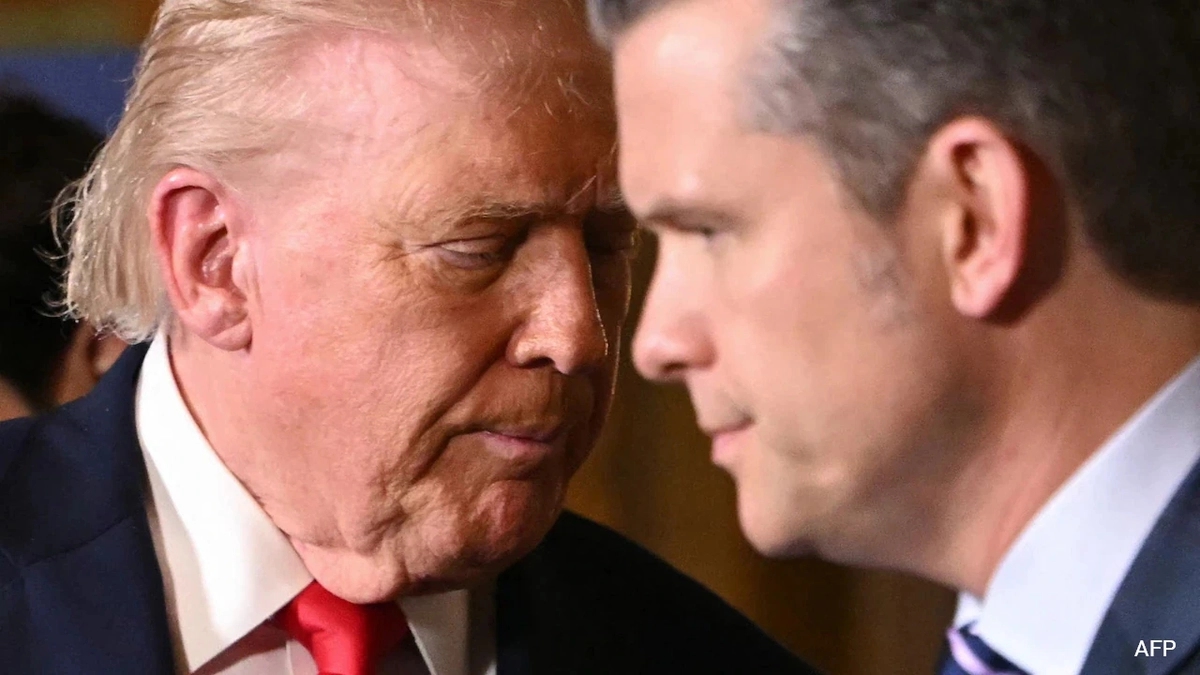
Hegseth did not create the shortage, but he did arrive in the Pentagon promising to revive the defense industry, overhaul the procurement system, and speed up the adoption of new technologies. Instead, innovation is moving slowly — with any actual progress occurring almost in spite of a leadership that is disbanding specialized units. The military’s inability to replenish its losses is increasingly becoming a problem for which Hegseth bears primary responsibility.
Preparing for the last war
It is still too early to say that the personnel policies implemented by Hegseth and Trump have significantly weakened the U.S. armed forces. But warning signs are coming from all directions. The missile shortage, slow production, and strain on the Navy did not begin under Hegseth. As the old saying goes, U.S. generals prepared for the last war.
They were unprepared for a war of attrition against a major adversary like Iran. Hegseth, however, came to the Pentagon promising to “restore combat readiness” but is making the situation worse through personnel that appears to prioritize ideology over effectiveness. The U.S. military, for which Trump has requested a staggering $1.5 trillion defense budget for 2027, is working to address these shortcomings, with the Pentagon drawing up emergency plans to replenish its arsenal. Nevertheless, the political agenda pushed by Hegseth has already cost the military substantial resources and effort, and possibly lives as well.
The Secretary's politics are likely to remain the main obstacle to modernization programs and decisions. In other words, the Pentagon chief himself could become the U.S. military's biggest problem.