In early September, Russia and North Korea opened a road bridge across the border river Tumen. Analysts note that the structure could become a key gateway for transporting North Korean troops and weapons for the war against Ukraine. Since 2023, military aid deliveries to Russia have become a key source of revenue for North Korea’s budget, fueling unprecedented economic growth. As Pyongyang has drawn closer to Moscow, China has also entered the competition for influence over North Korea — even though it backed sanctions against the country together with Russia back in 2017. Combined, these factors have strengthened Pyongyang’s position enough that it no longer needs to seek a thaw with the United States. At the same time, Donald Trump has shown readiness for talks, which, should they take place, could cement North Korea’s status as a nuclear power.
In July, South Korea’s central bank estimated that North Korea’s economy had grown by more than 3% for a third consecutive year, its best results since a comprehensive sanctions package took effect in 2017. The turnaround would have seemed improbable only a few years ago. North Korea emerged from the COVID-19 pandemic impoverished and more isolated than ever after sealing its borders, while international restrictions continued to limit trade as its nuclear program deepened the country’s estrangement not only from the West, but even from its traditional Chinese and Russian allies. Yet renewed trade with China, ambitious state-led development programs and, increasingly, military cooperation with Russia have produced North Korea’s strongest sustained growth in years. At the same time, Moscow has turned Pyongyang from an international liability into a useful military partner, while Donald Trump’s return has revived the possibility of direct diplomacy at the leader level. The Democratic People’s Republic of Korea (DPRK) represents perhaps the most striking example of a state rejecting the post-Cold War world, and its sudden breakout from isolation serves as a signal that the order which once marginalized North Korea is beginning to unravel.
An unlikely recovery
North Korea’s recovery began, in part, by simply reopening the country. Trade with China had collapsed from nearly $2.8 billion in 2019 to $539 million in 2020— and it was just $318 million in 2021 after Pyongyang responded to COVID-19 by virtually sealing its borders. However, freight traffic gradually resumed in 2022, and by 2023 bilateral trade had recovered to around $2.3 billion. That reopening restored supplies of fuel, fertilizer, machinery, and consumer goods while allowing North Korean exports back onto the Chinese market. At the same time, the state poured resources into construction and industry, and improvements in agricultural production also helped pull the economy out of its pandemic slump. Russia would soon add an entirely new source of demand and foreign revenue, but North Korea’s recovery was already far from dependent on the wartime relationship with Moscow alone.
The domestic component of North Korea’s sudden relative prosperity has been remarkably visible. Since 2021, Kim Jong Un has made construction and regional development a central priority for the government, combining a five-year program to build 50,000 new apartments in Pyongyang with an extensive rural housing drive. With even grander ambition, in 2024 the DPRK’s Supreme Leader launched the “Regional Development 20x10 Policy,” calling for the modernization of factories in 20 cities and counties every year for a decade, with an emphasis on food processing, clothing, and everyday consumer goods. This represents a notable turn away from the focus on heavy industry traditionally favored by the state. Even more worrying for its neighbor to the south (and for the power of UNSC sanctions more broadly), however, is the fact that these programs are difficult to dismiss as propaganda. Satellite imagery has shown construction beginning within weeks of its announcement, and factories were installed in all 20 communities targeted during its first year. Building on its initial success, in 2025 the 20x10 program expanded into hospitals, leisure facilities, farming infrastructure, and other local projects, again opening all of its intended projects before the end of the year.
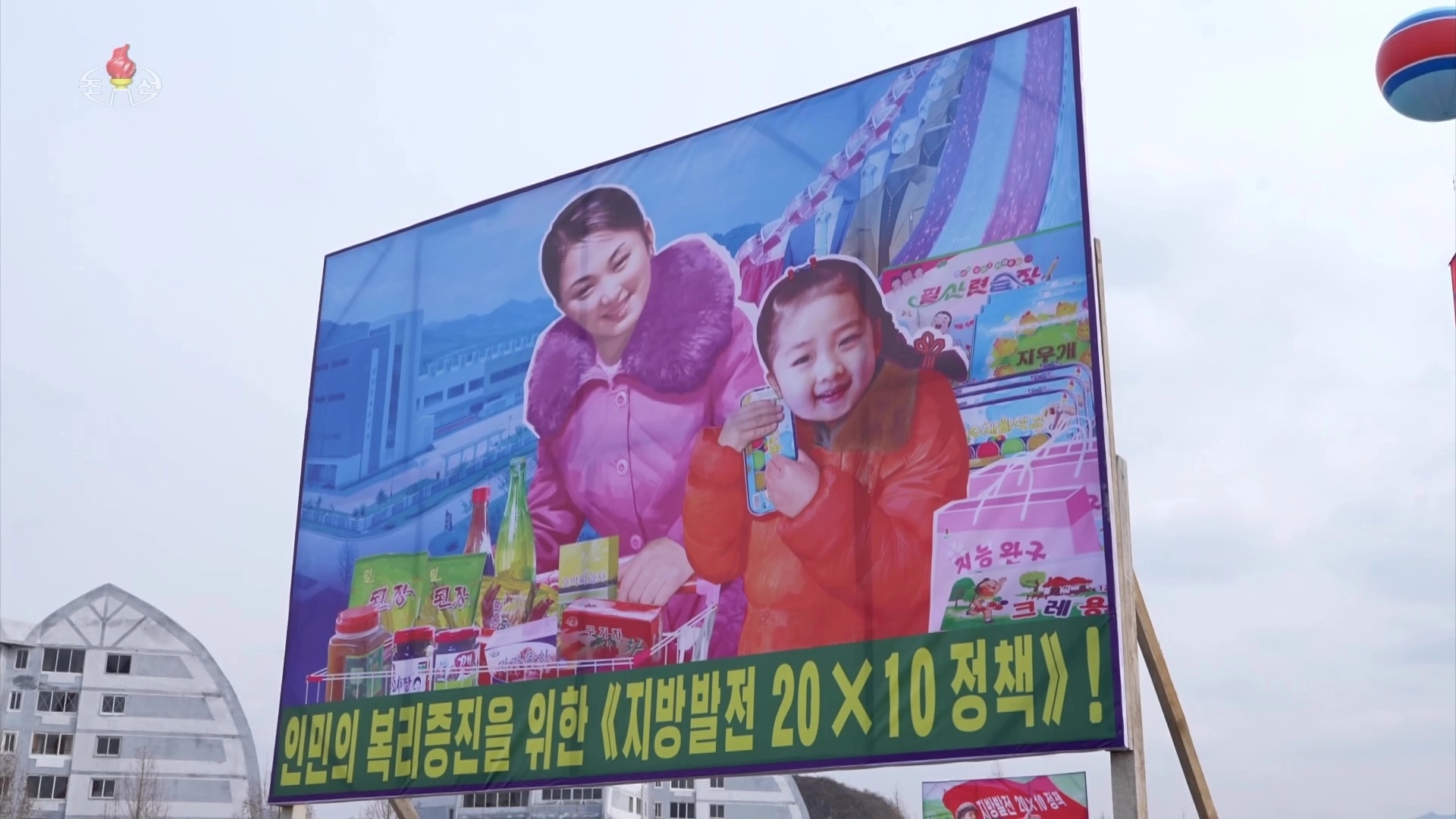
This headline policy represents a significant shift for a nation that has historically experienced extremely uneven economic development, with the capital, Pyongyang, and strategic heavy industries absorbing a disproportionate share of state investment while much of the country’s provincial economy remained dependent on Cold War-era factories or the nation’s growing informal economy. The 20x10 program, by contrast, is an explicit attempt to narrow that divide and invest in creating local provincial centers capable of processing regional materials into basic consumer products. It also seeks improvements in food production, agricultural mechanization, and housing. Whether these new industries can survive the country’s harsh shortages of electricity, machinery, and several raw inputs remains to be seen, but its focus on provincial economies and light industry is a significant departure from traditional party doctrine and seems to have borne early fruit.
That shift in emphasis, however, has not come at Pyongyang’s expense. At the same time the government has redirected investment toward provincial cities, it has continued an enormous reconstruction of the capital. In February, the government announced the completion of the aforementioned program to construct 50,000 new housing units, much of it concentrated in the brand new Hwasong district, where the program transformed former agricultural land into dense high-rise neighborhoods. The more striking changes, however, are taking place at the street level rather than on Pyongyang’s prominent skyline (which itself has long been a Kim family prestige project). Foreign visitors returning after the pandemic described the city as shockingly different from its pre-COVID self, with app-based taxis, QR-code payments, food and medicine delivery services, new storefronts and restaurants, and a far more visible smartphone economy. For the first time, the city’s wide streets and parking lots have been tested to capacity as the country experiences an influx of largely Chinese vehicles, imported despite UN sanctions. The most important new source of resources behind this expansion, however, came from outside the country.
Beginning in the summer of 2023, Pyongyang became a major supplier of artillery ammunition and ballistic missiles to Russia, eventually providing more than 15 million artillery rounds, according to South Korean intelligence estimates.
The resources for North Korea’s economic upturn largely came from military cooperation with Moscow
The Institute for National Security Strategy (INSS), a think tank affiliated with South Korea’s intelligence service, estimates that weapons exports alone earned North Korea more than $10 billion between mid-2023 and the end of 2025 — an extraordinary sum for a country whose entire annual GDP is estimated at only around $27 billion. The subsequent deployment of roughly 15,000 North Korean soldiers to Russia added hundreds of millions more, even if INSS says only a fraction of the proceeds has been confirmed as payment in kind, while much of the remainder may consist of sensitive military technology, components or materials, or may still be owed.
More consequential than the scale of the payments themselves, however, is the extent to which the relationship has begun to dismantle the economic constraints imposed on North Korea over the previous decade. The sanctions adopted after 2016 derived much of their force from the unusual willingness of both Russia and China to participate in isolating Pyongyang — restricting its access to fuel, machinery, foreign currency, overseas labor, and many of the export markets on which it had previously depended. Russia has now reversed that situation by becoming a major customer for the same military-industrial complex that the sanctions were intended to constrain while simultaneously supplying North Korea with many of the resources those measures sought to keep out. In short, the DPRK’s recent recovery is not simply a rebound from the extraordinary deprivation of the pandemic years, but the result of a much larger change in the country’s international position.
Pyongyang’s place in the new world
North Korea’s problem was never a lack of powerful backers. When it was nearly destroyed by the U.S.-led coalition during the Korean War, Communist China intervened in large part out of fear of having an American-aligned state and military presence on its border, and to this day the DPRK-PRC alliance remains China’s only mutual-defense commitment. What it couldn’t secure were powerful friends that truly needed anything it could provide. For most of the post-Cold War era, Pyongyang had little to offer in exchange for its dependence on Chinese and Russian trade and diplomatic protection — a meagre workforce, a domestic market too poor to absorb high-end imports, and an endless stream of diplomatic liabilities generated by its nuclear program and recurring foreign provocations. However, the war in Ukraine has begun to reverse that imbalance, turning qualities that had made North Korea a diplomatic liability into assets that its allies increasingly covet.
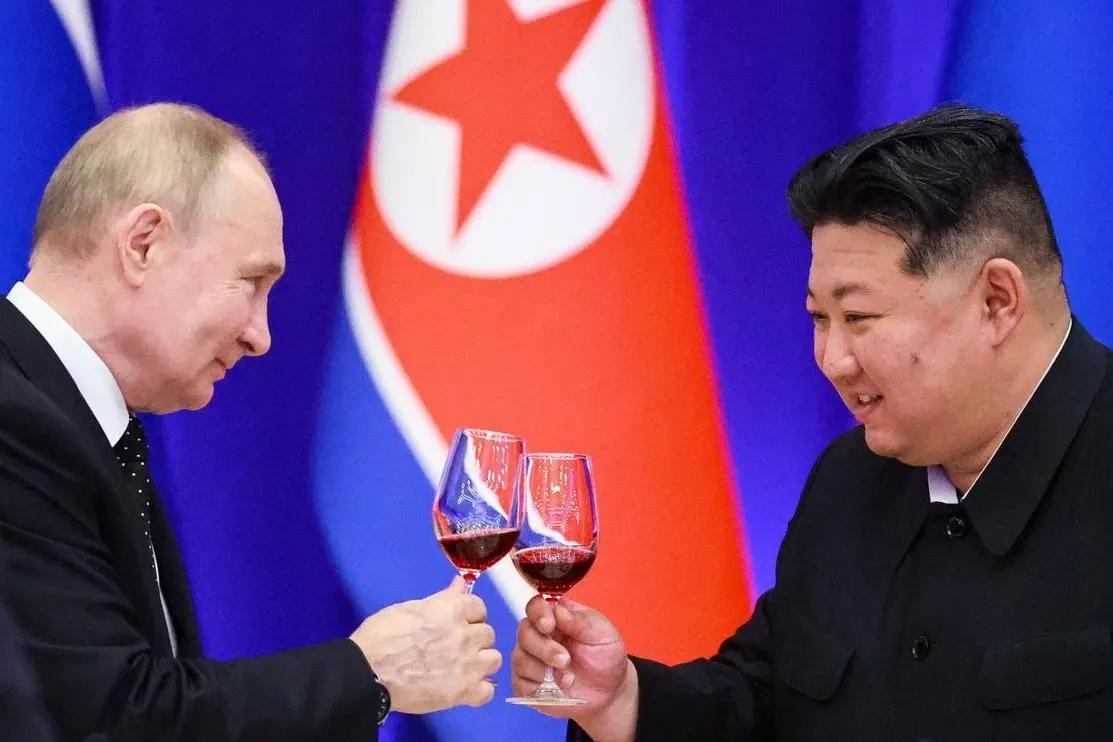
The shift is clearest in relations with Moscow. In 2017, Putin insisted that Russia “unequivocally condemned” North Korea’s nuclear tests and pledged “fully complied with the UN Security Council resolutions” imposed on the DPRK. And yet, by 2024 he was in Pyongyang signing a mutual-defense treaty as Russia purchased billions of dollars’ worth of North Korean munitions. The change soon reverberated to international institutions that had been designed to constrain the DPRK. In March of that year, Russia vetoed the renewal of the UN Panel of Experts responsible for monitoring sanctions on North Korea, dismantling one of the central mechanisms through which the Security Council could apply pressure on the country.
In March 2024, Russia vetoed one of the central mechanisms through which the UN Security Council could apply pressure on the DPRK
Of course, for Pyongyang the benefits go far beyond munitions export revenue and diplomatic protection. North Korea also receives access to fuel, materials, and advanced military equipment. According to some South Korean and Western assessments, the partnership also includes transfers of military technology in areas ranging from air defense to missile and satellite development. For the Korean People’s Army (KPA), which is still overwhelmingly reliant on Cold War-era Soviet designs and indigenous attempts at their modernization, such cooperation offers one of the few plausible routes toward modernizing the capabilities that North Korea cannot readily develop on its own.
The benefits of friendship with Russia also affect North Korea’s other international relationships. If anything, Pyongyang’s growing independence from Beijing appears to have made China more attentive when it comes to preserving its own influence. After starting to cool off during the pandemic, relations with Beijing grew dramatically closer starting in late 2025. As a result, in June 2026, Xi Jinping made his first visit to Pyongyang in seven years, pledging that China would not waver in its support for North Korea and agreeing to deepen cooperation in various fields. Rather than displacing Beijing, Russia’s entry has made North Korea more valuable to China by giving Pyongyang a realistic alternative source of support. Kim is now in a position to draw economic backing from Beijing and military and diplomatic benefits from Moscow while reducing the degree to which either power can take its influence over the DPRK for granted.
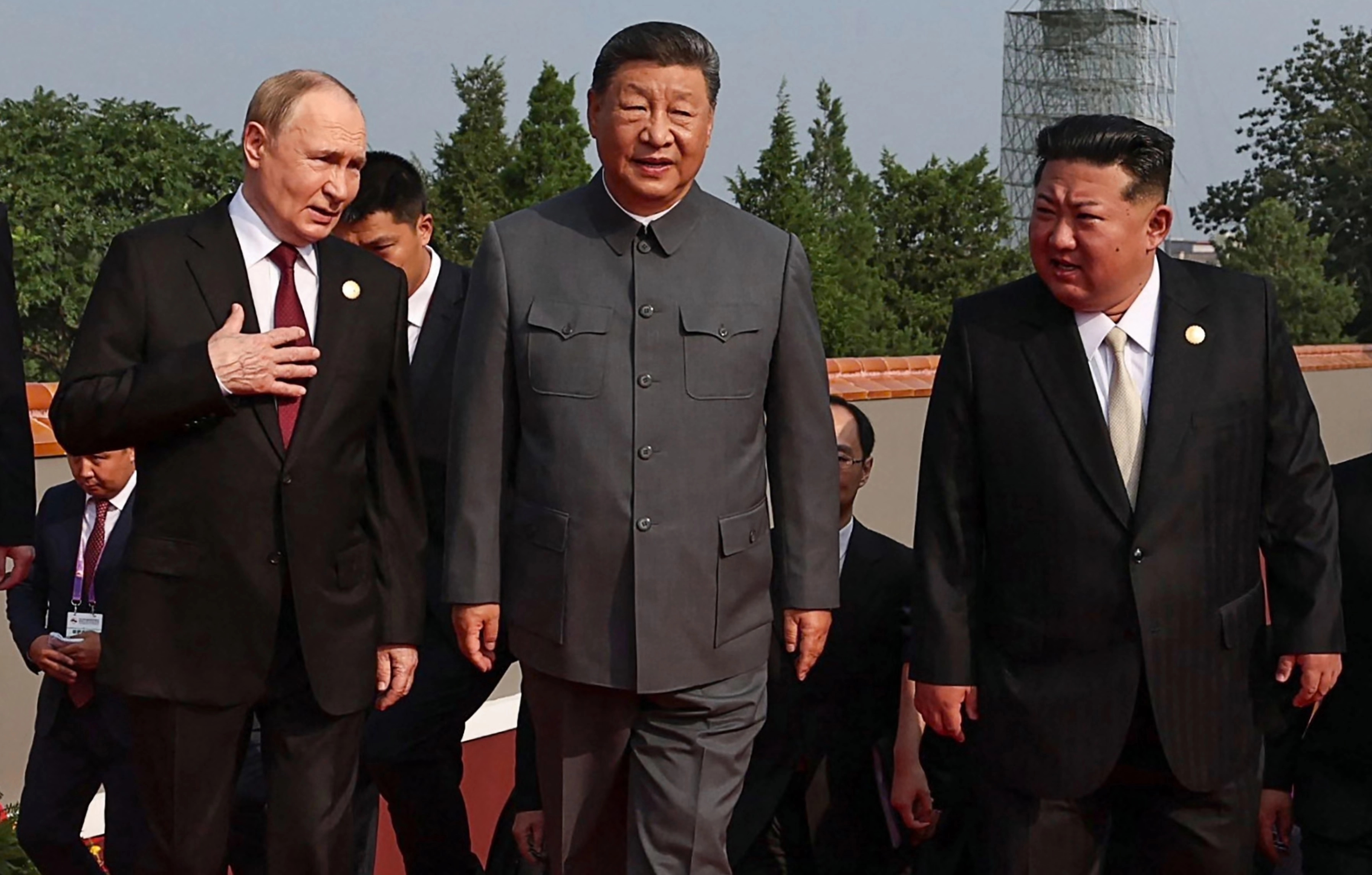
By the time Trump returned to office, he found the conditions that had enabled his famous first negotiations with North Korea largely absent. Back then, the DPRK was largely isolated from the rest of the world, and Western offers of sanctions relief and moves toward normalization were actually enticing. Now, Pyongyang has retained its nuclear arsenal, expanded its missile program, rebuilt much of its foreign trade, and secured relationships with Moscow and Beijing that are far more economically valuable than the recognition America once promised. While none of this removes negotiations or even potential steps to rapprochement from the table, it has shifted the starting point decisively in Kim’s favor. Trump’s America is still interested in talking to North Korea, but Kim’s North Korea has less of an incentive to reciprocate.
Trump’s gambit
Trump’s most consequential move toward Pyongyang so far took place on August 16. Only hours before the annual Ulchi Freedom Shield exercises were scheduled to begin, the president ordered the Pentagon to “substantially reduce” America’s participation, arguing that the drills were costly and that they sent a “totally inappropriate and hostile” signal to North Korea, a country he described as having been “unthreatening and respectful” during his first term. The eleven-day exercise was subsequently cut to five days and its field component reduced; Washington later cancelled a separate upcoming joint Marine Corps exercise. For Pyongyang, which has spent decades portraying the exercises as rehearsals for an invasion and demanding their termination — along with the end of America’s presence in South Korea — Trump demonstrated immense goodwill without even requiring Kim to meet him.
Trump has shown readiness to engage with Pyongyang since returning to the White House
While it’s unclear how much Trump’s apparent frustration with South Korea’s lack of backing for American action in Iran contributed to the cancellation, the move itself isn’t entirely unprecedented. Days after his first summit with Kim in Singapore in 2018, Trump announced the suspension of Ulchi Freedom Guardian and several smaller exercises, similarly adopting Pyongyang’s description of the drills as “provocative” while arguing that their cancellation would save the U.S. money. However, the circumstances surrounding the two decisions could hardly be more different. In 2018, Trump’s suspension came amid perhaps the most dramatic thaw in inter-Korean relations since the division of the peninsula, with Moon Jae-in and Kim Jong Un having already met at Panmunjom, where they declared that “there will be no more war” between the two Koreas and that reconciliation, economic cooperation, and even the eventual reunification of the peninsula were desirable.
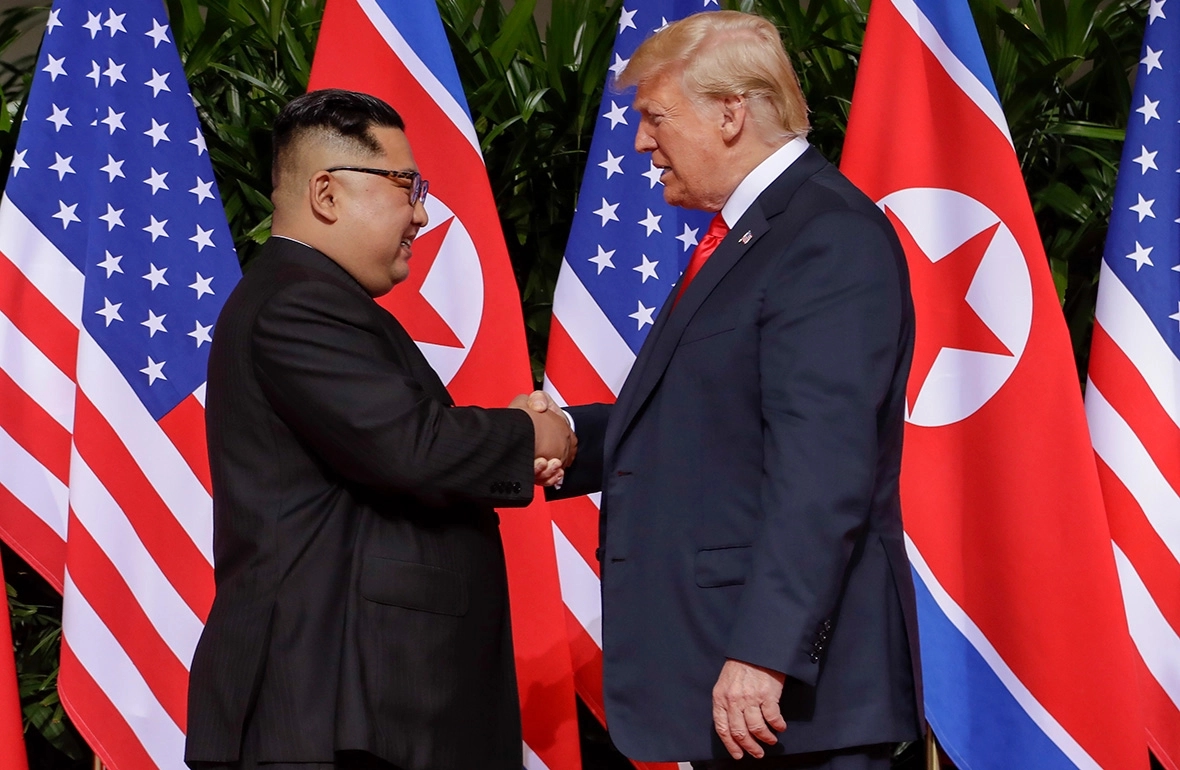
Today, nearly every condition that made such a gesture logical in 2018 has disappeared. The inter-Korean rapprochement surrounding Singapore has given way to Pyongyang’s formal abandonment of reunification, its designation of the ROK as a hostile state, and even the destruction of sections of the road and railway links that Moon and Kim had once promised to reconnect. At the same time, North Korea would enter any renewed negotiations with a growing nuclear arsenal, a mutual-defense treaty with Russia, and considerably less dependence on the sanctions relief that once formed Washington’s principal bargaining chip.
Despite offering little in return, Pyongyang does not appear to have ruled out renewed talks. Following Trump’s move, South Korean intelligence assessed that another Trump-Kim summit could be arranged “at any time.” However, unlike in 2018, North Korea now treats its nuclear arsenal as a permanent component of the state and the ultimate guarantor of its sovereignty. Analysts argue that, from Pyongyang’s perspective, America’s war against Iran vindicated a lesson already drawn from Libya and earlier attacks on Tehran: a credible nuclear deterrent is a necessary guarantee against potential American attack. This leaves any renewed summit with a much narrower window for discussion, particularly given Washington’s enduring policy calling for the complete denuclearization of North Korea (which is mirrored by South Korea).
Regardless of whether Trump’s gambit produces another summit, the larger reversal has already taken place. Less than a decade ago, North Korea faced a sanctions regime endorsed by Washington, Beijing, and Moscow, and the country depended almost entirely on China for its economic survival while remaining a liability even to the powers most interested in keeping it alive. Today, Pyongyang has already hosted two of the three most powerful leaders on Earth and is within reach of another meeting with the third. For the beleaguered hermit kingdom, it is a break in the storm clouds perhaps unmatched at any point this millennium.
A shrinking peninsula
For all of North Korea’s vast newfound advantages, the peninsula clearly leans in South Korea’s favor. For the DPRK, the enormous Korean People’s Army KPA remains central to the state, but the South Korean armed forces are still judged to hold the conventional advantage, as they are built around cutting-edge technology as opposed to the North’s heavily aged stockpiles. The economic imbalance is even more lopsided, with South Korea’s nominal GNI coming in at 56 times that of the North’s in 2025. Seoul’s annual defense budget alone now exceeds the estimated value of North Korea’s entire economy, giving the South a capacity to modernize, replace losses, and sustain high-end weapons systems on a scale Pyongyang cannot realistically match.
The one area where this overwhelming disparity is beginning to matter less, however, is manpower. South Korea’s fertility rate stood at just 0.80 children per woman in 2025, and the demographic collapse which for decades loomed as a distant economic problem has now reached the pool from which the ROK draws its soldiers. Between 2019 and 2025, the number of 20-year-old men fell by roughly 30%, while the active-duty military shrank by a fifth (to around 450,000 personnel), leaving a manpower shortfall estimated at roughly 50,000 troops. Seoul has been able to soften the consequences through force restructuring, expanded recruitment of women and career personnel, and a growing reliance on technology, but none of these measures change the arithmetic behind a conscription system which is drawing each successive intake from a substantially smaller generation than the last.
From 2019 to 2025, the number of young men in South Korea fell by 30%, and the size of the active-duty military by 20%
North Korea has also struggled demographically, though not as severely as its neighbor. The UN estimates its fertility rate at 1.8 children per woman in 2025, far above the South’s but still below replacement level. As the much smaller generation born during and after the famine of the 1990s reached enlistment age, the government reportedly loosened physical requirements for military service and also drew increasingly heavily on women. The country’s working-age population is estimated to have begun shrinking by almost 1% annually after 2020, and similar shortages have appeared outside the military, leading the state to increasingly direct young people toward mines and farms and mobilizing married women into factories and other production sites where the supply of workers has begun to thin.
The demographic balance between the Koreas is consequently moving in two directions at once. In the near term, South Korea is losing military-age manpower far faster, allowing Pyongyang to preserve one of the few quantitative advantages which Seoul’s economic ascent never completely eliminated. Over a longer horizon, however, the North is facing the same problem, only with much less room to absorb it. A smaller South Korean generation still enters an economy capable of sustaining increasingly capital-intensive production and defense, whereas a smaller North Korean generation has to be divided between an oversized military and a civilian economy in which agriculture, mining, construction, and large parts of manufacturing remain unusually dependent on labor. What currently looks like a durable Northern advantage is therefore better understood as a delayed disadvantage, albeit one which may matter considerably for the military balance during the decades before the DPRK’s own demographic contraction fully catches up with it.
Over a longer horizon, however, the North is also facing a demographic decline, only with much less room to absorb it
That reversal extends far beyond the demographic balance. North Korea’s reinvigorated economic growth, wartime partnership with Russia, renewed importance to China, and reduced dependence on what Washington can offer have together placed Pyongyang in perhaps its strongest international position since before the end of the Cold War. The country remains vastly poorer and conventionally weaker than the South, and its own demographic decline may ultimately prove more difficult to absorb, but it no longer approaches the outside world from the position of near-total dependence which shaped Trump’s first negotiations with Kim. If the two return to the negotiating table, Trump will therefore confront not the isolated North Korea he encountered in Singapore, but a state which has found in the unraveling of the post-Cold War order considerably more room to survive on its own terms.