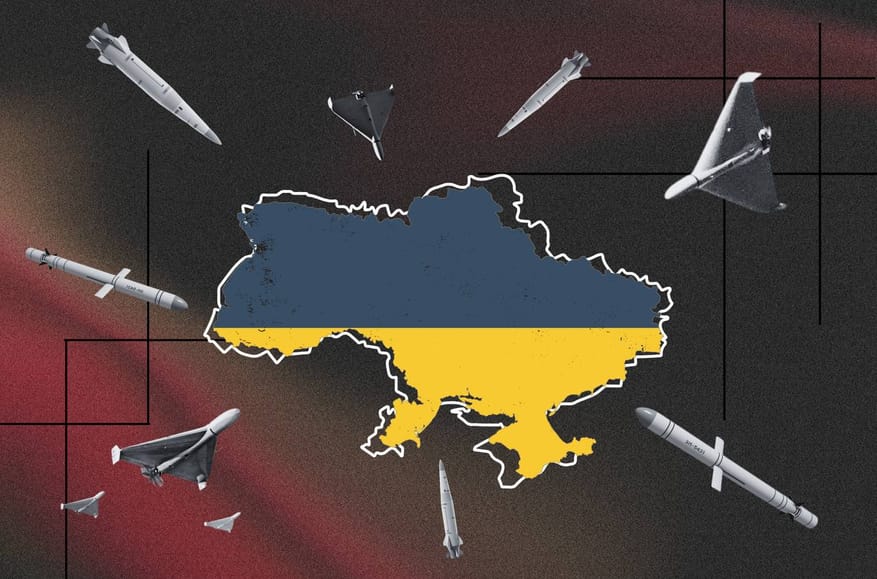
Two Ukrainian companies are working to develop their own ballistic missiles, President Volodymyr Zelensky announced on Aug. 23, adding that a number of technological challenges must be overcome before they can be mass-produced. Until recently, Ukraine’s own ballistic missiles were more an ambitious dream than a real project. But Russia's full-scale invasion changed that: dependence on limited Western supplies and outside restrictions on target selection have forced Kyiv to revive earlier developments while launching new ones. The focus is now no longer on a single missile but on creating an entire range of weapons — from systems designed to strike the near and deep rear to development of its own missile defense system. At the same time, Ukrainian statements about the tactical and technical characteristics of ballistic missiles and plans to begin production do not mean that a combat-ready arsenal is about to emerge anytime soon. The projects are at different stages of development, but according to the developers, the first combat deployments for some Ukrainian productions could come as early as this fall.
- 1.Why Ukraine needs Its own ballistic missiles
- 2.FP-7: one missile for both strike and interception
- 3.FP-9: a ballistic missile for the deep rear
- 4.Sapsan tactical missile system: from a protracted development to combat deployment
- 5.Nightfall: a British ballistic missile for Ukraine
- 6.Prospects for Ukraine’s ballistic missile programs
Why Ukraine needs Its own ballistic missiles
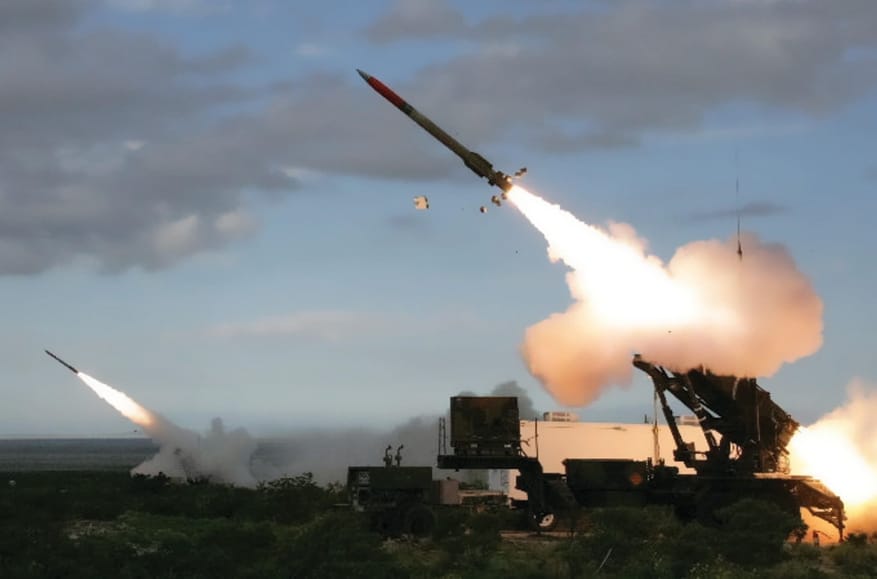
Russian forces are increasingly using ballistic missiles to strike Ukrainian cities and critical infrastructure. The main means of intercepting them remain U.S.-made Patriot air defense systems, but supplies of missiles for them are limited.
In 2026, Ukraine’s allies delivered just one-third as many air defense missiles as they had the previous year, and the global shortage of PAC-3 interceptors worsened significantly as a result of the war in the Middle East. As a result, Ukrainian commanders have had to choose which cities and facilities to prioritize for protection. Moreover, some attacks have seen ballistic missiles evade interception altogether (1, 2).
Even with the best of intentions, Ukraine’s allies are unlikely to be able to meaningfully increase their air defense supplies to Kyiv. A single modern PAC-3 interceptor costs an estimated $4–5 million, and production capacity is limited — as are stockpiles in European and U.S. arsenals. According to a CSIS estimate, as of July 2026 the U.S. had only around 800 PAC-3 missiles, and annual production comes in at about 650. Several missiles may be needed to reliably destroy a single target, meaning Ukraine sees its own ballistic missile programs not solely as offensive in nature but also as a means of countering the Russian missile threat by destroying launchers, ammunition depots, and the units that operate and service them.
Former Ukrainian Defense Minister Mykhailo Fedorov put the idea bluntly: after an Iskander is launched, a retaliatory missile should hit the launch position within minutes. This, however, requires an intelligence-and-strike network capable of detecting the launch site, determining the coordinates of a mobile launcher, and transmitting them to the missile unit before the crew can leave the position.
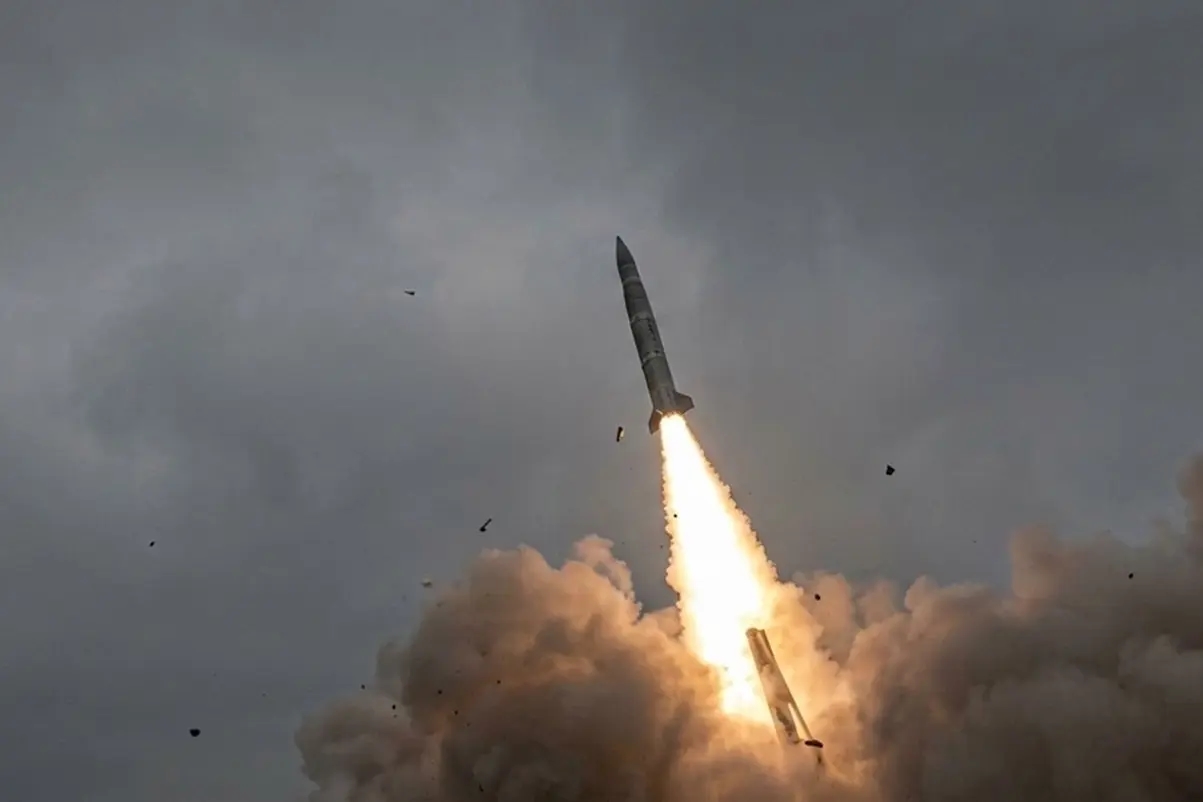
When striking deep behind enemy lines, the Ukrainian armed forces have so far remained heavily dependent on Western missiles. ATACMS quasi-ballistic missiles made it possible to hit enemy airfields, ammunition depots, command posts, and air defense systems at distances of up to 300 kilometers, but the batches supplied were small, and permission to use them against targets inside Russia's internationally recognized borders was not always forthcoming from Washington. Even the transfer of U.S. weapons from a third country requires approval from the U.S. government. For example, the purchase of 70 older-model ATACMS missiles from Turkey in 2026 required State Department approval and notification of Congress. Producing similar missiles domestically would remove such restrictions, allowing Ukraine’s military leadership to determine targets and the intensity of strikes independently, without waiting for its partners’ approval.
Ukraine’s own ballistic missiles would remove restrictions imposed by its allies
Ukrainian long-range drones and cruise missiles are already successfully striking targets deep inside Russian territory, but ballistic missiles meet a different need. They travel at several times the speed of sound and can reach their targets within minutes, sharply reducing the reaction time available to air defense crews. Their heavier warheads also make them suitable for attacking hardened or particularly important targets that a drone’s payload may be insufficient to destroy.
Fire Point CEO Iryna Terekh noted that a Russian ballistic missile can reach the Ukrainian capital in roughly two to five minutes. It is precisely this short interval between launch and impact that makes such weapons particularly dangerous.
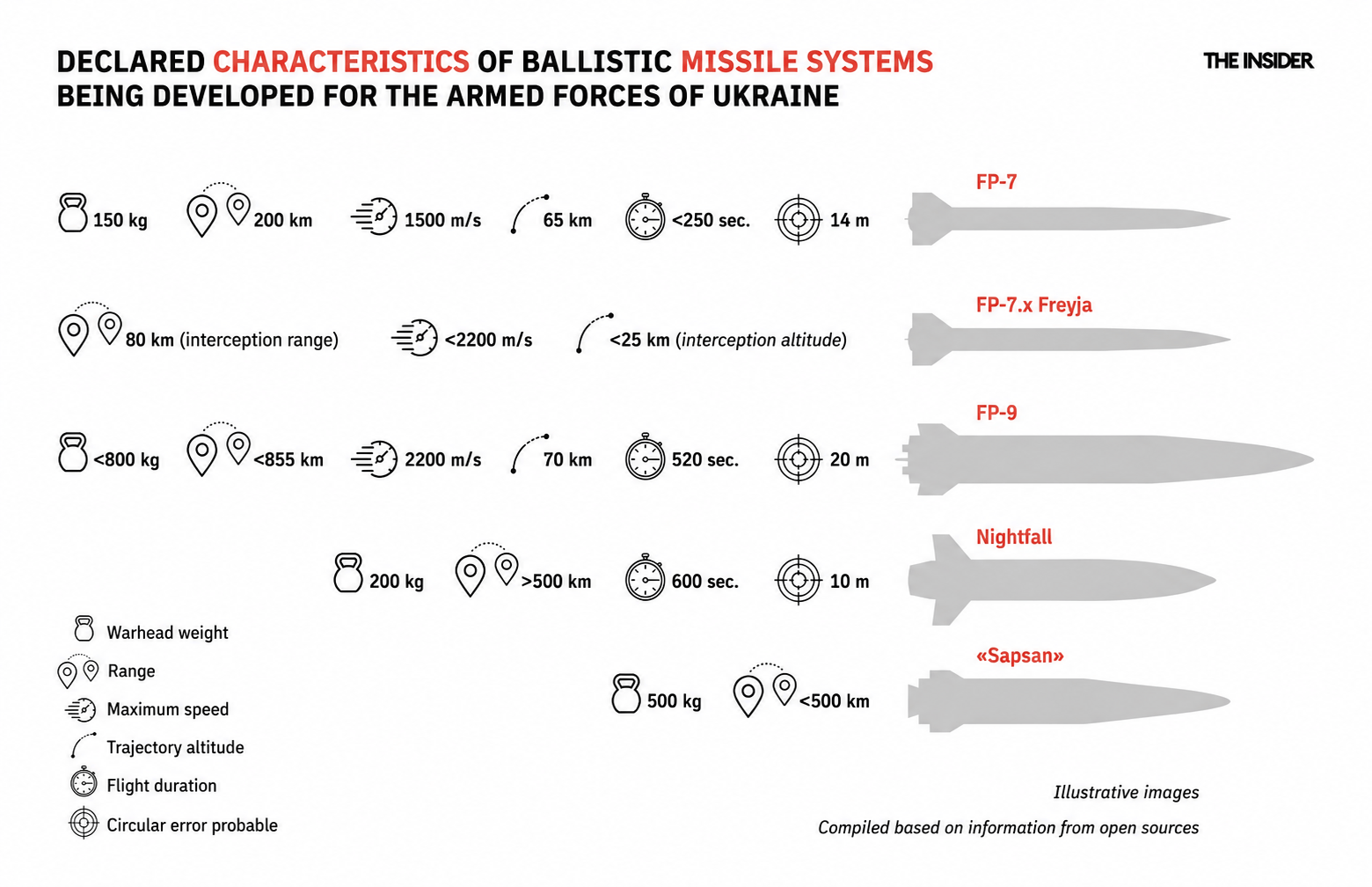
The range of missiles being developed in Ukraine is intended to cover several different distances. The FP-7 tactical ballistic missile is designed to strike targets at distances of up to 200 kilometers, the Sapsan is reportedly capable of reaching up to 500 kilometers, while the heavier FP-9 has a range of up to 855 kilometers. If these programs are successfully implemented, the Ukrainian armed forces will be able to carry out rapid strikes both against the operational rear of the Russian command posts, airfields, ammunition depots, logistics hubs, and air defense positions, but also against military-industrial facilities much farther from the front line.
Unlike Fire Point’s FP-5 Flamingo cruise missile, which have a maximum speed of around 950 km/h, ballistic missiles like the Russian Iskander can reach speeds of up to 8,500 km/h, giving air defenses significantly less time to detect and intercept them. Notably, the Ukrainian FP-7 platform is being developed to work defensively as well, with its FP-7.x variant intended to serve as an interceptor within the joint European missile defense system Freya.
Ukrainian ballistic missiles are expected to reach targets several times faster than Flamingo cruise missiles
The mere appearance of a prototype missile does not provide a strategic advantage. To have a meaningful impact on the course of the war, Ukraine needs mass production, reliable supplies of components, domestic production of solid rocket fuel, secure manufacturing facilities, mobile launchers, and stable funding.
Ultimately, it will be the scale of production, rather than the stated specifications of individual prototypes, that determines whether Ukraine can reduce its dependence on ATACMS and turn its own ballistic missiles into a regularly used weapon. In August 2026, President Volodymyr Zelensky described the results of tests of Ukrainian ballistic missiles as promising while still acknowledging that the systems developed still had to be turned into a fully operational combat capability.
FP-7: one missile for both strike and interception
Of the three ballistic missile programs announced by Ukrainian private company Fire Point, the FP-7 is the closest to practical deployment: a compact, ground-launched solid-fuel missile. It was originally developed to strike ground targets, but the modular design has also made it possible to create the FP-7.x interceptor on the same platform. As a result, two different systems are being developed in parallel — a tactical missile and a component of the future European Freya missile defense system, whose first full-scale tests are scheduled for 2027.
The FP-7 incorporates design solutions from the Soviet 48N6 surface-to-air missile, variants of which are used in the S-300P and S-400 air defense systems. According to Fire Point CEO Terekh, the FP-7 is about 20% similar to the original design.
According to Defense Express, the developers retained the overall configuration and aerodynamic layout of the 48N6 but replaced its electronics, propellant, and launch system while manufacturing the missile body from composite materials. The extent of the design borrowing cannot, however, be assessed due to the fact that the company has not disclosed the missile’s internal design or the composition of its components.
The FP-7 is designed to carry a warhead weighing up to 150 kilograms to a range of up to 200 kilometers. Its stated maximum speed is 1,500 m/s, or about Mach 4.4, with a trajectory reaching up to 65 kilometers in altitude and a flight time of no more than 250 seconds. The manufacturer claims a circular error probable of up to 14 meters. These characteristics would allow the missile to be used against targets in the operational rear. Its range is shorter than that of later ATACMS variants, but it is intended to perform similar tasks and has one important advantage: its use does not require Washington’s approval.
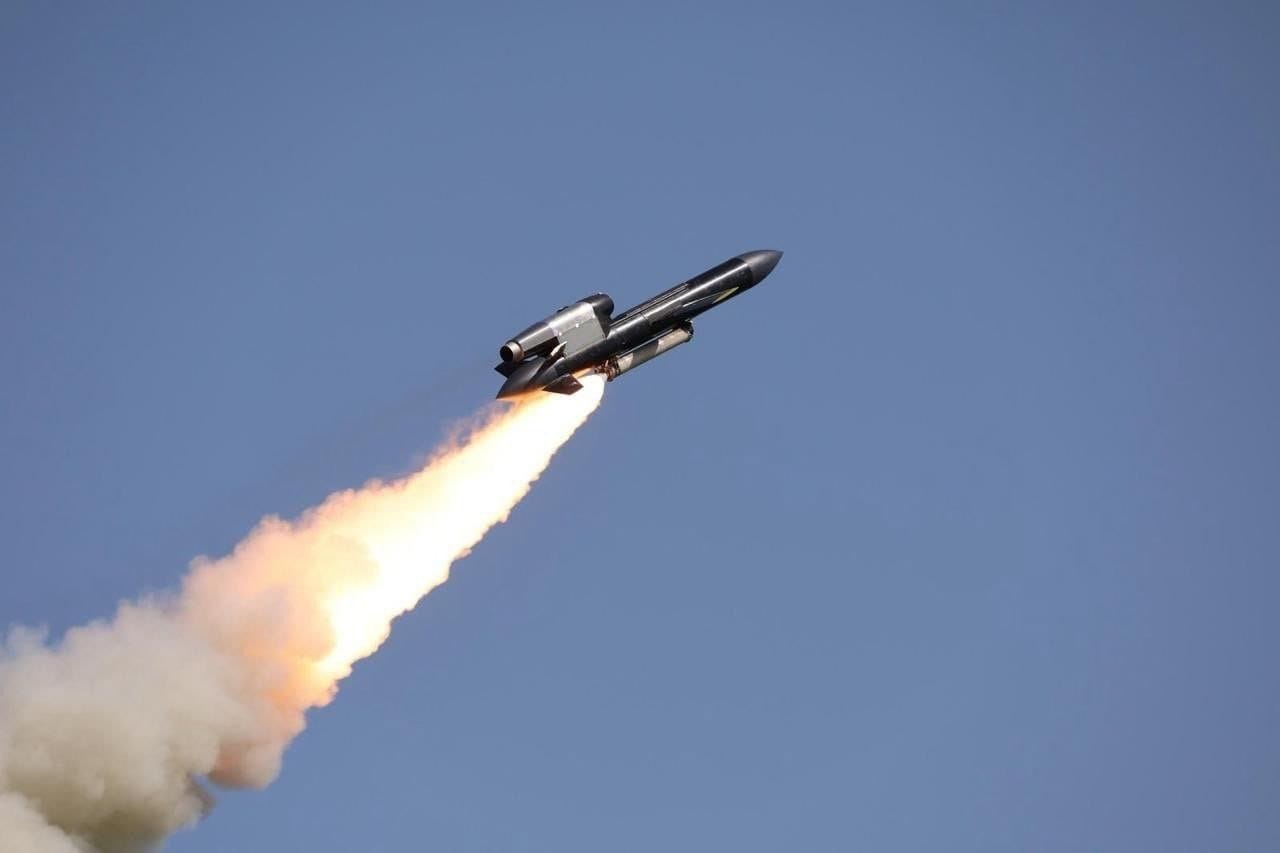
By early August 2026, the strike version had completed around 15 test launches and was in the final stages of certification by Ukraine’s Defense Ministry. Fire Point expected the process to take another two to four weeks, after which the missile could be used against a real target for the first time — possibly as early as this fall. The FP-7 was tested using a hot launch (in which engine ignites directly on the launcher) from an inclined rail launcher mounted on an ordinary vehicle trailer. The configuration differs from the vertical canister launch used by S-300 surface-to-air missiles and is likely a simplified test setup for the time being. The final configuration of the combat vehicle has not been disclosed.
Of course, range testing and certification alone do not mean that the missile is ready for mass deployment. The first strikes should demonstrate how reliably its engine, navigation, and guidance systems perform outside controlled conditions, as well as how closely its actual accuracy matches the stated specifications.
Fire Point is also developing the faster FP-7.x, designed not to strike ground targets but to intercept ballistic threats. Conceptually, it is similar to the PAC-2 GEM-T interceptor used by Patriot systems — a heavy surface-to-air missile capable of engaging ballistic targets but lacking the hit-to-kill technology of the more advanced PAC-3 MSE.
In June 2026, Fire Point reported a test in which the missile completed a fully controlled, maneuvering flight. The video released by the company confirmed the launch and maneuvering but did not show an interception of a real target. That capability will be implemented once the various systems being developed by Ukraine's European partners are integrated into the project.
A successful interceptor flight is only one of the initial stages in developing a missile defense system. For the system to become fully functional, the missile must receive data from external radar stations, detect an incoming target, close with it at high speed, and detonate its warhead at the calculated point.
The FP-7.x is intended to form the backbone of the Freya system, officially launched in July 2026 by a coalition of 10 European countries and 12 defense companies (including Kongsberg, Eurosam, Leonardo, Thales and SAAB). The number of partner companies could eventually grow to 20, Fire Point CEO Terekh said. The Ukrainian company is responsible for the missile and launcher, while its partners are to provide the system’s most complex components.
Norway’s Kongsberg is developing a command center to integrate the various systems, while Germany’s Diehl Defense is working on guidance systems. Freya is being built on an “open architecture” principle, allowing individual components to be sourced from different manufacturers and replaced without redesigning the entire system. For example, a radar made by Danish company Weibel could be replaced with one from Sweden’s SAAB.
This approach should reduce dependence on any single company and make it easier to scale up production. At the same time, it complicates development: radars, the command center, the launcher, and the missile itself are being developed by different companies but must operate as a single system. In early August, Terekh said the most difficult stage of the project would be integrating surveillance and guidance radars with seeker heads, which are being manufactured by European companies but still need to be adapted for the FP-7.x and integrated with the other Freya components. Overall, according to Terekh, the company is prepared to produce at least 2,000 interceptors a year.
FP-9: a ballistic missile for the deep rear
The FP-9 is a heavy ground-launched ballistic missile being developed by Fire Point. While the FP-7 belongs to the tactical class and is intended to strike targets in the operational rear (up to 200 kilometers), the FP-9 is designed to reach the operational-strategic depth of several hundred kilometers. The manufacturer claims a range of up to 855 kilometers and a warhead weighing up to 800 kilograms. Its maximum speed is expected to reach 2,200 m/s, or about Mach 6.5, with a trajectory reaching up to 70 kilometers in altitude with a flight time of no more than 520 seconds. The claimed circular error probable is 20 meters.
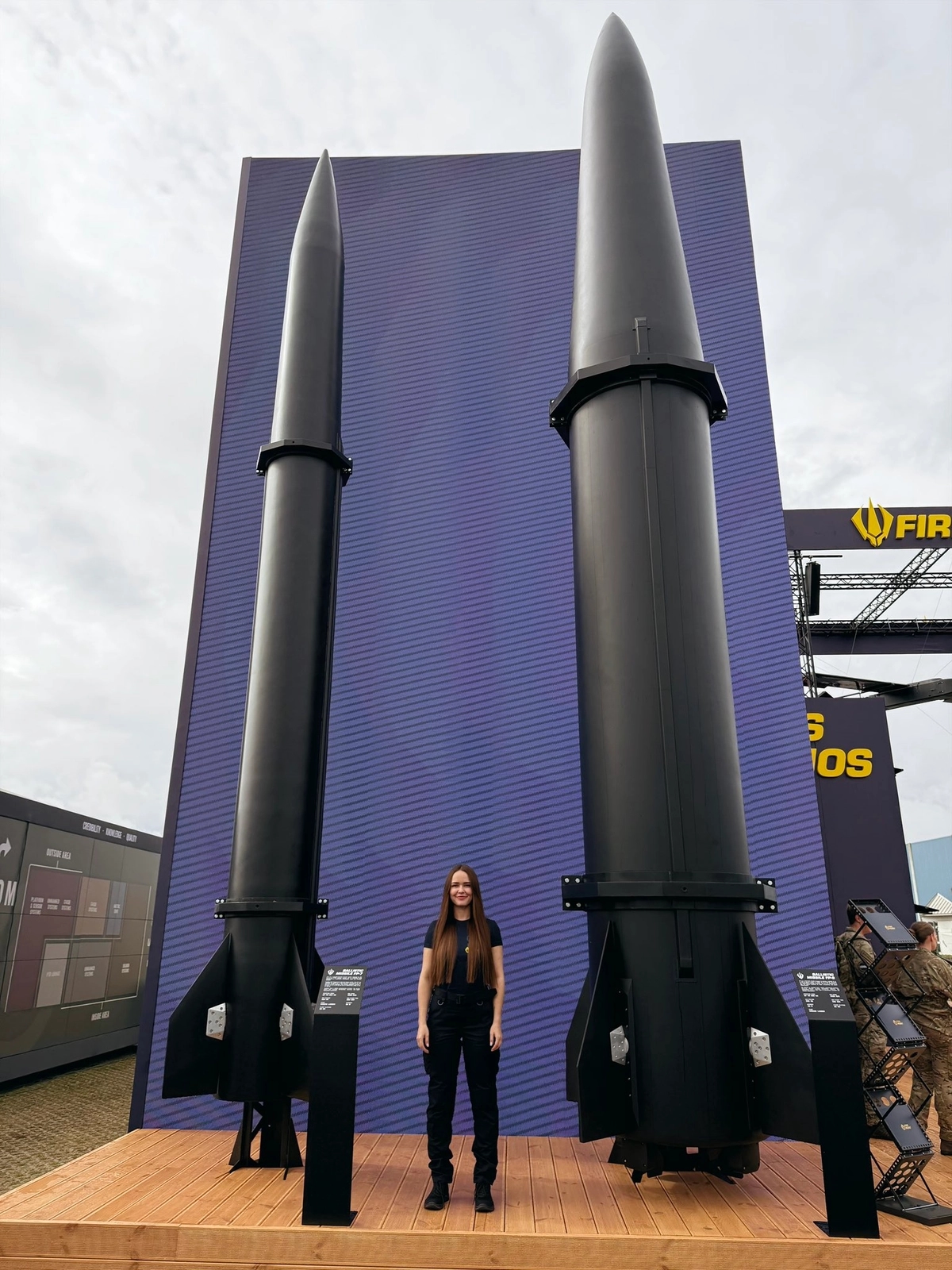
A range of 855 kilometers would allow the missile to strike military targets across almost the entire European part of Russia. In terms of speed, the FP-9 is expected to be comparable to Russia’s Iskander-M ballistic missile, while its 800-kilogram warhead is far larger than that of ATACMS.
Unlike drones and most cruise missiles, the ballistic FP-9 would cover its trajectory within a matter of a few minutes, giving air defense crews substantially less time to detect and intercept it. At the same time, the published specifications remain the developer’s own figures: as far as is known, the FP-9 had not undergone a single flight test as of early August 2026.
According to Terekh, the navigation system and other main components of the FP-9 are already complete. Now work is focused on the engine, which has proved to be the main technical challenge. It contains 4.6 tons of solid rocket propellant — more than four times as much as the FP-7 engine. Such a charge cannot be produced simply by scaling up an existing design. Instead, it requires new mixers, propellant casting equipment, and a separate system for curing the motor after molding.
Historically, the production of large solid-fuel rocket motors was concentrated in the city of Pavlohrad, which is now regularly targeted by Russian missile strikes (1, 2, 3). In addition, Terekh said, local companies use a somewhat different technology from the one required by Fire Point. The company therefore decided to establish an alternative production base, building several facilities inside Ukraine while beginning construction of a plant in Denmark. Fire Point says it has already obtained the necessary permits to operate the facility.
The company initially planned to convert a building it had purchased, but the site failed to meet safety requirements for handling solid rocket propellant. As a result, Fire Point will have to build a new facility, with its commissioning postponed until the end of 2027. The cost of the project has meanwhile risen from €50 million to more than €150 million.
In effect, the developers have had to relearn much of the technology for preparing the propellant mixture, casting it, and subsequently curing the charges. This is not only a complex but also a dangerous process: large quantities of propellant and explosives are kept at a single facility, meaning that its destruction could bring the entire missile program to a halt.
Fire Point’s production system was designed from the outset as a distributed network. Terekh says that roughly 90 dispersed facilities play a role in the process — an ecosystem of workshops, warehouses, and logistics hubs rather than one large production center. The production of critical components is duplicated across several sites, increasing resilience to strikes at the cost of additional investment and complex logistics that require individual missile components to be moved between numerous concealed facilities before being assembled at a single location.
Fire Point’s missile production is organized as a distributed network
Fire Point plans to conduct the first test launch of the FP-9 in the fall of 2026 before moving on to testing the system under combat conditions. However, in a conversation with The War Zone Terekh declined to give a specific date, explaining that “a lot can go wrong” during testing.
Although the FP-9 is described as a ground-launched missile, neither the type of chassis the missile will use, the way the missile will be mounted, nor the number of missiles carried by a single vehicle is known. Given the missile’s weight, it will require a heavier mobile launcher, likely mounted on a truck chassis or semitrailer.
Here too, even a successful launch will only mark the beginning of the testing process, as the developers will still have to verify the missile’s stated range and accuracy, the reliability of its engine, and its ability to overcome air defense countermeasures. This means that the FP-9 remains an ambitious project rather than a ready-to-use weapon, with its ultimate timeline depending largely on the results of its first flights.
Sapsan tactical missile system: from a protracted development to combat deployment
Unlike Fire Point’s efforts, the Sapsan tactical missile system is a state-run development with a history spanning nearly two decades. Work began in 2006 but was repeatedly suspended due to insufficient funding. Then, in August of 2022, the Defense Ministry signed its first state procurement contract with the system’s developer, Pivdenne Design Bureau, under the 1KR1 designation, while Pivdenmash was brought into the production effort.
The 1KR1 Sapsan is a mobile, ground-based missile system equipped with a single-stage solid-fuel ballistic missile measuring 7 meters in length. The version developed for Ukraine’s armed forces was designed for a range of up to 500 kilometers, while the export variant known as Hrim-2 has a range of up to 280 kilometers. The missile’s weight is estimated at around 3.5 tons, with a 500-kilogram warhead. The system is designed to strike command posts, airfields, ammunition depots, communications hubs, and other important targets in the enemy’s operational and operational-strategic rear. However, the stated specifications are based primarily on design documents and commentary from people involved in the program, while the official parameters of the missile adopted for service have not been disclosed.
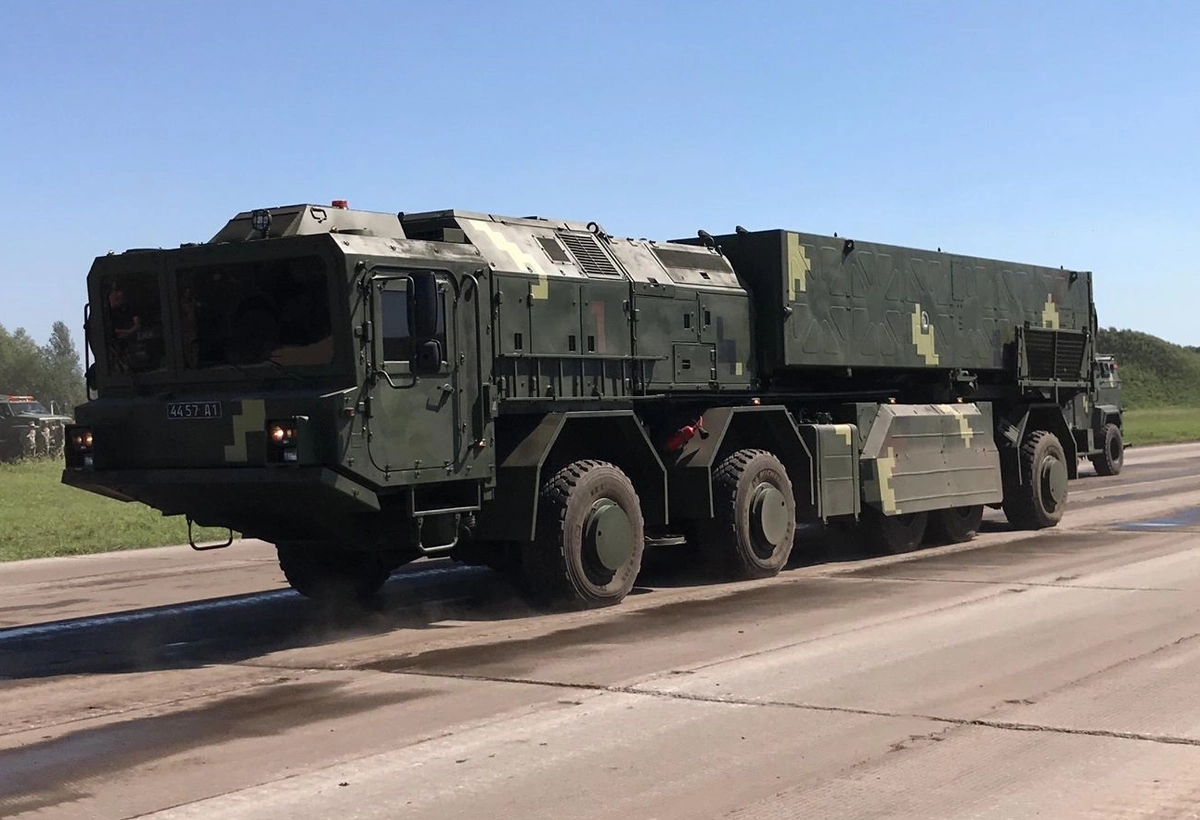
According to former Ukrainian Defense Ministry official Oleksandr Liiev, the first tests of the 1KR1 Sapsan missile system took place in 2023, followed by the first test strikes against targets in Russia in 2024. As Liiev explained in 2025, “the system entered regular use” and production became serial. Meanwhile, Russia’s Defense Ministry claimed as early as March 2023 that it had intercepted “one Hrim-2 tactical missile," and since then it has claimed (1, 2, 3, 4, 5, 6, 7, 8) to have intercepted a total of 10 missiles. The ministry also said (1, 2, 3, 4, 5, 6) it had struck “ammunition production facilities” for Hrim tactical missiles, as well as their launchers.
Public statements by Ukrainian officials have been more cautious. In August 2024, Zelensky spoke (1, 2) only of the successful “test of Ukraine’s first ballistic missile.” In May 2025, then-head of the Presidential Office Andriy Yermak announced its first combat use, saying the missile had struck a Russian command post at a range of nearly 300 kilometers. In June 2025, Zelensky said preparations were underway for mass production of the Sapsan, without specifying a timeline or projected number of missiles.
In July 2026, the program apparently underwent another round of testing. Mykhailo Fedorov said in early August that on his final day as defense minister, July 14, 2026, an unnamed ballistic missile — likely the Sapsan, given the fact that the FP-9 is only preparing for its first flight, while the FP-7 is in the final stages of certification — was tested and hit “exactly on target, without deviation.” Federov previously reported that the military had revised the system's technical requirements, achieved maximum accuracy, and reduced the missile’s cost by 30%.
If the July test did indeed involve the Sapsan, it would show that the program is continuing to develop alongside Fire Point’s private projects. However, the lack of production data and information regarding the system’s combat performance means that no conclusions about its effectiveness can yet be drawn.
Nightfall: a British ballistic missile for Ukraine
Alongside its domestic development programs, Ukraine’s armed forces may receive a ballistic missile being developed specifically for them in the United Kingdom. In January 2026, the British Defense Ministry announced a competition for the Nightfall project — a mobile, ground-based missile system. The project is not yet a finished weapon, but it does qualify as an accelerated development program whose results the UK expects to use in future long-range systems for its own armed forces as well.
Under the competition requirements, the missile must deliver a conventional high-explosive warhead weighing about 200 kilograms to a range of more than 500 kilometers and reach its target in less than 600 seconds. Its circular error probable must not exceed 10 meters, while its navigation system must function under conditions of heavy electronic warfare interference and in the absence of a satellite signal. Each mobile launcher is expected to carry several missiles that can be fired at short intervals, after which the crew must be able to leave the position within 15 minutes.
The initial requirements published in summer 2025 were more ambitious: the range was estimated at around 600 kilometers, the warhead was to weigh 300 kilograms, and the maximum cost per missile was set at £500,000 (excluding the warhead, launcher, and development costs). By the time the official competition was launched, however, the required range and warhead weight had been reduced, while the maximum price was raised to £800,000.
In terms of capability, Nightfall will be significantly less powerful than the Sapsan and FP-9, but it should have a longer range than the FP-7, occupying an intermediate niche between tactical and heavier tactical ballistic missiles. An important advantage will be its minimal dependence on third-country export licenses, though if the missile uses predominantly British components, the government in London will be able to make its own decisions on transferring the weapons.
Up to three design teams are to receive £9 million each and provide three missiles within 12 months for test launches. The British Defense Ministry subsequently plans to produce at least 10 missiles a month and has the capacity to scale up production. Development contracts were signed in May 2026, but the subsequent resignation of Keir Starmer created additional uncertainty over the project’s timeline.
Although the new government has not announced any plans to revise the program, its implementation could be delayed by possible cuts or reallocations of defense spending. Even if the original schedule is maintained, prototypes may not appear until spring 2027 at the earliest, after which further testing and preparations for serial production will be required. Nightfall’s significance, therefore, will depend less on its stated specifications than on whether the competition can be turned into a mass-produced weapon within a compressed timeframe.
Prospects for Ukraine’s ballistic missile programs
The real scale of Fire Point’s capabilities is best illustrated by its experience producing the FP-5 Flamingo cruise missile. The company announced plans to produce up to seven missiles a day. It failed to reach that target, but CEO Terekh later explained that seven missiles was in fact the maximum capacity of the production lines that had been built, but that there were not enough orders to fully utilize them.
The plan to produce at least 2,000 FP-7.x interceptors a year is even more ambitious. CIT considers it unrealistic and compares it with Lockheed Martin's efforts to expand PAC-3 production. The company produced around 620 interceptors in 2025 and expects to reach an annual capacity of 2,000 only by the end of 2030 — efforts that would not be possible without support from the Pentagon, which is signing multibillion-dollar agreements with several suppliers of rocket motors, seeker heads, and other components. Fire Point has no comparable financial or industrial resources, and a key component of the FP-7.x — its seeker head — is still being refined by Kyiv's European partners. “If the company manages to achieve the stated target, it will be a major success,” the analysts write.
Fire Point’s production plans look overly ambitious
In other words, the path from a functioning prototype to sustained serial production is long. Production rates for the FP-7, FP-7.x, and FP-9 will depend on government orders, partner financing, and regular supplies of components. A program should therefore be assessed not by the specifications announced by its developer, but by the number of weapons the company can reliably deliver to the armed forces each month.
The secrecy surrounding the missile programs makes forecasting difficult. The situation surrounding the Sapsan missile system and its ballistic missiles remains highly uncertain, with most information about the program being based on statements by officials. The launcher and mock-ups of the system were publicly displayed even before the full-scale war, but the missiles themselves have never been seen.
Among Fire Point’s various projects, the FP-7 is the closest to practical deployment, as the company has demonstrated its launch and reported around 15 tests (without disclosing their results or confirming the start of serial deliveries). The missile is currently undergoing certification by Ukraine’s Defense Ministry. Meanwhile, however, Britain’s Nightfall only exists at the level of technical requirements and development contracts, the FP-9 is still preparing for its first launch, and the FP-7.x has completed a controlled flight but has not intercepted a ballistic target.
A CIT expert who asked to remain anonymous believes that the publicly available information is insufficient to determine whether the promised combat use of the FP-7 will actually take place this fall. “You need to have at least some information about how the project is progressing. What has been reported in the media simply doesn’t allow you to understand that,” he told The Insider, adding that Fire Point has “not the most reliable” track record when it comes to fulfilling public promises. That does not, however, mean that the announced deadlines will necessarily be missed.
Sapsan, for its part, raises no fewer questions. Officials were still claiming in 2025 that it was in serial production and being used regularly, while Mykhailo Fedorov spoke of new tests in summer 2026 and the need to complete the program. “Maybe there will be more tests a year from now,” the CIT expert says.
Military expert Kirill Mikhailov takes a considerably more optimistic view of the pace of development, pointing out that it took the United States around nine years to develop ATACMS, despite the capabilities of the U.S. defense industry during the Cold War. Against this backdrop, he considers the speed with which Ukraine has brought its own ballistic missile programs to the testing stage to be exceptional. Mikhailov is also not inclined to doubt Fedorov’s claim about the successful Sapsan test: in his view, the former minister would not have made such a statement without sufficient grounds.
Although producing hundreds of FP-7 missiles a month would not in itself represent a strategic breakthrough in the war, Ukraine's regular use of ballistic missiles could change the situation in the Russian military’s operational rear. If the new systems' accuracy and reliable targeting are confirmed, a domestic Ukrainian ballistic missile capability would make it possible for Kyiv to move from occasional launches of scarce ATACMS to regular strikes against Russian command posts, airfields, ammunition depots, and air defense systems at depths of up to 200 kilometers. Russia’s military leadership would have to disperse its forces, strengthen the protection of key facilities, and move infrastructure farther from the front line.
The success of Ukraine’s ballistic missile program will be determined not by the speed of development or the missiles’ specifications, but by their serial production and combat performance. The prospects for Freya will also depend on the successful integration of seeker heads, detection and tracking radars, and data links.