By the end of June 2026, Ukrainian defense companies had signed at least 47 agreements for joint projects with European partners, according to The Insider’s calculations. The integration is the result of Kyiv’s Build with Ukraine program, launched in 2025, which aims to establish defense enterprises in Europe with Ukrainian participation. The program gives Ukraine access to financing and production capacity, while Europe gains the opportunity to test its weapons on the battlefield while incorporating Ukrainian innovations developed under actual combat conditions. For Kyiv, the arrangement also offers protection for its defense industry: Moscow is unlikely to risk striking production sites located inside NATO countries.
Federico Borsari is a fellow with the Transatlantic Defense and Security program at the Center for European Policy Analysis (CEPA) and an associate with the Tochnyi project.
The unprecedented rise of Ukraine’s military-industrial complex
Ukraine is rapidly reshaping its relationship with Europe, emerging as a legitimate defense industry partner thanks to an expanding network of co-production agreements and joint innovation projects.
At the outset of Russia’s full-scale invasion, Ukraine’s defense-industrial base remained largely rooted in Soviet-era production structures and was ill-equipped to sustain a prolonged, high-intensity conflict. Domestic manufacturers could repair and modernize legacy platforms but lacked the capacity to produce a sufficient quantity of the advanced systems required on the modern battlefield. Consequently, Ukraine initially relied heavily on Western military assistance to replace losses and maintain combat effectiveness. Over the past two years, however, this relationship has progressively evolved from one centered on equipment transfers to one increasingly based on industrial cooperation, technology sharing, and co-production with European and, to a lesser extent, North American partners.
Few observers could have predicted this transformation. In four years, the Ukrainian defense sector’s production capacity has reportedly grown by 5,400%, from $1 billion to $55 billion, while the number of specialized defense technology companies has increased by an astonishing 12,400%, from 10-12 to an estimated 1,500, with even higher growth rates for firms operating in specific segments such as uncrewed aerial vehicles (UAVs).
In four years, the Ukrainian defense sector’s production capacity has reportedly grown by 5,400% — from $1 billion to $55 billion
Beyond the numbers, Ukraine’s military-industrial complex has also changed structurally, evolving from a largely state-controlled, heavily bureaucratized Soviet legacy sector into a hybrid, more decentralized, dynamic, and fast iterating ecosystem encompassing large defense conglomerates, small start-ups, and everything in between. Such a change, forged amidst the enormous challenges of a brutal invasion, has allowed the sector to increase domestic production of various capabilities, establish unique defense technology, and develop innovation clusters centered on continuous feedback loops with frontline units to design, test, and iteratively improve new capabilities under combat conditions.
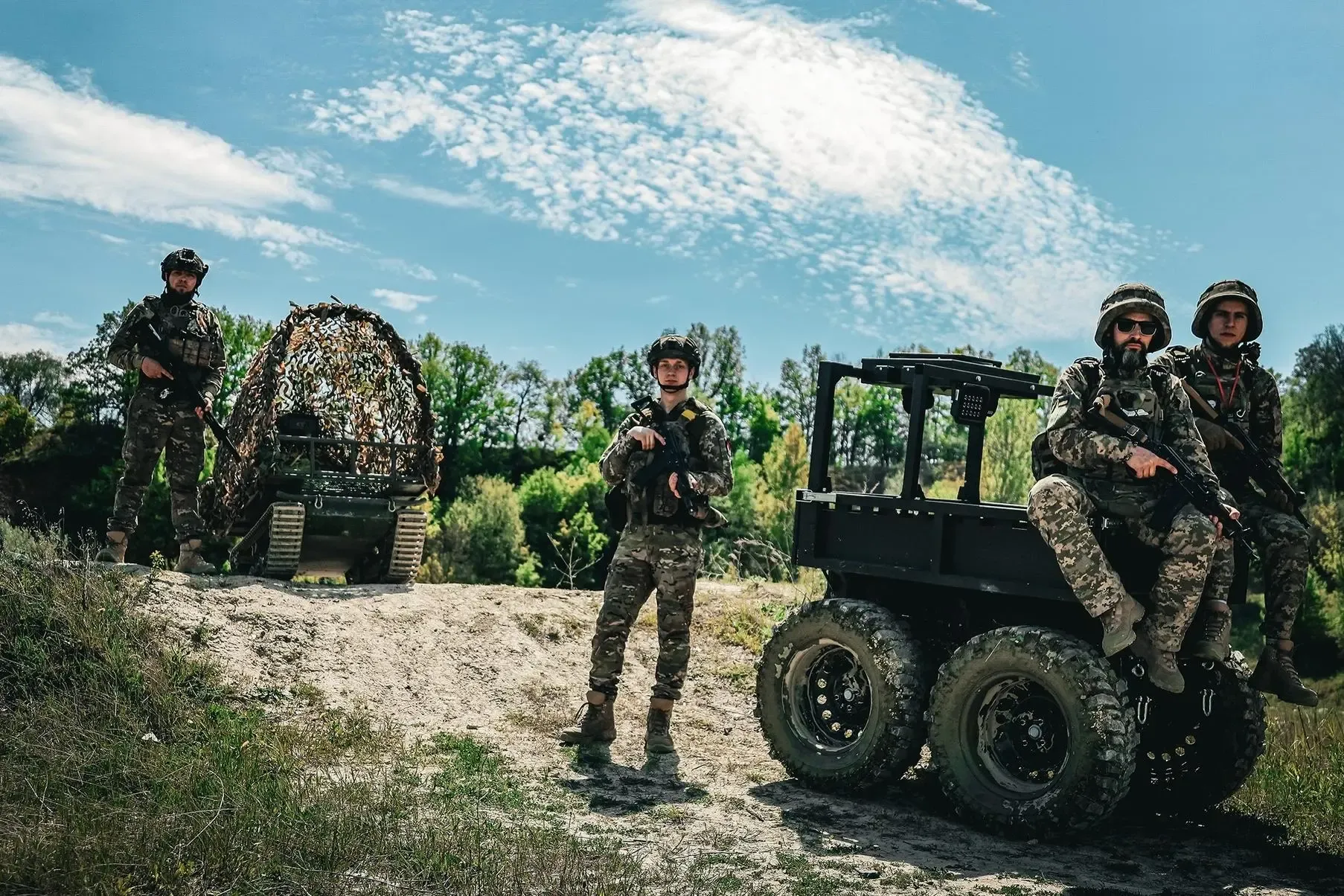
As a result, Ukraine has developed a relative innovation advantage in selected capability areas where speed of adaptation and operational feedback matter more than production volume alone. This is most evident in the areas of FPV drones, uncrewed ground vehicles, battle management software, electronic warfare, and counter-drone technologies. In contrast, Russia’s more centralized and vertically integrated defense industry has generally struggled to replicate this speed and flexibility, though it has also adapted and improved over the past two years, narrowing the gap with Ukraine.
This transformation has brought more international connections to the Ukrainian defense industry, allowing it to look beyond the context of the ongoing war and embrace a more structured and sustainable long-term vision.
The benefits of international cooperation
In this respect, while the Danish model has attracted considerable attention by directing foreign funding into Ukraine’s domestic production, Kyiv’s “Build with Ukraine” (BWU) initiative represents a complementary and increasingly ambitious approach. The Danish program was launched in 2024 and revolves around partner countries investing directly in Ukrainian defense manufacturing. BWU, on the other hand, seeks to establish joint production facilities, manufacturing hubs, and research and development partnerships all across Europe, allowing Ukrainian companies to expand output, access foreign investment, and integrate into the European defense and industrial base. Rather than relocating production wholesale, the BWU model is designed around joint ventures and licensed manufacturing arrangements based on intergovernmental agreements in which part of the production of Ukrainian defense items located abroad is destined for Ukraine’s armed forces and the remaining part is either acquired by the partner country or cleared for export. The BWU addresses wartime necessity while also seeking to make the Ukrainian defense sector a more competitive supplier on the European and broader international defense market.
First, and most obviously, it would allow Ukrainian companies to establish production in secure facilities that are beyond the reach of Russian missile and drone attacks. This would unlock extra capacity backed by stable energy supplies and modern industrial infrastructure, with more equipment to sustain the country’s military needs.
Second, the bilateral arrangements with partner countries would provide Ukrainian defense enterprises access to much needed financial support, thus compensating for the Ukrainian government’s insufficient funds, a factor that previously prevented the sector from taking advantage of its abundant excess capacity. This is particularly important as the country faces record defense expenditure needs for 2026 — projected at $158.2 billion, a 20% increase year-on-year.
Ukraine faces record defense expenditure needs for 2026 — projected at $158.2 billion, a 20% increase year-on-year
Third, production abroad can become an avenue for exporting defense material, which is currently very difficult — if not impossible — due to a slow and convoluted bureaucratic process and the tight export controls necessitated by the war. Ukrainian defense firms have long lobbied for a simpler, clearer, and more permissive export policy in order to take advantage of growing market opportunities, consolidate their business, and reinvest part of the revenues into increasing production. The BWU initiative is the government’s response to these demands and a complement to other policies such as the Defence City special regime aimed at scaling domestic defense production through favorable fiscal and regulatory conditions.
Fourth, co-production abroad can pave the way for Ukrainian enterprises to benefit from deeper integration into the European defense-industrial ecosystem, thereby gaining exposure to innovative production processes and technologies, diversifying its supply chains, and facilitating the EU and NATO certification process. Hence, from Kyiv’s perspective, the program represents a pathway toward the long-term sustainability, competitiveness, and international integration of its defense-industrial sector without losing the right to exercise political oversight.
Partner countries also derive significant benefits from these arrangements. Cooperation with Ukrainian firms provides access to battle-tested technologies and associated operational concepts, as well as rapid innovation cycles that bring a gust of fresh air to a traditionally conservative and slow manufacturing sector. Ukrainian companies have demonstrated an exceptional ability to iterate designs quickly, particularly in robotic platforms, electronic warfare, battle management software, and counter-drone systems. European manufacturers gain exposure to these innovation processes while also benefiting from access to highly skilled Ukrainian engineers, technicians, and defense specialists. As a result, “Build with Ukraine” can become a win-win solution rather than a traditional donor-recipient relationship — one in which Western partners contribute capital and industrial capacity in exchange for battle proven technologies, rapid innovation, and unique expertise.
How Ukraine is integrating into the European defense industry
After a slow start, the program seems to have gained significant steam in recent weeks, with nearly four dozen defense-production agreements involving at least twenty-one partner countries across Europe and North America as of late June, based on statistics compiled by this author.
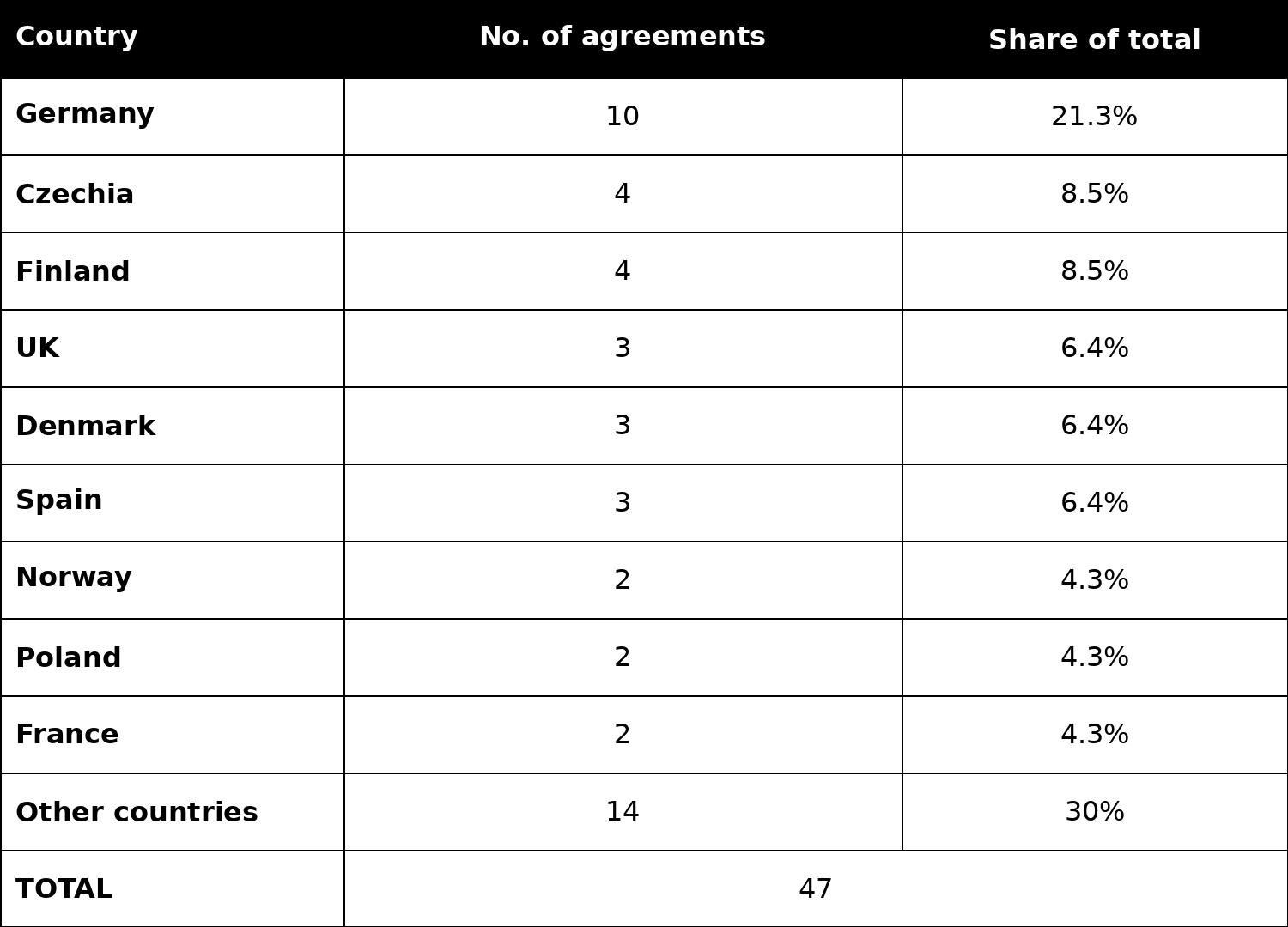
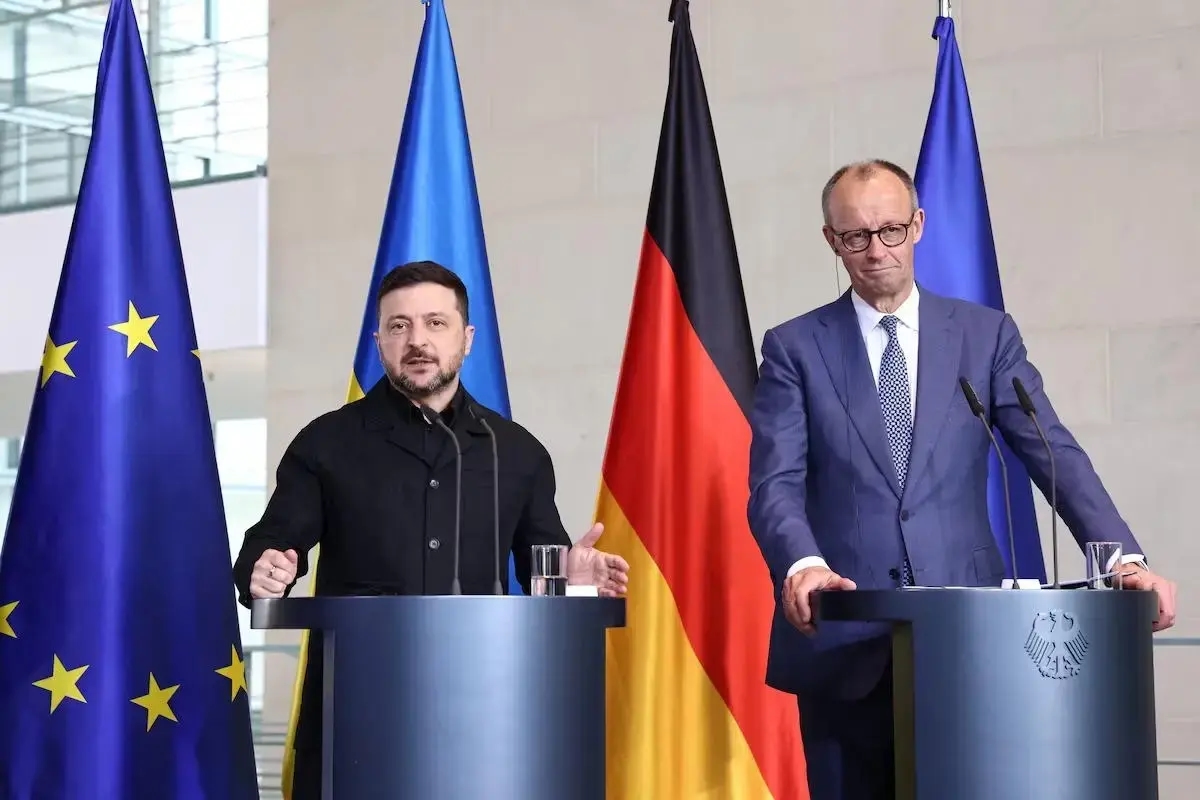
Germany alone accounts for more than one-fifth of the total, making it Ukraine’s single most important co-production partner. The cooperation between Kyiv and Berlin extends from FPV drones and autonomous systems to counter-UAS technologies, aviation systems, and missile-related projects, reflecting Germany’s growing role as both an industrial and technological hub for Ukraine’s defense-industrial integration. The Czech Republic and Finland rank second with four agreements each (8.5%), while the United Kingdom, Denmark, and Spain each account for three joint production deals (6.4%). Additional countries whose defense industries have established joint ventures with Ukraine include France, Norway, Poland, the U.S., and Canada. Together, these data suggest that “Build with Ukraine” has evolved from a series of bilateral initiatives into a wider diplomatic and industrial effort that could generate significant return on investments for both Kyiv and its partners.
The scope and focus of the projects also reveal the strategic areas driving cooperation. More than two-thirds of the identified agreements focus on uncrewed and autonomous systems, including air, ground, and surface vehicles, loitering munitions, and counter-drone technologies. Notable examples include Quantum Systems’ multiple joint ventures with Ukrainian firms in Germany, UK-based production of Shark and PD-2 reconnaissance drones by Ukrspecsystems in a £200 million facility, Portugal’s production of Ukrainian uncrewed surface vessels, Finnish-Ukrainian partnerships on UAVs and ground robots, and joint ventures with Romanian, Danish, and Baltic companies focused on manufacturing various types of drones.
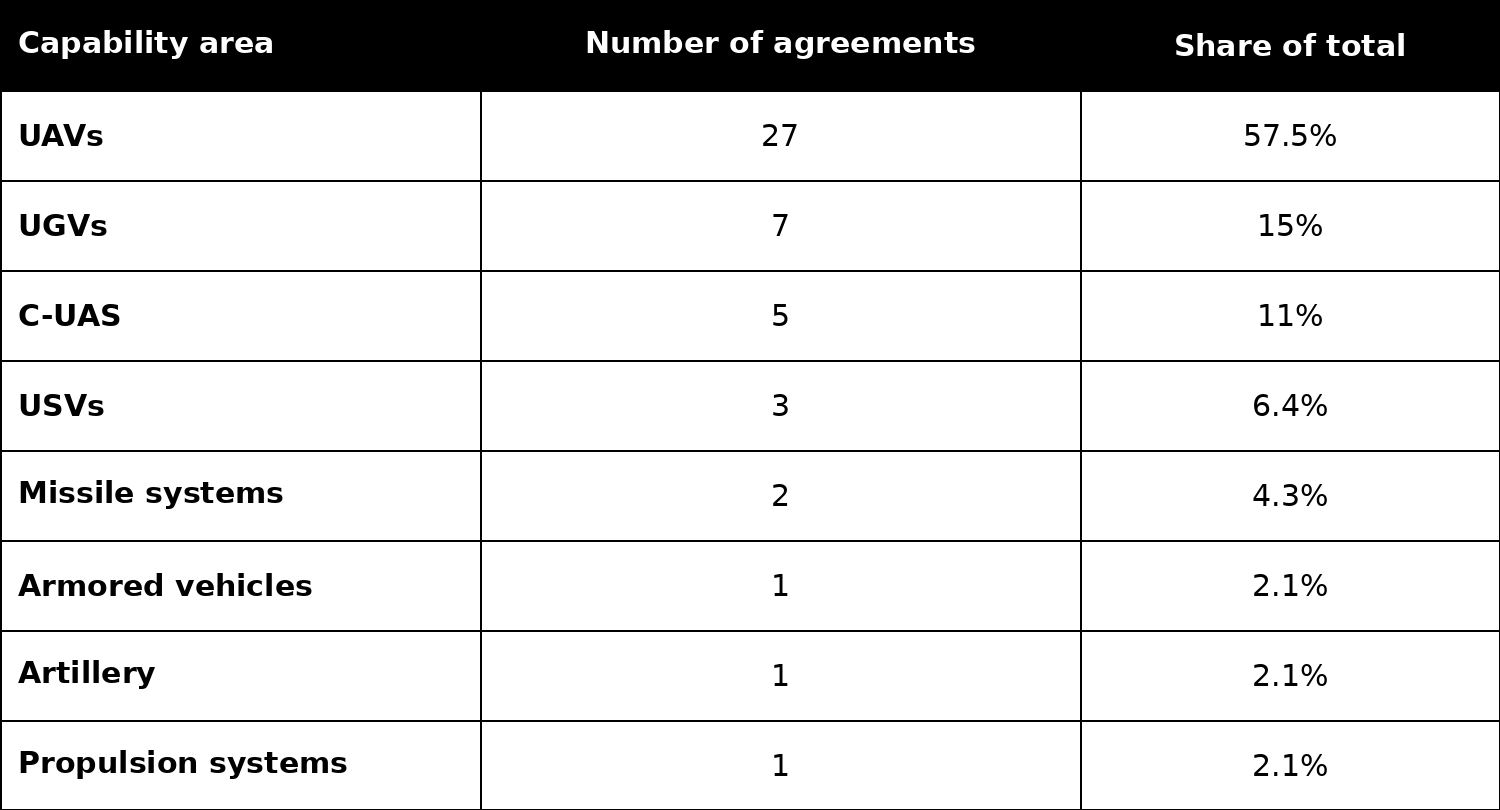
This reflects both Ukraine’s comparative advantage in rapidly evolving drone technologies and Europe’s realization that future military operations will depend increasingly on scalable autonomous systems, electronic warfare, and cost-effective munitions. Other capability areas covered by joint production deals include artillery and armored vehicles production, and as these partnerships mature, strategic assets such as cruise and ballistic missiles will get more attention.
Another noteworthy development is the parallel focus on collaborative research and development. While scaling production of drones and other urgently needed military equipment remains the priority area, Ukrainian and European firms are now looking at next-generation technologies.
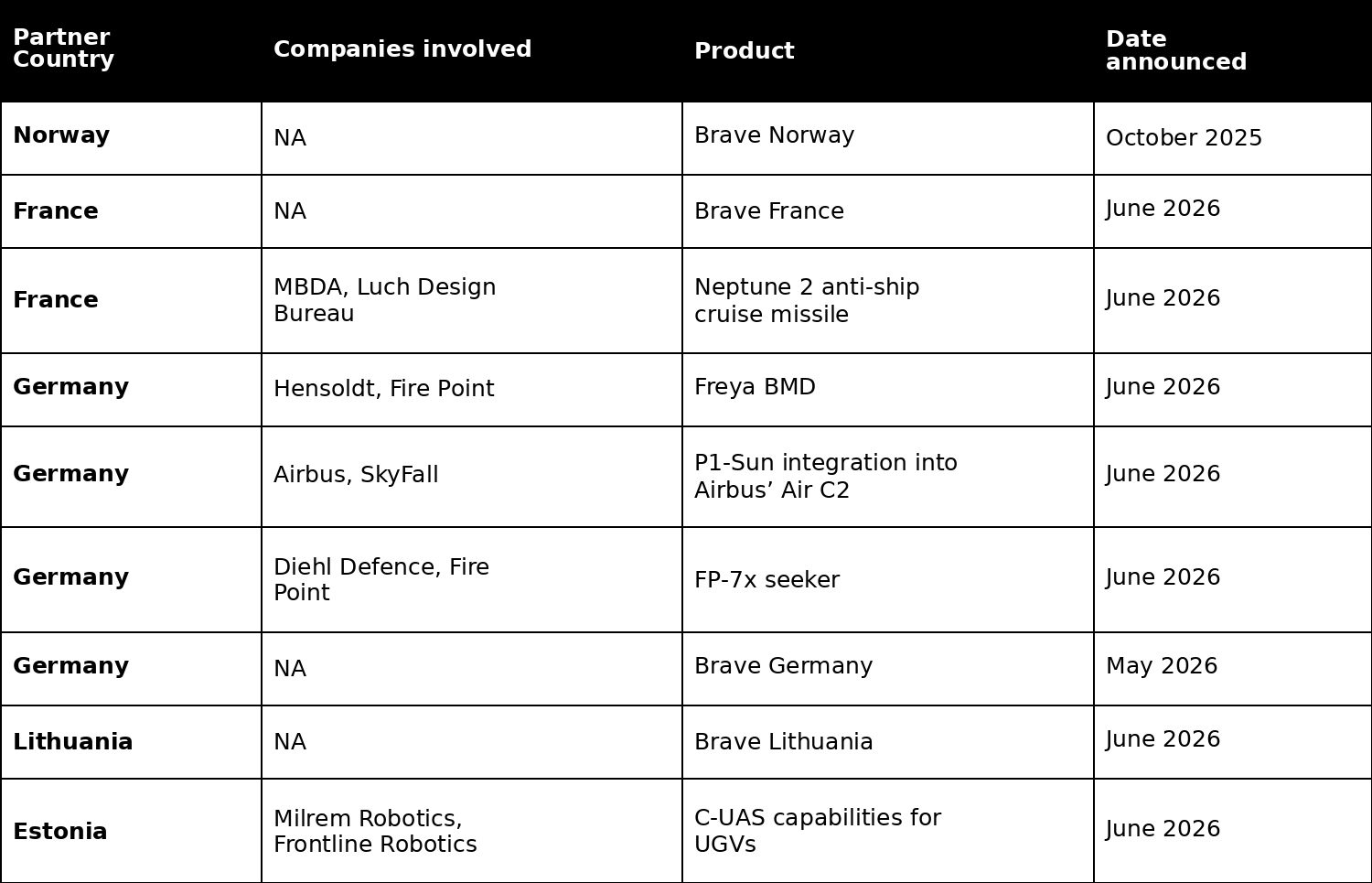
Recent projects include cooperation between Hensoldt and Fire Point on the Ukrainian Freya ballistic missile-defense system, between MBDA and the Luch Design Bureau on the Neptune-2 anti-ship cruise missile, and between Airbus and Ukrainian drone developer SkyFall to integrate Ukrainian high-speed drone interceptors into advanced command-and-control architectures.
Additional initiatives will focus on missile seekers, propulsion, and related technologies. Programs such as BRAVE Germany and the other national Brave chapters exemplify the growing emphasis on defense innovation and collaborative technology development, and provide joint grant schemes for promising Ukrainian and European startups, along with hackathons and networking opportunities to foster long-lasting defense tech collaborations. For the leadership in Kyiv, this also serves to demonstrate to the EU and its Western allies that Ukraine is not a mere recipient of military assistance but also a committed contributor to Europe’s future defense innovation ecosystem.
From a financial standpoint, co-production relies on a patchwork of resources that reflect both the urgency of wartime demands and European strategic interests. Funding has two primary sources: national contributions from partner countries, typically managed by the Ministry of Defense or other national administration offices, and EU funds pooled through various mechanisms. Occasionally, these resources may be augmented with windfall profits from frozen Russian assets, which have already been used to support Ukrainian military needs.
At the same time, leading Western companies and, in some cases, Ukrainian ones, are expected to contribute part of the capital to kickstart joint projects. In this context, the role of the European Union has become increasingly central to overcoming budget deficits and unlocking greater cooperation in the long term. Ukraine can now participate in EU-funded research and development projects via the European Defence Fund (EDF) and receive funding through the Ukraine Support Instrument (USI) within the European Defence Industry Programme (EDIP), which allocates €300 million for 2026-2027 specifically to bolster Ukraine’s defense capabilities and integrate its enterprises into European supply chains. These tools add to the resources disbursed via the Security Action for Europe (SAFE) loan mechanism, which allows Ukrainian firms to participate as contractors or subcontractors in defense projects involving at least one member state. SAFE has already been activated for multiple joint defense production initiatives in Poland, Romania, and Greece.
Bureaucratic, financial, and organizational hurdles
Despite these promising developments, implementing and expanding the Build With Ukraine program still presents a challenge.
Notwithstanding some important updates and changes made by Ukrainian authorities, strict export controls on military equipment – originally intended to prioritize domestic supply in the face of the Russian invasion – currently hinder the full potential for co-production and international sales under joint ventures. As a result, additional reforms, along with effective implementation of new rules, are necessary.
Access to capital represents another constraint, particularly for smaller Ukrainian companies seeking to expand production abroad. Although EU instruments such as the SAFE, EDIP, and EDF provide important sources of support, guaranteeing access to long-term investment remains elusive. The provision of credit from partner governments can shift with the political cycle, while high start-up costs can limit the pace of expansion — or kill a project outright when most of the financial burden falls on private actors.
Regulatory and governance issues present an additional challenge. Ukrainian companies must comply with a complex web of national, international, and NATO certification and quality-control standards and information-security procedures, along with national export controls laws.
Ukrainian companies must comply with a complex web of national, international, and NATO certification and quality-control standards
These regulations, as well as differences between Ukrainian and foreign legal frameworks, can complicate the setup of joint ventures and become a serious administrative burden, especially for smaller enterprises that have limited internal audit capacity and expertise. The recent bilateral agreement with Finland for the development of a joint framework for quality assurance of defense equipment is promising and could be a template for similar initiatives with other partners.
In general, regulatory delays are quite common, as seen in Denmark, where authorities had to repeal domestic environmental and building regulations to authorize the establishment of a fuel and component production facility for missiles made in cooperation with the Ukrainian company Fire Point.
The fragmented nature of European defense procurement also continues to favor national industrial champions, potentially limiting broader integration opportunities for Ukrainian firms even after a joint venture begins operations. This can also lead to siloed projects and diminished economies of scale.
Additionally, legal challenges related to integrity and oversight, including investigations into potential corruption within Ukrainian defense firms, can affect the partner’s political will and delay project implementation. Effective due-diligence mechanisms will therefore become increasingly important as cooperation deepens.
Human capital and technology protection represent other potential areas of friction. Expanding cross-border production will require greater mobility for engineers, technicians, and defense specialists, and cooperation between public and private entities operating under different legal frameworks must be facilitated. Critically, Ukrainian companies opening production abroad face the risk of losing skilled Ukrainian engineers, technicians, and specialists attracted by better-funded European firms.
Ukrainian companies opening production abroad face the risk of losing skilled Ukrainian engineers, technicians, and specialists attracted by better-funded European firms
Equally important, Ukrainian companies remain concerned about protecting intellectual property and preserving the competitive advantages they have developed through wartime innovation. Successful joint ventures and multinational collaborative projects depend on transparent and well-defined agreements that take all of these factors into account.
At this stage, the Build With Ukraine initiative has certainly gained traction and promises to give a lifeline and international exposure to the country’s growing defense industrial sector while scaling up the production of essential military equipment for national defense. It is also becoming a framework for integrating Ukraine into the European defense technological and industrial base through a combination of co-production, investment, technology transfer, and collaborative research and development. Still, its success depends on the removal of structural barriers in multiple areas and at different levels, both within Ukraine and in partner countries.