Donald Trump’s America First policy, his dismantling of USAID, and his war against Iran have led to the revival of the long-forgotten phenomenon of Somali piracy. Due to the actions of Trump and his Israeli allies, sea raiders around the Horn of Africa have once again become a serious threat to international shipping.
“Who would have thought we were doing that? We’re like pirates,” Donald Trump joked, describing the capture of an Iranian tanker by U.S. forces in the Strait of Hormuz in early May. Iranian authorities, for their part, called American forces outright maritime marauders who, in violation of all norms and laws, seize foreign ships and appropriate their cargo. (However, it should be noted that the Iranians themselves, who terrorize vessels passing near their territorial waters, have also been accused of piracy.)
For both the U.S. and Iran, seizing foreign ships and expropriating their cargo functions as a supplementary tactic in their respective warfare strategies. Notably though, the war has led to the return of genuine pirates — people who make their living from maritime robbery. A side effect of the new Middle Eastern conflict has been the resurrection of Somali piracy, which a mere twenty years ago was considered one of the foremost challenges to global security before finally being defeated — or so it seemed.
Echo of war
Somalia is an impoverished country, torn apart by separatists, jihadists, and simple bandits with no clear religious or political identity. Even today it remains on the official United Nations list of the world’s least developed nations.
In the 1990s, when the country descended into a civil war that killed at least half a million people, things were even worse. The government disbanded, and the official armed forces ceased to exist. Some soldiers and officers deserted, and many joined militias or gangs. The navy vanished as well. Its few vessels were scrapped for metal, and the remaining ships and boats were sailed by their crews to ports in Yemen and Kenya.
European and Asian fishing companies quickly exploited the absence of a central government and navy in the country, sending large trawlers into Somalia’s ungoverned territorial waters, where they fished without any quota restrictions. They also began dumping waste — often highly toxic and harmful to marine life — into the unguarded waters. Somali fishermen suffered no less than the fish: foreigners stripped them of their catch, condemning the fishermen and their families to famine.
European and Asian ships began dumping toxic waste in Somalia’s unprotected waters
In December 1991, in an attempt to drive strangers away from their shores, Somalis seized the slow cargo vessel MV Naviluck and executed three Filipino sailors before setting the freighter on fire. This was not yet a pirate attack, as the assailants made no attempt to seize the cargo or demand a ransom for the vessel and crew. It was more of an act of intimidation — which, incidentally, went largely unnoticed at the time.
The first case of an actual pirate raid came in September 1994, when Somalis seized the merchant vessel MV Bonsella, which was carrying medical supplies. They then attempted to use the ship to capture other passing vessels, but the MV Bonsella proved insufficiently maneuverable and too slow for this purpose. A few days later, the Somalis abandoned it, taking all the cash, valuables, and part of the cargo — acting, in other words, in purely piratical fashion.
After this incident, robbery attacks on foreign vessels became noticeably more frequent. The authorities (often self-proclaimed) of various parts of the formerly unified Somalia tried to impose order on the free rein of foreign ships in their waters, and also on the aggressive behavior of Somali fishermen. Foreign vessels were sold fishing licenses and quotas, and armed security crews were brought in to escort them through unsafe waters.
But things did not go as planned. In March 2005, the security guards aboard the Thai trawler Sirichai Nava 12 mutinied because they had not been paid, taking the crew hostage and demanding $800,000 from the owners for the release of the ship and its personnel. A few days after the takeover, the guards-turned-pirates were captured in a rescue operation carried out by British and American forces.
It was one of the first attempts by Somalis to seize a vessel for ransom rather than plunder — an attempt that ended in spectacular failure. But the next attempt, made just a couple of weeks later, showed that piracy had a future.
A perfect storm
On April 10, 2005, armed men seized the Hong Kong tanker MV Feisty Gas off the coast of Somalia and demanded half a million dollars from the ship’s owners in exchange for the safety of the cargo and crew. During negotiations, the owners managed to bring the price down to $315,000, which was delivered to Somalia in cash. The era of rampant Somali piracy had begun.
Importantly, the story of MV Feisty Gas, which showed the viability of maritime robbery as a 21st-century trade, is just one component of the perfect storm that ensued. Somali piracy became a phenomenon that seriously affected international shipping and, with it, the entire architecture of global security.

Another no less important element of this metaphorical storm was a literal natural disaster. In 2004, a devastating tsunami in the Indian Ocean destroyed entire cities in Southeast Asia, but it also reached the shores of Somalia, sinking many fishing boats and tearing apart the nets of local fishermen.
In addition, the storm waves washing up on Africa’s shore ruptured barrels and containers of toxic waste that had been dumped into the sea off Somalia’s coast, triggering an environmental catastrophe that forced even those fishermen who managed to save their boats to abandon their familiar trade due to the mass die-off of fish and сustomers’ refusal to buy contaminated seafood.
In a country ravaged by endless war, fishermen had no legal alternative to earn a living. Additionally, many of them had combat experience from years of fighting — and often the weapons that went with it, which came in handy for the extremely risky but potentially very lucrative enterprise of piracy.
In a country ravaged by endless war, fishermen had no legal alternative to earn a living
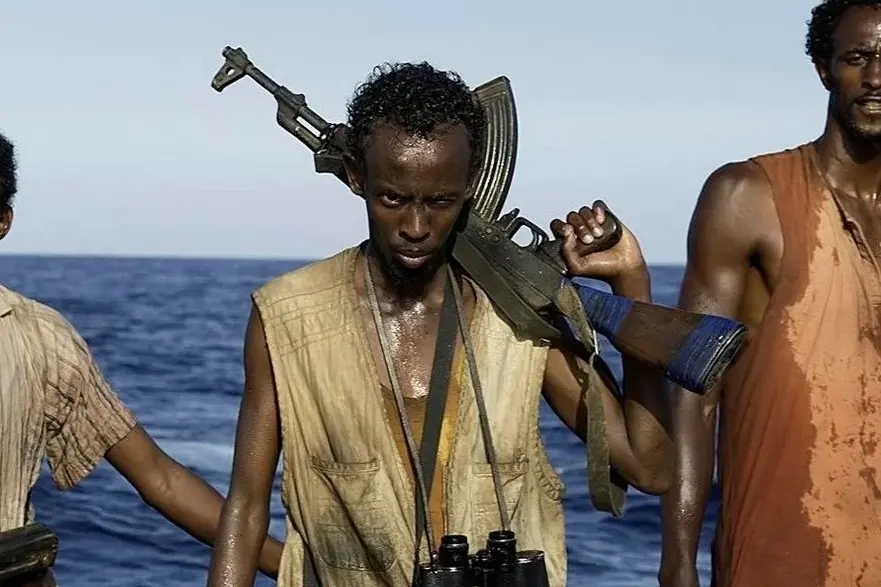
In 2005, Somali pirates seized more than a dozen ships, and by 2008 the number had risen to 42. The Guinness Book of World Records even features a dedicated entry for the year in which maritime marauders received the highest payments from the owners of captured ships: 2010, when $238 million changed hands, an average of $5.4 million per vessel. The entry specifically notes that most of this money ended up in Somalia.
The indirect losses to the global economy from Somali pirates from 2005-2012 — due to the rerouting of ships, rising insurance costs, hiring of armed guards — are estimated at tens of billions of dollars.
Of course, gangs of desperate unemployed fishermen could not have caused so much trouble on their own. After the first successful ship seizures, the amateur crews were joined by professional military personnel and sailors. Warlords and tribal sheikhs also got involved, supplying the buccaneers with weapons, ammunition, satellite phones, powerful engines for their boats, and intelligence on ships passing near Somalia’s coast (information obtained from corrupt officials both at home and in neighboring countries).
Behind the warlords and sheikhs stood “shareholders” and “investors”: wealthy Somali expatriates living in Kenya, the Gulf states, or Europe, who were ready to finance the preparation and arming of gangs in exchange for future profits from the seizure of tankers and cargo ships.
With so many people looking to profit from the plunder, the actual captors were left with a relatively small share of the loot. Of the $1.6 million received as ransom for the release of American journalist Michael Scott Moore, up to 90% went to officials, sheikhs, warlords, and foreign “shareholders.”

Moore arrived in Somalia in 2012 to conduct a journalistic investigation into pirate activities and ended up in their captivity for 977 days. He later recalled that the gang that captured him received so little money in the end that the division of the proceeds led to a shootout in which five pirates were killed by their own comrades.
Make Piracy Great Again
Reining in the pirates proved to be no easy task. They had no single base — no “Somali Tortuga,” the 17th-century center of piracy in the Caribbean — whose destruction would have put an end to the plunder. Instead, Somalia’s were scattered across dozens of small coastal villages and floating bases — large mother ships from which motorized boats carrying boarding parties were launched whenever a potential prize appeared on the horizon. And given that one of the world’s most important sea routes passes through Somalia’s territorial waters — connecting Europe with the ports of Asia, Australia, and East Africa via the Suez Canal and the Red Sea — potential prizes appeared daily.
Pirates changed the rules of seamanship. Ships began passing the waters near the Horn of Africa at significantly higher speeds than before. Citadel rooms with reinforced walls and tamper-proof doors appeared in crew quarters for sailors to take shelter in the event of an attack.
The UN developed rules for the legal prosecution of maritime marauders, enabling the courts of the Seychelles, Mauritius, and Kenya to hand down convictions to those accused of piracy. This last point was critically important. Previously, Somali pirates captured by military forces or by ships’ crews were most often simply released — given that Somalia itself had no unified national criminal code, no one understood who should try them or under which laws.
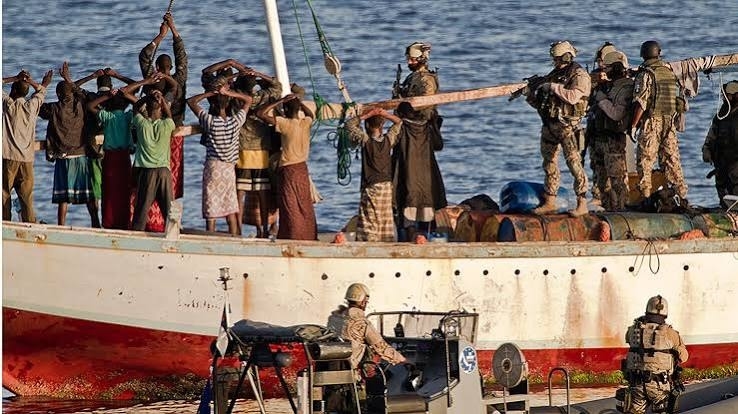
In addition, starting in 2008, EU and NATO countries sent their fleets to Somalia’s shores. A multinational Combined Task Force 151 was also established, with ships and aircraft patrolling the waters near the Somali coast around the clock.
Moreover, the U.S. land contingent in Somalia — some 700 personnel — was engaged not only in fighting jihadists but also in training local security forces to counter the pirates. On top of that, U.S. humanitarian aid to Somalia, which ran to hundreds of millions of dollars per year, kept many would-be pirates on shore by at least reducing their economic incentive to risk their lives trying to seize a foreign vessel.
All of these efforts struck such a severe blow to piracy that in 2022 the International Maritime Organization announced the imminent removal of the high-risk zone status from the waters around Somalia, marking an official declaration of victory over Somali piracy.
Yet even then, it should have been clear that this victory might not prove to be quite so decisive. In December 2020, shortly after losing his bid for re-election, lame-duck President Donald Trump announced his decision to withdraw all U.S. military personnel from Somalia. Piracy did not spring back to life the very next day, but the absence of an armed American presence added a further layer of instability to an already turbulent country, fueling criminal activity.
Under Trump, U.S. aid to Somalia was cut manifold, driving the country into deeper poverty
Trump’s successor went further still. In 2023, Joe Biden shifted part of the U.S. Navy’s remaining forces away from Somalia’s shores toward Yemen, which Houthi rebels had begun using as a launching ground for ballistic missiles fired at Israel.
After returning to the White House in 2025, one of Trump’s first decisions involved the elimination of the U.S. Agency for International Development (USAID), which was responsible for distributing aid to other countries. As a result, U.S. aid to Somalia was cut from $476 million in 2024 to $70 million in 2025, and in the first three months of 2026, it totaled just $3 million. The move predictably led to the further impoverishment of an already desperately poor population.
However, it was the start of the U.S. war against Iran that truly reopened the window of opportunity for a revival of piracy around Somalia. With American, European, and Israeli attention focused on the Gulf, ships that previously guarded trade routes from pirates have been deployed elsewhere. While a return to the peak levels of 2010–2011 — when seized vessels were counted in the dozens and ransoms often exceeded $5 million per ship — is still far off, the resumption of pirate activity off Somalia’s coast has become a visible fact.
The redeployment of American ships to the Gulf has allowed piracy around Somalia to make a comeback
Currently, pirates are holding three vessels and their crews: the tankers Honour 25 and Eureka, and the cargo ship Sward. At a time when the war in Iran has driven fuel prices to record highs, laden tankers are a coveted target.
In the case of Eureka, which sailed under the flag of Togo, pirates initially demanded $3 million for the release of the tanker and crew. Then, irritated by the slow pace of negotiations, they raised the sum to $10 million. The high price of oil, which has soared due to the war in the Persian Gulf, only whetted their appetites.
The bitter irony is that the Trump administration will find it very difficult to pass off the end of its Iranian adventure as a victory. At this point, no one expects the collapse of the ayatollahs’ regime, while Tehran will likely retain both its own armed forces and its extensive network of regional proxies. Whatever becomes of the diplomatic efforts to maintain the current ceasefire, the war certainly has not ended in Iran’s unconditional defeat.
Most likely, the war will end with Iran’s commitments to facilitate commercial traffic through the Strait of Hormuz and with promises not to build a nuclear bomb. But before the war, no one was blockading the Strait of Hormuz, and Tehran has been swearing for years that it has no interest in a bomb, meaning the presumed endgame is merely a return to the pre-war status quo. The war has cost the U.S. billions of dollars and claimed thousands of lives — all while giving the long-forgotten issue of Somali piracy a chance to return from what may have seemed like the dead.