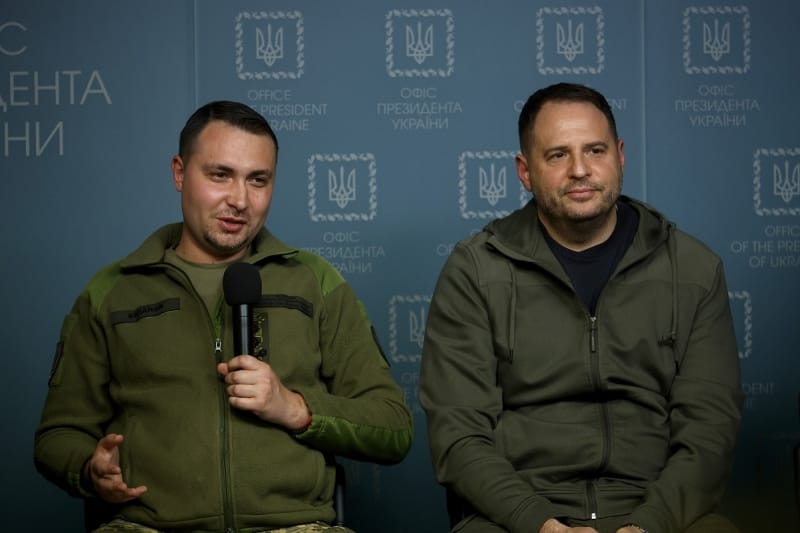
Kyrylo Budanov, head of the Office of the President of Ukraine, has been criticizing the mobilization methods the country has been using. While acknowledging that coercive measures are unavoidable, he noted that there is room for reform in order to eliminate “cases of inhumane treatment.” For the first time, the country’s highest authorities have admitted that the actions of territorial centers of recruitment often cross legal boundaries, turning recruitment efforts into a manhunt. At the moment, abuse connected with mass mobilization is creating tensions on the home front.
Territorial centers of recruitment: how the system works
Ukraine’s system of territorial centers of recruitment and social support (TCRs, or ТЦК in Ukrainian) replaced the Soviet-style military enlistment office system relatively recently: on Feb. 23, 2022, one day before the start of Russia’s full-scale invasion (the reform law itself had been adopted by the Verkhovna Rada in 2021). Unlike the old enlistment offices, TCRs were tasked not only with military registration and drafting but also with providing social protection and adaptive solutions for veterans and their families. They were meant to be part of an effort aimed at humanizing and optimizing military service as a whole.
Another important objective of the TCRs was to replace paper-based bureaucracy with digital systems, in order to help transform the cumbersome Soviet-era structure into a “service-oriented” institution, in line with Zelensky’s reforms aimed at building a “state in a smartphone.”
However, under the conditions of full-scale war, the TCRs effectively remained focused almost exclusively on manning the military. In the first year of the war, the system could not cope quickly enough with the enormous influx of volunteers, and queues formed outside offices. However, as the number of motivated recruits was exhausted and it became clear that the war was turning into a prolonged conflict — especially following the failure of Ukraine’s counteroffensive in the fall of 2023 — the situation began to change.
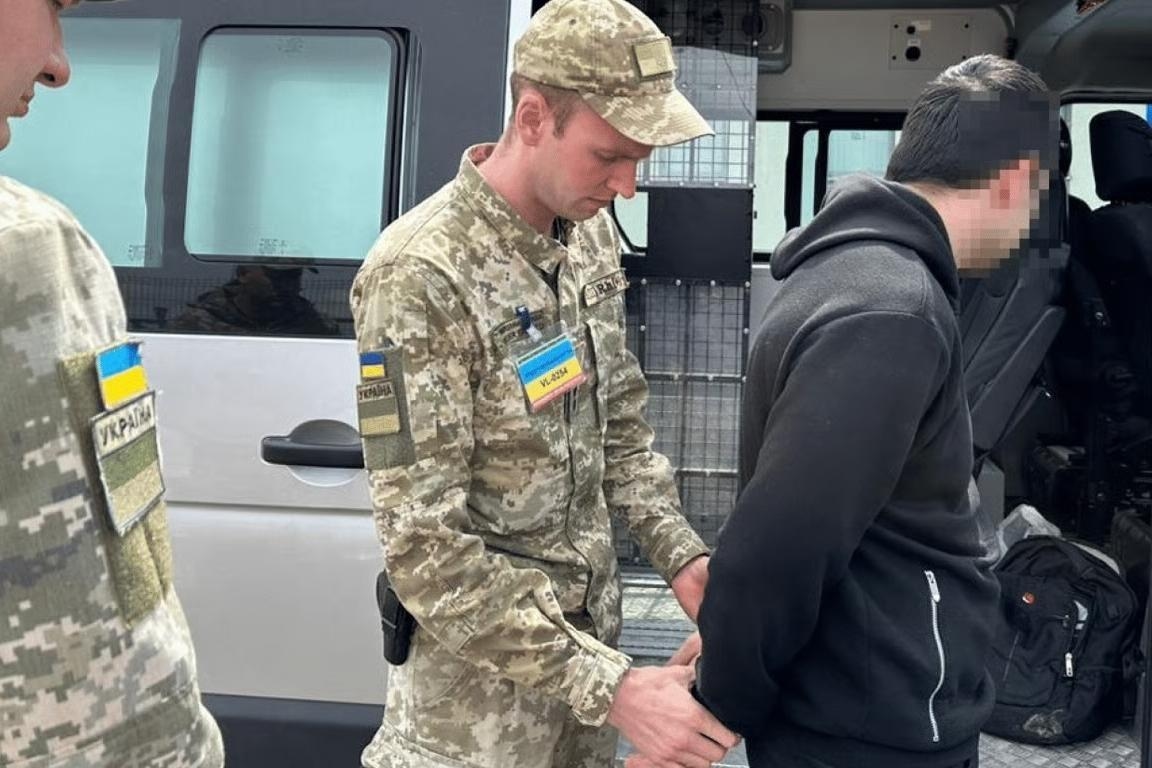
Videos showing draft-age men being detained on the streets and forcibly taken to TCRs began appearing online more and more frequently. In 2023 alone, more than 1,000 conflicts between civilians and TCR personnel were recorded. The issue became the subject of public debate, though mostly at the grassroots level.
According to a Kyiv-based source for The Insider, a serviceman with the Armed Forces of Ukraine: “At first, the topic of TCRs was mostly discussed on social media. In 2023, I learned that there were Telegram and WhatsApp chats where people warned each other about TCR patrols appearing in crowded places. Back then, this contrasted sharply with the overall patriotic mood, but it was already a worrying trend.”
In 2024, the situation deteriorated drastically, especially after the mobilization law was tightened in May. The changes expanded the categories of people eligible for service and lowered the mobilization age from 27 to 25. During this period, mobilization became increasingly coercive, and conflicts grew more violent.
The word of the year became the neologism “busification,” derived from the minivans used by TCR patrols to transport mobilized men to recruitment centers. As tensions escalated, protests by relatives of mobilized men broke out, and attacks on TCR personnel became more common, leading to multiple deaths.
Corruption in mobilization
Corruption has exacerbated this society-wide issue. According to Kyiv-based sociologists, a majority (54%) of Ukrainian citizens consider corruption a greater threat to the country than even the Russian military aggression (39%).
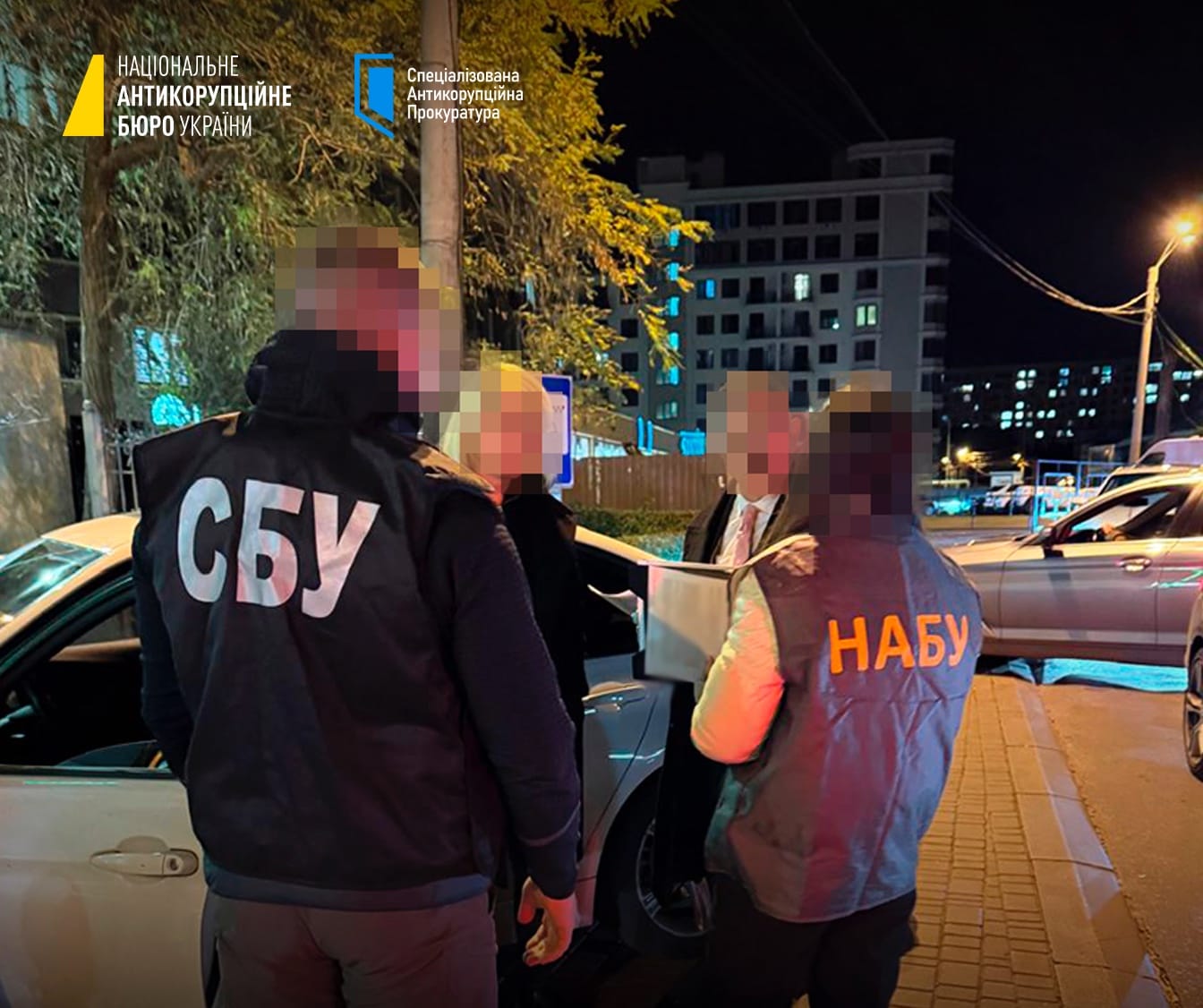
Footage of a high-profile detention of TCR personnel in Odesa, complete with gunfire and a chase, even circulated widely in Ukrainian media. On April 21, 2026, the Security Service of Ukraine (SBU) arrested servicemen from one of the district territorial recruitment centers who had been caught taking bribes and extorting money. According to the Odesa-based outlet Dumska, bats, brass knuckles, and cash were found in the suspects’ possession. Before that, rival TCR teams travelling in two minivans (the infamous “buses”) staged a showdown on Mykhailivska Square.
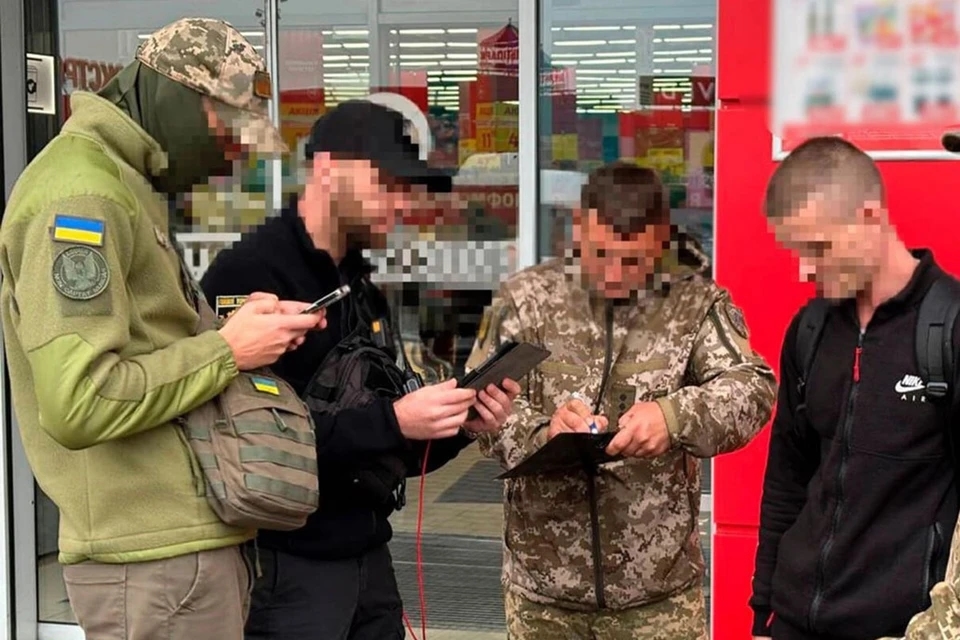
Such “officers” have become a genuine source of public concern. Since the very beginning of the full-scale war, Odesa has been notorious for incidents connected with the draft. Notices were handed out on beaches and in nightclubs, and the corrupt income over the years of the war was enough for Yevhen Borysov, head of the Odesa TCR, to buy real estate in Spain.
Odesa is far from the only example of draft-related abuses. On April 30 in Bila Tserkva, the SBU detained a group of TCR officers who had been providing “services” involving fake exemptions from mobilization for a flat fee of $5,000. The officers’ accomplice was the owner of a military-uniform manufacturer that fictitiously employed draft evaders.
A resident of one of Ukraine’s regional centers, speaking anonymously to The Insider, said that the “fees” charged by enlistment officers are widely known among the public. Buying one’s way out of a TCR bus costs €1,000, provided relatives manage to bring the money quickly enough. Upon arrival at the enlistment office — but before the medical examination — the fee rises to between $5,000 and $10,000. Another popular scheme involves losing a recruit on the way; in such cases, the team leader is fined 20,000 hryvnias ($455) for the escape, and in return receives a bribe worth several thousand dollars.
Response from society and the armed forces
It is the prevalence of corruption that has made “busification” so odious. At the start of the war, draft evaders and people resisting the delivery of draft notices were ostracized. Ukrainian social media even produced the meme “Ukhilles” — a combination of the Ukrainian word “ukhyliant” (“draft dodger”) and the name of the ancient Greek hero Achilles.
But as the scale of corruption within the TCRs came to light, many more Ukrainians began to see the system as deeply unjust. Some would-be recruits are shoved into minibuses with their arms twisted behind their backs, while others easily buy their way out of service by purchasing fake exemptions or forged disability certificates.
Ukrainians began to view the system as profoundly unfair: some are forcibly taken away in minibuses, while others easily buy their freedom
Ukrainska Pravda cites the account of a serviceman temporarily attached to a TCR: “I was stationed at a checkpoint on the road to [the Carpathian resort town of] Bukovel. The more expensive your car, the more impressive your ‘disability.’ There were Rolls-Royces and Bentleys everywhere. Some drivers had been removed from military registration lists altogether. For the first two days after seeing this, I was simply in shock.”
A worrying signal for the authorities came in the form of a July 2024 Razumkov Center opinion poll, according to which 46% of respondents sympathized with draft evaders — and among respondents under 29, the figure reached half. Commenting on the poll’s results, well-known Ukrainian sociologist Yevhen Holovakha noted:
“From a human point of view, all of this is understandable. But there is a risk: a time may come when there will be no people left who want to fight at all. We have to understand that this problem is not unique to Ukraine. No country has a passionate majority. Ukrainians, in my opinion, have already proven themselves incredibly patient and courageous.”
Ukrainian political scientist Volodymyr Fesenko similarly stated: “Mobilization is unpopular with the public. The instinct for self-preservation and the understanding that the war will drag on mean that no one wants to risk the lives of their loved ones.”
Active-duty Ukrainian servicemen who spoke to The Insider on the condition of anonymity speak of a mixed attitude toward the TCRs within the army itself. “On the one hand, there is contempt for ‘draft dodgers,’ but on the other, there is no particular love for TCR officers either. Officers treat them like ‘rear-line rats,’ while many rank-and-file soldiers ended up in the Armed Forces themselves through ‘busification,’ so any news about incidents involving TCRs is met with a crooked grin,” one source says.
Servicemen also point to another problem: in general, recruits brought in by force are extremely poorly motivated. Commanders are unhappy, but they have no alternative — the army needs personnel.
Ukrainian drone forces commander and former MP Ihor Lutsenko considers “busification” a national disgrace, the result of a breakdown in communication between the authorities and society. In his opinion, grabbing people off the streets demonstrates the absence of any real personnel generation plan, while “the enforcers are only after numbers.”
Lutsenko believes the solution could lie in expanding direct recruitment by military units and allowing prospective recruits to obtain a military specialty before enlistment. That way, people would have a clear understanding of where they would serve and what they would do in the war. This would reduce irrational fears and thereby lessen the drive to evade military service.
According to statistics from the Office of the Human Rights Commissioner, the number of complaints concerning unlawful actions by TCRs is alarming. Its head, Dmytro Lubinets, noted that while 3,300 complaints were filed in 2024, the number rose to 5,000 in 2025. In May 2025, officers of an enlistment office in Kyiv beat a man to death right inside the minivan for “resisting mobilization.” In April 2026, a cancer patient died in a Kryvyi Rih TCR after being forcibly brought there.
The harsh methods employed by TCRs provoke resistance from potential recruits, whose efforts to evade the authorities can take violent forms. In some cases, the violence turns bloody, and there have even been armed attacks on TCR personnel. For example, on Feb. 1, 2025, Oleksandr Sikalchuk, a serviceman from a security company escorting a minivan carrying recruits, was shot point-blank at a gas station in Pyriatyn (Poltava Region). The attackers were attempting to free one of the recruits.
In addition, on April 30, 2026, a TCR team in the Rivne Region came under automatic gunfire, leaving a police officer and a serviceman wounded. Although these were largely isolated incidents, they attracted nationwide attention.
Ukrainian mobilization and Kremlin propaganda
The difficulties surrounding Ukrainian mobilization provide ample material for Kremlin propaganda. Ukraine’s Center for Strategic Communications monitors its key narratives.
In 2022–2023, Moscow’s propaganda focused on encouraging passive draft evasion; however, since the end of 2023, the emphasis has shifted toward promoting violent resistance. The Kremlin uses a combination of methods in these campaigns: media resources targeting Ukrainian audiences (websites, social networks, Telegram channels), bot farms, and “troll factories.”
Between March and November 2023, the center recorded 596 advertising materials containing pro-Russian disinformation aimed at disrupting mobilization. Notably, Russian propaganda actively exploits the topic of the possible mobilization of women and young people beginning at age 21. In reality, military service for women in Ukraine is voluntary, while men are mobilized starting at age 25 (lowered from 27 in 2022–2024). To reduce social tensions, the government even allowed young men aged 18–25 to leave the country freely (while travel remains restricted for draft-age men).
As the backbone of Kyiv’s draft effort, TCRs are an important target for Russian sabotage operations. Andrii Kovalenko, head of Ukraine’s Center for Countering Disinformation under the National Security and Defense Council, stated that a series of explosions near TCR buildings in 2024–2025 were coordinated by operatives from Russia’s Main Intelligence Directorate (GRU) and Federal Security Service (FSB). Some of the plots used Telegram channels to recruit participants.
As the backbone of Kyiv’s draft effort, TCRs are an important target for Russian sabotage operations
A similar incident took place in Bila Tserkva at the end of April 2026, when a local man threw a live grenade into the courtyard of a TCR (fortunately, no one was injured). According to investigators, the man had been manipulated by Russian “handlers” posing as SBU officers. According to the story the assailant’s handlers purportedly told him, the grenade was merely a training device, and the action itself was simply a test of the TCR’s security system.
Russia’s mobilization of occupied Ukrainians
While vividly portraying the “horrors” of Ukrainian mobilization, the Russian authorities are doing everything possible to erase the memory of one of their own war crimes — the forced mobilization of residents of occupied Donbas into the armed forces of the self-proclaimed Luhansk and Donetsk “people’s republics.” To maintain the official narrative that the Russian invasion of Ukraine was carried out in support of the “brotherly peoples” of Donbas, the local collaborationist authorities had to demonstrate a convincing number of “allied troops” from the breakaway republics.
The stream of volunteers that had once sustained the Donbas militias dried up long before 2022, and so the collaborationist authorities began forcibly conscripting everyone they could. There are numerous testimonies of how mobilization unfolded in the Donbas. A man from occupied Luhansk Region was forcibly drafted despite poor eyesight and the absence of a finger on his right hand; without any training whatsoever, he was sent to the front, where he was killed in one of his very first battles. A schoolteacher from Perevalsk in Luhansk Region ended up in the “LNR” army under similar circumstances and became disabled. Hastily mobilized residents of occupied territories were used as cannon fodder, with casualties among the “allied troops” during the first six months of the full-scale war reaching as high as 55% of personnel.
Steps taken to restore order
The Ukrainian authorities are fully aware that tensions surrounding mobilization could destabilize the home front, and they are therefore making considerable efforts to remedy the problem.
In August 2023, following the scandal involving the Odesa enlistment center, President Volodymyr Zelensky dismissed all regional enlistment officers at once, and criminal cases were opened against 112 TCR employees (including the chief enlistment officer in Odesa). In addition, the Ministry of Defense decided to involve ideologically motivated veterans in the work of enlistment offices, believing them to be less susceptible to corruption.
It was also decided that enlistment officers should be appointed to work outside their home regions, as they would lack local ties necessary for building corruption schemes. In April 2025, Commander-in-Chief of the Armed Forces Oleksandr Syrskyi ordered that TCR officers without combat experience and without health restrictions be reassigned to service in combat zones, to be replaced by “war veterans who had suffered injuries or concussions.”
Since the beginning of 2026, resolving draft-related issues has been placed within the purview of the new head of the Presidential Office, Kyrylo Budanov. Corruption within the TCR system was one of the first topics Budanov discussed after assuming office. He set the task of eradicating abuses by ruthlessly dismissing and prosecuting everyone involved.
Earlier this month, a nationwide police operation was launched against officers suspected of committing draft-related abuses. The list of documented violations includes illicit enrichment and false asset declarations totaling 92 million hryvnias (nearly €2 million).
One of the suspects was the head of a district TCR in Odesa Region, who had received 45 million hryvnias in bribes. In addition, on May 6, the SBU detained the head of the Zhytomyr Regional TCR, who had extorted money from a major businessman in exchange for not mobilizing his employees.
In the meantime, Zelensky has announced a mobilization reform. Its implementation will be overseen by the new defense minister, Mykhailo Fedorov, formerly deputy prime minister for the digitalization of public services. The reform calls for a comprehensive audit of the Ministry of Defense (the TCR system falls under its chain of command), the creation of more transparent mechanisms for military registration and mobilization, and a shift in emphasis away from forced mobilization and toward contract service. Fedorov acknowledges the scale of the problem: 2 million Ukrainians are wanted as draft evaders, while another 200,000 are suspected of being AWOL from their military units.
Additionally, a significant number of draft-age Ukrainian men have left the country in violation of the law. The authorities are trying to bring them back home. During a visit to Germany — currently home to more than 1.2 million Ukrainian refugees, including 349,500 men aged 18–63 — Zelensky asked Berlin to help return Ukrainian citizens who are subject to military service. According to him, this is a matter of justice, since many Ukrainian soldiers at the front need rotation. Chancellor Merz supported his Ukrainian counterpart. However, effective mechanisms for returning such individuals have yet to be adopted.
Neighboring Poland has also declared its readiness to return Ukrainians of draft age to their home country. However, the Polish government — interested in Ukrainian labor resources — has allowed refugees from Ukraine to apply for residence permits, making their return home highly unlikely. Some countries, most notably Norway, are moving toward tightening asylum procedures for men of draft age.
Both Russia and Ukraine are aging European nations whose demographic situation was made even worse by the economic turbulence of the 1990s. Nevertheless, thanks to its demographic advantage and its disregard for human life, Putin’s dictatorship can still afford to “dispose of” generations of Russians in pursuit of its geopolitical ambitions. Meanwhile, Ukraine, which is fighting a fully justified defensive war, does not possess such a resource.
As researchers Ivan Krastev and Stephen Holmes note: “Kyiv is acutely aware that a prolonged war will devastate Ukraine. A long war means not only more people killed and wounded, but also fewer babies born and fewer Ukrainians returning home from abroad. It was because of these demographic fears that, in the first two years of the war, Kyiv decided not to mobilize young men aged 18-24, dramatically reducing the quality of the Ukrainian armed forces but preserving the country’s demographic potential.”
As long as Russian aggression continues, Ukraine has no choice other than imposing mass mobilization, yet the methods used to implement this policy are becoming one of the country’s main domestic challenges. At the same time, it must be acknowledged that no modern democracy is prepared for the level of social strain involved in waging a full-scale war. Ukraine did not choose this path voluntarily, but was forced onto the path of militarization due to external aggression from Putin’s Russia all the way back in 2014.