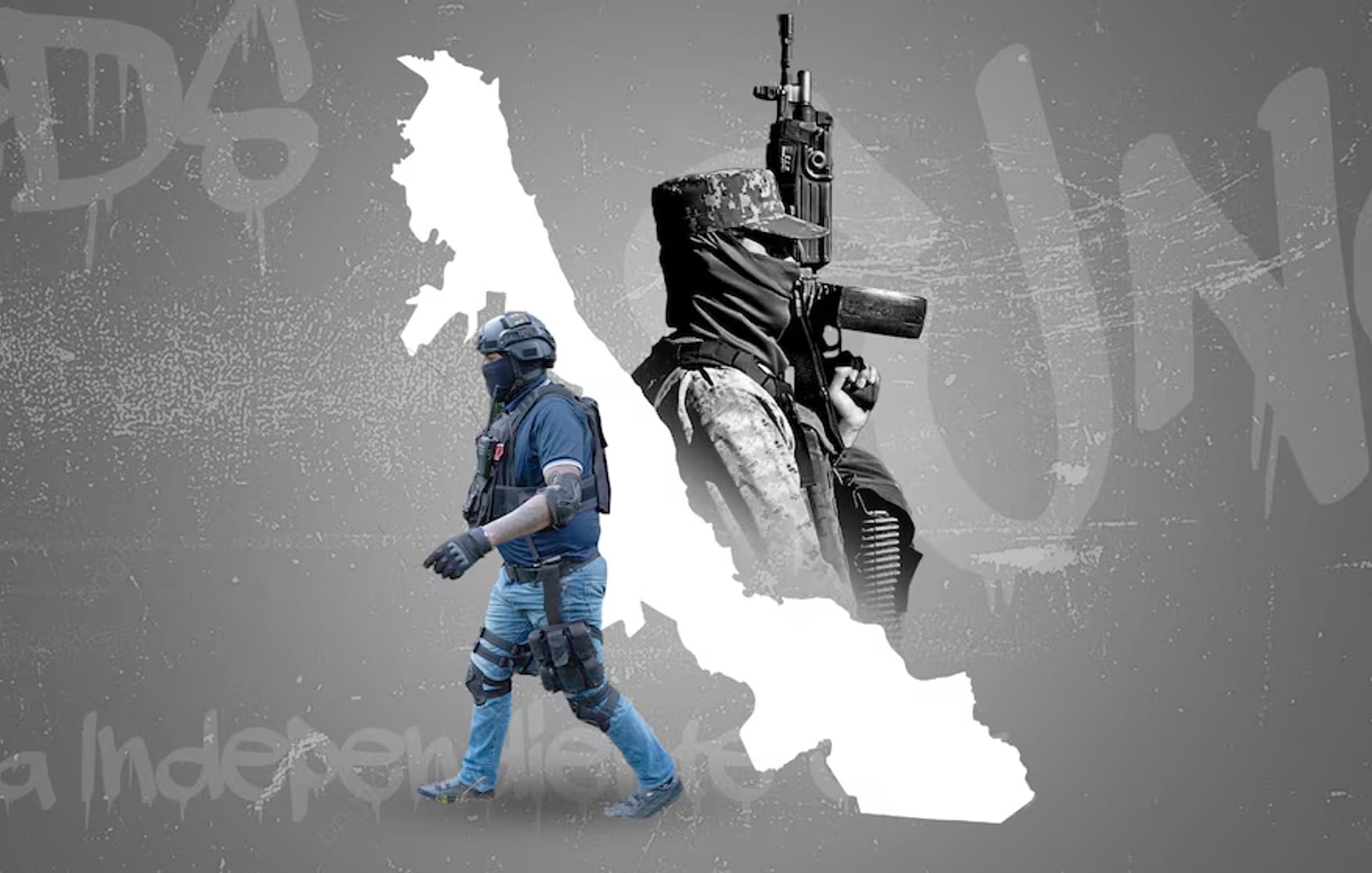
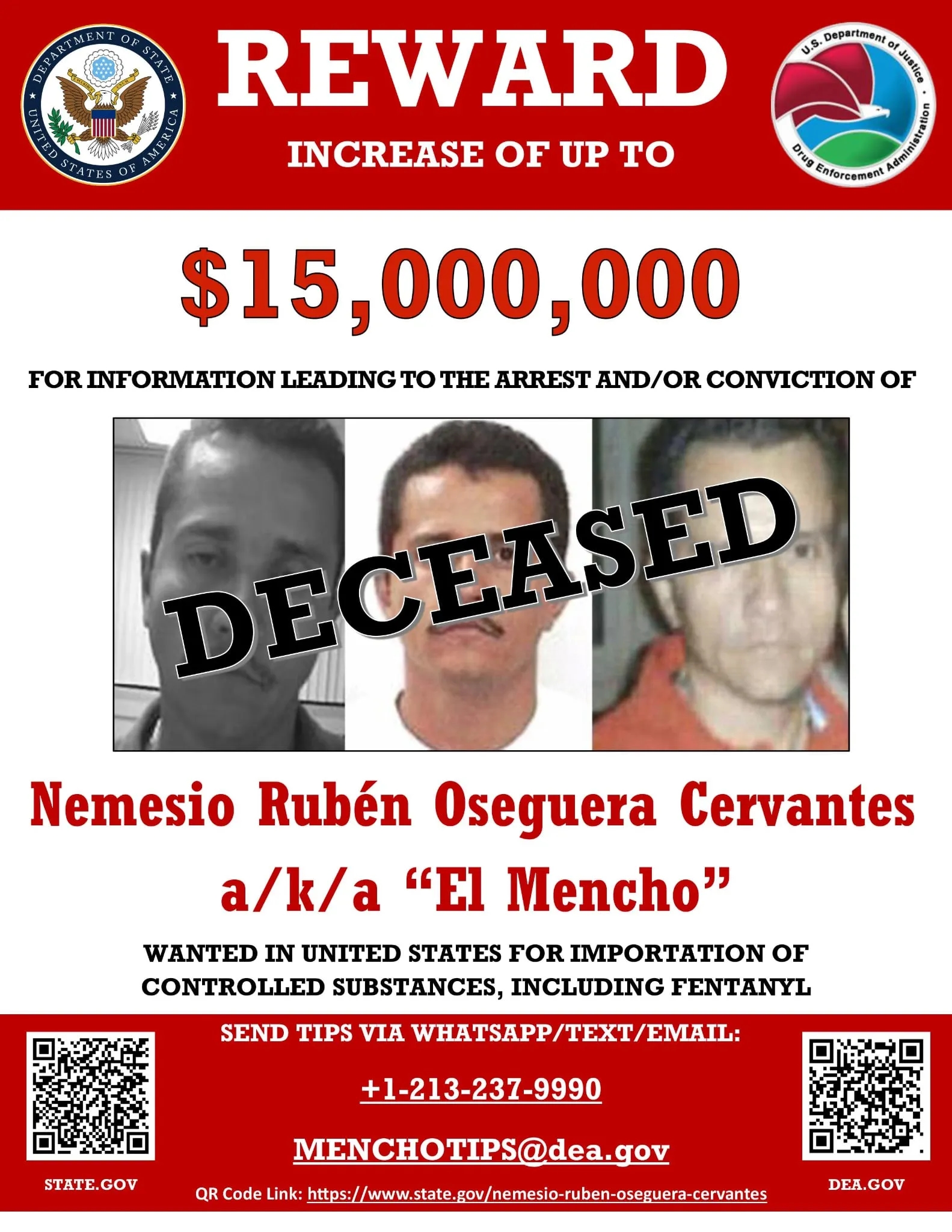
In mid-March, Colombian authorities arrested Ecuadorian drug lord Ángel Aguilar for organizing the 2023 assassination of Ecuadorian presidential candidate Fernando Villavicencio. Aguilar had flown to Bogotá from Mexico, and, according to Mexican authorities involved in the operation, his arrest can be seen as a continuation of the war that the Mexican government has effectively declared on local drug cartels. Another notable episode of this war was the recent killing of crime boss Nemesio Oseguera Cervantes, known as “El Mencho” — a co-founder of the New Generation Jalisco Cartel (Cártel de Jalisco Nueva Generación, CJNG). The elimination of El Mencho triggered a wave of violence in Mexico comparable in scale to a civil war, marking a new stage in the fight against drug cartels that have effectively created a parallel power structure in Mexico. Still, it remains unclear whether the government’s campaign will lead to systemic change.
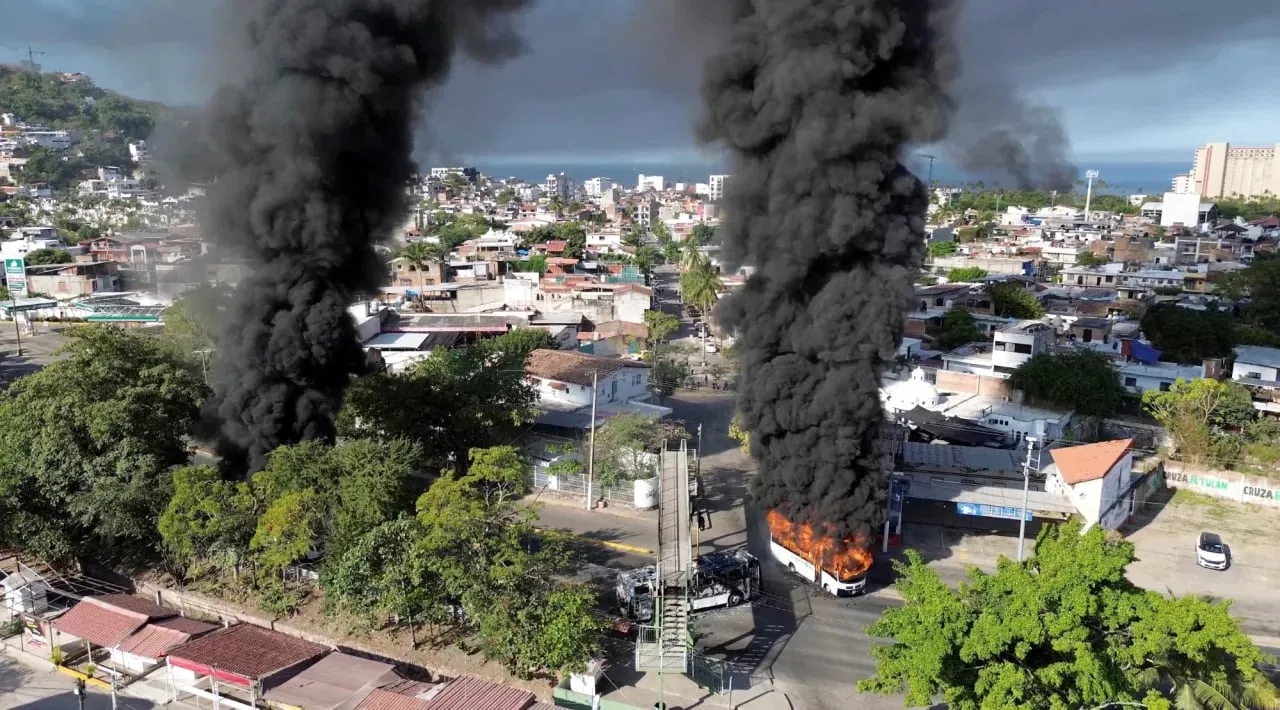
According to Mexico’s Secretariat of Security and Citizen Protection (SSPC), following the killing of crime boss “El Mencho” on Feb. 22, a total of 252 road blockades composed of burning cars, buses, and trucks were recorded across the country, with at least one instance occurring in 20 of the country’s 32 states. The blockades are a standard tactic used by drug cartels in clashes both with law enforcement and with rival groups. The Mexican Association of Insurance Institutions (AMIS) reported the theft of 631 insured vehicles, 90% of which occurred in the states of Jalisco, Michoacán, and Nayarit.
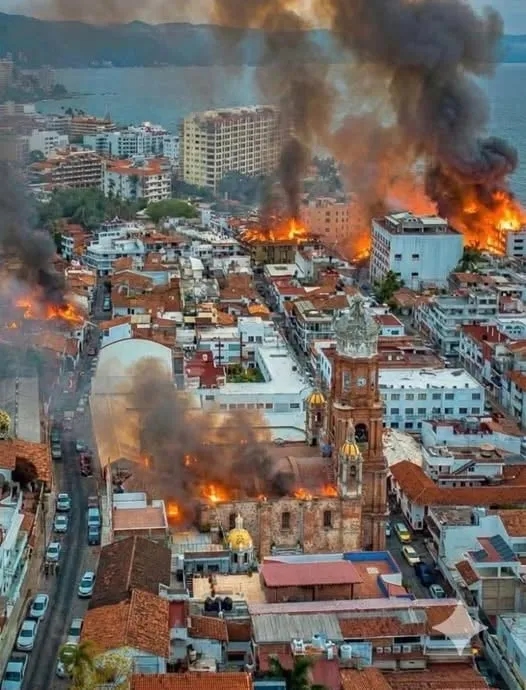
After El Mencho’s assassination, social media platforms were filled with viral videos of the Guadalajara airport shooting, footage of passengers fleeing across the runway at the airport of Puerto Vallarta, and photos of the resort’s downtown area engulfed in flames.
State authorities insisted that all content depicting chaos and unrest in Mexico had been generated using artificial intelligence. However, officials have not yet determined who created it or for what purpose, meaning it is possible the same drug cartels were waging an information war.
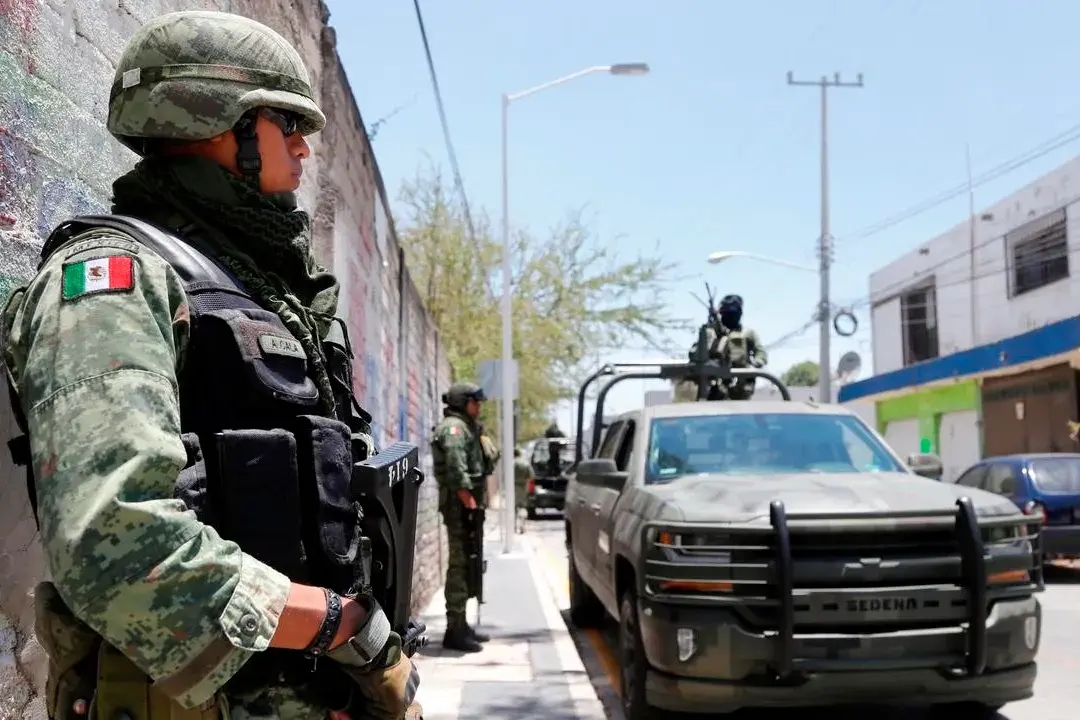
In any case, authorities in certain areas took very real steps to avert a potential escalation of the situation. Guadalajara switched schools to remote learning, banned mass events, blocked roads, and halted public transport. Although the restrictions were lifted days later, the question remains whether the government forces truly restored order, or if the CJNG and its allies simply paused their activities.
The sides may have even reached some form of tacit agreement, as an uneasy calm has persisted in the country since the latest wave of unrest died down. There is still no clear answer as to how security will be ensured during the 2026 FIFA World Cup, which Mexico is set to host together with the United States and Canada this summer.
According to the Armed Conflict Location and Event Data Project (ACLED), Mexico is the most dangerous country in the world for civilians, second only to Palestine. The 2025 Conflict Index shows that of the 8,070 violent incidents recorded in Mexico over the past 12 months, 77% were directed against civilians.
The events following the killing of El Mencho sharpened the long-debated question of whether the government in Mexico City is capable of ensuring public safety across the country. According to a LATAM Pulse survey conducted by AtlasIntel and Bloomberg this past November, 51% of Mexicans listed corruption as being among the country’s main problems, with 45% naming “insecurity, crime, and drug trafficking” (inflation finished third, at 36%).
Mexican drug cartels blur the lines between organized crime and irregular armed conflict, and in clashes between the criminal gangs and security forces — as well as in territorial conflicts among rival groups — civilians are the primary victims. Institutional corruption and the infiltration of the mafia into government and judicial bodies weaken the state’s ability to combat drug cartels, undermining public trust in the authorities. Even more striking is the scale of impunity in Mexico: although cases are opened for 94% of crimes, fewer than 1% are solved.
Cases are opened for 94% of crimes, but fewer than 1% are solved
Additionally, according to government statistics, more than half of the country’s population qualifies as “poor,” with inadequate access to education, healthcare, or employment. This grim reality is the main reason why many young people are willing to join the ranks of the drug cartels.
Failed or mob-controlled?
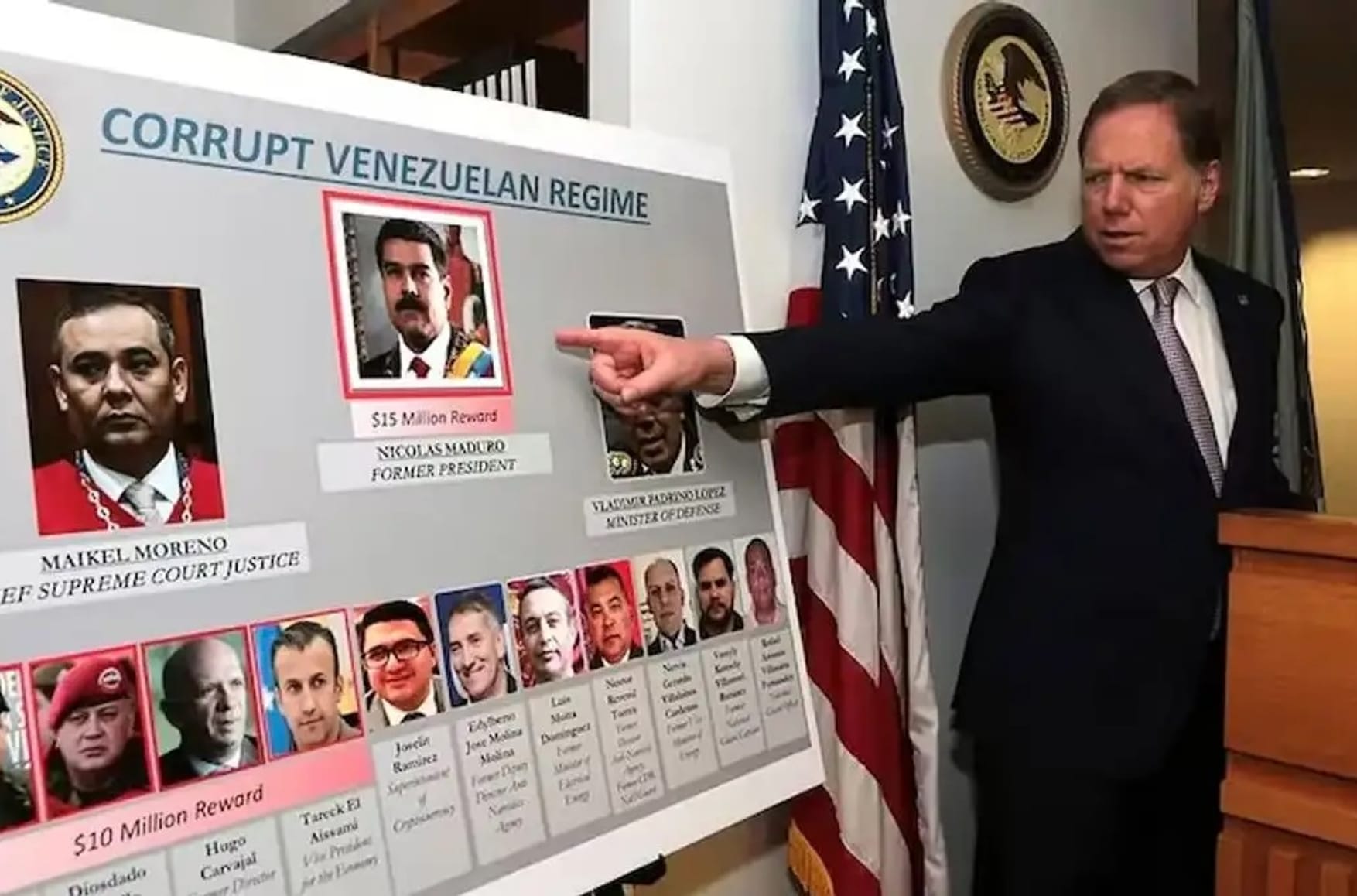
Mexico has often been called a failed state. In 2024, Uruguayan President José Mujica characterized Mexico’s government institutions as “completely out of control and corrupt to the core” (though he retracted those remarks the following day after the Uruguayan ambassador was summoned to the Mexican Foreign Ministry). And in 2017, Venezuelan President Nicolás Maduro stated that Mexico had become a “failed state, dominated by violence, inequality, and drug trafficking” (although Maduro’s comments would have proven more apt as a description of his own country).
Mexico is described as a “failed state” so often that a game called Failed State Mexico has even appeared on Roblox, offering players the chance to take part in “epic battles” in the city center, choosing sides between law enforcement and criminal groups.
Still, calling Mexico a failed state is clearly an exaggeration. After all, elections are held, parties and presidents change, and rights and freedoms exist. However, the protection of citizens’ safety varies greatly from state to state.
According to its Constitution, Mexico is a federal republic consisting of 31 states and one federal district (the capital, Mexico City). Each state has its own constitution, government, governor, and state congress. The country covers nearly 2 million square kilometers and has a population of 130 million. The states differ significantly in terms of economic development, culture, and climate. The north is more industrialized and has closer ties to the United States, while the south is agricultural, with a poorer population.
The influence of drug cartels remains one of the key factors affecting security, with the situation worst in states located near the Pacific coast and along the 3,141 kilometer border with the United States. These areas are used as drug smuggling routes and also host major synthetic drug production facilities.
Last year, the United States included terrorism as a security factor in its travel recommendations for those heading to Mexico, the first time such a warning had been issued. According to the State Department, the threat affects 29 states and Mexico City. Only two southern states — Campeche and Yucatán — are considered safe for travel.
In an official warning, Washington explains that Mexico faces a high rate of violent crime — homicides, kidnappings, carjackings, and assaults — and a risk of terrorist attacks. The “Do Not Travel” category includes the states of Colima, Guerrero, Michoacán, Sinaloa, Tamaulipas, Zacatecas, and Coahuila.
In turn, Mexican authorities classify Colima, Morelos, Sinaloa, Baja California, and Guanajuato as the most dangerous states. However, this assessment is based primarily on the number of homicides per capita, rather than the overall level of security. The situation is volatile, not only due to clashes between drug cartels and the government, but also as a consequence of criminal groups fighting over territory.
Mexico is effectively a mafia state
A decade-old Stanford University study asserts that Mexican police are largely under the control of criminal organizations, describing the “penetration of organized crime into state structures.” Government authority is effectively absent in some areas, especially those affected by violence, with drug cartels quickly filling the vacuum.
At the same time, the fight against the most prominent drug lords and cartels does not lead to the defeat of crime, but rather to its dispersion. The criminal groups employ various methods — from bribing the authorities to helping locals resolve disputes and find work— thereby winning the hearts and minds of thousands of supporters, some of whom later become professional fighters. As a result, in some Mexican states, drug cartels have already established parallel power structures alongside official institutions, effectively overseeing some cities and even regions. In short, Mexico is effectively a mafia state.
Drug war chronicles
The Mexican cartels did not emerge overnight. By the 1980s, they had developed sufficiently to begin participating in the smuggling of drugs from Colombia, forming an alliance with the Colombian cartel that at the time dominated the region, operating under the leadership of the world’s largest drug trafficker, Pablo Escobar.
By the late 1990s, Mexican criminal groups began engaging directly in the drug trade themselves, transforming Mexico from a transit country to a major producer of marijuana, methamphetamine, and heroin for the U.S. and European markets. Several politicians who promised to fight the traffickers were assassinated, while several who opted for deliberate inaction were accused of enjoying ties to the cartels. The issue became an integral part of Mexico’s political life. However, at that time, the number of victims was still no more than a few hundred murder victims per year.
In the late 1920s, Mexico became a “cartel democracy” — a term that has no actual connection to the drug trade. For 71 years (from 1929 to 2000), the Institutional Revolutionary Party held unchallenged power, ruling through a cartel-like collusion among politicians and other major stakeholders, organized criminals among them.
This tacit agreement was broken after Vicente Fox, of the right-wing National Action Party (PAN), won the presidential election in 2000. For the first time, incumbent governors and local officials were replaced, meaning drug lords had to figure out how to bribe the new representatives, effectively ending the country’s illusory stability. The resulting power struggle was accompanied by an unprecedented wave of violence.
For the first time, incumbent governors and local officials were replaced, and drug lords had to bribe the new ones
Sanho Tree, a drug policy expert at the Washington DC-based Institute for Policy Studies, explains: “From a citizen's point of view, it is better to have a couple of big players and alliances rather than a checker board of a bunch of smaller cartels fighting amongst each other. The only thing worse than organized crime is disorganized crime.”
Fox was succeeded as president in 2006 by Felipe Calderón, also of the PAN. The new head of state officially declared a war on the cartels, deploying the armed forces in the fight. Calderón sent 6,500 federal troops to the state of Michoacán to put an end to the violence perpetrated by drug lords there. However, the results were disappointing. According to the National Institute of Statistics and Geography (INEGI), Calderón’s six-year campaign against organized crime (2006–2012) resulted in 121,683 violent deaths, yet criminal activity remained as prevalent as ever. In addition to those killed in the war against the cartels, around 30,000 people simply went missing.
“Hugs, not bullets”
Elected in 2018, President Andrés Manuel López Obrador, representing the left-wing National Regeneration Movement (MORENA), declared an end to the war on the cartels with the slogan “hugs, not bullets” (abrazos, no balazos). AMLO’s intent was to focus on the root causes of violence by addressing poverty through social programs and the creation of economic opportunities for young people.
Although the approach attracted its share of criticism, UN experts also point to the futility of the punitive efforts to drug control that Mexican authorities had applied for decades. They cite negative consequences such as mass arrests, increased drug-related crime and violence, growth in illicit drug production, and the stigmatization and discrimination of entire communities.
However, addressing Mexico’s social issues will still take decades. Meanwhile, violence continues on city streets, making public safety the country’s most pressing challenge. Despite the change in tone, the number of victims of drug cartels has not decreased since the authorities’ shift to the “hugs” approach.
According to the National Institute of Statistics and Geography (INEGI), 31,062 homicides were recorded in the country in 2023, an average of 85 victims per day. The total number of violent deaths in Mexico from 2012 to early 2026 has topped the staggering figure of 350,000.
The number of murders in Mexico from 2012 to early 2026 has exceeded 350,000
Mexico’s current president, Claudia Sheinbaum, also of the left-wing MORENA party, largely followed the moderate approach of her predecessor. Moreover, she stated that the violence following El Mencho’s death cannot be classified as acts of terrorism, since that crime is defined by different standards under the Mexican Penal Code. This perception clearly does not align with that of Donald Trump’s White House, which has designated drug cartels, including the New Generation Jalisco Cartel, as terrorist organizations.
Needless to say, such measures will not stop the flow of fentanyl across Mexico’s northern border. As long as there is demand for drugs in the U.S., the fight against drug cartels in Mexico cannot be effective. Despite the seizure of tons of drugs, the destruction of production labs, and the high-profile takedowns of capos like El Mencho, the roots of the cartels remain untouched. One capo is simply replaced by another.
Prospects of foreign intervention
U.S. pressure on Mexico is evident in all of Trump’s statements. On Jan. 4, the day after U.S. forces removed Venezuela’s Nicolás Maduro from Caracas, Trump said of Sheinbaum: “Every time I spoke with her, I offered to send troops.” However, according to the American president, his Mexican counterpart declined the offer: “ She's concerned. She's a little afraid. The cartels are running Mexico, whether you like it or not.”
On Febr. 23, Trump called Sheinbaum to discuss details of the military operation to eliminate El Mencho. She noted the high level of cooperation and information exchange between the agencies of both countries: “I told him how the operation had gone, that we had received intelligence assistance from the United States.”
While it remains unclear what role Washington played in the plan, in his annual State of the Union address on Feb. 24 Trump took credit for the elimination of El Mencho: “We've also taken down one of the most sinister cartel kingpins of all. You saw that yesterday.” Earlier, White House Press Secretary Caroline Leavitt officially stated: “The Trump Administration also commends and thanks the Mexican military for their cooperation and successful execution of this operation.”
In turn, billionaire Elon Musk, who had once again aligned himself with Trump, wrote on X about the Mexican president after El Mencho’s elimination: “She’s just saying what her cartel bosses tell her to say.” Following this, Sheinbaum stated that she was considering the possibility of suing Musk. Such legal action is unlikely to achieve anything, but the episode is yet another indication of the complex relationship between Mexico and its northern neighbor.
Another important aspect of this “cooperation under pressure” is Mexico’s readiness to extradite its citizens who face drug trafficking charges in the United States. From February 2025 to January 2026, Mexico handed over 92 alleged cartel leaders, who now face criminal charges of drug trafficking, murder, money laundering, kidnapping, and involvement in organized crime. Undoubtedly, this too is done under pressure from Trump, who demands concrete results from Mexico in the fight against illegal drug trafficking.
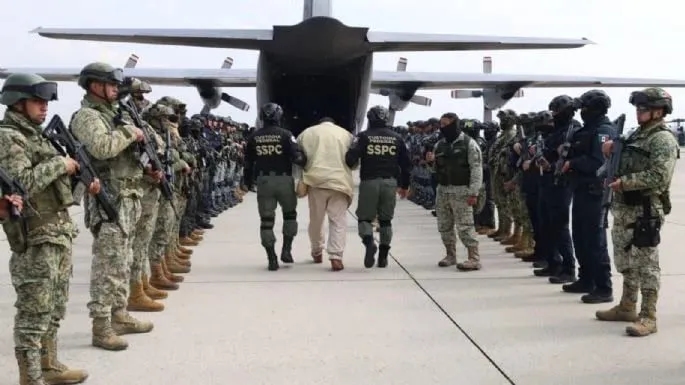
To bypass the formal extradition process, Mexico relies on its National Security Law, which permits the extradition of citizens who stand accused of engaging in espionage, sabotage, terrorism, rebellion, treason, or actions that hinder the government’s fight against organized crime. The latter provision allows for a fairly broad interpretation, and drug cartel capos are generally regarded as individuals who pose a threat to national well-being, enabling Mexico’s Ministry of Security to carry out their direct extradition.
This legal solution was reached amid prior efforts to overcome the deadlock caused by multiple extradition requests submitted by the United States. For years, drug lords and their lawyers managed to delay court proceedings. In 2024, then-U.S. Ambassador to Mexico Ken Salazar criticized judges who had stalled the extradition process for more than ten years for brothers Miguel and Omar Treviño Morales, known as Z-40 and Z-42, leaders of the Los Zetas cartel.
The extradition treaty between the United States and Mexico, in effect since 1974, stipulates that the requesting country cannot impose the death penalty on those being extradited. After several rounds of negotiations, Washington indeed committed not to seek the death penalty for any of the prisoners handed over under this direct agreement, which bypasses the standard extradition procedures and appellate review.
Experts warn that this practice sets a dangerous precedent. Santiago Aguirre Espinosa, a scholar at the Ibero-American University, argues that it has no legal basis, despite the application of the National Security Law, the Palermo Convention on Transnational Organized Crime, Article 89 of the Mexican Constitution, and recent decisions by the Ministry of Security and the National Security Council.
“The decisions to send Mexicans to the U.S. are not extraditions and do not meet the legal requirements for extradition. It is something entirely different. How can they be described, and what is their legal basis? I think the government has used various terms: they called it sending, transferring, and some analysts even referred to it as deportation. However, deporting citizens is prohibited by Article 22 of the Mexican Constitution,” Aguirre Espinosa said.
In his view, the crucial point is that these individuals were sent away without due legal process, without the opportunity to defend themselves or appeal to prevent their transfer. In this case, there is no doubt about the drug lords’ guilt. But the question arises: what will happen if, in the future, someone else creates other problems for the state? Could this extralegal mechanism be used again?
U.S. Attorney General Pam Bondi does not appear to be concerned with these legal nuances. On Jan. 21, 2026, after the latest transfer of Mexicans to the U.S., she stated: “This is another landmark achievement in the Trump Administration’s mission to destroy the cartels. These 37 cartel members — including terrorists from the Sinaloa Cartel, CJNG, and others — will now pay for their crimes against the American people on American soil.”
The elimination of El Mencho, which marked the start of a new phase of the “war,” also raised many questions. He did not die in a shootout but rather in a helicopter while being transported to a hospital. Mexican senator Lilly Téllez of the National Action Party alleged that the killing of the CJNG leader was done in order “to protect politicians connected to drug trafficking.” Téllez believes that the Mexican military had the capability to carry out a “surgical operation” that would have seen El Mencho captured alive and sent to prison so that he could reveal his connections with politicians.
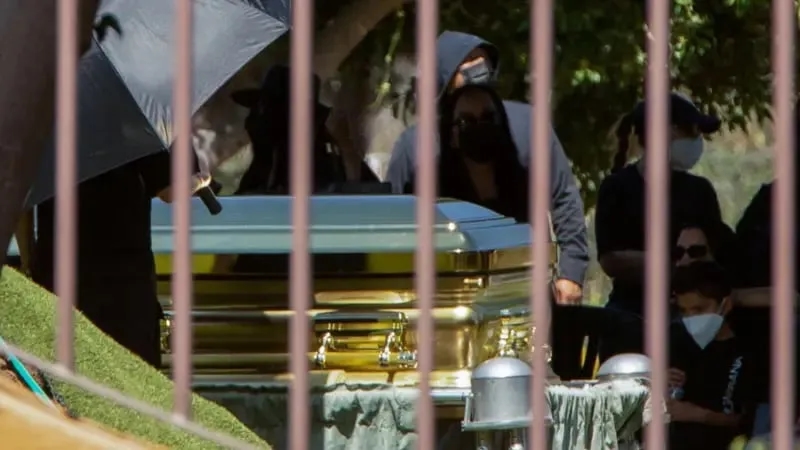
On March 2, El Mencho was buried in a cemetery in suburban Guadalajara in a gilded coffin. A large crowd, protected by the state’s security forces, turned out for the occasion. Many attendees wore masks, and the funeral wreaths bore no ribbons with written condolences, nor the names of the senders. Within a few hours, narcocorridos — songs in the popular Mexican folk music genre of corrido — appeared on social media and YouTube commemorating El Mencho’s death. The capo is gone; the cartel lives on.